• Photography
  • Interviews
  • Business
  • Reviews

Tiffinbox

Inspiring Photographers

  • Home
  • About
  • Blog
  • Contact

Going Wireless: PocketWizard For Off-Camera Flash

June 15, 2011 by Seshu | Editor & Publisher

The very core of the Strobist experience is to use your flash units off-camera or studio strobe units on location. There are a lot of options in the market now that can help you do just that. From personal experience, though, I have used the PocketWizard Plus II Transceivers. More recently I switched to Paul C. Buff's CyberSync system. Now I am considering returning back to PocketWizard.

These two videos below by Mark Wallace have convinced me to make the move back. The videos show how the new units work with the Nikon camera and flash systems. I suspect, however, the way these units operate won't be too radically different if you are using a Canon system. So everyone is welcome!

How To Shoot With PocketWizard MiniTT1 and FlexTT5

How To Use The PocketWizard AC3 Zone Controller

For using these units on a Canon system, check out these video tutorials.

By sheer coincidence, I won these units some time back. So, you'll see an “open-box” video very soon. Stay tuned! Thanks to Mark Wallace and Phil Bradon of Mac Groups for sending me the Nikon version of these PocketWizard units. I can't wait to go out and play with them.

Below, tell me if you have considered buying these units or you have already invested in a RadioPopper or some other wireless system. Do you work with flash off-camera or studio units for your shoots? Do you have questions on how to set those up? Would you find it useful if there were more tutorials posted here on Tiffinbox? Let me know!
Filed Under: Off-Camera Flash, Photography, Reviews Tagged With: camera flashes, cameras, digital photography, electronics, Flash, j. mark wallace, live preview digital cameras, nikon, nikon camera, off-camera flash, Photography, pocketwizard, red digital cinema camera company, shooting, strobist, technology, Video, video tutorials, zone controller

Effectively Automating Social Media Marketing

June 13, 2011 by Andrew Funderburg

Andrew “Fundy” Funderburg, is no stranger to Tiffinbox. Read his previous contribution about his album designing program for wedding and portrait photographers. In full disclosure I have to tell you that he and I are collaborating on SociRoll, the social media marketing tool he discusses briefly in this guest blog post.

I’d like to start off by saying that I am at the top of the list of haters of social media tools being used to spam people. Do not use social media to spam your followers.

So, the question is, why would I invent a program for automating Social Media marketing. The answer is simply that I have more things to share with my friends and followers than I have time in the day to share.

Social Media is all about making connections with people. For me it is about making deep connections. I’m not the type of person always tweeting and posting a ton of personal information. Sure, I’ll hop on Facebook and Twitter during the weekend and talk about the movie I’m going to see or whether my kids won their basketball games. But, during the week, I post a few personal things–mostly information about photography and the business of photography.

We strive to collect and provide some of the best content in the wedding and portrait industry. Content that we create and share today is still valuable in one or two months. If we manually update everything on Facebook and Twitter, all of this old content is lost. We constantly have new followers and friends and these new people will be just as interested in our old content as our new content.

Andrew Funderburg Blog Posts

Since August of 2010, we’ve written 150+ blog posts. More than 100 of these blog posts are related to the business of wedding and portrait photography. There are articles on everything from how to price wedding albums to how to sell portrait packages and everything in between. I want to make sure that our followers see this info.

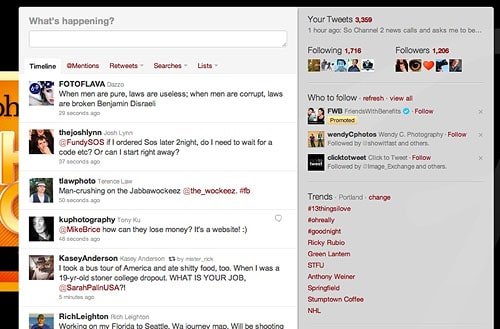
It would be physically impossible for me to make sure that each one of these blog posts is featured in a tweet once a day. I would lose track of what I shared yesterday, probably miss some things, duplicate some things, etc. The point here is that if I have SociRoll auto post one of my blog posts every day, or even twice a day, we won’t repeat sharing a blog post for 3 months. And then we take into account the fact that if something doesn’t show up in your Twitter in the last five minutes, we won’t see it. The chances of someone seeing repeated Tweets is very low.

Andrew Funderburg Twitter Streams

Now, let’s take a professional photographer. Let’s say the average wedding photographer shoots 30 weddings and 40 portraits a year. That’s 70 blog posts a year. Then let’s say they have been in business for 3 years. That’s more than 200 blog posts. Sharing one of these (or even two of these) events on their Facebook fanpage every day will seriously add to their brand and their site traffic.

So, do we set it and forget it? No. We let SociRoll do the heavy lifting for us, and we work hard to respond to people, retweet our friends, add personal touches, etc. But we know that our content that we’ve worked extremely hard to create is being shared among our friends and followers. Here's how to get started with SociRoll.

Filed Under: Blogging, Business, Marketing Tagged With: automate, automating, blog, blog post, engaging with people online, facebook, human interest, Marketing, marketing tools, online social networking, portrait photographers, social information processing, social media, tools, Twitter, web 2.0, world wide web

How To Stay Healthy On The Road

June 6, 2011 by Matt Brandon

This guest post is by Matt Brandon, a travel photographer now based in Malaysia. He works with NGO's “to tell their stories and to train their field staff to do the same.” Please follow Matt on Twitter. He is a terrific resource, as you will see from his blog post here.

One of the most frustrating things that can happen to you when you travel is getting to a new and amazing place only to get sick. Then having to spend the next several days recovering. It happens way too often and used to happen to me … a lot. In fact, travelers' diarrhea (TD) is the most common illness affecting travelers. Each year between 20-50% of international travelers, an estimated 10 million persons, develop diarrhea. (from Centers for Disease Control and Prevention) I used to suffer from TD a lot till I got a few simple little tricks under my belt. Please, don't misunderstand what I am saying, I still get sick, just not as often with travelers' diarrhea . Quite frankly, most of the time it is just a cold or the flu because I have pushed my self too hard for too long. Thankfully for me the infamous “Delhi belly”, “Montezuma's revenge”, “Aztec two step”, “Thai-dal wave” or the “Katmandu quickstep” is much a thing of the past. Why? Because I take some simple precautions.

Matt Brandon Photography - Harvesting Tea Leaves

Matt Brandon Photography - Boats On A River

First let's define some terms. There is travelers' diarrhea or TD and traveler's stomach. I differentiate the two because often when you travel you eat new and strange food and it takes a few days for your system to get use to it. Don't panic, often these new spices are hard on your gut and on top of that, your internal clock is messed up so you just need time to adjust. It is a recipe for upset stomach. After a few days things will settle down and life will be good again. But, full-on TD, aka Delhi Belly, is a sanitation issue and can be quite dangerous. It is often bacteria from bad water, poorly handled food or quite frankly from your own hands and it is bad news. Not to gross you out, but this bacteria lives in feces – as in poo – you know, sh*t. So how does this … stuff get into your mouth? The reality is in many of the countries I visit people often use their left hand to clean themselves after they defecate. Thus, the whole idea of the left hand being unclean and eating with your right hand. But unfortunately cooks don't use only their right hand to prepare food. Plus many of the countries I visit have water systems that have long ago failed. To get clean water you would have to drink it right from the filtration plant. You see, most of the city's pipes are rusted and cracked allowing every sort of germ and bacteria to enter the city's water system. So, what do I do to prevent these little germs from entering my system?

Matt Brandon Photography - Boy Peeping Through Fence

Sumatra Girl | Matt Brandon

Pretty simple really. The best way to insure this is: if in doubt, don't. If you think the water in your hotel is not properly treated or that the country as a whole has dicey water purification, then drink bottled water. For the most part bottled water is fine. If it is legitimate. I am sure you saw “Slum Dog Millionaire” where they casually fill old bottles with tap water, reglue the tops and serve them to unsuspecting guest. This isn't very common, but it is good to inspect and open them yourself.

I know many people who will also brush their teeth with bottled water. It is a good practice to get into. I generally don't, but then my gut, after living in India for 13 years is a little stronger than most. What if you don't have bottled water available? If you don't have it, then you can boil it. This last trip to China, I went off to bed and didn't have any bottled water and I needed to take some medicine. The hotel had a tea kettle in the room so I simply boiled some water and then let it cool and I was good to go. Boiling water is great, but remember, if you are at higher altitude water boils at a lower temperature. To kill those bugs the water temp needs to be at or above 170º F or 76º C or so I have been told.

Matt Brandon Photography - Boy Selling Puppets

Another little thing that some folks forget, is avoiding ice. Freezing water does not kill anything and once you put frozen bad water into your clean water, you get a nice cup of cold bad water.

I generally don't worry about tea and most of the time coffee. Most tea needs to be boiled to be steeped and so you are safe. If the coffee is Nescafe, like most coffee in Asia (who knows why?!) make sure the water is boiled. It only takes warm to hot water to make Nescafe and warm water won't kill all the bugs. Here is a general rule of thumb, if it can't burn your tongue it wont kill the bugs.

Here is another little tip. Stay away from uncooked food like raw fruits and vegetables unless you can peel them. In many South Asian countries you are served raw onions or radishes in a small plate before the meal – sort of a salad. Think of them as a plate of poison! Don't eat them. There are many reasons why they could be contaminated. First is they just might not be washed and you could be eating something that was handled by everyone in the market where it was purchased. Yuck! As your mother once said, “You don't know were those hands have been!” Another reason is the cook's hands may not be clean. One more reason is that if those veggies were washed, the water used was probably right form the tap and may still be present on the food. Not good. OK, now that I have grossed you out, lets move on.

Stay away from shellfish and most uncooked sea foods. Sea food is a risk anytime. It can harbor all kinds of nasties, but when you are traveling to countries you might describe as “developing”, make it a habit to just say no! It is not worth hours and hours of hugging the toilet or wearing down the carpet between your bed and the bathroom in your hotel room.

One last way you can prevent these guys from kicking your butt is treating them prophylactic. Now, I don't do this, but I have known a few doctors who I have traveled with that will take 2 tablets of Pepto Bismol 4 times daily or 2 fluid ounces 4 times daily as a prophylactic for travelers' diarrhea. They swear by this and I never saw them sick on the trip. At least not with E. Coli or giardia.

So prevention is great, but what happens if you get E. Coli or giardia in your tummy? First understand that E. Coli is bacteria and giardia is a little bug and they do different things to you and must be treated differently. Not all baddies are created equal.

Let me say here, I am not a doctor and I am not prescribing a treatment. I am telling you what I do and that is it. There is a good chance you have a bacteria like E. Coli when you have a sudden onset of nausea, vomiting, diarrhea, abdominal cramping, bloating and fever. If I can, I will go to a medical lab and give them a stool specimen. But often I am not in an area where I can do that so I must self diagnose and self medicate. Commonly prescribed treatment is 500 mg of ciprofloxacin twice a day or 400 mg of norfloxacin twice a day for 3-5 days. I have had doctors tell me if the symptoms leave after a day then you can stop. It is not like taking a full course of antibiotics. If you can manage to ride it out and have time to stay in bed for a day or two… or three it might resolve its self. Most cases are benign and resolve in 1-2 days without treatment. TD is rarely life-threatening. The natural history of TD is that 90% of cases resolve within 1 week, and 98% resolve within 1 month. (source, Centers for Disease Control and Prevention) But I never have that kind of time or the willingness to hang out at my toilet bowl for a month. So I nuke these guys.

Giardia's symptoms are not as violent as E. Coli. Usually giardia will show up over a longer time and come on gradually as diarrhea, nasty rotten egg smelling gas or flatulence, greasy stool that can float, stomach cramps, upset stomach or nausea especially after a meal. Again, if you can, it's best to go to a clinic and get tested. Often you will have to give several stool samples for giardia as it shows up intermittent. Treatment for this little bug (and it is a real bug by the way) is with metronidazole or tinidazole.

Matt Brandon Photography - Holy Man

Often diagnosis is hard to tell without lab test and if your up in the mountains that just might not be possible. In India and other countries where these bugs are prevalent you can find a cocktail of one of the “zole” drugs and an antibiotic i.e. tinidazole and norfloxacin. This combination will just about kill everything. When I say everything, I mean it and that is not always good. Your gut needs bacteria in it. So you can travel with pro-biotics or you can eat the local yogurt. I know many folks don't like yogurt, but the local stuff is really good for you. Because it has all the local bacteria and can actually strengthen your tummy.

So, there you go. That is how I keep my gut healthy when I am on the road in some really dicey places. In closing, remember, I am not a doctor and you should never use this blog post as a way to diagnose your illness, The best thing you can do is get to a good clinic or hospital if you think you have these symptoms and get checked out and listen to your doctor.

Filed Under: Photography, Travel Tagged With: biology, boiling water, bottled water, centers for disease control and prevention, diarrhea, drinking water, escherichia coli, family photography, gastroenterology, healthy, how to stay healthy, infectious diseases, matt, matt brandon, medicine, microbiology, on the road, stay healthy, symptoms, travel photographer, traveler's diarrhea, upset stomach, water borne diseases, water purification, watering system

Are Senior Portraits Your Target Market?

May 25, 2011 by Jen Basford

Yesterday we had John Pyle talking about how to specialize in photographing high school seniors.Today's guest post is by Jen Basford, a highly successful Edmond, Oklahoma-based photographer. Be sure to follow her on Twitter.

Like most photographers, I love what I do. I mean, I REALLY love what I do. And my biggest passion is marketing to seniors (which is JUST slightly above photographing seniors, however on most days I tend to love them just the same). And to be truly honest, I just love marketing in general. It is quite possibly one of the biggest factors in the success or failure of portrait studios in today's world. So you need to take a hard look at how you're approaching things.

Jen Basford - 3girlsphotography - Senior Portraits

First of all – who are you marketing to – the senior or their parent? In general, I am marketing to the senior. However, don't ignore the parents entirely or it can come back to bite you. So with that in mind, I look at ways in which to reach my target market most effectively. Oh, and I also should let you in on another little tip – I like to do EVERYTHING differently. And I like to do it my way. :)

For me, that means doing what everyone else ISN'T. I've done a LOT of research over the past several years into what gets the attention of teenagers. And I can tell you that it is NOT direct mail. Everyone mails pretty little postcards to seniors with the same things on them – here are some images of what we do, here is our latest campaign, and here is an offer to get you to come in and have your portraits made. And I can tell you that every single one of them looks alike. Sure, the colors may be a bit different, and many people use WAY too many fonts, but they all look like they come from a photography studio trying hard to get your business. Which will bore the daylights out of a soon-to-be senior.

Who, by the way, is quite possibly way MORE marketing savvy than you are.

Teenagers are marketed to nonstop from the moment they wake up until the moment they fall asleep (and some might argue even well past that point). They can spot a fake, a gimmick, or something cheesy from 3 states away. They aren't interested in discounts. They aren't interested in deals. And they aren't interested in the fact that you can photograph really great well-lit images (though you'd better at least be able to do that if you're calling yourself a professional).

Jen Basford - 3girlsphotography - Senior Portraits

Jen Basford - 3girlsphotography - Senior Portraits

What they ARE interested in is fame. Being important (or made to feel like they are). Helping others. Relationships. Being REAL. You get the gist here.

So how do we reach them? By developing relationships with them and giving them once-in-a-lifetime experiences.

Our 2 main marketing ventures for high school seniors are our senior model program and our annual Lights. Camera. Fashion! show we put on every spring. And these two things work hand in hand with each other. We recruit our models each year from the current year's junior class, and give them options in which they can choose to participate. And this isn't your parents' ‘rep' program designed to make kids work for referrals and discounts. Our model program offers the kids so much more – fame, the chance to be a top model for our studio, the chance to be a national senior portrait artists (spa) model winner, and the opportunity to be a runway model in our annual fashion show. We do offer incentives for direct referrals, however our model program is designed such that if they don't directly refer seniors to us we still benefit from indirect referrals, and the model then becomes a full-paying client. It's truly a win-win in all situations for us.

Jen Basford - 3girlsphotography - Senior Portraits Fashion Show

Our fashion show that we hold each year is the biggest event of its kind in our area. The focus is on the upcoming fashion trends, and we show high schoolers what types of clothes they will be wearing for their upcoming senior portraits. We also show them what a great time they will have at our studio, and how senior portraits are SO much more than just having your photograph made. They are about an experience. A feeling. A passion. A love. About everything you've worked your whole life to be, and everything you're heading off to become. It's a point in time that will never be repeated, and we want to make sure they realize the value of their senior portraits and that our studio can provide them with the best experience possible.

To support and supplement our model program and our fashion show, we effectively use Facebook, twitter, our blog and our website to create personal interaction and relationships with our models, clients and potential clients. One thing you have to realize, however, when using social media is that you HAVE to make it personal. Making a connection with your audience goes a LOT further than making it ONLY about business. High schoolers especially will start to tune you out before they even really tune in. Simple posts such as ‘Monday-1, Jen-0' on your social media can spark connections with almost everyone, as all of your target markets can relate to this humorous quip in some fashion or another. Keep it fun, make it personal, and use it effectively to enhance your business.

Jen Basford - 3girlsphotography - Senior Portraits

Jen Basford - 3girlsphotography - Senior Portraits

And keep it up. Regularly. If you don't, your audience will soon become bored and wander elsewhere. So it's your job to continually engage them and keep them coming back for more.

Assuming you are good at your craft, by giving some attention to your marketing and looking at how you can differentiate yourself from the pack you will be able to drive your target client towards you without the need to compete in the same arenas as ‘everyone else'. You must find out what makes you different, and start to capitalize on that. Because if you continually do things the way everyone else is doing them, eventually you will burn out and find that you are just a commodity to your market base. And people compare commodities on price – a war you will NEVER win, no matter where your pricing falls.

So play hard or go home. Because if you're marketing isn't on its ‘A' game you're going to be left behind.

Filed Under: Business, Marketing, Photography Tagged With: high school seniors, jen basford, Marketing, portrait studio, Portraits, senior modeling, senior portraits, seniors, target, target market

How To Specialize Photographing High School Seniors

May 24, 2011 by John Pyle

John Pyle Photography specializes in High School Senior Photography and is a three time national senior portrait artist (spa) winning studio. He and his wife, Sallye Anne, own and operate John Pyle Photography in Columbus, Georgia and enjoy their soon to be 2 year old daughter, Julie Anne. Follow John on Twitter.

When I first began specializing in seniors (about 4 years ago) weddings were the buzz in the photography world.  People were laughing because I was on “that Facebook site.” Others thought all you needed was “passion”, a 5D camera and a 1.2 lens to become a wedding photographer. Now it seems that everyone with a camera wants to photograph high school seniors. The marketplace and Facebook have become saturated with photographers tilting the lens to create images for high school grads. So how do you separate yourself from fan pages, logos, and self proclaimed “artists” in  a growing and crowded senior market?

My point is you don’t have to sink in a massive pool of mediocrity if you are doing what it takes to stand out.

John Pyle Senior Portrait Sessions

Competition

Before full time photography I was in pharmaceutical sales. I sold one of the most popular drugs in the market with only one competitor for 6 years. When a new competitive drug launched, everyone was panicked that our market share and business would crumble. But the opposite occurred. Despite the drug being slightly cheaper than the one our company sold OUR sales grew! Why? Because there was more noise being made about the market, the drug, and the disease state it treated. Sometimes competitors can actually grow your business. Especially if your work and sessions clearly stand out. 

Yesterday a client told me she was surprised at how many “photographers” are on Facebook when she began looking to book a session. She also said that it was actually very clear who did quality work because so much of the “noise” coming across Facebook from other “photographers” was not ”good at all”. 

My point is you don’t have to sink in a massive pool of mediocrity if you are doing what it takes to stand out. This may start by educating your clients on what quality is and by valuing what you do. If you don’t value your own work then people aren’t going to randomly decide to value it for you. Worry about your customers while competitors worry about you. 

John Pyle Senior Portrait Sessions

John Pyle Senior Portrait Sessions

John Pyle Senior Portrait Sessions

Know Your Customers

When photographing high school seniors you better target everything to seniors right? WRONG. Seniors are a unique population to photograph because you are essentially targeting several clients in one; seniors, parents, family, siblings, peers, classmates … etc. Meet with the seniors and their families prior to shoot to clearly define the goals, likes, and dislikes before a session. You want customers to be thrilled with your images, excited about the session and be proud enough to show off the images. Sit down and analyze your customers to include defining who you want your ideal customers to be.

I talk with a lot of wedding photographers who are frustrated that they aren’t attracting brides who value their work, invest in their business, send referrals, and praise them to friends on Facebook. Some are advertising 75% off of everything, giving away free books, free CDs, free engagement sessions, etc. That’s fine if you don’t need income. But if you do need income you can’t be afraid of the word “profit”. It is still a business and being blessed enough to create images and work in your “passion” is still not enough to pay for gas or buy groceries.

Knowing your customers means knowing business also. A great lesson to be learned is if you sell on price, what happens when you aren’t the cheapest anymore? And if all your customers choose you based on price then that may be the only thing they value about you. Perfect your craft and learn how to run a business.   

Social Media

When utilizing Facebook and a blog/website make sure you show what you want to shoot. If you are constantly posting images of flowers, babies, concerts, airplanes, the beach, brides, and parks while claiming to specialize in senior photography don’t be surprised if your senior business doesn’t grow. You can’t sell what you don’t show. 

Customers (current and future) don’t need to see 463 images from a session. Limit what you show and choose what you show very carefully. This includes personal pictures and information as well. Personal pages are as much business pages for people and political statements, bad jokes, angry comments, and insults turn everyone off. Remember teenagers, seniors, parents, and grandparents are on your Facebook now. It’s also a good idea to monitor the images you post online for inappropriate comments. Every picture we post we are tagged in for this very reason.  

John Pyle Senior Portrait Sessions

Network

Seek out other businesses outside of photography including those that target your market. Find out what they are doing right, and what works and doesn’t work for them. 

Invest in yourself and your business. Joining professional organizations, online forums, attending quality workshops, and experiment with new styles of shooting and lighting.

These will all improve your business and your creativity. The days of secret locations, mystery editing techniques, and hiding in darkrooms are over. You cannot be complacent in the senior market.  

Finally seniors are a very rewarding population to photograph. They keep you young and force you to stay current. But you must enjoy interacting with people and creating experiences on your sessions if you want to grow this segment of your business. Seniors only graduate once. You can’t even say that about people getting married anymore.  

John Pyle Senior Portrait Sessions

Filed Under: Marketing, Photography Tagged With: facebook, high school senior photography, high school seniors, john pyle, online social networking, photograph, photographer, Photographers, photographing, Photography, senior marketing, senior portraits, seniors, seniors photography, specialize

What Happens When A Canon Shooter Uses A Nikon?

May 20, 2011 by John Edgar

John Edgar is an internationally renowned wedding and portrait photographer who travels the globe documenting moments and creating art of his discerning clients. He is based out of the beautiful city of Toronto, Canada.

I’ve been take pictures for over 10 years, and worked as a full time photographer for 6 of those. I don’t feel that any topic has been more discussed than Nikon vs. Canon. In fact, the number one question I always get as a photographer is just that. Until last weekend, Canon was the only system I have ever shot. I started with a Canon 300D post college, picked up a 30D shortly after, and the day the 5D came out, I had one. I shot the 5D for many, many years until I recently switched to the 5D mkII and 1Series bodies.

I’ve been a prime shooter since day one, originally with the plastic fantastic (50mm 1.8), upgrading from the 1.8 to the 1.4, and more recently the 1.2. My daily drivers are the 35 1.4, 50 1.2, 85 1.2 and 135 2.0.

After much conversation at the Mystic 6 convention I came to the conclusion that I should at minimum play around with a Nikon setup to see what I think. It would be quite ignorant of me to stand behind my Canon love having never given Nikon a fair run, right? My friend Steve Sager agreed to let me come out and shoot a wedding with him, and bestie Tara McMullen agreed to lend me her Nikon gear for the day.

Full disclosure: I was sure I wasn’t going to like the system, but I resigned myself to the fact that I would indeed give it a fair shot, and leave my bias at home. I’m not an overly techie person. I understand camera and imaging technology but I don’t obsess over custom functions and AF point placement algorithms. I like taking pictures, and hope my camera for the most part “just works”. I guess as a result, my commentary won’t be particularly technical.

Armed with a D3s, 35, 50, 85 and 135mm lenses, I left my beloved Canon bodies at home and ventured off to shoot a wedding.

The Preparation

I arrived in the morning at the groom’s house to shoot preps. The family was Portuguese and everything was moving along quite quickly. This wasn’t anything usual for me, but I felt it was definitely a great opportunity to put the D3s through it’s paces. I like the 35 1.4 in the morning, for preps. It gives a great sense of place and as a result it’s almost always my go-to lens for that portion of the day. I stuck it on the D3s and started snapping. We were upstairs and the bedroom was quite dark. I didn’t have a flash on (mostly because I like to shoot available light) so I was pushing the ISO into the 1200+ range.

My first immediate and extremely frustrating observation was that the autofocus was slow to acquire a focal lock and to allow me to fully depress the shutter button. With my 5D mkII, it almost never hunts around for focus. With the D3s, I felt like it was just sitting there thinking about what to do next, while I was missing some great moments. To be honest, it really, really annoyed me. However, when it did finally acquire AF lock and I made an image, the focus was spot on. This wasn’t really something I had ever thought about before, and sparked an internal conversation of “would I rather have the image, but out of focus, or miss a few for something sharp” (more on that later). Generally, a pretty high proportion of my images shot with my Canon system are out of focus, mostly because it just can’t seem to focus on the right thing. This has been a frustration for a while and definitely my main friction point with the Canon system.

Nevertheless, I pushed on shooting. I was tweeting as I went and Paul Johnson offered some insight into a change I could make in the camera settings that would allow for faster autofocus. I made some quick changes, tested it out a bit and found the “continuous” mode to be quicker in low light. After making this change, I did notice a much higher percentage of out of focus images, but still plenty of usable frames coming from the camera.

My next realization about the Nikon system came as I moved from inside the house to the yard out back. I’m a manual shooter so I’m used to changing my exposure on the fly as I move around and the lighting conditions change. Over the years you become accustomed to knowing the settings you need by judging the light and your hands automatically find the settings and plug them in. For me this is something that happens almost subconsciously as I’m shooting. As I quickly ran outside and started shooting my fingers did the usual wheel turns and something struck me. I realized that in less than 30 minutes of using the camera, it felt second nature to me. Believe it or not, after 10 years of shooting on the Canon system I still sometimes get lost and turn things the wrong way or forget where a setting is. I was very, very impressed with how quickly I was able to adapt and learn the Nikon layout, and found it extremely natural and ergonomic. Hours in I said to a guest who asked me about the camera, “it really is a joy to shoot with.”

John Edgar - Wedding with Nikon D3s

The Ceremony

After the preps we headed to the church. It was very dark and I wasn’t about to use the flash during a ceremony. This was the perfect time to test the higher ISO ranges. I sent a quick message to my friend Ryan Brenizer to confirm that the files are pretty clean around 6400 ISO before I went trigger-happy. He gave me the nod and with a smile I set the camera there and went to town. I shot for a bit and then zoomed in to 100% and checked the shadows. Just as Ryan had mentioned: very, very clean. I kept my exposures solid if not slightly to the right and shot the rest of the ceremony 3200/6400.

I had decided to shoot the whole ceremony with 135mm lens. Having had a morning filled with slow AF I was a little worried about it, but plunged in never the less. I switched out of continuous focus back to single focus because my morning tests had left me with a feeling that S was slightly more accurate, and I could afford to slow down a little during the ceremony. As I shot the ceremony, I noticed almost none of the AF lock lag I had observed in the morning. The quality of the light in the church, while dim, was quite a bit better. The shadows were more even, and had less contrast. Without knowing the in-depth technical aspects of AF, my gut feeling is this helped. After shooting I went through the frames on the back of the camera at 100% zoom checking the focus. I noticed that about 85% of them were sharp and focused as I expected. This is about 30-40% better than what I generally experience off of my Canon bodies.

The Photo Session

In “Canonland” I shoot 90% of the photo session with the 50 1.2 so I decided to shoot with the Nikon 50 1.4 I had. I immediately noticed that the bokeh was totally different. At first I thought I had my aperture set wrong, I wanted to be wide open but what I was seeing looked like I was at f2/2.8. (I’m not going to debate the merits of bokeh here, that would be stupid. It’s all personal preference.) Going back over the images and looking at my Canon work, I personally like the look of the out of focus areas on my Canon glass much much better. I switched over to the 35 1.4, and set it to 1.4, again I really didn’t like the way the glass rendered out of focus light. It was also during the photo session that I noticed the general hue of the image was drastically different than what I was used to seeing on the back of the camera. At that point I didn’t know if that was the RAW rendered jpg, the screen, the light I was in, my eyes or what. Having now looked at the files side by side in ACR I definitely feel that a CR2 file has more of a magenta hue to it than a NEF. Nikon raw files generally seem warmer/orange. This is also to my mind a hue difference, not simply white balance related. I don’t really have a clear opinion on that either way at this point, so I’m merely making the observation. Do as you will with it.

John Edgar - Wedding with Nikon D3s

The Reception

After the photo session we headed to Liberty Grand where the reception was held. Anyone local to Toronto knows how brutal shooting in this hall can be. The ceilings are dark wood and a good 30 feet high. Bouncing isn’t much fun in there, but if you aim for the walls and get the angle right it’s doable. I’ve shot the venue 20+ times so I’m used to it, but I wasn’t used to the SB900. I was told to keep it in manual mode because it sometimes overheats and shuts down in TTL. This initially put me off a bit, but I compensated for it manually and it was fine.

As I shot, I found that my ability to pull in a lot of ambient light was great! The high ISO I used gave me much more flexibility with the flash than I usually afford myself with my 580EXII. I really liked the exposures I was getting. At one point during the evening the flash batteries died and before I had a chance to replace them, the father of the groom pulled me over and demanded a quick shot with some of the groomsmen. I didn’t have batteries in my pocket so I thought “to hell with it” and cranked the ISO into H1. It was almost pitch black and the (very) intoxicated groomsmen wouldn’t stay still. I grabbed a few frames and I was pleasantly surprised with them. The final image will have to be presented in black and white, however it was sharp and fairly well exposed.

As I finished out the night, I felt the strain in my arm. The camera is more weight than I’m used to for a 13 hour day and my wrist was starting to ache a little. If I’m to do this for another 10-15 years I feel heavy bodies are going to cause some long term damage to my right hand. Many of my professors from school now have bad carpal tunnel and arthritis from shooting for 20+ years. I guess the alternative is to shoot a D700/D3s combo, as it’s a much lighter body.

John Edgar - Wedding with Nikon D3s

John Edgar - Wedding with Nikon D3s
The Post

When I got home I went over some of the files: zoomed, cropped, pushed, pulled, starred and un-stared. I spent a good few hours figuring out what I liked and what I didn’t. So here is what I’ll say:

The AF focus system is, at worst, much better than anything I’ve experienced with Canon. In continuous focus mode, while a lot of the AF lag is gone, so is a lot of the accuracy. That being said, I still found more of the images to be in than out or at least acceptability soft. During the photo session, shooting with good light in AF-S, the focusing was almost always spot on.

The flash system is good. I know some people hail it as the second coming of Christ, but I truly believe the 580EXII is just as good as the SB900. Feature wise, it does have some nice fancy do-das that the 580 doesn’t, but in terms of just taking a good solid exposure the systems are very, very comparable.

The high ISO noise tolerance on the D3s is unreal. That’s all I need to say about that.
I personally find the layout of the D3s to be fantastic. A lot of the button arrangement and menu options make much more sense to me than the Canon design. For example, where Canon will use a 3 finger strain voodoo dance menu wheel scroll push setting change, Nikon simply has a toggle switch.

Now I realize this is just my personal opinion, but I do not like the bokeh. And as an artist/photographer/whatever, I rely heavily on depth of field as a pivotal element of the work I produce. This will be the main reason I wouldn’t switch systems. Canon has great glass. The colour clarity, the way it renders flair, the out of focus areas, the contrast and general “look” of the images from my Canon are what I fell in love with, and continue to love.

In the wedding space I feel that if those “artistic” elements of photography (that transcendental feel and quality of the image that you just can’t quite put your finger on) are important to you as a Canon shooter, you might find a switch frustrating. If you are a photographer who is very methodical, photo journalistic, technical or moment driven then you should without a doubt be shooting Nikon right now. However I am truly in love with the look of my Canon glass. I’m willing to over shoot and deal with weird white balance and a total inability to focus to have that.

Call me stupid, and maybe I am.

“Popularity does not dictate quality,” says this one Mashable article which coincidentally compares Canon v. Nikon. Check out the infographic. What are your thoughts? Have you given both systems an honest, unbiased try? Tell us your experiences with that “other” system. Go!

UPDATE: John wanted me to let you know that the images presented here are SOOC – Straight Out Of Camera – with the only exceptions being that they were scaled down and sharpened a tiny bit.

Filed Under: Photo Technology Tagged With: autofocus, bokeh, canon, canon 300d, canon eos 5d mark ii, canon shooters, conventions, live preview digital cameras, mystic, nikon, nikon d3s digital camera, nikon system, Photographers, Photography, portrait photographers, shooter, shooting, toronto

The Importance Of Having A Photographic Style

May 17, 2011 by Glyn Dewis

I am honored to have Glyn Dewis as this week's first guest blogger. He is a UK based Photographer, Workshop Instructor and Adobe Community Professional specialising in Conceptual Portraits both location and studio based. An avid blogger, Glyn thrives on sharing his photography and editing techniques through his Workshops, YouTube Video Page and Blog. Follow him on Twitter.

When I was approached about writing a post for Tiffinbox I have to admit that at first I was a little stumped as to what I should cover. I changed my mind more times than I care to remember but that being said I always came back to the same starting point …‘Style’ and by that I mean ‘the unique, defining look to your photography’.

But when it come to style how do you get it? How do you develop you a look that makes you stand out from the seemingly saturated market of photographers?

Glyn Dewis - Shopping Cart

Glyn Dewis - Ultimate Fighter

I have my own blog that I update several times each week covering such topics as recent photo shoots, editing techniques, latest news plus hints and tips. In addition to that each month I interview prominent photographers from around the world; such names as Tim Wallace, David E Jackson and Matt Kloskowski to name but a few, and post the content of the conversation in full on the blog.

One question that I always ask is “How does someone develop a style?” and the answers always intrigue me:

Tim Wallace says “Your style is influenced by your life experiences and every time you press the shutter, in a way your photographing yourself.”

David E Jackson says “You don’t find a style…your style finds you.”

Trying to make your name as a photographer and have a style that is recognizable as unique to you is no easy task that’s for sure but one thing that is, is that the process is alot harder if you’re not picking up your camera on a daily basis.

Glyn Dewis - Model

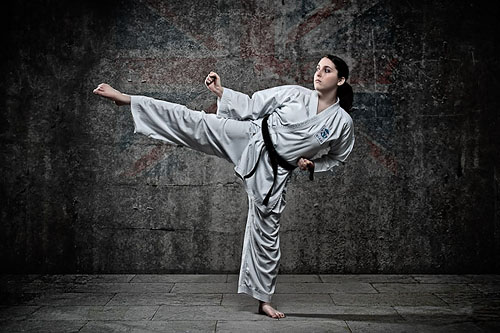
Glyn Dewis - Karate Kid

So what do I mean by “having a style”? How do you define it or more to the point, how do you get a photographic ‘style’ ?

In today’s current climate where photography has become so much more accessible and people are setting themselves up as photographers almost as soon as they’ve unboxed their new DSLR, the need to separate yourself from the crowd and get noticed is more important than it ever was!

Now just to clarify, what I’m not saying here is that I believe your ‘style’ is set in stone, but what I do believe is that the more you use your camera, each and every day getting out and shooting something…anything, then your photographic style will evolve.

Up until a few years ago I used to compete in Bodybuilding Shows. For the life of me I can’t recall who it was said this to me but it rang so true …

“Photography and your ‘style’ is like your bodybuilding. You can’t expect to go to the gym just occasionally if you want to develop your physique to a level where you can compete. It takes dedication … training hard every day, putting in the hours and even when you’ve built your physique, continuing to train.”

Copying someones style is financial suicide.

Much like photography, it takes practice, constant practice to get good and even when you’re at the top of your game you still keep practicing. Look at Joe McNally, for example. He is without doubt amongst the best in the world but again someone who continues to practice, day after day and even attends workshops!

We’re all individual and we will all develop our own unique style. Going back to the bodybuiliding analogy, we could all start training doing exactly the same exercises, with the same weights, eat the same, get the same amount of sleep but still our physiques would look different; just as our styles will be different in photography.

Of course there are those that try to ‘copy’ to the letter other people’s styles. I remember a year or so ago when I was looking for a company to build my new website. Sure they seemed to do a great job with the design and functionality but what really shocked me was that in their ‘samples’ section, there were a large number of sites, all with slightly different designs but what seemed like all the same photos. Clearly there were/are a large number of people ‘cloning’ a style from photography training they’d received in the UK but weren’t putting their own ‘style’ into it.

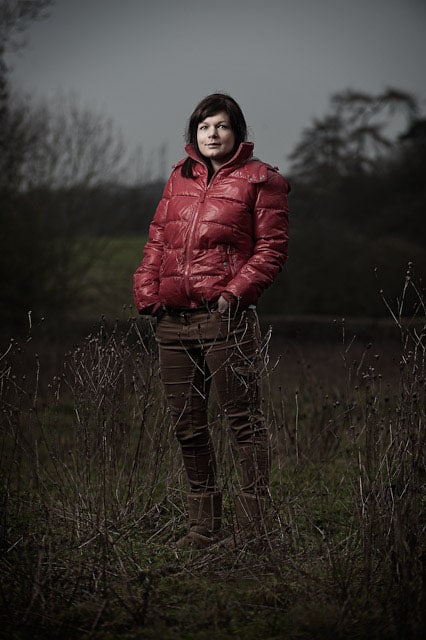
Glyn Dewis - Portrait In A Field

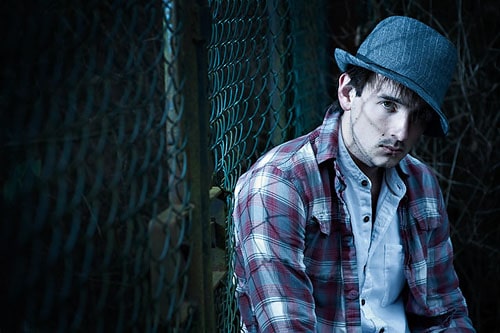
Glyn Dewis - Man In A Hat

Copying someones style is financial suicide. Our goal should be to attract clients that want us for our ‘style’ and quality of work but ‘copying’ a style will only lead to getting clients on a cost basis i.e. everyone is doing the same, so who is cheapest? Does that make sense?

Style is vital if we are to stand out from the crowd and attract clients, but don’t stress over it. Just get out and shoot more and more often and let your style find you. But the less you’re out shooting, the longer it’ll take and the more you’ll feel frustrated.

Talking of getting out and shooting more, some might say they would do but they have no one to photograph. Well in that case dare I say it, shoot for free! Get people in front of the camera on a time for prints basis; i.e they give their time and you give them a disc of edited images. This is something I did to build up a portfolio and is something I continue to do.

The big advantage here is that you can choose what you shoot and how you shoot it and those images can be used in your portfolio so you then start to get more of the same type of clients but who will pay you!

Just to finish off, this topic came up yesterday when I met up with a friend who mentioned something valid:

Your style won’t show itself until the technical side of shooting is second nature. Know your camera controls inside and out to the point you can change settings, and know why you’re changing them, without really looking at what you’re doing.

Do you feel like you have a defined style? If so, what is it? If you are struggling with it, do you think the steps Glyn has outlined here will help you? Chime in below in the comments section.

Filed Under: Photography, Photoshop Actions, Tutorials

How To Grow Your Photography Income?

April 22, 2011 by Rosh Sillars

Today's guest blog post is by Rosh Sillars, a veteran photographer with a photojournalism background specializing in people, food and interiors. He earned his BFA in photography at the College of Creative Studies (CCS), Detroit. Rosh offers his services to traditional media, new media and corporate clients. He owns the creative representation firm The Rosh Group, Inc. and teaches photography at two universities and serves as a marketing and social media consultant for Synectics media. Rosh is also the coauthor of the book Linked Photographers guide to marketing and social media.Please visit his new project The Driven Business.

Is it really possible to increase dramatically your photography income?

Yes.

Photography has changed over the last 10 years. Digital cameras have made everyone a photographer; many of the basic point-and-shoot jobs have been lost. But, that doesn’t mean the opportunities are gone.

The truth is, there are more opportunities than ever. The secret is to make your competition irrelevant.

How?

Great photography and your creative ideas are the answer. Photography can be combined with writing, video, Photoshop, and other digital technologies to help you create unique offerings.

You must find your niche.

If you don’t have a good website, you are not in business. Make sure it is easy to use and well-optimized (If you don't know what that means, find out.) to attract the people who are searching for what you do. Don’t take search engine optimization lightly. Make sure you have a blog that is updated weekly with great images and text.

Get out of your home, office, or studio. Business is about people and developing relationships. Go to at least one networking event a week. Make sure you have business cards, portfolio cards, and your freshest images ready to share on your smart phone or tablet. Always have a portfolio available. You never know when opportunity will come knocking.

Follow up using the social web. Keep your new connections alive through social media. Develop new relationships using Facebook, LinkedIn and Twitter. Don’t sell to your followers, educate them. Teach them how to find leads for your business and you return the favor with opportunities and valuable introductions.

Create partnerships with companies that focus on the same target market. Develop packages and market your products in cooperation.

Don’t just sell your product. Sell the experience of working with you. You can’t hide behind your products. Photographers today need to understand that if they are going to be successful they are part of the product. Customers, in many cases, are buying the photographer more than the photography.

Make it easy for someone to do business with you. It is important to protect your copyrights. If copyrights were not important, people wouldn’t be working so hard to take them from you. Keeping your copyrights will increase your income by providing more opportunities to resell your images at the appropriate time. But, the issue of copyright, business practices, and contracts doesn’t have to be an us versus them battle. Keep it simple.

Unless you photograph events, you should be using the per-image-pricing model. Your rates should be based on the value of each image, not your time. It is much easier for customers to justify a few hundred dollars per commercial image than $1,500 a day for the photographer's time. This model can easily be adjusted and applied to portraits and family photography. Each image has value; never give away a valuable CD full of images.

Don't forget to follow up.

Communicate regularly with past clients. They are the best referral sources you have, so make sure you collect e-mails and addresses. Don’t let them forget what a great experience they had working with you. Keep them up-to-date with you newest images. Give them the tools and the opportunity to refer you.

The best marketing campaign you can participate in is to regularly send hand-written thank-you notes. People like to be appreciated. Your appreciation is often rewarded with additional income.

What strategies will you employ to grow your photography income? What are you trying now? Willing to share so that can learn from each other? Post your thoughts below!

Filed Under: Business, Photography Tagged With: business cards, digital cameras, family photography, grow, how to grow, income, News, photographer, Photography, rosh sillars, search engine optimization, stock photography, teaching photography, visual arts, Wedding Photography

Photographer Joe McNally Speaks With Tiffinbox

April 19, 2011 by Seshu | Editor & Publisher

As I mentioned a few days back, I had the honor of meeting both David Hobby and Joe McNally during their Flash Bus stop in Boston. Thanks to Adorama – The Photography People, I was able to interview them both. If you haven't seen the interview with David Hobby yet, please check it out now.

Here is the one with Joe McNally:

This wasn't the first time I met Joe. I was one of his students at his Dobbs Ferry workshops (highly recommend it, by the way) in June 2009.

I have two of his books – The Hot Shoe Diaries: Big Light from Small Flashes and The Moment It Clicks: Photography secrets from one of the world's top shooters. His next book, Sketching Light, is due out soon and based on what he has just told me in the interview above, I just pre-ordered it.

If you have any of his books or you have attended Joe McNally's presentations in the past, please comment below.

Please thank Adorama again for making this interview possible. When they say they are the “Photography People,” I know they mean it. One way you can help Tiffinbox and yourself is by ordering all your photographic gear through them. Heck, if they are the go-to-store for Joe McNally's professional needs, why not for you?

*Yes there are affiliate links embedded in this blog post.

Filed Under: Off-Camera Flash, Photography, Reviews, Video Tagged With: Boston, david hobby, Flash, flash bus, guru, interviewing, joe, joe mcnally, mass media, mcnally, photographer, photographic lighting, Photography, speaks, video interview

Tiffinbox Weekly Wrap

April 18, 2011 by Seshu | Editor & Publisher

Going to try something new for Monday's – will give you all a weekly wrap up from the previous week, just in case you have missed reading a post or watching a tutorial or video interview.

Love The Products & Services Posted On Tiffinbox? talked about how some of the reviews of products and services mentioned on Tiffinbox have actually been very useful to you and your photography business.

Robert Norman wrote a guest blog post on How To Use CardMunch To Manage Business Cards, an application for your iPhone that will scan and save your data. Pretty cool!

Leon Sandoval from Colorati came back to Tiffinbox for another guest blog post about < a href="https://tiffinbox.org/how-do-you-keyword-your-digital-images/">keyboarding digital files. He had two short tutorials on using Lightroom or Bridge, whichever works best for your workflow.

Blair Phillips has a handle on using video to attract high school senior clients to his studio. In his guest blog, “Video Speaks Louder Than Words,” he tells us just how he goes about it.

Lastly, I had an opportunity to speak and interview David Hobby, the photographer/teacher behind Strobist, a veritable repository for off-camera flash users. David also spoke about his new project “HOCO360,” photographing the people and events in Howard County, Maryland. Check it out!

P.S. This weekly wrap idea was highly influenced by the awesome Copyblogger blog. You ought to check it out too.

Filed Under: Blogging, Tiffinbox Tagged With: adobe photoshop lightroom, apple inc., articles, blog, computing, guest bloggers, Guest Blogging, iphone, leon sandoval, Photography Business, product service, technology, Tiffinbox, Tutorials, Video, video interview, weekly, wrap, wraps

  • « Previous Page
  • 1
  • …
  • 47
  • 48
  • 49
  • 50
  • 51
  • …
  • 198
  • Next Page »

Subscribe To Tiffibox Treats!

Looking for a well-curated email newsletter that will leave you inspired and motivated about your photography business? Sign up below!

About Seshu

Seshu creates relaxed portraits of families and high school seniors in Avon, Connecticut. He also leads a successful headshot photography studio in Connecticut, helping professionals from a variety of disciplines project the very best versions of themselves. He created Tiffinbox as a way of inspiring photographers, to create better images and successful businesses. [Read More]

Email Templates For Headshot Photographers

Email Templates for Headshot Photographers

Recent Posts

  • How Capture One Changed My Event Photography
  • 10 Steps To Stay Positive In Times Of Great Stress
  • Why You Need To Read “Personal Branding For Photographers” Now
  • How To Master Your Website Content Step By Step?
  • Tony Taafe’s TNT Method For Headshot Photographers

Recent Comments

  • Stephen Davison on Are You A Business Owner Who Is Smart, But Stuck?
  • Ben A. on Don Giannatti Clinches The 8th Annual Tiffinbox Award
  • Dan on Don Giannatti Clinches The 8th Annual Tiffinbox Award
  • Donald Giannatti on Don Giannatti Clinches The 8th Annual Tiffinbox Award
  • Stephen Davison on G.E. Masana’s 6 Strategies For Wedding Photography Success
  • Naveen Kumar on Weddings In India Are More Than Being At The Right Place And At The Right Time
  • kartick on Weddings In India Are More Than Being At The Right Place And At The Right Time
  • Leonid Farbman on 6 Uncommon Trends To Grow Your Photography Business
  • Willow and Finch Wedding Photography on 11 Reception Tips To Help Your Wedding Photography
  • Web Designer Malaysia on How To Optimize Your Squarespace Website For Search Engines
  • Creastan on An Interview With Photojournalist G.M.B. Akash
  • Cindy Brown | Atlanta on An Open Letter To A Local Photographer

Become a Patron!

Copyright © 2026 · Tiffinbox · Site Design by Heather Mackan Creative · Built on Genesis