• Photography
  • Interviews
  • Business
  • Reviews

Tiffinbox

Inspiring Photographers

  • Home
  • About
  • Blog
  • Contact

Woot Camera To The Rescue

October 25, 2010 by Guest

Jen May PastoresThis guest blog is a second for Jen May Pastores. Her first post was about her Cambodian photo project.

Beyond the online sphere of social media, smart phone efficiency, and the praise of technological advances that the world goes gaga for there is still an unfulfilled satisfaction that plagues many of us. It’s a real desire for a true connection without the abbreviations or vagueness that often travels through digital walls. Symptoms of this desire starts with often checking emails for replies, scanning Twitter for mentions, and counting likes and comments on Facebook. This is where Woot Camera intervenes to present a pleasant breakaway from the modern day overload.

Woot Camera is a personal project that sends a disposable camera to strangers across the world. It arrives in a purple box in the mail–sent from the previous photographer–and when opened a personal handwritten note sits on top to greet the new photographer. Included are instructions to take a single, creative image with the Woot Camera and then send it off to the next person. When completed the camera returns to me and the exposures will be developed and shared online. It’s a fun example of balancing the intimate joys of a tangible connection and sharing it with the multitude of users on the Internet.
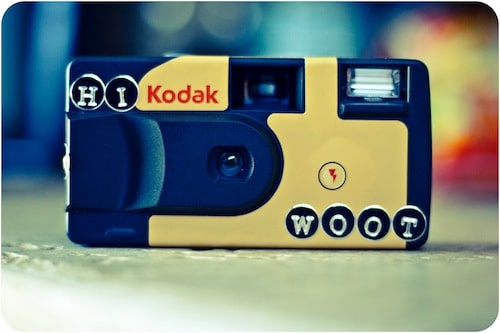
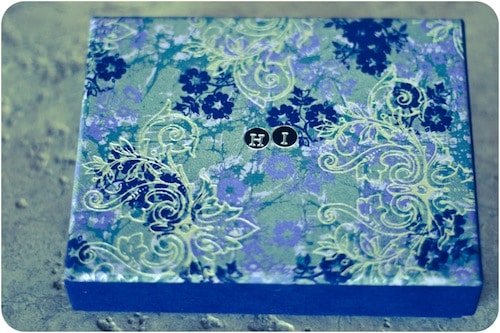
Woot Camera Project

Woot Camera Project

Woot Camera Project

All participants signed up last month when I first released the project and since then Woot Camera has traveled to five cities on the east coast. Other places like Canada, Dubai, Japan and more cities in the states are on the itinerary, as well. Participants have expressed excitement in sharing this experience and are eager to see the results. Who wouldn’t enjoy discovering a package in the mailbox in front of their home that encourages creativity and new friendship?

Woot Camera will continue to rescue the dissatisfied, gadget-addicted-junkies with a second round of participants starting before the holidays. The best part about this is that anyone can start their own traveling camera project. Tie a disposable camera around a tree or leave one on the subway. The possibilities start with you giving back in a unique way. Photojojo, an online source of the best photo tips and DIY projects around, is also another great place to discover fun ideas.

Follow Woot Camera’s journey on Twitter (@wootcamera) or sign-up to be a part of the project.

Filed Under: Personal, Photo Projects, Photography Tagged With: camera, cameras, communication, disposable camera, disposable cameras, internet culture, Jen May Pastores, mass media, personal, photo projects, projects, publishing, smart phones, strangers, woot

The First Steps In Shaping The Future Of Photobooks

October 22, 2010 by Guest

Miki Johnson, AvatarThis is a guest blog by Miki Johnson, a former editor of the RESOLVE Photo Blog and social media strategist for liveBooks. Before that she was a senior editor at American Photo magazine. She currently lives in San Francisco where she continues to support photographers and journalists through writing, promotion, programming, and consulting.

With so many photographers taking publishing into their own hands these days, there seem to be a lot of questions and more than a few misperceptions about photobook publishing floating around.

I never would have considered myself an expert in photobooks until this February when I collaborated with Andy Adams of FlakPhoto to create the Future of Photobooks project, a month-long, cross-blog discussion about how photobooks would be made, read, and sold in the future.

Over the course of the project, more than 50 photo professionals and publishers wrote posts on their own blogs about where they saw photobooks heading. I read them all, organizing them and pulling out highlights for three final discussions hosted by guest bloggers. I felt at times like the blogosphere was giving me my own private class in photobook publishing :)

With any project like that, my greatest reward was getting to redistribute that knowledge back to the community, connecting with so many new people, and seeing people get excited about the discussions. Personally I have also been asked to speak publicly about phtoobooks, most recently on a panel at the inaugural Flash Forward Festival in Toronto — along with highly respected colleagues, Alec Soth, Stephen Mayes, Darius Himes, Jason Fulford, and Andy Adams.

A number of important questions were raised during that discussion, ones I thought it would be helpful to share with anyone thinking about publishing a book or seeking a publisher for one. I’ve listed three big ideas below, but these are only starting points. It would be great to hear what you think about these, since the future of photobooks, now more than ever, truly is ours to shape.

1. Don’t expect your photobook to make money.

Aside from the very rare exception (things with large general appeal like Full Moon and A Child is Born) photobooks rarely turn a profit — in fact, many fail to break even. Darius Himes, founder of the non-profit Radius Books, pointed this out in his post for Future of Photobooks and again in Toronto. Photographers looking to have a book published often expect the same experience of lucky novelists, who receive an advance check before the book is even written. Photobooks are a completely different model. Novels cost a tiny fraction of a photobook to produce, and they have a much wider audience. Photographers (aside from Annie Leibovitz maybe) DO NOT get advances, and even top photographers with several books in publication admit they haven’t made any money from them.

2. Decide what you want to accomplish with your book.

Once you get over the idea that your book is going to make you any money, do you still want to make it? If so, why? Do you want it to be a culmination of a specific project, essentially a hand-held exhibition? Then you might need to work with a publisher that can help you find professional designers and editors. Or you could consider working with a printer directly, and producing a small editioned run of artists books. If you want your images to achieve a specific outcome, to be seen by lots of people or a few of the right people, partnering with a non-profit organization is a good option. Or you might even set aside the idea of a physical book for a viral video that can travel much further. If you simply want to be able to share your images in a tangible way, perhaps with friends and family or editors and clients, then a self-published book is great. All of these decisions and more will depend on your ultimate goal for your book — so figure that out first.

3. Be prepared to provide your own capital and, ideally, audience.

During our discussion, several photographers expressed chagrin that they had been asked to make an initial investment in order to publish their book with a publishing house. Although that may seem unfair, Darius and Jason both said that finding funding for a book was an important first step for them as publishers — as non-profits they worked together with the photographer to do that, but it’s not uncommon for publishers to ask the photographers to do it themselves. Funding may be the area that new technology can have the most effect on, through online pledge drive software like Kickstarter, or pre-sales through social media as with Lay Flat and Publication. And even when the actual funding isn’t provided online, that can still be an important place to build support and audience for a book project. For instance, look at Phil Toledano’s Days With My Father, which drew over 1 million hits as a website and allowed Phil to approach publishers with 15,000 emails from people who said they would buy the book in hard copy. Or Simon Roberts, who enlisted his fellow Brits through his blog, asking for ideas for photos to include in his We English book, thus creating an automatic base of support: Fans who were involved in the project were more likely to buy the book and share it with friends.

What steps are you taking to publish your photography book? If you are working on a book project and want to share it with us, please comment below! Thank you.

Filed Under: Uncategorized

How To Find Your Perfect Photography Printing Lab?

October 21, 2010 by Guest

Ingrid Spangler, AvatarThis is a guest post by Ingrid Spangler. Ingrid has been involved with photo sharing and social media (before it was called social media), with an account on Flickr going back to 2004, and before that was active on Fotolog and Fotola for two years. She has been with AdoramaPix for over 3 years, and is responsible for all the social media, as well as copywriting, promotions and marketing. She has been an avid photographer from the time she was a child, and studied film at Temple University in Philadelphia, where she learned to shoot on a Bolex 16mm movie camera as well as studying film theory and visual aesthetics. Some of her favorite all-time photographers are Lee Friedlander, Robert Frank, and Harry Callahan. Currently, Ingrid says, “I'm just crazy over Matt Eich and Noah Kalina. I'm lucky that in my job I get to see lots of photographs and I'm constantly inspired by the work I see rolling out of our printers everyday.”

Choosing an online lab for your print fulfillment can be overwhelming. There are a lot of labs out there, how do you wade through all the choices and find the right lab for your clients' images?

Start by asking what is most important to YOU. Is it price? Is it quality? Is it a wide selection of products? Is it having access to knowledgeable customer service?

Of course I'm sure you've answered that ALL these things are important. You want the highest quality materials and print quality at the best price. You want to be sure that you have access to someone who has the power to make things right if there is ever an issue with an order. Is it possible to get everything you want in one lab?

Store and More

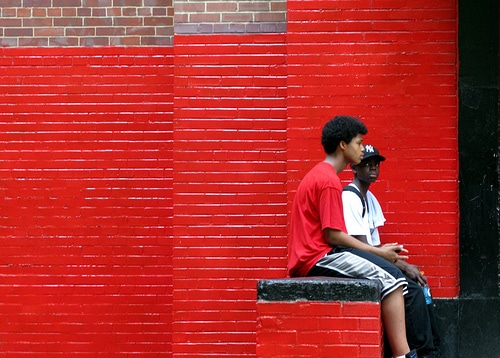
Red Boy, by Ingrid Spangler

Let's start with the order process and the website's ease of use. I'd look for a lab with plenty of storage for your images and the ability to share links directly back to your images. This is important because you want to be able to maintain your images for as long as your clients are going to want to order copies. This could be indefinitely! Lots of clients may come back a year or more after a wedding or portrait session to reorder prints for themselves or as gifts; you won't make a sale if their images have expired and/or are no longer available.

Try Before You Buy

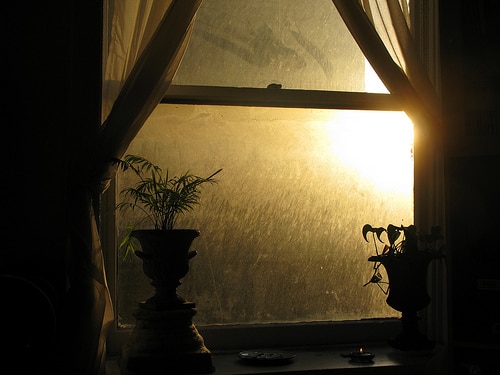
Window, by Ingrid Spangler

Does the lab offer test prints? This is important for a couple reasons. First, it allows you to experience the order process, if it's difficult or not user-friendly, now is the time to find out, not when you have sweaty palms and a deadline looming. Test prints will also allow you to gauge turnaround time and how well your potential lab keeps you informed of your order's progress. Do they let you know when your order has shipped? Do they provide tracking numbers, if applicable? Do they let you know in a timely manner if there is a problem with your order?

Your test order should also give you the chance to try out the various papers and processing options that the lab offers; compare what a glossy print versus a matte print looks like. Do they offer color corrections and how do those affect your images?

Will or can the lab print your studio name or copyright information on the back of the prints? How does this show up?

Control

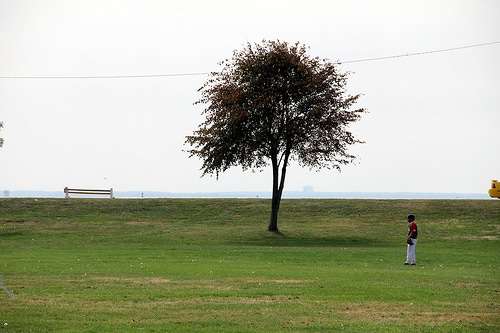
Tree and Baseball, by Ingrid Spangler

It's not just a Janet Jackson song. What kind of control does the lab give you over your images?

Cropping

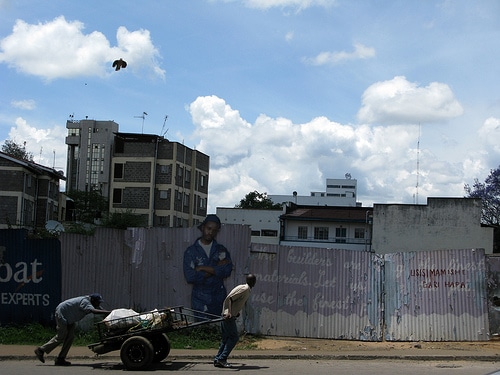
Nairobi Cart, by Ingrid Spangler

As you know, digital images are often in different proportion than many traditional print sizes. If the aspect ratio of the image file does not match that of the print size chosen, how does the lab deal with this discrepancy? Ideally, you should be able to control the cropping, if necessary, or at the very least see how the lab will print the images.

ICC Profiles

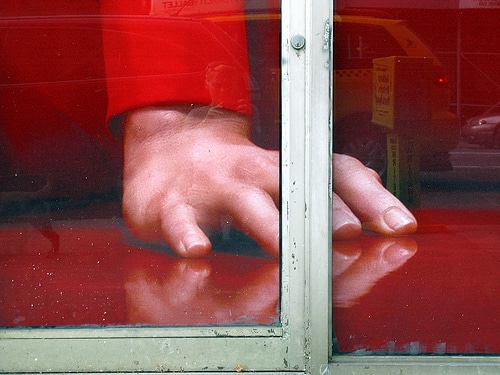
Red Hand In Window, by Ingrid Spangler

Does the lab offer ICC profiles? With a properly calibrated monitor, profiles allow you to soft-proof your photos and see your images the way the lab will print them. Profiles (along with a calibrated monitor) are the key component in maintaining the most control over color and what your final printed images will look like.

Auxillary Products

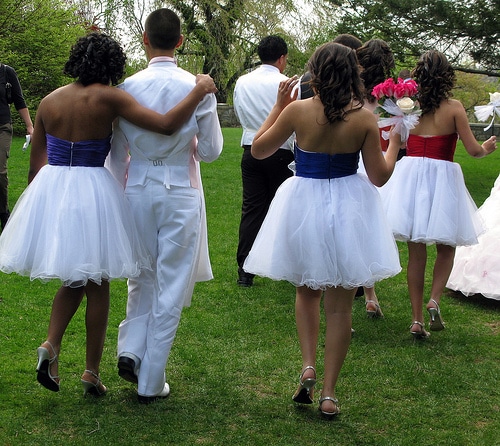
Sweet 16, by Ingrid Spangler

Can you do one stop shopping for prints, photobooks, canvases, etc?

Quality

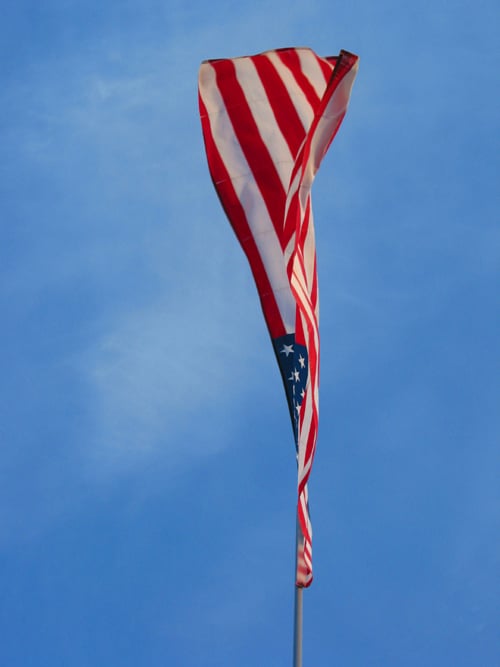
Nathan's Flag, by Ingrid Spangler

This is probably the most important thing to look for when shopping for a lab. What good are all these other options without quality materials and quality personnel producing your prints?

Are you familiar with the reputation of whatever brand of materials are used? If not, do you like the way the prints look and feel? Is there a good choice of different kinds of papers for different types of images? Do they print in-house or outsource? Is there some kind of quality control in place?

How is your potential lab's customer service structured? Can you get to a living, breathing person on the phone (or instant messenger, live chat, etc.) if you need to? If you have a question or if there is an issue with your order, how is it handled? Are the customer service agents knowledgeable? Ideally, they should work in the lab (not be outsourced), understand the workflow and know the products offered inside and out.

The bottom line is that your reputation is only as good as your photography and people will judge your photography mostly by the prints they see.

Your clients will see your images for a short time online or in print when they see proofs, but they'll live with them for a much longer time. Make sure they have good thoughts about you whenever they look at their prints by choosing a lab that does justice to your photography!

Get $10 in print credits when you sign up with AdoramaPix – http://www.adoramapix.com

Filed Under: Photo Biz, Photo Books, Photo Technology, Photography Tagged With: adorama, how to find, ingrid, ingrid spangler, lab prints, labs, online labs, photo sharing, Photography, photography lab, photography prints, print quality, printing, prints your pictures, spangler, to find your perfect photography printing lab

Photographer’s Conundrum: To Charge Or Not Charge

October 18, 2010 by Guest

Sean Low, AvatarThis is a guest blog by Sean Low, President of The Business of Being Creative which “provides practical business advice to those in the business of being creative.” You have got to follow Sean on Twitter.

Of all the issues confronting creative businesses, photographers included, pricing tops the list. Always. What to charge? How to charge? Can you charge? When to charge? If only there were a right answer. Unfortunately, there is not. However, there is definitely a wrong answer.

If you are not transparent and do not have a pricing model that supports your philosophy, you will go broke in a hurry. Why? You will never be able to create the trust with your client necessary for you to do your best (or even adequate) work. If you are trying to “bury” expenses and/or profit in a single number or “package”, your clients will sense it and will (rightfully) question your integrity. They will be waiting for the other shoe to drop, even if there is no shoe. So the better question to ask yourself is: have I communicated the value of my art and does the way I do things support that value.

You can earn a fair return if you a transparent with your pricing and your business model.

Fundamentally, photographers are in two businesses: 1) selling the act of creating the image; and 2) selling the products derived from the image (i.e., prints, albums, etc.). In a perfect world, a photographer would be able to make money on both businesses. However, in the digital age and with competition the way that it is, it is increasingly difficult to earn a fair return on your investment of time and energy in either business.

The pricing pressure on the act of creating the image has never been greater. You need only take a look at Groupon offerings by photographers to witness the price of creating an image approach zero. On the other hand, services like the Album Boutique make it very difficult to extract value from selling products associated with an image. Moreover, many clients are placing photographers in the very difficult position of having to give up control of their art and just turn over a CD of hi-res images. Just say no.

To move forward, you have to bring integrity to your process. You can earn a fair return if you a transparent with your pricing and your business model. You should be able to say to your client that this is what you need to create your images. If it means having a second or third shooter, then you should lay this out too. Despite what you might think, clients do know you are in business and have to pay things like rent, utilities, payroll, etc., so if you do tell them that you charge say fifty percent on your and your staff’s time they will probably accept it. Likewise, if you require a certain quality of album be purchased (it is the legacy of you and your art after all), they will likely accept that too. Again, you are entitled to earn a fair return on your investment of time and energy – enough to sustain your business. The key is to be transparent to what that is with your clients. Transparency builds trust and is really the only currency you trade in.

Ignore those that would compete with you solely on price. Focus on what you offer and why you do things the way you do. Be uncompromising when it comes to the integrity of your art and completely transparent in what it takes for you to create it. Your ultimate value has nothing to do with the price you charge and everything to do with how you communicate. Those clients who need (read: not just want) your vision will pay for it. It is up to you to move them from want to need.

It's your turn to sound-off. What are your challenges when presenting pricing to your clients? How do you approach pricing – is it transparent or do you make it difficult for your clients to get a good read on you and your business? What issues do you encounter when discussing pricing with your clients?

Filed Under: Photo Biz, Weddings Tagged With: Art, Business, business models, business transparency, charge, competition, conundrum, creating trust, creating value, Marketing, photographer, Photographers, photogrpahy, Pricing, pricing models, sean low, transparent, value, Wedding Photography

Control & Chaos: Two Genres Of Photography

October 5, 2010 by Guest

Paul GeroThis is a guest post by Paul Gero, a wedding photojournalist based in Orange County. Paul is also known for being a terrific writer, speaker and teacher. He, his wife Nicki and now two kids are wonderful people to know.

Having been in photography for a little while, I find that the work falls down into basically two approaches: Control and Chaos.

Doing Control type work is about setting up, posing, lighting and forging a bond that elicits the desired response.

Much of the commercial world and a lot of the wedding and portrait world is in that category of Control.

A few reasons why it might be so popular:

a) The desire to create an image that looks familiar (and with the web more images are shown and seen than ever before).

b) The desire to create an image that you know will be client pleasing and you know will sell.

c) A newer photographer with new found skills and less certain about capturing things “on the fly”.

The Chaos approach has been around for decades practiced by many of the greats including Henri Cartier-Bresson, Josef Koudelka, Larry Towell and others.

Many of the great photographers from the famed photo agency Magnum work in this manner. These are some of my favorites primarily because of the way the see the world, the moments they capture and the way they structure their photographs.

It’s a style that takes practice to master. It's about looking, watching, spending time in the field with a camera, and anticipating — it's not always reproducible, but it will always be interesting. Serendipity is a huge part of the equation of Chaos photography — that can be scary but also hugely rewarding.

It takes thinking about how you'll approach a situation from where you position yourself in relation to your subject, where they are in relation to the background and what focal length you'll use to make this type of photograph.

I recommend to my students is they watch people especially as they gather at a mall, for example. Notice how they stand, how they greet people (and cultures are different).

Then when watching those interactions think about where you would need to be to make a great photograph of that situation. What lens would you use? How far would you be from the subjects?

Selecting a spot to stand in relation to your subject in the Chaos realm is important. This location along with your focal length determines how much context will be revealed in the photograph. And typically you’ll want to see that subject’s face in order to capture emotion (the eyes reveal the soul, as they say). That often means being in front of or to the side of your subject.

When I worked in Washington DC and covered events with the President, it was interesting to watch how the Associated Press determined their coverage and would station a photographer front and center of the President. That was a safe angle, and often times the best angle.

They would position another photographer off to the side for most events — that 45 degree or called the “cut away” angle.

This angle adds depth to the photo as the subject to the right or left of the President would often be slightly out of focus (with a telephoto lens). It would be a good angle if the President was looking in the camera direction, and perhaps less successful if he were to look to the opposite side.

Selecting the angle behind your subject is a lower percentage choice, but can be useful as this position gives the viewer a sense of “walking into the sunset”, or leaving. That aspect makes it useful and can help creating a natural looking end to a story.

While observational skills and camera position are critical to successful Chaos photography so is being in control of your technical skills.

Knowing light, knowing exposure, knowing when to trust or not trust your meter all play into that role.

Many photographers use the auto modes on a modern camera to “set it and forget it” and while that can work and does in many cases, there are times when it can get you in trouble especially if you’re not paying attention to the choices made by the camera or get sloppy in where you meter and hold the exposure value.

When I choose my working settings, I start from selecting aperture first, in order to create the look and depth of field on the scene (especially using wide or normal lenses).

My shutter speed choice then coincides with a good exposure for that scene based on the ISO (typically using the lowest ISO for optimum quality while still being able to get the desired shutter speed). I also consider the amount of movement in a scene in order to select the appropriate shutter speed to stop the action.

Lens selection is critical for Chaos photography.

Much of what I call the inspirational photography in this genre is often made with simple focal lengths, either slightly wide or normal (i.e. 28mm, 35mm, 50mm lenses on 35mm cameras). Rarely do you see a lot of this work done with extreme wide angles and extreme telephotos.

These lens choices also force an intimacy with your subjects in terms of your position to them. It’s much tougher to hide when you’re using a wide or a normal focal length lens, as is possible when using long zooms or telephotos.

When you’ve become really disciplined using one, two or three focal lengths, you begin to see the world taking place on the stage for those lenses. You get comfortable framing with the the imaginary lines of those focal lengths.

Zooms are popular and can be useful tools, though I find that primes often help photographers hone their vision especially when learning. It forces you to move to frame, rather than zoom to frame.

I know for me when using zooms I have to be very disciplined to not just zoom out when I should be moving my feet to frame. In fact, I try to use the zoom like a prime and determine the focal length I want to use, set it on the zoom and then move to frame but not zoom unless I absolutely must (especially with a zoom such as the 24-70mm; less so with a long lens such as the 70-200mm).

Metering light which then translates to a great exposure is critical especially in fast-moving situations.

I find that using an old school incident meter is great in this area. It allows me to dial in the exposure so that helps exposure consistency from frame to frame. Even if you only use an external meter for a while as you learn the patterns of lighting, I think it can be extremely useful.

This gives you one less thing to think about because you’ll know that exposure is handled.

Look at the scene and anticipate what would happen if you change position or your subject’s change position. Think ahead and pre-visualize where the subjects might go can help you successfully handle any change in exposure.

I can’t stress it enough: Exposure is a critical component to successful photography — and especially digital photography.

To paraphrase my instructor, famed National Geographic photographer William Albert Allard: You have to get your exposure dialed in because you’d hate to lose a portfolio photograph due to a lousy exposure.

He was right when he told me (and we were shooting transparency film) as he is today if you’re shooting digital.

What I enjoy most about Chaos photography is that it’s more about capturing life as it happens, as opposed to having it set up by me. It takes more time for this to work, because you have to be able to witness things — having a five minute window with a subject often precludes that and reduces you to do Control work.

I find that life is so much more fascinating and people do much more interesting things than I could ever set up.

I loved to be surprised when looking through the lens and use that as a guide to know if I'm in the presence of an interesting photograph — if it moves me, excites me, or causes an emotional response in me while I'm photographing, it will usually translate in the actual photograph.

Perhaps folks who prefer Control photography are not certain that good or great photos will even materialize therefore they want to ensure that they do.

All I can say from years of experience is to trust that they will — if you have time. Wherever people gather there is a potential for great photographs. And you will often be surprised by the photographs these subjects give you.

The human element makes that happen. The energy from an event makes it happen. You just have to have faith that you’ll see those moments when they happen and using your skills acquired from practice and observation, you’ll be in the right place at the right time.

Knowing how to create nice Control images is a part of the modern photographer’s tool box, no doubt, but I think it should be a piece of the box, not the whole thing.

Practice your observational skills and your technical skills and be prepared to be surprised with the beautiful and incredible chaos that is life and then capture that feeling with your camera.

What kind of photography do you practice? Do you agree or disagree with Paul? Your comments below will create a dialogue that I will welcome here on Tiffinbox. So please take a moment to tell us what is on your mind. We're listening to you!

Filed Under: Photography Tagged With: aperture, camera, chaos, control, controlled chaos, controls, digital photography, exposure, focal length, genre, genres, optics, paul gero, photographer, Photographers, photographic lens, Photography, physics, science of photography, shutter speed, telephoto lens, wide angle lens

  • « Previous Page
  • 1
  • 2
  • 3
  • 4
  • 5
  • 6
  • …
  • 12
  • Next Page »

Subscribe To Tiffibox Treats!

Looking for a well-curated email newsletter that will leave you inspired and motivated about your photography business? Sign up below!

About Seshu

Seshu creates relaxed portraits of families and high school seniors in Avon, Connecticut. He also leads a successful headshot photography studio in Connecticut, helping professionals from a variety of disciplines project the very best versions of themselves. He created Tiffinbox as a way of inspiring photographers, to create better images and successful businesses. [Read More]

Email Templates For Headshot Photographers

Email Templates for Headshot Photographers

Recent Posts

  • How Capture One Changed My Event Photography
  • 10 Steps To Stay Positive In Times Of Great Stress
  • Why You Need To Read “Personal Branding For Photographers” Now
  • How To Master Your Website Content Step By Step?
  • Tony Taafe’s TNT Method For Headshot Photographers

Recent Comments

  • Stephen Davison on Are You A Business Owner Who Is Smart, But Stuck?
  • Ben A. on Don Giannatti Clinches The 8th Annual Tiffinbox Award
  • Dan on Don Giannatti Clinches The 8th Annual Tiffinbox Award
  • Donald Giannatti on Don Giannatti Clinches The 8th Annual Tiffinbox Award
  • Stephen Davison on G.E. Masana’s 6 Strategies For Wedding Photography Success
  • Naveen Kumar on Weddings In India Are More Than Being At The Right Place And At The Right Time
  • kartick on Weddings In India Are More Than Being At The Right Place And At The Right Time
  • Leonid Farbman on 6 Uncommon Trends To Grow Your Photography Business
  • Willow and Finch Wedding Photography on 11 Reception Tips To Help Your Wedding Photography
  • Web Designer Malaysia on How To Optimize Your Squarespace Website For Search Engines
  • Creastan on An Interview With Photojournalist G.M.B. Akash
  • Cindy Brown | Atlanta on An Open Letter To A Local Photographer

Become a Patron!

Copyright © 2026 · Tiffinbox · Site Design by Heather Mackan Creative · Built on Genesis