This guest post is by Dr. Dhiraj Kacker, CEO and co-founder of Canvera, an online digital photography company based in Bangalore, India. Dhiraj has numerous patents and publications to his name in the field of Digital Imaging. Dhiraj can be found online on twitter, his company blog or his personal blog.
With the advent of digital photography and the simultaneous rise of the Internet the entire photography landscape has been revamped in the last decade. This audience knows these changes quite well so I won’t dwell on all of them but rather I’ll focus my post on the technology and craft that goes behind a product that was spawned by this revolution: Photo Books.
I don’t know how many people actually sit back and think about it but it is quite remarkable that today we can actually get a single copy of a book printed at a reasonable price and turned around fairly fast. In the traditional book publishing world the economics just would not make sense unless there were at least say a 1000 copies of a book to be printed. There are many services that provide the ability to print one-off books:
a) Consumer grade photo books by companies such as Shutterfly, Snapfish, Kodakgallery
b) Self publishing service providers such as Blurb, Amazon etc. that focus on generic publishing not just photo content
c) High-end photobook and album manufacturers such as Graphistudio, Asuka, Queensberry etc. that provide a much richer variety in covers, papers, finishing and other customizations. These are the favorites with professional photographers because they best showcase the work of a pro.
Canvera falls in the last category and we have slowly but surely added more and more options as we engaged with more photographers and understood their needs. There is however a constant tension between how many options we can offer versus producing a high quality output and keeping fast turnaround times. What makes this difficult is that there are many different pieces that have to come together in an exact sequence without requiring any one person or set of people to keep track.
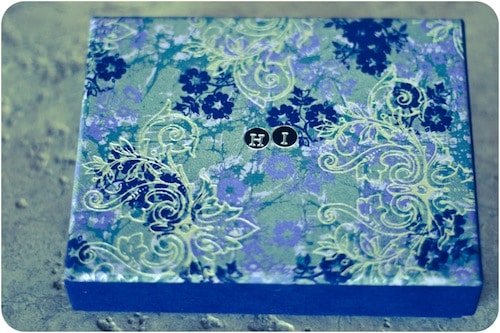
Take for example a flush mount book with a custom cover and a personalized box with pictures. The inside of the book is printed on a silver halide machine and bound. The cover and the box wrap are printed on a wide-format printer (in Canvera’s case). The cover goes for separate finishing and then through barcodes is matched at a separate station with the book block and then bound together. The same happens with the custom box. Now there are complications in the process: the silver halide printer and wide-format printer have to be producing the same colors at all times, we can’t afford to have anyone trying to match colors on a book by book basis; individual sheets may have to get re-printed for a variety of reasons; QA may reject the finishing of one of the pieces and that may have to get re-done and matched back with the remaining finished pieces.
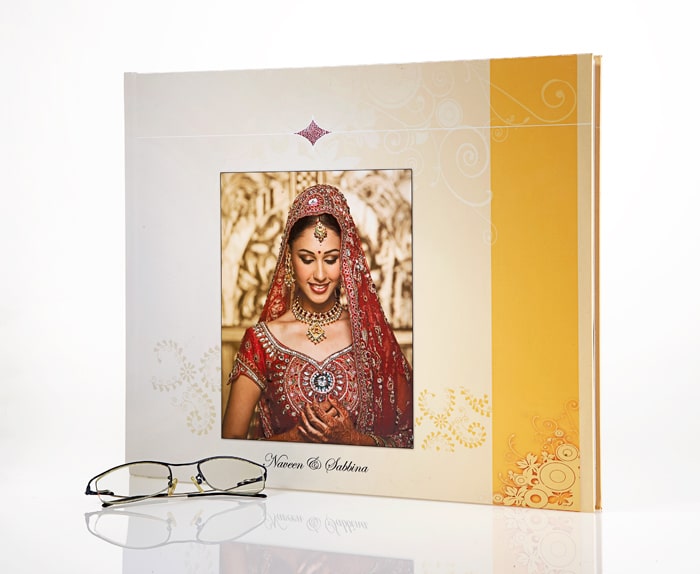
None of this is possible to do at scale without significant automation and technology. But adding options brings with it significant complexity as well. Even seemingly simple things such as adding more cover varieties, paper types or hot foil stamping fonts requires us to think through the full workflow: what equipment do we need, where will the raw materials be available on the production floor, how will quality analysis happen etc. We keep trying to push the envelope in adding choices (and at times have gotten burned!) but it is a balancing act.
At Canvera our driving philosophy behind everything we do is as follows:
a) 80% of what makes a good photo book or album is the photography! No matter how many digital photography touch-up tools have been created and how many effects one can do, the pressure on a pro to produce great pictures is as high as ever. In fact I’d argue that with an explosion in images fueled by the web and multitude of capture devices, consumers have subconsciously developed a greater appreciation of what makes a good picture.
b) Fast turnaround time matters a lot. Take the case of wedding photography: For the bride and groom 90% perfect pictures and album received within 10-15 days of the occasion are much more valuable than the absolute perfect set received 6 months after the event. At Canvera therefore, once we get an order we try to put it in the mail within 48 hrs.
c) Quality of printed products should be high and predictable. It is not good enough that the samples are great, but every single product produced every single time without requiring any special treatment should be produced at high quality.
With these driving principles, we focus more on turn-around-time and end-to-end workflow to ensure speed and quality while hopefully letting the photography do most of the talking. This does not mean that we don’t keep adding options, but we do try and think through the full implications first.
Here are things for you to consider when choosing a photo book or album company (beyond of course liking the samples):
1) What kind of front end tools (web or client based) do they provide to capture the order correctly? If there is complexity of choices in the order that the front end tools are not capturing and you are sending instructions over email/phone, chances are that mistakes will happen..
2) As the company grows, do they have processes in place to maintain their turn-around-times and quality at high volumes or are they better off as a low volume hand-made producer?
3) Do the variety of options on the books and albums lend themselves to more mistakes? Is the company ready to handle that much complexity?
4) What kind of color consistency is there in their production work flow?

As I said earlier, at Canvera we are taking the approach that first and foremost the photographs should do the talking. That’s key. And we as the photo book and album manufacturers should get out of the way by quickly turning around a high quality product with the right colors morning, evening or night, even if it means in the short term compromising a little on the variety we offer.
What do you think? How do you pick your photo book and album company? Do you agree/disagree with this thinking?