• Photography
  • Interviews
  • Business
  • Reviews

Tiffinbox

Inspiring Photographers

  • Home
  • About
  • Blog
  • Contact

Finding Your Butterflies … Again!

March 16, 2012 by Amanda Reseburg

Amanda Reseburg is a wedding and portrait photographer from Beloit, WI. When she's not photographing for clients she's hanging out with her kids, shooting for fun and blogging incessantly. In the spirit of personal passions, Amanda started Kindred Spirits Hospice Photography in 2009. Follow her on Facebook and on Twitter.

Starting a career in photography is a lot like dating.

In the beginning, the passion is ignited and you want to be with photography ALL. THE. TIME. Your camera is your constant companion and you will photograph anything that moves. You love photography. Photography loves you. It gives you butterflies. You will be together forever.

As you become more serious with photography, you begin to settle into a typical routine. Sure, you still love photography, but the passion has waned a bit. You have regular clients. Regular shoots. Regular poses. It’s all very comfortable. All very regular.

There may come a time when you become SO comfortable with your long-term love Photography that you start to hate the very sight of it. Everything your camera does starts to bug you and you just want some time to THINK … ok, maybe not … but, much like dating, if you don’t feed your relationship with photography … it will die. Those butterflies you felt in the beginning will go away, and what you’ll be left with is a JOB. Yes, I maintain that even at its most hectic I have the best job in the world. But, that doesn’t mean my passion for the craft couldn’t use a little pick-me-up.

Enter personal projects. Diving into personal work is a way to not only practice newly learned skills, but it’s the best way to really enjoy your craft again. With personal work, the rules fade away for the most part. You are shooting for yourself and yourself only. There are no clients to please and no deadlines to meet.

Last summer I started a personal project based on my love of turn-of-the-century children’s portraiture. I wanted to tap into what I call the natural “creepiness” of kids. It was a departure from what my portrait clients typically ask for, but it was FOR me, no one else. The project morphed into what people started calling “Creepy Kids.” It was met with mixed reviews. Some people LOVED the darker take on children’s portraits. Some people thought I had made the precious children look dead or evil. But, I was satisfied in the end that I had created something that I liked and in the process learned something new about my aesthetic.

[blogshow id=9ca3 player=1 autoplay=0 toolbar=1]

Tapping into a darker, moodier feel to my portraits changed my outlook on my regular client-based work. In that sense, stepping outside of my “9-to-5” to shoot just for me really changed my work as a whole. I could have continued shooting what easily sells, but I wonder how long I could continue to do that before I reached maximum burnout.

I challenge all working photographers to take time out to shoot for you. Reclaim your passion, embrace what others may find strange, and find those butterflies again.

Are you working on a personal project that you would like to share with other photographers? Tiffinbox welcomes your submission. Simply contact me if you are interested in guest blogging.

Filed Under: Call To Action, Photography Tagged With: amanda reseburg, avoiding burnout, beloit, butterflies, fashion photographers, finding, human interest, personal, personal photo, personal photos, personal projects, photographer, Photography, portrait photographers, projects, pursue, Twitter, visual arts

Woot Camera To The Rescue

October 25, 2010 by Guest

Jen May PastoresThis guest blog is a second for Jen May Pastores. Her first post was about her Cambodian photo project.

Beyond the online sphere of social media, smart phone efficiency, and the praise of technological advances that the world goes gaga for there is still an unfulfilled satisfaction that plagues many of us. It’s a real desire for a true connection without the abbreviations or vagueness that often travels through digital walls. Symptoms of this desire starts with often checking emails for replies, scanning Twitter for mentions, and counting likes and comments on Facebook. This is where Woot Camera intervenes to present a pleasant breakaway from the modern day overload.

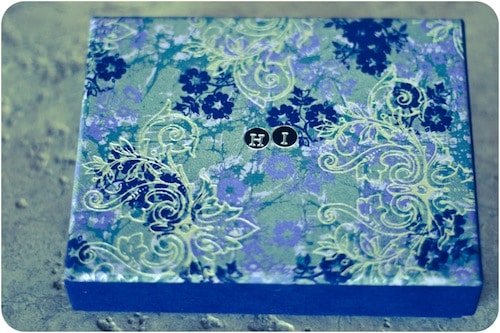
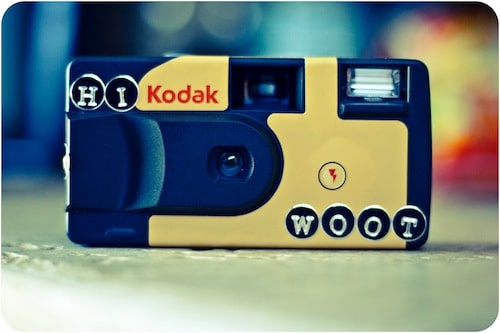
Woot Camera is a personal project that sends a disposable camera to strangers across the world. It arrives in a purple box in the mail–sent from the previous photographer–and when opened a personal handwritten note sits on top to greet the new photographer. Included are instructions to take a single, creative image with the Woot Camera and then send it off to the next person. When completed the camera returns to me and the exposures will be developed and shared online. It’s a fun example of balancing the intimate joys of a tangible connection and sharing it with the multitude of users on the Internet.

Woot Camera Project

Woot Camera Project

Woot Camera Project

All participants signed up last month when I first released the project and since then Woot Camera has traveled to five cities on the east coast. Other places like Canada, Dubai, Japan and more cities in the states are on the itinerary, as well. Participants have expressed excitement in sharing this experience and are eager to see the results. Who wouldn’t enjoy discovering a package in the mailbox in front of their home that encourages creativity and new friendship?

Woot Camera will continue to rescue the dissatisfied, gadget-addicted-junkies with a second round of participants starting before the holidays. The best part about this is that anyone can start their own traveling camera project. Tie a disposable camera around a tree or leave one on the subway. The possibilities start with you giving back in a unique way. Photojojo, an online source of the best photo tips and DIY projects around, is also another great place to discover fun ideas.

Follow Woot Camera’s journey on Twitter (@wootcamera) or sign-up to be a part of the project.

Filed Under: Personal, Photo Projects, Photography Tagged With: camera, cameras, communication, disposable camera, disposable cameras, internet culture, Jen May Pastores, mass media, personal, photo projects, projects, publishing, smart phones, strangers, woot

How To Use Kickstarter To Fund Your Photo Projects?

September 13, 2010 by Guest

Robb Hill, AvatarThis guest post is by Robb Hill. Read his first post on Tiffinbox: “Homelands: A Documentary Project in Southern Indiana.” He is a Maryland-based documentary photographer. Connect with him on Twitter.

A few weeks ago I was here writing about a project I have on Kickstarter.com. Seshu and I have known each other since college and as a long time follower of his, this, blog I thought posting on it would be a good way to get the word out about my project. Now that the fund raising window has closed on my Kickstarter project (I was able to raise more than my goal!!) we thought it a good idea to write about my experience, hopefully for the benefit for all.

I had never heard of Kickstarter.com until a friend and fellow photographer, Nelson Chan, told me about it a few months ago. Nelson has watched me struggle with HomeLands over the years and has been supportive. He thought Kickstarter and my project would be good fit.

The first photos I took for HomeLands was back in March of 2005. When I began I lived in Chicago and my business was doing well. Which meant I had the time and money to get down to Southern Indiana to work. Now I live in Sliver Spring, Maryland and it has been a struggle the last two years to keep my head above water. As much as I wanted to return to Indiana to photograph, my priority had to be financial stability.

Since starting HomeLands I have applied to 15 different grants and received none. For a previous project I won three grants and felt confident about my understanding of the grant writing/application process. Now, for whatever reason, I was getting no traction in the grant world. Trying to secure funding via Kickstarter seemed like a good idea.

After reading all the FAQ and application pages I submitted a proposal. The first piece of advice I have is edit, edit, edit. The initial proposal to Kickstarter is only 1500 characters. Yes, that’s characters not words. It is very important to write as concisely as possible. I don’t think Kickstarter is looking for a certain kind of project, if you look around on the website you’ll see a wide range of projects. What I think they are looking for is clarity of thought in the proposal and uniqueness of project. But I don’t know for sure.

If you are accepted – I am curious to see what they turn down – you next have to create your Kickstarter page. This is a longer written proposal, video, and whatever else you can get on a web page. Here is where you have to start selling your project.

For my video I decided to use still images, music, and voice-over. I did not want to be on camera because, although I was looking for support, I wanted people viewing the video to think of the project not me. For me this is key. Get people interested in what you’re doing not yourself. This may be obvious but the tone and feel the video should match the tone and feel of your project.

For the written portion Kickstarter recommends not only describing your project but explaining how you plain to spend the money you raise. I didn’t publish a specific budget but did generally explain how I plain to use the money. It could be helpful to be very specific about your expenses but for my project I didn’t see it as necessary.

Even if you don’t publish a budget it’s very important to create one because it’s completely up to you to set the dollar amount you want to raise. I set my goal at $7,000, an ambitious amount but not overly so. I examined budgets from various grants proposals I’d written and calculated a comfortable amount of money that would allow me to work unrestricted. By unrestricted I mean I will be able to cover materials like, film (yes, I’m shooting my project on film), processing (doing it myself), scanning, flights, etc. as well as meet my financial obligations at home while I’m away photographing. The only real advice I have about the budget is; be thorough and honest about your costs. And don’t be afraid of the total.

Look around on Kickstarter and you’ll see people who successfully raised far more and far less money than I did. Kickstarter is very up front about the fact they are an all or nothing proposition. This means if you don’t meet your dollar goal, you don’t get any of it. Which I think makes sense because it forces two things to happen. The first is, as I alluded to above, artists are forced to really think about what they need financially to do their project. The second is, it makes the larger public aware of how expensive the creation of art can be.

There is no cost to post your project on Kickstarter. But, and Kickstarter is very upfront about this, they take 5% of your goal as their fee, but only if you reach your goal. This is completely reasonable. Also be aware Kickstarter uses Amazon Payments as their money handler and Amazon takes 4.5% as their fee. This is also clearly stated but was a little harder to find. If you need a very specific amount for things like, studio rental, printing, etc., make sure you factor in the 10% you’ll loose in fees.

Then you need to set how long the pledge window will be open. The FAQ’s have much to say about this. But it boils down to this; the maximum length of time to pledge to a project is 90 days and longer isn’t necessarily better. I set my window at 45 days.

Once I had my project page ready I nervously hit the Launch Project button.

After the Launch Project button is hit you are far from done. Now it’s very important to do the one thing almost every artist I know is horrible at, selling yourself. While people do search Kickstarter for projects that interest them, you cannot rely on Kickstarter alone to raise your funds. I can’t stress this enough, it’s very very very very very very very important for you to get the word out about your project.

Immediately after hitting the launch button I posted a link on Facebook and sent emails to damn near everyone in my contact list. In the first week a good number of people, mostly family and friends, pledged to my project. Also, many people reposted my link on their Facebook page, some I asked, and some just did.

As the dollar amount in the pledged column increased that first week I was pretty happy about how the fund raising was going. When the first complete stranger pledged to my project I suddenly felt the power of Kickstarter. Here was someone I don’t know who pledged $250. I was very touched. With this person’s pledge I felt I could reach my goal.

Then it was time to get the word out even farther. I asked Seshu if I could post about it on his blog. I asked an old high school friend who is a booster for our hometown to talk up my project on his website. I have close connections to the digital media staff at NPR and they were kind enough to feature my project on the NPR Picture Show blog, with links to my site and Kickstarter page.

With all that attention I didn’t see the amount of pledges I thought I would. Because of my personal real estate situation I am very aware of how bad the economy is. But bad economy or no, I had to keep putting the word out. I then started trying to get posted on other photography oriented websites. Most sites I contacted posted a link. But I still wasn’t seeing much of an increase in pledges. This was partly because in today’s world asking photographers for money is like expecting Bob Cratchit to come up with the Christmas goose by himself. It’s not that we aren’t a supportive, generous bunch; it’s just that the industry as a whole is in a tough way.

As the days passed there was little movement towards my goal. With two weeks left I was less than half way to my goal. I talked to my sister, a professional grant writer, about things I could do. Her advice to me was very simple. “The only way to get people to give you money is to ask.”

With just over a week left I started a direct email campaign. I went through my Facebook friends and wrote a personal email to everyone I thought would donate to my project. Like everyone, I have Facebook friends who I’ve not actually spoken with in twenty years. But I really wanted to make my goal and I didn’t let that stop me from asking for donations.

It worked. Pledges started coming in immediately. Also, something of the ebay effect happened, meaning strangers also pledged to my project in the last few days. With 72 hours left I had done all that I could think of, the only thing to do now was wait and see what happened.

With 48 hours left checked the total before going to bed and notice it had gone down. Someone, who I don’t know, reduced his pledge from $250 to $5. Kickstarter allows people to reduce or cancel their pledge. Here is what they’ve written about it on the website, “By pledging, you are committing to supporting that person’s project; canceling that commitment is discouraged.” But it does happen and I went to bed crestfallen.

For some reason at 4:30 the next morning I was awake. I read for a little while and decided to check the status of my project. It was $7,131 dollars. I rolled over and told my wife the good news. But knowing that people could reduce or cancel their pledges I didn’t allow myself to celebrate until Kickstarter told me it was over.

In the end I had 110 backers, 24 of whom are total strangers to me. Two weeks earlier I felt there was no way I was going to reach my goal. But by taking the bull by the horns and asking people to help me, I raised $7,326.

I was happier than I’ve been in a long time.

Kickstarter encourages you update backers about your project. Which can be done from you project page. Here is the last paragraph of a thank you letter I posted on my blog:

Even in good economic times it’s hard for artists to find the money that allows us to create. Watching the number in the pledged column on my Kickstarter page grow was exciting, gratifying, and very moving. I am incredibly thankful and honored that so many of you out there respect me and or my work enough to donate to my project. Last Sunday when the pledge window closed with my goal being exceeded I was happy beyond measure. I feel a responsibility that goes beyond making good work. I feel responsible to the 110 of you who helped me be the artist I want to be. Thank you for giving 105%.

Are you inspired to use services like Kickstarter? Comment below to tell us about your efforts to raise money for your photography project.

Filed Under: Contests & Grants, Photography Tagged With: documentary photographers, documentary photography, fund, fund raising, funding, grant writing, how to use, human interest, kickstarter, projects, raising funds, secure funding, write proposal

Subscribe To Tiffibox Treats!

Looking for a well-curated email newsletter that will leave you inspired and motivated about your photography business? Sign up below!

About Seshu

Seshu creates relaxed portraits of families and high school seniors in Avon, Connecticut. He also leads a successful headshot photography studio in Connecticut, helping professionals from a variety of disciplines project the very best versions of themselves. He created Tiffinbox as a way of inspiring photographers, to create better images and successful businesses. [Read More]

Email Templates For Headshot Photographers

Email Templates for Headshot Photographers

Recent Posts

  • How Capture One Changed My Event Photography
  • 10 Steps To Stay Positive In Times Of Great Stress
  • Why You Need To Read “Personal Branding For Photographers” Now
  • How To Master Your Website Content Step By Step?
  • Tony Taafe’s TNT Method For Headshot Photographers

Recent Comments

  • Stephen Davison on Are You A Business Owner Who Is Smart, But Stuck?
  • Ben A. on Don Giannatti Clinches The 8th Annual Tiffinbox Award
  • Dan on Don Giannatti Clinches The 8th Annual Tiffinbox Award
  • Donald Giannatti on Don Giannatti Clinches The 8th Annual Tiffinbox Award
  • Stephen Davison on G.E. Masana’s 6 Strategies For Wedding Photography Success
  • Naveen Kumar on Weddings In India Are More Than Being At The Right Place And At The Right Time
  • kartick on Weddings In India Are More Than Being At The Right Place And At The Right Time
  • Leonid Farbman on 6 Uncommon Trends To Grow Your Photography Business
  • Willow and Finch Wedding Photography on 11 Reception Tips To Help Your Wedding Photography
  • Web Designer Malaysia on How To Optimize Your Squarespace Website For Search Engines
  • Creastan on An Interview With Photojournalist G.M.B. Akash
  • Cindy Brown | Atlanta on An Open Letter To A Local Photographer

Become a Patron!

Copyright © 2026 · Tiffinbox · Site Design by Heather Mackan Creative · Built on Genesis