• Photography
  • Interviews
  • Business
  • Reviews

Tiffinbox

Inspiring Photographers

  • Home
  • About
  • Blog
  • Contact

Interview With Documentary Photographer, Mahesh Shantaram

October 24, 2014 by Seshu | Editor & Publisher

We've all heard stories of hardcore career photojournalists now-a-days shooting weddings to keep their heads above water. But Mahesh Shantaram, an already established Indian wedding photographer based in Bangalore, did exactly the opposite. Known best for bringing his quirky sense of humour to how weddings are portrayed in India, Mahesh recently made a transition into political photography on the back of the recent Indian general elections. His work as a documentary photographer has been seen around the world lately, thanks in part to the New York Times Magazine. In fact, I caught up with him just as he's preparing to show his work in Paris, Addis Ababa, and Dhaka over the next three months.
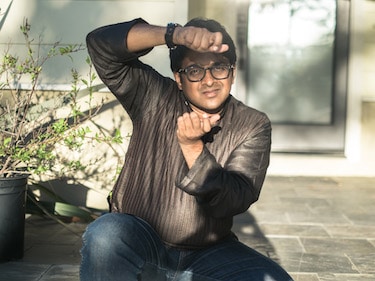
Mahesh Shantaram, Documentary Wedding Photographer In India1) Mahesh, tell us a little bit about your start in photography. Why photography? What drew you to this medium?

Back in 2005, I was enslaved in a cubicle four blocks away from the White House. It was the lowest point in my life. I was desperately looking for a lifeline to creative rejuvenation. That's when providence struck me. At an art exhibition in Providence, RI, I chanced upon a particular work that was almost prophetic with its message. It happened to be Annu Matthew's, An Indian from India. For it, that was the moment of realization of how photography could be more than mere documentation of events, it's qualities as a medium of expression, and how identity can be both a reason and a subject of one's photographic practice. Within two months, I had quit my job and was in Paris to pursue a full-time diploma in photography.

2) You spent several years making a name for yourself as a wedding photographer. Not an easy feat in India where cultural demands can pigeonhole a man easily. Why weddings? And what about weddings commanded your attention?

We're talking 2006 now. When my wife and I were getting settled into our new home in Bangalore, we stumbled upon our wedding album. It came a jarring shock to my recently shaped perspectives on what sentiments photography should evoke. Traditional wedding photographers were generally seen as insensitive louts serving patriarchal needs at a wedding. They were totally out of touch with the expectations of the modern Indian couple. Ivy League educated, well-traveled, living abroad but Indian at heart–and now coming home to the prospect of having their dream weddings covered by the traditional guy. I became the solution to this problem just as I was looking for something to do in photojournalism and documentary.

3) Let's talk about your current foray into editorial work. I know you have shot for the NY Times Magazine and recently traversed the country during the national elections. Again, I am curious about your motivation. What did you sense about the elections that made you pursue politicians and their rallies all across the land?

The New York Times Magazine stumbled upon my work on my gallery's website. I've shot three assignments with them since then. It's such a motivational kick to work with a legendary photo department who actively seek out and hand opportunities to new talent.

The elections work was a purely personal project that sprung from a very deep place, but it started out as an editorial assignment for the Financial Times. Their correspondent was working on a story about corporate honchos making a bid for a seat in Parliament. That's how I get to shoot the Nandan Nilekani campaign–the 2014 elections' wealthiest candidate. There was this one picture (which the FT was bold enough to use as their cover) that gave me the confidence that I was on to something and that I should shoot the rest of the elections on my own terms.

4) Your series of images called, “The Last Days of Manmohan” appear both humorous and whimsical. Is your approach to photography intentionally so? Are you attempting to draw humor out of what is or could be a difficult situation for millions of people? Are you giving us permission to laugh at ourselves?

I find a lot of my inspiration in standup comedy. Jerry Seinfeld, Russel Peters, and Louis CK are my heroes. I love how these guys take an everyday situation and illuminate with their perspective so that it then becomes a critique of society. And hey, it's funny as hell and we're laughing away, forgetting that we're actually laughing at ourselves. I think this quality of standup comedy to combine humour and critique is worth emulating in documentary photography.
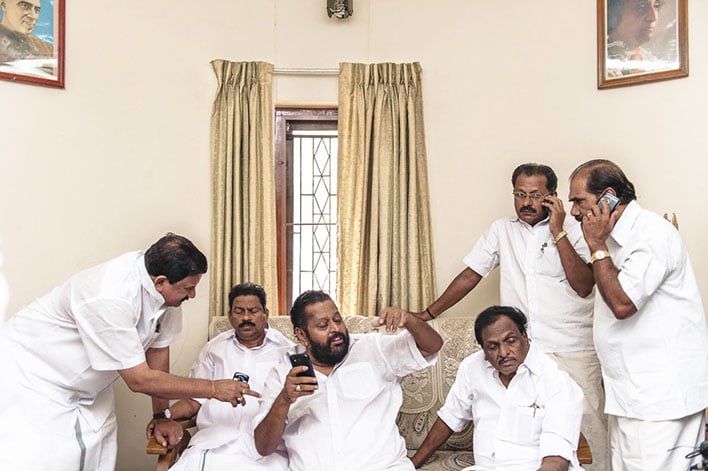
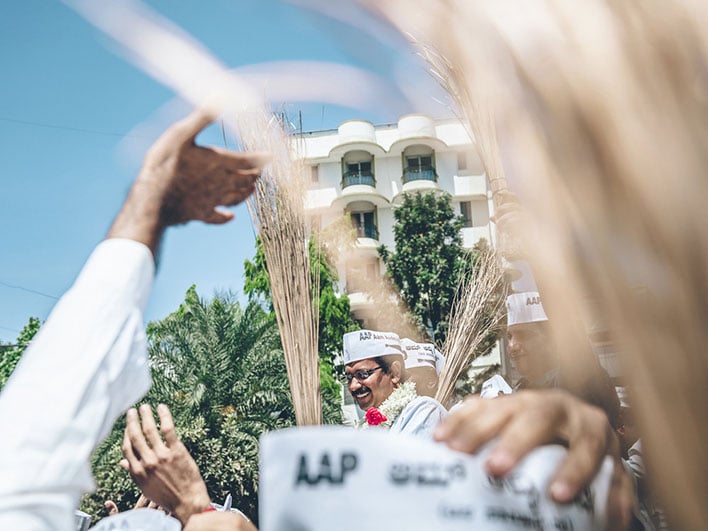
The Last Days of Manmohan - Mahesh Shantaram

The Last Days of Manmohan - Mahesh Shantaram

5) You and your wife have actively collected photography books – I am totally envious of your collection by the way – which 3 books would you simply not part with and why?

They would be books with personal stories. I absolutely love Will They Sing Like Raindrops or Leave Me Thirsty by Max Pinckers. Max and his girlfriend Victoria (whom I equally credit for the work) came home one evening and left the dummy on my table. I sat through the night pouring over the book and by morning, I was its greatest fan. It's a book about a topic that's close to my heart – about love and the freedom to love and how grave is the threat to both.

Then there's Paul Gaffney's We Make the Path by Walking. I bumped into Paul at the Belfast Photo Festival in 2011. Later when he published his book, I was happy to recall our wonderful conversations and wanted to keep it as a memory. Not everybody gets minimalist photo books right. Paul did.

Lastly, I'll fight to keep anything by Alec Soth. I love Niagara, and Broken Manual is special because I acquired one from a collector as a present for Vidya on our hundredth anniversary or something.

6) You are also known to open your house to strangers who are interested in peering through your collection. How did you spring upon that idea and how has that been received by the public? Was that a way to get your name known? If so, bloody clever!

The implied threat of opening our house to strangers never occurred to us until a journalist used that as her opening line in a story about us. That certainly got my mother worried. Our idea was to simply share our growing library with those who cared enough and to spread the love for photobooks in Bangalore. I'm reminded of that Irving Stone quote: “There are no faster or firmer friendships than those formed between people who love the same books.” The Open House Photobook Library also serves great coffee, by the way. Some people come for the books and go away with renewed appreciation for traditional south Indian filter coffee.
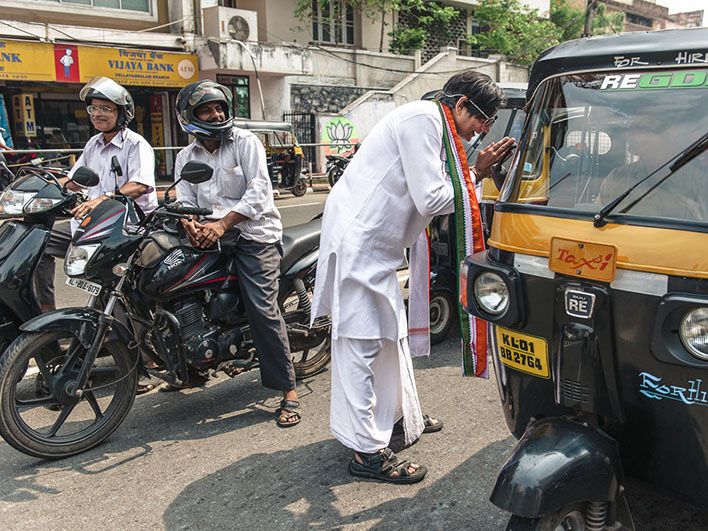
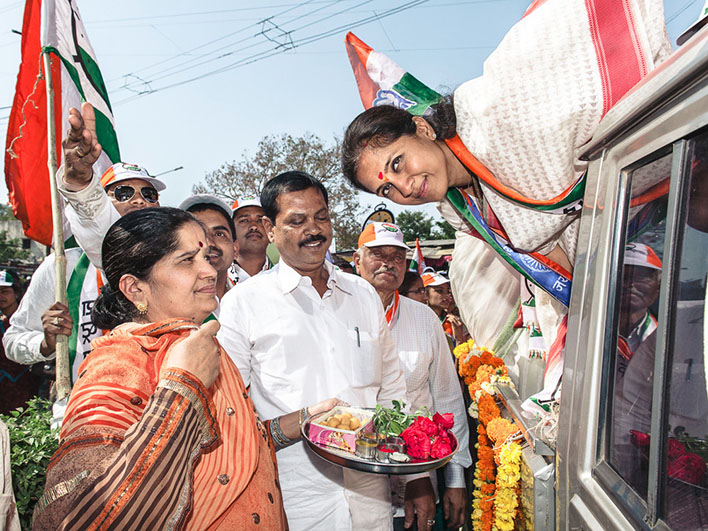
The Last Days of Manmohan - Mahesh Shantaram

The Last Days of Manmohan - Mahesh Shantaram

7) Now that the elections are over and you have a body of work that sings, are you going to remain an editorial photographer or are you heading back to photograph weddings in India and abroad again?

So much of what passes as political photography in India comes from the news media. It merely corroborates that an event X happened at location Y with leader Z in attendance, exactly as the caption reads. During these recent general elections, there was a surge in independent work, but sadly, most of it was the “hey look who I got to hang out with!” kind and lacked voice or acumen.

The politics of India is a large and complex system that has many layers to peel and penetrate. Politicians seem like mythical gods but they are human beings with weaknesses. I don't want to limit my work to being just about Elections 2014. By revisiting the electoral process through many more elections to come, I'm hoping to gain and share valuable insight into the nuts and bolts of Indian democracy, probe the relationship between politicians and the people, and construct a pan-Indian picture of our political landscape.
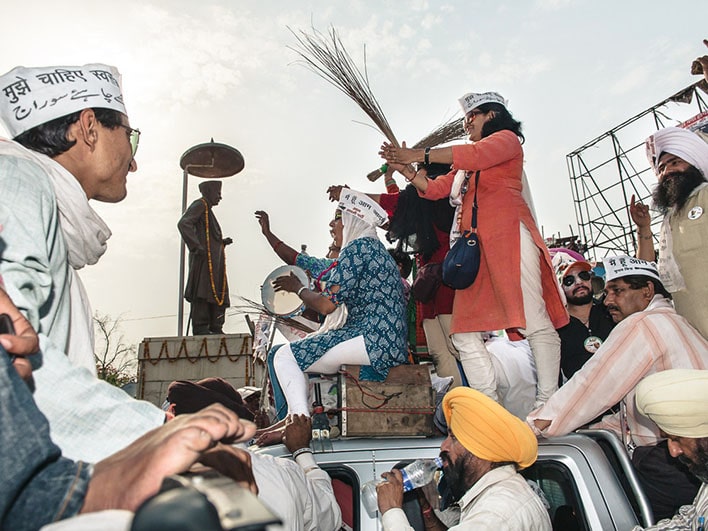
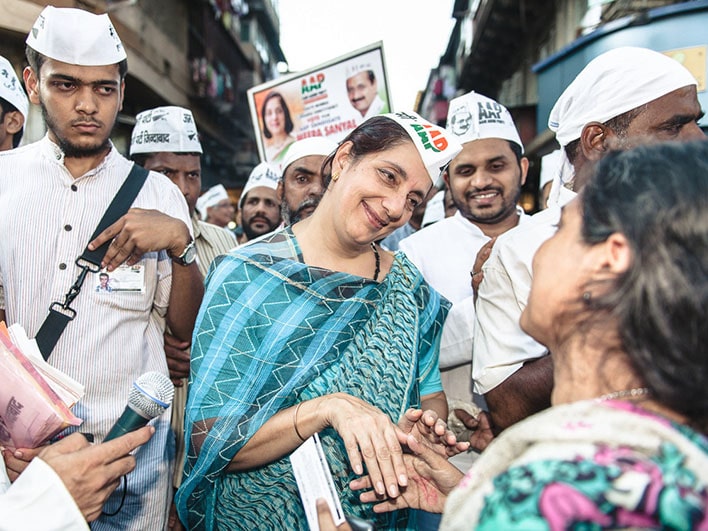
The Last Days of Manmohan - Mahesh Shantaram

Last Days of Manmohan - Mahesh Shantaram

8) Let's talk about your ascendency in the photo world, at least in the Indian subcontinent (I know you are known around the world now too). How has that been received? Do you see yourself as being a part of the “new guard”?

I don't know if I'm part of any “new guard” as much as I'm against the “old guard”. I'm not afraid to take a stand against old ways of holding up bastions of privilege and new ways of suppressing personal freedom, creativity, and independent thinking. I guess this general attitude has defined my public identity and influences what I produce as a photographer.

9) There are more photographers in India now than ever before. How do you plan on staying relevant? What are your plans to stand out among that crowd?

My formula to stay relevant is to keep abreast of what's happening in the world around me and be sensitive to what provokes me to respond. That response will be through my photography because it is all I know to do.

10) Now that you have a great amount of experience, how are you looking to pass that on to the next wave of eager photographers?

In the same way that so many truly great photographers passed on their experience to me – by constantly putting quality work out there.
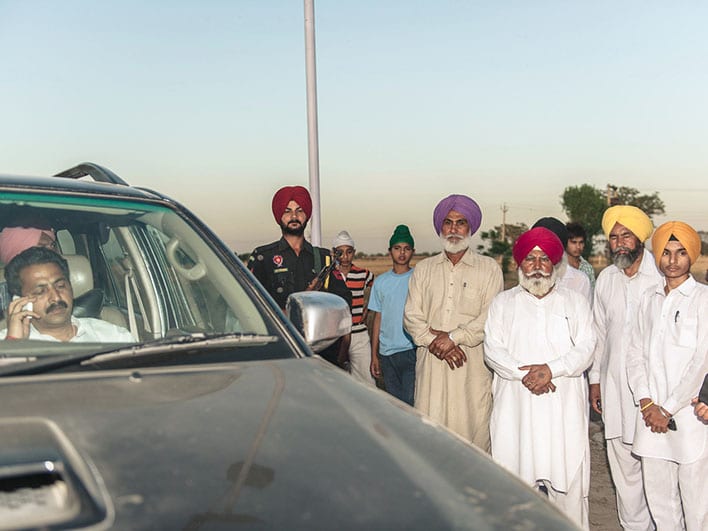
The Last Days of Manmohan - Mahesh Shantaram

11) Going back to your series, “The Last Days of Manmohan” (which refers to the last waning days of a beleaguered Indian Prime Minister, Dr. Manmohan Singh), do you believe you have created a document, a work of art or something in-between? How useful do you believe these images will be in the future?

When I set out on a backpacking trip across the country to bear witness to those historical elections, my intention was to document the politics of our times in all its rawness. Only time will tell whether this series will be valued as historical documents. But there is a method to how any work is launched into orbit. I will be shooting more to expand the scope of the work, take it to new audiences (via exhibitions and contests, for example), and edit and re-edit until my eyes pop out. That's how work is strengthened over time. A serious photographer's responsibility to his or her work has barely begun once the shooting is done.
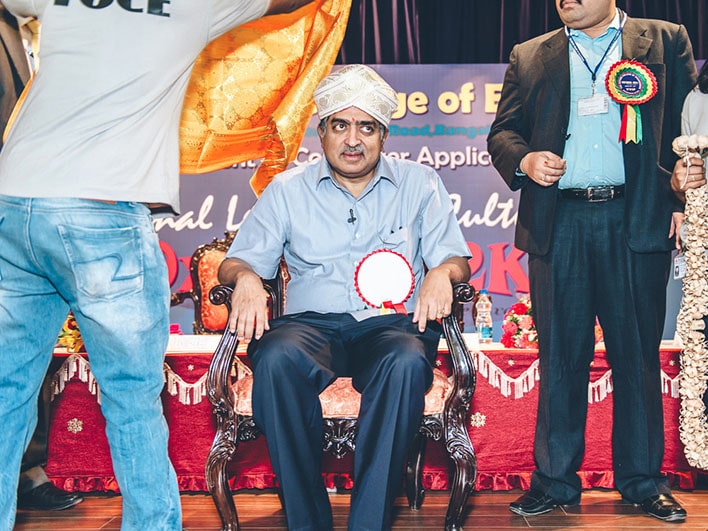
The Last Days of Manmohan - Mahesh Shantaram

12) There is one frame that I love (image above) – the one of Nandan Nilekeni – where he looks so unsure of himself. In US terms, that would be the time when Nixon was wiping away his sweat during the first televised Presidential debate against JFK. It has that sort of weight to it. Tell us a little about how you came to make that image? Were you reading his body language the whole time? Did you expect that moment when a politician is felicitated with a shawl and just happened to capture him?

Seshu, I'm sure you know this ritual in south Indian Brahmin weddings called the “kaashi yatra” in which the bridegroom is packed off and sent to Kashi to lead the life of an ascetic. It's a mock ritual, of course, but the guy is never really prepared for the absurdity of it. The fun of photographing a kaashi yatra is not to merely prove that it happened, but to be able to preserve the groom's awkwardness for posterity.

I could smell a kaashi yatra moment when the very corporate Mr. Nilekani was about to receive an Indian style felicitation.

13) What motivates you to make images? Why is it important for you to create them? Who are they for – you or the general public?

I absolutely love photography's unique and mysterious expressive qualities, the kind that Stephen Shore describes as “visual thinking that does not require any words”. I love how photography gives me free pass to interesting places and situations where my presence would otherwise be hard to justify. I love the image collecting experience of a long-term project that gives me ample time poke at complex questions in life. It is at once a luxury, privilege, and sacred duty to be a photographer. I love it. I'm happy to serve others through my photography, as long as I'm the one with the first-hand experience.
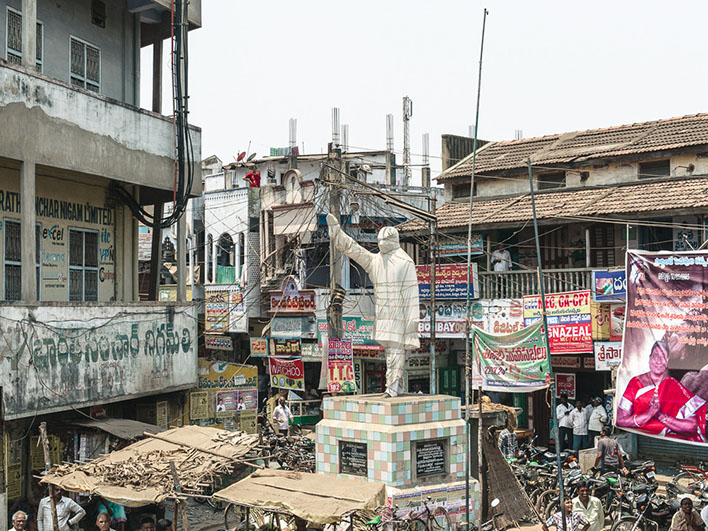
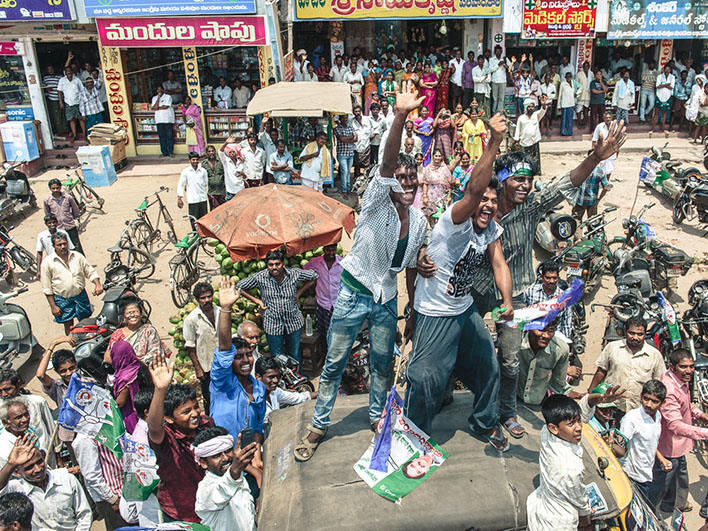
The Last Days of Manmohan - Mahesh Shantaram

The Last Days of Manmohan - Mahesh Shantaram

Filed Under: Documentary, Home Middle Left, Interviews, Photography Tagged With: documentaries, Documentary Photographer, documentary photography, documentary wedding photographer, wedding photographer

An Interview With Documentary Photographer Darren Baldwin

May 26, 2013 by Seshu | Editor & Publisher

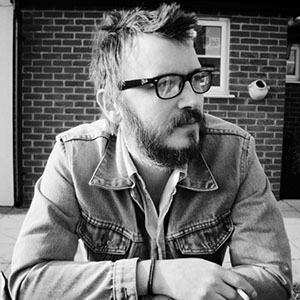
Thanks to my previous interviews with documentary photographers Jim Mortram and Brant Slomovic, I “met” Darren Baldwin, a documentary photographer based in Brighton, United Kingdom. In addition to being a documentary photographer, he is a pediatric nurse and a design director for a few websites. Follow Darren on Twitter: @BWDdrj

Darren Baldwin | Documentary Photographer

1) So, tell us a little about how you got your start in documentary photography. Is it an off-shoot from being a street photographer? What draws you to this particular genre of photography?

My dad is a videographer by trade, but has always been an avid and passionate photographer; he was one of my earliest visual influences. Interestingly, I recently found out my estranged grandfather (whom I never met) was a popular street portraiture photographer – it would appear that the apple never falls far from the tree; even if you never sat beside it!

In my teens I’d go out with one of my friends and take pictures using my father’s camera; I dragged all his darkroom equipment down from the attic and we’d spend hours developing images in my little dark room in the garage, taking time to mess around with developing times and trying effects (often with rather less than successful outcomes!).

It wasn’t until I met my partner Carrie that my passion for photography really became apparent again. When we formed DIGITAL bungalow, Kitchen Bitching and live.love.space. photography became a way of life. We’re really passionate about strong imagery on the sites, and as Carrie is the wordsmith it naturally fell to me to provide suitably beautiful images to accompany her words.

Whilst I have dabbled with landscape, product, macro, band, sports etc, my interest in street portraiture came about by chance the day that I discovered Vivian Maier. Everything changed when I realised that landscapes, seascapes, traditional portraits and conventional concepts of beauty just didn’t excite me. I found more beauty in Maier’s work than in anything I’d seen before; and I wanted to see if I could capture the same unexpected human essence that Maier did. I also went back to books I’d previously read, Araki’s ‘Lucky Hole’, ‘Radical Eye’ by Miron Zownir, ‘Im Auftrag’ by Snowdon and ‘The Seven Ages of Man’ from Hulton Getty. These small developments steered me into a ‘documentary’ style of photography.

2) You are now the second in this series of interviews who has an affiliation with the health industry. Is there anything in particular that makes you better documentary photographer because of your medical training?

That’s true. Brant Slomovic being the first! I agree with Brant in that I see the two ‘as completely separate existences’. However, after 10 years in adult emergency and 3 in paediatric emergency, you get a feel for situations and how they’re going to develop which is a good skill for street photography. I deal with conflict, anxiety, anger, sadness and happiness when I am at work, so I definitely think that helps. However, that doesn’t make you take better photographs, and nor does the camera you’re using.

3) In addition to being a pediatric nurse (what is a & e?), you are the design director at DIGITAL Bungalow, Kitchen Bitching and Live Love Space. First, how the heck do you find the time to juggle all that and secondly, how do your design sensibilities inform your documentary approach?

A&E is the UK equivalent to your emergency rooms (Accident and Emergency).

My partner Carrie is a writer and workaholic, very driven and always moving forward. I like that, it kicks me up the backside and gets me moving too. So we started DIGITAL bungalow it quickly became something much bigger than we anticipated, then Carrie wanted to start another, and another, and another! As Design Director I oversee the sites, and deal with any design requirements the team might need. Carrie now runs DIGITAL bungalow Editorial Agency – so there’s plenty of design work to be done for her clients too. How do I fit it all in? Well … the revolution will not be televised.

I studied graphic design when I left school and get a lot of my creative sensibilities from my father which filter down into my photography, definitely. While I photograph a lot of people I also like, structure, form, architecture and symmetry. As a photographer I’m not one for setting up shots. I don’t overthink it – I just shoot and let the subjects do all the talking.

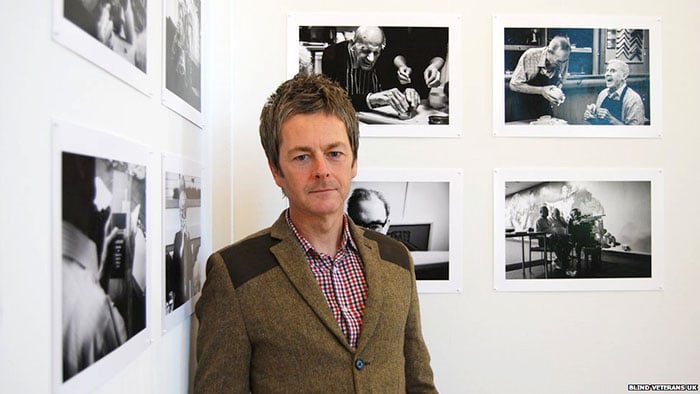
4) How and perhaps why were you so interested in photographing blind veterans? How did you get your start in that project?

Following my documentary series that captured the London Road area of Brighton and its inhabitants, I wanted to work on a new project that further challenged peoples’ perceptions of usual stereotypes.

The initial idea behind the Blind Veterans project was to challenge the the stereotype of a “hero”. I wanted to collect images that defy the clichéd young, muscular, bare-chested hero; instead allowing the viewer to recognise for themselves the once pivotal role of these now frail individuals. My subjects' lack of sight mirrors the way that society sometimes fails to “see” the elderly, or truly appreciate the influence their actions had
on the world of relative peace we are so lucky to live in today.

Darren Baldwin | Documentary Photographer

Darren Baldwin | Documentary Photographer

Darren Baldwin | Documentary Photographer

Darren Baldwin | Documentary Photographer

Darren Baldwin | Documentary Photographer

Darren Baldwin | Documentary Photographer

Darren Baldwin | Documentary Photographer

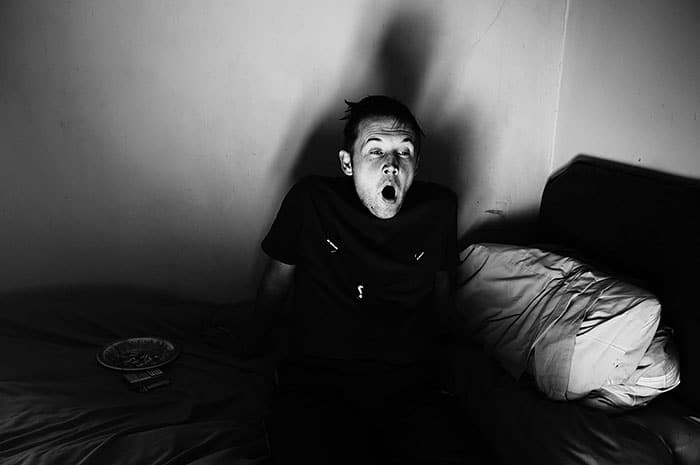
5) There is a certain aloofness in the subjects you photograph. If first impressions count, the one word that came to mind when I viewed your images is – “isolation” – am I right in assuming you are fascinated by how people are part of a community but still remain apart or isolated?

Absolutely. I do have a fascination with that aspect of our lives. We’re all so damn busy but there are people who can seem very alone. That’s not to say they’re unhappy – I believe there are many more facets to isolation than simple, abject misery. Contemplation, meditation, introversion … all these things can come from or lead to isolation. I’m interested in capturing both quiet moments – almost the pauses in between breaths – and diminutive moment when subjects see the lens. I love to wonder what it is they’re thinking – the multifaceted nature of the human psyche fascinates me – as it does many other people!

6) With very few exceptions, your recent work is all black and white. Why is that?

I just really like black and white. I love the deep contrasts. I like dark images. You don’t get tangled up in the colour.

Not everything works well in black and white, of course – and I love colour street work from people such as Matt Stuart, Justin Sainsbury, and Paul Russell. I am definitely influenced by Maier and Arbus’ work, but both my dad and grandfather worked in B&W, so who knows, maybe it’s in the genes.

7) Brighton, UK, where you live is a popular destination for tourists. Are your images mostly of them?

No.

8) Your images now live on Flickr. How helpful has Flickr been to attract you clients interested and willing to support your documentary projects?

I use Flickr because I’d rather spend time taking photos than building a website to house them.

When it comes to working with new people, new projects and potential backers – I like good old-fashioned word of mouth. I want my images to do the talking. It’s great if someone stumbles across you – but the internet is an immense space – I’m not expecting a “stumbler” to commission me for a massive project any time soon. Flickr serves as a quick and easy gallery – a convenient way of people seeing what my work is about. Hopefully people will see my work, and want to talk about it – and we’ll take it from there.

9) Other than Twitter, where you are quite active, and Flickr, where your images are hosted, do you use any other social media channel to market your work? Tell us about it.

Apart from Twitter and Flickr I have a facebook page. That’s it. No tumblr, no 500px, no Google+ nothing else. I don’t see the point in constantly repeating myself!

10) You mentioned that a new website is in the works. Care to tell us what the domain url will be and when we can expect to see it go live?

At the moment I’m so busy with projects that a website will just have to wait – it would be fantastic to have a proper online showcase but, as I said, for me it’s personal relationships that build really positive projects.

Do you know of other documentary photographers I should interview? Why not put them in touch with me? Simply direct them to this website! Thank you.

Filed Under: Documentary, Interviews, Photography Tagged With: Baldwin, Darren, Documentary Photographer, documentary photographers, documentary photography, street photographer

An Interview With Documentary Photographer Brant Slomovic

May 16, 2013 by Seshu | Editor & Publisher

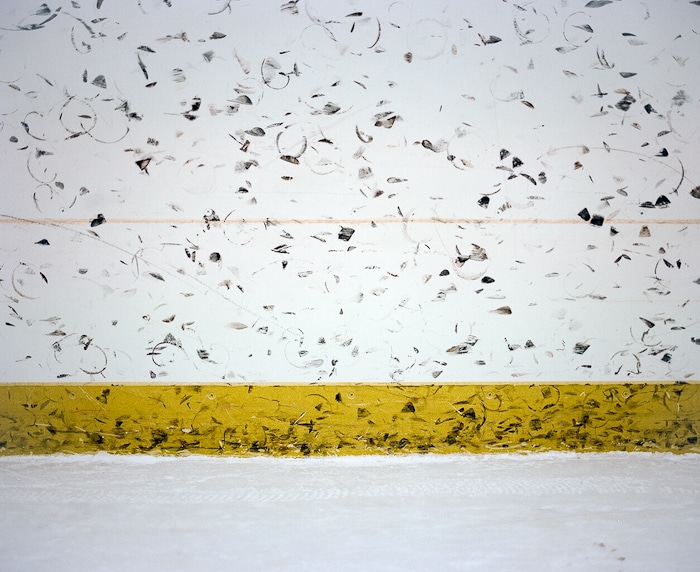
Brant Slomovic is a documentary photography based in Toronto. He was recently featured as a Contender in the 2012 Hey, Hot Shot! International Photography Competition and in the Collection at Flak Photo. His current personal projects include Shinny, which details the ubiquity of shinny Hockey in Canadian culture, and Puja, which explores daily rituals of spirituality in Indian life. Please follow Brant on Twitter.

Documentary Photographer Brant Slomovic | Shinny

1) You became a documentary photographer after pursuing emergency medicine. First what motivated you to change tracks? And, secondly, what was it in your training as a medic prepared you the most to be a documentary photographer?

Those are great questions, but to clarify, I was a photographer long before I even considered becoming a physician. So it wasn’t really changing tracks from one métier to another, as much as it was rediscovering of a need to make photographs and tell stories. I had abandoned photography when I entered university. By the time I finished my specialty training in emergency medicine this deep desire to express myself through images re­emerged. It was unstoppable.

I think of the two ­- medicine and photography ­- as completely separate existences. I’m keenly aware of the potential for conflicts of interests to arise, because I am a photographer and at the same time a physician. So the choice not to cross paths is deliberate. Perhaps one day I will find a way to approach a subject and bring the two together­; the insight and empathy that my training as a physician has developed and photo making.

2) If I was to describe the images on your website, I would use the words: “quiet” or “deliberate” ­ do you agree? Where did you acquire this sense of rhythm in your images?

I do agree, it’s a very fair statement. I search out these moments. On one hand its a reflection of an esthetic that I’m looking for. On the other, it gets back to your first question, about the relationship between practicing medicine and making images. As a result of the inherent chaotic environment of the emergency department, I look for the opposite when I am engaged with the other elements of my life. It's about finding a balance for me personally.

3) So many interviews I have heard or read focus on the process. I am interested in your intention. The projects you have embarked on ­ Shinny and Puja ­ couldn't be more disparate. Can you tell us what it is about each that you are drawn to?

Both the Shinny project and the Puja work emanate from very personal places. My long term projects have to come from something that stirs within, whether it be a deep curiosity or something I am already connected to and passionate about.

Shinny is about my love of hockey and the place it has in Canadian culture and art. As a Montrealer, having grown up during the heyday of the 70’s, it would be impossible not to be passionate about this subject. I see shinny as a deeply unifying Canadian experience, shared by a huge spectrum of people, from elite professional athletes to new immigrants. The initial inspiration began with the paintings of great Quebec artists like Terry Tomalty and John Little, who have established a tradition of painting hockey scenes. I thought “no one is doing this kind of work with photographs”.

The Puja project is also highly personal. My wife was born and raised in Bombay. So my attraction to this work began with my discovery of her and where she came from. I am fascinated by the intertwining of cultures in India, how the lines of distinction are blurred, and by this sense of unification through diversity. The ritual of puja is a beautiful expression of devotion and I love that it can exist in public spaces and that it’s interpretation is limitless. Puja can be a specific religious act as much as it can be about the way in which one travels to work or performs mundane daily activities.

4) Around 1984, when you graduated from high school, you tasted your first big win in an art competition. How important is it for you to enter contests? How do you select which ones to enter? And, lastly how do you edit your images and select your personal “winners”?

To be honest, contests, per se, are not very important to me. The recognition is of course nice and there is certainly a role for them in the advancement of one’s work. At this point I am concentrating on building the strongest body of work that I can and on developing new projects. But hey, if you’re interested in nominating me for anything, I’ll accept graciously.

Editing is always a challenge. First, I take time away from the images and the experiences. I need the separation physically and emotionally; the space to gain objectivity. Then I enlist the eyes of a few trusted friends. The personal winners communicate emotion and that impact stands the test of time.

5) Tell us a little bit about your sense of awareness of when an image should be made.

A large part has to do with the preparation before you even show up. Developing a clear idea and intention, researching, immersing in one’s subject. Then, for me, its about being as present an open minded as possible. Looking and often waiting for specific moments but having the awareness to let things happen as well.

Documentary Photographer Brant Slomovic

Documentary Photographer Brant Slomovic

Documentary Photographer Brant Slomovic

Documentary Photographer Brant Slomovic

Documentary Photographer Brant Slomovic

6) When I came across image #14 in your “PUJA” series, it stopped me in my tracks. Can you tell us about why that image was made and what its significance is?

That image was made because it was there. The significance is that for me the image is a reflection of India, in it’s totality. It is a literal and perhaps slightly cliché representation of the contrasts that personify India. I was also attracted to the scene because it made me wonder about the story of those roses ­where and by whom were they made, what was their purpose and in what kind of ceremony were they used. And finally, what was their journey and how did they end up adrift in murky waters.

7) I have to ask you about the form factor of your gear. What are you using? Are you shooting film or is all of your work now digital?

The majority of my work, and specifically the two projects we have been discussing, are shot on medium format film.

8) Whether it's “PUJA”, “SHINNY”, “GLENGARRY” or “PAAN”, I get the sense that you are most interested in how humans inhabit their spaces. True? Is distilling it to that even fair?

It is fair. There is certainly an element of that in my work. For a while, I wanted to make images devoid of people. It was just something that made sense and felt natural at a specific time in my evolution. When I was editing my first show, Glengarry, I realized that I couldn’t fully tell the story I wanted to tell without including the human element in the edit. From that point forward it has been something I strive for­ – how people fit into the narrative. I think of the work of Simon Roberts and Massimo Vitale as great examples of this.

9) Personal projects are never ever finished as they go on and on. Do you find yourself finding a point to stop and say that you've got it all and you move on to the next project?

Ha! Well I thought so. But recently I was encouraged by one of my mentors to return to a project I thought I had closure on. I’m considering it, but haven’t gone back to it, yet. I think some will inherently come to an end, either when I feel a sense of satisfied completion or simply exhaustion. With Shinny, I’ve just begun to scratch the surface and I’m excited for it to carry on for a long time.

10) Are you represented by an agency or a gallery? How would one go about buying one of your prints?

At this time, I do not have representation. Buying prints can be done through the contact link on my website, www.brantslomovic.com. Thank you Seshu. It’s been a real pleasure.

Know of other documentary photographers like Brant or Jim Mortram pursuing projects that they are ready to show and share with the world? Send them my way. I would love to highlight their efforts and interview them.

Filed Under: Uncategorized Tagged With: Brant Slomovic, Documentary Photographer, documentary photography, interview, project

An Interview With Documentary Photographer Jim Mortram

April 29, 2013 by Seshu | Editor & Publisher

Jim Mortram is a documentary photographer. That's perhaps the easiest way to describe him. The images on his website – Small Town Inertia – gripped me like a vice for their gritty portrayal of lives lived in rural England. I was surprised by how quickly I cared for those people Mortram photographed. There is compassion and clarity in Mortram's approach and it is a refreshing change from the synthetic and saccharine images we are all subjected to every day. Mortram has published a limited edition book called “Electric Tears & All Their Portent” – limited and sold out! Please follow Jim Mortram on Twitter.

Small Town Inertia | Jim Mortram

1) Who are you and how did you get your start in documentary photography?

About six years ago I'd become quite insular. Working as a caregiver for my Mother in my family home; it's an intense situation, quite highly stressed, with odd hours. Before you're even aware of it, the ties you once had – friends and the connection to the outside word – erode. It's a subtle shift, and by the time I noticed, it was too late to cease that evolution. I was loaned a camera by a friend and immediately knew I had to document people. The challenge was where and how. I live in a very rural, low-population part of East Anglia, UK; I was tied to my duties as a caregiver. Long periods away from home to shoot were out of the question due to both responsibilities and financially. I hated the situation. I wanted to escape, wanted an escape for everyone involved … I wanted to click my fingers and make my Mother well, Father freed of the pain of seeing his wife in pain everyday but there was no way that was going to happen. After having this effect me profoundly it was then a long road of rebuilding everything.

One relationship really helped pull me out of my shell and pull my photography into focus. It was because of a person close to me, 2 doors from the family home, in fact. I'd known W.H. since I was a child. In his late 80's, I would visit often to hear his stories. Gradually I began to make portraits. He encouraged me greatly. The whole process was very organic and instinctive. He became ill with cancer, and I ended up being one of the last people to talk with him – certainly the last to photograph him. This experience really forged the understanding of why I had to document local people. I began to understand that everyone has a story; that they are all important. It also made me re-appraise my location and my relationship to it. I finally harmonized with where I lived. Where I had felt suffocated suddenly transformed into a place that was of the highest importance : Dereham, one of those small forgotten towns, with a distinct strata of the population that have also been forgotten.

I still work at home, caring for my Mother, that's never changed, I don't shoot for money, I fit shoots in and around duties etc. It's a big balancing act but like water finds it's way from mountains to sea, you find a way!

2) Do you have a sense of the documentary tradition – as in, have you studied it, or did this all come about naturally for you?

I'm an autodidact really, I studied fine art painting before being forced to quit early in my degree to return home to be a Carer. Regarding photography or documentaries I've always been aware of it and when I turned to it, it was a very natural extension of myself.

3) Why is it so important for you to document the lives in your own community?

I think this has been answered through the other Q&A's : )

4) How do you cope with the emotional baggage that usually comes with working in this genre of photography?

I could not see myself working in any other way than long form. Without the time invested, on both sides of the lens, I think I would document in a much shallower, ephemeral way, so taking months, years to constantly document and share it gives the series context, there is a evolution within the lives, to tell any story you have to do more than read chapter one you have to read from the front to the back cover. That's all far more important to me than how it might touch ‘me' emotionally, even if it and often is quite really stressful or saddening and you know if it did not affect me, touch me … I'd really worry.

5) How do you go about choosing people to photograph? How do you get access into their lives? Why are they so eager to tell their story to you?

I just ask … or sometimes I'll get a call from someone or someone who knows someone and wants to be involved. I always treat people, as I myself like to be treated. You can never feign nor fake interest in a person. I’ve never singled out people with an eye that they might make a good story for example; it’s a very organic evolvement. People are very giving and that humbles me greatly, my greatest debt is always to the person the other side of the lens. It’s such a great honor to be accepted and brought into another person’s life and given the access to document it. I’m sure I could work in a faster fashion but for me long form documentary is where my heart is. Often I’ll visit people and not even take an image, just talk and more importantly listen, and I listen more than I shoot. I have an equation that I always bear in mind talk more than you shoot and listen more than you talk and it serves me well. I break shoots up into periods of straight documentary and periods to shoot portraits, make interviews and shoot video.

Initially, for the people I work with it’s a way to have an opportunity, ANY opportunity to share their experiences and to be heard. It’s, I feel, a really empowering step for someone to make the decision to get involved, stay involved. It’s a way for many people to take a positive step, to maybe take some control where there might be a huge absence of any control in their lives. It’s also a mirror for many people, it might be the first time that they have paused for thought as every day is just surviving, enduring and when you live just to make it through one day to the next it’s often hard to distance yourself from that experience and take a moment for reflection.

6) Typically, how long do you spend photographing someone? When do you know you are “done” telling their story?

I'll shoot a person, their story forever, I don't think you can ever be ‘done'.

Small Town Inertia | James Mortram

Small Town Inertia | James Mortram

Small Town Inertia | James Mortram

Small Town Inertia | James Mortram

Small Town Inertia | James Mortram

7) Your images are almost always black & white. Was that by design or were you limited to black & white film? Do you shoot in color?

I get asked this a lot and there's a simple and fast answer and also one I might expound upon. When I started shooting I was using borrowed equipment, digital equipment, cameras, lenses and the monitor I had was broken, the colours were way off and no way to calibrate etc. so I turned the colour off and worked in mono. Mono suited me as I related to it having watched my Father hand develop images in the kitchen or the bathroom when I was young. My formative years were spent experiencing images in mono, newspapers, books from the library, most were featuring mono so that language was imprinted within me I think, the shapes within mono, the way composition is highlighted. I've never found a B&W image to be more abstract than a colour and I'm aware of all the arguments VS … likewise film VS digital … truth be told, from day one of shooting I'd planned to shoot colour (Film, medium format) portraits in tandem with the mono DSLR it was just a fact that I was not able to fund it immediately so I've had to wait a few years.

8) You've used social media quite effectively to spread your message. Which platform do you feel best helps you do that?

Twitter is amazing. On first glimpse it's easy to see it as quite an ephemeral platform, fast, impersonal but if you apply patience and dedication the friendships and relationships that have evolved from Twitter have been so rewarding, I've met and become firm friends with so many incredible people via Twitter. I've never seen the Internet as ‘other' to our non on-line lives, just different. It's like photography (or anything else) you'll get back what you put in and it's only going to be as honest as your own intent.

9) I can see how one could feel a sense of satisfaction narrating the lives of your fellow neighbors. But, what do your subjects receive in return for their time?

I've never felt satisfied, I feel driven, obliged, motivated to make photographs and share stories the way I do. It's all about addressing an imbalance, I find everyone around me is in a situation where they are subjected to prejudice or stereotyping, especially now via mainstream media and our current government. I have no satisfaction depicting lives, real lives lived that are sometimes filled with suffering, struggle … of course some stories feature great happiness, great strengths and endurances. As for the people I document, I never use the term or perceive anyone as a subject, I'd really have to ask them … were I to assume, I'd think as for me, it's good to have someone to talk to, share with, someone to listen and often the people I'm working with know they are never heard, never noticed and want to be, want an opportunity to have their life experienced rather than have it written about in text or policy by some far away pen that's no experience of their situation.

Jim Mortram10) You were accepted into Aletheia, the documentary photography and film collective. How has that helped you personally and professionally?

It's just amazing to be included with a group of such amazing documentary makers and afforded the opportunity to share work as part of a collective and a collective that shares a very similar world view.

11) What are your plans for Small Town Inertia? Have you been approached to create a book or a country-wide exhibit?

I just keep shooting and what comes along, comes along. If nothing ever happened I'd still do everything exactly the same.

12) You came at this from a very personal angle – your mom suffers from epilepsy. Is having a personal stake important in creating images and pursuing personal projects?

Having emotions and having empathy is important. I'm not alone in experiencing pain or struggle in life, in witnessing it. I'm not alone in allowing the sum of ones life to inform, to be fuel for ideas, to inform ethical or moral views, to be the compass, direction and engine.

I'm a big believer in the now, right now, to be alive in the now you can't ignore the situations around you. Here in the UK right now … it's a hugely volatile time, divisive … real fractures are appearing in society … and I feel compelled as you either to choose to ignore it and the lives situations around you or you feel it, experience it and react.

Documenting, to document “Something, such as a recording or a photograph, that can be used to furnish evidence or information,” is so important, important to the lives lived and important lest they now be forgotten.

Would you like to see more interviews such as this on Tiffinbox? Can you recommend other documentary photographers who are pursuing personal projects? Please do so in the comments section below. Your participation is crucial!

Filed Under: Documentary, Photography Tagged With: Documentary Photographer, documentary photography, James Mortram, photograph, The Documentary Tradition, Town

How To Use Kickstarter To Fund Your Photo Projects?

September 13, 2010 by Guest

Robb Hill, AvatarThis guest post is by Robb Hill. Read his first post on Tiffinbox: “Homelands: A Documentary Project in Southern Indiana.” He is a Maryland-based documentary photographer. Connect with him on Twitter.

A few weeks ago I was here writing about a project I have on Kickstarter.com. Seshu and I have known each other since college and as a long time follower of his, this, blog I thought posting on it would be a good way to get the word out about my project. Now that the fund raising window has closed on my Kickstarter project (I was able to raise more than my goal!!) we thought it a good idea to write about my experience, hopefully for the benefit for all.

I had never heard of Kickstarter.com until a friend and fellow photographer, Nelson Chan, told me about it a few months ago. Nelson has watched me struggle with HomeLands over the years and has been supportive. He thought Kickstarter and my project would be good fit.

The first photos I took for HomeLands was back in March of 2005. When I began I lived in Chicago and my business was doing well. Which meant I had the time and money to get down to Southern Indiana to work. Now I live in Sliver Spring, Maryland and it has been a struggle the last two years to keep my head above water. As much as I wanted to return to Indiana to photograph, my priority had to be financial stability.

Since starting HomeLands I have applied to 15 different grants and received none. For a previous project I won three grants and felt confident about my understanding of the grant writing/application process. Now, for whatever reason, I was getting no traction in the grant world. Trying to secure funding via Kickstarter seemed like a good idea.

After reading all the FAQ and application pages I submitted a proposal. The first piece of advice I have is edit, edit, edit. The initial proposal to Kickstarter is only 1500 characters. Yes, that’s characters not words. It is very important to write as concisely as possible. I don’t think Kickstarter is looking for a certain kind of project, if you look around on the website you’ll see a wide range of projects. What I think they are looking for is clarity of thought in the proposal and uniqueness of project. But I don’t know for sure.

If you are accepted – I am curious to see what they turn down – you next have to create your Kickstarter page. This is a longer written proposal, video, and whatever else you can get on a web page. Here is where you have to start selling your project.

For my video I decided to use still images, music, and voice-over. I did not want to be on camera because, although I was looking for support, I wanted people viewing the video to think of the project not me. For me this is key. Get people interested in what you’re doing not yourself. This may be obvious but the tone and feel the video should match the tone and feel of your project.

For the written portion Kickstarter recommends not only describing your project but explaining how you plain to spend the money you raise. I didn’t publish a specific budget but did generally explain how I plain to use the money. It could be helpful to be very specific about your expenses but for my project I didn’t see it as necessary.

Even if you don’t publish a budget it’s very important to create one because it’s completely up to you to set the dollar amount you want to raise. I set my goal at $7,000, an ambitious amount but not overly so. I examined budgets from various grants proposals I’d written and calculated a comfortable amount of money that would allow me to work unrestricted. By unrestricted I mean I will be able to cover materials like, film (yes, I’m shooting my project on film), processing (doing it myself), scanning, flights, etc. as well as meet my financial obligations at home while I’m away photographing. The only real advice I have about the budget is; be thorough and honest about your costs. And don’t be afraid of the total.

Look around on Kickstarter and you’ll see people who successfully raised far more and far less money than I did. Kickstarter is very up front about the fact they are an all or nothing proposition. This means if you don’t meet your dollar goal, you don’t get any of it. Which I think makes sense because it forces two things to happen. The first is, as I alluded to above, artists are forced to really think about what they need financially to do their project. The second is, it makes the larger public aware of how expensive the creation of art can be.

There is no cost to post your project on Kickstarter. But, and Kickstarter is very upfront about this, they take 5% of your goal as their fee, but only if you reach your goal. This is completely reasonable. Also be aware Kickstarter uses Amazon Payments as their money handler and Amazon takes 4.5% as their fee. This is also clearly stated but was a little harder to find. If you need a very specific amount for things like, studio rental, printing, etc., make sure you factor in the 10% you’ll loose in fees.

Then you need to set how long the pledge window will be open. The FAQ’s have much to say about this. But it boils down to this; the maximum length of time to pledge to a project is 90 days and longer isn’t necessarily better. I set my window at 45 days.

Once I had my project page ready I nervously hit the Launch Project button.

After the Launch Project button is hit you are far from done. Now it’s very important to do the one thing almost every artist I know is horrible at, selling yourself. While people do search Kickstarter for projects that interest them, you cannot rely on Kickstarter alone to raise your funds. I can’t stress this enough, it’s very very very very very very very important for you to get the word out about your project.

Immediately after hitting the launch button I posted a link on Facebook and sent emails to damn near everyone in my contact list. In the first week a good number of people, mostly family and friends, pledged to my project. Also, many people reposted my link on their Facebook page, some I asked, and some just did.

As the dollar amount in the pledged column increased that first week I was pretty happy about how the fund raising was going. When the first complete stranger pledged to my project I suddenly felt the power of Kickstarter. Here was someone I don’t know who pledged $250. I was very touched. With this person’s pledge I felt I could reach my goal.

Then it was time to get the word out even farther. I asked Seshu if I could post about it on his blog. I asked an old high school friend who is a booster for our hometown to talk up my project on his website. I have close connections to the digital media staff at NPR and they were kind enough to feature my project on the NPR Picture Show blog, with links to my site and Kickstarter page.

With all that attention I didn’t see the amount of pledges I thought I would. Because of my personal real estate situation I am very aware of how bad the economy is. But bad economy or no, I had to keep putting the word out. I then started trying to get posted on other photography oriented websites. Most sites I contacted posted a link. But I still wasn’t seeing much of an increase in pledges. This was partly because in today’s world asking photographers for money is like expecting Bob Cratchit to come up with the Christmas goose by himself. It’s not that we aren’t a supportive, generous bunch; it’s just that the industry as a whole is in a tough way.

As the days passed there was little movement towards my goal. With two weeks left I was less than half way to my goal. I talked to my sister, a professional grant writer, about things I could do. Her advice to me was very simple. “The only way to get people to give you money is to ask.”

With just over a week left I started a direct email campaign. I went through my Facebook friends and wrote a personal email to everyone I thought would donate to my project. Like everyone, I have Facebook friends who I’ve not actually spoken with in twenty years. But I really wanted to make my goal and I didn’t let that stop me from asking for donations.

It worked. Pledges started coming in immediately. Also, something of the ebay effect happened, meaning strangers also pledged to my project in the last few days. With 72 hours left I had done all that I could think of, the only thing to do now was wait and see what happened.

With 48 hours left checked the total before going to bed and notice it had gone down. Someone, who I don’t know, reduced his pledge from $250 to $5. Kickstarter allows people to reduce or cancel their pledge. Here is what they’ve written about it on the website, “By pledging, you are committing to supporting that person’s project; canceling that commitment is discouraged.” But it does happen and I went to bed crestfallen.

For some reason at 4:30 the next morning I was awake. I read for a little while and decided to check the status of my project. It was $7,131 dollars. I rolled over and told my wife the good news. But knowing that people could reduce or cancel their pledges I didn’t allow myself to celebrate until Kickstarter told me it was over.

In the end I had 110 backers, 24 of whom are total strangers to me. Two weeks earlier I felt there was no way I was going to reach my goal. But by taking the bull by the horns and asking people to help me, I raised $7,326.

I was happier than I’ve been in a long time.

Kickstarter encourages you update backers about your project. Which can be done from you project page. Here is the last paragraph of a thank you letter I posted on my blog:

Even in good economic times it’s hard for artists to find the money that allows us to create. Watching the number in the pledged column on my Kickstarter page grow was exciting, gratifying, and very moving. I am incredibly thankful and honored that so many of you out there respect me and or my work enough to donate to my project. Last Sunday when the pledge window closed with my goal being exceeded I was happy beyond measure. I feel a responsibility that goes beyond making good work. I feel responsible to the 110 of you who helped me be the artist I want to be. Thank you for giving 105%.

Are you inspired to use services like Kickstarter? Comment below to tell us about your efforts to raise money for your photography project.

Filed Under: Contests & Grants, Photography Tagged With: documentary photographers, documentary photography, fund, fund raising, funding, grant writing, how to use, human interest, kickstarter, projects, raising funds, secure funding, write proposal

Subscribe To Tiffibox Treats!

Looking for a well-curated email newsletter that will leave you inspired and motivated about your photography business? Sign up below!

About Seshu

Seshu creates relaxed portraits of families and high school seniors in Avon, Connecticut. He also leads a successful headshot photography studio in Connecticut, helping professionals from a variety of disciplines project the very best versions of themselves. He created Tiffinbox as a way of inspiring photographers, to create better images and successful businesses. [Read More]

Email Templates For Headshot Photographers

Email Templates for Headshot Photographers

Recent Posts

  • How Capture One Changed My Event Photography
  • 10 Steps To Stay Positive In Times Of Great Stress
  • Why You Need To Read “Personal Branding For Photographers” Now
  • How To Master Your Website Content Step By Step?
  • Tony Taafe’s TNT Method For Headshot Photographers

Recent Comments

  • Stephen Davison on Are You A Business Owner Who Is Smart, But Stuck?
  • Ben A. on Don Giannatti Clinches The 8th Annual Tiffinbox Award
  • Dan on Don Giannatti Clinches The 8th Annual Tiffinbox Award
  • Donald Giannatti on Don Giannatti Clinches The 8th Annual Tiffinbox Award
  • Stephen Davison on G.E. Masana’s 6 Strategies For Wedding Photography Success
  • Naveen Kumar on Weddings In India Are More Than Being At The Right Place And At The Right Time
  • kartick on Weddings In India Are More Than Being At The Right Place And At The Right Time
  • Leonid Farbman on 6 Uncommon Trends To Grow Your Photography Business
  • Willow and Finch Wedding Photography on 11 Reception Tips To Help Your Wedding Photography
  • Web Designer Malaysia on How To Optimize Your Squarespace Website For Search Engines
  • Creastan on An Interview With Photojournalist G.M.B. Akash
  • Cindy Brown | Atlanta on An Open Letter To A Local Photographer

Become a Patron!

Copyright © 2026 · Tiffinbox · Site Design by Heather Mackan Creative · Built on Genesis