• Photography
  • Interviews
  • Business
  • Reviews

Tiffinbox

Inspiring Photographers

  • Home
  • About
  • Blog
  • Contact

Please Don’t Just Give Your Clients The CD or DVD!

September 9, 2010 by Guest

Alethea Cheng Fitzpatrick, AvatarThis is a guest post by Alethea Cheng Fitzpatrick, NYC based architect, interior designer, photographer AND mom! Alethea has her own business, alethea cheng fitzpatrick photography.

I hear photographers talking about digital images all the time.

I've noticed that portrait photographers tend to be the ones bemoaning the fact that their clients “just want the CD”. Mostly it's because those same clients also think that the CD should be really inexpensive, because it “didn't cost the photographer much” to make.

Alethea Cheng Photography

Wedding photographers, on the other hand, often celebrate the fact that their clients don't really want albums any more. They claim that it's hard to make money off albums because they take so long to design and cost so much to make. They are quite happy to wow their brides and grooms by having an iPad pre-loaded with all their photos waiting on their doorstep when they return from their honeymoon.

The different perspectives are interesting, and there's a simple reason for the difference – wedding photographers typically charge up front for a package and include the high resolution files because they are already assured of the sale. Portrait photographers depend on post-session sales and, unless properly priced, high res files undercut their other products.
Alethea Cheng Photography

But regardless of the type of photographer you are, in both cases I strongly believe that you are doing your CLIENT a disservice if you only give them the CD. It is not in their best interest!

Here's why.

Fifty years from now, where is that iPad going to be? Where is that CD going to be?

What about a hundred and fifty years from now? Or longer?

Technology is going to COMPLETELY change, I don't need to tell you that, but have you thought about how your super fancy high resolution digital images of today… might not look so good on technology down the road, or might not be viewable at all? Now, I do not have any expertise in “future proofing” digital files, but then, you probably don't either, and nor do your clients. And a quick Google search seems to show that … no one really knows, and one recommended strategy is to make hard copies of important documents and photos!

Yes, your clients may upwardly convert their files, but do you want to depend on that?
Alethea Cheng Photography

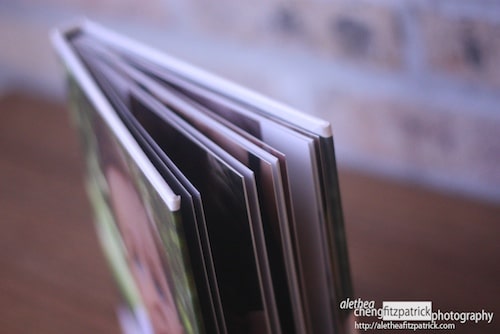
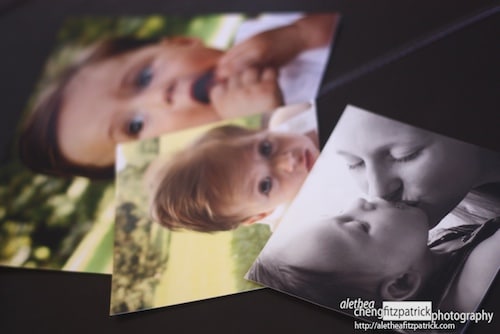
Prints and albums (of archival quality – which of course you are going to provide) are your most future proof medium. They can sit on a shelf for years and still be viewed with no additional effort required by anyone.

But even aside from the future proofing issue, even assuming that the format you pick for your digital images is readable forever, is that really the only way you want your clients to experience your images?

Forget 50 years from now, even tomorrow, does viewing a digital images come anywhere close to the experience of holding viewing an actual physical piece of artwork in person?

Honestly? If you think it does then, seriously, you are not getting your prints made at the right lab!

Alethea Cheng Photography

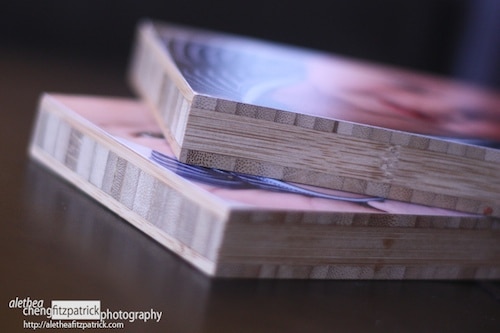
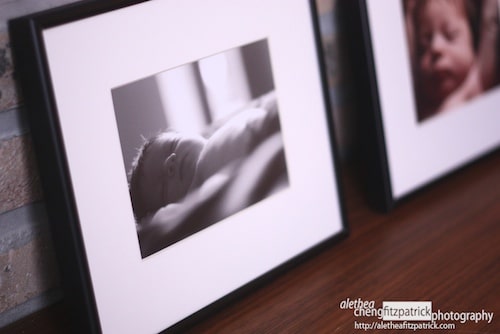
I love my prints – love love LOVE them, and so do my clients. In fact, some of my clients start out thinking they just want the high resolution files but after they see the artwork products I offer (including museum quality framed and bamboo mounted prints, custom designed heirloom photobooks on presentation stands and beautiful notecards), they “get it”. Often they end up with everything BUT the high resolution files they started out so concerned about and are very happy about it.

Why?

Well, first of all, don't get me wrong, I'm not saying DON'T offer digital files. I absolutely understand the importance and value of digital files and I offer them to all my clients. I'm just saying that to ONLY provide digital files is doing your clients a disservice. I follow the recommendations that Alicia Caine makes in Easy As Pie (I highly recommend this resource by the way – well worth the investment). I offer high resolution files but a la carte, they are the most expensive item on my price list, and it's actually less expensive for clients to purchase high resolution files AND a proof box. I also offer low resolution web-sized watermarked files but only after a minimum purchase of other artwork has been made. Basically, my pricing is structured in a such a way that no client ends up with only digital files.
So how do clients end up changing their mind about the high resolution files?

Well, first of all, a big reason people want digital files is so they can share them online and via e-mail, and the low res web files take care of that. It helps that I offer my low res web files in the form of a finished product – an online digital storybook that is a cohesive presentation, designed and paced to tell a story, and set to licensed music. It can also easily be shared in a matter of clicks.

Secondly, they want them for archival purposes, but as we've discussed, hard copies are better for that.

Finally, they want the freedom to make their own prints in the future … and those that are really motivated to have this option available are willing to pay for it (or I am just not the right photographer for them). But most clients, when it comes down to it, and presented with the beautiful artwork options I offer, plus the fact that I sit with them and help them select their images and put together their order, not to mention frame, deliver and install their custom designed wall gallery, know deep or even not so deep down that they will not make such beautiful artwork themselves, and even if they had the resources and knowledge to do so, probably would never get around to it.
Alethea Cheng Photography

Think about it. If you hand your client a CD, they have to put it in their computer, open it up, download them to their desktop, sort through the images, select the ones they want to print, upload them to a printing service, collect or receive their prints, get them framed, buy the hardware to hang them, and then hang them.

Yes, some clients are very motivated and will do this. But most of my clients are busy professionals and they want to spend their spare time hanging out with their kids, not traipsing to a framer or a hardware store.

And how many clients can design an album? How many will?

Alethea Cheng Photography

My high resolution digital files are my highest priced a la carte product, because if they were any less, I would be underselling all my other products. But I feel that my clients get a LOT more value out of ordering artwork and albums from me, and after a certain spend level, I actually throw in the high res files at what works out to be pretty much for free as part of a collection.

Many photographers follow a “shoot and burn” model I know, and if it works for you, great. But if you're doing it because you think that is what clients want, consider whether it really is in their best interest, not to mention yours. You know how I feel about it – please don't just give them the CD!

How do you handle high resolution files for clients? How about low resolution files? What is your take on delivering just the digital images and nothing else to clients? Who wins and why do your clients almost always lose?

Filed Under: Most Popular Posts, Photo Biz Tagged With: alethea cheng fitzpatrick, cds, client, client expectations, clients, compact disc, customer service, digital file, digital imaging, digital media, electronics, filing, image processing, image resolution, Photographers, Photography, Photography Business, portrait photographers, storage, Wedding Photography

Using Your Photo Archive: Looking Back To Look Forward

September 7, 2010 by Guest

Ed Kashi, AvatarThis is a guest post by Ed Kashi, a widely celebrated and published photojournalist, based in New York. He is now represented by VII. Ed Kashi is also a filmmaker and educator dedicated to documenting the social and political issues that define our times. A sensitive eye and an intimate relationship to his subjects are the signatures of his work. Kashi’s complex imagery has been recognized for its compelling rendering of the human condition. In 2002, Kashi and his wife, writer / filmmaker Julie Winokur, founded Talking Eyes Media. The non-profit company has produced numerous short films and multimedia pieces that explore significant social issues.

As a photographer, my archive houses many of my memories and the personal experiences attached to the creation of those photographs. Over time I have come to appreciate the value of my archive as something more than a simple repository of those images and associated memories. This growing, thriving and continually evolving organism has become a living library with untold value. By value I’m not speaking about the monetary potential, which is important and vital, but to the greater meanings, connections and possibilities of interpretation that it offers. In a sense, my library of images, made over a nearly 30-year period, offers an opportunity for further explorations into my work and who I am.

Over time, as one accumulates many thousands and even hundreds of thousands of photographs, your archive becomes more than the individual images and stories, instead forming a whole larger than its parts. In looking over your work, the images start to have meaning and connections amongst themselves that you can’t necessarily recognize in the moment, or when you’re editing for purpose. Patterns of style, theme, issue, geography, mood, design, etc. begin to emerge and with them great potential for discovery. Images are not just historical record, but also a record of your growth as a photographer and as a human being. It's a rewarding practice whether you’ve been photographing for a few years or a few decades, to use your archive as a tool to make these new discoveries. And even though this journey through your photographic past and present might prove disappointing at times, revealing weaknesses or blind spots, you can still gain valuable and rich insights. It’s always hardest to examine yourself closely but when you allow for vulnerability, many powerful and rewarding epiphanies are sure to come.

Even though this journey through your photographic past and present might prove disappointing at times, revealing weaknesses or blind spots, you can still gain valuable and rich insights.

It is in this spirit that I have begun yet another exhumation of my archives. I thrive on collaboration, having another set of eyes, another heart and mind to make new discoveries about my own creations. My collaborator in this project is Alison Shuman, a New York-based photographer who assists me part-time in my studio. She has been combing through my files and forming an edit of single images that we have missed in previous reviews, or that feel like discoveries through the prism of this moment. On a weekly basis for the coming months we will create a blog post featuring an image from my archive presented together with her thoughts and comments. I have always found it exciting to encourage someone I trust to review my work, which often leads to additional insight. After all, that is one of the joys about working with great editors and art directors. Alison is a thoughtful, articulate and strong writer. So far in the blogging and social networking she has done to support our efforts in the self-dissemination of my work, ideas, causes, issues and point of view, she has brought a fresh, smart and insightful voice.

In conclusion, the moral of the story here is (because there’s always a moral with me, much to the dismay of my kids), be good to your archive. There’s immense value in looking back while always moving forward. But you can only do this effectively if your archive makes sense to not only you, is searchable and organized in a way that anyone can find all your images and understand their context. Otherwise you’ve failed yourself. This means creating great captions, keywords and the other information we now call metadata. In this manner, you won’t lose the potential for deeper discoveries and hidden joys that your work may contain. It’s crucial from an early point in your photographic life to take care of your photos and archive them carefully. Keep notes. Be organized and respect your work. And who knows what kinds of discoveries you’ll make as you build and grow your photography.

Tell us – Do you have a photographic archive? How well is it organized? How often do you dig back into it to see what you have done in the past? Is it easier or more difficult to do with digital files? If you have comments about Ed's article above, please pen your thoughts below so that we may learn more about your “best practices.”

Filed Under: Photography

Crafting Your Photographic Vision Leads To Success

September 1, 2010 by Guest

Daniel Milnor, AvatarThis guest post is by Daniel Milnor who splits his time between the chaos of Southern California and the spiritual landscape of New Mexico. He is happiest with his notebook, Leica and trusty leather boots, sizing up whatever situation is happening in front of him.

Milnor is the author of the blog, Smogranch, which allows him to speak his mind, post his mother’s poetry and bring together like minded people around the globe. Connect with him on Twitter.

For being a “creative industry” we sure love to conform.

A trend develops, no pun intended, and suddenly the industry publications, blogs, advertising, seminars and trade shows are filled with what is hot, new and temporary.

I’ve never completely understood this.

This isn’t unique to photography. Look at television. One reality show becomes a success and suddenly three or four similar shows pop up, all slightly less relevant than the original. Within a year or two the public is saturated, bored and searching for a new thrill.

Today’s photography world is filled with more photographers than ever before as the barrier for entry into the professional world falls lower and lower.

So what gives? How do we look to the future with a positive glow in our eyes?

Well, to me it comes down to finding our individual vision and refining our style, and accomplishing this isn’t possible by following industry trends or what’s hot.

Finding your vision comes from intense soul searching, time in the field and mastering the basics of photography, things like light, timing and composition, not to mention actually having something to say, something unique and native only to you, or me, and not simply what the industry wants us to say.

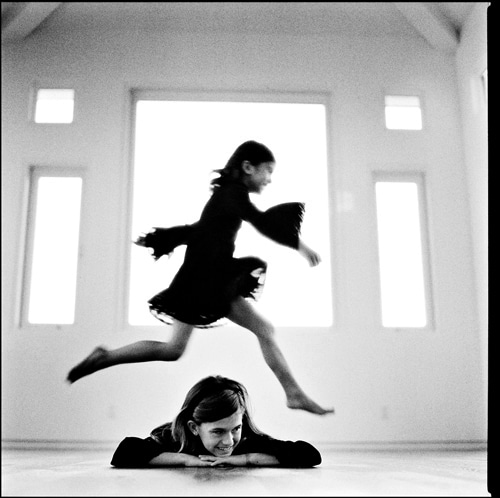
Children's Portraiture by Daniel Milnor

Often times, words like “vision, soul, passion, style,” are thrown around with reckless abandon, but most of the time this is only for show. These things, these traits are easy to talk about but very difficult to actually acquire. The good news, you already have them and all you have to do now is find them inside yourself.

Why do you need vision? Style?

Well, in essence, your vision is the most valuable thing you have. Making unique imagery, instantly recognizable imagery, is what will create the demand around your business.

Yesterday I received an email from a potential portrait client who said, “I had another photographer booked to photograph my kids, but after I saw your work I canceled with them and knew you were the photographer I was looking for.”

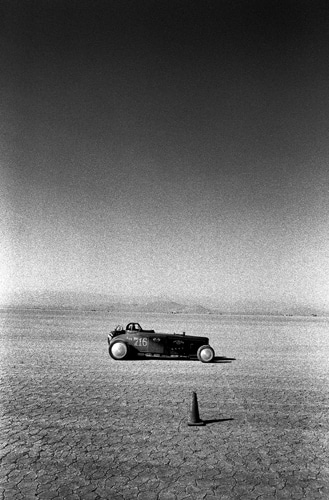
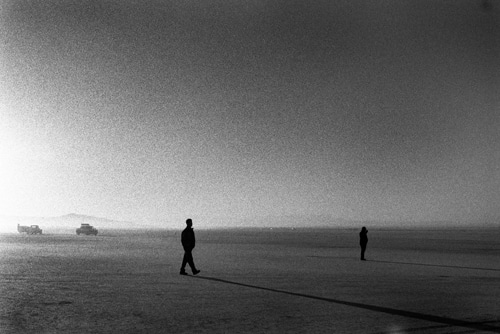
Mirage by Daniel Milnor

If I followed the industry trends, used all the same tools that the masses of photographers were using, then how does the client differentiate between my work and the masses? What do I have to negotiate with?

If I’m using camera A, lens A, Photoshop action A, Filter A, and you are using all these same things, then where is the value in my work? Why would anyone hire me over the photographer down the street?

When photographers conform and follow the masses, what typically happens is the job comes down to price and how much the photographer is prepared to give away. What gets lost? The photographs.

This is NOT the situation you want to find yourself in.

When you produce unique imagery clients recognize they are seeing something they can’t get everywhere. This doesn’t’ mean you are going to book every job, the reality is far from this, but what becomes the focal point of the negotiation is the IMAGERY.

My point with this little story is that finding your vision isn’t easy and might require time alone and asking some serious questions.

“Who am I with a camera in my hand.”
“What am I trying to say?”
“What do I REALLY want to do?”

You might think this last question is an easy one but I can’t tell you how many photographers I’ve spoken with who have simply followed what the industry has told them to do, or what they feel “They have to do.”

How did I find my vision?

I found my vision by NOT working as a photographer. I began working as a photographer, full time, around 1993. By 1997 I knew something wasn’t right. I was working but I wasn’t particularly thrilled with what I was producing and after looking back at what I had produced over the entire year I realized I didn’t have anything to show.

So, I took a job working for Eastman Kodak and signed a non-competition letter stating I wouldn’t accept any assignments during my time working for the company. I sold all of my equipment except for one Leica M body and one lens.

Over the following four years I learned much about the industry, other photographers, but more importantly I had the time to learn about my own work.

Over the four years I worked for Kodak I shot extensively on the side, not for anyone else, strictly for myself. When I picked up a camera I had only my own vision in mind.

After four years I looked at what I had accomplished and finally recognized who I was with a camera in my hand.

I made the decision to leave Kodak and become a photographer once again only this time I had a personal vision to lead my way.

Mirage In The Desert, by Daniel Milnor

Had I NOT stopped working as a photographer I don’t think I would have ever come close to finding my vision. The industry and the controls being placed on me were just too powerful. There was little room to explore and what was expected of me was cut and dry.

My jobs today come more from me making suggestions than from a client telling me what to do. This is a very liberating feeling. When I book a portrait shoot or a wedding I book it because my work looks different and I have a clear vision of what I want to accomplish. Working this way feels like you are part of a creative collaboration as opposed to having to adopt to someone else’s idea of what images should look like.

My advice? Think about studying photography, really studying. Take classes, go to bookstores, go to galleries, museums and study what photography really has to offer. Learn who the masters were and are, and not just those in your genre. I’ve learned FAR more about how to photograph a wedding by looking at documentary work than I ever have from the wedding industry.

Also, think about taking on a long-term personal project, a project that is entirely controlled by you and preferably something outside your normal comfort zone.

Children's Portraits by Daniel Milnor

And finally, approach one of your best clients and suggest a new direction.

We can make all kinds of excuses about conforming, about not taking the time to find our unique point of view, but ultimately we simply owe it to photography to continue to explore the limits of our vision.

Finding your vision can be frustrating, confusing, sure, but when you begin to see a pattern or begin to see the proverbial light at the end of the tunnel the positive feeling will far outweigh any struggles you had to endure.

So go forth, take chances, break some eggs and keep your eyes open for the spark that can set you free.

Desert Mirage by Daniel Milnor

Milnor is a former newspaper, magazine and commercial photographer who now tries to work solely on his own projects, projects that allow him to work in the fashion he feels most likely to produce images that go beyond the temporary. Milnor is also a member of the advisory board at Blurb, a print on demand book publishing company comprised of some of the most creative and talented folks he has ever encountered.

He has taught at Art Center College of Design, The Santa Fe Photographic Workshops, The Julia Dean Workshops and is scheduled to teach in Peru, California and New Mexico in 2010. He has also found considerable success with his portrait work, which is represented by the agency Masterfile.

Filed Under: Commentary, Photography Tagged With: craft, crafting, creative industries, current trends, daniel, daniel milnor, event photographer society, industry trends, milnor, photographer, Photography, Success, vision, vision led, visual arts, Wedding Photography

Get Better Seo By Finding & Using Long Tail Keywords

August 31, 2010 by Guest

Zach Prez, Avatar

This is a guest post by Zach Prez who offers 1-on-1 coaching and SEO workshops. Follow him on Twitter and Facebook.

Everyone knows choosing the right keywords begins the SEO process (or at least you know now). After all, search engine optimization means optimizing keywords so you can rank for them. In this post I’ll refer to keywords as a phrase you want to rank for, and demonstrate how to find longer keywords where competition is less extreme. Even a new site or beginner can rank quickly.

Knowing Keywords is a Critical First Step

Without a keyword list it’s easy to optimize for the wrong words, repeat words, words nobody searches for, and words that don’t create new business. All of these take time away from your true talent (hint: not SEO) and are doomed for failure. Let me demonstrate some examples of what not to do. Feel free to bang your head against a desk for having fallen victim to one of SEO’s classic blunders such as:

1. Wrong words: optimizing for wedding binders won’t make you crazy cash like a successful rank for wedding albums. Go with words people actually use.

2. Repeat words: No need to put Los Angeles wedding photographer in all your blog titles and images. Do you really expect every one of them to rank for that phrase? A homepage will outrank a blog post for a main/primary phrase. Target one page per phrase please.

3. Words nobody searches for: Cool, you rank #1 for Arizona ocean photography but nobody has yet to search that in Google. Don’t waste time optimizing for that.

4. Words that don’t create new business: A #1 rank for celebrity photographer may build your online rep to Ashton Kutcher levels, but if you’re based in Minnesota and not willing to travel it probably won’t deliver new clients. Avoid the above by doing a little up front keyword research to find the most searched terms. We’ll put those terms into a list and map it to a content timeline.

How Longer Phrases Can Help SEO

Before you go picking the top 10 most difficult keywords in your niche, let me explain how Google works.
1. A user types a phrase into Google
2. Google looks for a page about that phrase
3. Google finds lots of pages about that phrase and ranks the page with the most authority at #1 (authority is mostly determined by the number of links pointing to the page or site)

Thus, Google looks for keywords on the page (in the title, then URL, then body copy and images). A phrase like Los Angeles wedding photographer appears on 3.5 million pages.

Los Angeles Wedding Photographer Google Results

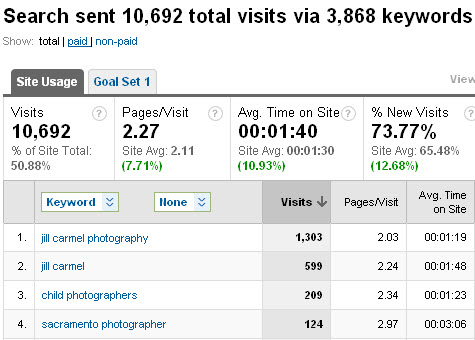
Rather than try to compete on authority for that phrase (or in addition to), find phrases like Hollywood Indian wedding photography ideas. No pages exist with that phrase, so if you optimize a blog post then you will easily rank very high. Plus you might even rank for different keyword combinations such as Hollywood Indian wedding, Hollywood photography ideas, etc. Even if only a handful of people search for that every month, that blog post provides exactly what they are looking for. Specific phrase + little competition = new client. Multiply the number of posts optimized for specific phrases and the traffic becomes significant. Look at this Google Analytics snapshot from a Sacramento Photographer. The main phrase Sacramento photographer was just 1 of 3,868 keywords that she ranked for and contributed to less than 1% of total traffic. Most of the few thousand phrases are very specific searches you would never imagine people would type.

Jill Carmel Analytics

Long-tail SEO is a strategy to find and capture search presence for the thousands of long phrases users will type to find you. Here’s how to locate and organize them.

Keyword List Worksheet

Start with a 4 column list on paper or spreadsheet using the following column headings

Adjectives: Indian best
Locations: Los Angeles Hollywood
Niches:  wedding photography
Nouns:  ideas

As the columns fill out, use various keyword combinations to develop the best phrases for your business.
1. Indian Hollywood wedding ideas
2. Best Los Angeles Indian wedding photography

Put the most important phrase at the top of the list. Next time you write a page or a post, take a look at the list and see if you can incorporate one of the phrases into your post idea. Or you can proactively start writing posts about each of your phrases. This week write about item 1, next week item 2, etc. Cross them off your list so that you don’t optimize for the same phrase twice.

Idea! Create a “best-of” post using content you already have written elsewhere. Take a paragraph here, and image there, and using old posts you can quickly create a new and optimized post.

How to Find Great Keywords

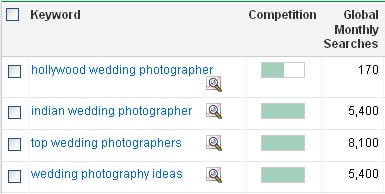
Two of my favorite 10 SEO Tools for Photography Keywords are free Google Keyword Tool and Traffic Travis PC software. Most everyone knows about the Google Keyword Tool for keyword research, but may be confused on how to get great ideas. I searched Los Angeles wedding photographer has 170 broad searches per month, meaning those 3 words were somewhere in the search criteria. Notice other keywords that users type as a part of their search phrase: Indian, top, ideas, photography. Add these to the keyword list worksheet for future use.

Indian Wedding Photographer Ideas

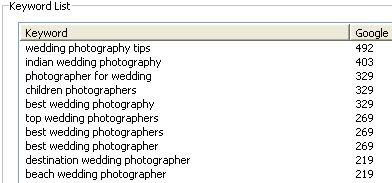
Yes, it is that simple. Looking up Hollywood Indian wedding photography ideas would not show any search volume, but we can see that users do search with those words in different combinations. If people are searching top wedding photographers, then they would also search for top in local searches as well. You don’t need 1,000 visits to grow your business. Rank high for something that 5 people search for each month and you can snag all of those clients ASAP. Traffic Travis just offers a second opinion. Another search uncovers more great keywords. I add the following keywords to my list: tips, best, destination, beach.

Hollywood Wedding Photographer Travis Results

My next post might be something like “10 Photographer Tips for the Best Beach Wedding in Los Angeles” and capture users searching for beach wedding tips, best photographer tips, Los Angeles beach wedding, etc. The power of long-tail SEO gains a little traffic from a number of phrases.

Compare Two Keywords

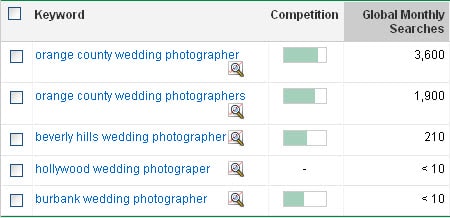
The other time a keyword tool comes in handy is when comparing the search volume of two or more keyword phrases. If I’m a wedding photographer in Southern California it would help to know which cities have the most searches. After typing a few phrases (at the same time) into the Google Keyword Tool I find that Orange County is very highly searched. Optimizing for that location has a lot more potential than Beverly Hills, while Hollywood and Burbank have very few searches. The keyword list should reflect this priority with the majority of phrases going after Orange County and maybe only 1 or 2 for the other locations.

Compare Two Keywords

For the creative and visual learners out there this video speaks to some of the tactics above.

Take Keywords to the Next Level

”Blog

Keywords are a small portion of search engine optimization strategy. My Photographers SEO Book and Blog SEO Zen ebook are quickly becoming the standard do-it-yourself guides for ranking photo and wedding businesses. Learn about site structure, link strategy, and tools with no technical knowledge needed.

Filed Under: Marketing, Photo Biz Tagged With: celebrity photographers, google, google search, index term, information retrieval, internet search engines, keyword, keyword list, keyword optimization, keyword research, keyword tracking, keywords, long tail, los angeles, los angeles wedding photographers, Marketing, optimize keyword, people search, Photographers, search engine optimization, seo, web search engine, wedding albums, world wide web

Photographers – Don’t Use Email Marketing To Market!

August 30, 2010 by Guest

Dean Levitt, AvatarThis is a guest post by Dean Levitt, Mad Mimi‘s Chief of Culture. Based in Brooklyn, Dean spends altogether too much time thinking about email, people, music and hanging out in the park.

I've always been a huge fan of poetry, especially the sonnets of Edna St. Vincent Millay. I think that the “aha!” moment with poetry came to me at the Boston Museum of Fine Art while strolling through a photography exhibit. I saw some line somewhere about photography capturing a moment in emotion (or the other way around depending on your outlook) and it kinda hit me how similar the two arts are. Poetry (at least the kind of poetry I enjoy) is a wordy photograph.

No one understands better how one medium can be two things than photographers. There's a world of difference between a “photograph” and a snapshot, miles between prose and poetry and a gulf between an email that “markets” and an email that reaches out and connects. That's what we do! We connect… Think of your email marketing service as a way to share, touch, explore and exhibit. Whether your art form is expressed professionally as a portrait or wedding photographer or in purely aesthetic shots for the joy of it, you can utilize the available tools to stay visible and grow (as a business and as an artist).

Poetry is a wordy photograph.

Our entire culture has moved into a system of immediate sharing. Via Flickr, Facebook, Twitter and email, we're constantly sharing and updating. This only gets annoying when we're bombarded by advertising, marketing and spam. Anyone still use MySpace? It's like trying to add a slogan into a rhyming couplet! Take a step back and think about the beauty inherent in the social mediums rather than the possible benefit to yourself.

Building an email with Mad Mimi provides an easy way to share with hundreds (or thousands) of people in moments but it's only really sharing when it's personal and sincere. Take advantage of these tools in our lives to give a moment of your time to tell your friends, clients, customers and potential customers what's on your mind, what you're thinking and what is coming up professionally and personally. It makes receiving an email more like a coffee break with a good friend.

Mad Mimi Email Marketing

Emails provide a lovely way to exhibit your latest works by embedding images directly into the email accompanied by the story with it; whether is the story of a lifetime captured in a portrait, or the love shared at a wedding. Your email becomes a gallery. It's like a wormhole really – an gorgeous powerful email received at a desk whips the reader into a gallery where the photographs transport the viewers out of their moments into the moment captured by you.

So stop marketing and be a photographer, even when you're being an email marketer.

Please do email me and I'd be happy to help you with the boring technical bits of building lovely emails!

Dean and Mad Mimi have been instrumental in my launching MANTRA, a monthly e-newsletter about my wedding photography. While an in-depth review of the service and my experiences will be published soon here, I went ahead and became an affiliate of Mad Mimi. If you were to click the links or the image in this post, I do get a small commission. Thank you and thanks to Mad Mimi.

Filed Under: Marketing, Photo Biz, Photography Tagged With: Business, dean levitt, e mail, email marketing, fine art, mad mimi, Marketing, newsletters, photographer, Photographers, photography exhibit, poetry, Wedding Photography, world wide web

  • « Previous Page
  • 1
  • …
  • 4
  • 5
  • 6
  • 7
  • 8
  • …
  • 12
  • Next Page »

Subscribe To Tiffibox Treats!

Looking for a well-curated email newsletter that will leave you inspired and motivated about your photography business? Sign up below!

About Seshu

Seshu creates relaxed portraits of families and high school seniors in Avon, Connecticut. He also leads a successful headshot photography studio in Connecticut, helping professionals from a variety of disciplines project the very best versions of themselves. He created Tiffinbox as a way of inspiring photographers, to create better images and successful businesses. [Read More]

Email Templates For Headshot Photographers

Email Templates for Headshot Photographers

Recent Posts

  • How Capture One Changed My Event Photography
  • 10 Steps To Stay Positive In Times Of Great Stress
  • Why You Need To Read “Personal Branding For Photographers” Now
  • How To Master Your Website Content Step By Step?
  • Tony Taafe’s TNT Method For Headshot Photographers

Recent Comments

  • Stephen Davison on Are You A Business Owner Who Is Smart, But Stuck?
  • Ben A. on Don Giannatti Clinches The 8th Annual Tiffinbox Award
  • Dan on Don Giannatti Clinches The 8th Annual Tiffinbox Award
  • Donald Giannatti on Don Giannatti Clinches The 8th Annual Tiffinbox Award
  • Stephen Davison on G.E. Masana’s 6 Strategies For Wedding Photography Success
  • Naveen Kumar on Weddings In India Are More Than Being At The Right Place And At The Right Time
  • kartick on Weddings In India Are More Than Being At The Right Place And At The Right Time
  • Leonid Farbman on 6 Uncommon Trends To Grow Your Photography Business
  • Willow and Finch Wedding Photography on 11 Reception Tips To Help Your Wedding Photography
  • Web Designer Malaysia on How To Optimize Your Squarespace Website For Search Engines
  • Creastan on An Interview With Photojournalist G.M.B. Akash
  • Cindy Brown | Atlanta on An Open Letter To A Local Photographer

Become a Patron!

Copyright © 2026 · Tiffinbox · Site Design by Heather Mackan Creative · Built on Genesis