• Photography
  • Interviews
  • Business
  • Reviews

Tiffinbox

Inspiring Photographers

  • Home
  • About
  • Blog
  • Contact

Selling Your Photography Without Shame

May 12, 2012 by Seshu | Editor & Publisher

Without a sale, you don't have a business. You have a hobby. Which, by itself may be where you want to be, but most readers of Tiffinbox are either professionals or aspiring professionals, so I figured I give you a head's up on this short video by Kristen Kalp introducing her new product offering called Sales Without Shame.

Some of you may recall that I reviewed Kristen's e-book, Circus Circus. If you follow Kristen's popular blog – BrandCamp Blog – you'll immediately grasp what she is trying to convey thanks to her lucid writing and her humor.

Sales Without Shame promises to be another remarkable and useful guide for those of us who are shy about in-person selling. If your online sales are off the charts, then you may not even need this guide. If, however, you are not seeing great results with that strategy and want to try selling your services and products to your clients face-to-face and don't know how, Kristen's guide is your ticket.

Personally, I do very little online sales. All of my portrait clients now expect to come in to meet with me after their session so that they can see all of the images I created for them and it gives them an opportunity to fully describe what it is they are looking to buy. Selling, to me, isn't about pushing products on unsuspecting clients. It's about having a good understanding of what my clients may need now and in the future and then suggesting a few valuable options to them.

While I have not had a chance to see the final version of Kristen's new guide, I mention it here because I find her writing and advice for photographers so very valuable. I trust that Sales Without Shame will teach me a few more ways to help my clients better appreciate the art that I create for them. And lucky for you, if you order Sales Without Shame, you get to learn from her as well.

So, here's what you should do next: Go to Sales Without Shame and enter your email address. Once you do that, you'll be sent a “sampler,” which in itself is chalk-full of great info that you can put to use in your business today. Then, at the tail end of this month (May 29th or so), you'll get an email inviting you to purchase the full version. Bingo!

UPDATE: Sales Without Shame launches on May 30th for $247, until June 8th when it goes up to $447. So jump to it!
Filed Under: Business, Photography, Portraits Tagged With: circus circus, client, emotions, guides, kristen, kristen kalp, portrait photographers, portrait photography, Portraits, sales, selling, shame

Finding Your Butterflies … Again!

March 16, 2012 by Amanda Reseburg

Amanda Reseburg is a wedding and portrait photographer from Beloit, WI. When she's not photographing for clients she's hanging out with her kids, shooting for fun and blogging incessantly. In the spirit of personal passions, Amanda started Kindred Spirits Hospice Photography in 2009. Follow her on Facebook and on Twitter.

Starting a career in photography is a lot like dating.

In the beginning, the passion is ignited and you want to be with photography ALL. THE. TIME. Your camera is your constant companion and you will photograph anything that moves. You love photography. Photography loves you. It gives you butterflies. You will be together forever.

As you become more serious with photography, you begin to settle into a typical routine. Sure, you still love photography, but the passion has waned a bit. You have regular clients. Regular shoots. Regular poses. It’s all very comfortable. All very regular.

There may come a time when you become SO comfortable with your long-term love Photography that you start to hate the very sight of it. Everything your camera does starts to bug you and you just want some time to THINK … ok, maybe not … but, much like dating, if you don’t feed your relationship with photography … it will die. Those butterflies you felt in the beginning will go away, and what you’ll be left with is a JOB. Yes, I maintain that even at its most hectic I have the best job in the world. But, that doesn’t mean my passion for the craft couldn’t use a little pick-me-up.

Enter personal projects. Diving into personal work is a way to not only practice newly learned skills, but it’s the best way to really enjoy your craft again. With personal work, the rules fade away for the most part. You are shooting for yourself and yourself only. There are no clients to please and no deadlines to meet.

Last summer I started a personal project based on my love of turn-of-the-century children’s portraiture. I wanted to tap into what I call the natural “creepiness” of kids. It was a departure from what my portrait clients typically ask for, but it was FOR me, no one else. The project morphed into what people started calling “Creepy Kids.” It was met with mixed reviews. Some people LOVED the darker take on children’s portraits. Some people thought I had made the precious children look dead or evil. But, I was satisfied in the end that I had created something that I liked and in the process learned something new about my aesthetic.

[blogshow id=9ca3 player=1 autoplay=0 toolbar=1]

Tapping into a darker, moodier feel to my portraits changed my outlook on my regular client-based work. In that sense, stepping outside of my “9-to-5” to shoot just for me really changed my work as a whole. I could have continued shooting what easily sells, but I wonder how long I could continue to do that before I reached maximum burnout.

I challenge all working photographers to take time out to shoot for you. Reclaim your passion, embrace what others may find strange, and find those butterflies again.

Are you working on a personal project that you would like to share with other photographers? Tiffinbox welcomes your submission. Simply contact me if you are interested in guest blogging.

Filed Under: Call To Action, Photography Tagged With: amanda reseburg, avoiding burnout, beloit, butterflies, fashion photographers, finding, human interest, personal, personal photo, personal photos, personal projects, photographer, Photography, portrait photographers, projects, pursue, Twitter, visual arts

Is Going To WPPI Every Year A Necessity?

February 18, 2012 by Seshu | Editor & Publisher

On Twitter, on Facebook and even on LinkedIn, I have been asked the same question: “Are you going to be at WPPI?”

The short answer is: no. The somewhat longish answer is: no, not this year, but hopefully the next.

It got me thinking, however, about my friends who have been to every single WPPI convention in Las Vegas for the last 20+ years. That's commitment. That's loyalty. That's staying power. That's knowledge. Those photographers are obviously much more advanced than I could be; knowing their craft, the business and the industry we are all members in.

Can you imagine going to every single WPPI convention? Are you that committed to your business or to the industry?

Is WPPI the must-go event of the year for wedding and portrait photographers? If you are going, what do you get out of conventions like WPPI? How do you pay for the entire experience? Do you set aside a special budget for it? If you are not going, why not?

Are there other conventions you attend on a regular basis? For me MysticSeminars and Inspire Photo Seminars provide great value. Why? Because I live in Connecticut and while MysticSeminars is in my back yard, I think of Inspire Photo Seminars as being in my front yard, in Massachusetts. The smaller, more intimate, nature of these events are also a bit factor in my decision to commit to them every year. I guess, then, it comes down to one's personality and goals.

So tell us a little bit about you and your goals. Would a big (and I do mean BIG convention like WPPI) be your cup of tea or would you prefer smaller, more regional gathering of wedding and portrait photographers.

Please comment below!

Filed Under: Conferences, Photography, Portraits, Weddings Tagged With: buzzworthy success, conventions, inspire photo seminars, Las Vegas, mgm grand hotel, Mysic Seminars, Photographers, portrait photographers, regional conferences, Wedding, WPPI

Effectively Automating Social Media Marketing

June 13, 2011 by Andrew Funderburg

Andrew “Fundy” Funderburg, is no stranger to Tiffinbox. Read his previous contribution about his album designing program for wedding and portrait photographers. In full disclosure I have to tell you that he and I are collaborating on SociRoll, the social media marketing tool he discusses briefly in this guest blog post.

I’d like to start off by saying that I am at the top of the list of haters of social media tools being used to spam people. Do not use social media to spam your followers.

So, the question is, why would I invent a program for automating Social Media marketing. The answer is simply that I have more things to share with my friends and followers than I have time in the day to share.

Social Media is all about making connections with people. For me it is about making deep connections. I’m not the type of person always tweeting and posting a ton of personal information. Sure, I’ll hop on Facebook and Twitter during the weekend and talk about the movie I’m going to see or whether my kids won their basketball games. But, during the week, I post a few personal things–mostly information about photography and the business of photography.

We strive to collect and provide some of the best content in the wedding and portrait industry. Content that we create and share today is still valuable in one or two months. If we manually update everything on Facebook and Twitter, all of this old content is lost. We constantly have new followers and friends and these new people will be just as interested in our old content as our new content.

Andrew Funderburg Blog Posts

Since August of 2010, we’ve written 150+ blog posts. More than 100 of these blog posts are related to the business of wedding and portrait photography. There are articles on everything from how to price wedding albums to how to sell portrait packages and everything in between. I want to make sure that our followers see this info.

It would be physically impossible for me to make sure that each one of these blog posts is featured in a tweet once a day. I would lose track of what I shared yesterday, probably miss some things, duplicate some things, etc. The point here is that if I have SociRoll auto post one of my blog posts every day, or even twice a day, we won’t repeat sharing a blog post for 3 months. And then we take into account the fact that if something doesn’t show up in your Twitter in the last five minutes, we won’t see it. The chances of someone seeing repeated Tweets is very low.

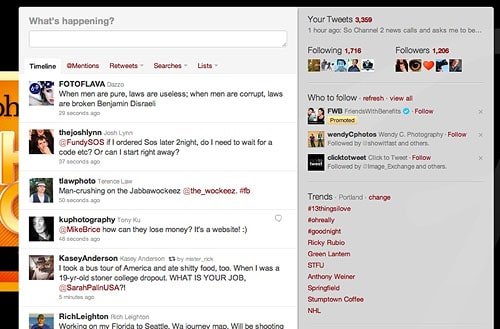
Andrew Funderburg Twitter Streams

Now, let’s take a professional photographer. Let’s say the average wedding photographer shoots 30 weddings and 40 portraits a year. That’s 70 blog posts a year. Then let’s say they have been in business for 3 years. That’s more than 200 blog posts. Sharing one of these (or even two of these) events on their Facebook fanpage every day will seriously add to their brand and their site traffic.

So, do we set it and forget it? No. We let SociRoll do the heavy lifting for us, and we work hard to respond to people, retweet our friends, add personal touches, etc. But we know that our content that we’ve worked extremely hard to create is being shared among our friends and followers. Here's how to get started with SociRoll.

Filed Under: Blogging, Business, Marketing Tagged With: automate, automating, blog, blog post, engaging with people online, facebook, human interest, Marketing, marketing tools, online social networking, portrait photographers, social information processing, social media, tools, Twitter, web 2.0, world wide web

What Happens When A Canon Shooter Uses A Nikon?

May 20, 2011 by John Edgar

John Edgar is an internationally renowned wedding and portrait photographer who travels the globe documenting moments and creating art of his discerning clients. He is based out of the beautiful city of Toronto, Canada.

I’ve been take pictures for over 10 years, and worked as a full time photographer for 6 of those. I don’t feel that any topic has been more discussed than Nikon vs. Canon. In fact, the number one question I always get as a photographer is just that. Until last weekend, Canon was the only system I have ever shot. I started with a Canon 300D post college, picked up a 30D shortly after, and the day the 5D came out, I had one. I shot the 5D for many, many years until I recently switched to the 5D mkII and 1Series bodies.

I’ve been a prime shooter since day one, originally with the plastic fantastic (50mm 1.8), upgrading from the 1.8 to the 1.4, and more recently the 1.2. My daily drivers are the 35 1.4, 50 1.2, 85 1.2 and 135 2.0.

After much conversation at the Mystic 6 convention I came to the conclusion that I should at minimum play around with a Nikon setup to see what I think. It would be quite ignorant of me to stand behind my Canon love having never given Nikon a fair run, right? My friend Steve Sager agreed to let me come out and shoot a wedding with him, and bestie Tara McMullen agreed to lend me her Nikon gear for the day.

Full disclosure: I was sure I wasn’t going to like the system, but I resigned myself to the fact that I would indeed give it a fair shot, and leave my bias at home. I’m not an overly techie person. I understand camera and imaging technology but I don’t obsess over custom functions and AF point placement algorithms. I like taking pictures, and hope my camera for the most part “just works”. I guess as a result, my commentary won’t be particularly technical.

Armed with a D3s, 35, 50, 85 and 135mm lenses, I left my beloved Canon bodies at home and ventured off to shoot a wedding.

The Preparation

I arrived in the morning at the groom’s house to shoot preps. The family was Portuguese and everything was moving along quite quickly. This wasn’t anything usual for me, but I felt it was definitely a great opportunity to put the D3s through it’s paces. I like the 35 1.4 in the morning, for preps. It gives a great sense of place and as a result it’s almost always my go-to lens for that portion of the day. I stuck it on the D3s and started snapping. We were upstairs and the bedroom was quite dark. I didn’t have a flash on (mostly because I like to shoot available light) so I was pushing the ISO into the 1200+ range.

My first immediate and extremely frustrating observation was that the autofocus was slow to acquire a focal lock and to allow me to fully depress the shutter button. With my 5D mkII, it almost never hunts around for focus. With the D3s, I felt like it was just sitting there thinking about what to do next, while I was missing some great moments. To be honest, it really, really annoyed me. However, when it did finally acquire AF lock and I made an image, the focus was spot on. This wasn’t really something I had ever thought about before, and sparked an internal conversation of “would I rather have the image, but out of focus, or miss a few for something sharp” (more on that later). Generally, a pretty high proportion of my images shot with my Canon system are out of focus, mostly because it just can’t seem to focus on the right thing. This has been a frustration for a while and definitely my main friction point with the Canon system.

Nevertheless, I pushed on shooting. I was tweeting as I went and Paul Johnson offered some insight into a change I could make in the camera settings that would allow for faster autofocus. I made some quick changes, tested it out a bit and found the “continuous” mode to be quicker in low light. After making this change, I did notice a much higher percentage of out of focus images, but still plenty of usable frames coming from the camera.

My next realization about the Nikon system came as I moved from inside the house to the yard out back. I’m a manual shooter so I’m used to changing my exposure on the fly as I move around and the lighting conditions change. Over the years you become accustomed to knowing the settings you need by judging the light and your hands automatically find the settings and plug them in. For me this is something that happens almost subconsciously as I’m shooting. As I quickly ran outside and started shooting my fingers did the usual wheel turns and something struck me. I realized that in less than 30 minutes of using the camera, it felt second nature to me. Believe it or not, after 10 years of shooting on the Canon system I still sometimes get lost and turn things the wrong way or forget where a setting is. I was very, very impressed with how quickly I was able to adapt and learn the Nikon layout, and found it extremely natural and ergonomic. Hours in I said to a guest who asked me about the camera, “it really is a joy to shoot with.”

John Edgar - Wedding with Nikon D3s

The Ceremony

After the preps we headed to the church. It was very dark and I wasn’t about to use the flash during a ceremony. This was the perfect time to test the higher ISO ranges. I sent a quick message to my friend Ryan Brenizer to confirm that the files are pretty clean around 6400 ISO before I went trigger-happy. He gave me the nod and with a smile I set the camera there and went to town. I shot for a bit and then zoomed in to 100% and checked the shadows. Just as Ryan had mentioned: very, very clean. I kept my exposures solid if not slightly to the right and shot the rest of the ceremony 3200/6400.

I had decided to shoot the whole ceremony with 135mm lens. Having had a morning filled with slow AF I was a little worried about it, but plunged in never the less. I switched out of continuous focus back to single focus because my morning tests had left me with a feeling that S was slightly more accurate, and I could afford to slow down a little during the ceremony. As I shot the ceremony, I noticed almost none of the AF lock lag I had observed in the morning. The quality of the light in the church, while dim, was quite a bit better. The shadows were more even, and had less contrast. Without knowing the in-depth technical aspects of AF, my gut feeling is this helped. After shooting I went through the frames on the back of the camera at 100% zoom checking the focus. I noticed that about 85% of them were sharp and focused as I expected. This is about 30-40% better than what I generally experience off of my Canon bodies.

The Photo Session

In “Canonland” I shoot 90% of the photo session with the 50 1.2 so I decided to shoot with the Nikon 50 1.4 I had. I immediately noticed that the bokeh was totally different. At first I thought I had my aperture set wrong, I wanted to be wide open but what I was seeing looked like I was at f2/2.8. (I’m not going to debate the merits of bokeh here, that would be stupid. It’s all personal preference.) Going back over the images and looking at my Canon work, I personally like the look of the out of focus areas on my Canon glass much much better. I switched over to the 35 1.4, and set it to 1.4, again I really didn’t like the way the glass rendered out of focus light. It was also during the photo session that I noticed the general hue of the image was drastically different than what I was used to seeing on the back of the camera. At that point I didn’t know if that was the RAW rendered jpg, the screen, the light I was in, my eyes or what. Having now looked at the files side by side in ACR I definitely feel that a CR2 file has more of a magenta hue to it than a NEF. Nikon raw files generally seem warmer/orange. This is also to my mind a hue difference, not simply white balance related. I don’t really have a clear opinion on that either way at this point, so I’m merely making the observation. Do as you will with it.

John Edgar - Wedding with Nikon D3s

The Reception

After the photo session we headed to Liberty Grand where the reception was held. Anyone local to Toronto knows how brutal shooting in this hall can be. The ceilings are dark wood and a good 30 feet high. Bouncing isn’t much fun in there, but if you aim for the walls and get the angle right it’s doable. I’ve shot the venue 20+ times so I’m used to it, but I wasn’t used to the SB900. I was told to keep it in manual mode because it sometimes overheats and shuts down in TTL. This initially put me off a bit, but I compensated for it manually and it was fine.

As I shot, I found that my ability to pull in a lot of ambient light was great! The high ISO I used gave me much more flexibility with the flash than I usually afford myself with my 580EXII. I really liked the exposures I was getting. At one point during the evening the flash batteries died and before I had a chance to replace them, the father of the groom pulled me over and demanded a quick shot with some of the groomsmen. I didn’t have batteries in my pocket so I thought “to hell with it” and cranked the ISO into H1. It was almost pitch black and the (very) intoxicated groomsmen wouldn’t stay still. I grabbed a few frames and I was pleasantly surprised with them. The final image will have to be presented in black and white, however it was sharp and fairly well exposed.

As I finished out the night, I felt the strain in my arm. The camera is more weight than I’m used to for a 13 hour day and my wrist was starting to ache a little. If I’m to do this for another 10-15 years I feel heavy bodies are going to cause some long term damage to my right hand. Many of my professors from school now have bad carpal tunnel and arthritis from shooting for 20+ years. I guess the alternative is to shoot a D700/D3s combo, as it’s a much lighter body.

John Edgar - Wedding with Nikon D3s

John Edgar - Wedding with Nikon D3s
The Post

When I got home I went over some of the files: zoomed, cropped, pushed, pulled, starred and un-stared. I spent a good few hours figuring out what I liked and what I didn’t. So here is what I’ll say:

The AF focus system is, at worst, much better than anything I’ve experienced with Canon. In continuous focus mode, while a lot of the AF lag is gone, so is a lot of the accuracy. That being said, I still found more of the images to be in than out or at least acceptability soft. During the photo session, shooting with good light in AF-S, the focusing was almost always spot on.

The flash system is good. I know some people hail it as the second coming of Christ, but I truly believe the 580EXII is just as good as the SB900. Feature wise, it does have some nice fancy do-das that the 580 doesn’t, but in terms of just taking a good solid exposure the systems are very, very comparable.

The high ISO noise tolerance on the D3s is unreal. That’s all I need to say about that.
I personally find the layout of the D3s to be fantastic. A lot of the button arrangement and menu options make much more sense to me than the Canon design. For example, where Canon will use a 3 finger strain voodoo dance menu wheel scroll push setting change, Nikon simply has a toggle switch.

Now I realize this is just my personal opinion, but I do not like the bokeh. And as an artist/photographer/whatever, I rely heavily on depth of field as a pivotal element of the work I produce. This will be the main reason I wouldn’t switch systems. Canon has great glass. The colour clarity, the way it renders flair, the out of focus areas, the contrast and general “look” of the images from my Canon are what I fell in love with, and continue to love.

In the wedding space I feel that if those “artistic” elements of photography (that transcendental feel and quality of the image that you just can’t quite put your finger on) are important to you as a Canon shooter, you might find a switch frustrating. If you are a photographer who is very methodical, photo journalistic, technical or moment driven then you should without a doubt be shooting Nikon right now. However I am truly in love with the look of my Canon glass. I’m willing to over shoot and deal with weird white balance and a total inability to focus to have that.

Call me stupid, and maybe I am.

“Popularity does not dictate quality,” says this one Mashable article which coincidentally compares Canon v. Nikon. Check out the infographic. What are your thoughts? Have you given both systems an honest, unbiased try? Tell us your experiences with that “other” system. Go!

UPDATE: John wanted me to let you know that the images presented here are SOOC – Straight Out Of Camera – with the only exceptions being that they were scaled down and sharpened a tiny bit.

Filed Under: Photo Technology Tagged With: autofocus, bokeh, canon, canon 300d, canon eos 5d mark ii, canon shooters, conventions, live preview digital cameras, mystic, nikon, nikon d3s digital camera, nikon system, Photographers, Photography, portrait photographers, shooter, shooting, toronto

  • « Previous Page
  • 1
  • 2
  • 3
  • 4
  • 5
  • Next Page »

Subscribe To Tiffibox Treats!

Looking for a well-curated email newsletter that will leave you inspired and motivated about your photography business? Sign up below!

About Seshu

Seshu creates relaxed portraits of families and high school seniors in Avon, Connecticut. He also leads a successful headshot photography studio in Connecticut, helping professionals from a variety of disciplines project the very best versions of themselves. He created Tiffinbox as a way of inspiring photographers, to create better images and successful businesses. [Read More]

Email Templates For Headshot Photographers

Email Templates for Headshot Photographers

Recent Posts

  • How Capture One Changed My Event Photography
  • 10 Steps To Stay Positive In Times Of Great Stress
  • Why You Need To Read “Personal Branding For Photographers” Now
  • How To Master Your Website Content Step By Step?
  • Tony Taafe’s TNT Method For Headshot Photographers

Recent Comments

  • Stephen Davison on Are You A Business Owner Who Is Smart, But Stuck?
  • Ben A. on Don Giannatti Clinches The 8th Annual Tiffinbox Award
  • Dan on Don Giannatti Clinches The 8th Annual Tiffinbox Award
  • Donald Giannatti on Don Giannatti Clinches The 8th Annual Tiffinbox Award
  • Stephen Davison on G.E. Masana’s 6 Strategies For Wedding Photography Success
  • Naveen Kumar on Weddings In India Are More Than Being At The Right Place And At The Right Time
  • kartick on Weddings In India Are More Than Being At The Right Place And At The Right Time
  • Leonid Farbman on 6 Uncommon Trends To Grow Your Photography Business
  • Willow and Finch Wedding Photography on 11 Reception Tips To Help Your Wedding Photography
  • Web Designer Malaysia on How To Optimize Your Squarespace Website For Search Engines
  • Creastan on An Interview With Photojournalist G.M.B. Akash
  • Cindy Brown | Atlanta on An Open Letter To A Local Photographer

Become a Patron!

Copyright © 2026 · Tiffinbox · Site Design by Heather Mackan Creative · Built on Genesis