• Photography
  • Interviews
  • Business
  • Reviews

Tiffinbox

Inspiring Photographers

  • Home
  • About
  • Blog
  • Contact

Should Photographers List Their Prices? If So, Where?

June 26, 2012 by Angela Pointon

Angela Pointon is the founder of Steel Toe Images. She inspires photographers and other creative people to kick major butt through her consulting sessions, blog, emails, workshops and her first book (coming soon), called “ A Swift Kick In The Pants: Business Smarts For Us Creative Types”. Follow Angela on Twitter or on Facebook.

Should You List Your Prices, And If So, Where?

Pretty much every photographer I meet asks me this question. And whether you’re just starting out or have been around for years, it’s something that challenges many.

Angela Pointon With Money

Never In Expensive Print

A photographer I met with recently was about two years into the business. They thought that glossy brochures were a mandatory marketing “must” and printed a boatload when their business first launched. That was mistake #1. Mistake #2 was printing them with prices mentioned. When you need to increase prices (which they did), those brochures become useless. Ouch.

Price sheets should be printed off one or two at a time, never more. As your business grows, your price will typically increase. You never want to have a price written somewhere that isn’t easy to change.

Maybe On Your Website

If you receive most of your business through referrals, these consumers already have a price point in mind, because they probably already asked your past client. But if your business is a blend of referrals and completely fresh clients, you might be thinking that pricing can help attract them to you.

Consumers are busy these days. If you do not list your pricing, some will be frustrated that your price isn’t listed publicly for the entire world to see. So if you aren’t going to list prices (more on that in a minute), make it very easy for them to request it. Have your phone number and a quick form on the website (asking just a 3-4 questions… not a gazillion) and respond within 24 hours with an unbelievably well written and remarkable email or amazing phone conversation about what makes your business different. Attached to that, include your most recent price list.

But Seriously, Why List It?

Now we get to the why. Why… I mean, really… why list pricing on your website? What do you feel it is going to accomplish? You do not want someone choosing you based on price. So why go there right away?

If you and I were going on a date, I wouldn’t ask you how much you were planning on spending on me the first time we met. And you shouldn’t let people be so rude as to judge your value from a website visit alone, either. After all, what makes your business unique and what establishes your value is so much more than a price.

But ignore me if you must. If you’re going to list prices, be a tad vague. List starting prices and clarify that exact pricing will be provided. Give yourself the opportunity to at least engage with them, discuss your style and what you have to offer before you can have the only deciding factor be price.

Don’t Wait Too Long

If you do decide to remove pricing from your website, telling a potential client your pricing at a face-to-face meeting is too late. You’ve already invested time in them, and remember: you are qualifying them as much as they are qualifying you. Before you sit down with anyone, communicate how you’re unique and what you have to offer, and state your typical pricing range or send them your pricing sheet. Ask them if it’s within their budget. If it’s not and they aren’t willing to adjust their budget to afford you, you’ve saved yourself a ton of time. Spend that precious time on more qualified clients, instead.

How has listing or not listing prices worked for you or against you? I’d love to hear your stories!
Filed Under: Marketing, Photography Tagged With: angela pointon, Business, competition, increase prices, list price, Marketing, photographers list, potential clients, price, price list, price sheet, Pricing, suggested retail price, time based pricing

How You Can Optimize Facebook Marketing

June 11, 2012 by Craig Robinson

Today's guest post is by Craig Robinson. He works as Editor for a Facebook Ad manager tool called Qwaya. Besides writing about topcis like this one, Craig covers other trends within Social Media for Qwaya and he has studied Social Context and Media-Communication Science.

Facebook is a great marketing channel for small businesses. If you put some effort into creating and tweaking your campaigns, you may outperform bigger competitors who won’t spend as much time on a single niche. But it takes a lot of testing and result analysis to succeed. You can’t just put up an ad and wait for it to convert.

Before we go any further, let’s quickly look at the advertising options available on Facebook.

Social or Antisocial Ads

You could say that Facebook ads range from classic, banner-like online ads to social recommendations.

The first category consists of the ads you see to the right of your news feed. When you click them you’re usually directed to a company’s webpage where you’re supposed to sign up or make a purchase.

Remember, though, that you can still be quite creative when you make these ads even though there are rather strict rules regarding text length and image size etc. Here’s a short list with great tips on how to change things up.

Just keep in mind that you need to have material in the ad that is followed up when the person clicks through to wherever the ad is pointing. Forget “smiling ladies” and generic “persons standing around having fun together.” Use pictures and texts that really represent what you are about instead.

On the other hand of the spectrum we have sponsored stories, which is a mix between an ad and a recommendation from a friend to a friend. This could be that someone comments on your fan page and the comment is converted into an ad shown to his friends. It could also be a check-in at your studio, an RSVP to an exhibition or that someone likes or tags an image you’ve posted.

Basically anything can be turned into an ad/recommendation, and for people working in creative industries, social Facebook ads are often the best option. You highlight when someone does something on your fan page and this action is then spread to this person’s friends. People see that you are “liked”.

Facebook Ads Optimization

Facebook is packed with people. Everybody is there. So your problem as an advertiser is not how to reach out to as many as possible but rather how to reach out to the right people – people who will like you, visit your website or fan page, and in the end become a customer.

Because of this you have to use demographic features when you’re creating your ads, such as age, interests, geographic locations etc.

My biggest advice for aspiring Facebook advertisers is to test everything – different type of ads and different targeting. This is the only way to really find out what which your best target groups are and what kind of ads they respond to.

One such group could be women in Seattle who like photography and are between ages 25-35. If you approach them with both traditional Facebook marketplace ads as well as sponsored stories you’ll soon find out what ad type matches your business goals and then you carry on using the best-performing ads.

You can of course organize the ads yourself through Facebook, but it’s a bit of a hassle. You will have to keep track on your own which ads are running, when they are running, how much impressions they get and so on. After a while this can cause some problems as you are probably spending money on stuff you don’t want.

When you’ve started to run several campaigns simultaneously you might benefit from using a tool to help you keep track of where you are in the advertising process, and perhaps even more important, which ads that actually made profit or met your business goal in terms of number of likes etc.

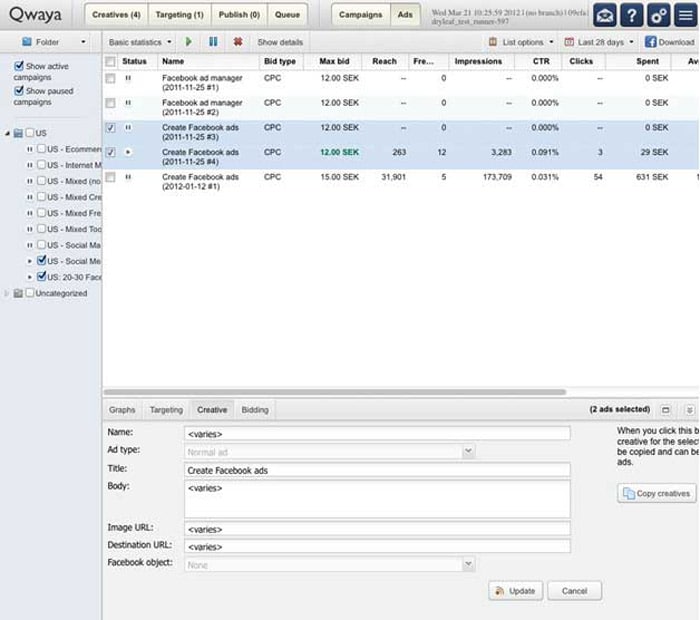
The only tool on the market today that provides a full self-serviced solution is Qwaya. The tool is completely browser based so that you can access it anywhere. Qwaya has direct access to Facebook’s API which means that it’s always updated with the latest segmentation features and demographic options.

Qwaya Campaign Interface

Most Important Thing When Making Ads

When realizing that Facebook is full of people with different interests and demographics it’s easier to create ads with them in mind. One key thing to remember is to always A/B test ads for the same demographic group and follow up on the result.

Don’t just run ads and hope for the best. You might improve the results if you tweak them a bit. Use the statistics that you get from Facebook, perhaps Google Analytics or some other tracking source. In doing so you will be able to quickly move your advertising budget to ads that perform well and cancel ads that just cost you money.

Again, the key is to start advertising to different people in different ways and then let the results dictate the future.

These are just some short tips on Ads for Facebook. If you are interested in learning more you can check out this page for more Facebook marketing strategy tips.

Would you like to win a month-long access to Qwaya's Premium Plan (valued at $149)?

Here is what you need to do to win:

1) Comment below, telling us how you would use your Qwaya account
2) “LIKE” Tiffinbox on Facebook – https://www.facebook.com/tiffinboxmedia
3) Tweet “I just LIKED #Tiffinbox on Facebook – http://seshu.me/JSOBYk – for a chance to win a month of Qwaya for my photography business. Please RT!”

I'll randomly pick one person who has commented below, LIKED Tiffinbox on Facebook and posted the Tweet as it appears above. Winner will be notified via Facebook on June 15th.

Filed Under: Marketing, Photography Tagged With: ad manager, advertising, blog software, facebook, facebook ads, facebook features, facebook marketing, facebook marketplace, facebook social, Marketing, marketing channel, marketplace ads, online social networking, social facebook, social information processing

5 Steps To Creating And Marketing And Marketing … Nonstop!

May 30, 2012 by Shuva Rahim

Today's guest blot is by Shuva Rahim, a photographer in Eastern Iowa. Read her first post on Tiffinbox, “9 Tips For Clear & Consistent Client Communication.” When she's not focused on her photography business, she teaches businesses about how to effectively use social media. Follow her @shuvarahim.

Marketing IS never-ending. Some photographers are awesome at it, some aren't. I think I fall somewhere in the middle. But I know how to work hard and am not afraid to put myself out there. When I first proposed this post for Tiffinbox I was all gung-ho about it. I accidentally created a marketing “formula” without realizing it. Then after the first few drafts of this post I felt less certain, only to realize the only person who can expertly speak about my marketing is me. The following is what I did for one session. It's not the “right” way or the “wrong” way but it's my way. It hasn't made me millions (yet), but it's gotten me attention and free press and business … and allows me to create with a level of honesty, heart and love that fulfills me as an artist.

I introduced a new session last fall called Beloved, an unposed session aimed for longterm couples focusing on who they are instead of what they look like. I had been shooting Beloved-style since 2010, but it wasn't until 2011 I decided to really start promoting it. The marketing required a lot of thought, planning and time.

1. Promo video. After more than a year of photographing Beloved, I approached two different couples to photograph complimentary sessions, and hired a videographer. For me, this was a 6-month project (mostly because of scheduling). One of the sessions was videotaped and interviews were done with both. The end result was a short promotional video I was able to share on Facebook, Twitter, LinkedIn, YouTube and my blog. You can watch it below:

2. Media outlets. Once I had the video, I contacted various media outlets in my area and used it to pitch a story about me and Beloved as a product that was unique and celebrated relationships. My first media exposure to this was a newspaper interview in November (about a month after releasing the video). The second was a live TV interview on Valentine's Day (four months after releasing the video). The more recent was a feature in a business newspaper (five months after the video). All these media exposures are free publicity, and I blogged about each one, and subsequently created a link on my blog showing the promo video along with the media exposure. Again, something I share multiple times on Facebook, Twitter and LinkedIn. As a former reporter I knew media staff are busy. So if I didn't hear back I would followup.

3. Silent auctions. I created a 12×18 mount with a Beloved image, with my name and contact info on it. I provide that to whatever charity is holding a silent auction. In addition, I make a custom certificate (8.5×11 paper) laminated for each auction, in which the bid winner takes home. The certificate states a deadline – usually 10 days after the event – in which item must be validated. Validation for me means to contact me to set up an appointment. Every time I've had this strict time clause, the session has been validated. (A great tip I got from Sarah Petty's Joy of Marketing). Previously if I put a deadline of 6 months or a year, I got nothing.

4. Blogging. Blogging. Blogging. I was a newspaper reporter for 6 years prior to becoming a photographer, so this part was easy for me. However, it does require an immense amount of discipline. Not only do I blog my sessions, I blogged about my products. Before the promo video was done, I also blogged about the individual interviews we did with the couples. I also posted status updates on social media about the progress of the promo video before it was released. It was a way for me to tell people what I was working on and create anticipation. Since then, I blog about the silent auctions I'm participating in where Beloved has a presence.

5. Getting out there. Earlier this year I made a goal of connecting with at least 6 different people each day, Monday through Friday, whether they were already old contacts or new. I'll be the first to admit I've slacked off … some. But it's kept me on my toes, and in people's minds. To some degree, I consider myself a reserved individual. But I'm confident in my service and product, and I use that to leverage how I approach people. I've been in and out of various business groups since i started. Finding a good group of people you connect with takes time, much like building a relationship. But it's always about the other people, not you. Learn about everyone else, what makes them tick and what they like to do for fun. Then talk about you.

Marketing for Beloved is never “done”. In the end, as long as I believe in the experience and the product and love what I do, Beloved may very well be a longterm endeavor.

What steps are you taking to market your photography? Discuss below!

Filed Under: Marketing, Photography Tagged With: beloved, blogging, create image, five steps, Guest Blogging, images, Marketing, photographing couples, promo video, promotional videos, session, social media

Small Business Smarts For Photographers

March 15, 2012 by Jared Bauman

Today's guest post is by Jared Bauman who has built a photography studio in Southern California that photographs over 200 events and sessions annually. In business for a decade, Jared's clients fly him across the world to document their big events. Jared is a Co-Founder and President of ShootDotEdit, the #1 post processing partner for the professional wedding photographer. Known for his business background, Jared has released several educational DVDs and tours the country speaking to photographers about their small business. Follow him on Twitter.

Think Like An Owner

Mention that you’re a small business owner to anyone, and more than likely the response is along the lines of “Wow, you must make a lot of money and have a lot of time off!” Contrary to popular opinion, being a business owner seems to be synonymous with being a jack of all trades and master of none. Being a small business owner is overwhelming, time intensive, and all consuming.

In his book “The E-Myth”, Michael Gerber talks about going to work ON your business, rather than IN your business. By stepping back and watching your business, you learn to develop a system that will work outside of you. Systems don’t make mistakes … Only people do. So by developing a system, you can ensure that your business will run smoothly and effectively, providing the best possible product and experience for your clients.

Think of how much time we waste each day. Imagine if you weren’t the owner of the business … But merely just an employee. What would the owner think of how you spend your time on a daily basis? Are you working just to get things done? Or are you going to work and acting like an owner, working on tasks that only an owner can to grow and advance the business?

Determine the tasks in your business that only you can do. Spend time developing a system at your studio. It takes a lot of effort. But, by creating a manual for your systems and operations, you’ll be on the path to working ON your business, rather than IN your business. And this is where you’ll experience all of the freedom that small business owners dream about.

Efficiency

As small business owners, we are responsible for every part of our business. Most days, we juggle email, phone, calendar, billing, editing, production, IT … All in addition to our busy shooting schedule!

Because of this, becoming hyper-efficient at the tasks we are required to do becomes imperative. If we HAVE to do the task (reference the previous entry for more on that), then we need to perform the task as quickly and efficiently as possible. This is the only way we’ll be able to spend our time growing our business, rather than just operating it.

Here are some great tips for becoming more efficient in your daily tasks:

1) Set up Drafts and Rules in your inbox to handle frequently asked emails. Typically speaking, most of the emails we receive … We’ve answered before. Save your answer as a Draft, and next time you get that same email, copy it over as a response. Add a personalized intro and close, and send it off!

2) Utilize Rules to sort through emails that you can delay for later.

3) Utilize shortcut keys. Apple has a well-developed set of shortcut keys, along with Gmail. Shortcut keys can shave minutes off of your daily activity, but these add up to hours each week. You can see what that adds up to each year.

4) Take advantage of software like Text Expander to further reduce duplicated time.

5) Maximize your usage of a To Do list app, like Wunderlist or Things. Tasks that can be handled quickly (under 2 or 3 minutes) should be taken care of right away. Anything else is placed on your to do list, with a defined due date.

6) Much of this seems mundane and somewhat extraneous. However, if you can maximize efficiency on day-to-day tasks, you leave yourself able to do more of what you love…. And isn’t that what we all got in this for?

Pricing & Packaging

Pricing. It’s often the last thing we think about as photographers. We focus on our website, our branding. We pour over reviews of the latest gear, and try to learn how to light for every situation. Email monopolizes our time, and fulfilling client orders takes up our off days. And yet, pricing is one of the most important pieces of our small business.

Believe it or not, there is actually a science behind Pricing. From the beginning, you should set your goals BEFORE you construct your pricing. Do you know how much you want to work? Do you know how much you want to make? All of these things should be taken into consideration as you construct your pricing.

Confusion is usually the main reason prospective clients don’t book. Confusion enters the picture when the pricing is introduced. It might be confusion through the structure of the pricing, and they couldn’t find a package that suited their needs. Or maybe they were interested in an album, and there were just far too many options. Maybe they didn’t see an engagement session anywhere, it wasn’t in the packages, and they couldn’t find it on the a la carte list.

Simplifying the pricing process gives you a huge advantage when it comes to booking.

Here are a few tips to keep in mind:

1) Have an odd number of packages. This gives your pricing a “natural middle” point, which naturally guides your clients towards certain options.

2) Whenever possible … Less is more! Reduce the number of options available.

3) Don’t show them the whole menu. Save the details for later.

At the end of the day, keep it simple, and remove confusion at all costs. This will ensure you give yourself the best chance of booking the wedding, and working with the couples you really want as your clients.

Filed Under: Business, Photography Tagged With: Business, business background, business owner, competition, educational dvds, human behavior, jared bauman, management, Marketing, owner, photographer, Photographers, Pricing, professional wedding photographer, small business, small business owner, smarts, solid foundation, time management

9 Steps To Building A Better Photography Brand & Boosting Your Business

January 25, 2012 by Ellen Petty

This guest blog is by Ellen Petty, the Head Brandslinger at Identity Kitchen, a marketing and design studio specializing in photographers. She and her business partner Marty Thornley launched a new line of affordable all-in-one WordPress portfolio sites designed specifically for professional photographers at PhotographyBlogSites.com.

Just yesterday, they announced new lower pricing on their self managed, all-inclusive BlogSites. As a special thank you to the Tiffinbox audience, they would like to extend an extra $50 off your first year when you use the code TIFFINBOX50.

Let’s Start at the Beginning. What is Branding?

Your brand is your touchpoint. Everything from how you answer your phones to the auto-responder on your email. Yes, it’s the big picture items; your website, your business card, your space, but it is the cohesiveness, that glue that gives a clear picture to your potential clients. There are some companies, (Starbuck’s anyone?) They do this very, very well. Talk about the Starbucks cup, how it fits perfect in your hand. Not a waxy exterior, not styrofoam, a little thinner than a regular takeout coffee. How much planning do you think went into just the coffee cup? Now let’s talk interior, advertising, their charities, the music, the Wifi.

“That's great for Starbucks”, you say, but how can I create a killer brand for my photography business? Here are 9 steps to not only get you started, and make sure you stay on track.

1) What’s Your Mantra?

Your brand essence, sometimes called your brand mantra, is the heart and soul of your business. Sometimes defined in a few words. Your brand essence is “Who you are”. Try and define your brand in six words or less. If I said “Maiden voyage…iceberg…not enough lifeboats” you would know Titanic. How can you define who you are?

Start with describing your work, yourself, your approach. Ask, who am I, who is this business? Choose 5-6 words that best describe you and your business.

2) Who Am I?

This is your brand positioning; what makes my business different from my competition? Is it the service that you give? Is it the kind of photographs you take? Is it the kind of photographer you are?

One of the most important rules in positioning your business and your brand is to know your competition. Once you know what you are up against, once you understand your competition you can figure out how you are different AND create a unique business perspective and carve out your very own market share.

3) Define Your Target Audience?

Do you know your target customers? Who are you going after? Engaged couples? Parents? Parents to be? What is their demographic? How do you want to come across to them?

This is where you really think about who your client or potential client is. Where do they shop, what toothpaste they use, how much disposable income they have, are they like you are they not like you?

4) Get Inspired

Now that you know who you are, what makes you/your studio different, who your competition is and who you are talking to…it’s time to get inspired, and really push that creative envelope. Look to places outside the photography industry for inspiration. Fashion, architecture, music, fine art, even food. Wherever your muse lies, don’t be afraid to interpret. Pinterest is a fantastic place to create style boards and have a sneak peek into other creative formulas.

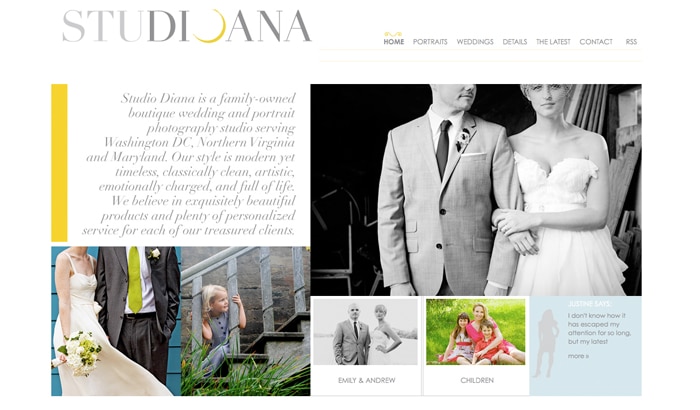
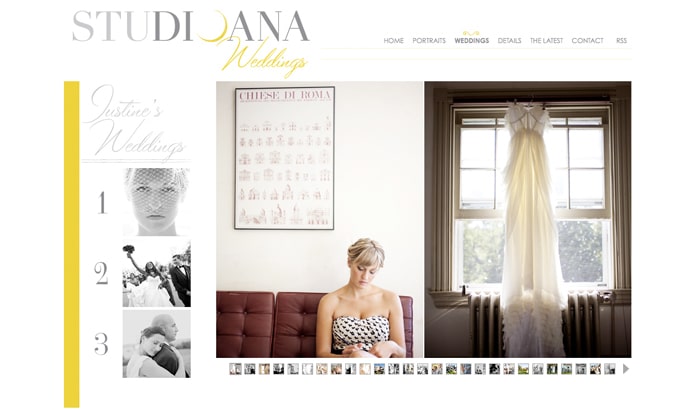
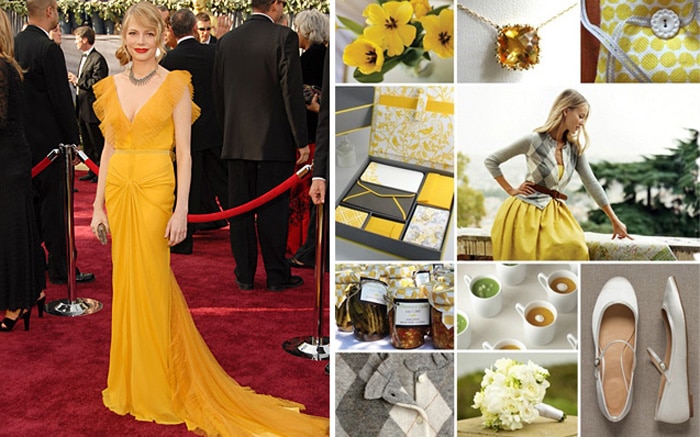
Below is an example of an inspiration board and how we translated it into the online brand design for Studio Diana.

Studio Diana - Fashion

Studio Diana - Wedding

Studio Diana - Wedding

5, 6 & 7) The 3 C’s; Get Creative, Make It Cohesive, Keep It Consistent

Ok, you have your strategy, you have your inspiration boards, now it’s time to get creative. Whether you are designing your brand yourself or hiring an outside designer, this is where the magic happens. The “Ah-­?ha” moment. The spark, that can be realized as your own personal touchpoint or brand.

Once you choose a design path make sure there is a thread or a few that keeps your brand cohesive and consistent across all mediums. Print, online, advertising, promotion, and sales. Don’t be afraid to loosen the reins on your brand as you move between mediums, keeping your brand consistent, does not mean choking it. This is where it may be helpful to bring in a professional.

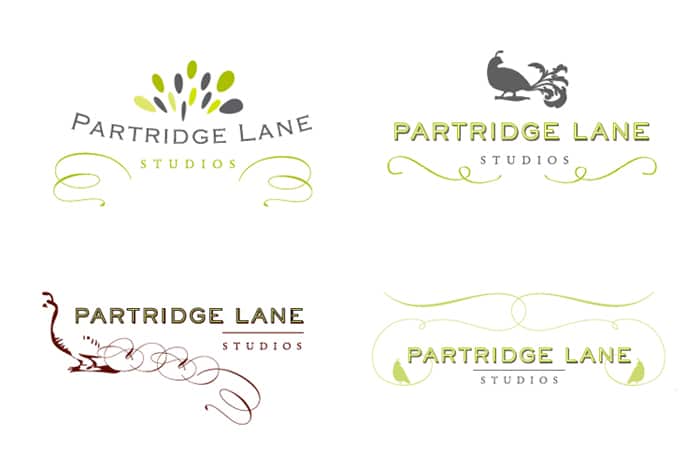
Below are some examples of the creative process of Partridge Lane Studios. Also, an example of how we kept the look cohesive from printed material to the online presence.

Partridge Lane Logos Grouped

Partridge Lane Business Card

Partridge Lane Home Page

8) Choose Your Best Work

If you have completed the last 7 steps, we know you can make choices. Don’t question yourself now. It’s time to choose your best work. Go through your body of work and choose your best 5, 10 and 20 pieces. Those should always be front and center on all your promotional vehicles. Be strong, if you feel a piece does not live up to the standard of these choices, they should not appear in your portfolio. Your online galleries should be between 20 & 30 photos per gallery. Always aim to put your very best foot forward.

9) Be Unique

If you have followed these steps you should arrive at a brand that is unique, because it is you. If it is true to who you are as an artist, it is right.
One of my favorite sayings when it comes to finding your true voice in life and in branding is by Oscar Wilde, “Be yourself, because everyone else is already taken.

Filed Under: Marketing, Photography, Portraits, Weddings Tagged With: advertising, better photography, brand, brand positioning, branding, Business, business cards, business partners, communication, communication design, design studio, ellen petty, graphic design, identity design, Marketing, Photography Business, positioning, professional photographers, starbucks, studios, touchpoint

  • « Previous Page
  • 1
  • …
  • 4
  • 5
  • 6
  • 7
  • 8
  • …
  • 10
  • Next Page »

Subscribe To Tiffibox Treats!

Looking for a well-curated email newsletter that will leave you inspired and motivated about your photography business? Sign up below!

About Seshu

Seshu creates relaxed portraits of families and high school seniors in Avon, Connecticut. He also leads a successful headshot photography studio in Connecticut, helping professionals from a variety of disciplines project the very best versions of themselves. He created Tiffinbox as a way of inspiring photographers, to create better images and successful businesses. [Read More]

Email Templates For Headshot Photographers

Email Templates for Headshot Photographers

Recent Posts

  • How Capture One Changed My Event Photography
  • 10 Steps To Stay Positive In Times Of Great Stress
  • Why You Need To Read “Personal Branding For Photographers” Now
  • How To Master Your Website Content Step By Step?
  • Tony Taafe’s TNT Method For Headshot Photographers

Recent Comments

  • Stephen Davison on Are You A Business Owner Who Is Smart, But Stuck?
  • Ben A. on Don Giannatti Clinches The 8th Annual Tiffinbox Award
  • Dan on Don Giannatti Clinches The 8th Annual Tiffinbox Award
  • Donald Giannatti on Don Giannatti Clinches The 8th Annual Tiffinbox Award
  • Stephen Davison on G.E. Masana’s 6 Strategies For Wedding Photography Success
  • Naveen Kumar on Weddings In India Are More Than Being At The Right Place And At The Right Time
  • kartick on Weddings In India Are More Than Being At The Right Place And At The Right Time
  • Leonid Farbman on 6 Uncommon Trends To Grow Your Photography Business
  • Willow and Finch Wedding Photography on 11 Reception Tips To Help Your Wedding Photography
  • Web Designer Malaysia on How To Optimize Your Squarespace Website For Search Engines
  • Creastan on An Interview With Photojournalist G.M.B. Akash
  • Cindy Brown | Atlanta on An Open Letter To A Local Photographer

Become a Patron!

Copyright © 2026 · Tiffinbox · Site Design by Heather Mackan Creative · Built on Genesis