• Photography
  • Interviews
  • Business
  • Reviews

Tiffinbox

Inspiring Photographers

  • Home
  • About
  • Blog
  • Contact

The New Wedding Guest

March 14, 2011 by Richard Esposito

This guest blog is by a good friend and fellow Connecticut wedding photographer, Richard Esposito. In addition to being a photographer, RE as he is known, is also called upon to teach efficient workflow systems to other photography studios. To some lucky ones, he plays mentor. His Emmy (yes, that EMMY) not withstanding, RE is starting to reconnect with his video side and bringing true fusion to discerning clients getting married all over the world.

Needless to say, a lot has changed in the world of photography over the last 5 or so years. Remember film? Using the same camera for more than 3 years? Just about every professional photographer is using a digital camera that gets replaced with a newer, better, version after one year of use. It's become a rather expensive hobby for amateur's and a financial burden for some professionals. With technology getting better and especially cheaper, we've all seen a new type of photographer emerge. Call them what you will, uncle Bob, cousin Carl, or “I have a friend that took a photography class in college.” This is the new competition. And they are getting cheaper than the cost of the camera. I've heard of a number of professionals that have sold everything they had and closed their doors for good. We can't compete with free, or “I'll shoot your wedding and hand you a disc for $500. I know I seem to be getting off topic, but it's leading to our newest issue. You are not the only photographer at a wedding anymore.
© Photographer RE

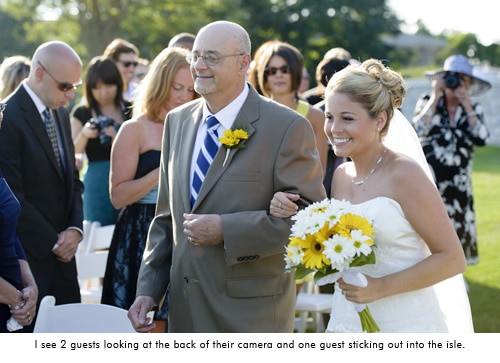
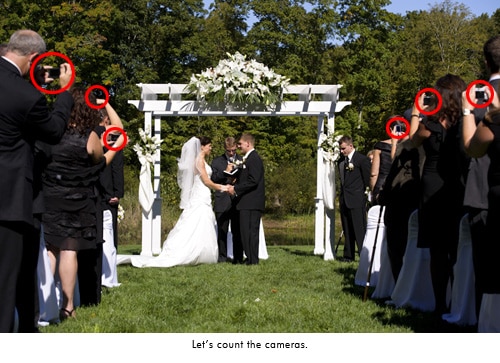
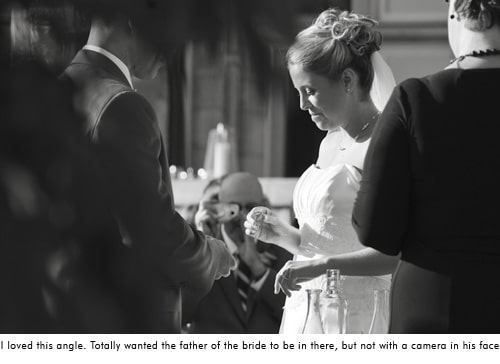
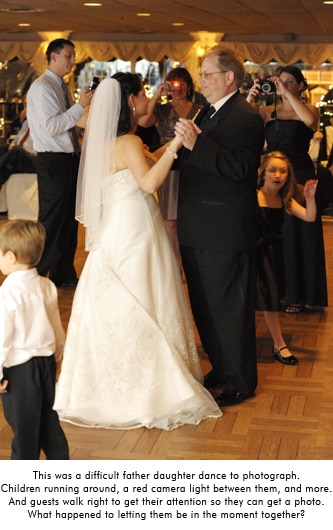
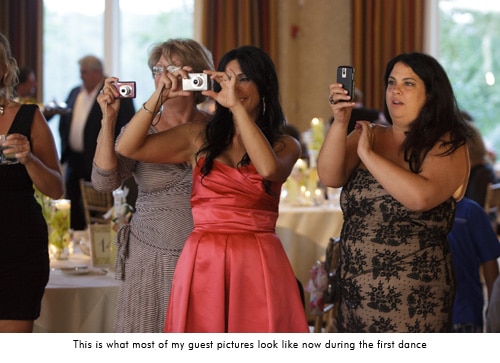
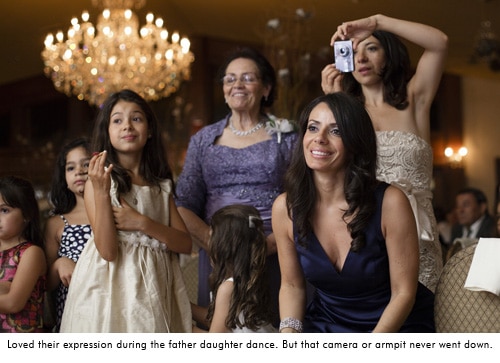
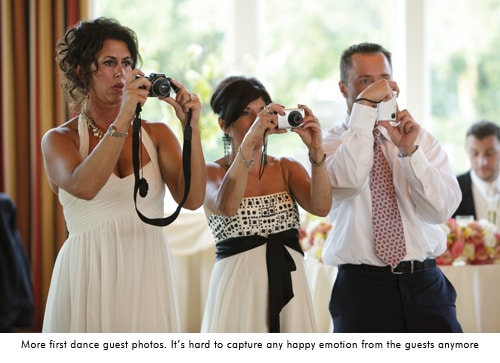
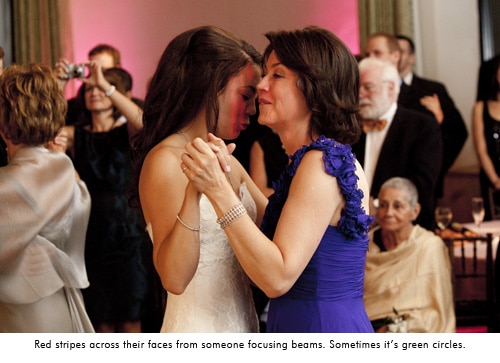
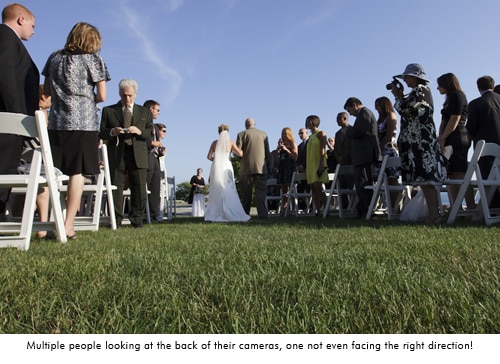
Gone are the days of capturing a sea of guests with genuine emotion on their faces. Now you have to give an elbow to Aunt Clair who's blocking the aisle with her Digital Rebel in hand as the bride makes her grand entrance. I used to love capturing guests emotion during the first dance, parent dance, even the toasts. But now my subjects are a handful of guests with point and shoots held up blocking their faces, or the tops of everyones head because they are looking down at the back of the camera to check the photo they just took. My favorite moment so far was a photo of the bride going down the aisle from behind. Everyone in front of the bride has their cameras up, everyone that the bride has past is still facing the back of the church with the heads down looking at the back of their camera. Very few people stopped to enjoy the moment of a father walking his daughter down the aisle on her wedding day. I did have a beautiful photo of a bride coming down the aisle with great emotion on her fathers face. However there were hues of red and green across them both thanks to all of the focusing beams from guests cameras. That's an instant black and white! The cake cutting has become my favorite time now that I have no room to move around thanks to the crowd of people and cameras. It's amateur suffocation.

You are not the only photographer at a wedding anymore.

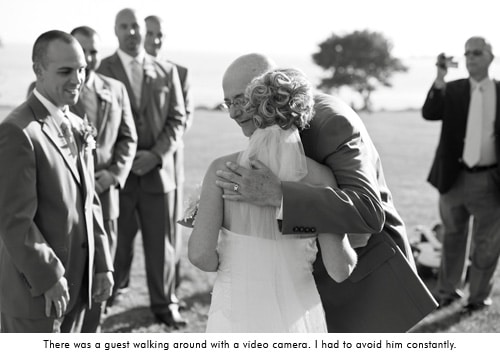
Just when you feel good that you are getting the job done, you're in the zone, there's a tap tap tap on your shoulder. It's Aunt Clair again, Rebel in hand, suggesting “that’s a nice photo of the flower girl over there. Look she’s spinning around! Hey girls look over here!” Well Claire, if you didn't just interrupt me I would be photographing that, but now i missed it so you can talk to me about it. While trying to capture an emotional father daughter dance, someone will walk up close to them and say “Hey, over here!”, completely interrupting the moment just so they can get a photo with their faces smiling at their camera. They completely missed the point. Welcome to a world where lighting, composition, creativity, and emotion don't matter to a wedding guest. All you need is a persons face looking at the camera.
© Photographer RE

© Photographer RE

© Photographer RE

© Photographer RE

© Photographer RE

© Photographer RE

© Photographer RE

© Photographer RE

© Photographer RE

Many of us put out a little slideshow of images at the wedding reception. It's been a great way to show guests your work and generate some business, especially with the reception venue. It also satisfies the instant gratification generation of guests. I've gotten home from a wedding and checked a clients Facebook page to see that she has already been tagged in photos that Uncle Bob took at the wedding. I can't compete with that. I hand out event cards at the reception with the website and password to see the photos “approximately 8 weeks after the wedding.” One night, after seeing the slideshow at the reception, the grooms step father comes up to me with his iPhone and has my online viewing website loaded. He said he couldn't get the wedding. Hello! I'm still photographing it! Really?! Many times I have guests say “Great! I'll check them out tomorrow.” Tomorrow? Let me hand you a few thousand photos, have you review and edit them and see how fast you get them all up. Let’s factor in that it's the end of the wedding season and you've just done 2 weddings per weekend for the last 8 weeks.

It's no wonder that professional Photographers are having a hard time competing with amateurs. We get in their way, we don't know what we’re doing, it takes forever to get your images, and we really expensive! If you think it's expensive to hire a professional photographer for one day, the emotional cost of hiring an amateur lasts forever.

The Price We Pay

So how do we convince an engaged couple to spend $3-10k with a professional? According to Market Watch, wedding photographers are the most overpaid jobs in America, saying “Total work for each wedding is generally a sit-down consultation combined with a single day spent following the happy couple. While equipment costs and film development must be covered, thanks to digital technology such costs have been heavily reduced. Unfortunately for the consumer, photographers do not offer any reduction in price for missed photos, amateur shots, or other mediocre work product.”

So let’s talk briefly about what it costs to be a professional wedding photographer. My second photographer here was looking to buy his own equipment. Just to start off with the basics he was up to $8,000. Imagine the cost of what I carry. Oh, and I have to insure all of it. Then there’s vehicle expenses, commissions for running credit cards, equipment repairs, I spent $1200 on postage this year (postage!!!), continuing education, computer and software upgrades, hard drives, hard drives, hard drives, it costs to make albums, some of us pay staff… I really could go on. Oh wait! providing for my family? Putting food on our table and the discount outlet clothes on our back? A professional photographer doesn’t have a “real job” during the week so we have to pay our own health care for our family, save for retirement, and hope for a weeks vacation that comes out of our pocket. I did 25 weddings this year and my expenses were double the average 2 person family income in Connecticut (according to census.gov).

For the other side of the story, the International Society of Professional Wedding Photographers did an awesome survey of photographers recently. I know when I started my business, everyone I knew thought I just worked weekends and did nothing during the week. We have a great lifestyle of taking photos, traveling, and partying.
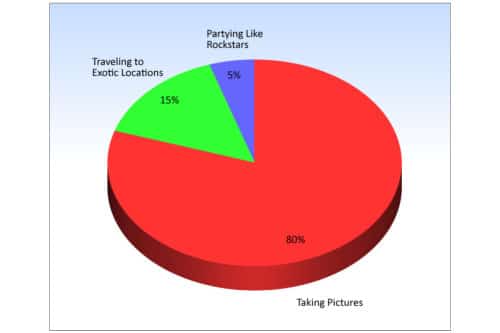
The Perception Of A Working Photographer

Here’s reality: 70 hours a week through our 6-7 month season and 40 hours a week off season. There is no mention in here regarding time with family, charity work, and taking any time off. Only 12.2% off our time during business hours is spent taking pictures.
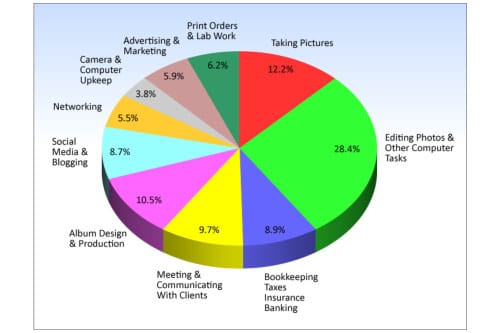
The Reality Of  a Working Photographer

If I didn’t have the expenses that I have, or spend this much time getting everything done, I’d be out of business. I’d have to get a full time job and just do photography on the weekend. I’d be your Uncle Bob.

Update from Seshu: Since publishing this blog post above, there have been other similar posts out in the interwebs:
Filed Under: Business, Most Popular Posts, Photography, Weddings Tagged With: camera, competitive world, connecticut wedding photographer, cousin carl, Culture, digital rebel, discerning clients, esposito, first dance, genuine emotion, grand entrance, photographer, photographer richard, Photography, photography class, photography studios, professional photographer, professional wedding photographer, uncle bob, Wedding, wedding guest, wedding music, Wedding Photography, workflow systems

3 Simple Techniques To Elevate Your Photography

January 20, 2011 by Trevor Rideout

This is a guest blog post by Trevor Dean Rideout, a lifestyle and family photographer based in central Newfoundland.

So you’ve conquered exposure, you confident in your ability to shoot in manual or priority modes and your getting some great feedback on your photography. What next? Well here are three things to apply to your craft, that don't cost money, you can apply in-camera, and will improve your photography overnight!

These techniques are simple in theory but take time to become second nature. Don't fret and as the saying goes, “practice makes perfect”.

1. Focus On The Eyes

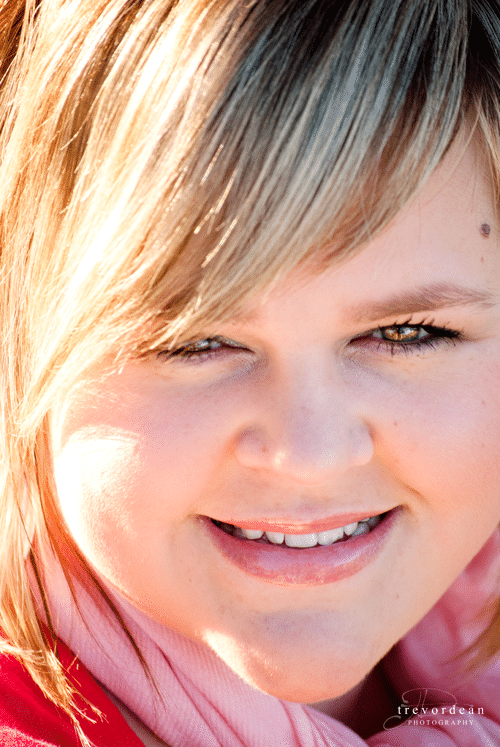
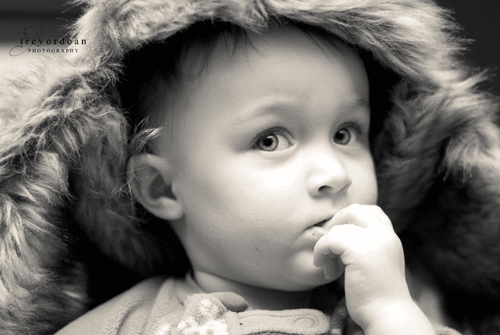
You've probably heard this expression more than once and may be wondering to yourself, “well what does that mean?”. The concept is simple. Set your focus mode to center focus. Most if not all camera's today have the ability to move your focus zone around between those little squares in your camera, but for now let's just focus on the very center. When shooting portraits, it is usually the most ascetically pleasing to shoot with a wider aperture. This helps to separate your subject from the background and gives you nice creamy backdrops. The biggest issue here, is that the result of opening your aperture nice and wide, decreases you “depth of field” (DOF). Wherever you zone in that focus point, is where your subject will be most in focus. To guarantee the best results you need to focus on the eyes. As humans, our first instinct when viewing a photograph is to look at what's in focus, and in portraiture, the most important element is the eyes.

So, have a look through your viewfinder, line up that little square right over the eye that is closest to you and press your shutter half way down. This will lock in that focal area and give you nice sharp results on the eye that you've chosen. Whatever else falls outside of the DOF at this point is irrelevant. Sometimes, you may not be able to frame the scene exactly the way you want it, if you just focus and shoot in the one spot. This is where locking in your focus (half press of the shutter) and then recomposing your shot, comes in to play. As long as you do not move the camera forward and backward, you will stay within your focal plane, and the chosen point will stay in focus. This is absolutely essential when shooting at anything wider than f5.6 but should become common practice whenever your photographing people.

Trevor Rideout

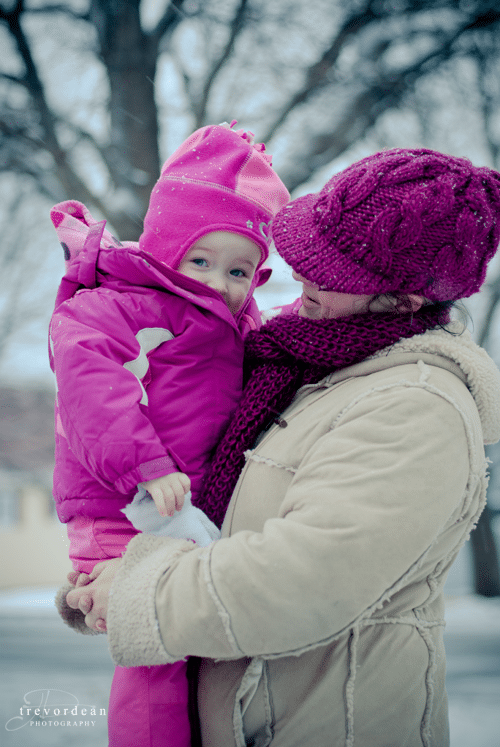
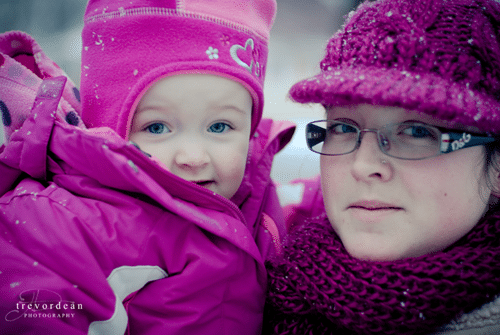
Trevor Rideout - Focus On The Eyes

2. Watch Your Crop!

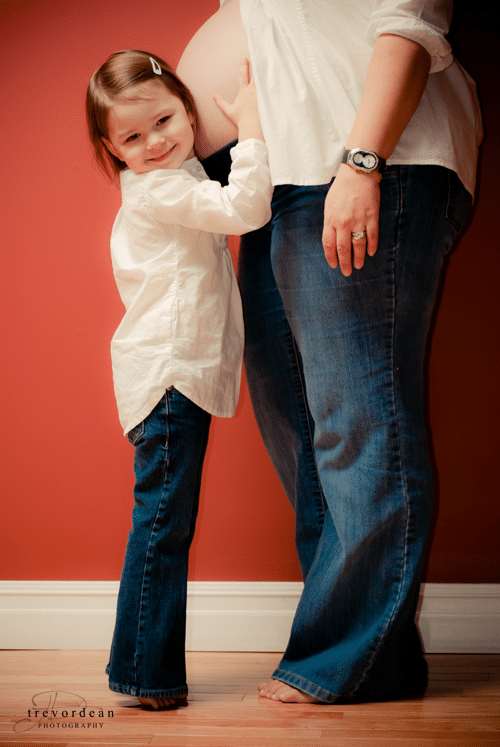
I see this mistake made probably more than any other when photographing people. If you're not careful about where you frame your subject, you may end up cutting off fingers, toes, limbs, etc. While this is probably something you may have never noticed, it is commonly accepted rule in Art. There are though, what we call “crop points”. The general rule you need to remember, is don't crop at anything that bends. Most commonly you will see fingers cropped at the edges of the frame. Standard crop could include about midway down the bicep, above the waist (midway between the sternum and waistline) and about midway between the waist line and knees. When you crop at other sections of the body it tends to make the subject look amputated and is not considered ascetically pleasing.

Trevor Rideout - Watch Your Crop!

Trevor Rideout - Watch Your Crop!

3. Watch Your Backgrounds

This is also one of those things that you need to become completely aware of when photographing people. It requires what you might refer to as “situational awareness”. When you’re composing your photo you may want to include some of the background to help better portray the story you’re trying to tell. What you need to watch for is objects passing through your main subject. Commonly it would end up being power lines, tree branches and other architectural features; although I have seen some instances that involve much more hilarity. You have to keep in mind that we see in 3 dimensions, but our camera's only have the ability to convert that scene into 2 dimensions. This means that you may see your subject in front of a very compelling backdrop with lots of people and things behind them, but your camera may tell a different story. Deeper in the frame, objects tend to shrink, in relation to your subject. This could mean that although you see a person walking down the street, once compressed, that person could be walking right into your subjects ear (as a less likely, but more comical example). So keep your eyes open and make a habit of scanning the entire viewfinder area. When we're first starting out, we tend to focus on one thing … whatever the main subject we're trying to photograph. Try to make a conscious effort, whenever you’re composing your shot, to take a quick scan around the entire area of the viewfinder. This will also help to better express your vision. Think about what you want to include in the frame and what you don't. Even though our higher resolution sensors allow us to do some pretty heavy cropping in post, it is always better to nail it, in camera, and have the ability to work with the entire resolution of the photo.

Trevor Rideout - Watch Your Background

So there you have it! Three simple techniques that you can apply right now. They don't cost any money, don't require any special software but they will take time to perfect and make second nature. Practice these techniques daily and before you know, you won't even know you're thinking about it!

Since this blog is all about learning and sharing, how about dropping a link to one of your images (use Flickr if you have to) that uses one or possibly all that Trevor has talked about in this post? Don't spam the comment box. One entry per person please. So, what are you waiting for? Let's see some of your images! If you do post anonymously, I reserve the right to delete your comment.

Filed Under: Uncategorized Tagged With: aperture, camera, cameras, depth of field, digital single lens reflex camera, elevate, elevated, optics, Photography, point and shoot camera, science of photography, shutter, techniques, trevor dean, trevor dean rideout, viewfinder

Fuji FinePix X100: The Street Photog’s Dream Camera

November 15, 2010 by Seshu | Editor & Publisher

This isn't a plug for the Fuji FinePix X100 camera. I am just posting this video clip up here just in case you are a street photographer like I was back in the day. This camera will quite likely be THE camera to have with you at all times. No, it doesn't look like it will fit in your pocket, but then again, what camera would you want at the ready – one that is slung over your shoulder or the one tucked into your pant pocket – to capture your next great image?

Tell me this doesn't look like an early Leica rangefinder camera. Yes, it's all digital. How I wish Fuji will come out with an all-black version of it. That would really bring back memories of my Leica M6.

So, what do you think? Will you consider buying this camera? Word is it won't be out till Spring 2011. As I told my friend Jigar on Twitter – I want it NOW! Brace yourself, though, as the retail price is likely to be close to $1000 or more.

Filed Under: Photo Gear, Photography, Photojournalism Tagged With: camera, cameras, digital cameras, dream, dreams, fuji, fuji finepix, fujifilm, fujifilm cameras, leica camera, leica m6, Photography, rangefinder cameras, street photographer, x100

Woot Camera To The Rescue

October 25, 2010 by Guest

Jen May PastoresThis guest blog is a second for Jen May Pastores. Her first post was about her Cambodian photo project.

Beyond the online sphere of social media, smart phone efficiency, and the praise of technological advances that the world goes gaga for there is still an unfulfilled satisfaction that plagues many of us. It’s a real desire for a true connection without the abbreviations or vagueness that often travels through digital walls. Symptoms of this desire starts with often checking emails for replies, scanning Twitter for mentions, and counting likes and comments on Facebook. This is where Woot Camera intervenes to present a pleasant breakaway from the modern day overload.

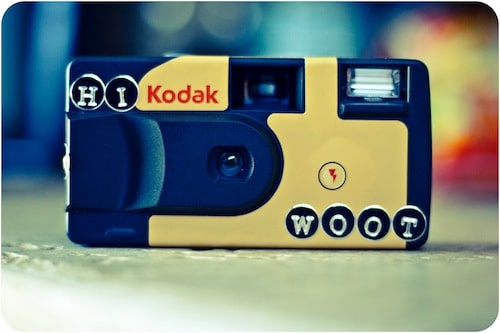
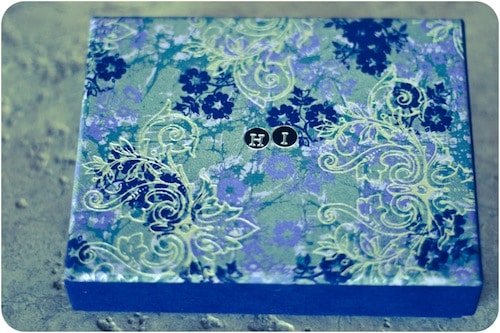
Woot Camera is a personal project that sends a disposable camera to strangers across the world. It arrives in a purple box in the mail–sent from the previous photographer–and when opened a personal handwritten note sits on top to greet the new photographer. Included are instructions to take a single, creative image with the Woot Camera and then send it off to the next person. When completed the camera returns to me and the exposures will be developed and shared online. It’s a fun example of balancing the intimate joys of a tangible connection and sharing it with the multitude of users on the Internet.

Woot Camera Project

Woot Camera Project

Woot Camera Project

All participants signed up last month when I first released the project and since then Woot Camera has traveled to five cities on the east coast. Other places like Canada, Dubai, Japan and more cities in the states are on the itinerary, as well. Participants have expressed excitement in sharing this experience and are eager to see the results. Who wouldn’t enjoy discovering a package in the mailbox in front of their home that encourages creativity and new friendship?

Woot Camera will continue to rescue the dissatisfied, gadget-addicted-junkies with a second round of participants starting before the holidays. The best part about this is that anyone can start their own traveling camera project. Tie a disposable camera around a tree or leave one on the subway. The possibilities start with you giving back in a unique way. Photojojo, an online source of the best photo tips and DIY projects around, is also another great place to discover fun ideas.

Follow Woot Camera’s journey on Twitter (@wootcamera) or sign-up to be a part of the project.

Filed Under: Personal, Photo Projects, Photography Tagged With: camera, cameras, communication, disposable camera, disposable cameras, internet culture, Jen May Pastores, mass media, personal, photo projects, projects, publishing, smart phones, strangers, woot

Control & Chaos: Two Genres Of Photography

October 5, 2010 by Guest

Paul GeroThis is a guest post by Paul Gero, a wedding photojournalist based in Orange County. Paul is also known for being a terrific writer, speaker and teacher. He, his wife Nicki and now two kids are wonderful people to know.

Having been in photography for a little while, I find that the work falls down into basically two approaches: Control and Chaos.

Doing Control type work is about setting up, posing, lighting and forging a bond that elicits the desired response.

Much of the commercial world and a lot of the wedding and portrait world is in that category of Control.

A few reasons why it might be so popular:

a) The desire to create an image that looks familiar (and with the web more images are shown and seen than ever before).

b) The desire to create an image that you know will be client pleasing and you know will sell.

c) A newer photographer with new found skills and less certain about capturing things “on the fly”.

The Chaos approach has been around for decades practiced by many of the greats including Henri Cartier-Bresson, Josef Koudelka, Larry Towell and others.

Many of the great photographers from the famed photo agency Magnum work in this manner. These are some of my favorites primarily because of the way the see the world, the moments they capture and the way they structure their photographs.

It’s a style that takes practice to master. It's about looking, watching, spending time in the field with a camera, and anticipating — it's not always reproducible, but it will always be interesting. Serendipity is a huge part of the equation of Chaos photography — that can be scary but also hugely rewarding.

It takes thinking about how you'll approach a situation from where you position yourself in relation to your subject, where they are in relation to the background and what focal length you'll use to make this type of photograph.

I recommend to my students is they watch people especially as they gather at a mall, for example. Notice how they stand, how they greet people (and cultures are different).

Then when watching those interactions think about where you would need to be to make a great photograph of that situation. What lens would you use? How far would you be from the subjects?

Selecting a spot to stand in relation to your subject in the Chaos realm is important. This location along with your focal length determines how much context will be revealed in the photograph. And typically you’ll want to see that subject’s face in order to capture emotion (the eyes reveal the soul, as they say). That often means being in front of or to the side of your subject.

When I worked in Washington DC and covered events with the President, it was interesting to watch how the Associated Press determined their coverage and would station a photographer front and center of the President. That was a safe angle, and often times the best angle.

They would position another photographer off to the side for most events — that 45 degree or called the “cut away” angle.

This angle adds depth to the photo as the subject to the right or left of the President would often be slightly out of focus (with a telephoto lens). It would be a good angle if the President was looking in the camera direction, and perhaps less successful if he were to look to the opposite side.

Selecting the angle behind your subject is a lower percentage choice, but can be useful as this position gives the viewer a sense of “walking into the sunset”, or leaving. That aspect makes it useful and can help creating a natural looking end to a story.

While observational skills and camera position are critical to successful Chaos photography so is being in control of your technical skills.

Knowing light, knowing exposure, knowing when to trust or not trust your meter all play into that role.

Many photographers use the auto modes on a modern camera to “set it and forget it” and while that can work and does in many cases, there are times when it can get you in trouble especially if you’re not paying attention to the choices made by the camera or get sloppy in where you meter and hold the exposure value.

When I choose my working settings, I start from selecting aperture first, in order to create the look and depth of field on the scene (especially using wide or normal lenses).

My shutter speed choice then coincides with a good exposure for that scene based on the ISO (typically using the lowest ISO for optimum quality while still being able to get the desired shutter speed). I also consider the amount of movement in a scene in order to select the appropriate shutter speed to stop the action.

Lens selection is critical for Chaos photography.

Much of what I call the inspirational photography in this genre is often made with simple focal lengths, either slightly wide or normal (i.e. 28mm, 35mm, 50mm lenses on 35mm cameras). Rarely do you see a lot of this work done with extreme wide angles and extreme telephotos.

These lens choices also force an intimacy with your subjects in terms of your position to them. It’s much tougher to hide when you’re using a wide or a normal focal length lens, as is possible when using long zooms or telephotos.

When you’ve become really disciplined using one, two or three focal lengths, you begin to see the world taking place on the stage for those lenses. You get comfortable framing with the the imaginary lines of those focal lengths.

Zooms are popular and can be useful tools, though I find that primes often help photographers hone their vision especially when learning. It forces you to move to frame, rather than zoom to frame.

I know for me when using zooms I have to be very disciplined to not just zoom out when I should be moving my feet to frame. In fact, I try to use the zoom like a prime and determine the focal length I want to use, set it on the zoom and then move to frame but not zoom unless I absolutely must (especially with a zoom such as the 24-70mm; less so with a long lens such as the 70-200mm).

Metering light which then translates to a great exposure is critical especially in fast-moving situations.

I find that using an old school incident meter is great in this area. It allows me to dial in the exposure so that helps exposure consistency from frame to frame. Even if you only use an external meter for a while as you learn the patterns of lighting, I think it can be extremely useful.

This gives you one less thing to think about because you’ll know that exposure is handled.

Look at the scene and anticipate what would happen if you change position or your subject’s change position. Think ahead and pre-visualize where the subjects might go can help you successfully handle any change in exposure.

I can’t stress it enough: Exposure is a critical component to successful photography — and especially digital photography.

To paraphrase my instructor, famed National Geographic photographer William Albert Allard: You have to get your exposure dialed in because you’d hate to lose a portfolio photograph due to a lousy exposure.

He was right when he told me (and we were shooting transparency film) as he is today if you’re shooting digital.

What I enjoy most about Chaos photography is that it’s more about capturing life as it happens, as opposed to having it set up by me. It takes more time for this to work, because you have to be able to witness things — having a five minute window with a subject often precludes that and reduces you to do Control work.

I find that life is so much more fascinating and people do much more interesting things than I could ever set up.

I loved to be surprised when looking through the lens and use that as a guide to know if I'm in the presence of an interesting photograph — if it moves me, excites me, or causes an emotional response in me while I'm photographing, it will usually translate in the actual photograph.

Perhaps folks who prefer Control photography are not certain that good or great photos will even materialize therefore they want to ensure that they do.

All I can say from years of experience is to trust that they will — if you have time. Wherever people gather there is a potential for great photographs. And you will often be surprised by the photographs these subjects give you.

The human element makes that happen. The energy from an event makes it happen. You just have to have faith that you’ll see those moments when they happen and using your skills acquired from practice and observation, you’ll be in the right place at the right time.

Knowing how to create nice Control images is a part of the modern photographer’s tool box, no doubt, but I think it should be a piece of the box, not the whole thing.

Practice your observational skills and your technical skills and be prepared to be surprised with the beautiful and incredible chaos that is life and then capture that feeling with your camera.

What kind of photography do you practice? Do you agree or disagree with Paul? Your comments below will create a dialogue that I will welcome here on Tiffinbox. So please take a moment to tell us what is on your mind. We're listening to you!

Filed Under: Photography Tagged With: aperture, camera, chaos, control, controlled chaos, controls, digital photography, exposure, focal length, genre, genres, optics, paul gero, photographer, Photographers, photographic lens, Photography, physics, science of photography, shutter speed, telephoto lens, wide angle lens

  • « Previous Page
  • 1
  • 2
  • 3
  • 4
  • Next Page »

Subscribe To Tiffibox Treats!

Looking for a well-curated email newsletter that will leave you inspired and motivated about your photography business? Sign up below!

About Seshu

Seshu creates relaxed portraits of families and high school seniors in Avon, Connecticut. He also leads a successful headshot photography studio in Connecticut, helping professionals from a variety of disciplines project the very best versions of themselves. He created Tiffinbox as a way of inspiring photographers, to create better images and successful businesses. [Read More]

Email Templates For Headshot Photographers

Email Templates for Headshot Photographers

Recent Posts

  • How Capture One Changed My Event Photography
  • 10 Steps To Stay Positive In Times Of Great Stress
  • Why You Need To Read “Personal Branding For Photographers” Now
  • How To Master Your Website Content Step By Step?
  • Tony Taafe’s TNT Method For Headshot Photographers

Recent Comments

  • Stephen Davison on Are You A Business Owner Who Is Smart, But Stuck?
  • Ben A. on Don Giannatti Clinches The 8th Annual Tiffinbox Award
  • Dan on Don Giannatti Clinches The 8th Annual Tiffinbox Award
  • Donald Giannatti on Don Giannatti Clinches The 8th Annual Tiffinbox Award
  • Stephen Davison on G.E. Masana’s 6 Strategies For Wedding Photography Success
  • Naveen Kumar on Weddings In India Are More Than Being At The Right Place And At The Right Time
  • kartick on Weddings In India Are More Than Being At The Right Place And At The Right Time
  • Leonid Farbman on 6 Uncommon Trends To Grow Your Photography Business
  • Willow and Finch Wedding Photography on 11 Reception Tips To Help Your Wedding Photography
  • Web Designer Malaysia on How To Optimize Your Squarespace Website For Search Engines
  • Creastan on An Interview With Photojournalist G.M.B. Akash
  • Cindy Brown | Atlanta on An Open Letter To A Local Photographer

Become a Patron!

Copyright © 2026 · Tiffinbox · Site Design by Heather Mackan Creative · Built on Genesis