• Photography
  • Interviews
  • Business
  • Reviews

Tiffinbox

Inspiring Photographers

  • Home
  • About
  • Blog
  • Contact

Professional Photography Is Dead. Long Live Professional Photography!

March 14, 2012 by Dhiraj Kacker

This is Dr. Dhiraj Kacker's second guest blog post here. Read his first post on album manufacturing too. He is the CEO and co-founder of Canvera, an online digital photography company based in Bangalore, India. Dhiraj can be found online on Twitter, his company blog or his personal blog.

This post has been on my mind for a long time as I think a lot about the changing role of pro-photographers in the digital age. But in some ways I got beaten to the punch by a much more spunkier take on the issue by Allen Murabayash, CEO of Photoshelter, on his blog post “Rant: I Love Photography”. Please go read it. My post here will be much more sedate and boring! With that warning, let’s dive into it.

I have much more insight into the market where pros get hired for personal or corporate events (such as weddings, portraits, bar/bat mitzvahs, etc) so I will focus on that and not on commercial, editorial and stock photography which has its own set of dynamics in the digital world.

What do we all hear and say everyday: DSLRs are getting cheap, everyone has a camera, it’s getting tougher to earn a living being a pro! A lot of it is true. Digital Photography combined with the internet and cheaper and cheaper capture devices have made it simpler for all and sundry to take and share images like never before. Unshackled from the physical limitations of film and the cost of taking each picture everyone today can pretend to have some proficiency in photography. There are weekend wedding photographers who are taking business away from full time pros just based on price. There are pro-sumers who are building online galleries, showcasing their work and in fact selling their work.

But here’s the funny thing:

– For the first time in the history of pro-photography we have celebrity wedding photographers! Celebrity status was limited to fashion and editorial photographers, never to wedding photographers. How did this happen?

– Family portraits on the wall look like model shoots today, not just people saying cheese into a camera and accepting whatever came out. Perfect lighting, perfect smile are must!

– Corporate mug shots make management look like celebrities and anything lower quality doesn’t speak well of the company

– I am hearing more and more that right after a wedding date is fixed the first or second service provider that gets booked is the photographer; this used to be an afterthought

– Senior shoots are blurring the line between model portfolios and what was considered just pictures of the teenage years

– Parents want their kids’ sports pictures to look like shots from pro sports

– Never before have engagements & boudoir shoots been taking place in such large numbers. The smart photographers have also created the “trash the dress shoot” as well!

I don’t believe any of this was common a decade ago.
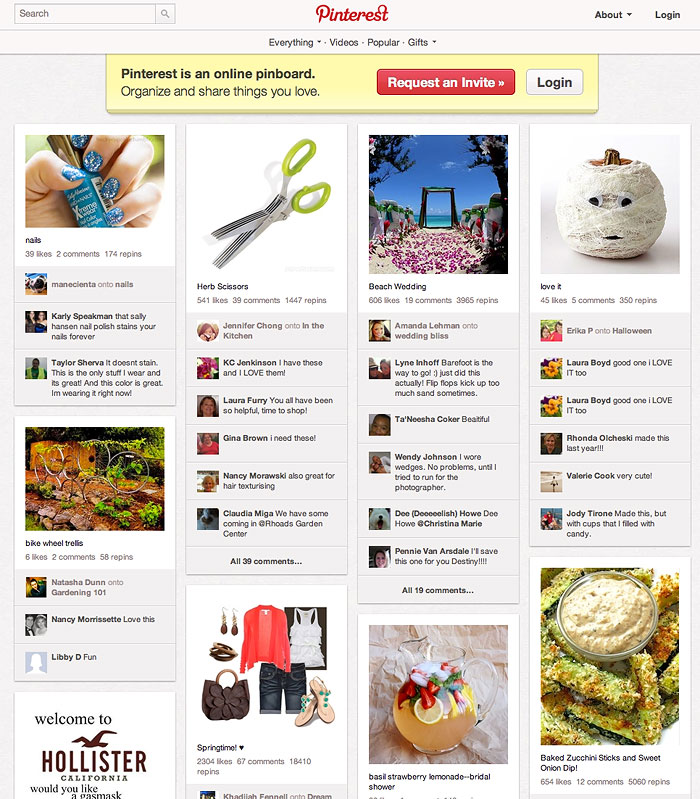
Dhijar Khacker | Pinterest Home Page

So what’s really going on? Let me talk a little from my personal experience. I had a run of the mill point and shoot film camera in the 90s and in 2000 bought my first 3MP digital camera – an Olympus 3000 for a $1000 (yes, a thousand bucks for a 3MP P&S camera). I remember the excitement of getting pictures back in the film world and just being able to relive those memories was amazing. At the time the pictures looked great but today, they look mediocre (and I am being generous). Too much sharpening, probably done by the minilab and too much contrast because of the film I bought. And of course I had no eye for composition or lighting. Initially I really liked my P&S digital camera – it was quite simply the excitement of digital. But my appreciation of photography kept going up and at some point that quality was just not good enough.

After my first kid was born, I finally invested in an SLR and for a few years managed with the default lens. And then I got fancier with the lens. It is safe to say that today with two young kids I shoot a lot of pictures, but here’s the kicker: unlike in the film world where I did not know any better, I can immediately tell how many decent shots I got. It takes me possibly 100 shots to get one really good one! I don’t have an eye for light or composition, and I rely on sheer volume to get lucky. So much so that on a recent birthday party I did the unthinkable: I called up a pro friend of mine to hire him to take pictures. By playing around a lot I have come to realize just how difficult it is to consistently take good shots. It is kind of like playing sports and developing a greater appreciation for the professional who plays the same sport. Isn’t it true that the omnipresence of little leagues and minors grows the business for the majors?

Here is what is happening: never before have average consumers been exposed to this much high quality imagery – web, mobile, magazines, hoardings, blogs – you name it. The quality of images on Pinterest or Tumblr is just mind blowing. Sub-consciously consumers have developed a greater appreciation for good images. Everything I’ve listed above is happening because of this trend. I believe that today consumers (like me) are experimenting a lot more with photography trying to reproduce the quality they observe. And like me they are coming to appreciate how difficult the art and craft of photography is. So when it comes to important life events (operative words being “important life events”), my prediction is that over the next decade pros will be hired in record numbers. Consumers will be spending in record amounts.

None of this means that things have not changed and pros can simply fall back to what they did in the 90s (which was essentially to build a physical portfolio and get referral business). Like a pro-sportsperson, they have to be savvy business people. I am writing on a photographer’s blog so I know that this audience is aware that from building a brand, to marketing to sales and operations, a pro has to do a lot more; a pro’s life has become lot more complicated. But boy, I don’t think there has ever been a greater appreciation for the art and craft of photography as it is today and I think we are at the start of a golden age of professional photography fueled by the omnipresence of images in our lives.

So, what do YOU think? Pen your thoughts below!

Filed Under: Business, Opinion, Photography Tagged With: camera, dhiraj kacker, digital camera, digital cameras, digital photography, fine art photography, life event, personal blog, photographer, Photographers, Photography, pro photography, professional photographers, stock photography, Wedding Photography

5 Questions For Strobox

December 29, 2011 by Seshu | Editor & Publisher

Images are created in fractions of a second and our memories are often too poor to remember how we set up a particular shot. Indeed there is a part of us that probably feels confident in achieving the same look and concept, if only we knew where and how the off-camera flashes were placed, how they were modified or what our settings on the camera were. Well, a couple of weeks ago I connected with Janis Lanka, who founded Strobox.

Strobox is a place for all types of photographers to share how they set up that amazing photo! The easiest way to learn is to look at photos and their lighting diagrams so you can see for yourself how they were created.

Here is a, um, snapshot of the questions I peppered Janis with during our conversation. If you have other questions for him, please post them in the comments section below.

1) It's great that in such a short span of time, you have been able to create a community of photographers interested in presenting their work and getting it critiqued. How do you, however, qualify the images? Is it a free for all – anyone can post to the site regardless of quality?

While currently there are few basic rules that I screen each photo for, we are continuously adding measures that help us filter through spam or unqualified photos. It's important to note that Strobox is about a community that raises everyone’s awareness about photography lighting, and as a such, the quality control should be a part of community effort. The ultimate goal is that work displayed is a result of a joint effort from our community rather than just from one or two individuals who happen to have access to MySQL db!

Janis Lanks | Strobox.com2) Tell us a little bit about yourself – are you a professional photographer? Why or rather how did you see the need to create a website like Strobox for photographers?

Just like most who reads this, photography has been a hobby of mine taught to me by my dad with a Zenit camera. Fast forward almost two decades, my learning curve needed some improvement and I purchased a book about portrait photography which explained how each photo was made by giving technical information as well as sketches of lighting diagrams. That is when I asked the question on why such a thing is not available online. The idea was born and it took another 2 years to make it happen. An iPhone app, a community site, and a book later I still see it as a fun experiment.

Currently my day job consists of being a Strategy Consultant at digital agency “Blast Radius” and by evening I'm trying to coordinate a group effort to make Strobox happen – someone from Canada contributes their design skills, from Slovakia their CSS skills, from Lithuania their programming skills, and from England their editor skills, etc. The Strobox core team members are volunteers and not necessarily professional photographers. We continuously need more help (PHP anyone?) so if you want to join us, let me know!

Strobox 2010 Book3) I received Strobox 2010, your first book which is more of a compilation of some of the best work your site has seen in 2010. Books aren't typically huge money makers for their authors. So why take that risk?

No, making a book has not been our revenue strategy. First and foremost it's a celebration of our community and their efforts to help each other raise awareness about photography lighting. While this was yet another one of those enthusiastic experiments which resulted in hundreds of hours spent trying to figure out different legal and logistical things in the book-publishing world, it was totally worth it! Not financially, but the emotional reward is there when you hold that book in your hands for the first time. This book seeks to showcase our community’s achievements during 2010, acknowledge our top contributors, and most importantly, attempting to help us financially sustain our online community. On top of that, we’re also sharing 40% of the book’s profit with the top ten photographers who joined us for this initiative. This has been our first attempt at publishing, and we hope that we'll be able to do this every year and show our appreciation to our community this way.

4) Technique and using tools is one thing. Being able to craft images by collaborating with your subjects is another story. Do you think your site will ever shift the focus every so slightly to discuss that collaboration? That almost intrigues me more than what kind of a light modifier was used in the process of creating an image. Am I in the minority on this?

You are probably in the right minority by asking this excellent question! I would say that story and emotional response it creates is what makes a photo stand out from the others. Lighting technique is merely a tool to help you with that goal. I love listening to other photographers share their techniques and stories of collaboration – those things can't be methodologically systematized as lighting diagrams can. So, in a rather simple way the Strobox community is trying to do one of those “un-sexy” things and geek-out about photography lighting to help each other get the basics right so that sites like yours could take them to the next level.

5) I suspect with sites like 500px.com and Sylights.com, competition keeps you in check. What would you say Strobox does differently and better than those other sites?

Both of your mentioned sites do an amazing job and each of them excel at different things. Without getting in too many details, focus of Strobox should be changing a bit so stay tuned! Additionally, because this is mostly a volunteer experiment that is not based on generating revenue or trying to entice customers, I would rather ask a question of what keeps us doing this. It's our community members who write us and thank us for a useful iPhone app, it’s our Facebook fans who encourage us and like to hear what we’re doing, and it’s our community members who help us with moderation.This started as an attempt to get educated about photography lighting by looking at other examples. But it has turned into a platform for learning. When you learn something, we’ve done well.

Thank you for help us not just create lighting diagrams but also curate them and share them with others. We'll be sure to follow you on Twitter to hear more of your experiments and new features on Strobox.

Filed Under: Lighting, Photography Tagged With: camera, diagrams, janis, lanka, light diagram, Lighting, photographer, Photography, photography lights, portrait photography, professional photographers, questions

Photography Concentrate Offers Special Black Friday Deals For Photographers, Ends Nov. 29

November 24, 2011 by Seshu | Editor & Publisher

In the US, you are all just about ready to sit down and have a good meal with your family and friends. Here's wishing you a very Happy Thanksgiving, from my family to yours.

What comes next is usually considered the biggest SALE day of the year, or Black Friday. I haven't done that 2 am mall run in ages and have no desire to send you looking for stuff at such a witching hour either. Life isn't a scavenger hunt. Instead of buying “stuff” that will collect dust in no time, how about giving your brain a boost and learning some new techniques or getting your photography fundamentals down?

Photography Black Friday Sale

Full disclosure: Rob & Lauren of Photography Concentrate are friends. I love their products, I have used them myself and have learned a tremendous amount from them. Yes, even professionals need to keep learning. All the time. So the links you will find here are all affiliate links.

essential_camera_skills If you are just beginning to use your digital camera, consider buying Extremely Essential Camera Skills. Regularly priced at $49.95, if you buy it before November 29 (midnight), you'll save $19.98. I reviewed this gem of an ebook (comes with videos to explain a few necessary fundamental things about your camera) and everybody who has bought it through my affiliate link has thanked me later. With a whole lot of you buying cameras – be they point & shoot or DSLRs, you'll want to get this truly foundational course to get you going.

Once you have your photography skills down pat, you'll need help with editing them. The team at Photography Concentrate have a tutorial called Super Photo Editing Skills. It too is on sale. Instead of paying $79.95, you can buy it for $47.97, saving you $31.98. If you ever wanted to learn how to use Lightroom, this is a great video tutorial. What's awesome is that you can pause it, rewind and watch it again and again until the concepts and the steps make sense to you.

photo editing tutorial album design tutorialWhen you are done editing your images, you have a couple of choices. You can save them on hard drives or you can share them with the world. Albums are always a good choice because they have staying power. Awesome Album Design Skills, is another tutorial that Rob and Lauren have produced for portrait and wedding photographers. They show us how they use InDesign to quickly and efficiently create custom albums for their clients. This too will be selling for $47.97 through the end of November 29th, so you'll want to jump on this deal if you are ready to go pro. It's regularly priced at $79.95.

In addition to the sale, Photography Concentrate has a new free eBook – The Camera Buying Guide (do they just think of everything?) and giving away a Fuji Instax camera (brings you back in time to your Polaroid days doesn't it?).

Please remember that the sale starts NOW and ends on November 29th at midnight EST. If you do buy these products, please come back here and let me know what you thought about them. Your feedback is valued greatly.

Filed Under: Design & Illustration, Photography, Photography Workflow Tagged With: adobe photoshop lightroom, buy camera, camera, concentrate, digital camera, digital cameras, digital photography, digital single lens reflex camera, photographer, Photographers, Photography, photography skill, sale, special deals

You Got Extremely Essential Camera Skills?

August 22, 2011 by Seshu | Editor & Publisher

Right around the holidays last year, just about everyone I know bought or received a camera. No, these weren't the point & shoot variety (hey we have our iPhones for that right?). These were DSLR‘s or digital SLR's. The excitement over opening the camera was palpable. I know because I received several emails soon after asking me … “So, I got a DSLR, but my images still suck. Why?”

My first response was always, “did you read the manual?” The silence at the other end was quite telling. Most of us, I know fail to read our manuals. When I bought my first Nikon DSLR, which I believe was the D70, I don't remember diving into the manual either. On the one side, there is a new toy to play with and on the other, my ego was saying to me: “Yeah, I can figure this out. No problem.” That's until I started seeing images I'd be ashamed to show my mom.

Essential Camera Skills TutorialSo, if the manual is way too daunting, or even boring, what do you do? Until today, you could have scoured the interwebs and patched together a bunch of the info that may have helped elevate your game. That too is time consuming and unless you are nuts about photography or pursuing as a professional, chances are slim you would be inclined to curate that information, digest it and then deploy it on your next go around with your DSLR.
Rob & Lauren Lim, the duo behind Photography Concentrate, have just published Extremely Essential Camera Skills. I was one of the few lucky ones to receive a review copy gratis. Having seen some of their earlier tutorials – Photo Editing Skills and Album Design Skills, I knew this one was going to be special.

Think of Extremely Essential Camera Skills as the foundational course you forgot to take when you started experimenting with your camera. It's exquisitely designed – consistent with their other tutorials and extremely engaging website (which you must bookmark). When you open up the PDF, you are presented with a set of colorful tabs for the different chapters such as: The Camera, Focusing, Exposure, Lenses, Depth of Field and Camera Settings. I found the built-in navigation to be very helpful as it makes it easy to skip pages or navigate back to the ones you want to read again.

Extremely Essential Camera Skills Navigation

Unlike other tutorials that teach but fail to train, what I loved about Rob & Lauren's latest offering is that they are serious about making sure you get the concepts they have just taught before moving on to the next chapter. They do this through tips, exercises, videos (more on this in a bit) and pop quizzes. Though it is incredibly thorough, Extremely Essential Camera Skills is not a read it and forget it kind of manual. The lessons you will learn, each one at your own pace, will stick with you for a lifetime. The definitions and demonstrations are easy to understand and absorb.

As a professional, most of the concepts were familiar to me. But that's only because I use my camera every day, so it does become intuitive. Having a guide like Extremely Essential Camera Skills will help you get to that point where you too can easily make images you are proud to show your family and friends.

If there was one area where I could see the authors develop more content, it's the section on using an alternative to that pesky flash that everyone insists on deploying. To their credit they do say this: “The built-in flash on cameras generally sucks.” So true. May we see a sequel to this guide that will dwell on off-camera flash? I hope so, but I do believe this guide will lay the foundation for better images using flash. So, I do urge you to get this one first.

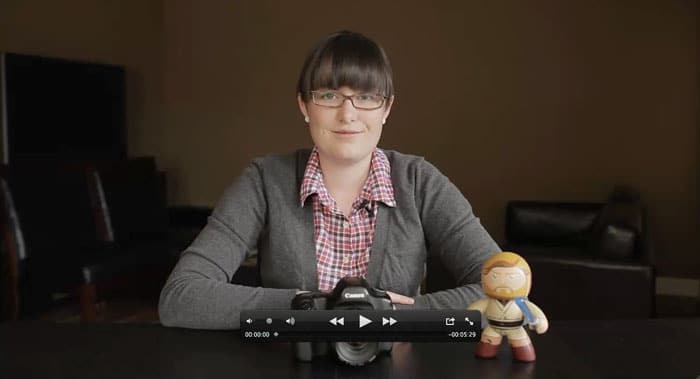
Extremely Essential Camera Skills Videos

The 7 videos by Lauren are fantastic. Her even, conversational tone and excellent examples helped me better understand the concept behind exposure compensation. So, the take aways are many. With Rob & Lauren's permission, I am considering using this guide book for photographers (I really don't want to call it a manual) in the beginning photography class I teach high schoolers. Yes, it's that good and it is perfectly fitted to meet the demands of amateurs and semi-professionals too.

As I have already stated, I received a review copy Extremely Essential Camera Skills and loved it. If you are struggling to use your DSLR, this guide book will help you get comfortable. For the next two weeks starting today, Rob & Lauren are offering a launch sale. You can get Extremely Essential Camera Skills for $29.97, that's 40% off the regular price of $49.99. In addition to the 89-page PDF and videos which you can view on your computer or your iPad, you will receive the Extremely Essential Camera Skills Field Guide, which you can print and tote around while you are photographing.

Full disclosure: As an affiliate, I receive a commission on the sale of this PDF to support Tiffinbox. If you enjoy the content on this site, I ask that you use the links in this post to buy Extremely Essential Camera Skills. Thank you!

Filed Under: Books, Photography, Tutorials Tagged With: camera, camera flashes, camera settings, cameras, digital photography, digital single lens reflex camera, dslr, ebook, essentials, extremely essential camera skills, Flash, guide books, guides, manual, PDF, Photography, photography concentrate, rob & lauren lim, skill, technology, tutorial

Nope, Film Is Not Dead

March 18, 2011 by Seshu | Editor & Publisher

I've loved Utah-based Jonathan Canlas‘ wedding photography for quite some time. I must have come across his website quite randomly about four or five years ago. His images continue to inspire me. The moments are real and the processing is just right.

Little did I know back then that he was a wholly film-based photographer. Yes, film. Some of us may remember that medium. With digital being all the rage – I mean who isn't addicted to chimping, right? – why would a photographer eschew Photoshop actions (that can make your digital images look like they were shot on film) and other “bells and whistles.” The answer is simple. Because he can, he wants to be different and his clients love him for it.

So, take a moment to look at his work again.

Now that you are back, do you see anything different? Do the images just appear more tactile, or have more depth to them? Or, is it my imagination? I believe it is the former.

Whichever way your answer sways, if you are curious about how Jonathan Canlas photographs weddings or portrait sessions using film, you have three options to learn from him.

You see, in addition to being a successful photographer, Canlas is a wonderful teacher. For several years, Canlas has offered the Film Is Not Dead workshops for those photographers looking for a solid foundation in film photography.

Canlas has also very patiently answered questions via Formspring. You should follow him on Twitter where most of these responses show up.

The last option, is a resourceful guidebook called FIND (Film Is Not Dead). There is a dedicated website where you can order this truly comprehensive offering. Jonathan generously offered me a review copy and I just got done reading it. As a photographer who cut his teeth on Tri-X and TMAX 3200, a lot of what he had to say in the book was not new to me. As a mostly 35-mm film photographer, though, I learned a great deal about medium-format cameras. So much so that I am now actively looking for a used Yashica-Mat 124-G.

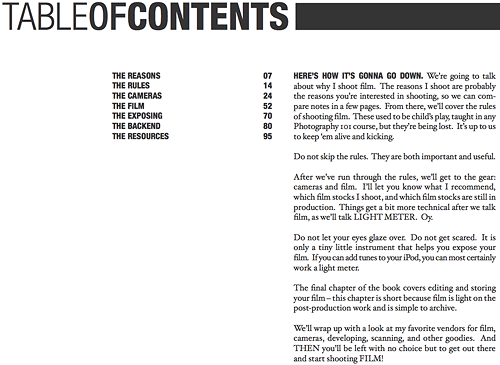
Here is a breakdown of the table of contents:

Jonathan Canlas' Film Is Not Dead PDF Table Of Contents

This is a 95-page e-book that is sprinkled with great wisdom and some jaw-dropping images. If you are clueless about working with film, because you simply never had the opportunity or were too intimidated, then you need to run out and get this hefty PDF. Unlike other PDFs that may discuss a particular type of digital technology that is sure to change over time, I feel what Jonathan Canlas has produced for us will be as timeless as his own work. Indeed, its his generous spirit that allows us to share his vast knowledge about a medium long thought of as “old,” or worse, “dead.”

Thanks to companies like Kodak and Ilford, who continue manufacturing film, Canlas feels strongly that he will be working in that medium for a very long time and now so can you.

Buy the Film Is Not Dead guidebook by using the code “SESHU” and receive $45 off the final price. All I ask in return is that you subscribe to the Tiffinbox newsletter. Goodies like this will only be available in the future for my newsletter subscribers so you may want to get a headstart.

Full disclosure – I received a review copy of this PDF, but I don't make a dime for mentioning it here on Tiffinbox. If you liked this review and bought the PDF, please come back here and post your comments. I'll try and have Jonathan swing by and answer any questions you may have.

Filed Under: Books, Film, Photography Tagged With: camera, dead, digital imaging, Film, film formats, film photography, jonathan, jonathan canlas, mass media, medium format, photographer, Photography, Portraits, resource guide, resource guides, used film, Wedding Photography, yashica

  • « Previous Page
  • 1
  • 2
  • 3
  • 4
  • Next Page »

Subscribe To Tiffibox Treats!

Looking for a well-curated email newsletter that will leave you inspired and motivated about your photography business? Sign up below!

About Seshu

Seshu creates relaxed portraits of families and high school seniors in Avon, Connecticut. He also leads a successful headshot photography studio in Connecticut, helping professionals from a variety of disciplines project the very best versions of themselves. He created Tiffinbox as a way of inspiring photographers, to create better images and successful businesses. [Read More]

Email Templates For Headshot Photographers

Email Templates for Headshot Photographers

Recent Posts

  • How Capture One Changed My Event Photography
  • 10 Steps To Stay Positive In Times Of Great Stress
  • Why You Need To Read “Personal Branding For Photographers” Now
  • How To Master Your Website Content Step By Step?
  • Tony Taafe’s TNT Method For Headshot Photographers

Recent Comments

  • Stephen Davison on Are You A Business Owner Who Is Smart, But Stuck?
  • Ben A. on Don Giannatti Clinches The 8th Annual Tiffinbox Award
  • Dan on Don Giannatti Clinches The 8th Annual Tiffinbox Award
  • Donald Giannatti on Don Giannatti Clinches The 8th Annual Tiffinbox Award
  • Stephen Davison on G.E. Masana’s 6 Strategies For Wedding Photography Success
  • Naveen Kumar on Weddings In India Are More Than Being At The Right Place And At The Right Time
  • kartick on Weddings In India Are More Than Being At The Right Place And At The Right Time
  • Leonid Farbman on 6 Uncommon Trends To Grow Your Photography Business
  • Willow and Finch Wedding Photography on 11 Reception Tips To Help Your Wedding Photography
  • Web Designer Malaysia on How To Optimize Your Squarespace Website For Search Engines
  • Creastan on An Interview With Photojournalist G.M.B. Akash
  • Cindy Brown | Atlanta on An Open Letter To A Local Photographer

Become a Patron!

Copyright © 2026 · Tiffinbox · Site Design by Heather Mackan Creative · Built on Genesis