• Photography
  • Interviews
  • Business
  • Reviews

Tiffinbox

Inspiring Photographers

  • Home
  • About
  • Blog
  • Contact

4×6 Print, $6 Or $60, Who’s Right?

December 20, 2010 by Seshu

Fundy, AvatarThis is a guest post by Andrew “Fundy” Funderburg, the creator of the Fundy Album Builder and Fundy Album Proofer. Please check out the free trials available at http://www.fundysos.com. If you were looking to design albums yourselves, I highly recommend Fundy's products.

I've seen many forum posts on pricing prints for photographers and they usually all end badly. There are those that defend the high price points due to labor, business costs and what the market will bear. And those defending the low end price points, focus on auto-fulfillment, and what the market is willing to pay.

So who's right? Well the answer is simple, both price points are correct?

How can this be? Well, ‘correct' pricing is based only on two things.

1. What the market is willing to pay for something.
2. That a price is profitable according to retail pricing rules.

Let's take a closer look. It's pretty easy to find out if people are willing to pay a certain price for something. You simply throw it out there in the marketplace and if people pay money for it, then it is a viable price. You can move the price point up and down. When it goes down, more people buy it, when it goes up fewer people buy it. Pretty soon, you find the happy price point, quite a few buyers at a profitable price point.

What is profitable? Well, according to the Professional Photographers Association of America, you'll want to have at least a 35% cost of goods mark up to be profitable – that is, pay your bills, run a profit and grow your business. A 35% cost of goods, simply means that for every $1.00 you make, it costs you 0.35¢. If you sell ice cream on the street corner, and you buy it for 0.35¢ and sell it for $1.00, then you have a 35% cost of goods.

To get retail pricing of goods, simply take your costs and divide by the percentage (35%=0.35). So, if something costs you $10 to create for your client:

$10 ÷ 0.35 = $28.50

We'll use this simple formula to prove both arguments are correct. We did this recently in a speaking engagement we had at ProDPI headquarters. We were using our new pricing program, Prosper™ during the demonstration.

Here in our settings, we have our cost of goods set at 25%, a good COG for an established photographer. We've also estimated our hourly rate in our studio for the work we do.
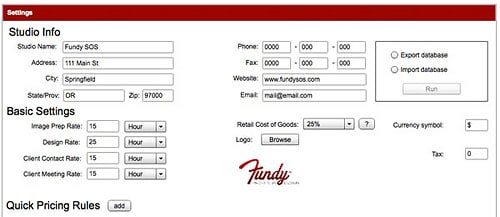
Prosper Settings Window

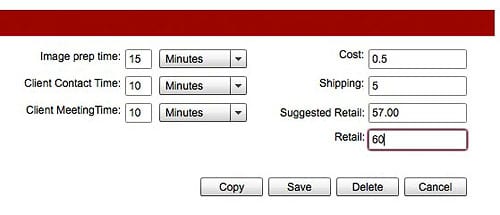
Now, let's look at two scenarios. The first being a photographer who is selling art prints for a portrait sitting or of the bride and groom in a posed shot. This is a special order, the photographer is going to retouch the print, have it shipped to the studio and the bride or groom (probably the bride) are going to come in and pick it up.
Print Pricing Scenario 1

As you can see we've calculated that we spend 15 min. finding, opening and retouching the image. We've set aside 10 minutes contact time with the client on the phone and 10 minutes time meeting the client in the studio to chat and $5 for shipping to our studio. Prosper™ has done the math for us, and calculated all of our costs and divided by 0.25. The total is $57. I'm going to just round that off to $60. So, you can see that with this business scenario, $60 for a 4×6 is the proper amount. And if the photographer educates the client about the quality of the print, it should sell.
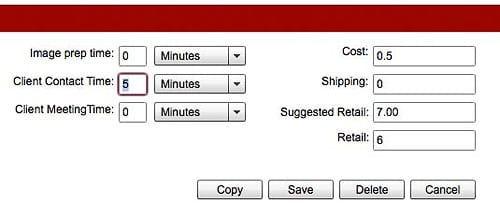
Print Pricing Scenario 2

As you can see, quite a bit has changed here. In this scenario, we've used numbers for an auto-fulfillment. This photographer shoots the wedding, does minimal batch retouching with an action and uploads the whole wedding for anyone to buy. After that, they are done. We've added the price of the print to the calculation and allotted 5 minutes for a quick call or email if the client asks about the delivery of the print. As you can see, Prosper™ has done the math for us and come out to $7 for a retail price on this print. I've rounded down to $6 for the purpose of this discussion.

So, as you can see, depending on how your run your business, $6 or $60 can be the right price for a 4×6 print. It all depends on how much work you are putting into the final product. The only mistake you can make is creating a fine art print and pricing it like an automated fulfillment print.

The simple matter of fact is, if you know your cost of goods then calculating your pricing is easy Junior High School math.

Prosper™ is a product of Fundy Software. You can find out more here about a free trial and the limited time pricing special happening right now.
Filed Under: Business, Photography Tagged With: andrew, Business, business costs, competition, Fundy, highest price, how to use, Marketing, photographer, photographic printing, price, price prints, Pricing, print, printing pricing, retail price, retailing

What Is Your Big Idea For SnapKnot?

December 15, 2010 by Guest

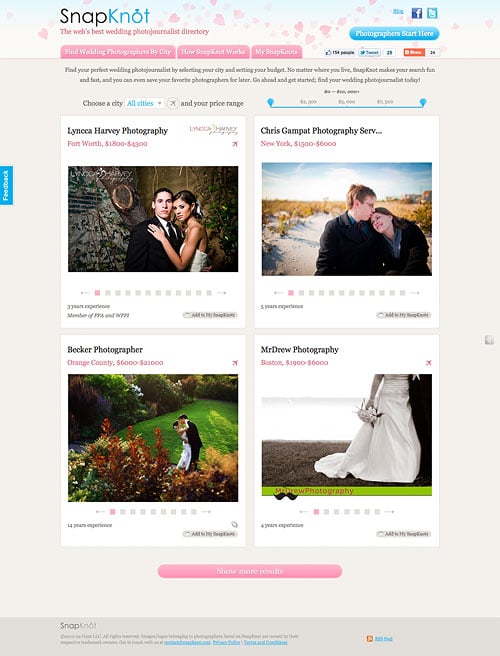
This is a guest post by SnapKnot, a website dedicated to helping engaged couples find their perfect wedding photographer.

We have been very pleased with the response from the wedding photography community and engaged couples since launching SnapKnot in February of this year. Now that we are in our 10th month of operations, we are considering the next steps to improve the site with the goal of making SnapKnot the go-to choice for brides and grooms just starting their search for a wedding photographer.

SnapKnot ScreenShot

We have a few ideas of our own that we are planning to implement in the coming months, but we thought it would be fun to create a contest around the next Big Ideas for SnapKnot here on Tiffinbox.

We want to reach out to the vast community of photographers who visit this blog and ask –

How Would You Improve SnapKnot?

What would you like to see?

What would you change?

What would give photographers and/or brides a better overall experience?

Leave a comment below with a few sentences describing what you'd like to see on the site. In return for sharing your opinion with us, three photographers will win free SnapKnot Premium memberships. We will consider all the ideas and we will select the ones we like the best as winners. Also we encourage people to comment on which ideas they like – this will help us make our final decisions.

The 3 Best Ideas Will Win:

1) Grand Prize: 1 year of SnapKnot Premium membership
2) 2nd Prize: 6 months SnapKnot Premium
3) 3rd Prize: 3 months SnapKnot Premium

Contest Rules:

1) Minimum of 50 ideas needed to activate the prizes
2) Current Premium members are not eligible for these prizes. Only new members and current Free members are eligible.
3) 1 entry per photographer
4) Please include a valid name and email address so we can contact the winners
5) Contest ends at midnight December 31, 2010
6) Winners will be announced in January

So, hop to it. You have only TWO weeks left before we call out 3 winners. Keep those ideas coming. We want to hear from YOU!

Filed Under: Marketing, Weddings Tagged With: Big Idea, Bride & Grooms, Brides, Contest, Couples, Grooms, Ideas, Marketing, Photographers, Photography, planning a wedding, SnapKnot, Website, Wedding, Wedding Planning, Weddings

Only You Can Be You

December 13, 2010 by Guest

Dustin MeyerDustin Meyer is an internationally acclaimed wedding and portrait photographer with clients across the country. WPPI speaker, owner of MpactPhoto Blog, Collages.net CLASS leader, and contributor to the Pay It Forward Blog, Dustin is all about giving it back when it comes to marketing, social media, Lightroom, and sales techniques.

You’re nervous. As the barista brings you your latte, you glance at the clock in apprehension. The sound of your heartbeat fills your ears as you inspect your outfit yet again. Questions like “What if she doesn’t like me?” and “What if I sound like an idiot?” race through your mind as the door to the café opens and in walks the woman you came to meet.

Take a deep breath. You’re not on a date. You’re meeting with a potential bride. However, many times as we get prepared to meet with clients for the first time, it can feel just like your first date. Except, in the dating world, booking brides would be the same as competing on the Bachelorette. You’re not the only one hoping to shoot this wedding and therefore being yourself is more important than ever.

In most major cities, the wedding photography industry is pretty oversaturated. Everyone is grabbing a camera and calling themselves photographers. The frustration builds as the photo community begins to collapse on itself as we all try to compete with each other on pricing, style, and products.

In the beginning, our studio had booths at bridal shows and advertised in local wedding magazines. However, I couldn’t help but feel like a number as the overwhelming sea of brides passed our booth again and again. Identity can get lost as the crucible of marketing boils everything we have down to the numbers game. “How many images do you shoot per wedding” and “The guy three booths down can shoot my wedding for X dollars, how good can you do on that price” are questions that become so common it makes you want to just put down your camera and walk away.

But you’re not a number. You’re a photographer. Pricing and even photographic style don’t have a face attached to them. This is why it’s most important to get your personality out there.

Your personality is the one thing that other studios cannot copy. It’s who you are, along with the style and portfolio you’ve developed over the years. By letting go of the copycat game (mimicking another photographer’s Photoshop effects or stealing someone’s price sheet at a wedding expo) you free yourself to just be you. And that’s exactly what brides are looking for.

It’s easy to feel like the guy next to you must be doing it better than you, hence why so many people are doing the same thing. However, it’s far easier to just stand out by being yourself. By putting as much of your personality on your site, in your work, or in your presentation, you’ll find that the quality of your clients will increase dramatically.

As we all probably know, it was much better to be yourself back when you were dating. It’s the same when it comes to booking brides. The more you just act like you, the more compatible you are with your clients. So relax, have another sip of your latte, and be a pro at being you.

Got something on your mind after reading Dustin's blog post? Sound off below in the comments. We love to hear from you.

Filed Under: Business, Photography Tagged With: adobe photoshop lightroom, be you, dustin, dustin meyer, human interest, photographer, Photographers, portrait photographers, unique, Wedding, Wedding Photography

6 Reasons Why Photographers Suck At Business

December 8, 2010 by Guest

Anne Ruthmann - Boston Documentary and Lifestyle PhotographerThis is a guest blog by Anne Ruthmann. She is a Documentary Wedding & Lifestyle photographer in the Greater Boston area, where you can hang out with her every month at the local Pictage Users Group (PUG) group. She's won some fancy awards and been published in famous magazines but more importantly has been running a profitable business since she started in 2005. Before photography, she was successful in marketing & management for various corporations and non-profits, and learned how to make complicated things easy to understand by teaching music to elementary students. When she gets bored working on her own business, she consults for other small businesses, updates PhotoLovecat.com, and LowellHandmade.com. She hugs trees and sings in the car, but prefers to dine out because she's a terrible cook.

1. You Don't Know What Your Time Is Worth

You only seem to think that the time you spend shooting is worth any value. Nevermind that you spend 2-4x more time on post-production, backing up images, dealing with orders, setting up appointments, meeting with clients, putting out fires, etc. If you had an office assistant, I'm guessing they wouldn't do all of that for free- so why do you?

2. You Think Equipment Is Going To Make You A Better Photographer

I'm sorry dear gearhead, but if you can't make people fall in love with your work when you're using a point & shoot camera, what makes you think they're going to love your work any more after you've spent $20,000 on the most expensive gear you can find?

3. You Discount Your Services In order To Work With Clients Who Don't Appreciate You

Why, oh why, would you say yes to a client who already has decided you aren't worth what you're charging by asking you to work for less? Why are you going out of your way and cutting your own source of income in order to work with people who have already started your relationship on the basis that you will be bending over backwards and slitting your financial wrists for them?

4. You Think Your Technique Is Worth More Than The Moment

If you capture a beautifully lit image of someone in front of the perfect background and they have a lifeless face vs. a poorly exposed image in front of a distracting background but the subject has an engaging smile… duh… they will choose the one that makes THEM look good!

5. You Feed Your Ego More Than Your Bank Account

All of those advertising dollars you spent with that magazine or blog so your work could be featured resulted in how many solidly booked clients? If you didn't make 300% more than you spent on advertising, than it was a bad deal. Advertising should be an investment toward gaining future income, not an expense to stroke your ego and primp your peacock feathers.

6. You Don't Read PhotoLovecat.com

Because if you did, and you actually took our advice, you probably wouldn't suck so much at business.

Filed Under: Business, Photography

How To Organize A Portfolio Into A Hardcover Photobook

December 6, 2010 by Guest

Ingrid Spangler, AvatarThis is Ingrid Spangler's second guest blog post for Tiffinbox. She is responsible for all the social media, as well as copywriting, promotions and marketing for AdoramaPix. She has been an avid photographer from the time she was a child, and studied film at Temple University in Philadelphia, where she learned about film theory and visual aesthetics. Her first post was about finding the perfect photography printing lab.

Hardcover photo books are fast becoming the best choice to present and distribute your portfolio. It’s a more permanent way to display your images, and while that is a definite plus, it also requires much more care when organizing and designing than just slipping your prints into the plastic sleeves. There’s also something about having your images in a book that leads the viewer to believe that the images should hold together and tell a story more than a traditional portfolio.

Here’s a general portfolio tip from my buddy Joe Holmes of joe's nyc focus on one style or genre of photography that you do best, such as landscapes or street photography or portraits. You can always do separate portfolios/books for each genre.

Another tip: Don’t let the design of your book overwhelm your images. Keep it simple. This rule goes for any photo book you make, but is especially true for portfolios.

From speaking to photographers and photo editors, it seems that the general rule when organizing your images into your portfolio is “put your best images in the front and the back; make a strong first impression, then give them something to remember you by.” While you can still use this tenet to start to set up your book, what do you do with all the prints in the middle?

Here are some suggestions for how you can sequence the images to have them hold together as something cohesive.

Organize Your Images By Color

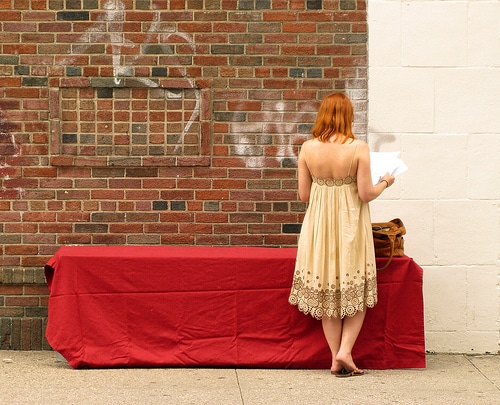
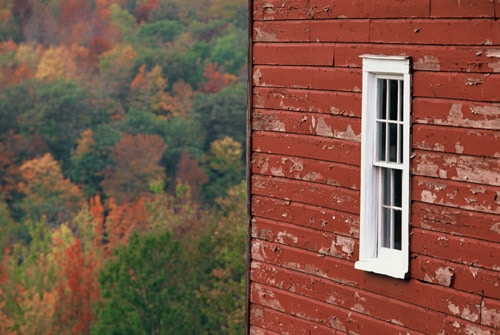
Allow the dominant color in one image to dictate what the next image will be. This is very subtle and works very well for images that are largely disparate. Take for instance these images with lots of red tones, the next images could be something with orange or deeper red as the dominant color and so on.

Keep moving through the color spectrum until you are close to the end of the book, where you’ll place your second set of strong images to leave a lasting impression on the viewer.

Red Table

Red Barn

Organize Your Images Graphically

Look for the strong, dominant lines in your images and pair them accordingly. This image with strong diagonal and horizontal lines is matched by an image with similar lines. For diagonal lines that go off the page, try as much as possible to have them point to the center of the book. This pairing also works because of the similar colors.

Boys On The Beach

Bridge

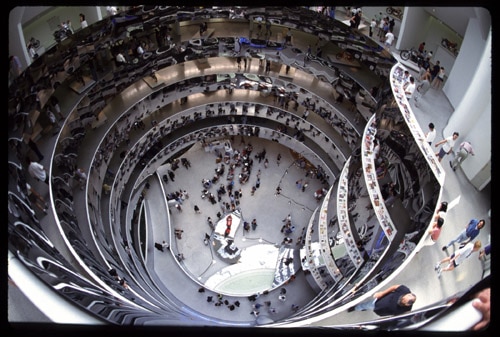
Or these circular shapes:

Guggenheim

Tunnel

*Images courtesy of Brandon Remler: Fall Trees, Boys on Beach, Bridge, Guggenheim and Tunnel. Red Table courtesy of Ingrid Spangler.

Group like with like: black and whites together, images that depict the same subject, etc.

Above all, choose a high quality lab to make your photo book portfolio! AdoramaPix photo books are printed on real photo paper, so they are the closest thing to a traditional portfolio. Unique lay-flat bindings ensure that none of your images are lost to a gutter in the center, plus you don’t have to worry about matching up halves of an image that you want to span both pages. PixPublisher, the online book creation and editing program, is easy to use and powerful, you can design your portfolio exactly the way you want, sizing and positioning your images precisely on the pages, down to the pixel!

Remember, it’s your work, don’t gamble with the presentation. You may only get one chance to impress someone, make it count!

Filed Under: Books, Photo Books, Photography Tagged With: books, digital photography, hardcover, hardcover photo book, how to organize, ingrid spangler, organize, photo books, photo editor, photobook, photograph album, Photography, physics, portfolio

How To Define Your Target Market or Niche?

December 3, 2010 by Guest

Robyn Mayne, AvatarThis is a guest blog is by Robyn Mayne, based in Sydney, Australia. She is a children’s portrait photographer, workshop facilitator and customer experience fanatic! Robyn owns Today is Different and provides photography courses, workshops, retreats and networking events for photographers. Follow Robyn on Twitter.

Who are your customers?

One of the basic elements of any good marketing strategy is a narrowly defined target market – a niche. In fact, a great approach is to start by defining your ideal or perfect customer – Your “right” customer!

Many photographers try to be all things to all people and find it hard to really focus their activity on appealing to their right customers.

Often this happens because someone is on the phone asking for help in an area that’s not really your thing. What tends to kick in here is a fear of saying no to the “wrong” customers. “What if I don’t get any calls from my right customers?”  

While it may seem like growth to take on a new customer, if that customer isn’t a good fit, it can actually take your focus away from real growth and may even create dissatisfied customers that expected something other than what you were able to provide. Dissatisfied customers WILL tell their friends. Do you have a well-defined target market? Or, is it something like…”anyone that we think will pay us”.

So how do you identify your ideal target client?

a) Take a good hard look at your past clients. Look for types of clients that you would love to do more with?
b) Which are your most profitable clients? Are there types of work or types of clients that traditionally produce profitable or unprofitable sales?
c) Do they “want” what you do? If they do not want it for one reason or another, then you are sunk. If you have to convince them of a need, then they are not a good target market.
d) Do they value what you do? Price shoppers will always be prices shoppers. Look for those who appreciate the extra they get from you.

Create a picture of your ideal client

One useful trick is to discover what that ideal client looks like in the most specific way possible and then go about building your entire marketing strategy around attracting more of them. The idea here is that you create a picture of your ideal customer. Give her, or him, a name and a set of characteristics. Consider things like: age; sex; occupation; geography; family; income; beliefs; values; interests; challenges etc.

Now whenever you are reviewing your business, think of a new idea or try a different approach you can ask yourself “Would this appeal to Fiona/Fred?”

What do you think? Have you defined your target market? Do you operate within a niche? Tell us. Discuss. Share. This is the place to do it.

Filed Under: Business, Marketing, Photography Tagged With: Business, define, define target market, Marketing, marketing strategies, mayne, niches, photographer, portrait photographers, relationship marketing, robyn, robyn mayne, target market, targets

Hard Light, Soft Light For Photographers

December 1, 2010 by Guest

David Robertson, AvatarThis week, we'll have two blog posts from my friends from “down under.” Can you tell I've always wanted to use that expression? In all seriousness, though, this first one up is a guest post by David Robertson, a Canberra Wedding Photographer. Follow him on Twitter.

As photographers we’re fed this basic message that a bigger lens = better photos. Don’t get me wrong, I love shooting with good quality equipment but as soon as you replace a passion for knowledge with a passion for equipment you’ll find yourself frustrated when your photos aren’t improving and will get burnt out. As a young photographer I bought the gear that I had lusted after and spent thousands of dollars without even realizing that I can make some amazing photos when equipped with the right knowledge and understanding of light.

Lighting in photography is one of the most overlooked aspects by today’s photographers and even the ‘professional’ photographers. Amateurs and professionals alike are completely oblivious to the effects of light of the human body and how different lighting can reveal or hide things, tell a story and bring your subject to life. Through this article I’ll go over some very simple and basic natural lighting techniques that I use for 90% of the work I do.

David Robertson

David Robertson Bridal Party

Many photographers over chop their images to try to make up for their lack of ability to understand light. We’ve all seen those ‘professional’ wedding photos that really just make you cringe and die a little inside. The aim of my work is to provide a very exclusive and high end photography experience, not just great images and being able to utilize the available light to the best measures is absolutely essential to that.

Amateurs and professionals alike are completely oblivious to the effects of light of the human body and how different lighting can reveal or hide things, tell a story and bring your subject to life.

There are a few different factors to consider when you’re lighting for portraits; size, diffusion (hard or soft), color and angle. Before I take a single photograph I analyze the scene and choose one of the below based on the factors above.

David Robertson

David Robertson

David Robertson

Hard light – shoot into the sun with the subject in front of you. This prevents squinting, gives a great wrap around light and if exposed correctly can give you amazing results. If possible try avoid shooting with midday sun. I always get a few wedding clients every season boasting about how they’ve planned to have the ceremony at midday and how good the light is then. Truth is that it’s very hard to avoid making people look likes pandas when the sun is at its apex.

Soft Light – The easiest light to work with, there is usually no squinting of the eyes (important) and it gives really nice warm, soft skin tones. The clouds act as a massive softbox; it’s my preferred light to shoot with. Shoot with the subject facing the light source (sun behind clouds) to get the most of all the color in the eyes, catchlights from light source (sun) and the best skin tones.

Sounds too easy? Well, it kinda is really :)

I encourage you to buy a small mannequin or get a willing model and study the effects of light on the person in a room with a nice big window. Rotate around the model as you’re shooting and very carefully observe with your eyes all the subtle differences that occur when you change the angle of the light and position of yourself and the subject. You’ll soon find yourself being able to get familiar with the effects of light and in no time you’ll be a light connoisseur.

If I had known all the things I do now when I first started I could have saved myself a lot of stuffing around, I hope it helps you :)

Do you have a preference for hard or soft light? Sound off below and let us know. Tell us also why you like one over the other. What challenges do you face when photographing in different types of light.

Filed Under: Lighting, Photography, Weddings Tagged With: available light, david robertson, hard light, human interest, Lighting, lighting techniques, photographer, Photographers, photographic lighting, Photography, professional photographers, science of photography, soft light

The Foundation Conference, Kansas City: A Recap

November 29, 2010 by Guest

Stacey Doyle, AvatarThis is a guest blog by Providence, Rhode Island-based documentary wedding photographer, Stacey Doyle. She documents weddings & families focused mainly in the New England area, though always willing to pack a bag & travel far and wide. Besides photography she really enjoys the art of sewing, specifically deconstructing older pieces and making them new again. If you don't find her behind her camera or sewing machine, you may find her perusing used book stores, thrift stores or at a local brewery surrounded by friends.

I was supposed to go to the Foundation Conference, held in Kansas City, this year. Circumstances at home prevented me from making the trip. When I came to know Stacey was going to be there, I lost no time in recruiting her to report back on her experiences at the conference. What you will read below are her impressions.

Walking into Foundation Conference 2, I was welcomed by friends. By hugs. By smiles. Open hearts & minds. An ego free zone.

Foundation Workshop Conference

From the speakers, to those coming along for a shot of inspiration, everyone there seemed to have a common thread, they see not only with their skillful eyes yet also with their hearts. They tell their stories using their individual visions fueled with their excitement to share, their ability to listen softly, their desire to infuse passion.

I heard Still Motion speak about how, a mere year ago they were creating images that were just good enough. They were pretty. But something was lacking. Something was missing. Something wasn't being said.
Inspired from last years Foundation Conference they decided to change all that. They now immerse themselves into their couples lives, they learn more about who they are, what they are about, what is really meaningful to them. They spend their time documenting what will speak to the true story of their couple, instead of focusing on details that mean nothing in the end. Even if that means skipping the makeup application in order to photograph a couple's beloved pups enjoying a morning swim. It's the images that truly matter, that's their goal. In the end they encouraged everyone to examine where you are right now and then ask yourself ‘Where do you want to be in one year?'

‘Suck less everyday'

DQ have always made me smile. They are a rich and giving couple, in their teachings, in their energy, in their commitment to the photography world. Dave and Quinn are one of the first people to run up and give you a warm genuine hug. Their excitement over showing you how to bring light into a scene to layer and transform a rather dull atmosphere into a whole different world is infectious! What I really adore is each time I've heard them speak, they both seem to glow when they talk about the other's abilities. Not ‘oh darn, Quinn one upped me' but ‘Heck yea did you see what she did?! So proud of her!'. Their motto that day was ‘Suck less everyday', which I quickly retweeted! However I really loved their son, Tobi's, quote ‘Making little moments go a long way'.

I found JVS‘s work years ago online and was floored. I couldn't believe someone could walk into a wedding and find images like that. His lighting skills are outstanding. I recently took his off camera flash workshop in Boston. I remember during his teaching that knowledge is important however what really stood out was if you are going to do something, don't half ass it. Do it right. His talk at the Foundation Conference was more introspective. He went through his life in pictures and in stories. He spoke of the moments that changed the way he viewed the photographic world he was in. He talked of the stories that had an impact, not only on his career but his heart. He spoke of being true to himself, his vision, the life he really wanted to be living, the work he really wanted to be producing. What shined through again was if you are going to do something do not go half way. Put your all into it. Don't be lukewarm about your approach. Mean it. And if you don't, maybe you need to examine what it is you really want to be doing in your life.

They wanted to create a playground where the mind-blowingly awesome photographers in their area could safely come together and, well, play!

The Wed Rockers are a group of established photographers from Mexico. They were looking for community, they were looking to help bring others with a similar desire to share and create, together. They wanted to create a playground where the mind-blowingly awesome photographers in their area could safely come together and, well, play! Their passion flowed out of them like warm sunshine. I was grinning the minute they started their talk and laughing and smiling and tearing up with them at the end. I believe they accomplished what it was they were trying to create: community. And they brought that feeling of sharing & encouragement to the hearts of all those that were there in that room listening that morning. Their talk made my heart swell, it made me want to share anything that I know with anyone that asks. Do you want to know what the secret ingredient is? Nothing. So do not be afraid to share. It's in the sharing where you will find your true self, your true vision.

It's hard for me to use just words to describe Anna Kuperberg‘s work, because when I see her pieces, all I can do is feel. Words may fail me, but my emotions do not. I respond within. I think it has a lot to do with her approach. Her talk during Foundation Conference spoke of being more childlike. Trying to tap into that long lost creative being we once were, until it was schooled, questioned, hushed out of us. And that's not an easy thing to do for some of us. I think ‘won't I look like a fool' but then I remember the little girl that I was flying down the street on my bike, not caring who or what saw me, just that I could fly (on two wheels, of course). I didn't care who heard me make-believing in the back yard with my Barbies and Strawberry Shortcake dolls. A whole magical world existed in my mind and I didn't feel like a fool, because it was fun. I didn't care enough about others opinions to not care about what felt good. I just played and I played well. And I believe that's what I took from Anna's talk; who cares if you mess up or screw up. It doesn't matter! Get back to caring about playing, playing well.

I had not heard of Candice C. Cusic nor seen her work before Foundation Conference. I am so glad I was there to experience her world, her approach and her imagery. Her emotional way of shooting, her steady courageous way of waiting it out until she knows she has what she wants. Her bold patience really struck me. Again, it's the idea of being overly concerned about what others are thinking of you as you work and allowing that to dilute your imagery. Don't let the thoughts of others get in your way. And don't read this wrong, Candace isn't being disrespectful of her subjects, no way! She calmly waits it out, where others might think ‘ok i'm probably bothering them so i should stop now', she's asking you ‘who says?' Don't ever assume you know what people will or will not let you photograph. Be patient, be bold, don't forget to tap into your heart, and then let go and shoot.

The local Kansas City contingent, Lemon & Lime, rounded out the talks. They spoke of their approach, creating one of a kind imagery, using their distinct vision to capture the story of their couples. How a fluke meeting a few years ago brought Neal & Eric together, and since then they have been able to immerse themselves in their creative process, in their couple's lives and in their business together. What struck me most was the way they talked about working with one another. How this collaboration has become so important to them both. The emotion that carried their words was heartfelt and true. I didn't feel as though they were talking just about a business, but a family they created. Once their talk was complete, I saw the other local photographers from Kansas City gather around them at the back of the room, each in turn hugging them both, congratulating them. Not doing this because they wanted those around them to know they ‘knew' them. This was real. There was a camaraderie there that I can only hope and pray others are blessed with.

And if you want to grow, the best thing you can do for yourself is get your butt in the hot seat. Now.

You may think of the Foundation Workshop Forum as just another photography forum. But that is so very far from the truth. It is a collection of brightly colored, vibrant, rich photographers threaded together with their deep desire to share with those around them who are equally passionate about the work they create. It isn't just a bunch of gear geeks talking numbers. These people are full of heart, they pay attention, they care. There is safety in knowing you are not going to get squashed by some self absorbed personality. However if you ask for a critique of your work, don't expect to be embraced warmly while they sugar coat their words. These people love what they do, they respect the art form far too much to give you a simple pat on the back. And if you want to grow, the best thing you can do for yourself is get your butt in the hot seat. Now. But let me assure you, having sat in that seat quite a few times, you will find no cruelty there. You will find not a single drop of snark. No one is there simply to beat anyone up. It is because they care, that they want to see you grow. They want to see you break free from the negative thoughts that anchor you. They want to see you soar.

Forums can most certainly be intimidating. However, you will find with the Foundation Workshop Forum group, that intimidation quickly melts away, as you are welcomed in by the warm generous souls that make up this great family.

Filed Under: Documentary Wedding Photography, Photojournalism, Seshu Photography, Weddings Tagged With: Anna Kuperberg, Candice C. Cusic, conferences, documentary wedding photographer, DQ Studios, Education, foundation, JVS, kansas city, Lemon & Lime, photographer, rhode island, stacey doyle, Still Motion, the foundation, The Foundation Forum, The Foundation Workshop, The Wed Rockers, Wedding

7 Easy Tips to Sell More Photography Albums

November 24, 2010 by Guest

Fundy, AvatarThis is a guest post by Andrew “Fundy” Funderburg, the creator of the Fundy Album Builder and Fundy Album Proofer. Please check out the free trials available at http://www.fundysos.com. If you were looking to design albums yourselves, I highly recommend Fundy's products.

I firmly believe that fine art albums are the finest representation of good photography available wedding and portrait market. They allow the photographer to to create a family heirloom that can be handed down through generations. In the age of digital where hard-drive crashes and the fact that DVDs and CDs erode over time, a fine art album is one of the few ways to truly preserve the story of the day. A finely crafted leather album printed on true photographic paper will last, literally, hundreds of years.

I want all of my clients to preserve their photos in fine art albums. Yet, with the cost of the album, plus the cost of design, these can be significant investments for clients. So, the question is, how can we help more of our clients choose these albums, which we firmly believe are the best way to preserve their story, their day and their family's memories.

Tip 1 – Show more albums

Tips For Selling Albums By Fundy

This may seem like a no brainer, but people only buy what they can see, touch and feel. I've hear of photographers complaining that they never sell anything beyond a 10″x10″ album. But, later I find out that they only show 10″x10″ albums and give the option to upgrade the size. But the client can't know what a 12″x12″ or 14″x14″ feels and looks like without holding that album. In the studio, photographers need to have samples of each and every size they want to sell.

Tip 2 – Show big and fancy

Tips For Selling Albums By Fundy

Samples should be big and fancy. Have at least one sample of the largest album your album company offers. If they offer a 12×18″ album, get a sample of it. To keep costs down, only put in the minimum amount of pages (usually 20 pages). If your album company offers cool metal covers, get one. If you like those cool, expensive plexiglass covers, get a sample. By offering larger albums with fancier covers, it validates the cost of the regular leather albums. And it shows to the client, the fine art capabilities your studio has to offer.

Tip 3 – Tell clients what “most” people are buying

Tips For Selling Albums By Fundy

Clients usually only get married once (well maybe twice) in their lifetime. For the most part, they don't know how to get married. They don't know what they should do with their photography, they don't know how to preserve it, how to show off their day. For portrait clients it's basically the same. Senior photos are taken once in a lifetime. Families usually only have nice professional portraits done once or twice before kids are grown up and out of the house. It is part of our job description to let them know what we can do and what other clients are doing. Tell them that “most people are getting an album like this.” or “An 8×8″ cloth covered album is our most popular portrait album.” or “A lot of people are getting our new leather options.” Let them know this information during the consultation or on the day of the shoot. People need to digest this information and see pricing before viewing the images. If you design beautiful albums, they will want one, but they need time to justify the cost.

Tip 4 – Shoot for the Album

Tips For Selling Albums By Fundy

If we, as photographers, need to shoot differently if we want to sell more albums, versus, individual prints. Albums are all about telling stories. If we have one fantastic shot, we need to take supporting shots. This philosophy is ingrained in most wedding photographers, but the same philosophy needs to be adopted by portrait photographers. When you have “the shot” set up, also take accent shots from different angles and with different lenses. A shot with a long lens, cropped into the subject may have a great accent shot with a wide angle showing the landscape around the subject. So, shoot once, move around and take 3 more shots.

Tip 5 – Use albums as hooks in your packages

Tips For Selling Albums By Fundy

If you want to sell more albums, make them the centerpieces of your packages. In all of your wedding packages offer album credit. In wedding packages, album credit usually works better than actual albums (e.g. a 30 page 10″x10″ album). With so many sizes and options to clients for wedding albums, credit allows clients to create their own ‘dream' album without confusing upgrade options. For portrait albums, using different sizes in different packages works well. For example, a 5×5, an 8×8 and a 10×10 option in three different packages. Additionally, you can offer upgraded covers (e.g. leather) in larger packages.

Tip 6 – Break down your workflow

Fundy Album Builder

Albums are big projects, especially when you get over 40 pages. They involve not only the design, but also the proofing of the album to the client. When designing albums, I have pre-made folders with page numbers on them (e.g. 0203) and I drag the images for those pages into their own folders. This helps me organize each spread separately and speeds up the design process. For proofing the album, I realized that proofing needed an organized, visual solution and that is why I created the Fundy Album Proofer. I did the same with my Album Builder. I needed an organized way to make gorgeous, high-end albums. When you choose your software tools for albums, make sure that they fit your workflow and will not only help you produce and proof gorgeous albums.

Tip 7 – Know your profits

Fundy Album Builder
While this is not necessarily related directly to selling more albums, it will affect your ability to provide albums in the future. If you are not charging enough for your albums, you'll quickly get bogged down in the work of offering albums and they will quickly become a drain on your business instead of a boon to your business. Add all of your costs together, the cost of the album, the cost of the extra pages, the cost of designing the album (the cost of your time to design the album) and the cost of meeting the clients and proofing (again, the cost of your time). What most photographers forget is to do is charge for their time. But we don't want to work for free, do we? Take all of these and add them together. Now, the PPA recommends a maximum of 35% cost of goods. This means that for every $1 you make, it should cost you no more than 35¢ to produce. The easy way to calculate this is take all of your costs, add them together and divide by 0.35. For example, if it costs you $350 to produce an album, you should charge around $1000 for it. If you are on the higher end of your market, you can go smaller, for example 25% or divide by 0.25.

I hope that these tips help you sell more albums and helps your clients discover the joys of having a fine art album for generations to come.

Yes, Fundy does have a Black Friday sale. So, click the image below to get 30% off of all his cool album making products. {affiliate partner}

Black Friday Banner by Fundy SOS

Filed Under: Album Design, Business, Photo Technology, Photography, Web/Tech, Weddings

Kraft and Jute: Finding The Perfect Packaging Solution

November 23, 2010 by Guest

Jessica Lewis Family PortraitMelisa, AvatarThis is a guest blog by Jessica Lewis, co-owner of KRAFT and JUTE, which provides personalized kraft-sleeves and wedding favors using 100% recycled paper. Co-owners Melisa and Jessica are hard working wives and mothers; Melisa is due with baby #2 in December! She is a professor of business and marketing at Edinboro University and is currently working on her doctorate. When not running around after toddlers, Jessica sews sample CD sleeves for clients and runs her own photography business – Live: Beautiful Photography. Melisa and Jessica happen to be cousins who grew up together in northwest PA and have fond memories of playing in the tractor-tire sandbox on their grandparent’s farm.

The process of starting a new photography business is overwhelming for many new photographers. Many get weighed down with setting up a website or blog, finding a proofing site, creating a good workflow, managing a business, designing a logo, developing their brand… oh yeah – and taking and editing pictures. It is a lot of work and with so many different options, it is easy to lose track of time and become frustrated with trying to find the best solutions.

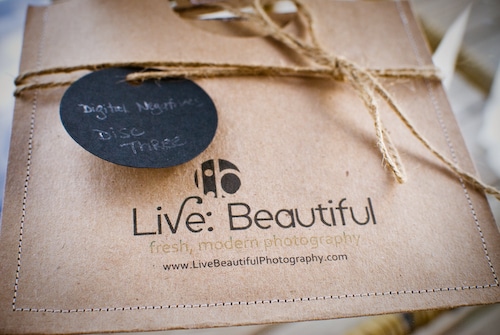
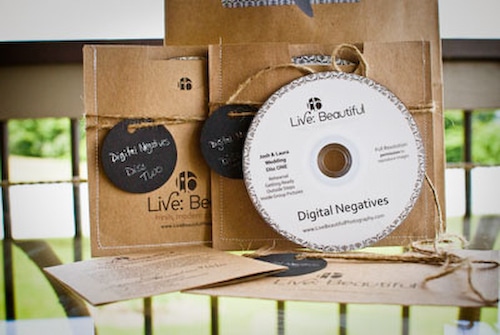
This process of being overwhelmed and frustrated is what led us (Melisa and Jessica) to develop Kraft and Jute. Jessica, photographer of Live: Beautiful Photography, wasn’t happy with the choices of Digital Negatives/DVD Slideshow packaging. We tried using the standard slim jewel case, but it screamed “cheap.” We thought about buying a 5×5 trifold from White House Custom Color, but were overwhelmed with trying to put together artwork and figuring out a nice layout. We knew we couldn’t spend a fortune on really nice custom packaging, but at the same time, we understood the value of a great presentation to the client.

So what better way to solve your own problems – create something for yourself! And that’s just what we did.

We created our own custom, eco-friendly, packaging for digital negatives in which we drew a lot of inspiration from two different websites: Caroline Ghetes and The Paperieboutique

The whole process was organic. We had tons of different ideas swimming around in our heads, but decided (encouraged by economics) to use the resources that were around us – kraft paper, our printer and a sewing machine. The feedback and ideas from friends and family were also key in developing our own professional packaging solutions. We knew that whatever the end result, we wanted something that was simple, yet beautiful.

You can see where we are now in the process by visiting our website, KRAFTandJUTE.com. Yes, this is still a process! We first posted some listings of the packaging products we had created in our Etsy shop. The response from fellow photographers was overwhelming. We were very excited to see their logos and brands printed on our simple CD/DVD sleeves. They looked amazing! We strive to fulfill custom packaging requests from professionals like you that need something that will make their brand stick out (but not lose a fortune in packaging costs).

We continue to build on our standard packaging solutions but also work on a one-to-one level with photographers all over the world to make something that is unique, simple and beautiful for them.

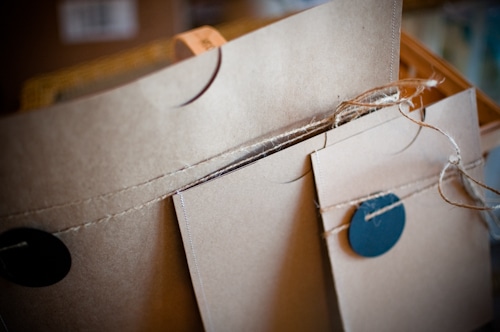
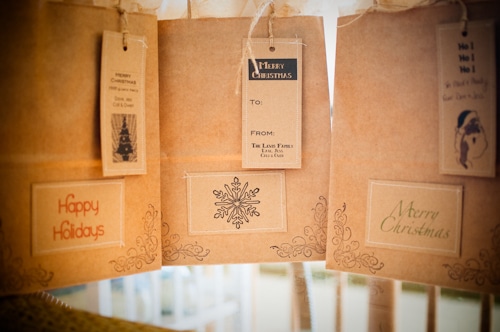
Kraft and Jute products have expanded from the simple CD sleeve to now include: CD/DVD sleeves, double sleeves, custom printing, print sleeves, print folders, and deluxe gift bag packages (for the total presentation). There are so many more new product ideas in the works – just not enough time to do it all at once!

We have produced over 5,000 CD sleeves for photographers and brides since July 2010 and were just featured in the latest addition of Design Aglow's Issue 11, “Presentation Perfection: Packaging That Inspires.”

Our clients LOVE the eco-friendly kraft and jute packaging. We hope you will be inspired to discover or create something beautiful for your treasured clients too!

Kraft and Jute

Kraft and Jute

Kraft and Jute

Kraft and Jute

Kraft and Jute

Kraft and Jute

SPECIAL OFFER: Receive 10 free Simple Stitched CD sleeves with every order of $15 or more until November 30. Mention the following code: “PicSeshu”.

Filed Under: Business, Marketing, Photography, Weddings Tagged With: Business, custom packaging, etsy, jessica lewis, jute, jute product, kraft, kraft paper, Marketing, optical disc packaging, packaging, packaging products, packaging solution, packaging solutions, papermaking, perfect package, recycled materials, recycled paper, waste management

  • « Previous Page
  • 1
  • …
  • 51
  • 52
  • 53
  • 54
  • 55
  • …
  • 198
  • Next Page »

Subscribe To Tiffibox Treats!

Looking for a well-curated email newsletter that will leave you inspired and motivated about your photography business? Sign up below!

About Seshu

Seshu creates relaxed portraits of families and high school seniors in Avon, Connecticut. He also leads a successful headshot photography studio in Connecticut, helping professionals from a variety of disciplines project the very best versions of themselves. He created Tiffinbox as a way of inspiring photographers, to create better images and successful businesses. [Read More]

Email Templates For Headshot Photographers

Email Templates for Headshot Photographers

Recent Posts

  • How Capture One Changed My Event Photography
  • 10 Steps To Stay Positive In Times Of Great Stress
  • Why You Need To Read “Personal Branding For Photographers” Now
  • How To Master Your Website Content Step By Step?
  • Tony Taafe’s TNT Method For Headshot Photographers

Recent Comments

  • Stephen Davison on Are You A Business Owner Who Is Smart, But Stuck?
  • Ben A. on Don Giannatti Clinches The 8th Annual Tiffinbox Award
  • Dan on Don Giannatti Clinches The 8th Annual Tiffinbox Award
  • Donald Giannatti on Don Giannatti Clinches The 8th Annual Tiffinbox Award
  • Stephen Davison on G.E. Masana’s 6 Strategies For Wedding Photography Success
  • Naveen Kumar on Weddings In India Are More Than Being At The Right Place And At The Right Time
  • kartick on Weddings In India Are More Than Being At The Right Place And At The Right Time
  • Leonid Farbman on 6 Uncommon Trends To Grow Your Photography Business
  • Willow and Finch Wedding Photography on 11 Reception Tips To Help Your Wedding Photography
  • Web Designer Malaysia on How To Optimize Your Squarespace Website For Search Engines
  • Creastan on An Interview With Photojournalist G.M.B. Akash
  • Cindy Brown | Atlanta on An Open Letter To A Local Photographer

Become a Patron!

Copyright © 2026 · Tiffinbox · Site Design by Heather Mackan Creative · Built on Genesis