• Photography
  • Interviews
  • Business
  • Reviews

Tiffinbox

Inspiring Photographers

  • Home
  • About
  • Blog
  • Contact

A Photographer’s Dream Client

July 28, 2012 by Salonee Pareek

Salonee Pareek is the better half of Ramit Batra Photography. She assists Ramit at his shoots and chronicles their experiences on their blog. When not travelling, or writing, she loves to spend her time with her books and can be found on Twitter.

A few days ago, I had the chance to interact with a prospective client and a fellow wedding photographer. The interaction was around two terms – one listed above, mentioned by the photographer – the dream client; and another what the dream client said “… if someone can put their heart and soul into doing a great job of the photography”. This got me thinking about our expectations as photographers and our clients' expectations for us and how it is like walking a tightrope to manage both of these expectations.

For a photographer, perhaps, there is no greater feeling than working for a client that wants the photographer to put her heart and soul in her photography. What would my dream client be like?

Realistically, what does a client really want? This may not be a million dollar question, but is definitely worth a few thousand dollars to us photographers. Some of us went to school or college and studied the craft of photography and some of us learned it in a more hands-on manner. But most of us have developed a manner of photography, we call our own, even as it changes and develops over time. There are certain things one is willing to do, and quite a few things one is not prepare to commit. And at the end of a hard day, we all want a client that appreciates our work and sees in it, a good value for her money.

While I am in no position to generalise, I have worked for clients who have appreciated the hard work I put in, gone a few steps further and asked for suggestions as to what would help me do my job better. And some, who have at the very outset, communicated the desire to always be in control of me and directed me to work accordingly. It is the latter variety that I am wary of. Here's why: because that does not come across to me as being honest. It appears as though this person only requires a camera operator with good equipment, not someone who uses their mind to control their equipment and create photographs the way only they can.

And thus began my dream of my ideal client. And here’s what I dreamed of:

My dream client would have some awareness about photography, if not especially about wedding photography. She would see me as a professional doing her work and not merely a camera controller. She would not vanish at the mere mention of payments (quite frankly, I know a lot of fellow photographers who have had brides vanish as soon as they receive an estimate). She will want to hire me as she likes my work, and not because she thinks I would do well to ape another’s style. Most of all, she will inspire me to create not merely capture.

Wow! Now that is quite a wish-list.

About being the client’s dream photographer? That would be another day, another story.

Sarah Petty's Worth Every PennyWant to win Sarah Petty and Erin Verbeck's book, “Worth Every Penny“? Comment below. Their book walks you through the steps you need to take to set up a boutique business. It's a great read, with lots of information that you can put to use right away in your photography business.

Respond to these questions below: Can you describe your dream client? What would she or he be like? What are your expectations? What, typically, are theirs? (I'll pick the best responses on August 1st. Winners will be notified by email so please use an email address you check regularly when you post your answers.)


Filed Under: Commentary, Photography, Weddings Tagged With: client, dream wedding, photograph, photographer, Photography, prospective client, ramit batra photography, the dream, visual arts, wedding photographer, Wedding Photography, your dreams

How Jasmine Star Shoots Wedding Rings

July 26, 2012 by Seshu | Editor & Publisher

When I photograph weddings, I love capturing the couple's wedding rings. For my clients, those details are important because they symbolize their connection to each other.

You may also recall Doug Levy's guest posting here, “How To Create Fun Wedding Ring Shots.”

Now, Jasmine Star has just published a post on her own blog about how she goes about quickly photographing wedding rings. I think it's always neat to see how other photographers approach a common theme. Take a look at the video she created to show you how:

Anne Ruthmann of Photolovecat once told me she packs silly putty and fishing wire to hold those rings up. So, how do you photograph wedding rings? What tips and tricks can you share with us?

Filed Under: Photography, Weddings

Want A Self-Hosted WordPress Website?

July 18, 2012 by Seshu | Editor & Publisher

A rather frazzled wedding photographer asked out aloud why her wordpress.com based blog/site was suddenly seeing advertisements that she hadn't approved. I quickly contacted her and let her know that because her site was (nameofherbusiness.wordpress.com) she was having WordPress dictate what goes on her site. What she has is a “managed” blog site. One easy solution would be to move to a self-hosted site.

Thankfully, there are ways to move your content over to a site that you have more control over. Also, if you are just starting out as a photographer and want to do it right, read on.

Full disclosure – not long ago, this site was hosted and managed by Typepad. In a future post, I'll go into more detail about why I moved from that managed option to a self-hosted solution.

I first came across this blog post: How To – Move From WordPress.com To WordPress.org. If that's a bit too geeky, check out the graphic below:

A Step-by-Step Guide to Creating Your Self-Hosted WordPress Website
Like this infographic? Get more WordPress and hosting tips from Synthesis.

And, if that doesn't do it for you, you may want to sign up for this FREE 9-part course called Site Set-Up Kit. Produced by Wendy Cholbi and Pamela Wilson, it's targeted towards beginners and they promise that it will be jargon-free. Even though I publish this and other blogs using the WordPress platform, I signed up to learn something new.

Tiffinbox, for example, is a self-hosted site. That means, I pay to host it on a server owned by BlueHost.com [affiliate] and I get to decide on what gets published, including advertisements. When, not if, you start considering where to host your blog or your website, I recommend BlueHost as an option. They routinely rank high among website hosting companies and I have always found their customer service to be very prompt.

So, if you have a website or blog hosted and managed by say, Blogger, Typepad or LiveJournal, where you really do not have a way of controlling all of the content you see on your site, you should be going the self-hosted WordPress route.

Yes, there is a little bit of work involved in setting it up. So, if you have any questions about that feel free to ask in the comments section below. I am happy to help as best as I can, or, I will direct you to a resource who will address your concerns.

I just stumbled upon another blog post about setting up a self-hosted WordPress website by Michael Hyatt. Check it out too!

Filed Under: Photography, Web/Tech Tagged With: akismet, blog hosting, blog hosting services, blog software, blogger, computing, content management systems, hosting company, hosting wordpress, hosts, livejournal, maintain control, matt mullenweg, Photographers, self hosting, typepad, website hosting companies, wordpress, wordpress platform, world wide web

Let Your Vision Lead the Way

July 17, 2012 by Spencer Lum

Spencer Lum is a storyteller with an indelible belief in the raw humanity of weddings. He is the founder of the photography journal, Ground Glass, and with 10 years of experience running Brooklyn-based 5 West Studios, he has developed a style that combines influences from fine art and photojournalism. He has also enjoyed time as a designer, creative director, and filmmaker, and he is a doting husband and father of two beautiful children in Brooklyn, NY.

In the simplest terms and the most basic words, you are not your business. No structure, entity, or process could ever contain the complexities and beauty that you possess. As you become intertwined with the day to day burdens of living, life, and the baggage we acquire that makes pack rats of us all, remember that you must always let your vision lead your business and not the other way around.

A friend of mine has a lasagna recipe from the old world. Passed on through the years, it was tradition that each generation added one improvement to the recipe. The current iteration is a sight to behold. Laden with grease, muddled by complexity, and very clearly the result of more than one too many a generation, it is a beastly thing that no person should have to consume.

The problem wasn't that no one cared. It was that each person who added their special touch saw only the trees and not the forest. Lamb instead of beef? Yes! Three cheeses instead of one? Yes! More layers? Yes! And so it went. No lasagna should have to suffer so merciless a fate. Yet this is life in action. It's not just lasagna and cooking and generations of people. It is the day-to-day. It is us, running our business, trying to get by. We don't have time to think about what we are at every moment in every action. But never let it get too far away.

It is tempting to treat business like that lasagna. To break it all down into a series of isolated steps, where each thing we do becomes severed from the actual goal we're after. More schwag? Yes! More follow-ups? Yes! More previews? Yes! But no amount of more will ever match the power of a simple, meaningful gesture. Each act that truly expresses who you are – your care and your value – is worth 10 times more than any generic gift or email.

What you want is not more. But better. What you want is not for people to like you, love you, be happy with you, or even recommend you. What you want is to be essential.

The rest will follow suit, but it will not work the other way around. It is when you are essential the referrals don't stop. It is when you are essential that you create bonds, and no one else can replace you. This is when people go to bat for you. To do this, you must make your beliefs theirs. You have to seek out those clients who can share your vision, and let them become a part of it.

In other words, you have to stand for something.

You must have beliefs that you put into action and let them roam the world. No one will ever hire someone for their opinion who is unwilling to express it. Yet this is exactly what you want to be hired for. Not just to know the rules of photography. Anyone can pick that up from a few online tutorials. Not even for that finely-honed instinct about where to be when. But for our decisions about what to capture and how to capture it. For each choice we make when we press the button and say that this image we create – in our way with our abilities – is the best representation of the moment and the day. When we are hired for that, our clients give us the greatest thing possible. Their trust. They are believing in us and not just in our skills.

If you want to achieve this, do not fall into the trap of “yes.” Do not pit yourself against your client as adversaries, where you are deciding how much of yourself you're willing to give in exchange for how much money they are willing to pay. You're not a parking meter, where dropping in a few more coins gets more time out of you. Yet too many of us position ourselves that way.

While “yes” is an the essential quality of good service, you must remember that good business starts when two people find a common nucleus of need. It is about mutual opportunity. What is good for you must be good for them. What is good for them must be good for you. No business is sustainable when you drive yourself into the ground in sacrifice of your client. If “yes” puts you at ends with your client, if getting it done hurts you whenever it helps them, it's time to re-examine what you're doing.

Being essential and earning trust requires two things. First, you must offer true value to your client. You must establish that it is them you are looking out for and not yourself. This seems at odds with the notion of mutual interest, but it's not. When you put your client first, what you lose in time will be returned in spades in the form of respect, trust, belief, and opportunity. In a good relationship, you will not just feel better about who you are. You will become better. Money may will be a byproduct of a good business relationship, but it cannot be the foundation for it.

Second, you must be willing to offer your truest opinion. Sometimes, you'll even need to push your clients for their own good. This is hard. We fear rejection. We are afraid to offend. We think we'll lose the business. But you cannot shelve this part of yourself. An opinion forged by the pressure of experience and the intensity of belief is everything. You are at your most potent when you can stir this mix into the soup of the present. This doesn't mean diva behavior. It doesn't mean grandstanding, showing off, and being abrasive. It means you can only give all of you when you create an environment that lets you perform your best. And that never happens if you don't show people who you are, what you're after, and what they need to know to let it all happen. If you want people to believe in you, give them something to believe in.

In reality, both of these are just flip sides of the same coin. To look out for the client is to engage the full value of your experience and judgment. Or to put it another way when “Yes” works, art and service are aligned. It is too common a misconception that we create the art for ourselves and offer service for others. It is equally common that we should create art for our clients and not for ourselves. In one model we are too invested. In the other, not enough. Neither should be the case. Service needs to foster art. Art needs to foster service.

Service is an enabler. It doesn't just hide our mistakes and fulfill our obligations. Good service should relate to the product we deliver. Use it to tell your story. To paint the picture of you and your value. Not just the technicalities of what you do. Service should guide and cradle our clients. It can make them excited and get them on board with our ideas. How much more interested will a client be if they feel like they're participating in the same journey? How much more trust will they give? Service carves out the space you need to perform your best.

Too many people sit passively by until the wedding day, then scratch their heads wondering why no one gets them. Service creates opportunity. How would anyone know what to do and what to expect if we don't let them in on it? That is our responsibility.

Good art, on the other hand, powers service. Without it, there is no way to show an opinion, fight for a perspective, or to even find the meaning of what we do. It will determine the words we use in our brand, and it will tell us the things to ask as we prepare our clients. Art demonstrates the values we espouse. It is a foundation.

Neither art nor service should exist in isolation. If things aren't working, examine the relationship between service and art. If the art is too self-serving and disconnected, it becomes detached from the service. If the art is too mundane, it gives the service no fuel for the fire. On the other hand, if your service only fulfills the duties without crafting a fully-fledged process, it won't establish the value of the art. It will leave us positioned as a vendor and nothing more. It is the duty of the business to show the value of the art.

At the end of it all, you must not be afraid to share yourself. Don't be afraid of the person you are. Don't bury the very best you, while the lesser parts slave away for a few extra dollars. It's when each part of what you do aligns and points in the same direction that everything comes together. It's when you never lose sight of what you're after that things happen. That's the sweet spot. And the formula couldn't be simpler. Make people part of your world, and let yourself become part of theirs.

Post a response below and enter to win a copy of Sarah Petty and Erin Verbeck's book, “Worth Every Penny.” Book giveaway for US residents only!

Filed Under: Commentary, Photography

The Musea Gathering

July 9, 2012 by Seshu | Editor & Publisher

Portrait and wedding photographers, listen up! You have WPPI, Imaging USA and a slew of other conferences you can potentially attend year in and year out. While there is some merit in going to those events at least once to see what they are about, I wholly recommend you check out The Musea Gathering. It will take place from February 4th, 2013 through February 8th, 2013.

It's an event that promises to be free of hype, free of rockstars and free of gear talk. Can I hear an “Amen”?

Musea, as some of you already know is an online proofing site but Michael Howard, its founder will quickly correct me to say, “for now.” The man has all kinds of ideas of where the photography industry should be going, what photographers should be focusing on, how photographers can elevate their businesses without going broke and keeping it all real. In some respects, Musea is a kind of rudder on a very big ship. So, look for more under the Musea brand in the years to come.

In the 7 months I have been using the service, I have seen tremendous growth in its features. If you are looking for an online proofing solution that also has a strong “give back” component built into it, look no further. Musea supports Water.org and soon, photographers pursuing personal and meaningful projects. A full review of it is coming soon.

Before all of that can happen, however, Michael is very clear that Musea needs to grow without going into debt or become tied to a bee hive of investors whose only motive will be to milk the system for profit.

I spoke with Michael yesterday and he describes how an event he has called The Musea Gathering will help him achieve his goal to fully fund his vision and help a bunch of photographers grow their craft and or their business too. It's a win-win for all.

For more information about The Musea Gathering click here and if you are a photographer looking for an alternative to one of the standard industry conferences, please sign up right away. If you sign up for any of the workshops, the entry to the opening day and the day full of presentations is FREE. And there are so many wonderful photographers coming to Nashville, Tennessee to teach at this new event.

If my schedule will permit it, I hope to attend. I think I would really enjoy Spencer Lum's workshop. His Ground-Glass blog is a must-read for all photographers and has prompted me to rethink my business.

Filed Under: Conferences, Photography

Gary Fong Wonders If Photo Workshop Instructors Can Handle The Truth

July 5, 2012 by Seshu | Editor & Publisher

There are photo workshops you should attend and then there are photo workshops you should avoid. That's just a fact of life.

I have been to a great many of them and in a future post, I'll list them all. I've always been careful about picking the ones I've wanted to go to. The instructors are all typically working professionals, not professional workshop instructors. Each had something to teach me that I could incorporate in my business or craft immediately. Every instructor promised me their full attention and delivered on it. I of course did my research. I asked my peers through forums, Facebook and Twitter. I checked their websites, blogs, forum posts and their public persona. I took mental notes on how they explained topics. Were they patient with people or did they cut people off? Did they invite discussion and conversation or was it all about them?

The ones I chose to attend seemed like they would be a good fit for me at that time. They taxed my premium resources – time and money – but I chose to spend it because I was convinced I would be a better photographer or better businessman.

But in the past few years, I have read a spate of bad press by frustrated photographers attending workshops, produced by those with little experience and clearly “rockstar” motivations. In one workshop review, I read how the instructors made more time for the video crew filming them than the workshop attendees who had paid top dollar to learn from them. That's plain appalling.

Photolovecat, a blog I respect a great deal, has occasional reviews of workshops and their presenters. These are unbiased and not anonymous, which I think gives the feedback some credibility. So that's one place you can go to see how a workshop you may be considering fared in terms of meeting or exceeding or failing expectations.

FishEye Connect, run by Kristy Dickerson, is also a great place to research workshops. So check that site out too.

Today, on Twitter, I saw Gary Fong Tweet this:

Before you sign up for anybody's seminar or workshop, protect yourself with this and please RT tinyurl.com/garyfonginstru…

— gary fong (@garyfong_REAL) July 5, 2012

Gary calls it a “Disclosure Declaration” and it's for workshop attendees to send to their workshop instructors. Will workshop instructors fill it out? Can they handle the truth? Will workshop attendees forward this form to their instructors to fill out prior to signing up for a workshop? Hard to say how far this will go, but I think Gary is on the right track.

I suspect that the PDF Gary has started to distribute is either a part of his third book – “So You Want To Be A Rockstar Photographer” or it is meant to lead up to it. At this time, I don't know what the book is about and I haven't read Snaps or Accidental Millionaire: How To Succeed In Life Without Really Trying, his first two books. If you have read them, post a comment below and let me know.

What we need to get back to is a promise or a commitment from the teacher to the student – to freely impart information without bias, malice or agenda that will in the end be of benefit to those who have come to learn from them. When workshops are covers for flimsy work or shady business practices, credibility and trust for all workshop instructors suffers. Do you agree? Sound off below.

Would you like to see a Tiffinbox branded photography workshop? If so, what would you want it to be about? Go on, humor me!

Filed Under: Commentary, Photography, Workshops Tagged With: gary, gary fong tweet, instructor, negative feedback, photo workshop, professional workshops, research workshop, the instructor, the workshop, workshop attendee, Workshops

The Art & Disposability Of Digital Photography

June 28, 2012 by Emily Buchanan

Emily Buchanan is a writer and blogger working for Howling Basset, a network of wedding photographers in Kent, UK. She'd cautiously call herself an amateur photographer and prefers to shoot with film (she, too, has a serious case of OCN and it is contagious). Follow Howling Basset on Twitter and Facebook.

By now, it’s a dated debate.Does the ease of a digital dark room hinder the legitimacy of an image or are we all just suffering from a strand of OCN (Obsessive Compulsive Nostalgia) bought on by digitalisation and social anxiety? Has the accessibility of photography served to dilute its artistry? Is this affected by the contemporary culture of cataloguing life online? Well?

In this ever-updating age, questions rotate in a perpetual thought-storm like transient objects of wonder. We are barely granted the time to form an opinion before the Next Big Thing has flipped the industry on its head and it’s time to reassess contemporary culture again. But whichever side of the fence you find yourself on, it’s important to take a balanced approach.

In 1936 Walter Benjamin wrote, “In the age of mechanical reproduction, art gradually loses its traditional and ritualistic value.” This theory bridged two states of human progression and so two states of art. The dust had barely settled since the Industrial Revolution and the Second World War was about to provoke an accelerated fast-forward into the modern age. What, then, would Benjamin make of art and mechanical reproduction today and which party would he align himself with?

Andy Stonier of Howling Basset defines one school of thought, “I believe there's no real difference between digital and analogue photography in terms of photographic art. They're merely different techniques for capturing a scene. Whether the image created is on film or a CCD it matters little; what counts is the idea.”

And sure, there’s a lot of weight to this argument. Quality photography is dictated by a certain compassion and understanding of the subject, alongside an innovative idea that challenges social conceptions or embellishes a moment, not to mention composition and technical now-how.

The trouble is, quality photography can be achieved using both digital and analogue cameras, it’s just that one instrument is distinctly more convenient than the other. Long have photographers bemoaned the loss of romanticism and solitude that came hand-in-hand with a day in the dark room. And indeed, it just doesn’t feel quite as poetic to plug a camera into a laptop and fiddle with exposure on Photoshop. Rick Adam of Destroy Everything shares this second school of thought, citing the skill involved in analogue photography compared to the point-and-shoot culture that’s now encouraged by social networking, “You have to be a lot more resourceful when shooting film,” says Adam in an interview with Digg Magazine, “for one you shoot fewer photos, but in doing so I think you learn a lot more about composition, lighting, etc… Looking at the bigger picture it’s not hard to see that technological advancements have affected photography drastically. Digital cameras have given people the chance to take and upload images to the Internet instantaneously. These days it’s easy to take some photos, build a website and call yourself a photographer.”

So where’s the resolution? Does the accessibility of photography make it easier to feign a career in the industry or, to put it another way, if one can afford professional gear, does one become a professional photographer? No, say many, for the tools don’t make the photographer. A good photographer needs ‘the eye,’ and that cannot be bought or sold.

Personally, I think the medium is evolving, just as all art forms have evolved and continue to do. If that weren’t the case, we’d still be painting stoic portraits of monarchs or eroticising reclining nudes. I think our online sharing habits have promoted a rebirth of photography as art. Sure, some would argue that this has diluted its quality, but the same can be said for every creative outlet. The internet provides a platform of expression for everyone, whether they’re good or not. This is something that shouldn’t be chastised, it should be celebrated. After all, the cream will always rise to the top and whether a traditionalist likes it or not, digital post production has the power to transform a moment in time into a work of art.

To quote Tolstoy, “Art is a human activity consisting in this, that one man consciously by means of certain signs, hands on to others feelings he has lived through, and that others are infected by those feelings and experiences them.”

So, tell us, do you think digital photography is disposable? Do you photograph with intent more with film versus digital?

Filed Under: Art, Commentary, Photography Tagged With: Art, art form, digital camera, digital photography, emily buchanan, News, photographic art, Photography, photography as art, Photojournalism, quality photography, visual journalism

Should Photographers List Their Prices? If So, Where?

June 26, 2012 by Angela Pointon

Angela Pointon is the founder of Steel Toe Images. She inspires photographers and other creative people to kick major butt through her consulting sessions, blog, emails, workshops and her first book (coming soon), called “ A Swift Kick In The Pants: Business Smarts For Us Creative Types”. Follow Angela on Twitter or on Facebook.

Should You List Your Prices, And If So, Where?

Pretty much every photographer I meet asks me this question. And whether you’re just starting out or have been around for years, it’s something that challenges many.

Angela Pointon With Money

Never In Expensive Print

A photographer I met with recently was about two years into the business. They thought that glossy brochures were a mandatory marketing “must” and printed a boatload when their business first launched. That was mistake #1. Mistake #2 was printing them with prices mentioned. When you need to increase prices (which they did), those brochures become useless. Ouch.

Price sheets should be printed off one or two at a time, never more. As your business grows, your price will typically increase. You never want to have a price written somewhere that isn’t easy to change.

Maybe On Your Website

If you receive most of your business through referrals, these consumers already have a price point in mind, because they probably already asked your past client. But if your business is a blend of referrals and completely fresh clients, you might be thinking that pricing can help attract them to you.

Consumers are busy these days. If you do not list your pricing, some will be frustrated that your price isn’t listed publicly for the entire world to see. So if you aren’t going to list prices (more on that in a minute), make it very easy for them to request it. Have your phone number and a quick form on the website (asking just a 3-4 questions… not a gazillion) and respond within 24 hours with an unbelievably well written and remarkable email or amazing phone conversation about what makes your business different. Attached to that, include your most recent price list.

But Seriously, Why List It?

Now we get to the why. Why… I mean, really… why list pricing on your website? What do you feel it is going to accomplish? You do not want someone choosing you based on price. So why go there right away?

If you and I were going on a date, I wouldn’t ask you how much you were planning on spending on me the first time we met. And you shouldn’t let people be so rude as to judge your value from a website visit alone, either. After all, what makes your business unique and what establishes your value is so much more than a price.

But ignore me if you must. If you’re going to list prices, be a tad vague. List starting prices and clarify that exact pricing will be provided. Give yourself the opportunity to at least engage with them, discuss your style and what you have to offer before you can have the only deciding factor be price.

Don’t Wait Too Long

If you do decide to remove pricing from your website, telling a potential client your pricing at a face-to-face meeting is too late. You’ve already invested time in them, and remember: you are qualifying them as much as they are qualifying you. Before you sit down with anyone, communicate how you’re unique and what you have to offer, and state your typical pricing range or send them your pricing sheet. Ask them if it’s within their budget. If it’s not and they aren’t willing to adjust their budget to afford you, you’ve saved yourself a ton of time. Spend that precious time on more qualified clients, instead.

How has listing or not listing prices worked for you or against you? I’d love to hear your stories!

Filed Under: Marketing, Photography Tagged With: angela pointon, Business, competition, increase prices, list price, Marketing, photographers list, potential clients, price, price list, price sheet, Pricing, suggested retail price, time based pricing

NextGEN Gallery Acquired By Photocrati

June 19, 2012 by Scott Wyden Kivowitz

Photocrati is the leading WordPress theme for photographers and NextGEN Gallery, now with over 5 million downloads, is one of the most popular plugins for WordPress.

Combine the two and what happens?  An all-in-one powerhouse platform for photographers.

Photocrati is excited to announce that it has acquired the NextGEN Gallery WordPress plugin!

NextGEN Gallery is the single most popular gallery management plugin for WordPress. The acquisition is part of an effort to consolidate the best WordPress solutions for photographers under one roof.

photocrati-acquires-nextgen-gallery

The future of Photocrati & NextGEN Gallery

  • Improving the user interface
  • Adding capabilities to manage galleries from within posts and pages
  • New slideshow, filmstrip and thumbnail displays
  • Caption and filmstrip styling
  • eCommerce capabilities w/ print and price options, digital downloads, shopping cart and PayPal features
  • Bug fixes and security patches
  • Build a relationship with the NextGEN Gallery user community through blogging and social channels

Last, but not least – Photocrati plans on creating a full integration with its WordPress theme. The integration process is very complicated and Photocrati must take into account the needs of existing theme and NextGEN Gallery users.

Be assured, the Photocrati will keep the community posted on the progress and with as many details as possible.

Please visit the Photocrati and WordPress gallery plugin site announcements for more details on the future of the theme and plugin.

Thanks for reading,

Scott
–
Scott Wyden Kivowitz is the Community & Blog Wrangler at Photocrati, Photographers SEO Community and NextGEN Gallery.

Filed Under: News Tagged With: gallery, plugin, portfolio, portfolio website, wordpress

Why Calibrating Your Camera’s Lenses Is A Must For All Photographers

June 19, 2012 by Wes Kauffman

Wes Kauffman is the President and Lead Technician at Perfect Image Camera, an independent camera repair center located in Lancaster, PA. Perfect Image has been providing professional camera repair service to the amateur, advanced amateur and professional photographic community for over 30 years.

“There are only two guarantees in life, Death and Taxes.” – Ben Franklin

I could not disagree more with the above statement. There are three guaranteed things in life. Death, taxes, and the fact that 90% of the lenses you buy will not focus properly on your camera. As a camera repair technician I am continuously hearing photographers complain about soft images. Either their lenses used to be sharp and now are not, or they just never performed up to their expectations. The truth is they are right, their lenses are not sharp, no matter how expensive, how new, or how well they take care of their lenses. Taking a camera and lens off the shelf, putting them together and getting perfectly sharp images is just not likely.

The reason is simple. Manufacturing relies on producing a high quality product, not a perfect product. Could Canon and Nikon produce perfectly matched cameras and lenses? Yes, but none of us could afford them. So in order to keep cost down they manufacture equipment to fall within “Allowable Tolerances”. In other words if a lens back focuses just a little, or a camera front focuses a tiny bit that is ok, because the amount of time and money it would take to get things perfect is just not worth it.

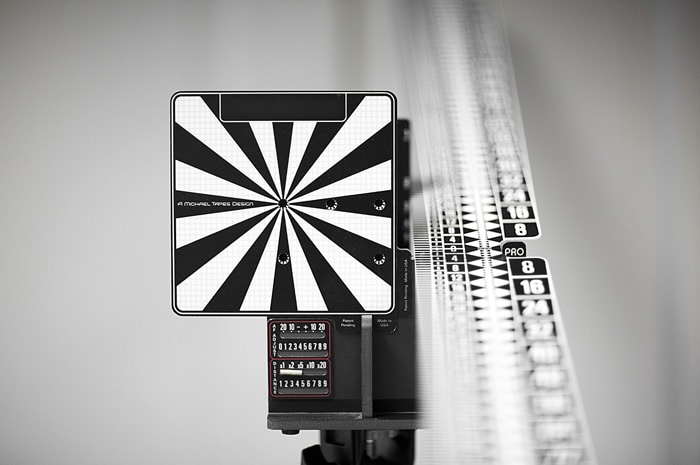
So, what’s a photographer to do? Thankfully the answer is really quite simple, Micro-Adjust (for the Canon lover), and AF Fine Tune (for all you Nikonians out there). Essentially what the manufacturers have come up with is a software solution. The process goes like this. We take a camera and lens that are having front or back focus issues, test them on an AF adjustment tool, enter the correct adjustment into the camera and voila we have a camera and lens combo that focus correctly. Now in real life it takes a little more work than that, but you get the idea. In my opinion the most practical and well thought out feature in newer DSLR’s is the AF Calibration feature. Very few technical advances have had such a profound impact on image quality as this one tool.

Perfect Image Lens Calibration

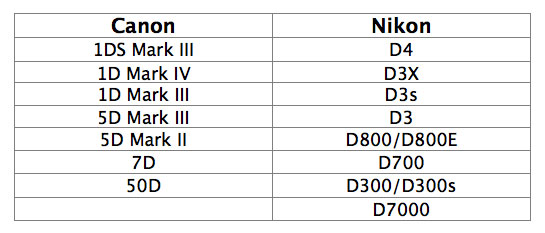
Now I’m going to be honest with you. Calibrating your camera is something you can do yourself, some of my customers do, and some of my customers try. The truth is a qualified repair tech can do it faster, and probably more accurately. They will have the correct tools and more importantly the experience. You also need to keep in mind that not all camera models have the AF Calibration feature built in. Here is a list of current cameras that can be calibrated.

Canon and Nikon

Nikon and Canon DSLR Bodies That Can Be Cleaned at Perfect Image Camera, Inc.

Sometimes calibration is not the answer to focus issues you might be having. Often times, (especially in Canon lenses) the USM (ultrasonic motor) unit in the lenses can go bad. If you have a Canon USM lens and the focus “seeks” (goes in and out without locking focus), or is very erratic (i.e. will back focus one moment and front focus the next) you need a repair not just a calibration. Nikon lenses don’t have the problem as frequently, but it still does occur. I always check a lens for these problems before I even begin the calibration process. If your lens does need repair please keep in mind that once the repair is complete it should still be calibrated with your camera.

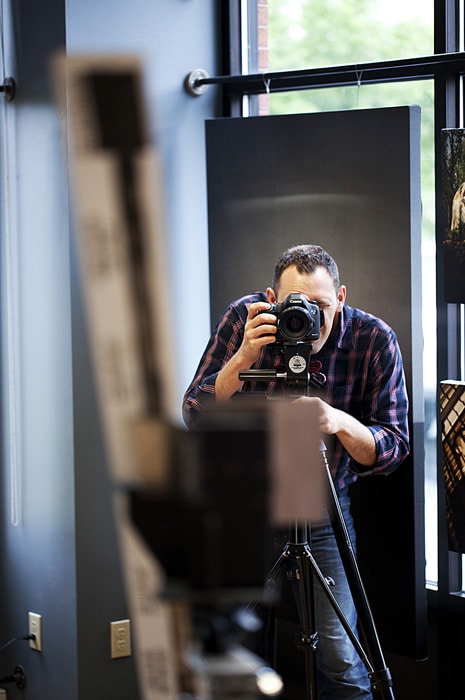
Perfect Image Lens Calibration

So to wrap things up, your images are soft, guaranteed! Well 90% guaranteed anyway. Thankfully there is a solution and I can help you with it. Check out my website www.perfectimagerepair.com or click here to order your calibration service today.

Perfect Image is committed to being the solution to all your camera repair or professional sensor cleaning needs. Use the following code: “tiffinbox” and receive a $5 discount off of calibration or sensor cleaning from Perfect Image Camera.

Filed Under: Photo Gear, Photo Technology Tagged With: calibrate, camera, camera and lens, digital photography, digital single lens reflex camera, image lens, images cameras, lenses, nikon, optics, perfect image, photographic lens, Photography, sharp images, technology, usm lens

  • « Previous Page
  • 1
  • …
  • 38
  • 39
  • 40
  • 41
  • 42
  • …
  • 198
  • Next Page »

Subscribe To Tiffibox Treats!

Looking for a well-curated email newsletter that will leave you inspired and motivated about your photography business? Sign up below!

About Seshu

Seshu creates relaxed portraits of families and high school seniors in Avon, Connecticut. He also leads a successful headshot photography studio in Connecticut, helping professionals from a variety of disciplines project the very best versions of themselves. He created Tiffinbox as a way of inspiring photographers, to create better images and successful businesses. [Read More]

Email Templates For Headshot Photographers

Email Templates for Headshot Photographers

Recent Posts

  • How Capture One Changed My Event Photography
  • 10 Steps To Stay Positive In Times Of Great Stress
  • Why You Need To Read “Personal Branding For Photographers” Now
  • How To Master Your Website Content Step By Step?
  • Tony Taafe’s TNT Method For Headshot Photographers

Recent Comments

  • Stephen Davison on Are You A Business Owner Who Is Smart, But Stuck?
  • Ben A. on Don Giannatti Clinches The 8th Annual Tiffinbox Award
  • Dan on Don Giannatti Clinches The 8th Annual Tiffinbox Award
  • Donald Giannatti on Don Giannatti Clinches The 8th Annual Tiffinbox Award
  • Stephen Davison on G.E. Masana’s 6 Strategies For Wedding Photography Success
  • Naveen Kumar on Weddings In India Are More Than Being At The Right Place And At The Right Time
  • kartick on Weddings In India Are More Than Being At The Right Place And At The Right Time
  • Leonid Farbman on 6 Uncommon Trends To Grow Your Photography Business
  • Willow and Finch Wedding Photography on 11 Reception Tips To Help Your Wedding Photography
  • Web Designer Malaysia on How To Optimize Your Squarespace Website For Search Engines
  • Creastan on An Interview With Photojournalist G.M.B. Akash
  • Cindy Brown | Atlanta on An Open Letter To A Local Photographer

Become a Patron!

Copyright © 2026 · Tiffinbox · Site Design by Heather Mackan Creative · Built on Genesis