• Photography
  • Interviews
  • Business
  • Reviews

Tiffinbox

Inspiring Photographers

  • Home
  • About
  • Blog
  • Contact

Nebraska Cornhusker Football Fans Get A Photography Book – Farewell Big 12

September 27, 2011 by Ken Jarecke

After nearly a month-long hiatus, I am thrilled to publish Ken Jarecke's guest blog post today. You may remember Ken's very popular (it received 133 retweets) first guest post, “A Photographer's Life Is a Juggling Act.” He is a world-renowned photojournalist and a founding member of Contact Press Images. Like before, I urge you read his blog, Mostly True.

As I search my memory, I find there was never a time when I was not a Cornhusker fan.

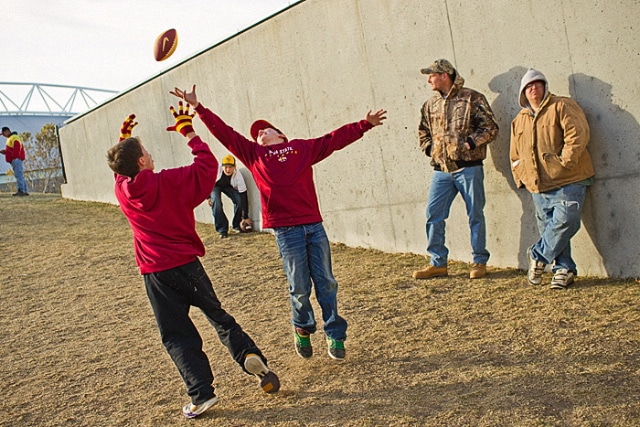
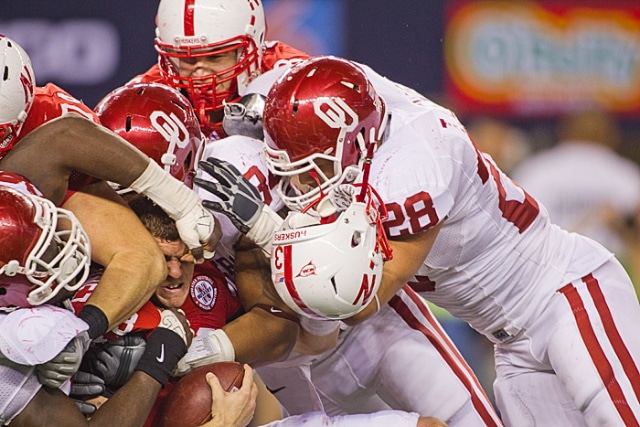
The awareness of the University of Nebraska’s football team precedes any understanding of the actual game of football itself. Around the age of five or six, when one starts to sort out how geography works. The idea that grandma lives in a different city, but the same state, or that although it looks similar when you cross over the Missouri River you’re really in Iowa, and that there’s a place called Oklahoma which is populated by people who are not to be trusted.
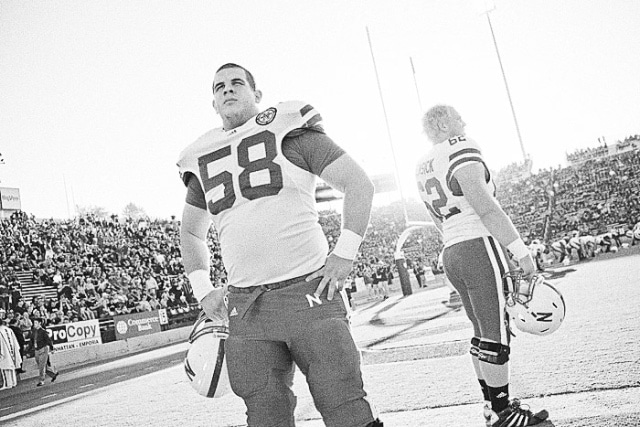
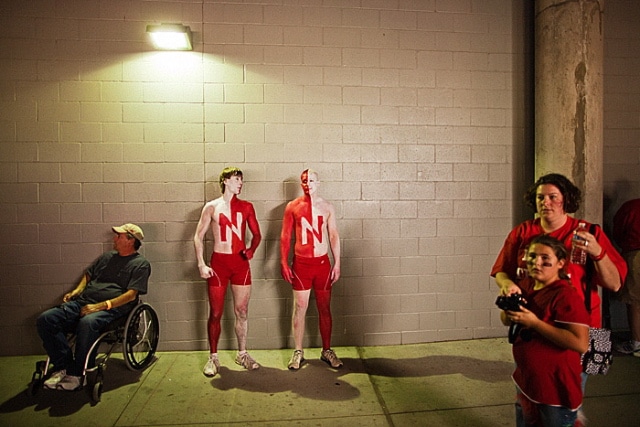
© Ken Jarecke - Nebraska Cornhuskers

© Ken Jarecke - Nebraska Cornhuskers

That's how it happened, not that there was much of a choice. Back then, before the internet, or cable TV the only other team you’d hear about was whoever the Cornhuskers were playing that week.

Normally, there’d be two games broadcast during the regular season. One early in the year and the Oklahoma game on the day after Thanksgiving (to decide who won the Big 8 Conference and got to play in the Orange Bowl). When the game wasn’t on TV, you and everyone else in the state would listen to Lyell Bremser’s unique color commentary/play by play broadcast on KFAB. If you walked down the street, into a store, or worked in your yard, you’d hear the game whether you had a radio or not. When the game was on TV, you’d turn down the TV set and try to reconcile Lyell’s interpretation of the game with what your own eyes were telling you.

Often times Lyell’s version would win.

Sunday mornings, before church, before getting dressed, but at some point after Davey and Goliath, a mad dash, sans shoes or socks, would be made to retrieve the Omaha World-Herald from the mailbox. The sports section, its black & white images with player’s names (helpfully?) pasted right on the photos and the infernal white arrow chasing Johnny Rodgers down the field (maybe that’s why he was running so fast) would be studied. Special scrutiny would be reserved for the one or two plays, recorded with the high-capacity Nikon (loaded with fifty feet worth of Tri-X) from the top of the stadium, that would be sequenced across two pages in the middle of the sports section.

Heaven help that photographer if he missed a crucial fumble, or a long touchdown run. Perhaps that’s why the chief photographer would assign himself this duty?

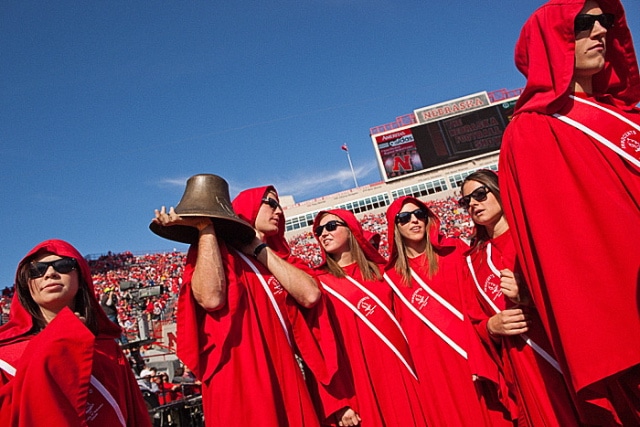
© Ken Jarecke - Nebraska Cornhuskers

© Ken Jarecke - Nebraska Cornhuskers

Personal memories of experiences shared by generations of Nebraska fans. Sure, like I said, we didn’t really have a choice. There were no other programs, college or pro which could compete for our attention. Choice or not, a community was built. Someone coined the term “Husker Nation” which works well since we’ve now migrated across the country.

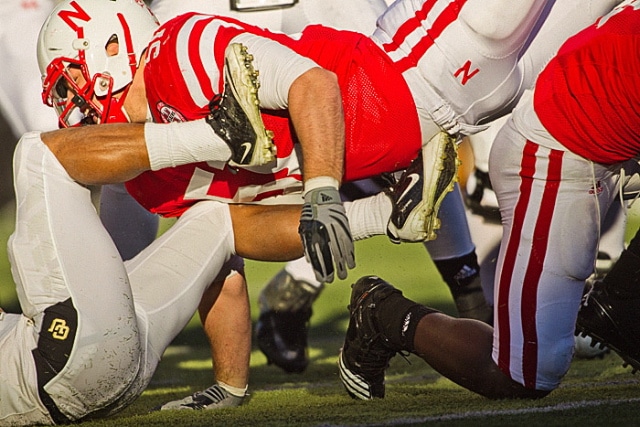
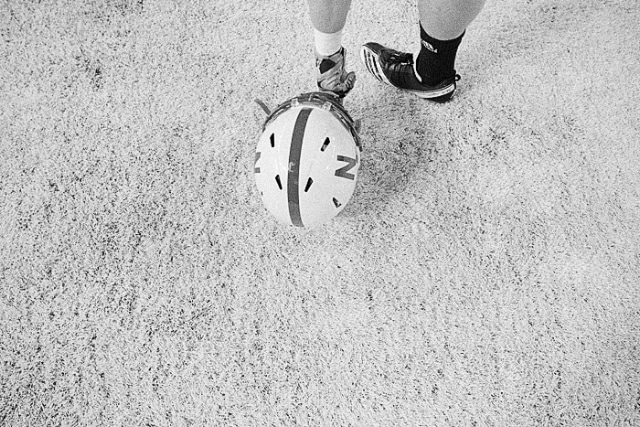
About a year ago, as the historic Big 12 conference was starting to break up (historic for no other reason than being born out of the Big 8), I decided to document the Husker’s final season before they moved on to the Big Ten conference.
© Ken Jarecke - Nebraska Cornhuskers

© Ken Jarecke - Nebraska Cornhuskers

Husker Game Day 2010 Book CoverThe resulting 256 page, 12” x 9 1/2” coffee table book, Husker Game Day 2010 – Farewell Big 12 will be going to press in the second week of October. The book is designed and printed in Omaha. My publishing company, eyeQ Press will continue to take pre-orders until Oct. 11 at the discounted price of $49.95. We’re only printing enough copies to cover retail and direct orders and books will be shipped right after Thanksgiving.

You can see work by me from every Husker game this season at www.eyeQpress.com. There’s a link to the shopping cart on the lower, right-hand side of the page. Or you can just click here to go directly to the shopping cart.

The companion book, which I start shooting this weekend in Madison, Wisconsin will document the Husker’s first season in the Big Ten.

When I started this project, I didn’t think I’d be creating my own publishing company, getting a license with the CLC, or driving over 20,000 miles to the games. My goal was to create the perfect book for myself, or perhaps the fifteen year old me who loved photography and football, and it turned out exactly how I imagined.
© Ken Jarecke - Nebraska Cornhuskers

© Ken Jarecke - Nebraska Cornhuskers

I couldn’t have done this without the support of my family. Projects like this keep a person away from home for too long. My beautiful wife Souad keeps our family and home together. I’d be nowhere without her.

Webster Design and Barnhart Press of Omaha have also been very supportive. It’s amazing that one can still produce such a high quality book completely in Nebraska.

Canon Professional Services has been outstanding. If you’re not a member, I would encourage you to become one today.

Be sure to check out the video below where Ken Jarecke goes into even more detail about this incredible, self-assigned project.

Tell us about your Cornhusker Football moment. A play-by-play works or wax nostalgic about what it was like to go to a Nebraska game. Either way, when you comment below, you may win a copy of Ken Jarecke's book, “Farewell Big 12”. Winner chosen on October 7. So, what are you waiting for?


Filed Under: Books, Photography, Photojournalism Tagged With: big 12 conference, books, cornhusker, cornhuskers fan, fans, football teams, footballs, ken jarecke, nebraska, nebraska cornhusker football, nebraska cornhuskers, nebraska cornhuskers football, photography book, photography books, photojournalist, sports, sports in the united states

Announcing The 1st Annual Tiffinbox Award!

August 23, 2011 by Seshu | Editor & Publisher

For the last 6 months, there has been a low rumble in my brain to present an annual award to a photographer or photography teacher who universally inspires us all to be better photographers, perhaps even be better human beings. In my mind, it had to be a person who goes well beyond the ordinary – shares her/his knowledge openly, invites dialogue and challenges us to elevate our craft and vision.

You probably already know some them. You've attended their workshops, hung out with them at parties and chatted with them one-on-one about your photography work and or business. You've come away after each encounter feeling energized and enthused about your calling – photography. They have rekindled that fire in your belly and you know that today and tomorrow are going to be great days because of the time you spent with him or her yesterday. Ever feel that way? It's time to celebrate them.

2011 Awardee

David DuChemin PortraitThe list of friends, and they have become just that over the years, is long. Choosing one among all of them for this first Tiffinbox Award was no easy task.

The photographer whose name I kept seeing again and again – thanks to his awesome Twitter presence, his phenomenal feat of writing 4 truly amazing books in 3 years, his workshops, his thought provoking blog posts and his positive spirit as he faced life-threatening challenges – is David DuChemin.

Tiffinbox ImageSo, David, congratulations. On behalf of all the photographers who have been inspired by your spirit, your hard work as a photographer, teacher and mentor, I am honored to present you the 1st Annual Tiffinbox Award. You'll receive a real Tiffinbox in the mail, filled with goodies you can munch on as you embark on your next trip with Jessie.

Craft & Vision

“Gear is good. Vision is better,” is his mantra. This simple, yet profound philosophy to photography and business has been my guide for the last few years. Perhaps it has been for you as well. So, instead of buying more gear, David suggests expanding the way you photograph your subjects. To that end, David began publishing beautifully designed and written e-books for photographers. At $5 each, these won't break your bank. Want to know more, check out Craft & Vision. [affiliate]

The Giveaways

If you have been influenced or inspired by David's blog posts, Tweets or even the e-books he produces, let me/us know in the comments section below. Be as descriptive and specific as possible. How has he helped you? What steps did you take with your photography after reading one of his e-books or blog posts? Which particular blog posts spurred you into action? Feel free to show us “before & after” images via links to a post on your site.

If I receive a 100 comments under this blog post between today and August 31, I'll select 4 of the best comments to each win one of 4 of David's awesome books (yes, shipped anywhere in the world) on September 1. So, hurry!

UPDATE: I've reconsidered the 100 comment requirement and I am pulling it. The deadline will be the same. You want to win 1 of 4 David's books, then comment away. I'll read through each of them and pick 4 winners. Deal?

Here are the four books I will be giving away:

Within the Frame: The Journey of Photographic Vision
VisionMongers: Making a Life and a Living in Photography
Vision & Voice: Refining Your Vision in Adobe Photoshop Lightroom
Photographically Speaking: A Deeper Look at Creating Stronger Images

By the way, the annual Tiffinbox Award will always be presented on August 23. I'll let you figure out why. Also start thinking of whom you will nominate for next year's award.

WINNERS ANNOUNCED: This morning I chose the following to win 1 of 4 David's books – @kristaphoto @LaraWhite @nine9beans and @BelindaOlsen. Congratulations! Please contact me with your mailing address by September 7. All but one book will be shipped in September. David's latest is in process of going to print. If you already own one or more of his books, please let me know which one(s) so that I don't send you something you already have.

Filed Under: Awards, Photography Tagged With: Annual, Awards, books, Celebration, david duchemin, Humanitarian, Mentoring, Photographers, Recognition, Teaching, Travel

You Got Extremely Essential Camera Skills?

August 22, 2011 by Seshu | Editor & Publisher

Right around the holidays last year, just about everyone I know bought or received a camera. No, these weren't the point & shoot variety (hey we have our iPhones for that right?). These were DSLR‘s or digital SLR's. The excitement over opening the camera was palpable. I know because I received several emails soon after asking me … “So, I got a DSLR, but my images still suck. Why?”

My first response was always, “did you read the manual?” The silence at the other end was quite telling. Most of us, I know fail to read our manuals. When I bought my first Nikon DSLR, which I believe was the D70, I don't remember diving into the manual either. On the one side, there is a new toy to play with and on the other, my ego was saying to me: “Yeah, I can figure this out. No problem.” That's until I started seeing images I'd be ashamed to show my mom.

Essential Camera Skills TutorialSo, if the manual is way too daunting, or even boring, what do you do? Until today, you could have scoured the interwebs and patched together a bunch of the info that may have helped elevate your game. That too is time consuming and unless you are nuts about photography or pursuing as a professional, chances are slim you would be inclined to curate that information, digest it and then deploy it on your next go around with your DSLR.
Rob & Lauren Lim, the duo behind Photography Concentrate, have just published Extremely Essential Camera Skills. I was one of the few lucky ones to receive a review copy gratis. Having seen some of their earlier tutorials – Photo Editing Skills and Album Design Skills, I knew this one was going to be special.

Think of Extremely Essential Camera Skills as the foundational course you forgot to take when you started experimenting with your camera. It's exquisitely designed – consistent with their other tutorials and extremely engaging website (which you must bookmark). When you open up the PDF, you are presented with a set of colorful tabs for the different chapters such as: The Camera, Focusing, Exposure, Lenses, Depth of Field and Camera Settings. I found the built-in navigation to be very helpful as it makes it easy to skip pages or navigate back to the ones you want to read again.

Extremely Essential Camera Skills Navigation

Unlike other tutorials that teach but fail to train, what I loved about Rob & Lauren's latest offering is that they are serious about making sure you get the concepts they have just taught before moving on to the next chapter. They do this through tips, exercises, videos (more on this in a bit) and pop quizzes. Though it is incredibly thorough, Extremely Essential Camera Skills is not a read it and forget it kind of manual. The lessons you will learn, each one at your own pace, will stick with you for a lifetime. The definitions and demonstrations are easy to understand and absorb.

As a professional, most of the concepts were familiar to me. But that's only because I use my camera every day, so it does become intuitive. Having a guide like Extremely Essential Camera Skills will help you get to that point where you too can easily make images you are proud to show your family and friends.

If there was one area where I could see the authors develop more content, it's the section on using an alternative to that pesky flash that everyone insists on deploying. To their credit they do say this: “The built-in flash on cameras generally sucks.” So true. May we see a sequel to this guide that will dwell on off-camera flash? I hope so, but I do believe this guide will lay the foundation for better images using flash. So, I do urge you to get this one first.

Extremely Essential Camera Skills Videos

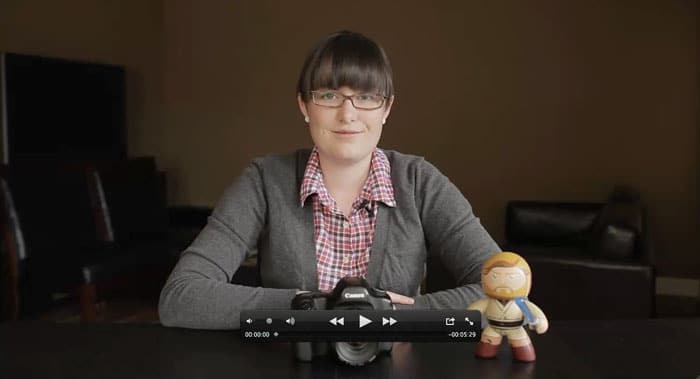
The 7 videos by Lauren are fantastic. Her even, conversational tone and excellent examples helped me better understand the concept behind exposure compensation. So, the take aways are many. With Rob & Lauren's permission, I am considering using this guide book for photographers (I really don't want to call it a manual) in the beginning photography class I teach high schoolers. Yes, it's that good and it is perfectly fitted to meet the demands of amateurs and semi-professionals too.

As I have already stated, I received a review copy Extremely Essential Camera Skills and loved it. If you are struggling to use your DSLR, this guide book will help you get comfortable. For the next two weeks starting today, Rob & Lauren are offering a launch sale. You can get Extremely Essential Camera Skills for $29.97, that's 40% off the regular price of $49.99. In addition to the 89-page PDF and videos which you can view on your computer or your iPad, you will receive the Extremely Essential Camera Skills Field Guide, which you can print and tote around while you are photographing.

Full disclosure: As an affiliate, I receive a commission on the sale of this PDF to support Tiffinbox. If you enjoy the content on this site, I ask that you use the links in this post to buy Extremely Essential Camera Skills. Thank you!

Filed Under: Books, Photography, Tutorials Tagged With: camera, camera flashes, camera settings, cameras, digital photography, digital single lens reflex camera, dslr, ebook, essentials, extremely essential camera skills, Flash, guide books, guides, manual, PDF, Photography, photography concentrate, rob & lauren lim, skill, technology, tutorial

3 Main Reasons For Using Lighting Diagrams

August 5, 2011 by Olivier Lance

This guest post is by Olivier Lance, who with Pierre-Jean Quilleré launched Sylights in 2009, a wonderful web and mobile application for photographers that helps them document their lighting setups. Olivier, a full time IT engineer from Paris, France, develops MacOS X software for a living. He's also a passionate photographer. Please follow Olivier on Twitter.

Every now and then, when you post a photo to your blog or on a sharing platform, you get the common question: “how did you light it?”

That's a tricky one! How do you go explaining to somebody a full setup of light modifiers, gobos, flash settings, angles, etc.?

The short answer is: lighting diagrams.

Lighting Diagram

Not everyone needs a lighting diagram to understand the lights behind a photography; experienced photographers can usually tell by looking at the shadows’ softness or shapes or at the catch light.

However, I'm not one of them. At least, not yet! So what do lighting diagrams have that can help me? Let's state the obvious first: lighting diagrams show the gear used to light a scene and how many lights were used. They show where the lights were set and how they were directed, relative to the subject.

“Relativity” is an important notion here. I think it's the key when working with lights. What I really see when I look at a lighting diagram is not “where” the main light is, but “how far” it is from the subject. And “how farther” (or closer, larger, etc.) the fill light has to be to do its job just as I see it in the resulting photo.

The same principle applies to flash power. This is a second set of information that's usually provided on or along with lighting diagrams. To correctly reproduce lighting, one has to know how powerful each light was. But it's really “the relationship between the different light levels that is important”, David Hobby tells us in his article Strobe/Ambient balance: A Shorthand Way of Thinking.

See, we're not used to describing amounts of light in an absolute manner. You'd rather say “this room is dark” – referring to what we usually consider a properly lit room – than “wow, it's barely 150 lux in here!”. Both are indicating a light level, but the former is relative whereas the latter is absolute. So a good lighting diagram could just use the main light as a reference and then say “this light is +1/3 of a stop, this other one -1 stop”.

That's why a lighting diagram is such a wonderful document to any photograph. No matter the kind of flash I use and no matter how powerful they are. By using that basic information – relative distances, angles, relative light levels – I can reproduce the lighting over and over again.

That's the main reason I see why photographers should use lighting diagrams: memory. Some photos are easy enough to remember; a lighting diagram will ensure the others are as easily reproducible. Besides the memory perspective, a document as complete as a lighting diagram is also a great way to share your knowledge … but more on that in a minute.

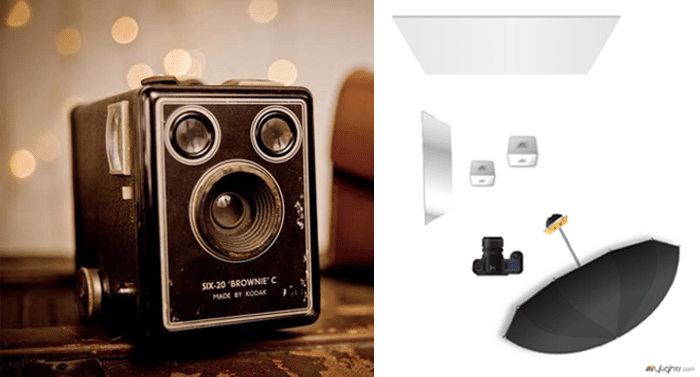
Another very simple reason is that “a picture is worth a thousand words.” If you’re working with one or several assistants, you’d rather be drawing what you have in mind than explaining it at great length several times! This leads me to the second main reason I think photographers should get used to lighting diagrams: teaching. There are so many people learning artificial lighting nowadays: amateur photographers, photography students and pros as well, who want to improve their technique.? To any of them, lighting diagrams are an incredible educational tool! By putting together a photo and its diagram, one can understand the role and effects of each light in a setup. So if you document your photos by using lighting diagrams, you can actually teach other photographers your lighting techniques and help them figure out very easily how you lit your shoots. Diagrams are also a perfect way to keep track of the setups that worked while testing and learning.

Brownie Camera Lighting Diagram

Finally, lighting diagrams allow any photographer to prepare a shoot beforehand. Just as I’m using a draft paper to prepare this post, a lighting diagram can easily be drawn to throw ideas, get the ball rolling and have some setups ready before a session. This is the third advantage of lighting diagrams: planning. You can of course use any other technique to prepare a shoot, but the completeness of a lighting diagram and its close representation of a real setup makes it a good choice to start with, before you can actually try your setups and make arrangements.

So, why should you use lighting diagrams as a photographer? Because it’s a great way to prepare your sessions, to document your photos afterwards and to keep track of your lighting setups as well as to share them with others and to teach beginners your techniques.

All those reasons pushed me to create Sylights, a service to photographers I launched a year ago with my friend Pierre-Jean Quilleré. Our idea is to make lighting diagrams easy to use and to base a complete sharing platform on them. Sylights’ goal is to accompany every photographers on their learning path and to store their lighting diagrams for them. We already offer a large range of tools for that purpose: an online diagram editor with a lighting diagram gallery accessible to anyone, an iPhone and an iPad app for when you’re on the go. Many features revolve around those three apps.

We’re still evolving and will gladly accept all your feedback to help us answer those three needs: memory, teaching and planning.

We’d also like to know: how do you use lighting diagrams, and why?

Food Photography Lighting Diagram

Filed Under: Lighting, Photography Tagged With: create light, diagrams, Learning, light diagram, light levels, Lighting, lighting techniques, memory, photographer, Photography, planning, setup, Teaching, used lighting

Portable Power Options For Photographers

July 29, 2011 by Seshu | Editor & Publisher

Yesterday, Tony Urban talked about off-camera lighting on location. If you are photographing early in the morning or later in the day, it's much easier to use your smaller Speedlites for the kind of results Tony produces for his clients.

But when you aren't so lucky about picking the time of day and your stuck having to fight that big fiery ball in the sky called the Sun, you are going to need something more powerful, like a studio strobe. Check out how Justin Van Leeuwen does it with an Elinchrom Quadra System.

I recently bought a few used Elinchrom monoblocs for the expressed purpose of using them outside, in the sun and to over power it. That's all well and good, but I was left wondering about how I would power it in the field.

Paul C. Buff's Vagabond IIWell, I initially bought the Paul C. Buff Vagabond II, now being discontinued. It is one very heavy option and I tell you I didn't use it much at all because it was such a pain to lug around. Photographer Blair Phillips has come up with an interesting way to carry it around, so if you have a Vagabond II, you should check the LR-02 Light Rover.

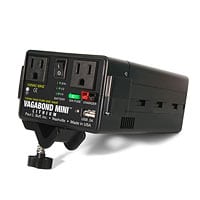
Paul C. Buff's Vagabond MiniI sold my Vagabond II unit and for some time I did not have another option. But the folks at Paul C. Buff came out with the much lighter Vagabond Mini. The wait to get one of those units, when I ordered them, was 2 to 3 weeks. That may not be the case anymore. At $240, it was a no brainer. Plus, Rob Galbraith's review of the Vagabond Mini convinced me that this was the unit to buy for what I wanted to do. Knowing its capabilities, I am not one to expect a faster recycle time than 3 or 3 1/2 seconds at full pop. So, I just shoot accordingly.

But there are clearly other options out there. Cris Mitchell of ProPhotoResource suggested that I look at Innovatronix Explorer XT as an alternative to the Vagabond II. It too is solidly built and has rave reviews from its legions of fans.

Tronix Explorer MiniToday, I received an email about Tronix Explorer Mini. And here, according to the company, are the top reasons for buying it. Check out the video below that shows you how quickly the unit recycles. While it calls itself a “mini” it is only so relative to its big brother the Tronix Explorer XT3 (coming soon).

I wonder if Rob Galbraith will get his hands on this unit so that he could compare it with the Vagabond Mini. I sure hope so! If you consider yourself handy with tools and gadgets and like to put things together, take a look at this Instructables tutorial to create a portable power box for photographers.

Which option would go for and why? Tell us in the comments. If you found this post useful, please share it with your tribe using the social media icons you see directly below this post. Thank you!

Filed Under: Lighting, Photography Tagged With: photographer, Photographers, portable power, studio strobes, the field, Tronix Explorer Mini, Vagabond Mini

  • « Previous Page
  • 1
  • …
  • 80
  • 81
  • 82
  • 83
  • 84
  • …
  • 164
  • Next Page »

Subscribe To Tiffibox Treats!

Looking for a well-curated email newsletter that will leave you inspired and motivated about your photography business? Sign up below!

About Seshu

Seshu creates relaxed portraits of families and high school seniors in Avon, Connecticut. He also leads a successful headshot photography studio in Connecticut, helping professionals from a variety of disciplines project the very best versions of themselves. He created Tiffinbox as a way of inspiring photographers, to create better images and successful businesses. [Read More]

Email Templates For Headshot Photographers

Email Templates for Headshot Photographers

Recent Posts

  • How Capture One Changed My Event Photography
  • 10 Steps To Stay Positive In Times Of Great Stress
  • Why You Need To Read “Personal Branding For Photographers” Now
  • How To Master Your Website Content Step By Step?
  • Tony Taafe’s TNT Method For Headshot Photographers

Recent Comments

  • Stephen Davison on Are You A Business Owner Who Is Smart, But Stuck?
  • Ben A. on Don Giannatti Clinches The 8th Annual Tiffinbox Award
  • Dan on Don Giannatti Clinches The 8th Annual Tiffinbox Award
  • Donald Giannatti on Don Giannatti Clinches The 8th Annual Tiffinbox Award
  • Stephen Davison on G.E. Masana’s 6 Strategies For Wedding Photography Success
  • Naveen Kumar on Weddings In India Are More Than Being At The Right Place And At The Right Time
  • kartick on Weddings In India Are More Than Being At The Right Place And At The Right Time
  • Leonid Farbman on 6 Uncommon Trends To Grow Your Photography Business
  • Willow and Finch Wedding Photography on 11 Reception Tips To Help Your Wedding Photography
  • Web Designer Malaysia on How To Optimize Your Squarespace Website For Search Engines
  • Creastan on An Interview With Photojournalist G.M.B. Akash
  • Cindy Brown | Atlanta on An Open Letter To A Local Photographer

Become a Patron!

Copyright © 2026 · Tiffinbox · Site Design by Heather Mackan Creative · Built on Genesis