• Photography
  • Interviews
  • Business
  • Reviews

Tiffinbox

Inspiring Photographers

  • Home
  • About
  • Blog
  • Contact

Documenting Occupy Wall Street

January 27, 2012 by Yunghi Kim

Yunghi Kim is today's guest blogger. She is a highly regarded freelance photojournalist based in New York City. From 1995 until 2008 she was represented by Contact Press Images. She has also been a team leader at the prestigious Eddie Adams Workshop. Learn more about here and follow her on Twitter.

I’ve learned from my 28 years as a photojournalist and the hundreds of stories I’ve covered, how to quickly recognize a big story. It was clear from the start that the Occupy Wall Street movement (OWS) had all the right elements to become huge. Unlike most of my projects, I wouldn’t be traveling to a far off war zone. This story was happening right in my own backyard.
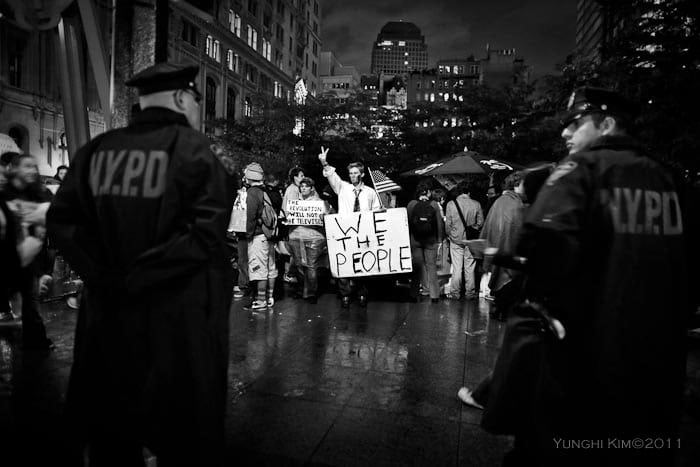
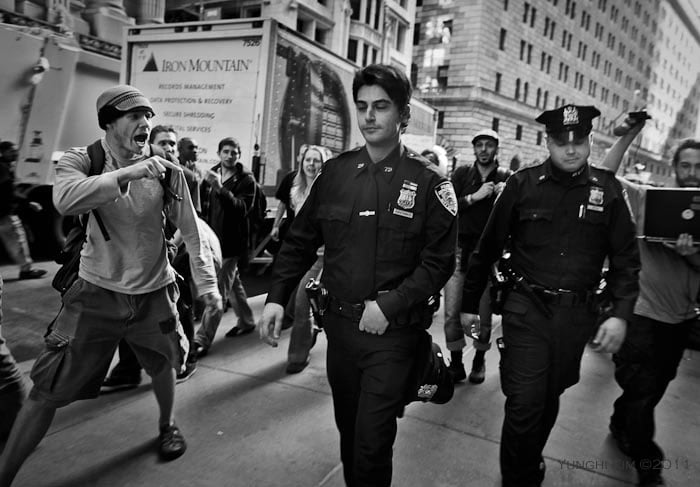
Occupy Wall Street | Yunghi Kim

I don’t recall a movement or an event in my career that has struck such a cord with so many Americans. OWS changed the dialogue in America and around the world as well. It successfully brought attention to runaway corporate greed and gave a voice to the working “99 Percent” of us. All of this only a subway stop away from my home in Brooklyn. How could I not pursue this story?

Like so many of my bigger projects over the years, like “The Comfort Women of South Korea”, the Rwandan refugee crisis, the wars in Iraq and Afghanistan, my own desire to document the story in pictures would be my biggest motivation. To bear witness to history is a common drive among photojournalists. We want to capture actual events as they unfold and to create a visual story. Without this drive, I think it’s almost impossible to produce a meaningful body of work.
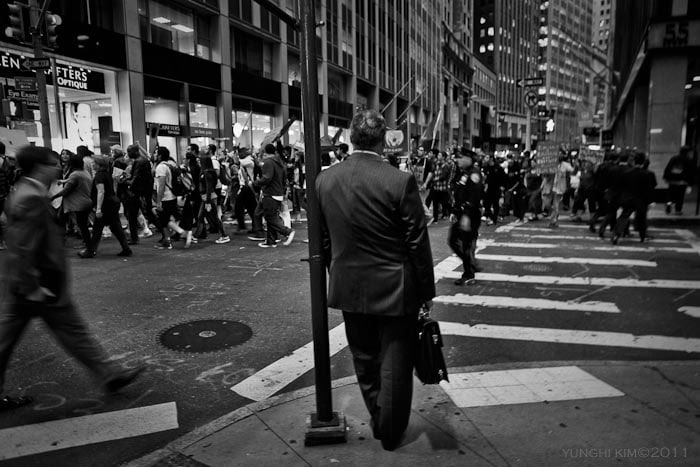
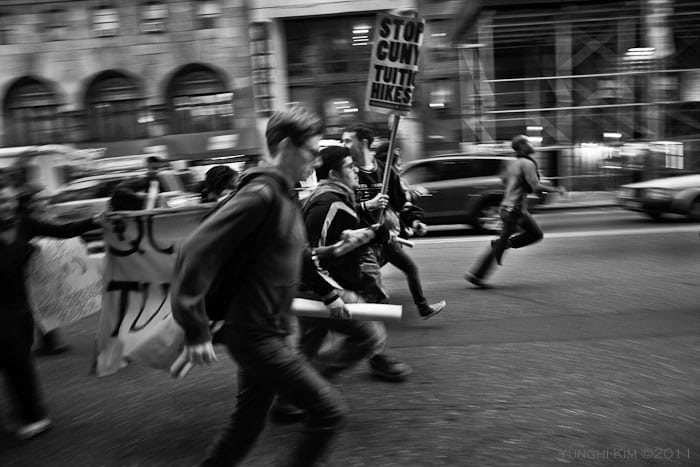
Occupy Wall Street | Yunghi Kim

Occupy Wall Street | Yunghi Kim

Occupy Wall Street | Yunghi Kim

I was surprised to see the wide amount of support generated by OWS and enjoyed the creative ways in which they spread their message. Everyday there’d be a protest scheduled for both the opening and the closing bells of the stock market. Complete with the now well known slogans like, “The banks got bailed out, and we got sold out” Often the protestors would use humor, such as dressing up like zombies or taking brooms to Wall Street and pretend to sweep away the greed. I think this strategy hit a cord with Americans and helped to successful brand the movement.

Of course, other times there would be a more serious tone. As when the protesters would play “cat and mouse” with the police, or even outrun them so they could march the streets, free of escorts, as they saw fit. These tactics often ended in arrests.

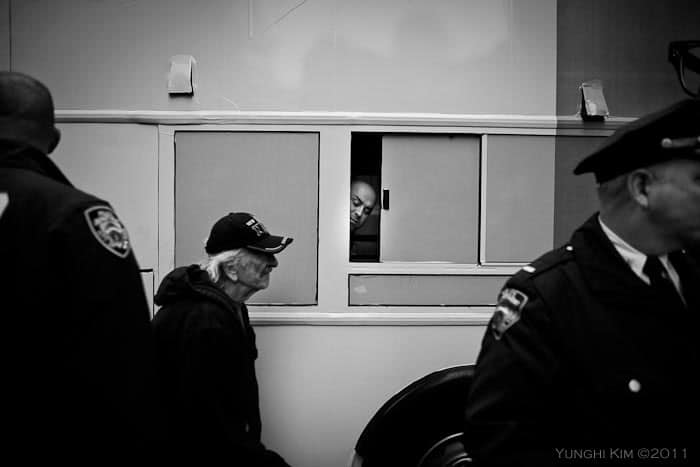
It was no easy task for the NYPD, probably the biggest and best trained police force in the world. Mayor Bloomberg claims it’s the sixth largest army on the planet! During arrests, police officers would form huge columns which would block what you could see. Frustrating, to know something is happening and not being able to photograph it. They’d also use a technique called “kettling” where people would be locked into a certain area (protesters, journalists, whomever) circled by police. Anyone trying to leave would be arrested. It didn’t matter who you were, once an officer decided to arrest you, there was nothing you could do. Many times the arrests seemed random.
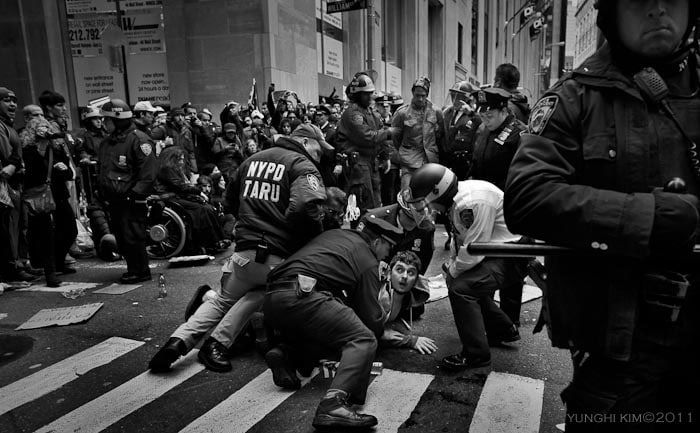
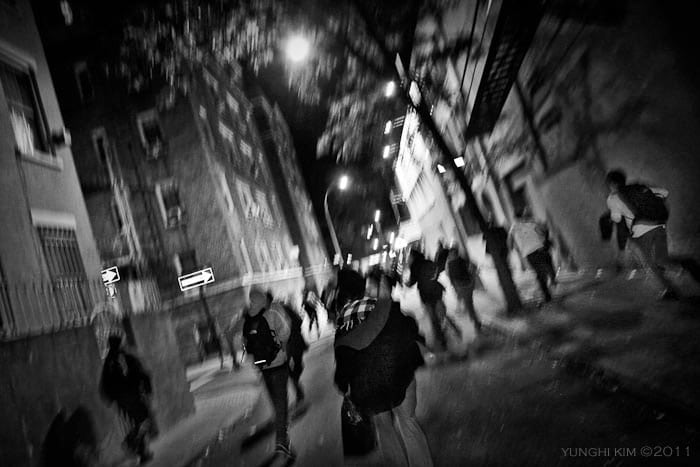
Occupy Wall Street | Yunghi Kim

Occupy Wall Street | Yunghi Kim

Occupy Wall Street | Yunghi Kim

As a freelance photographer, the thought of spending thousands of dollars in legal fees and going through the court system became more of a concern as I spent more time working this story. 

The protests were quite physically demanding. There was a lot of running, backwards, forwards, and sideways, during marches that would cover half the length of Manhattan. One day I ended up flat on my back (with another photographer on top of me) after being pushed by a police officer. Luckily I was able to find my glasses so I could continue shooting. Having a few new bruises at the end of the day was common among photographers.

Bruises are better than handcuffs any day!

I was fascinated by how efficiently OWS used social media to communicate with their supporters. They had their own live video streaming team with protesters carrying portable wi-fi enabled webcams. Everything they and the NYPD did was documented and shared almost as it happened. Eventually, I learned to utilize @Yunghi pretty well myself.
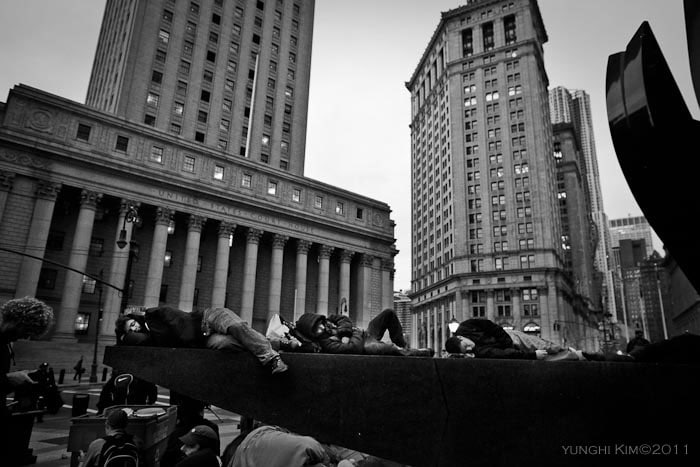
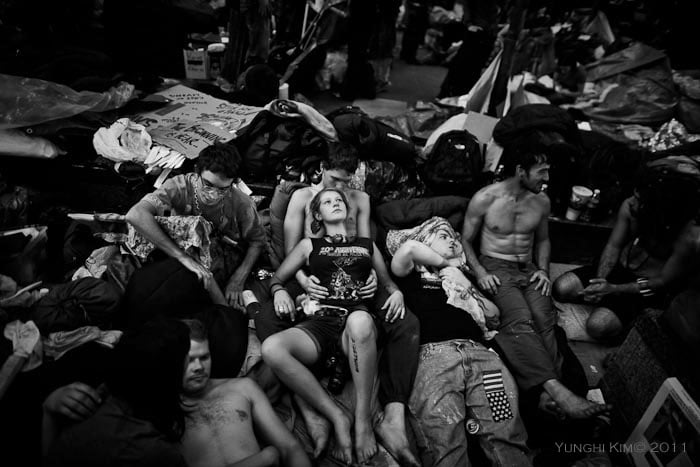
Occupy Wall Street | Yunghi Kim

Occupy Wall Street | Yunghi Kim

Zuccotti Park was another amazing scene. You could see Noble Prize winners, celebrities, average Americans and homeless people all rubbing shoulders and making speeches to one another.

If you had something to say, Zuccotti Park was the place to be!
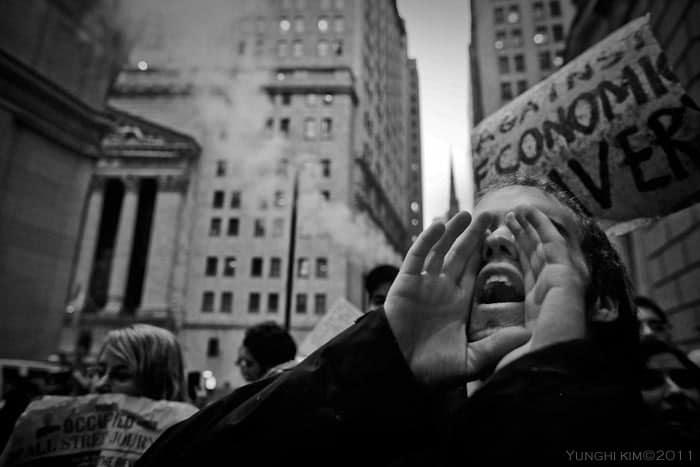
Occupy Wall Street | Yunghi Kim

Overall, this was a lot safer than much of my work. You didn’t have mortars going off or bullets flying around, but, it was often frustrating having to navigate around the NYPD. Still, I think my images stand up well and serve as a visual record of what I experienced and witnessed.

(The text of this post was edited by another incredible photojournalist, Ken Jarecke)

Did you field a camera and attempt to document the Occupy Wall Street protests? Tell us your story in the comments below.
Filed Under: Photojournalism Tagged With: 1%, 99%, Business, capitalism, document, documenting, freelance photojournalist, greed, kettling, metropolitan police, movement, new york city, occupy, occupy wall street, ows, photojournalist, police officer, stock market, wall street, yunghi kim

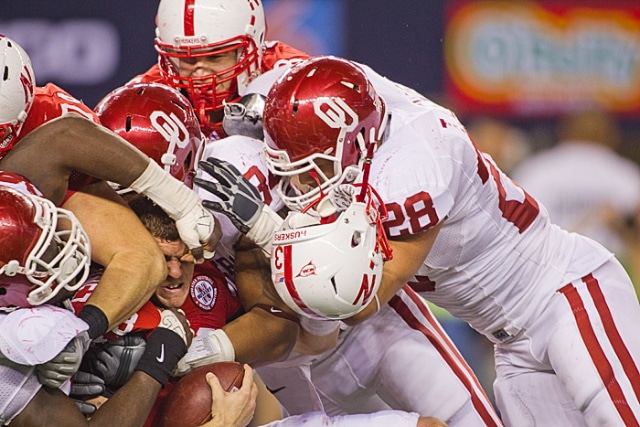
Nebraska Cornhusker Football Fans Get A Photography Book – Farewell Big 12

September 27, 2011 by Ken Jarecke

After nearly a month-long hiatus, I am thrilled to publish Ken Jarecke's guest blog post today. You may remember Ken's very popular (it received 133 retweets) first guest post, “A Photographer's Life Is a Juggling Act.” He is a world-renowned photojournalist and a founding member of Contact Press Images. Like before, I urge you read his blog, Mostly True.

As I search my memory, I find there was never a time when I was not a Cornhusker fan.

The awareness of the University of Nebraska’s football team precedes any understanding of the actual game of football itself. Around the age of five or six, when one starts to sort out how geography works. The idea that grandma lives in a different city, but the same state, or that although it looks similar when you cross over the Missouri River you’re really in Iowa, and that there’s a place called Oklahoma which is populated by people who are not to be trusted.

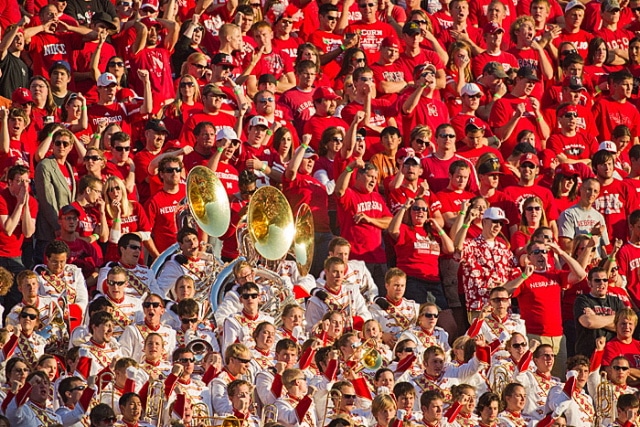
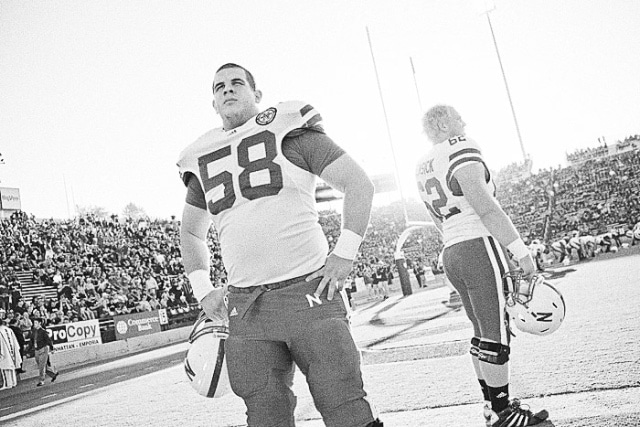
© Ken Jarecke - Nebraska Cornhuskers

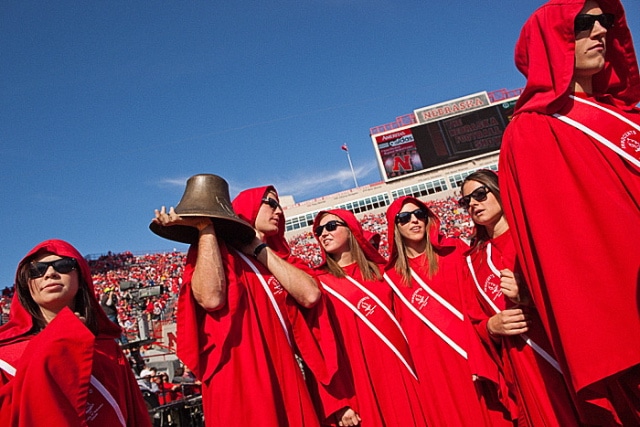
© Ken Jarecke - Nebraska Cornhuskers

That's how it happened, not that there was much of a choice. Back then, before the internet, or cable TV the only other team you’d hear about was whoever the Cornhuskers were playing that week.

Normally, there’d be two games broadcast during the regular season. One early in the year and the Oklahoma game on the day after Thanksgiving (to decide who won the Big 8 Conference and got to play in the Orange Bowl). When the game wasn’t on TV, you and everyone else in the state would listen to Lyell Bremser’s unique color commentary/play by play broadcast on KFAB. If you walked down the street, into a store, or worked in your yard, you’d hear the game whether you had a radio or not. When the game was on TV, you’d turn down the TV set and try to reconcile Lyell’s interpretation of the game with what your own eyes were telling you.

Often times Lyell’s version would win.

Sunday mornings, before church, before getting dressed, but at some point after Davey and Goliath, a mad dash, sans shoes or socks, would be made to retrieve the Omaha World-Herald from the mailbox. The sports section, its black & white images with player’s names (helpfully?) pasted right on the photos and the infernal white arrow chasing Johnny Rodgers down the field (maybe that’s why he was running so fast) would be studied. Special scrutiny would be reserved for the one or two plays, recorded with the high-capacity Nikon (loaded with fifty feet worth of Tri-X) from the top of the stadium, that would be sequenced across two pages in the middle of the sports section.

Heaven help that photographer if he missed a crucial fumble, or a long touchdown run. Perhaps that’s why the chief photographer would assign himself this duty?

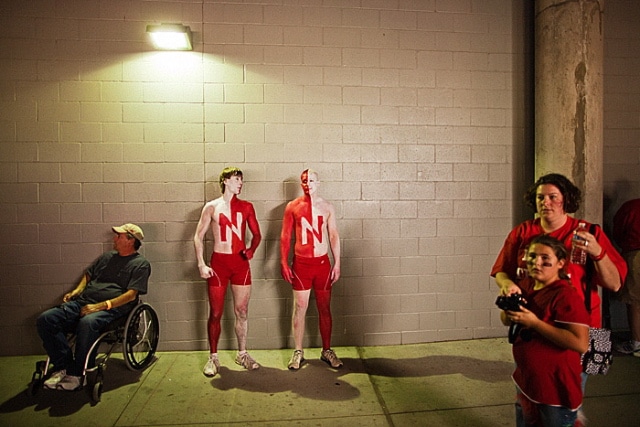
© Ken Jarecke - Nebraska Cornhuskers

© Ken Jarecke - Nebraska Cornhuskers

Personal memories of experiences shared by generations of Nebraska fans. Sure, like I said, we didn’t really have a choice. There were no other programs, college or pro which could compete for our attention. Choice or not, a community was built. Someone coined the term “Husker Nation” which works well since we’ve now migrated across the country.

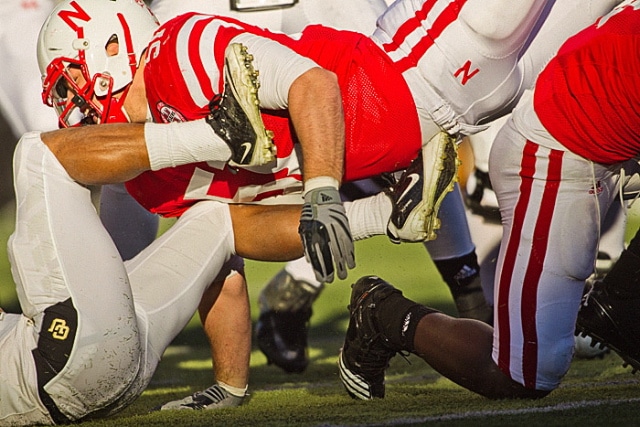
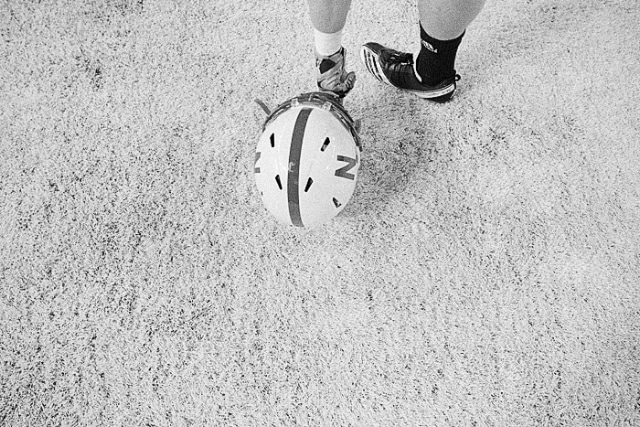
About a year ago, as the historic Big 12 conference was starting to break up (historic for no other reason than being born out of the Big 8), I decided to document the Husker’s final season before they moved on to the Big Ten conference.

© Ken Jarecke - Nebraska Cornhuskers

© Ken Jarecke - Nebraska Cornhuskers

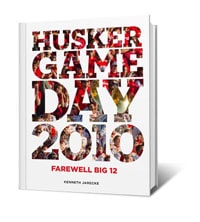
Husker Game Day 2010 Book CoverThe resulting 256 page, 12” x 9 1/2” coffee table book, Husker Game Day 2010 – Farewell Big 12 will be going to press in the second week of October. The book is designed and printed in Omaha. My publishing company, eyeQ Press will continue to take pre-orders until Oct. 11 at the discounted price of $49.95. We’re only printing enough copies to cover retail and direct orders and books will be shipped right after Thanksgiving.

You can see work by me from every Husker game this season at www.eyeQpress.com. There’s a link to the shopping cart on the lower, right-hand side of the page. Or you can just click here to go directly to the shopping cart.

The companion book, which I start shooting this weekend in Madison, Wisconsin will document the Husker’s first season in the Big Ten.

When I started this project, I didn’t think I’d be creating my own publishing company, getting a license with the CLC, or driving over 20,000 miles to the games. My goal was to create the perfect book for myself, or perhaps the fifteen year old me who loved photography and football, and it turned out exactly how I imagined.

© Ken Jarecke - Nebraska Cornhuskers

© Ken Jarecke - Nebraska Cornhuskers

I couldn’t have done this without the support of my family. Projects like this keep a person away from home for too long. My beautiful wife Souad keeps our family and home together. I’d be nowhere without her.

Webster Design and Barnhart Press of Omaha have also been very supportive. It’s amazing that one can still produce such a high quality book completely in Nebraska.

Canon Professional Services has been outstanding. If you’re not a member, I would encourage you to become one today.

Be sure to check out the video below where Ken Jarecke goes into even more detail about this incredible, self-assigned project.

Tell us about your Cornhusker Football moment. A play-by-play works or wax nostalgic about what it was like to go to a Nebraska game. Either way, when you comment below, you may win a copy of Ken Jarecke's book, “Farewell Big 12”. Winner chosen on October 7. So, what are you waiting for?

Filed Under: Books, Photography, Photojournalism Tagged With: big 12 conference, books, cornhusker, cornhuskers fan, fans, football teams, footballs, ken jarecke, nebraska, nebraska cornhusker football, nebraska cornhuskers, nebraska cornhuskers football, photography book, photography books, photojournalist, sports, sports in the united states

Visiting With Mr. Rai

March 14, 2011 by Seshu | Editor & Publisher

Raghu Rai is India's most famous photojournalist. A retrospective of his work opened at Aicon Gallery, in New York City on February 18 and wraps up on March 19.

This is an invitation for you to join me and a small group of image makers interested or curious about India. Meet us on the 19th (this Saturday) at the gallery at 10.30 am, to take in the body of work Mr. Rai has created over the last 40 years. We will also meet up for a cup of chai or coffee afterwards. It's essentially a very loosely structured networking event that I want to start doing more often either in New York, Hartford (where I live) or in Boston. If you are interested in photojournalism or documentary photography, you might find kindred spirits among us to trade stories, referrals or more.

Raghu Rai Portrait

Shreeya Sinha, a multimedia journalist and producer, will also join us as well. Having lived and worked in India, for Undesired, I felt she might provide us the right perspective on Raghu Rai's own mostly domestic work.

Aicon Gallery is located at 35 Great Jones Street, New York, NY 10012. If you are lost, please call 212-725-6092. Take the #6 Subway line to Bleecker Street and walk North on Lafayette Street for two blocks, then a right onto Great Jones Street. Aicon Gallery should be on your right hand side.

Meanwhile, check out the recent podcast SAJA hosted with Mr. Rai. Also view his work on the Magnum website. If you are inclined to buy one of Raghu Rai's books, I recommend Raghu Rai's India: Reflections in Colour. [aff]

So, tell me … are you already a fan of Raghu Rai's work? What can you tell me/us about him? Although I am familiar with some of his work, I know little about the man so I am interested in seeing this exhibit in hopes that it will reveal something about him.

I hope to see many of you there. It would be great to know of a headcount before hand so that there are no surprises. Would you please comment below if you are able to make it? Thank you!

If anyone knows who photographed Mr. Rai in the above photograph, please let me know. I would like to credit the image, if it is still ok to display the image.

Filed Under: Photo Exhibit, Photojournalism Tagged With: aicon gallery, arts, gallery, human interest, image maker, magnum photos, New York, new york city, nyc, photojournalist, raghu, raghu rai, rai, retrospective, visual arts

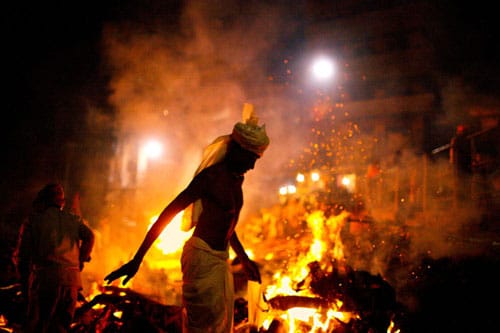
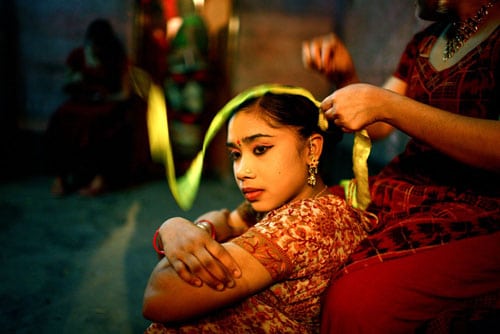
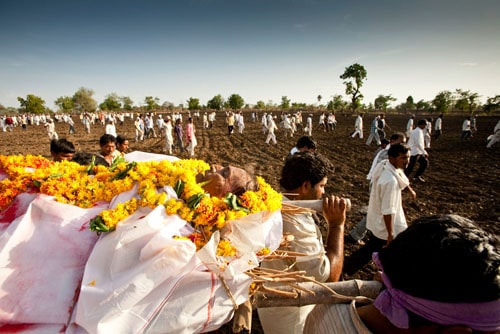
An Interview With Photojournalist G.M.B. Akash

November 11, 2010 by Seshu | Editor & Publisher

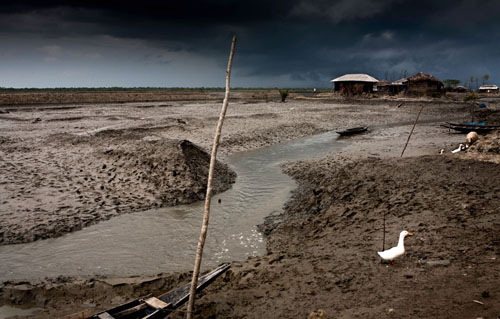
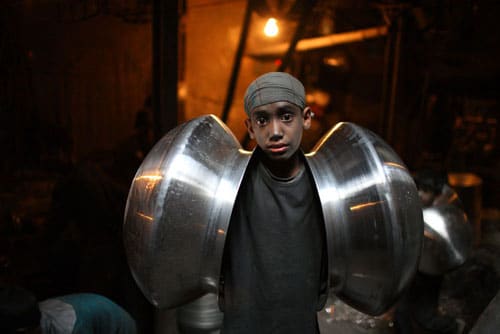
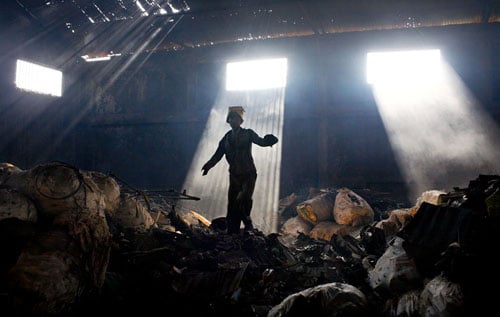
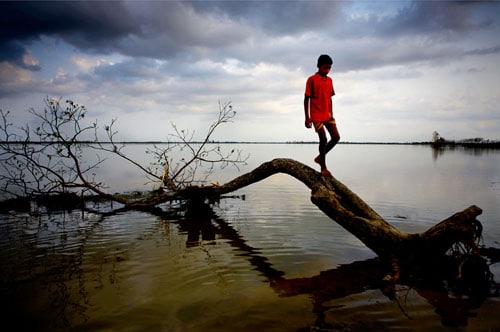
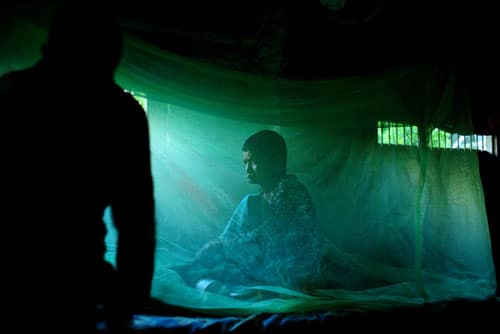
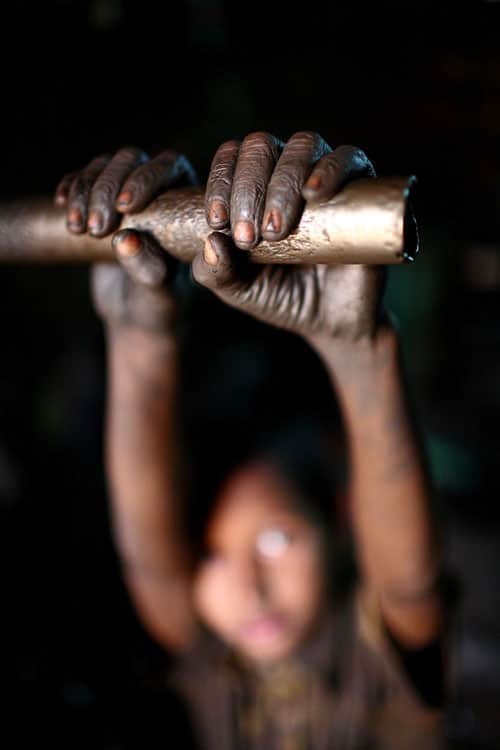
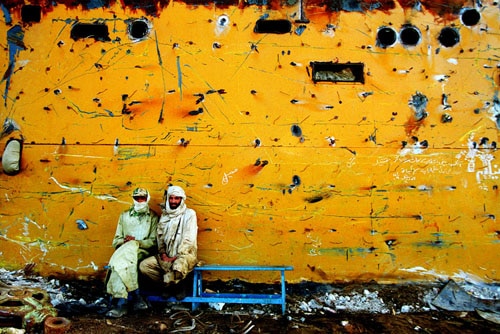
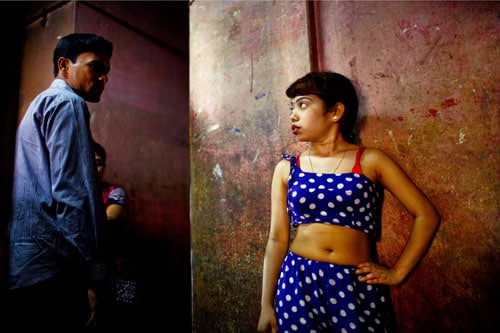
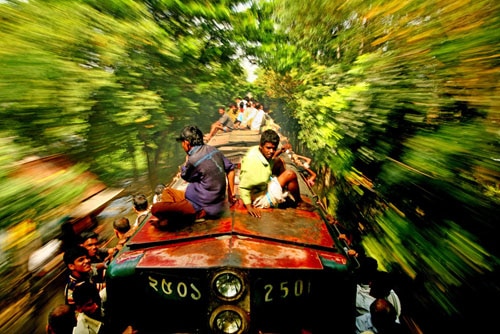
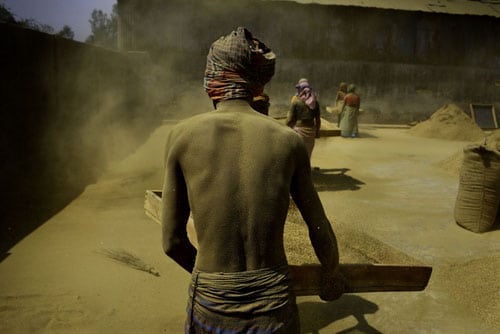
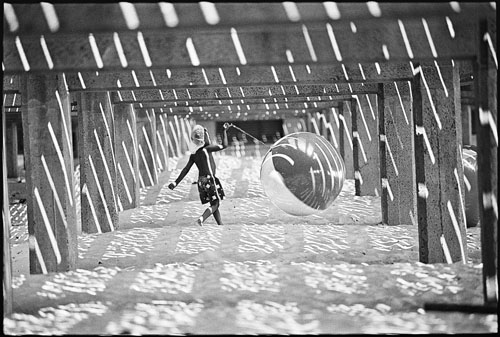
G.M.B. Akash, AvatarThis is a very special interview with an international, award-winning photojournalist G.M.B. Akash. He is based in Dhaka, Bangladesh and represented by Panos Pictures. Wrangling him into finding the time to answer these questions took some doing because he was always on the road working on one project or another. So, I am truly honored to host his images and his responses to a few of my questions here on Tiffinbox. If you have any questions or comments for him, please do submit them at the end of this post!

1) Tell us a little bit about yourself. Where are you from? How old are you?

I grew up in a home far removed from my profession. Throughout my childhood I did not have access to photographers, their work, or even a camera. Photography did not exist for me in theory or in practice. Then a decade ago I found my father’s old camera and my life took a different turn. My fascination for the captured image was uncontainable and overcame everything — even my inexperience. Not knowing what I was doing or why, I went everywhere shooting anything and everything that caught my attention. The only thing I was certain of were the subjects I photographed. I concentrated on people living on the edge of society because their faces, lives, and living conditions held a particular fascination for me. Gradually I became absorbed in their daily lives for months on end, learning from their experiences. My desire to capture it all on film pushed me to go to places and to meet people I never would have encountered otherwise. Each visit gave me a deeper understanding of humanity.

I am from Narayangonj, a city which is 200 km away from Dhaka. I come from a middle class, very ordinary family. I was born in 1977. I was always a last bencher in my school. I always felt inside that I have no talent like other kids. But photography gave me a new life.

G.M.B. Akash, A Photojournalist

2) Some would consider you Bangladesh's best known photojournalist. What has led to that success?

Hard work, honesty and respect towards the people whom I photograph.

G.M.B. Akash, A Photojournalist

3) Where were you trained as a photographer? And why, photojournalism? Why not advertising or travel?

My passion for photography began in 1996. I attended the World Press Photo seminar in Dhaka for 3 years and graduated with a BA in Photojournalism from Pathshala. I believe that the formal study of photography is necessary to survive in the industry today. But most important things are to be really passionate and dedicated.

The formal study helped me a lot but most of the time I learned from other photographers. I have learned from painting, songs and movies as well. Everyday I go through the work of other photographers and I learn from them. I have learned from many photographers.

Photography pushed me to go to places and to meet people I never would have encountered otherwise. Each visit gave me a deeper understanding of humanity. Today, I count myself blessed, having become a photographer. To be able to articulate the experiences of the voiceless, to bring their identity to the forefront, gives meaning and purpose to my own life.

In 1998, I saw a photo exhibition on AIDS victims, titled ‘Positive Lives’ at gallery in Dhaka. And realized for the first time how images can influence social perception. My first reaction, on seeing the exhibit was a complete subversion of my original perception of AIDS patients. It struck me how patients with AIDS are alienated and scorned by us because of social misconceptions, and I realized how I as a photographer could help dispel these misconceptions. I discovered the power that images have over us.

To me, photojournalism is a huge responsibility and a tough job. A photojournalist must be honest, hard worker, punctual, and he or she must respect other people.

I believe photography can bring lot of changes in our life. It can bring positive changes. In my case, “my images are my voice, I want to show the things that should be corrected or should be appreciated.”

G.M.B. Akash, A Photojournalist

G.M.B. Akash, A Photojournalist

G.M.B. Akash, A Photojournalist

4) What drives you to make images? Do you see it as a job or as a calling?

What I find most amazing about the work I do is that it opens my eyes to all these little pleasures of life. There is great pleasure in meeting people who are despised by the world, in sharing a cup of tea with them, and discovering that they are still capable of affection, though they themselves go unloved.

This is not a job about making money or succeeding; it is about pursuing art, and opening people’s eyes. That is the responsibility of every photographer.

G.M.B. Akash, A Photojournalist

G.M.B. Akash, A Photojournalist

5) How do you take on projects? Are they self-financed or do you write grants?

Most of my projects are self–financed. I keep saving my money from other assignments to keep doing my personal projects. I do not like using my camera for begging. Each of my projects usually lasts over a year or even two and I begin to use my camera only when I have earned the trust of the people whose lives I want to document.

To portray a community or a way of life, you first need to understand it well yourself, otherwise the images become superficial, and neither you, nor those who look at your photographs, will be touched or moved. In fact, I let the year pass in regular visits to a small community of transvestites in Dhaka, before I eventually started taking their photos. I like to mingle with my subjects, I visit them often, and I invite them to my house, to get it across that I see them as people rather them mere subjects of photography.

G.M.B. Akash, A Photojournalist

G.M.B. Akash, A Photojournalist

6) There is great sensitivity to people in your images? How did you cultivate it? How do you approach people when you are doing stories?

With every picture you take, you enter a space that is unknown to you as a photographer. In the beginning it feels like forbidden territory, a place you are not supposed to enter surrounded by borders of privacy you are not supposed to cross. You, the photographer, are there at a factory, an old home or a brothel with your simple black bag hanging from your shoulder, eying everything around you as you are eyed by the people there. The first days following these intrusions I never take pictures because they would not be good. I wouldn’t know the people I met, wouldn’t understand the place I had just entered – my photography would be stale and meaningless. But there is always that moment when it feels completely natural to open that bag. And also there is no way of telling why it comes. Suddenly, I have a friendly conversation, or the afternoon light makes everybody around me relaxed and mellow, or someone looks at me in a trusting yet familiar way.

Then I take out my camera, and for me and everybody around me it is the most natural thing to do. There is consent. People don’t accuse me, or reject me or pose in unnatural ways. They are just there, doing what they normally do. Then I click away, and it feels like a conversation, a conversation between me and the people, between me and the location, between me and the light, between me and the souls that make this place alive. In such moments a landscape becomes a soulscape.

After such moments, life where I am working becomes trivial again, and the next day everybody asks for their photographs, and there is no difference if the people are girls from a brothel, children who work in a factory or farmers from the countryside. But these little exchanges bring us closer to each other, and the ties between us, which started with small talk and conversation and continued with the first pictures I took, will begin to become deeper and more meaningful, and so will the pictures I take. And the closer I get to them and the deeper our friendship becomes, the simpler my photography gets. I am no longer looking for special angles or artistic points of views; I just open myself to these people, take a good look, frame and wait for the right moment. When I walk home, I have all the moments that I missed in my head, and they will become my source of inspiration in the days to come.

I see the beauty of people and the human soul in the pictures I take. And though the circumstances of some of the people I portray may be grim, back-breaking, depraved, the people themselves are always remarkable characters and souls. And it is my duty as a photographer and artist to point with my pictures at every aspect of existence in the society and world I live in, to show what can be shown, to go deep into every milieu and also into every aspect of poverty, deprivation and hardship that I encounter – because the only sin for a photographer is to turn his head and look away.

G.M.B. Akash, A Photojournalist

7) You keep winning award after award and you are very good about making it known that you were either nominated or you won. Where did you learn such a basic marketing strategy – that is, to be in forefront of everyone's mind when it comes to photography? What or who inspired you to follow that template?

I am very much alone in the Bangladeshi photography industry. I do not even have photographers as friends. I learned everything for my survival. I keep doing the hard work. And my God was always so kind to me and my friends and family.

G.M.B. Akash, A Photojournalist

G.M.B. Akash, A Photojournalist

8) What is the photo world like in Bangladesh? Does most of it revolve around Dhaka? Are Pathashala and Drik still the only resources for emerging photojournalists?

Lot of people are getting interested in photography in Bangladesh. It is becoming a very popular art form. Pathshala is one of the main photography schools. But there are many other schools which also
give a very good education.

It is very tough to survive as a freelancer now days. Especially in Bangladesh. Wire services like AFP, Reuters, AP, EPA capture all the markets. They are very fast and very powerful. They have a huge investment and network. They have their staff everywhere. It is really hard to publish your work as a freelancer.

But what I believe is this: “if you remain true to your work then your work will remain true to you”

G.M.B. Akash, A Photojournalist

9) Do Bangladeshi photojournalists have a network? Is there a sense of camaraderie and competition between photographers?

We have huge competition and huge politics in Bangladeshi photography. Lots of groups and nepotism. Few people control the whole system and they only favor their own people.

G.M.B. Akash, A Photojournalist

10) What challenges do you face when you are commissioned by magazines or newspapers around the world?

Every assignment is a new experience to me. Till today, I have received more than 40 international awards from all around the world and my work has been featured in over 50 major international publications including: National Geographic, Time, Sunday Times, Newsweek, Geo, Stern, Der Spiegel, The Fader, Brand Eins, The Guardian, Marie Claire, Colors, The Economist, The New Internationalist, Kontinente, Amnesty Journal, Courier International, PDN, Die Zeit, Days Japan, Hello, and Sunday Telegraph of London.

It is challenging to work with so many international magazines. Bangladesh is not an internationally important country. I've met so many people who even don’t know where Bangladesh is. Magazines seem to only want photographs from Bangladesh when there are big floods or big disasters.

We have also lot of problems in acquiring travel visas. If something happens in India or Pakistan, we cannot go there instantly. It takes a few days for getting the proper visa. It is so easy for a photographer from a developing country to get a visa but that's not the case for Bangladeshi photographers; it is almost impossible to go into a conflict zone.

But all these awards and publications bring lot of attention on those issues that I have been working. After seeing my work, so many individual people and organizations have shown their interest to help/improve the situation of child labor in Bangladesh and other issues.

My work on “home for elderly people in Nepal” has been printed in a German magazine. After it got printed so many individuals and organizations came to help them. We raised lot of money for this old home. The situation at that old home was very bad and the elderly people who lived there found it hard to get food three times a day.

G.M.B. Akash, A Photojournalist

11) Are you mentoring anyone interested in pursuing a career in photojournalism? Have you considered conducting workshops in South Asia?

I am trying to help a few of my friends. But no workshops at this time. I am very busy with assignments, traveling and working on my personal projects. And I really want to keep taking lot of photos. I need more time for organizing and giving workshops.

G.M.B. Akash, A Photojournalist

12) Have you ever been tempted to work with video? Will still photography always be your main mode of communication?

I have never tried video but I really want to start making short videos. I mainly concentrate on still photography now.

13) What are you trying to say with your photography?

I see the beauty of people and the human souls in the pictures I take.

G.M.B. Akash, A Photojournalist

Filed Under: Interviews, Photojournalism Tagged With: akash, bangladeshi, dhaka, g.m.b. akash, human interest, international award, interview, Journalism, meeting people, News, optics, people, photographer, Photography, photojournalist, photojournalists, positive lives, shahidul alam, world press photo

A Photographer’s Life Is A Juggling Act

August 27, 2010 by Guest

Ken Jarecke, AvatarThis a guest post by Ken Jarecke, a world-renowned photojournalist and founding member of Contact Press Images, an illustrious photo agency based in New York. Please also visit and read his blog, Mostly True.

The past few years it’s been hard for me to pick up a camera. We all know that the industry, at least the editorial side of it, has been at an all time low. Sure, I’ve worked to put a good face on it, like in this piece on the New York Times Lens blog, but more often than not, my desire to make wonderful images has been absent. My heart has just not been there.

It’s not the creative side. I’ve rarely cared about the choices editors make about my work. That’s never been my motivation. Besides, I figured if I made great images, they’d get published. Somewhere. Sometime.

For example, here’s a take from the Beijing Olympics. After nine Olympics, I felt this was the best job I’d ever done. Normally, the Olympics will generate tons of tear-sheets, but outside of China, where my agency had a deal with the local English language newspaper, I managed to get only a single image published (in a French newspaper).

Frustrating to be sure, but still, not something that would stop me from making pictures.

No, I’m sad and ashamed to report that my lack of desire stemmed from nothing more than a lack of money. More specifically, the constant worry, and the ongoing struggle to pay the bills had taken its toll.

It’s sad, because I didn’t become a photojournalist to get rich (I was never that crazy or misguided). I’m ashamed because much of my money problems were the direct result of poor or stubborn decisions that are completely my fault.

In the past, I hesitated to book weddings. I made the excuse that I couldn’t book something that far in advance. What if an editorial job came up? In reality, I felt this type of work was beneath me. I felt the same about the portrait market (Yes, I know where this is being read). It’s easy to say now, but what’s more important than a wedding, or capturing a child’s life? Oh well, live and learn.

I didn’t let the magazines determine if a picture was good or not, but I sure put them in charge of what was important enough for me to photograph!

Pride and arrogance, a nasty couple of vices. As you can imagine, the only people to suffer from the choices I made was my family. Over the past few years, we’ve cut expenses, and eliminated most of the extras that come with family life, in my vain attempt to reinvent the editorial market and make things right (vanity, there’s another one).

Although I never stopped loving being a dad or a husband, the only thing I accomplished was to give my family a grouchy dad who hated making pictures.

As a photojournalist, I always try to have a backup plan. I would look at every situation with the perspective of a worse possible case scenario. Like, what would happen if I got a two flat tires in a post-Katrina New Orleans?

Practical to be sure, but it also gave me a sense of being in control. Maybe we all do this. It would explain tings like always having a pocket bulging with extra batteries.

Well, about three weeks ago, I ran into a situation that I couldn’t control. One of our children came home from camp very sick. It took twelve days for the doctors to figure out what was wrong. Plenty of uncertainty. Lots of prayers. Scary times. I don’t want to put too fine of a point on it. She spent four nights in the hospital and has been home for about a week now. She’s getting better everyday and is on her way to a full recovery.

Ironically, being in this powerless situation has seemed to heal me also. I have no cares about my reputation, or my standing in the photography world. I should be totally freaked about the medical bills (on top of everything else), but instead they just don’t seem important. I just want to be a better dad and husband (I thought I always was, but I didn’t give any thought to the huge burden I had placed on my family).

Strangest of all, I also want to make some really good pictures. Go figure.

I’m working on getting some portrait jobs… I booked one yesterday! I did my first wedding back in June. I gotta say, I really enjoyed it. The pictures were good too! I hope I have the chance to do some more.

The medical bills? Well, I hope to pay for some of them with a special print sale. I’m going to offer eight or ten prints at a special price for seven days only. They’re signed, archival pigment prints made by me.

You can see a preview here. I don’t know what the final selection will be, but I’m open to suggestions. Please check the above site on Monday to find out. The 17” x 22”s will be $300 and the 8.5” x 11”s will be $97 (plus shipping).

The two black & whites shown here are from an essay I did for Time magazine in 1990 called, “The Rotting of the Big Apple”. They’ve been very popular with collectors over the years.

The Rotting of the Big Apple by Ken Jarecke

The Rotting of the Big Apple 2, Ken Jarecke

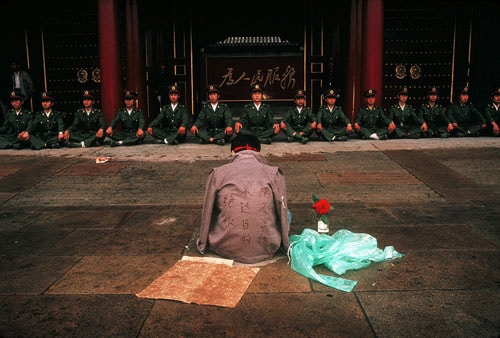
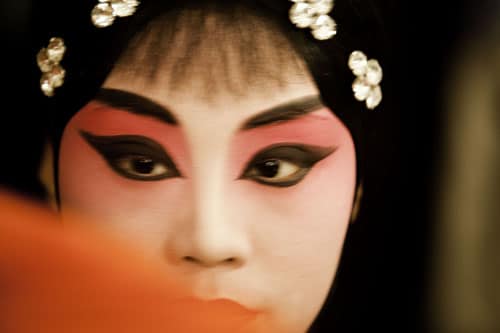
The image from the Tiananmen Square student protests of 1989, shows a lone hunger striker sitting in front of Chinese soldiers. It has also been popular with collectors. At some point it was named “The Rose”. The Beijing Opera performer was made in May of 2007. It’s one that I like. I think it works well.

Tiananmen Square Protestor by Ken Jarecke

Beijing Opera Performer, by Ken Jarecke

If you have ever considered creating a photography collection for yourself, Ken's offering here would be a terrific start. In fact, I have already told Ken that I will be buying one of his prints! Supporting each other through the valleys and peaks of life is what will make us stronger. Give it some thought, but don't wait too long because these prints are very likely to be gone soon.

UPDATE: Ken sent me this slideshow that you see below. It has all the images he has on sale through this Friday (September 10, 2010). I hope this inspires you to invest in one of his images.
Filed Under: Photojournalism, Prints For Sale Tagged With: beijing olympics, contact press images, day print, family life, juggling, ken, ken jarecke, life, life is, media, New York, News, photo agency, Photography, photojournalim, photojournalist, sale, special print, Travel

Subscribe To Tiffibox Treats!

Looking for a well-curated email newsletter that will leave you inspired and motivated about your photography business? Sign up below!

About Seshu

Seshu creates relaxed portraits of families and high school seniors in Avon, Connecticut. He also leads a successful headshot photography studio in Connecticut, helping professionals from a variety of disciplines project the very best versions of themselves. He created Tiffinbox as a way of inspiring photographers, to create better images and successful businesses. [Read More]

Email Templates For Headshot Photographers

Email Templates for Headshot Photographers

Recent Posts

  • How Capture One Changed My Event Photography
  • 10 Steps To Stay Positive In Times Of Great Stress
  • Why You Need To Read “Personal Branding For Photographers” Now
  • How To Master Your Website Content Step By Step?
  • Tony Taafe’s TNT Method For Headshot Photographers

Recent Comments

  • Stephen Davison on Are You A Business Owner Who Is Smart, But Stuck?
  • Ben A. on Don Giannatti Clinches The 8th Annual Tiffinbox Award
  • Dan on Don Giannatti Clinches The 8th Annual Tiffinbox Award
  • Donald Giannatti on Don Giannatti Clinches The 8th Annual Tiffinbox Award
  • Stephen Davison on G.E. Masana’s 6 Strategies For Wedding Photography Success
  • Naveen Kumar on Weddings In India Are More Than Being At The Right Place And At The Right Time
  • kartick on Weddings In India Are More Than Being At The Right Place And At The Right Time
  • Leonid Farbman on 6 Uncommon Trends To Grow Your Photography Business
  • Willow and Finch Wedding Photography on 11 Reception Tips To Help Your Wedding Photography
  • Web Designer Malaysia on How To Optimize Your Squarespace Website For Search Engines
  • Creastan on An Interview With Photojournalist G.M.B. Akash
  • Cindy Brown | Atlanta on An Open Letter To A Local Photographer

Become a Patron!

Copyright © 2026 · Tiffinbox · Site Design by Heather Mackan Creative · Built on Genesis