• Photography
  • Interviews
  • Business
  • Reviews

Tiffinbox

Inspiring Photographers

  • Home
  • About
  • Blog
  • Contact

Bangalore’s “Two Names, One Soul”

March 20, 2012 by Seshu | Editor & Publisher

This article was written by L. Romal M. Singh and reprinted, with permission, from Bangalore's Daily News & Analysis' You & I column. Mahesh Bhat, a photographer based in Bangalore made this republication possible. He is the co-author of Unsung, his first book. Read more about that book here.
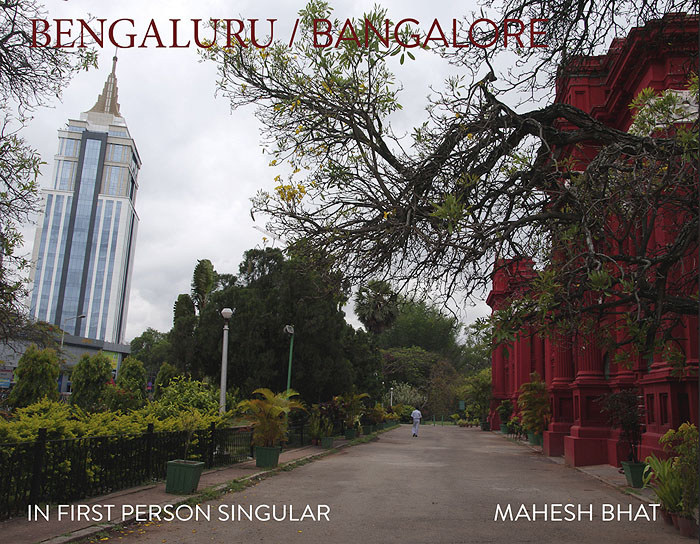
Mahesh Bhat's Bangalore Book Cover

“Two Names, One Soul”

It was this quote that inspired seasoned photographer Mahesh Bhat to look at Bangalore from the perspective of an outsider — an identity Mahesh Bhat gave up almost 20 years ago. “Bangalore is now home to me, but that wasn’t always the case. I grew up in Mangalore but moved here when I was quite young and now the city is home,” enthuses Mahesh, as we sit across a table at Koshy’s.

Koshy’s, so much a part of ‘identity’ Bangalore, does feature in the book that it brought about this meeting, and like many other Bangalore mainstays, the book inspires, records and chronicles a face of Bangalore that’s ever changing, but wonderfully constant.

“I was quite clear about what I wanted from this book — it took me four years to get down to finally putting it together and so I had enough time to ideate. I knew I wanted this book to be about transition — not about famous people and landmarks. Bangalore has always been about multiple identities, it really never has been the same city for any two people,” Mahesh tells us.

Bangalore has indeed been a city of many changes and the city has meant many things to different people, across the 900 years or so of the existence of this city. The powers have changed with almost each century, but the heart and soul of the city largely have remained intact. Bengaluru/Bangalore — in first person singular opens to a wonderful image of the Basavanagudi Bull Temple — an image that quite wonderfully captures the timelessness of this Bangalore.

“I began the journey for this book at Kalasipalya and then meandered through what remains of the pété, before the book halts temporarily at the Cantonment and all that it stands for — the Raj legacy included, before I finally make my way back to the layouts and newer areas that are now as intrinsically Bangalorean as Brigade Road,” shares Mahesh. As said, the book does journey through Bangalore in all its elements, giving you a fair picture of what the city was, is and is probably moving towards — all in one linear movement that personifies an energy now quintessentially known as Bangalore. One of the first images in the book is that of the Infosys pyramid, juxtaposed with slum-dwellings in Electronics City. The picture hits hard and quite succinctly portrays the economic divide in modern Bangalore.

“Bangalore changed after we became an IT city. We lost focus and wanted to be the next Singapore or Beijing. Change is important and inevitable, and don’t get me wrong, I am waiting for the metro as much as any other enthusiastic Bangalorean — but I am worried about the attitude behind this change. A city should be creative class friendly. It shouldn’t be about building infrastructure and then waiting for development — this should be a hand-in-hand process,” says Mahesh, quoting Richard Florida’s theory.

[blogshow id=9ca9 player=1 autoplay=0 toolbar=1]

Bangalore has indeed evolved in more ways than one and it often is the easiest option to just sit back and complain about how these changes are turning Bangalore for the worse. Mahesh however prefers to be more far-sighted in his opinion.

Quoting Narender Pani from his essay, Imaginations of Bengaluru, Mahesh says, “the dominant economic class has always decided what Bangalore will mean to the world and for some reason they have always done away with every trace of the city’s previous leaders. For example, the IT industry is now converting the city into India’s Silicon Valley, removing with it every trace of the city’s colonial past,while just before that the British did the same, by replacing every presence of the pété; with a larger-than-life Cantonment. It’s just how Bangalore functions and it may or may not be a great idea.”

Theme, ideas and motivation in place, we finally move on to parts of the making of this book that Mahesh fondly remembers. “It’s hard for me to decide. Each picture speaks so much to me and is equally precious, but if I had to choose, since you force me to, I would choose the picture of the Karaga festival. The festival is older than Bangalore in many ways and brilliantly captures the spirit of the people who call this city home. Imagine — a Hindu festival with a Telugu lineage, being celebrated by Tamils in a Kannadiga locality where the idols are placed in a dargah as a part of a great custom, proving that communities and religions can co-exist, live in peace and love one another.
I think that if there’s a definitive picture in the collection, it’s definitely this one,” Mahesh concludes.

Impressed and highly entertained, I take leave and rush back to my office where I take my time in absorbing each of these images — some strike a chord, some inform and some just bring the most genuine smile to my face. Bangalore is as much my city, as it is yours and if Bangalore was a song and the lyrics were the ages the city has seen— this book, quite incomparably, is the tune the city has been searching for all these years. P.S. And just in case, you are still looking for an answer to that question asked at the very beginning — read this book and wait for your eureka moment.

Mahesh Bhat says: People in North America can buy the book using Paypal and we'll ship it via DHL. The cover price is $30 and we just add another $5 for shipping.
Filed Under: Books, Photography Tagged With: analysis, bangalore, benguluru, books, daily news, document, electronics city, mahesh bhat, new books, singh, soul

Documenting Occupy Wall Street

January 27, 2012 by Yunghi Kim

Yunghi Kim is today's guest blogger. She is a highly regarded freelance photojournalist based in New York City. From 1995 until 2008 she was represented by Contact Press Images. She has also been a team leader at the prestigious Eddie Adams Workshop. Learn more about here and follow her on Twitter.

I’ve learned from my 28 years as a photojournalist and the hundreds of stories I’ve covered, how to quickly recognize a big story. It was clear from the start that the Occupy Wall Street movement (OWS) had all the right elements to become huge. Unlike most of my projects, I wouldn’t be traveling to a far off war zone. This story was happening right in my own backyard.

Occupy Wall Street | Yunghi Kim

I don’t recall a movement or an event in my career that has struck such a cord with so many Americans. OWS changed the dialogue in America and around the world as well. It successfully brought attention to runaway corporate greed and gave a voice to the working “99 Percent” of us. All of this only a subway stop away from my home in Brooklyn. How could I not pursue this story?

Like so many of my bigger projects over the years, like “The Comfort Women of South Korea”, the Rwandan refugee crisis, the wars in Iraq and Afghanistan, my own desire to document the story in pictures would be my biggest motivation. To bear witness to history is a common drive among photojournalists. We want to capture actual events as they unfold and to create a visual story. Without this drive, I think it’s almost impossible to produce a meaningful body of work.

Occupy Wall Street | Yunghi Kim

Occupy Wall Street | Yunghi Kim

Occupy Wall Street | Yunghi Kim

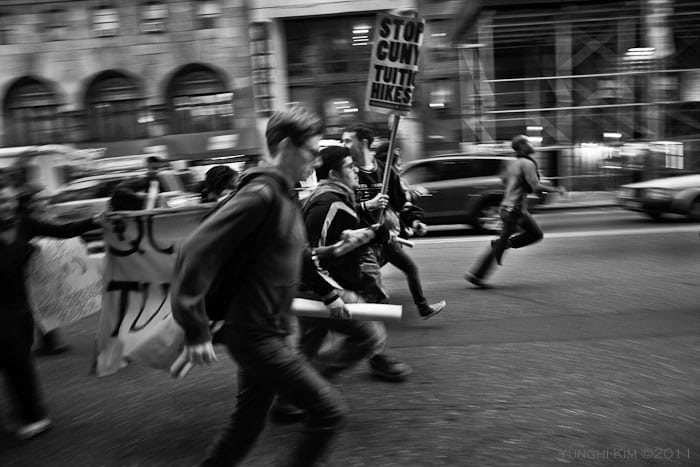
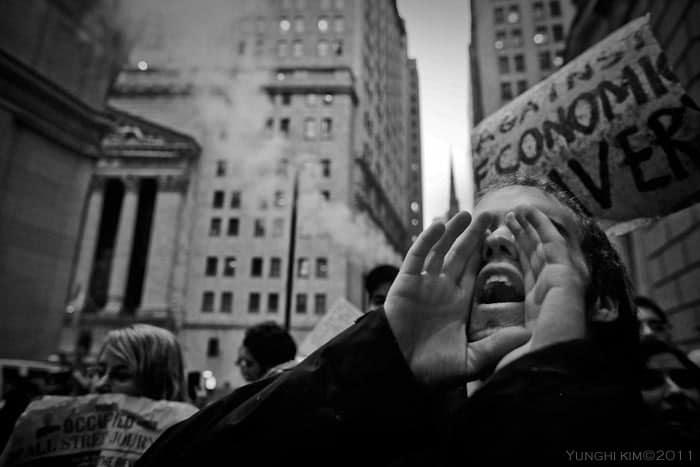
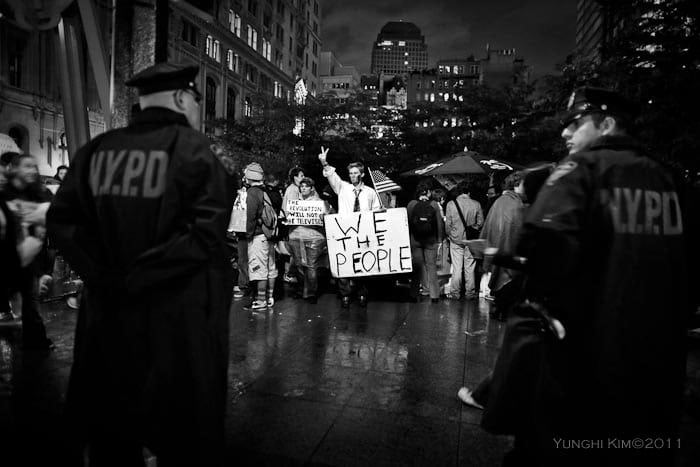
I was surprised to see the wide amount of support generated by OWS and enjoyed the creative ways in which they spread their message. Everyday there’d be a protest scheduled for both the opening and the closing bells of the stock market. Complete with the now well known slogans like, “The banks got bailed out, and we got sold out” Often the protestors would use humor, such as dressing up like zombies or taking brooms to Wall Street and pretend to sweep away the greed. I think this strategy hit a cord with Americans and helped to successful brand the movement.

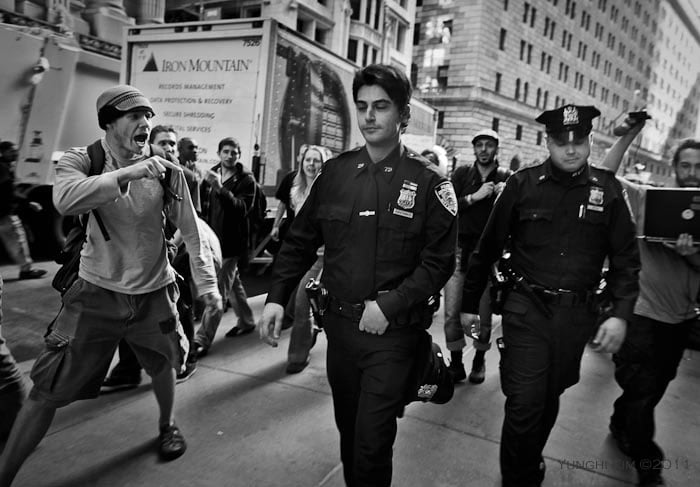
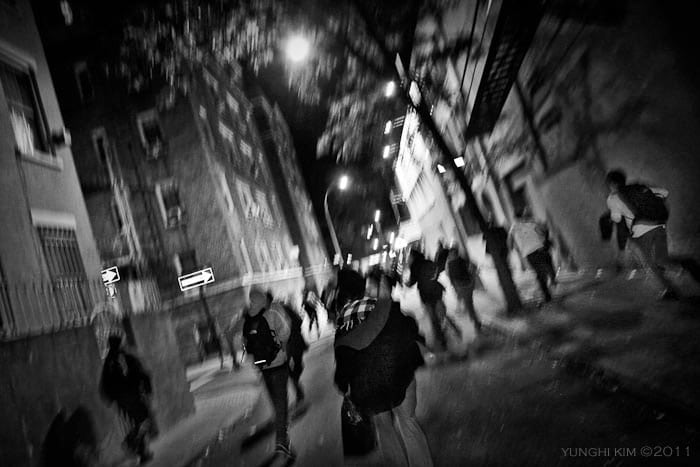
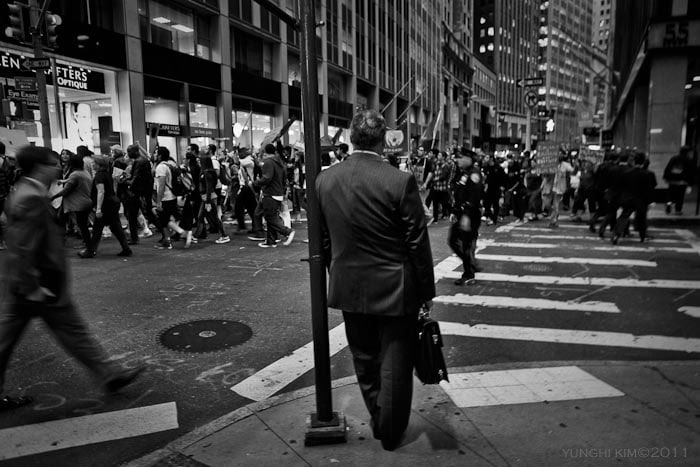
Of course, other times there would be a more serious tone. As when the protesters would play “cat and mouse” with the police, or even outrun them so they could march the streets, free of escorts, as they saw fit. These tactics often ended in arrests.

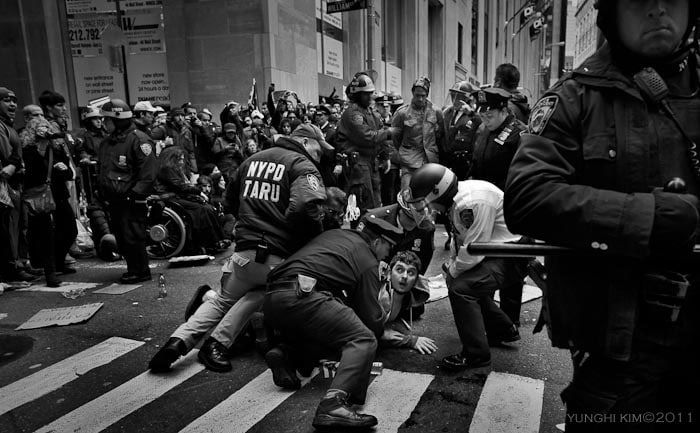
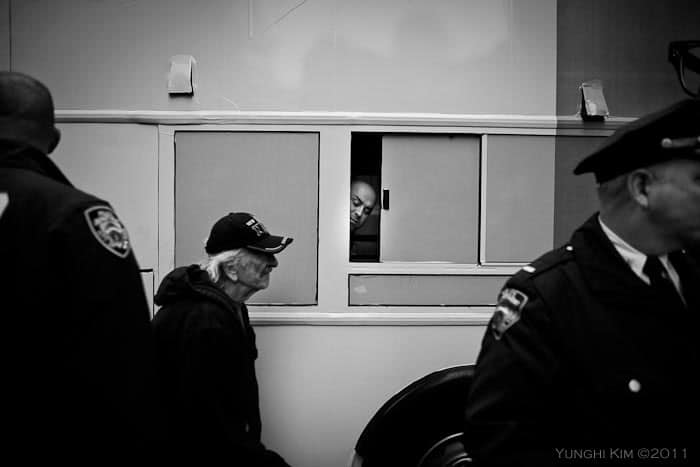
It was no easy task for the NYPD, probably the biggest and best trained police force in the world. Mayor Bloomberg claims it’s the sixth largest army on the planet! During arrests, police officers would form huge columns which would block what you could see. Frustrating, to know something is happening and not being able to photograph it. They’d also use a technique called “kettling” where people would be locked into a certain area (protesters, journalists, whomever) circled by police. Anyone trying to leave would be arrested. It didn’t matter who you were, once an officer decided to arrest you, there was nothing you could do. Many times the arrests seemed random.

Occupy Wall Street | Yunghi Kim

Occupy Wall Street | Yunghi Kim

Occupy Wall Street | Yunghi Kim

As a freelance photographer, the thought of spending thousands of dollars in legal fees and going through the court system became more of a concern as I spent more time working this story. 

The protests were quite physically demanding. There was a lot of running, backwards, forwards, and sideways, during marches that would cover half the length of Manhattan. One day I ended up flat on my back (with another photographer on top of me) after being pushed by a police officer. Luckily I was able to find my glasses so I could continue shooting. Having a few new bruises at the end of the day was common among photographers.

Bruises are better than handcuffs any day!

I was fascinated by how efficiently OWS used social media to communicate with their supporters. They had their own live video streaming team with protesters carrying portable wi-fi enabled webcams. Everything they and the NYPD did was documented and shared almost as it happened. Eventually, I learned to utilize @Yunghi pretty well myself.

Occupy Wall Street | Yunghi Kim

Occupy Wall Street | Yunghi Kim

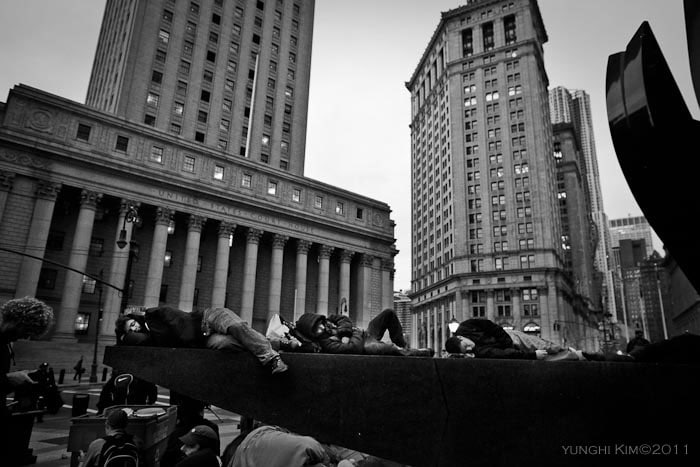
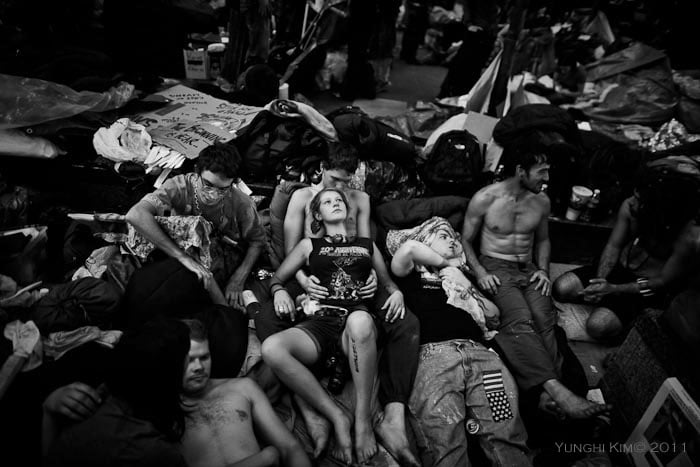
Zuccotti Park was another amazing scene. You could see Noble Prize winners, celebrities, average Americans and homeless people all rubbing shoulders and making speeches to one another.

If you had something to say, Zuccotti Park was the place to be!

Occupy Wall Street | Yunghi Kim

Overall, this was a lot safer than much of my work. You didn’t have mortars going off or bullets flying around, but, it was often frustrating having to navigate around the NYPD. Still, I think my images stand up well and serve as a visual record of what I experienced and witnessed.

(The text of this post was edited by another incredible photojournalist, Ken Jarecke)

Did you field a camera and attempt to document the Occupy Wall Street protests? Tell us your story in the comments below.

Filed Under: Photojournalism Tagged With: 1%, 99%, Business, capitalism, document, documenting, freelance photojournalist, greed, kettling, metropolitan police, movement, new york city, occupy, occupy wall street, ows, photojournalist, police officer, stock market, wall street, yunghi kim

Subscribe To Tiffibox Treats!

Looking for a well-curated email newsletter that will leave you inspired and motivated about your photography business? Sign up below!

About Seshu

Seshu creates relaxed portraits of families and high school seniors in Avon, Connecticut. He also leads a successful headshot photography studio in Connecticut, helping professionals from a variety of disciplines project the very best versions of themselves. He created Tiffinbox as a way of inspiring photographers, to create better images and successful businesses. [Read More]

Email Templates For Headshot Photographers

Email Templates for Headshot Photographers

Recent Posts

  • How Capture One Changed My Event Photography
  • 10 Steps To Stay Positive In Times Of Great Stress
  • Why You Need To Read “Personal Branding For Photographers” Now
  • How To Master Your Website Content Step By Step?
  • Tony Taafe’s TNT Method For Headshot Photographers

Recent Comments

  • Stephen Davison on Are You A Business Owner Who Is Smart, But Stuck?
  • Ben A. on Don Giannatti Clinches The 8th Annual Tiffinbox Award
  • Dan on Don Giannatti Clinches The 8th Annual Tiffinbox Award
  • Donald Giannatti on Don Giannatti Clinches The 8th Annual Tiffinbox Award
  • Stephen Davison on G.E. Masana’s 6 Strategies For Wedding Photography Success
  • Naveen Kumar on Weddings In India Are More Than Being At The Right Place And At The Right Time
  • kartick on Weddings In India Are More Than Being At The Right Place And At The Right Time
  • Leonid Farbman on 6 Uncommon Trends To Grow Your Photography Business
  • Willow and Finch Wedding Photography on 11 Reception Tips To Help Your Wedding Photography
  • Web Designer Malaysia on How To Optimize Your Squarespace Website For Search Engines
  • Creastan on An Interview With Photojournalist G.M.B. Akash
  • Cindy Brown | Atlanta on An Open Letter To A Local Photographer

Become a Patron!

Copyright © 2026 · Tiffinbox · Site Design by Heather Mackan Creative · Built on Genesis