• Photography
  • Interviews
  • Business
  • Reviews

Tiffinbox

Inspiring Photographers

  • Home
  • About
  • Blog
  • Contact

How Street Photography Makes You A Better Wedding Photographer

April 29, 2015 by Seshu | Editor & Publisher

Ryan Jones quit his corporate job and instinctively knew he had to be come a photographer.

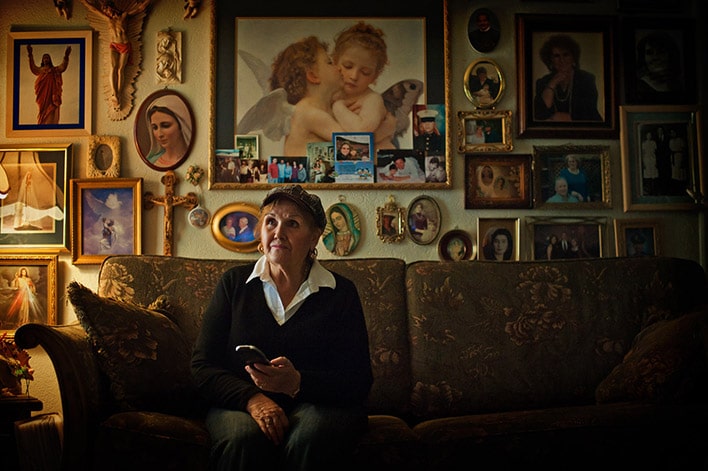
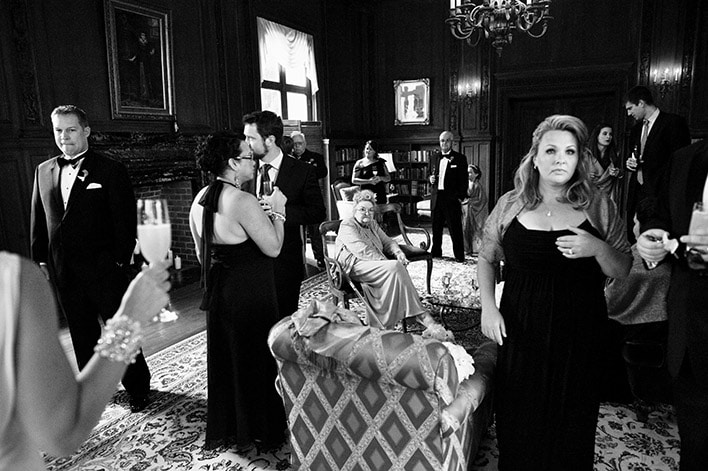
After working at the Fresno Bee as a freelancer and starting a commercial photography business on the west coast, Ryan decided to pull his roots up and move to New York City. He currently lives and works from Brooklyn, New York as both a street photographer and a wedding photographer. I urge you to check out his portfolio and website.

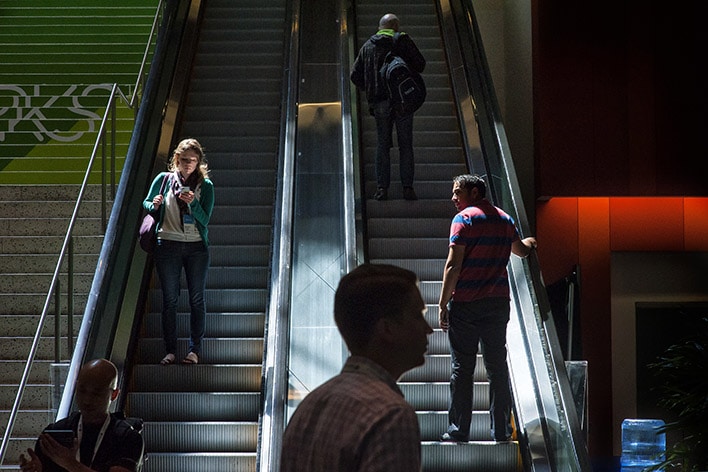
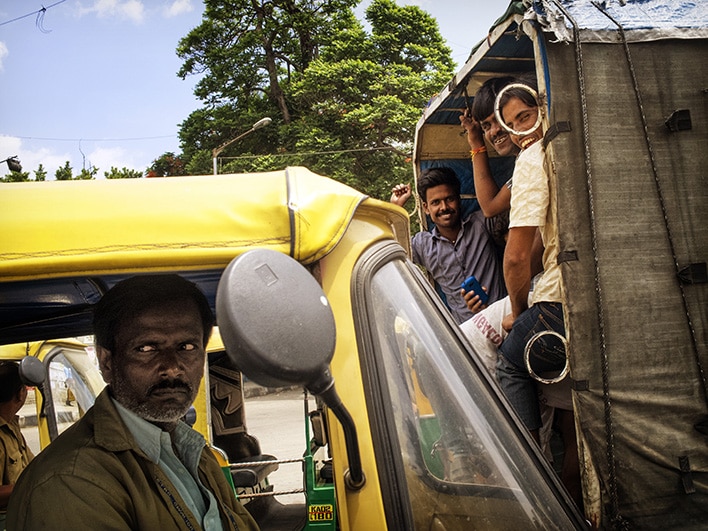
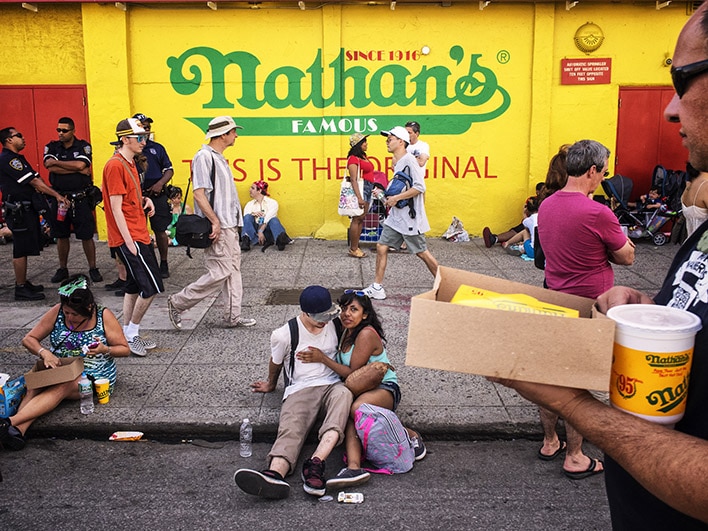
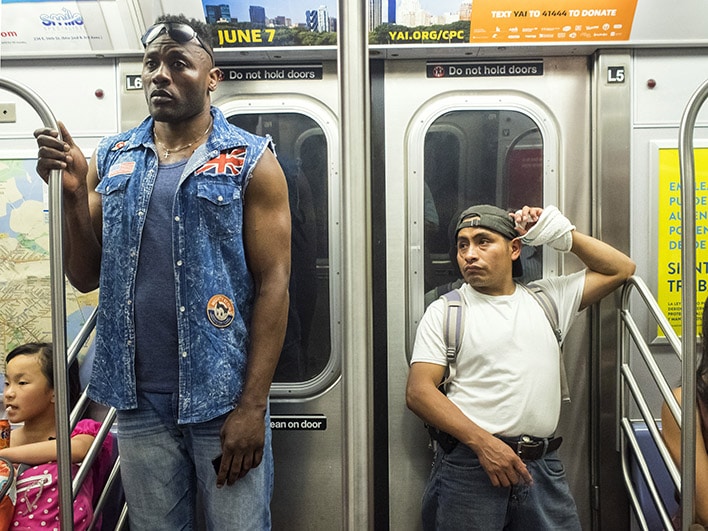
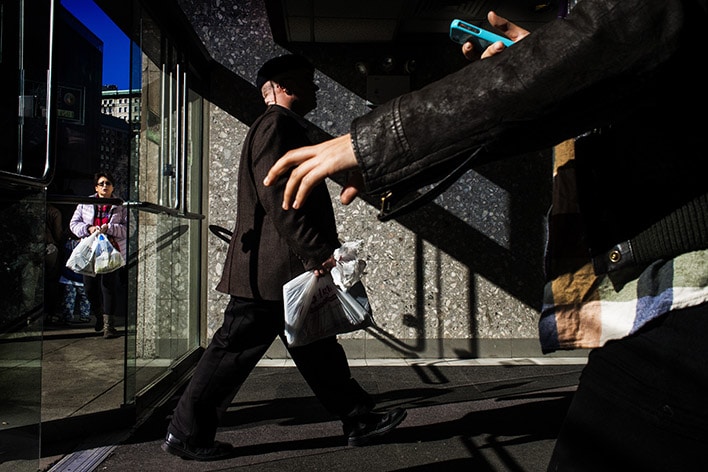
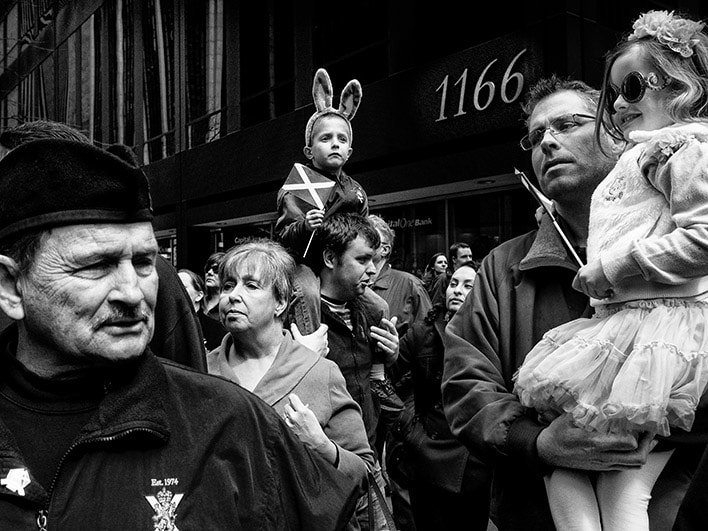
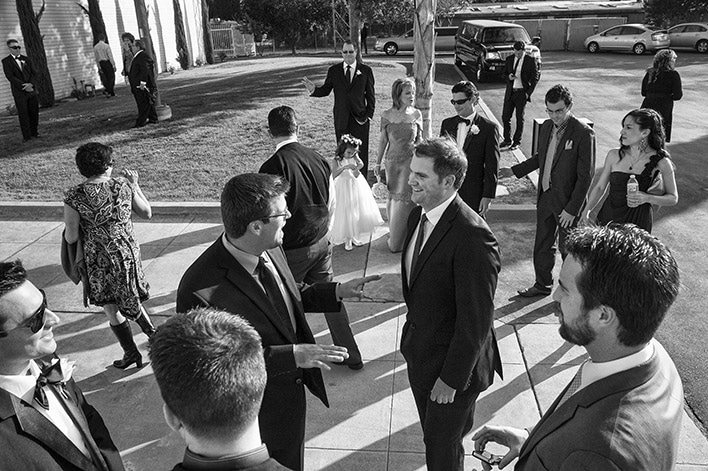
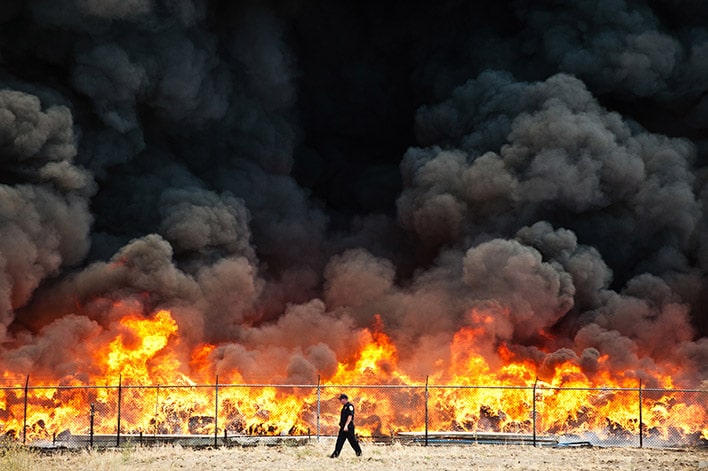
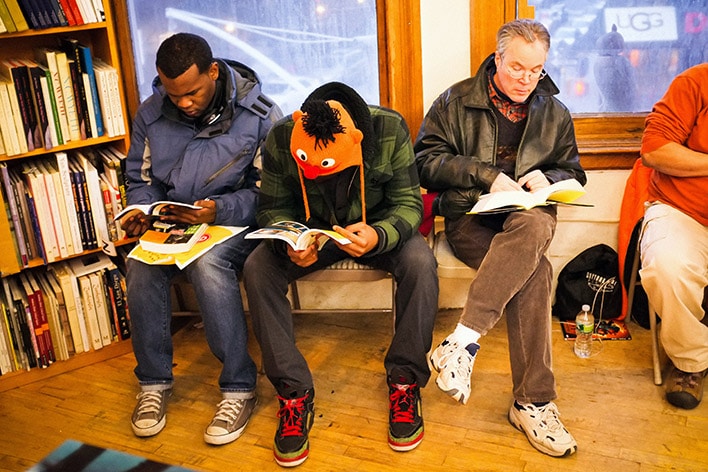
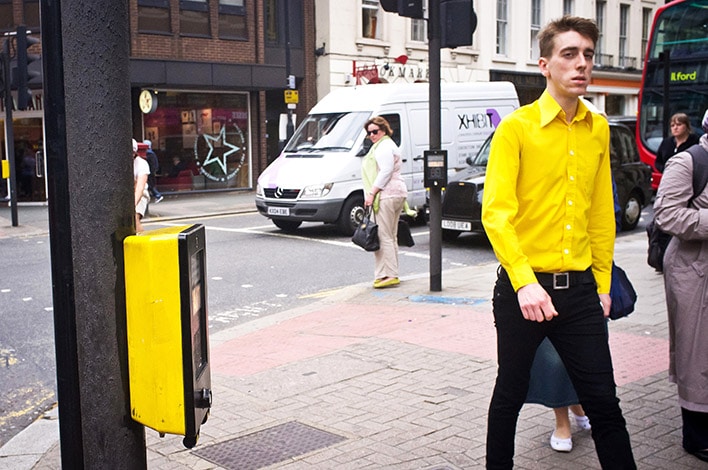
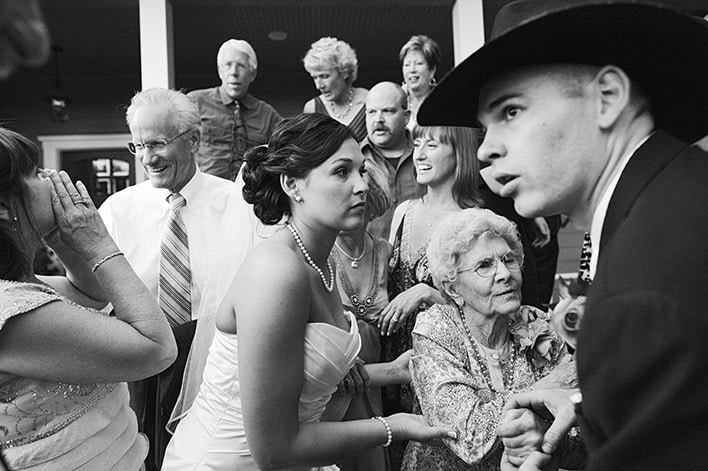
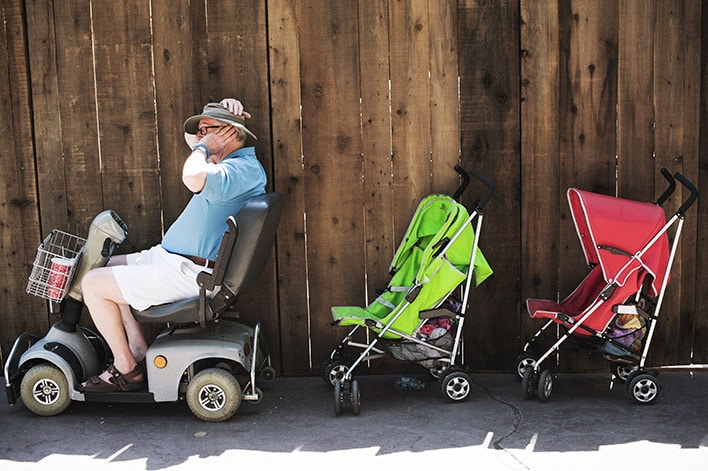
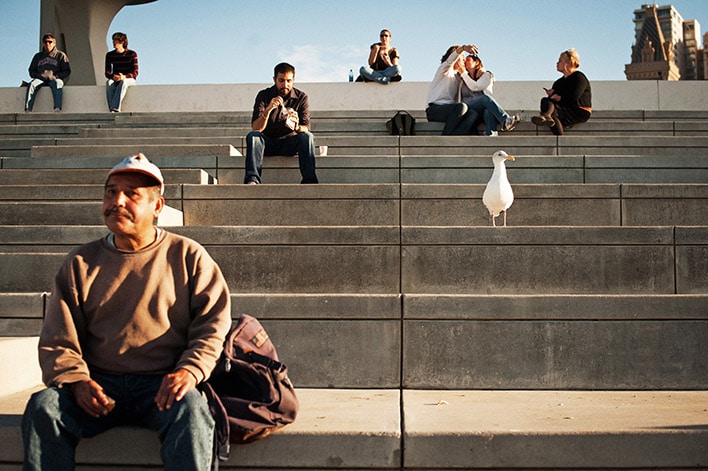
Ryan's work struck me as well-crafted and thoughtful. His photography can be labeled as off-beat or even a bit odd, but his portfolio is full of arresting images of daily life that place you in the scene as if you were actually witnessing it for yourself.

While some of his documentary style could be attributed to his attending the Foundation Workshops, it is Ryan's love for chaos on the streets and making sense of it all that informs his actions. His raw or organic approach to street photography lends itself well to also those commercial clients who seek him out for just that kind of work.

Ryan also curates a blog called An Unlikely Scene. He created it in 2013 and invites other street photographers to submit their work to be considered for inclusion.

A couple of weeks back, Ryan and I sat down to chat about his career and why street photography is so important to him. We discussed his blog An Unlikely Scene and one of his favorite street photographers, Richard Baker.

Some of Ryan's finest work:
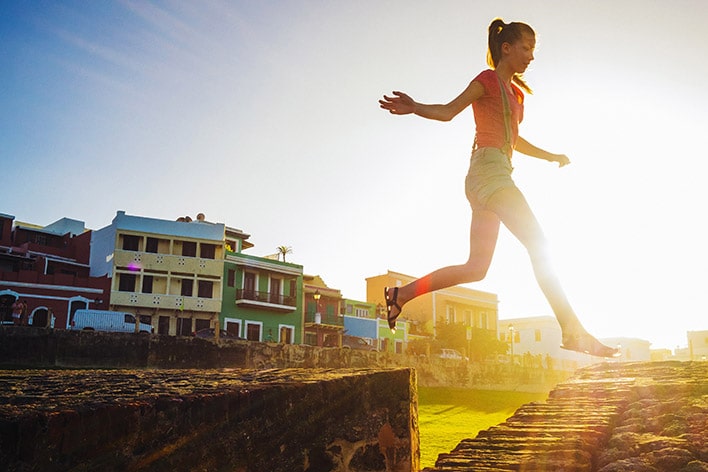
Ryan C. Jones Photography - New York City

Ryan C. Jones Photography - New York City

Ryan C. Jones Photography - New York City

Ryan C. Jones Photography - New York City

Ryan C. Jones Photography - New York City

Ryan C. Jones Photography - New York City

Ryan C. Jones Photography - New York City

Ryan C. Jones Photography - New York City

Ryan C. Jones Photography - New York City

Ryan C. Jones Photography - New York City

Ryan C. Jones Photography - New York City

Ryan C. Jones Photography - New York City

Ryan C. Jones Photography - New York City

Ryan C. Jones Photography - New York City

Ryan C. Jones Photography - New York City

Ryan C. Jones Photography - New York City

Ryan C. Jones Photography - New York City

Ryan C. Jones Photography - New York City

Ryan C. Jones Photography - New York City

Filed Under: Documentary, Home Middle Right, Photography Tagged With: chaos, environment, Fresno, narrative, new york city, people, Photojournalism, Ryan Jones, spaces, story telling, Street Photography
S&^$ People Say To Photographers

February 9, 2012 by Seshu | Editor & Publisher

This YouTube video made me chuckle because people have and still do say these things to me. They perhaps don't mean it or aren't thinking too much about what they are saying. Yeah, probably the latter. Ha!

Thanks to Sukhi Ghuman for the link through her Twitter feed.

Filed Under: Photography, Video Tagged With: cameras, comedy, editing, funny, people, Photographers, Photography, photoshop, processing

An Interview With Photojournalist G.M.B. Akash

November 11, 2010 by Seshu | Editor & Publisher

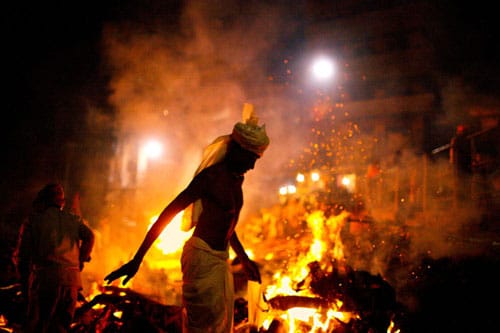
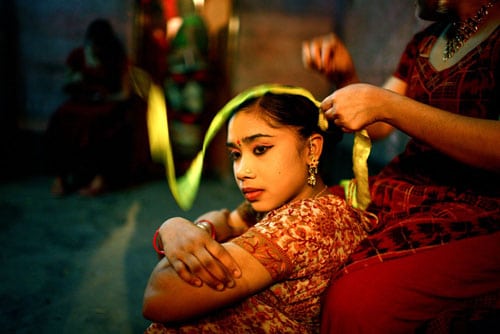
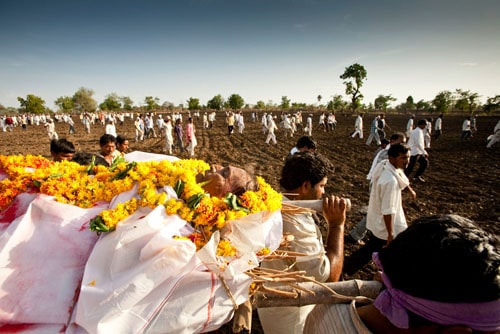
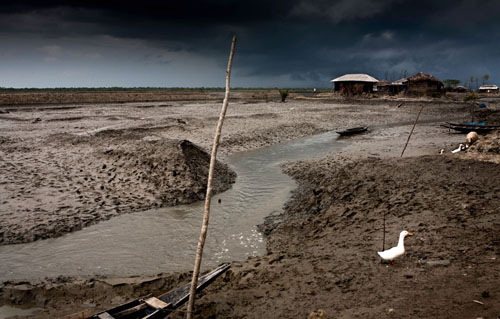
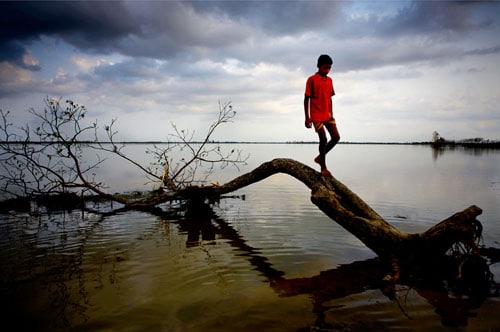
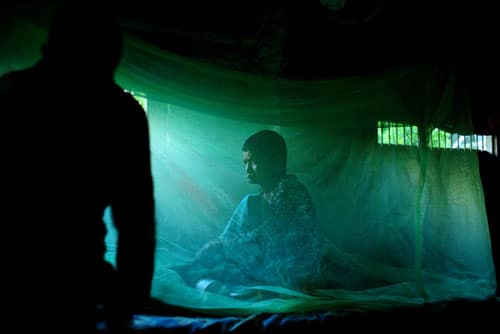
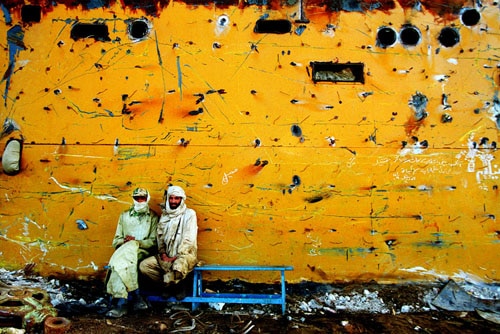
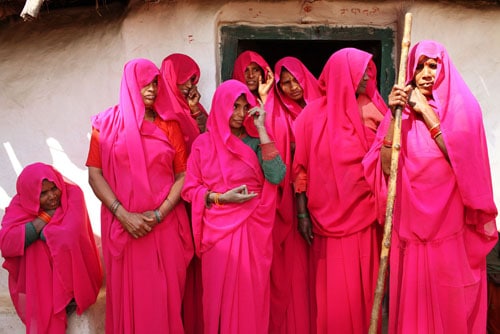
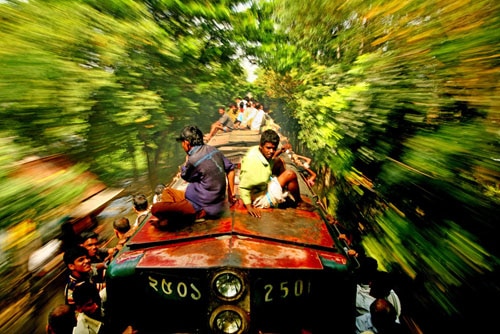
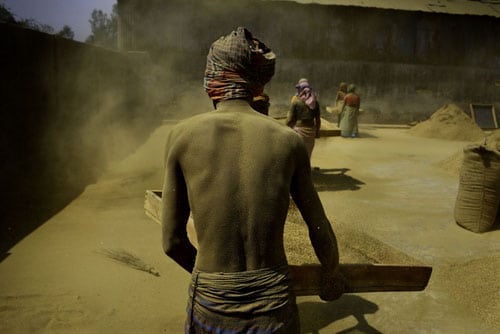
G.M.B. Akash, AvatarThis is a very special interview with an international, award-winning photojournalist G.M.B. Akash. He is based in Dhaka, Bangladesh and represented by Panos Pictures. Wrangling him into finding the time to answer these questions took some doing because he was always on the road working on one project or another. So, I am truly honored to host his images and his responses to a few of my questions here on Tiffinbox. If you have any questions or comments for him, please do submit them at the end of this post!

1) Tell us a little bit about yourself. Where are you from? How old are you?

I grew up in a home far removed from my profession. Throughout my childhood I did not have access to photographers, their work, or even a camera. Photography did not exist for me in theory or in practice. Then a decade ago I found my father’s old camera and my life took a different turn. My fascination for the captured image was uncontainable and overcame everything — even my inexperience. Not knowing what I was doing or why, I went everywhere shooting anything and everything that caught my attention. The only thing I was certain of were the subjects I photographed. I concentrated on people living on the edge of society because their faces, lives, and living conditions held a particular fascination for me. Gradually I became absorbed in their daily lives for months on end, learning from their experiences. My desire to capture it all on film pushed me to go to places and to meet people I never would have encountered otherwise. Each visit gave me a deeper understanding of humanity.

I am from Narayangonj, a city which is 200 km away from Dhaka. I come from a middle class, very ordinary family. I was born in 1977. I was always a last bencher in my school. I always felt inside that I have no talent like other kids. But photography gave me a new life.

G.M.B. Akash, A Photojournalist

2) Some would consider you Bangladesh's best known photojournalist. What has led to that success?

Hard work, honesty and respect towards the people whom I photograph.

G.M.B. Akash, A Photojournalist

3) Where were you trained as a photographer? And why, photojournalism? Why not advertising or travel?

My passion for photography began in 1996. I attended the World Press Photo seminar in Dhaka for 3 years and graduated with a BA in Photojournalism from Pathshala. I believe that the formal study of photography is necessary to survive in the industry today. But most important things are to be really passionate and dedicated.

The formal study helped me a lot but most of the time I learned from other photographers. I have learned from painting, songs and movies as well. Everyday I go through the work of other photographers and I learn from them. I have learned from many photographers.

Photography pushed me to go to places and to meet people I never would have encountered otherwise. Each visit gave me a deeper understanding of humanity. Today, I count myself blessed, having become a photographer. To be able to articulate the experiences of the voiceless, to bring their identity to the forefront, gives meaning and purpose to my own life.

In 1998, I saw a photo exhibition on AIDS victims, titled ‘Positive Lives’ at gallery in Dhaka. And realized for the first time how images can influence social perception. My first reaction, on seeing the exhibit was a complete subversion of my original perception of AIDS patients. It struck me how patients with AIDS are alienated and scorned by us because of social misconceptions, and I realized how I as a photographer could help dispel these misconceptions. I discovered the power that images have over us.

To me, photojournalism is a huge responsibility and a tough job. A photojournalist must be honest, hard worker, punctual, and he or she must respect other people.

I believe photography can bring lot of changes in our life. It can bring positive changes. In my case, “my images are my voice, I want to show the things that should be corrected or should be appreciated.”

G.M.B. Akash, A Photojournalist

G.M.B. Akash, A Photojournalist

G.M.B. Akash, A Photojournalist

4) What drives you to make images? Do you see it as a job or as a calling?

What I find most amazing about the work I do is that it opens my eyes to all these little pleasures of life. There is great pleasure in meeting people who are despised by the world, in sharing a cup of tea with them, and discovering that they are still capable of affection, though they themselves go unloved.

This is not a job about making money or succeeding; it is about pursuing art, and opening people’s eyes. That is the responsibility of every photographer.

G.M.B. Akash, A Photojournalist

G.M.B. Akash, A Photojournalist

5) How do you take on projects? Are they self-financed or do you write grants?

Most of my projects are self–financed. I keep saving my money from other assignments to keep doing my personal projects. I do not like using my camera for begging. Each of my projects usually lasts over a year or even two and I begin to use my camera only when I have earned the trust of the people whose lives I want to document.

To portray a community or a way of life, you first need to understand it well yourself, otherwise the images become superficial, and neither you, nor those who look at your photographs, will be touched or moved. In fact, I let the year pass in regular visits to a small community of transvestites in Dhaka, before I eventually started taking their photos. I like to mingle with my subjects, I visit them often, and I invite them to my house, to get it across that I see them as people rather them mere subjects of photography.

G.M.B. Akash, A Photojournalist

G.M.B. Akash, A Photojournalist

6) There is great sensitivity to people in your images? How did you cultivate it? How do you approach people when you are doing stories?

With every picture you take, you enter a space that is unknown to you as a photographer. In the beginning it feels like forbidden territory, a place you are not supposed to enter surrounded by borders of privacy you are not supposed to cross. You, the photographer, are there at a factory, an old home or a brothel with your simple black bag hanging from your shoulder, eying everything around you as you are eyed by the people there. The first days following these intrusions I never take pictures because they would not be good. I wouldn’t know the people I met, wouldn’t understand the place I had just entered – my photography would be stale and meaningless. But there is always that moment when it feels completely natural to open that bag. And also there is no way of telling why it comes. Suddenly, I have a friendly conversation, or the afternoon light makes everybody around me relaxed and mellow, or someone looks at me in a trusting yet familiar way.

Then I take out my camera, and for me and everybody around me it is the most natural thing to do. There is consent. People don’t accuse me, or reject me or pose in unnatural ways. They are just there, doing what they normally do. Then I click away, and it feels like a conversation, a conversation between me and the people, between me and the location, between me and the light, between me and the souls that make this place alive. In such moments a landscape becomes a soulscape.

After such moments, life where I am working becomes trivial again, and the next day everybody asks for their photographs, and there is no difference if the people are girls from a brothel, children who work in a factory or farmers from the countryside. But these little exchanges bring us closer to each other, and the ties between us, which started with small talk and conversation and continued with the first pictures I took, will begin to become deeper and more meaningful, and so will the pictures I take. And the closer I get to them and the deeper our friendship becomes, the simpler my photography gets. I am no longer looking for special angles or artistic points of views; I just open myself to these people, take a good look, frame and wait for the right moment. When I walk home, I have all the moments that I missed in my head, and they will become my source of inspiration in the days to come.

I see the beauty of people and the human soul in the pictures I take. And though the circumstances of some of the people I portray may be grim, back-breaking, depraved, the people themselves are always remarkable characters and souls. And it is my duty as a photographer and artist to point with my pictures at every aspect of existence in the society and world I live in, to show what can be shown, to go deep into every milieu and also into every aspect of poverty, deprivation and hardship that I encounter – because the only sin for a photographer is to turn his head and look away.

G.M.B. Akash, A Photojournalist

7) You keep winning award after award and you are very good about making it known that you were either nominated or you won. Where did you learn such a basic marketing strategy – that is, to be in forefront of everyone's mind when it comes to photography? What or who inspired you to follow that template?

I am very much alone in the Bangladeshi photography industry. I do not even have photographers as friends. I learned everything for my survival. I keep doing the hard work. And my God was always so kind to me and my friends and family.

G.M.B. Akash, A Photojournalist

G.M.B. Akash, A Photojournalist

8) What is the photo world like in Bangladesh? Does most of it revolve around Dhaka? Are Pathashala and Drik still the only resources for emerging photojournalists?

Lot of people are getting interested in photography in Bangladesh. It is becoming a very popular art form. Pathshala is one of the main photography schools. But there are many other schools which also
give a very good education.

It is very tough to survive as a freelancer now days. Especially in Bangladesh. Wire services like AFP, Reuters, AP, EPA capture all the markets. They are very fast and very powerful. They have a huge investment and network. They have their staff everywhere. It is really hard to publish your work as a freelancer.

But what I believe is this: “if you remain true to your work then your work will remain true to you”

G.M.B. Akash, A Photojournalist

9) Do Bangladeshi photojournalists have a network? Is there a sense of camaraderie and competition between photographers?

We have huge competition and huge politics in Bangladeshi photography. Lots of groups and nepotism. Few people control the whole system and they only favor their own people.

G.M.B. Akash, A Photojournalist

10) What challenges do you face when you are commissioned by magazines or newspapers around the world?

Every assignment is a new experience to me. Till today, I have received more than 40 international awards from all around the world and my work has been featured in over 50 major international publications including: National Geographic, Time, Sunday Times, Newsweek, Geo, Stern, Der Spiegel, The Fader, Brand Eins, The Guardian, Marie Claire, Colors, The Economist, The New Internationalist, Kontinente, Amnesty Journal, Courier International, PDN, Die Zeit, Days Japan, Hello, and Sunday Telegraph of London.

It is challenging to work with so many international magazines. Bangladesh is not an internationally important country. I've met so many people who even don’t know where Bangladesh is. Magazines seem to only want photographs from Bangladesh when there are big floods or big disasters.

We have also lot of problems in acquiring travel visas. If something happens in India or Pakistan, we cannot go there instantly. It takes a few days for getting the proper visa. It is so easy for a photographer from a developing country to get a visa but that's not the case for Bangladeshi photographers; it is almost impossible to go into a conflict zone.

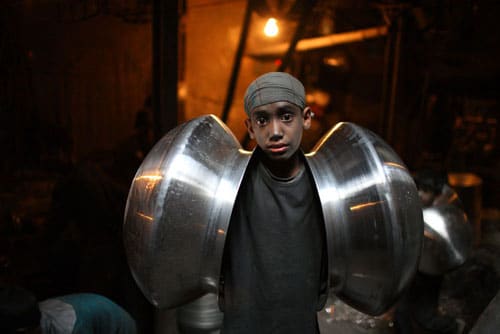
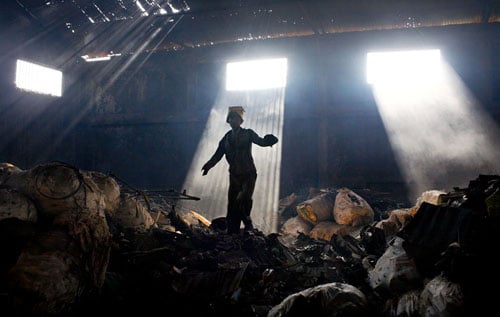
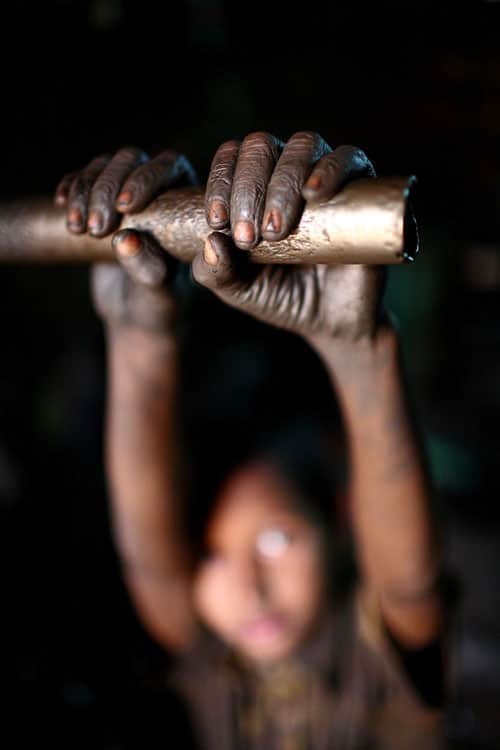
But all these awards and publications bring lot of attention on those issues that I have been working. After seeing my work, so many individual people and organizations have shown their interest to help/improve the situation of child labor in Bangladesh and other issues.

My work on “home for elderly people in Nepal” has been printed in a German magazine. After it got printed so many individuals and organizations came to help them. We raised lot of money for this old home. The situation at that old home was very bad and the elderly people who lived there found it hard to get food three times a day.

G.M.B. Akash, A Photojournalist

11) Are you mentoring anyone interested in pursuing a career in photojournalism? Have you considered conducting workshops in South Asia?

I am trying to help a few of my friends. But no workshops at this time. I am very busy with assignments, traveling and working on my personal projects. And I really want to keep taking lot of photos. I need more time for organizing and giving workshops.

G.M.B. Akash, A Photojournalist

12) Have you ever been tempted to work with video? Will still photography always be your main mode of communication?

I have never tried video but I really want to start making short videos. I mainly concentrate on still photography now.

13) What are you trying to say with your photography?

I see the beauty of people and the human souls in the pictures I take.

G.M.B. Akash, A Photojournalist

Filed Under: Interviews, Photojournalism Tagged With: akash, bangladeshi, dhaka, g.m.b. akash, human interest, international award, interview, Journalism, meeting people, News, optics, people, photographer, Photography, photojournalist, photojournalists, positive lives, shahidul alam, world press photo

Measure In Hugs (Or, How I Fell In Love With Marketing!)

October 28, 2010 by Guest

Alethea Cheng Fitzpatrick, AvatarThis is a guest post by Alethea Cheng Fitzpatrick, NYC based architect, interior designer, photographer AND mom! Alethea has her own business, nestingNYC (formerly alethea cheng fitzpatrick photography). Her first guest post here was “Please Don't Just Give Your Clients A CD or DVD!”

You know how many families want beautiful family portraits in their home but have a hard time getting through the entire process?

As an architect/interior designer and baby photographer, Alethea takes care of the whole thing from start to finish, meeting families in their homes and designing, creating, delivering and installing the perfect custom portrait wall gallery to complement their home and lifestyle.

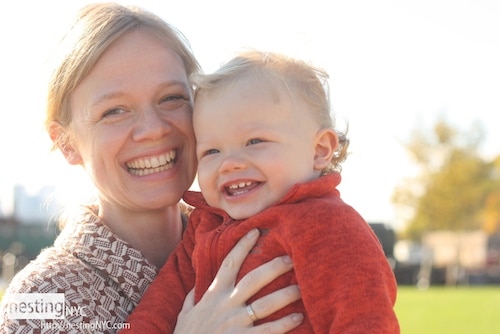
Portrait Of A Child

My eighteen month old son is going through a very affectionate stage (well, apart from when he's screaming his head off in the stroller and looking up at me with teary eyes filled with betrayal because I won't carry him).

He comes up to me, pulls my arms around him and says “‘ug!”

Sometimes he says “mommy ‘ug!”

Yes, it is as heart melting as it sounds.

But it's also particularly meaningful because of an amazing piece of advice I recently received from Kristen Kalp, business and marketing genius at Brand Camp Blog and an incredible photographer in her own right at Essential Imagery.

“Coffee coffee coffee,” she said. “Take people out for lots and lots of coffee. And measure your success in hugs.”

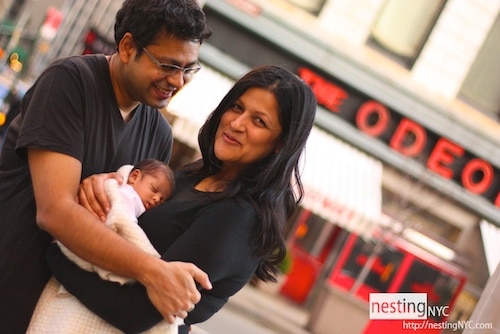
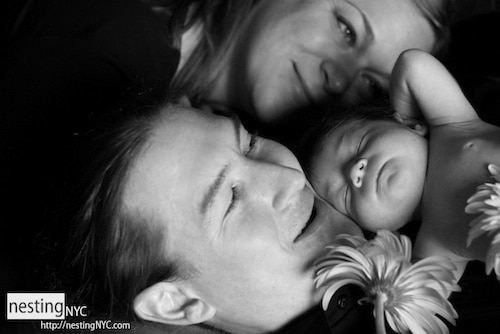
Portrait Of A Young Couple With Baby

This little piece of advice has changed everything for me – how I think not only about my business but also about my life.

I don't interpret this advice literally. It might not be coffee, it might be a two and a half hour lunch… with cocktails… on a weekday. And hey, I live in New York City, some people kiss and hug everyone … and some people don't really like to hug at all.

But what it means, to me, is that you should surround yourself by people you love, and who love you. It means business dates, not business meetings. It means connecting with people, asking them what their biggest challenges and dreams are, and finding out how you can help them.

It means believing that you have something amazing to offer – and offering it.

It means that all of a sudden something has clicked for me and I finally understand how to grow my business in a way that feels good.

It means that I have fallen in love with marketing.

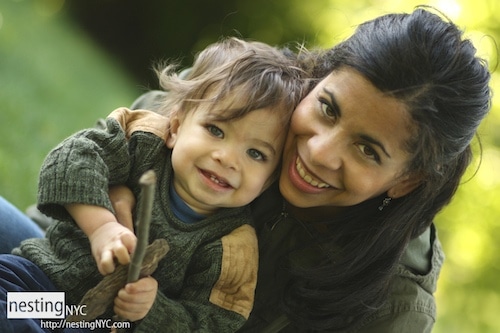
Mother and Child

I've never hated marketing, and as an architect, I probably was “into it” more than most. I started my own business after having my son as a) I went crazy taking photos of him and gained a new appreciation for the power, meaning and value of portrait photography and b) I wanted the flexibility so I could continue to be mostly at home with him. It's also true in retrospect that I've always wanted to have my own business, ever since I started one as part of an extra-curricular activity in high school, but I had become waylaid from that goal over the years.

Even with over ten years of experience as a creative professional with lots involvement on the business side, and even though small business owners are always talking about how surprised they are at how much time they have to spend marketing … well, there's no other way to say this. I was still surprised! I feel a little silly about it now but yes, I suppose I did somehow think that I could put up a website, tell all my friends, and run a few facebook and craigslist ads and I would be up and running in no time!

Well, needless to say it has taken a little more work than that. It's one thing to hear that running your own business involves a lot of marketing, but actually experiencing it is a whole different thing. I have been truly humbled by how much there is to learn, but it has also been thrilling to learn so much so quickly… and think of how much money I've saved by not going back to school to do it!

Infant Portrait

The good news is that the “hug” approach to marketing means that marketing and, ugh, the even more dreaded (to me) “networking” don't feel like marketing or networking – it feels like living your life. In other words, it feels very natural.

I do think that it means you have to be in the right place to begin with. You have to not only love what you do, but you have to love where you are and the people that you get to meet and work with. Where that is will change over the course of your life. It certainly did for me when I became a mother in a way that was completely unexpected to me – I wanted to be a mother all the time!

Mother & Child

Now I know that to some, that may sound like a complete nightmare, and they enjoy their professional life where they get to exist outside of parenthood. I can totally understand that. But for me, that was the last thing I wanted to do, and it still is.

“Being a mother all the time” does not, for me, mean spending all my time with my son, at least not since he was a tiny baby. That would not be good for either of us. But it means building a professional life for myself that integrates well with being a mother not just practically in terms of hours and flexibility, but conceptually. It means building a professional life for myself based on who I am as a person. It means integrating the professional and the personal much more than I ever dared to do before.

Being a mother is part of what enables me to be the photographer, designer and business owner that I now am – it's one of my assets and I draw on it constantly. And it explains why returning to my old and formerly much loved professional life suddenly seemed and continues to seem so unfathomable. I don't want my professional and personal life to compete, I want them to complement one another and feed off one another.

I hear a lot of talk in the photography industry these days about shooting from the heart, following your passion, and doing what you love, and not just from crunchy granola types either. Again, these are easy words to say, but I'm starting to experience how true it is, not just from a creative perspective but from the business side too.

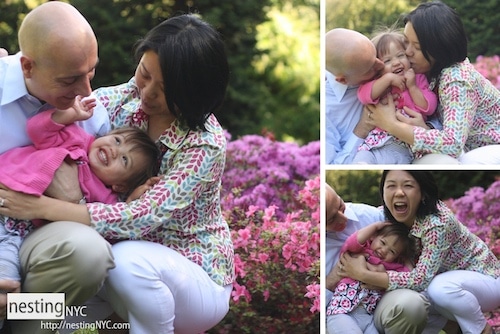
Collage Of A Family Portrait Session

Measure Your Success In Hugs

So simple, yet so powerful, it impacts everything – who you talk to at the next event and how, what your website looks like and says, what your offerings are, the relationships you establish with other businesses and vendors, and how you work with and follow up with clients.

I'll have to come back in a year to tell you the longer term impact, but so far, all signs indicate that it's going to be really great.

Sleeping Baby

I love connecting with new people, telling them about my business and following up with them. Everyone has been so excited and supportive.

I really look forward to filling my monthly newsletter not with sales and marketing copy but with information that I hope will be valuable and interesting to new and expectant parents and families with young children. I feel good about forwarding it to people, rather than self-conscious that I am “marketing” to them.

I've had some fantastic business dates with people I have quickly come to love and I can't wait to see what those relationships bring. I know it will benefit them, their clients and my clients as well as my business – it's win/win/win/win! And honestly, I'm more excited about what I can do to help them than what they can do for me.

In the same way, I'm no longer afraid to ask for business, because I'm not asking for something, I'm offering something.

Baby Girl Portrait

Finally, I get to create beauty out of joy and happiness every day… and people hug me for it. It doesn't get much better than that.

Who are you going to hug today? And who will hug you?

If you're looking for amazing insight into where you should be going with your photography business, check out Brand Camp Blog and talk to Kristen!

Filed Under: Marketing, Photo Biz Tagged With: alethea cheng fitzpatrick, baby photographers, hug, hugs, human interest, interior designer, love, Marketing, meaning, measure, measuring, own business, people, Portraits

Subscribe To Tiffibox Treats!

Looking for a well-curated email newsletter that will leave you inspired and motivated about your photography business? Sign up below!

About Seshu

Seshu creates relaxed portraits of families and high school seniors in Avon, Connecticut. He also leads a successful headshot photography studio in Connecticut, helping professionals from a variety of disciplines project the very best versions of themselves. He created Tiffinbox as a way of inspiring photographers, to create better images and successful businesses. [Read More]

Email Templates For Headshot Photographers

Email Templates for Headshot Photographers

Recent Posts

  • How Capture One Changed My Event Photography
  • 10 Steps To Stay Positive In Times Of Great Stress
  • Why You Need To Read “Personal Branding For Photographers” Now
  • How To Master Your Website Content Step By Step?
  • Tony Taafe’s TNT Method For Headshot Photographers

Recent Comments

  • Stephen Davison on Are You A Business Owner Who Is Smart, But Stuck?
  • Ben A. on Don Giannatti Clinches The 8th Annual Tiffinbox Award
  • Dan on Don Giannatti Clinches The 8th Annual Tiffinbox Award
  • Donald Giannatti on Don Giannatti Clinches The 8th Annual Tiffinbox Award
  • Stephen Davison on G.E. Masana’s 6 Strategies For Wedding Photography Success
  • Naveen Kumar on Weddings In India Are More Than Being At The Right Place And At The Right Time
  • kartick on Weddings In India Are More Than Being At The Right Place And At The Right Time
  • Leonid Farbman on 6 Uncommon Trends To Grow Your Photography Business
  • Willow and Finch Wedding Photography on 11 Reception Tips To Help Your Wedding Photography
  • Web Designer Malaysia on How To Optimize Your Squarespace Website For Search Engines
  • Creastan on An Interview With Photojournalist G.M.B. Akash
  • Cindy Brown | Atlanta on An Open Letter To A Local Photographer

Become a Patron!

Copyright © 2026 · Tiffinbox · Site Design by Heather Mackan Creative · Built on Genesis