• Photography
  • Interviews
  • Business
  • Reviews

Tiffinbox

Inspiring Photographers

  • Home
  • About
  • Blog
  • Contact

Interview With Documentary Photographer, Mahesh Shantaram

October 24, 2014 by Seshu | Editor & Publisher

We've all heard stories of hardcore career photojournalists now-a-days shooting weddings to keep their heads above water. But Mahesh Shantaram, an already established Indian wedding photographer based in Bangalore, did exactly the opposite. Known best for bringing his quirky sense of humour to how weddings are portrayed in India, Mahesh recently made a transition into political photography on the back of the recent Indian general elections. His work as a documentary photographer has been seen around the world lately, thanks in part to the New York Times Magazine. In fact, I caught up with him just as he's preparing to show his work in Paris, Addis Ababa, and Dhaka over the next three months.
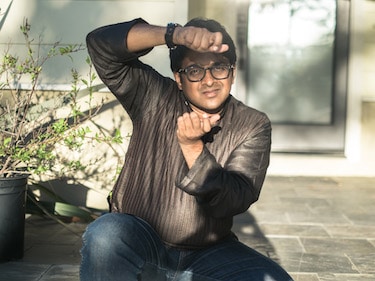
Mahesh Shantaram, Documentary Wedding Photographer In India1) Mahesh, tell us a little bit about your start in photography. Why photography? What drew you to this medium?

Back in 2005, I was enslaved in a cubicle four blocks away from the White House. It was the lowest point in my life. I was desperately looking for a lifeline to creative rejuvenation. That's when providence struck me. At an art exhibition in Providence, RI, I chanced upon a particular work that was almost prophetic with its message. It happened to be Annu Matthew's, An Indian from India. For it, that was the moment of realization of how photography could be more than mere documentation of events, it's qualities as a medium of expression, and how identity can be both a reason and a subject of one's photographic practice. Within two months, I had quit my job and was in Paris to pursue a full-time diploma in photography.

2) You spent several years making a name for yourself as a wedding photographer. Not an easy feat in India where cultural demands can pigeonhole a man easily. Why weddings? And what about weddings commanded your attention?

We're talking 2006 now. When my wife and I were getting settled into our new home in Bangalore, we stumbled upon our wedding album. It came a jarring shock to my recently shaped perspectives on what sentiments photography should evoke. Traditional wedding photographers were generally seen as insensitive louts serving patriarchal needs at a wedding. They were totally out of touch with the expectations of the modern Indian couple. Ivy League educated, well-traveled, living abroad but Indian at heart–and now coming home to the prospect of having their dream weddings covered by the traditional guy. I became the solution to this problem just as I was looking for something to do in photojournalism and documentary.

3) Let's talk about your current foray into editorial work. I know you have shot for the NY Times Magazine and recently traversed the country during the national elections. Again, I am curious about your motivation. What did you sense about the elections that made you pursue politicians and their rallies all across the land?

The New York Times Magazine stumbled upon my work on my gallery's website. I've shot three assignments with them since then. It's such a motivational kick to work with a legendary photo department who actively seek out and hand opportunities to new talent.

The elections work was a purely personal project that sprung from a very deep place, but it started out as an editorial assignment for the Financial Times. Their correspondent was working on a story about corporate honchos making a bid for a seat in Parliament. That's how I get to shoot the Nandan Nilekani campaign–the 2014 elections' wealthiest candidate. There was this one picture (which the FT was bold enough to use as their cover) that gave me the confidence that I was on to something and that I should shoot the rest of the elections on my own terms.

4) Your series of images called, “The Last Days of Manmohan” appear both humorous and whimsical. Is your approach to photography intentionally so? Are you attempting to draw humor out of what is or could be a difficult situation for millions of people? Are you giving us permission to laugh at ourselves?

I find a lot of my inspiration in standup comedy. Jerry Seinfeld, Russel Peters, and Louis CK are my heroes. I love how these guys take an everyday situation and illuminate with their perspective so that it then becomes a critique of society. And hey, it's funny as hell and we're laughing away, forgetting that we're actually laughing at ourselves. I think this quality of standup comedy to combine humour and critique is worth emulating in documentary photography.
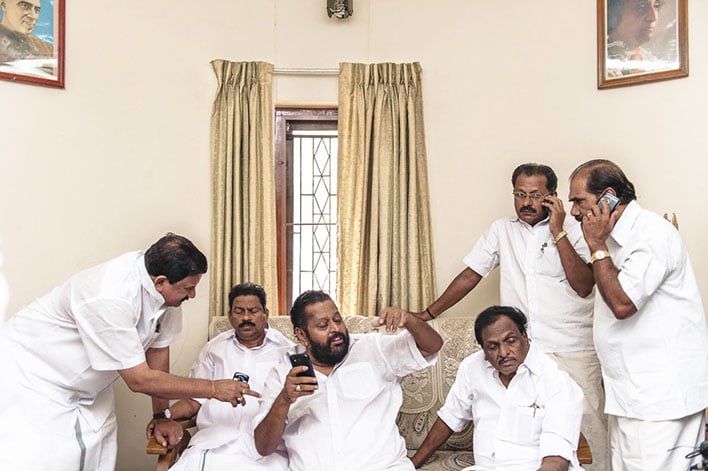
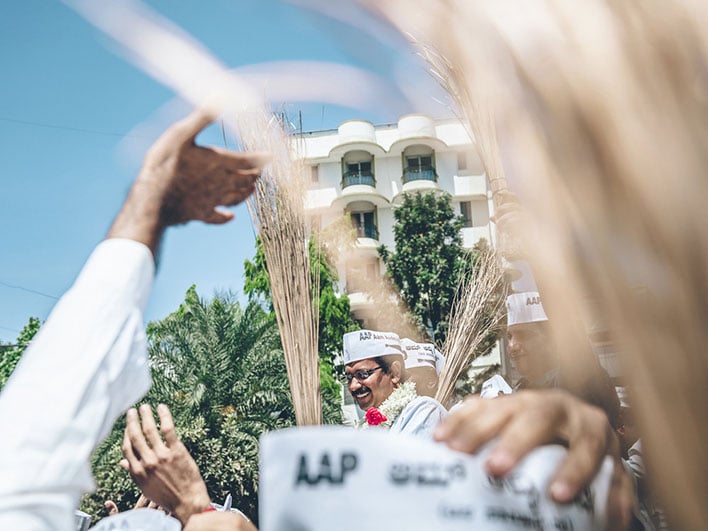
The Last Days of Manmohan - Mahesh Shantaram

The Last Days of Manmohan - Mahesh Shantaram

5) You and your wife have actively collected photography books – I am totally envious of your collection by the way – which 3 books would you simply not part with and why?

They would be books with personal stories. I absolutely love Will They Sing Like Raindrops or Leave Me Thirsty by Max Pinckers. Max and his girlfriend Victoria (whom I equally credit for the work) came home one evening and left the dummy on my table. I sat through the night pouring over the book and by morning, I was its greatest fan. It's a book about a topic that's close to my heart – about love and the freedom to love and how grave is the threat to both.

Then there's Paul Gaffney's We Make the Path by Walking. I bumped into Paul at the Belfast Photo Festival in 2011. Later when he published his book, I was happy to recall our wonderful conversations and wanted to keep it as a memory. Not everybody gets minimalist photo books right. Paul did.

Lastly, I'll fight to keep anything by Alec Soth. I love Niagara, and Broken Manual is special because I acquired one from a collector as a present for Vidya on our hundredth anniversary or something.

6) You are also known to open your house to strangers who are interested in peering through your collection. How did you spring upon that idea and how has that been received by the public? Was that a way to get your name known? If so, bloody clever!

The implied threat of opening our house to strangers never occurred to us until a journalist used that as her opening line in a story about us. That certainly got my mother worried. Our idea was to simply share our growing library with those who cared enough and to spread the love for photobooks in Bangalore. I'm reminded of that Irving Stone quote: “There are no faster or firmer friendships than those formed between people who love the same books.” The Open House Photobook Library also serves great coffee, by the way. Some people come for the books and go away with renewed appreciation for traditional south Indian filter coffee.
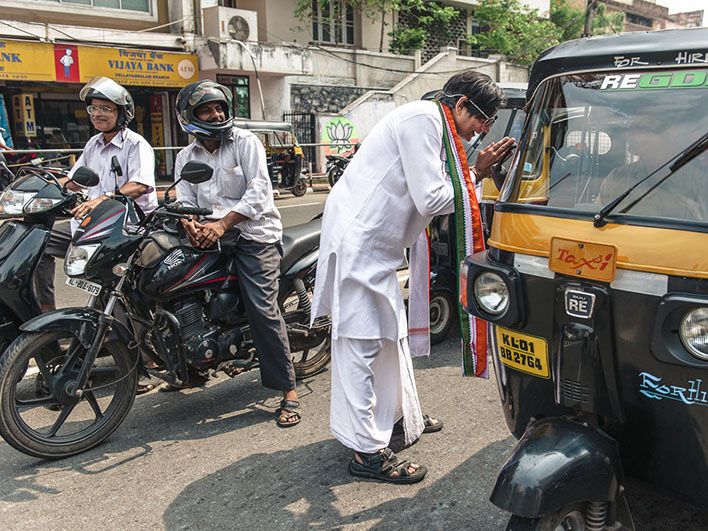
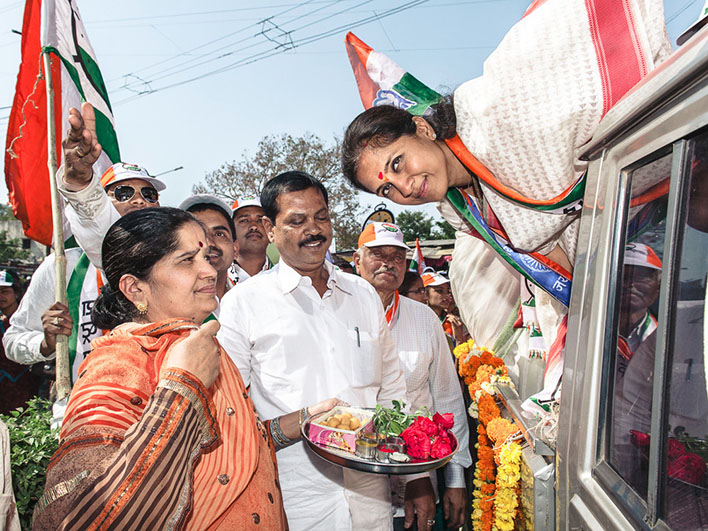
The Last Days of Manmohan - Mahesh Shantaram

The Last Days of Manmohan - Mahesh Shantaram

7) Now that the elections are over and you have a body of work that sings, are you going to remain an editorial photographer or are you heading back to photograph weddings in India and abroad again?

So much of what passes as political photography in India comes from the news media. It merely corroborates that an event X happened at location Y with leader Z in attendance, exactly as the caption reads. During these recent general elections, there was a surge in independent work, but sadly, most of it was the “hey look who I got to hang out with!” kind and lacked voice or acumen.

The politics of India is a large and complex system that has many layers to peel and penetrate. Politicians seem like mythical gods but they are human beings with weaknesses. I don't want to limit my work to being just about Elections 2014. By revisiting the electoral process through many more elections to come, I'm hoping to gain and share valuable insight into the nuts and bolts of Indian democracy, probe the relationship between politicians and the people, and construct a pan-Indian picture of our political landscape.
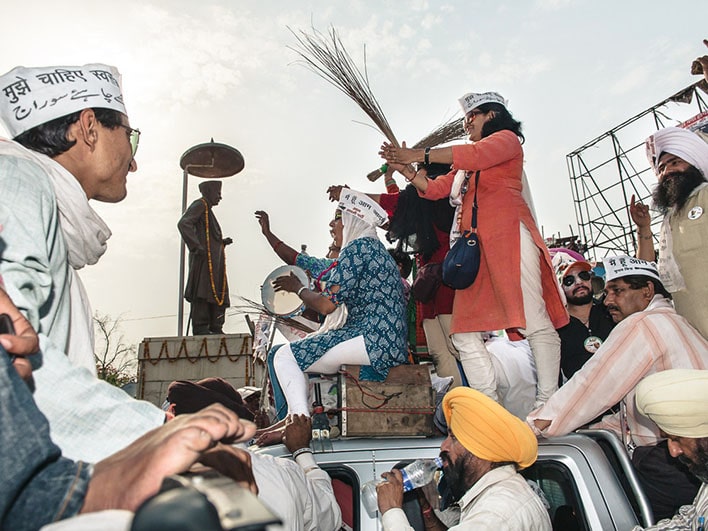
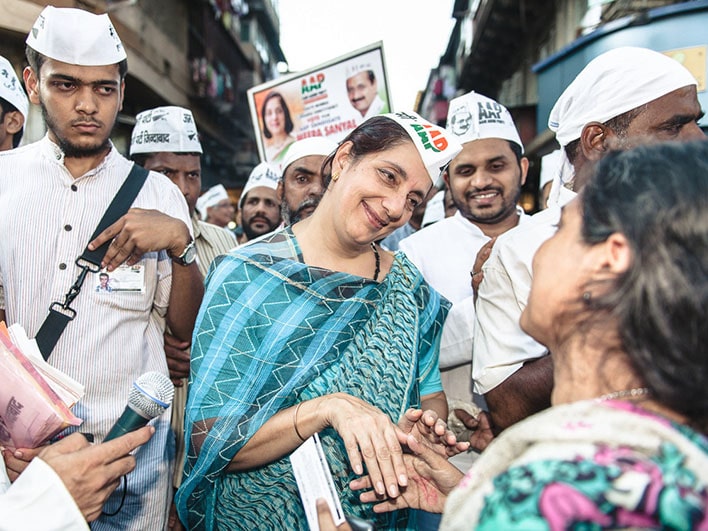
The Last Days of Manmohan - Mahesh Shantaram

Last Days of Manmohan - Mahesh Shantaram

8) Let's talk about your ascendency in the photo world, at least in the Indian subcontinent (I know you are known around the world now too). How has that been received? Do you see yourself as being a part of the “new guard”?

I don't know if I'm part of any “new guard” as much as I'm against the “old guard”. I'm not afraid to take a stand against old ways of holding up bastions of privilege and new ways of suppressing personal freedom, creativity, and independent thinking. I guess this general attitude has defined my public identity and influences what I produce as a photographer.

9) There are more photographers in India now than ever before. How do you plan on staying relevant? What are your plans to stand out among that crowd?

My formula to stay relevant is to keep abreast of what's happening in the world around me and be sensitive to what provokes me to respond. That response will be through my photography because it is all I know to do.

10) Now that you have a great amount of experience, how are you looking to pass that on to the next wave of eager photographers?

In the same way that so many truly great photographers passed on their experience to me – by constantly putting quality work out there.
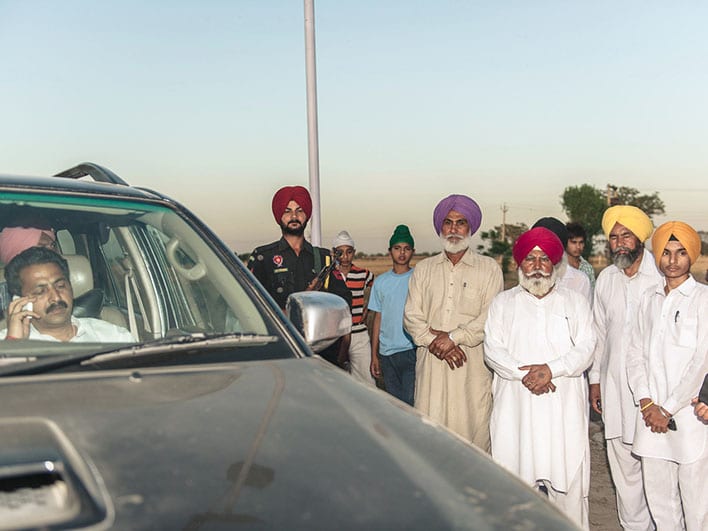
The Last Days of Manmohan - Mahesh Shantaram

11) Going back to your series, “The Last Days of Manmohan” (which refers to the last waning days of a beleaguered Indian Prime Minister, Dr. Manmohan Singh), do you believe you have created a document, a work of art or something in-between? How useful do you believe these images will be in the future?

When I set out on a backpacking trip across the country to bear witness to those historical elections, my intention was to document the politics of our times in all its rawness. Only time will tell whether this series will be valued as historical documents. But there is a method to how any work is launched into orbit. I will be shooting more to expand the scope of the work, take it to new audiences (via exhibitions and contests, for example), and edit and re-edit until my eyes pop out. That's how work is strengthened over time. A serious photographer's responsibility to his or her work has barely begun once the shooting is done.
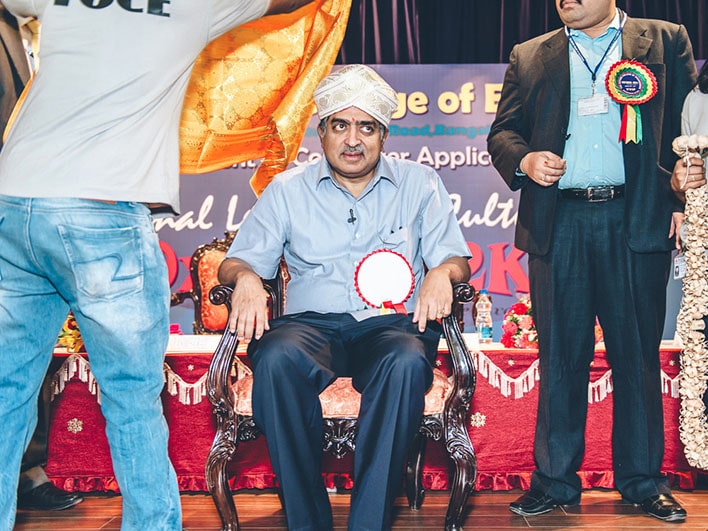
The Last Days of Manmohan - Mahesh Shantaram

12) There is one frame that I love (image above) – the one of Nandan Nilekeni – where he looks so unsure of himself. In US terms, that would be the time when Nixon was wiping away his sweat during the first televised Presidential debate against JFK. It has that sort of weight to it. Tell us a little about how you came to make that image? Were you reading his body language the whole time? Did you expect that moment when a politician is felicitated with a shawl and just happened to capture him?

Seshu, I'm sure you know this ritual in south Indian Brahmin weddings called the “kaashi yatra” in which the bridegroom is packed off and sent to Kashi to lead the life of an ascetic. It's a mock ritual, of course, but the guy is never really prepared for the absurdity of it. The fun of photographing a kaashi yatra is not to merely prove that it happened, but to be able to preserve the groom's awkwardness for posterity.

I could smell a kaashi yatra moment when the very corporate Mr. Nilekani was about to receive an Indian style felicitation.

13) What motivates you to make images? Why is it important for you to create them? Who are they for – you or the general public?

I absolutely love photography's unique and mysterious expressive qualities, the kind that Stephen Shore describes as “visual thinking that does not require any words”. I love how photography gives me free pass to interesting places and situations where my presence would otherwise be hard to justify. I love the image collecting experience of a long-term project that gives me ample time poke at complex questions in life. It is at once a luxury, privilege, and sacred duty to be a photographer. I love it. I'm happy to serve others through my photography, as long as I'm the one with the first-hand experience.
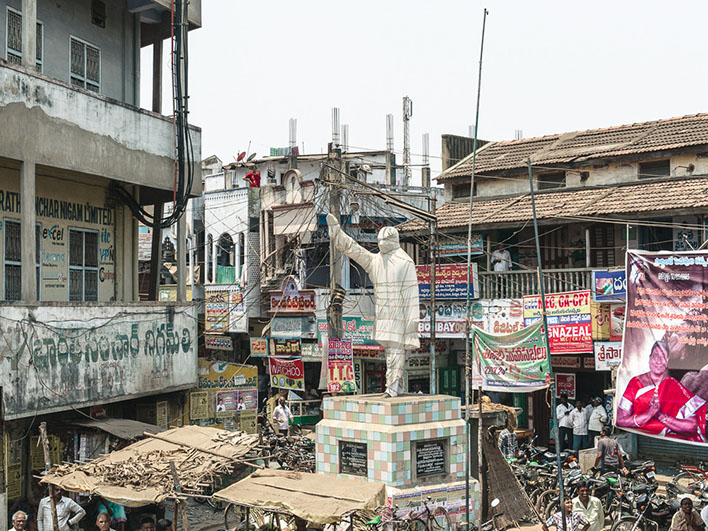
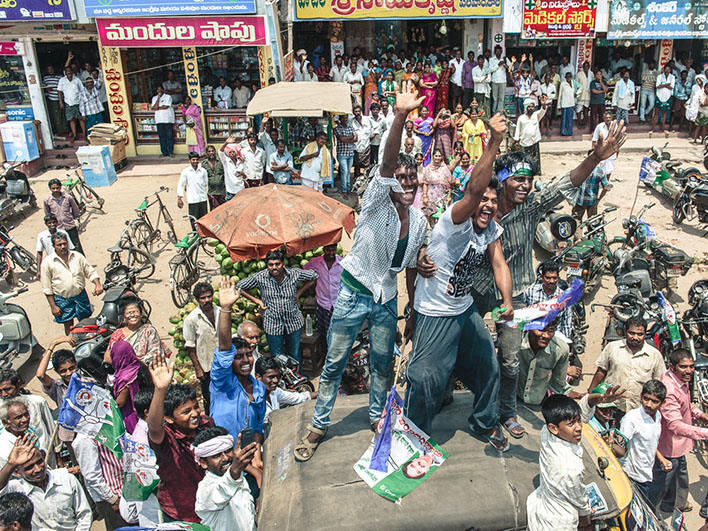
The Last Days of Manmohan - Mahesh Shantaram

The Last Days of Manmohan - Mahesh Shantaram

Filed Under: Documentary, Home Middle Left, Interviews, Photography Tagged With: documentaries, Documentary Photographer, documentary photography, documentary wedding photographer, wedding photographer

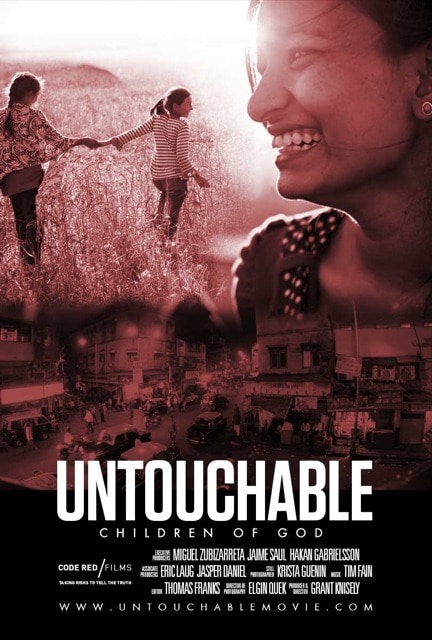
Untouchable: Children Of God, A Documentary About The Sex Slave Industry In Nepal & India

September 5, 2013 by Seshu | Editor & Publisher

Krista Guenin, a wedding photographer based in Boston is on a mission to end the sex slave industry in Nepal and India.

I recently chatted with her about Untouchable: Children of God, a documentary project she is looking to complete by the end of December of this year.

Thousands of Nepali minors are forced to sleep with more than fifty men per day; they are locked into rooms or cages where they are beaten, starved, drugged, burned and raped by their captors and countless men who use and abuse them.

What will strike you the most about Krista is her commitment and conviction to help these girls out. To her, and this struck me most profoundly, it simply makes sense to use her skills as a photographer – what she refers to as a “gift from God” – to better people's lives.

It's not an easy commitment to make. She could have just as comfortably decided to simply photograph weddings in New England and been quite content. But she chose to step out of her comfort zone a number of times, to connect with these girls from India and Nepal and to tell their stories so that we may see them as human beings.

Untouchable: Children Of GodWhat will end the sex slave industry in Nepal and India? Conventional wisdom points to first changing a mindset among men. And this documentary, Untouchable: Children of God, aims to do just that.

Whether you are a woman or a man, I urge you to support this project. Krista and her colleagues are about half way there right now. Help them reach their goal to raise $50,000 so that they can finish this film and screen it in Nepal, India and more than likely distribute it worldwide.

To learn more about this project, please visit Untouchable: Children of God. If you have questions for Krista, please step up and ask them below. She has promised to come back and respond to you.

We all have a responsibility to do something. Every day that we delay another girl dies. The situation is urgent, and this film spotlights ordinary people compelled to take extraordinary risks for the cause of freedom.

Untouchable: Children Of God by Krista Guenin

Untouchable: Children Of God by Krista Guenin

Untouchable: Children Of God by Krista Guenin

Untouchable: Children Of God by Krista Guenin

Untouchable: Children Of God by Krista Guenin

Untouchable: Children Of God by Krista Guenin

Untouchable: Children Of God by Krista Guenin

Also, are you pursuing a personal photography project like Krista? Please feel free to tell us about it in the comments section below or email me directly.

Filed Under: Documentary, Home Middle Right, PhotoBlog Tagged With: Documentary, Documentary Project, India, India And Nepal, Krista Guenin, mission, nepal, Sex Slave, sex slavery, The Sex Slave, Untouchable: Children of God, Untouchables

Interview With Documentary Landscape Photographer, Marc Wilson

June 19, 2013 by Seshu | Editor & Publisher

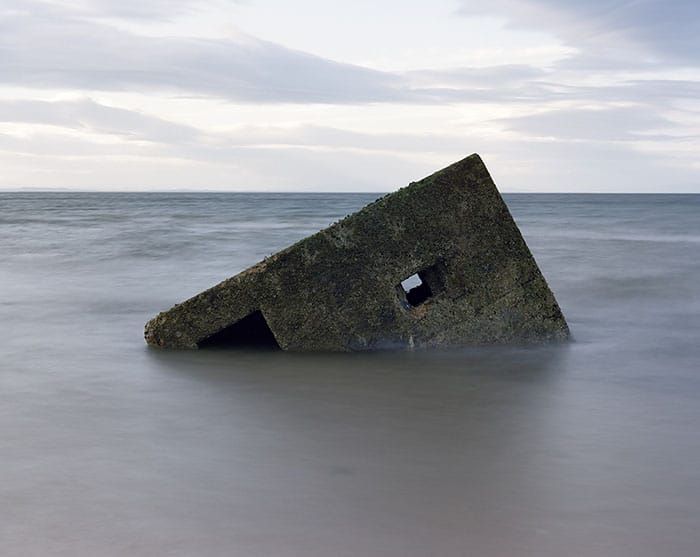
Working in the genre of documentary landscape photography, Marc Wilson looks at the memories and histories in the landscapes that surround us, and man’s interaction within it. He has exhibited in many solo and group exhibitions, both in the UK and internationally; in Milan, Grenoble and New York. Exhibitions include: The Terry O’Neill Award, 2013, The Royal Armouries Museum in Portsmouth and Leeds, the inaugural solo shows at the Back Hill and Now Showing galleries (London), a solo show at Focal Point gallery, Southend and group shows at Art 2001, Photo2005, The Photographers Gallery, The Association of Photographers gallery and Lucy Bell Fine Art.

Findhorn, Moray, Scotland. 2011

An Update From Marc Wilson:

“To coincide with the 75th anniversary of the end of WW2 I am this year publishing a 3rd edition of the photo book The Last Stand. The first 2 editions sold out and having the publishing rights back means I am able to make this 3rd edition in a different format with a number of new images and new design.

This new smaller softcover format also makes it more affordable which is something I’ve always wanted to do with this book in these later editions.The new version will start at only £25 but is currently £20 during the pre-order. There are print and special editions options also.”

Throughout all of my photographic work, I feel it is important to create visual reminders of our histories and the stories they contain.

These visual markers then give us the trigger for story telling and remembrance…which is ever more important as the number of individuals who lived through these histories grows ever smaller each year.

In many cases, the photographic document will become the only visual record of these places and the connected stories as many defences are subsumed by sands or water, or some even, pulled down and removed.

Many people whom have bought the book of the work have told me how they now have, or wish to, visit these places.

For all of these reasons I feel driven to make work like this, work that I hope triggers discussion, storytelling, inquisitiveness, remembrance and thought.

Pre-order the 3rd Edition here.

You are called a ‘documentary landscape photographer' – is that a term you came up with?

I can’t remember where I read the expression first but it was about five years ago I think. I had always struggled slightly with describing my work as it did not seem to fit into any conventional genres but the term ‘documentary landscape’ desribed it perfectly.

Do you feel your work echoes the work of those landscape photographers who have gone before you or do you think your work stands on its own?

My work is very subject specific in that I seek out particular objects and structures within the landscape and the stories behind them, as opposed to either the urban sprawl or the greater landscape itself. The landscape does though play an integral role in my work, as both the background and container for the subjects. Whilst it could be seen to have echoes of the work of John Davies and Stephen Shore it probably more closley echoes the ‘New Topographics’ work of photographers such as Joe Deal and Robert Adams.

If you were to pay homage to any one landscape photographer, who would it be?

It would have to be John Davies … not a traditional ‘landscape’ photographer of course but I do find his work of ‘our landscape’ very inspiring and images that I can return to again and again, I think because of the human interaction found within.

Tell us about The Last Stand. What motivated you to start that project?

The seeds of the work came out of an older piece of work I produced called ‘Abandoned’ in 2003. Two locations in this work had military significance and I found myself returning to them (visually) and wanting to explore the subject matter further, and the more I did the more important it became to me that it was a story that I felt compelled, as a photographer, to tell. The work then became self motivating with each location visited and story told.

What have you discovered about yourself the most as you have gone through this project?

This work has really made me realise how important a photographer can be … not of course in terms of him or herself but in the subjects that they document, the stories and memories they have the ability to tell, and the importance of this. As a photographer I have a great responsibilty to tell these stories and the weight of that is what drives me on. The idea that work I produce is seen by others as ‘vital and important’ is a wonderful feeling.

Do you identify yourself as a photographer or an artist or is it a combination of the two?

I used to call myself a photogapher, then when I started working commercially I tried to separate the two strands into ‘photography’ and ‘art’ but today I am really quite comfortable with just being a ‘photographer’ and not trying to justify any diffeence to myself (or others). At the end of the day it is just a label but a bit of definition is no bad thing. I think the comfort of the word ‘photogapher’ has come as I feel more confident in the work I do and its place in society.

Studland Bay I, Dorset, England. 2011
Studland Bay II, Dorset, England. 2011
Newburgh I, Aberdeenshire, Scotland. 2012

Newburgh II, Aberdeenshire, Scotland. 2012
Les Landes, Jersey, The Channel Islands. 2013
Reighton Gap, Yorkshire, England. 2012

Cramond Island, Firth of Forth, Scotland. 2012
Findhorn, Moray, Scotland. 2011
Lossiemouth I, Moray, Scotland. 2011

Lossiemouth II, Moray, Scotland. 2011
Sainte-Marguerite-sur-mer, Upper Normandy, France. 2012
Wissant I, Nord-Pas-De-Calais, France. 2012

Wissant II, Nord-Pas-De-Calais, France. 2012
Hayling Island, Hampshire. England. 2013
Torcross, Devon, England. 2011

Loch Ewe, North West Highlands, Scotland. 2012
Spurn Point, Yorkshire, England. 2012
Arromanche -les-Bains I, Normandy, France. 2012

Arromanche -les-Bains II, Normandy, France. 2012
Brean Down II, Somerset, England. 2012

If there was one museum where you would like your images to hang permanently which one would it be and why?

It’s probably no great surprise but I think for The Last Stand it would, in the UK, have to be the Imperial War Museums. Simply that it seems the most appropriate venue to hold the images on a permanent basis.

Your images are quiet. They are devoid of humans, yet are full of suggestions that humans have inhabited that particular place in some interesting ways. Even your portrait say more about the space your subject takes up than the subject themselves. Is this your mission? If not, what are you trying to say.

In terms of this particular work it is very important for me to make sensitive and subtle images that are respectful of the memories I am depicting. There is no need to add ‘photographic glamour’ to these subjects. I have always been interested in the memories and histories that the landscape and objects within it can hold. To me the suggestion of human presence is what holds my interest more so than a physical presence. I feel it allows a wider audience to imagine themselves in these places. I think that is where my work differs from more traditional documentary photography and photojournalism. It is telling these same stories but in a different way and allows me to look at historical work.
As for my portrait, I guess I set it up in the same way, without really realising it!

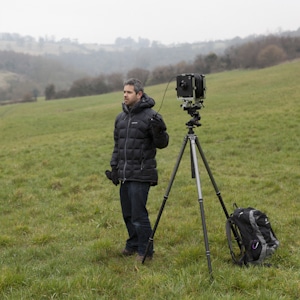
Marc WilsonI see you are using a 4×5 (or it is 5×7) view camera for your work in The Last Stand. Is that your first choice for your commercial work as well? What is it about his particular format that you like so much?

It is just the most appropariate format for the work, allowing the rise and fall that I need for the ‘architectural’ elements within the images and also the large film giving quite beautiful and subtle prints. It also works best for the quiet, sensitive and considered approach the work requires. Commercially I shoot digitally but still using shift lenses.

How did you get your start in photography? And, why have you spent a good deal of your own money pursuing documentary projects? What compels you to do what you do?

I studied Sociology at University and my final dissertation included elements of image making and photography and from there my love for the medium grew. I then went on to study at both degree and MA level. I spent some years teaching before starting to work commercially also about 7 years ago. It was only about 3 years ago that I felt I had ‘earned the right’ to start working on these projects again.

To me the story is everything. It is very difficult to get commissioned to produce this scale of work so the funding has to come from somewhere, in this case a combination of self funding and crowdfunding. The first stage of the work I funded 70% and crowdfunding 30%. This second stage will be more the other way round. My hope is that this work will go on to fund the next through print sales and books. (I am starting discussiosn about a printed book of the work very soon).

That said I am currently in the very early stages of discussion about continuing The Last Stand outside of Northern Europe and away from the second world war so it can happen.

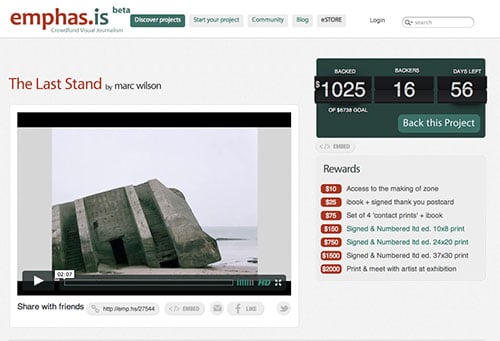
If this project by Marc Wilson resonates with you, please consider supporting his project, The Last Stand. You can make a donation here on this emphasis page.

Marc Wilson's The Last Stand Documentary Landscape Project On Emphas.is

Filed Under: Documentary, Featured Post of the Day!, Interviews, Photography Tagged With: Documentary Project, John Davies, Kurt Markus, Landscape Photographs, Last Stand, Marc Wilson, The Last Stand

An Interview With Documentary Photographer Zun Lee

June 6, 2013 by Seshu | Editor & Publisher

Zun Lee is a documentary photographer and a doctor. You can find some of his work also on this Flickr page. Zun was recently interviewed by New York Times about his project documenting African-American fathers and their relationships with their children. Check it out! Follow Zun on Twitter too!

Zun Lee | Documentary Photographer1) You say this in your bio: ” I was trained in a profession in which humans at their most vulnerable grant permission to a stranger to invade their privacy. As a result, I have always had an intense interest in the dynamics of power, trust and control when it comes to human interaction.” What profession is that? Are you referring to photography? Is this sense of vulnerability in the back of your mind every time you photograph someone – stranger or friend?

Being a physician definitely plays a part in how I go about interacting with people on the street. I’m not referring primarily to photography. For me, being a photographer is not something you “do”, it’s who you “are” as an artist and as a human being. So, yes, this notion of interaction and exploring aspects of vulnerability is constantly in the back of my mind.

When I refer to interaction between the photographer and the subject, I don’t necessary mean actual verbal communication taking place between two human beings. Even in street scenes or portraits featuring a single human being, the “subject” isn’t necessarily that human being. Our thoughts and behaviors are affected by how we move through the world, so the environment and how one relates to it at any given moment in time also play a part in that interaction.

Of course, the kind of interaction I seek on the street can take the form of actual verbal exchanges, and it is often the case for me. Sometimes, it’s subtler – a nod, a glance. But most of it happens invisibly – A feeling, emotion or state of mind you may become aware of in a particular moment and that you project into the world: in some cases, curiosity, empathy, love, optimism. In other cases discomfort, fear, doubt. Folks that know me personally often hear me talk about “energy”, something you intuitively feel in your gut as you survey your environment for picture-making opportunities.

Photographing people on the street, no matter how “interesting” or “beautiful” the subject, that alone doesn’t do it for me. I would like for the viewer to be able to discern what kinds of thoughts or emotions were involved when I pressed the shutter. Or at the very least, make up their own story about what is unfolding.

2) How do you approach strangers? What do you say to them? Or, do you simply watch, capture and move on like Bresson did? Indeed, I am curious to know how you operate. Tell us.

It’s not a one-size-fits-all approach. It all depends on who or what I see, and what that particular interaction may yield. Sometimes, it happens in a fraction of second – I snap and move on. Sometimes, it can take several minutes of striking up a conversation and then catching the individual in certain moments in which they share a part about themselves that wouldn’t have been easily evident otherwise.

“… Can I take your picture” is rarely a conversation starter. Getting creative is key. The subject also has to get interested in you – it works both ways. Humor helps a great deal. Being honest and upfront about who you are and why you’re doing this works most of the time. Rehearse your lines in front of the mirror or with friends – if they’re not buying it, you’re likely going to be in trouble.

Something that almost never works is being sneaky. Keep it natural and always be prepared to deal with rejection. And be courteous and thank them, even after a “no”. That’s the best policy.

3) What you and I share is this – and I hope I am on the right track about this – that there is innate beauty in everyday life that goes without being photographed or is not noticed by most. Do you agree?

Completely agree with you. I’m a strong advocate of finding beauty in the mundane, everyday scenes that unfold before us. That said, “beauty” doesn’t mean “beautiful”. I’m referring mostly to scenes or moments that remind us of how precious life is in all its facets – the good, bad and the ugly. And again, I think the best way to go about it is to approach the streets with a sense of wonderment and openness to its possibilities. Or, as one of my mentors once said to me, “Shoot with love, and you will shoot with purpose”.

4) Why is that we don't celebrate those moments where people reveal a little bit more about themselves for that split second? What causes us to cover ourselves up? Is it simply fear of being judged?

I think overall, vulnerability is seen as a weakness in our culture and surely, nobody wants to be judged as weak. We don’t publicly show and tell, we don’t give broadside. Also, I think life itself has gotten a lot tougher for most people in North America in the last few years – people generally have very little to smile about and lives have become increasingly hectic. When we get up and get dressed every morning and leave our homes to go to work or to run errands etc., the last thing on our mind is to reveal who we are and how we feel. We’re constantly stressed, have very little downtime, try to get from point A to point B quickly. We don’t stop to smell the roses, we have our game face on. We put forth this impenetrable façade to prevent us from sensory overload and avoid engaging with the outside world at any cost. Headphones on, eyes on our smartphones. Minds on our own business.

Zun Lee | Documentary PhotographerIf you think about the implications of that, today’s widespread notion of “candid photography” is really a misnomer. Think about the very definition of the word “candid” – frank, open, honest, transparent. Given what I just said above, people are anything BUT candid in public. Is taking pictures of people in that state of hurried indifference, without their knowledge and/or consent and without the subject looking into the camera really “candid”, then?

For me, candid means breaking through that emotional fortress and finding some kind of truth underneath that. Some wait for these decisive emotional moments. Others surprise and startle their subjects. I’m usually more about some kind of subtle interaction.

When time or the nature of the exchange permits, I show the pictures to the people I just photographed. Sometimes, I get “I didn’t know I look like this” or “Did I really make this face” as a positive reaction, which tells me I was on to something.

5) Your opening image in your “Street Portraits” portfolio is of a woman deep in thought, but there is a reflective, double-image of her. The image is rich with complementary colors and your use of a very shallow depth of field forces us to “stare” back at this woman. It's an arresting image. Do you know who she is? Do you engage with people once you photograph them? How aware was she that you were photographing her?

Thank you for the love and appreciation, Seshu. I was spending a day with fellow street shooters Ourit Ben-Haim, Rena Ginzburg, and Michael Martin in Midtown Manhattan (group walks are usually not my favorite thing to do but it works with certain shooters). We all saw this lady in Midtown Manhattan and were drawn to her immediately. She was VERY aware of our attempts to photograph her and she definitely did not appreciate it. The situation could have gone wrong easily, and somehow I managed to explain why we found her intriguing and why we wanted to take her picture. She eventually relaxed and allowed us to do our work. This particular shot took a while to get, as I wanted her to be a little more settled down and find an angle that gives me more context in terms of color and texture. I gave her my card and obtained her email address, and sent her the picture a few days later.

I think the latter is always a good practice – to return some of the goodwill by sending people the pictures you took, especially if you engaged them in a longer conversation. Or if email is not an option, make prints and mail them, or keep them with you as you roam the streets, ready to hand them out if you happen to run into the same individuals again. It happens more often than not.

Zun Lee | Documentary Photographer

Zun Lee | Documentary Photographer

Zun Lee | Documentary Photographer

Zun Lee | Documentary Photographer

Zun Lee | Documentary Photographer

Zun Lee | Documentary Photographer

Zun Lee | Documentary Photographer

Zun Lee | Documentary Photographer


6) Do you get any grief from people you photograph on the streets? I am curious to know how you deal with conflict on the street.

… All the time! People routinely yell and scream, sometimes fists get swung my way, and I’ve been stopped and detained by cops who were not aware of the legality of what I’m doing. And even without those moments, you have to be prepared for a lot of rejection. It’s not a relaxing pastime.

I’m actually quite shy and conflict-averse, so shooting street is definitely nerve-wrecking to begin with. I can’t tell you how many times I missed a shot by passing by a person or scene I really wanted to photograph but couldn’t muster the courage to do so. I’ve gotten better at standing my ground and negotiating with people to get what I want, but in the end you don’t want to manipulate them or cause unnecessary conflict. So if the answer remains no, you got to move on.

In general, I’d say pick and choose your battles. Over time, you develop a pretty good sense of which individuals you can push beyond the initial “no” and which ones are best left alone. Familiarity with a certain neighborhood also plays a role. When the locals see you coming back time and time again, it establishes a certain level of trust. By that token, it also helps sometimes to stay put in a certain spot for a while and interact with the people in the area until they relax and won’t notice you anymore.

7) The human face is perhaps the most interesting thing to photograph. What got you started on this mission to photograph people on the street? What drives you personally to observe and then to photograph these human interactions?

Agreed, for me it’s all about the face and the eyes. I think everyone has a story to tell, and that story often manifests in the face and eyes. I just have this desire to get in on that story, to uncover at least an aspect of it. But in the end, it isn’t really about “their” story. I think of my street photos as mirrors to my soul – they often reveal more about me and my state of mind than about what’s happening in front of me. Going back to the idea of “energy”, I often gravitate toward individuals that mirror my own realities back to me. It’s very unnerving to put that out there with certain frames, but it can also be liberating.

I first ventured into the streets about 4 years ago and was just happy to experiment, get to know my gear. I didn’t even know much about street photography then, had no idea who Cartier-Bresson, Winogrand, or Klein were. I went shooting every day after work, and on most weekends, more or less. At first, it was without much of a plan other than having an interest in photographing strangers, except I didn’t really know how to go about that. As mentioned, I’m quite shy, so the whole experience was terrifying. I just had a desire to learn how to do that, so I kept practicing. I tried with longer lenses at first and quickly realized that approach doesn’t work for me. The physical distance also creates emotional distance, and it was not a satisfactory experience at all.

Ironically, I think my shyness actually led to this desire to be as close as possible with people – by being in the same space, eventually people will let you into their world, their lives, their story. And being so close, it forces you to do the same – you also share a piece of who you are to enable the picture that you seek to make. It’s not about “stealing souls” or being an unobtrusive fly on the wall. To me, photography is about creating a relationship, whether for a split second or for a longer period of time, and whether it’s with people, animals, or inanimate objects. Your visceral reaction to a given moment – it matters as much as what you see in front of you. There’s a brief but powerful moment of someone expressing the notion of “I don’t know who you are but I trust you”, and that is a real privilege to be granted. I think being part of that “give-and-take” can be exhilarating, even addictive.

8) On a technical side, I see you use a Nikon D700. Do you switch around with different lenses? Which ones and why?

I use the D700 and the Ricoh GRD (GRDIV at the moment). As mentioned, I used telezooms initially, and now use them very rarely. 35mm or wider is my comfort zone, and my favorite Nikkor glass is the 14-24mm f2.8. The Ricoh is my always-on-me camera, 28mm is a perfect all-around focal length for me. It’s how I see the world, and the ergonomics of the camera suit my style of shooting. I’ve also begun using the Olympus OM-D (also with lenses 35mm or wider), which offers a great balance in terms of portability and image quality.

9) Your post-production is realistic. Colors pop and black & white images are some of the best I have seen online. Do you do your own post-processing? Is much of that learned on the job or did you go to school for it?

Thanks for the compliment, Seshu. I used to paint, so perhaps that background helps in the way I approach processing. I do my own post-processing, and it is all self-taught, lots of trial and error. I definitely am not very knowledgeable as a user of imaging software and you’d be appalled at some of my workflows! In terms of processing, I’m primarily driven by the desire to make an image look and feel like what I actually saw, as closely as possible. I definitely have a penchant for dramatic processing at times, but I never want it to look surreal or over-processed. Sometimes achieving the look I want takes just a few minutes; sometimes it can take up to an hour per frame.

10) I am always curious about how anyone can make a living as a street photographer. There are all kinds of copyright and model release issues that one has to deal with now. What are you doing to overcome all those challenges when marketing your work? Or, is your work simply a way to get your foot in the door for corporate work that calls for a “street vibe”? Tell us more about your plans to be represented. How do you make a living as a photographer?

That’s the $64,000 question, isn’t it? The whole industry is in flux, traditional business models are collapsing and entire job categories disappearing. Honestly, I haven’t really been in this field long enough to move it from a serious hobby into a full-time lifestyle, much less a life-sustaining one. There are no formulas, or transparent roadmaps. A huge part of being a creative visual professional nowadays will have to revolve around how to forge your own creative career path, and I am still in the process of figuring that out for myself.

Copyright and model release issues – that’s definitely an ongoing challenge to deal with. Luckily for most street work, I find I don’t explicitly need releases to publish or exhibit the work. Making money from prints and books is a bit of a grey area but so far it’s not been a huge problem for me because I don’t do stock or commercial photography. I haven’t actively sought any commercial work, even though I’ve been approached to use my street shots for ad campaigns or shoot commercial projects with a “street” vibe. For my long-term documentary work, I definitely make sure model releases are signed.

What’s next for me? I know I want to continue to tell interesting stories and bring them to people’s attention. I don’t think I’m interested in being an assignment photographer per se; I have to really be personally connected to the work I’m doing or it becomes just another chore. I’m really drawn to photodocumentary and photojournalistic work – unfortunately, this kind of work is recognized less and less, and commercially not very viable on its own. So, I will definitely not quit my day job anytime soon to do this full-time. That said, I’ve embarked on some long-term projects, for which I’ve already received some great recognition by the photo industry and major publications, so it’s encouraging to know that I’m on the right path.

My immediate goal is to complete these projects, get them published, maybe do a few exhibitions, and continue building my name in the field, both as a photodocumentarian and as a street photographer. Then we’ll see where it goes. I’m still paying my dues, so I’m focusing on producing more work and getting better at it. Being able to join a photo collective with a social or humanitarian mandate would be an amazing opportunity. Gallery representation would be a great experience at some point. But most of all, I want to continue to enjoy making pictures and engaging people in the process. That is the main reward for me; any potential money and recognition is secondary.

If you enjoyed this interview and would like to see more like it, please Tweet, post a link to this article on Facebook and tell your friends. I am looking for more documentary photographers to interview on this site. Thank you!

Filed Under: Documentary, Interviews, Photography Tagged With: documentaries, Documentary Photographer, Lee, photograph, Photographing People, street photographer, Zun

An Interview With Documentary Photographer Darren Baldwin

May 26, 2013 by Seshu | Editor & Publisher

Thanks to my previous interviews with documentary photographers Jim Mortram and Brant Slomovic, I “met” Darren Baldwin, a documentary photographer based in Brighton, United Kingdom. In addition to being a documentary photographer, he is a pediatric nurse and a design director for a few websites. Follow Darren on Twitter: @BWDdrj

Darren Baldwin | Documentary Photographer

1) So, tell us a little about how you got your start in documentary photography. Is it an off-shoot from being a street photographer? What draws you to this particular genre of photography?

My dad is a videographer by trade, but has always been an avid and passionate photographer; he was one of my earliest visual influences. Interestingly, I recently found out my estranged grandfather (whom I never met) was a popular street portraiture photographer – it would appear that the apple never falls far from the tree; even if you never sat beside it!

In my teens I’d go out with one of my friends and take pictures using my father’s camera; I dragged all his darkroom equipment down from the attic and we’d spend hours developing images in my little dark room in the garage, taking time to mess around with developing times and trying effects (often with rather less than successful outcomes!).

It wasn’t until I met my partner Carrie that my passion for photography really became apparent again. When we formed DIGITAL bungalow, Kitchen Bitching and live.love.space. photography became a way of life. We’re really passionate about strong imagery on the sites, and as Carrie is the wordsmith it naturally fell to me to provide suitably beautiful images to accompany her words.

Whilst I have dabbled with landscape, product, macro, band, sports etc, my interest in street portraiture came about by chance the day that I discovered Vivian Maier. Everything changed when I realised that landscapes, seascapes, traditional portraits and conventional concepts of beauty just didn’t excite me. I found more beauty in Maier’s work than in anything I’d seen before; and I wanted to see if I could capture the same unexpected human essence that Maier did. I also went back to books I’d previously read, Araki’s ‘Lucky Hole’, ‘Radical Eye’ by Miron Zownir, ‘Im Auftrag’ by Snowdon and ‘The Seven Ages of Man’ from Hulton Getty. These small developments steered me into a ‘documentary’ style of photography.

2) You are now the second in this series of interviews who has an affiliation with the health industry. Is there anything in particular that makes you better documentary photographer because of your medical training?

That’s true. Brant Slomovic being the first! I agree with Brant in that I see the two ‘as completely separate existences’. However, after 10 years in adult emergency and 3 in paediatric emergency, you get a feel for situations and how they’re going to develop which is a good skill for street photography. I deal with conflict, anxiety, anger, sadness and happiness when I am at work, so I definitely think that helps. However, that doesn’t make you take better photographs, and nor does the camera you’re using.

3) In addition to being a pediatric nurse (what is a & e?), you are the design director at DIGITAL Bungalow, Kitchen Bitching and Live Love Space. First, how the heck do you find the time to juggle all that and secondly, how do your design sensibilities inform your documentary approach?

A&E is the UK equivalent to your emergency rooms (Accident and Emergency).

My partner Carrie is a writer and workaholic, very driven and always moving forward. I like that, it kicks me up the backside and gets me moving too. So we started DIGITAL bungalow it quickly became something much bigger than we anticipated, then Carrie wanted to start another, and another, and another! As Design Director I oversee the sites, and deal with any design requirements the team might need. Carrie now runs DIGITAL bungalow Editorial Agency – so there’s plenty of design work to be done for her clients too. How do I fit it all in? Well … the revolution will not be televised.

I studied graphic design when I left school and get a lot of my creative sensibilities from my father which filter down into my photography, definitely. While I photograph a lot of people I also like, structure, form, architecture and symmetry. As a photographer I’m not one for setting up shots. I don’t overthink it – I just shoot and let the subjects do all the talking.

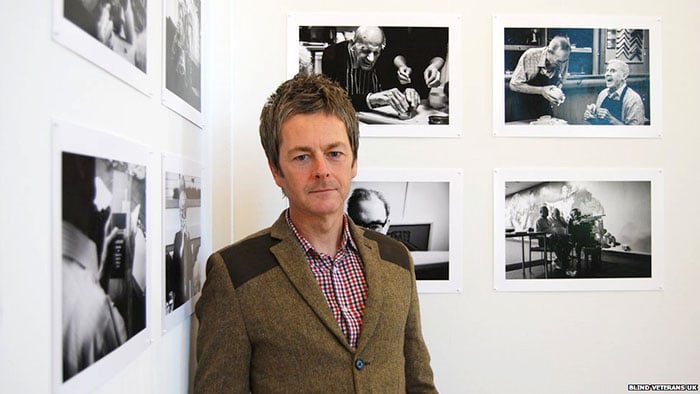
4) How and perhaps why were you so interested in photographing blind veterans? How did you get your start in that project?

Following my documentary series that captured the London Road area of Brighton and its inhabitants, I wanted to work on a new project that further challenged peoples’ perceptions of usual stereotypes.

The initial idea behind the Blind Veterans project was to challenge the the stereotype of a “hero”. I wanted to collect images that defy the clichéd young, muscular, bare-chested hero; instead allowing the viewer to recognise for themselves the once pivotal role of these now frail individuals. My subjects' lack of sight mirrors the way that society sometimes fails to “see” the elderly, or truly appreciate the influence their actions had
on the world of relative peace we are so lucky to live in today.

Darren Baldwin | Documentary Photographer

Darren Baldwin | Documentary Photographer

Darren Baldwin | Documentary Photographer

Darren Baldwin | Documentary Photographer

Darren Baldwin | Documentary Photographer

Darren Baldwin | Documentary Photographer

Darren Baldwin | Documentary Photographer

5) There is a certain aloofness in the subjects you photograph. If first impressions count, the one word that came to mind when I viewed your images is – “isolation” – am I right in assuming you are fascinated by how people are part of a community but still remain apart or isolated?

Absolutely. I do have a fascination with that aspect of our lives. We’re all so damn busy but there are people who can seem very alone. That’s not to say they’re unhappy – I believe there are many more facets to isolation than simple, abject misery. Contemplation, meditation, introversion … all these things can come from or lead to isolation. I’m interested in capturing both quiet moments – almost the pauses in between breaths – and diminutive moment when subjects see the lens. I love to wonder what it is they’re thinking – the multifaceted nature of the human psyche fascinates me – as it does many other people!

6) With very few exceptions, your recent work is all black and white. Why is that?

I just really like black and white. I love the deep contrasts. I like dark images. You don’t get tangled up in the colour.

Not everything works well in black and white, of course – and I love colour street work from people such as Matt Stuart, Justin Sainsbury, and Paul Russell. I am definitely influenced by Maier and Arbus’ work, but both my dad and grandfather worked in B&W, so who knows, maybe it’s in the genes.

7) Brighton, UK, where you live is a popular destination for tourists. Are your images mostly of them?

No.

8) Your images now live on Flickr. How helpful has Flickr been to attract you clients interested and willing to support your documentary projects?

I use Flickr because I’d rather spend time taking photos than building a website to house them.

When it comes to working with new people, new projects and potential backers – I like good old-fashioned word of mouth. I want my images to do the talking. It’s great if someone stumbles across you – but the internet is an immense space – I’m not expecting a “stumbler” to commission me for a massive project any time soon. Flickr serves as a quick and easy gallery – a convenient way of people seeing what my work is about. Hopefully people will see my work, and want to talk about it – and we’ll take it from there.

9) Other than Twitter, where you are quite active, and Flickr, where your images are hosted, do you use any other social media channel to market your work? Tell us about it.

Apart from Twitter and Flickr I have a facebook page. That’s it. No tumblr, no 500px, no Google+ nothing else. I don’t see the point in constantly repeating myself!

10) You mentioned that a new website is in the works. Care to tell us what the domain url will be and when we can expect to see it go live?

At the moment I’m so busy with projects that a website will just have to wait – it would be fantastic to have a proper online showcase but, as I said, for me it’s personal relationships that build really positive projects.

Do you know of other documentary photographers I should interview? Why not put them in touch with me? Simply direct them to this website! Thank you.

Filed Under: Documentary, Interviews, Photography Tagged With: Baldwin, Darren, Documentary Photographer, documentary photographers, documentary photography, street photographer

  • « Previous Page
  • 1
  • 2
  • 3
  • 4
  • 5
  • Next Page »

Subscribe To Tiffibox Treats!

Looking for a well-curated email newsletter that will leave you inspired and motivated about your photography business? Sign up below!

About Seshu

Seshu creates relaxed portraits of families and high school seniors in Avon, Connecticut. He also leads a successful headshot photography studio in Connecticut, helping professionals from a variety of disciplines project the very best versions of themselves. He created Tiffinbox as a way of inspiring photographers, to create better images and successful businesses. [Read More]

Email Templates For Headshot Photographers

Email Templates for Headshot Photographers

Recent Posts

  • How Capture One Changed My Event Photography
  • 10 Steps To Stay Positive In Times Of Great Stress
  • Why You Need To Read “Personal Branding For Photographers” Now
  • How To Master Your Website Content Step By Step?
  • Tony Taafe’s TNT Method For Headshot Photographers

Recent Comments

  • Stephen Davison on Are You A Business Owner Who Is Smart, But Stuck?
  • Ben A. on Don Giannatti Clinches The 8th Annual Tiffinbox Award
  • Dan on Don Giannatti Clinches The 8th Annual Tiffinbox Award
  • Donald Giannatti on Don Giannatti Clinches The 8th Annual Tiffinbox Award
  • Stephen Davison on G.E. Masana’s 6 Strategies For Wedding Photography Success
  • Naveen Kumar on Weddings In India Are More Than Being At The Right Place And At The Right Time
  • kartick on Weddings In India Are More Than Being At The Right Place And At The Right Time
  • Leonid Farbman on 6 Uncommon Trends To Grow Your Photography Business
  • Willow and Finch Wedding Photography on 11 Reception Tips To Help Your Wedding Photography
  • Web Designer Malaysia on How To Optimize Your Squarespace Website For Search Engines
  • Creastan on An Interview With Photojournalist G.M.B. Akash
  • Cindy Brown | Atlanta on An Open Letter To A Local Photographer

Become a Patron!

Copyright © 2026 · Tiffinbox · Site Design by Heather Mackan Creative · Built on Genesis