• Photography
  • Interviews
  • Business
  • Reviews

Tiffinbox

Inspiring Photographers

  • Home
  • About
  • Blog
  • Contact

An Interview With Documentary Photographer Jim Mortram

April 29, 2013 by Seshu | Editor & Publisher

Jim Mortram is a documentary photographer. That's perhaps the easiest way to describe him. The images on his website – Small Town Inertia – gripped me like a vice for their gritty portrayal of lives lived in rural England. I was surprised by how quickly I cared for those people Mortram photographed. There is compassion and clarity in Mortram's approach and it is a refreshing change from the synthetic and saccharine images we are all subjected to every day. Mortram has published a limited edition book called “Electric Tears & All Their Portent” – limited and sold out! Please follow Jim Mortram on Twitter.
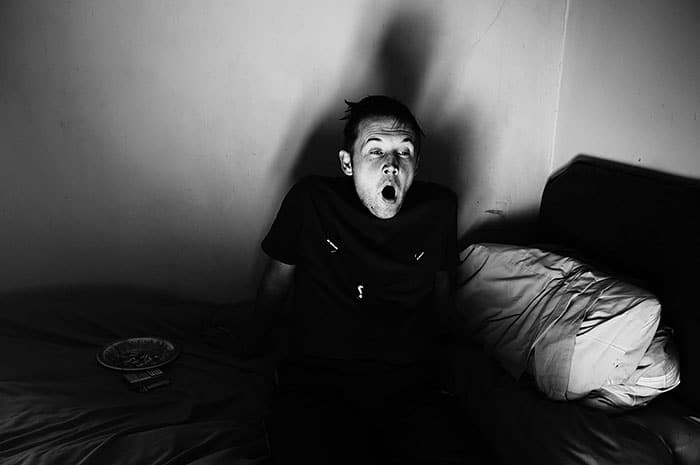
Small Town Inertia | Jim Mortram

1) Who are you and how did you get your start in documentary photography?

About six years ago I'd become quite insular. Working as a caregiver for my Mother in my family home; it's an intense situation, quite highly stressed, with odd hours. Before you're even aware of it, the ties you once had – friends and the connection to the outside word – erode. It's a subtle shift, and by the time I noticed, it was too late to cease that evolution. I was loaned a camera by a friend and immediately knew I had to document people. The challenge was where and how. I live in a very rural, low-population part of East Anglia, UK; I was tied to my duties as a caregiver. Long periods away from home to shoot were out of the question due to both responsibilities and financially. I hated the situation. I wanted to escape, wanted an escape for everyone involved … I wanted to click my fingers and make my Mother well, Father freed of the pain of seeing his wife in pain everyday but there was no way that was going to happen. After having this effect me profoundly it was then a long road of rebuilding everything.

One relationship really helped pull me out of my shell and pull my photography into focus. It was because of a person close to me, 2 doors from the family home, in fact. I'd known W.H. since I was a child. In his late 80's, I would visit often to hear his stories. Gradually I began to make portraits. He encouraged me greatly. The whole process was very organic and instinctive. He became ill with cancer, and I ended up being one of the last people to talk with him – certainly the last to photograph him. This experience really forged the understanding of why I had to document local people. I began to understand that everyone has a story; that they are all important. It also made me re-appraise my location and my relationship to it. I finally harmonized with where I lived. Where I had felt suffocated suddenly transformed into a place that was of the highest importance : Dereham, one of those small forgotten towns, with a distinct strata of the population that have also been forgotten.

I still work at home, caring for my Mother, that's never changed, I don't shoot for money, I fit shoots in and around duties etc. It's a big balancing act but like water finds it's way from mountains to sea, you find a way!

2) Do you have a sense of the documentary tradition – as in, have you studied it, or did this all come about naturally for you?

I'm an autodidact really, I studied fine art painting before being forced to quit early in my degree to return home to be a Carer. Regarding photography or documentaries I've always been aware of it and when I turned to it, it was a very natural extension of myself.

3) Why is it so important for you to document the lives in your own community?

I think this has been answered through the other Q&A's : )

4) How do you cope with the emotional baggage that usually comes with working in this genre of photography?

I could not see myself working in any other way than long form. Without the time invested, on both sides of the lens, I think I would document in a much shallower, ephemeral way, so taking months, years to constantly document and share it gives the series context, there is a evolution within the lives, to tell any story you have to do more than read chapter one you have to read from the front to the back cover. That's all far more important to me than how it might touch ‘me' emotionally, even if it and often is quite really stressful or saddening and you know if it did not affect me, touch me … I'd really worry.

5) How do you go about choosing people to photograph? How do you get access into their lives? Why are they so eager to tell their story to you?

I just ask … or sometimes I'll get a call from someone or someone who knows someone and wants to be involved. I always treat people, as I myself like to be treated. You can never feign nor fake interest in a person. I’ve never singled out people with an eye that they might make a good story for example; it’s a very organic evolvement. People are very giving and that humbles me greatly, my greatest debt is always to the person the other side of the lens. It’s such a great honor to be accepted and brought into another person’s life and given the access to document it. I’m sure I could work in a faster fashion but for me long form documentary is where my heart is. Often I’ll visit people and not even take an image, just talk and more importantly listen, and I listen more than I shoot. I have an equation that I always bear in mind talk more than you shoot and listen more than you talk and it serves me well. I break shoots up into periods of straight documentary and periods to shoot portraits, make interviews and shoot video.

Initially, for the people I work with it’s a way to have an opportunity, ANY opportunity to share their experiences and to be heard. It’s, I feel, a really empowering step for someone to make the decision to get involved, stay involved. It’s a way for many people to take a positive step, to maybe take some control where there might be a huge absence of any control in their lives. It’s also a mirror for many people, it might be the first time that they have paused for thought as every day is just surviving, enduring and when you live just to make it through one day to the next it’s often hard to distance yourself from that experience and take a moment for reflection.

6) Typically, how long do you spend photographing someone? When do you know you are “done” telling their story?

I'll shoot a person, their story forever, I don't think you can ever be ‘done'.

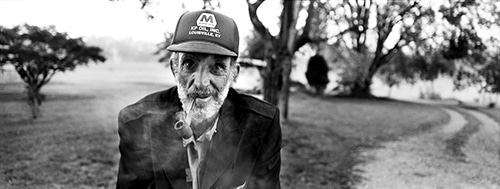
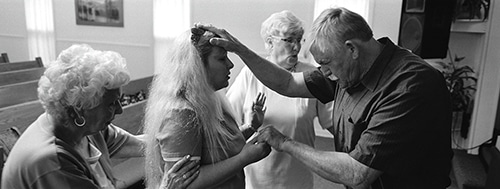
Small Town Inertia | James Mortram

Small Town Inertia | James Mortram

Small Town Inertia | James Mortram

Small Town Inertia | James Mortram

Small Town Inertia | James Mortram

7) Your images are almost always black & white. Was that by design or were you limited to black & white film? Do you shoot in color?

I get asked this a lot and there's a simple and fast answer and also one I might expound upon. When I started shooting I was using borrowed equipment, digital equipment, cameras, lenses and the monitor I had was broken, the colours were way off and no way to calibrate etc. so I turned the colour off and worked in mono. Mono suited me as I related to it having watched my Father hand develop images in the kitchen or the bathroom when I was young. My formative years were spent experiencing images in mono, newspapers, books from the library, most were featuring mono so that language was imprinted within me I think, the shapes within mono, the way composition is highlighted. I've never found a B&W image to be more abstract than a colour and I'm aware of all the arguments VS … likewise film VS digital … truth be told, from day one of shooting I'd planned to shoot colour (Film, medium format) portraits in tandem with the mono DSLR it was just a fact that I was not able to fund it immediately so I've had to wait a few years.

8) You've used social media quite effectively to spread your message. Which platform do you feel best helps you do that?

Twitter is amazing. On first glimpse it's easy to see it as quite an ephemeral platform, fast, impersonal but if you apply patience and dedication the friendships and relationships that have evolved from Twitter have been so rewarding, I've met and become firm friends with so many incredible people via Twitter. I've never seen the Internet as ‘other' to our non on-line lives, just different. It's like photography (or anything else) you'll get back what you put in and it's only going to be as honest as your own intent.

9) I can see how one could feel a sense of satisfaction narrating the lives of your fellow neighbors. But, what do your subjects receive in return for their time?

I've never felt satisfied, I feel driven, obliged, motivated to make photographs and share stories the way I do. It's all about addressing an imbalance, I find everyone around me is in a situation where they are subjected to prejudice or stereotyping, especially now via mainstream media and our current government. I have no satisfaction depicting lives, real lives lived that are sometimes filled with suffering, struggle … of course some stories feature great happiness, great strengths and endurances. As for the people I document, I never use the term or perceive anyone as a subject, I'd really have to ask them … were I to assume, I'd think as for me, it's good to have someone to talk to, share with, someone to listen and often the people I'm working with know they are never heard, never noticed and want to be, want an opportunity to have their life experienced rather than have it written about in text or policy by some far away pen that's no experience of their situation.
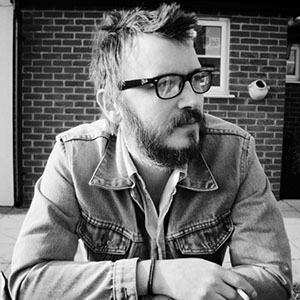
Jim Mortram10) You were accepted into Aletheia, the documentary photography and film collective. How has that helped you personally and professionally?

It's just amazing to be included with a group of such amazing documentary makers and afforded the opportunity to share work as part of a collective and a collective that shares a very similar world view.

11) What are your plans for Small Town Inertia? Have you been approached to create a book or a country-wide exhibit?

I just keep shooting and what comes along, comes along. If nothing ever happened I'd still do everything exactly the same.

12) You came at this from a very personal angle – your mom suffers from epilepsy. Is having a personal stake important in creating images and pursuing personal projects?

Having emotions and having empathy is important. I'm not alone in experiencing pain or struggle in life, in witnessing it. I'm not alone in allowing the sum of ones life to inform, to be fuel for ideas, to inform ethical or moral views, to be the compass, direction and engine.

I'm a big believer in the now, right now, to be alive in the now you can't ignore the situations around you. Here in the UK right now … it's a hugely volatile time, divisive … real fractures are appearing in society … and I feel compelled as you either to choose to ignore it and the lives situations around you or you feel it, experience it and react.

Documenting, to document “Something, such as a recording or a photograph, that can be used to furnish evidence or information,” is so important, important to the lives lived and important lest they now be forgotten.

Would you like to see more interviews such as this on Tiffinbox? Can you recommend other documentary photographers who are pursuing personal projects? Please do so in the comments section below. Your participation is crucial!
Filed Under: Documentary, Photography Tagged With: Documentary Photographer, documentary photography, James Mortram, photograph, The Documentary Tradition, Town

Keep Eye On Ball: The Hashim Khan Story

November 1, 2010 by Guest

This is a guest post by Josh Easdon, a squash pro, and a documentary filmmaker. Combining his interests and abilities, he just completed a documentary project, 7 years in the making, about the legendary Pakistan squash player Hashim Khan.

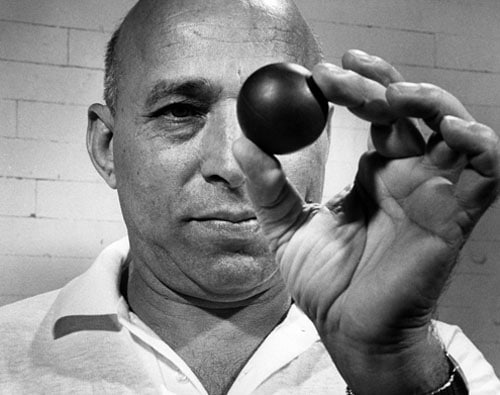
Hashim Khan Squash Player

Keep Eye on Ball: The Hashim Khan Story not only captures his life story, but also documents a section of history between England, India, Pakistan, and America up through post 9-11.

Originally, my plan was to make a documentary about the history of squash (a British creation) as seen through the wake in the British colonies. This was a way to hear the voice of people reclaiming something, or rather to reappropriate in this case squash – making it theirs. I thought this idea would allow me as a filmmaker to bring in all kinds of juicy cultural and historic elements – making an interesting commentary of the effects of colonization while letting me travel to pretty interesting places.

Once I realized the scope of this idea and the loose structure – and the mountains of funds I would have needed – I reconsidered. I picked one person on whom to focus: someone who would allow me to draw on some of these elements, but would also make an interesting story for the squash player and the non-player audience alike. That of course is Hashim Khan, the now 97-year-old Pashtun from Peshawar who, as a ball boy on a British garrison, learned a sport that he would change, and at the same time would change the destiny of his family forever.

In 2005, a crew of four, my co-producer Beth Rasin, director of photography Mikie Harlow, audio person Gabriel Cyr and myself, along with Hashim Khan and his son-in-law Rafiq Khan, traveled to the North-West Frontier Province of Pakistan to document the origins of this story. I was blown away by the hospitality and the eagerness of everyone we met to befriend us. It struck me that although I was not making a political documentary, this story would document a perspective of this corner of the world in a way that has rarely been depicted on the news in the 7-second sound bite. I knew we had something that was unique, and I was proud to show it to the rest of the world. After more than 200 hours of footage, archival material, music to be composed and raising a budget of over $200,000, Keep Eye on Ball is complete.

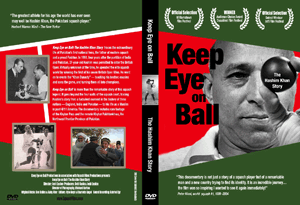
Keep Eye On Ball: The Hashim Khan Story by Josh Easdon

Keep Eye on Ball will be screening at the Avon Theater in Stamford, CT, Thursday, November 4th at 7:30PM.

For more information on this screening and future screenings please visit
www.SquashFilms.com. The DVD is available online and the film will be broadcast on the Sundance Channel this winter (date TBA). I hope you get the chance to see it.

If you have questions or comments about the film please pen your thoughts below. Josh will be happy to respond to you.

Filed Under: Documentary, Film, History, Sports Tagged With: azam khan, documentaries, eye, eyes, hashim, hashim khan, josh easdon, keep, khan, life story, nasrullah khan, pashtun people, sports, squash, squash player, squash racket, story

HomeLands: A Documentary Project In Southern Indiana

August 4, 2010 by Guest

Robb Hill, AvatarThis is a guest post by Robb Hill, a Washington, DC based photographer.

A few years ago I received an e-mail from my father. It was a link to a story in the Louisville Courier-Journal about how Kentucky and Indiana were in the planning stages for a new bridge to cross the Ohio River. His e-mail included the news that the location for the connecting highway will run about half a mile from the 150-year-old farmhouse they’ve lived in for 35 years. It was then I decided to photograph our pocket of rural, Southern Indiana.

HomeLands by Robb Hill

Creating a historical record of the area before construction began appealed to me. A few months later I was photographing the woods, farms and fields I tromped around in as a kid. I found an old family cemetery I never knew about. Subdivisions that were just a few homes when I left for college had grown into communities of their own. Some of the woods were sparse from being logged over. Much had changed already in the land of my youth.

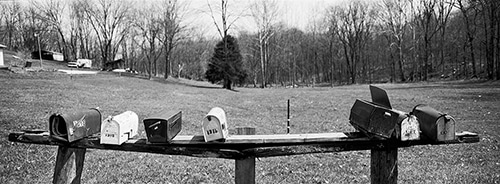
What has changed very little since I moved away are the people. Almost everyone I knew while growing up still lives there. A few have passed away and one couple moved. This should not have been the surprise to me it was. The Meyers have been farming the same land for four generations. The names Summers and Lentz on the headstones in the family cemetery from the 1800s can be found on mailboxes today.

Since starting my HomeLands project, I’ve come to understand just how much the land and the people are one. They may not say it in those words, but I know they feel it. Where they live is who they are. That can be said about anyone, I know, ask any New Yorker. But these people are unique: They know their way of life is facing imminent demise.

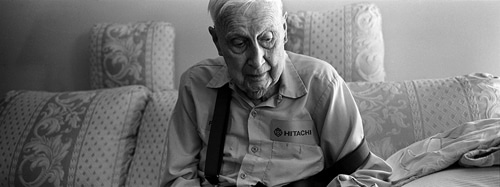
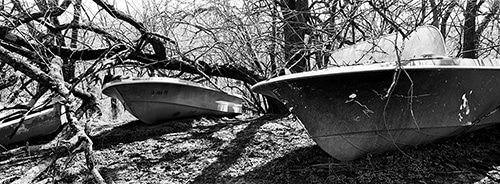
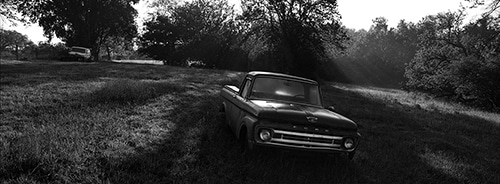
HomeLands by Robb Hill

HomeLands by Robb Hill

HomeLands by Robb Hill

HomeLands by Robb Hill

HomeLands by Robb Hill

To see more of HomeLands or donate via the Kickstarter.com website click on this link.

Your comments below will inspire a dialogue. We want to hear your opinions. So, step up and speak up!

Filed Under: Culture, Documentary, Photography Tagged With: Documentary, headstone, homeland, HomeLands, Indiana, louisville courier journal, photo projects, Photography, project, Robb Hill, rural, rural towns

Visual Peacemakers UNITE!

May 24, 2010 by Guest

Mario Mattei, AvatarMario Mattei is a photographer, visionary, & president of IGVP, based outside of Istanbul, Turkey.

I’m the kind of person who likes to ask “what if…” I’ve learned that I’m not alone in this and not alone in asking one particular “what if,” one that my friends and I were asking in 2008 …

In light of the tragedies on 9/11 and the fear-based reactions so often caused by worldviews shaped in onslaughts of “shocking” visual media, what if humans instead got consistently exposed to “other” cultures through photography and media themed on dignity, hope, and common humanity? Would the world be a different place?

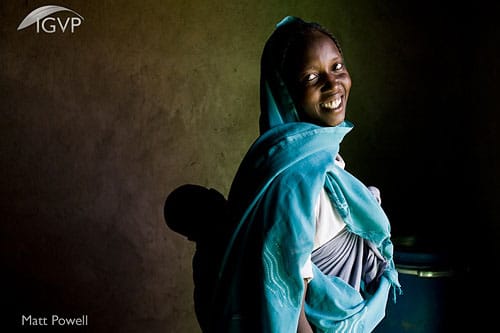
Matt Powell - Fiena, East Jabel Mara, Darfur, Sudan

This idea developed and is now known as “visual peacemaking.” All this year we’ve been moving it from dreams to action. Visualpeacemakers.org will be launching very soon. It’ll be a place to “get exposed” to the world’s peoples. And to get involved in contributing.

With this larger-than-life vision, my closest and most brilliant friends (Logan McAdams, John Machado and Jim Mullins) became co-founders with me in initiating, creating, and recruiting the International Guild of Visual Peacemakers (IGVP).

The vision spread through emails and Skype conversations. Matt Brandon, Nicole Gibson, and David DuChemin were in on the ground-level. It became our dream to form an organization and cross-promotional website that would advance the cause for visual peace and leverage photographers from around the globe to “SHOOT FOR PEACE.”

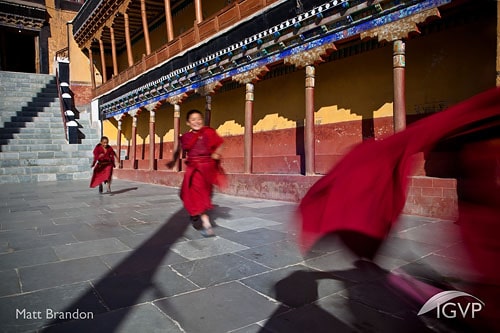
Matt Brandon Image of Buddhist Monks

Not much time passed and we soon invited Gavin Gough, Matt Powell, Ami Vitale, Jeffrey Chapman, and Kerry Lammi into the Guild. These world-class photographers, and do-gooders, immediately clicked with the call to “peacemaking and breaking down stereotypes by displaying the beauty and dignity of various cultures around the world.”

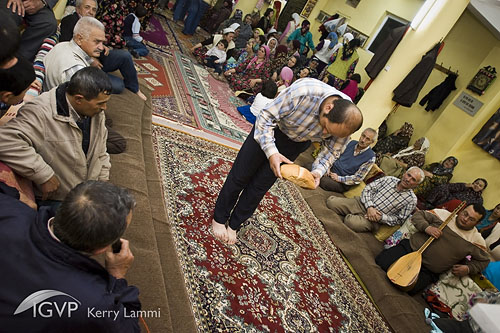
Kerry Lammi - man presents the bread for a blessing before the congregation.

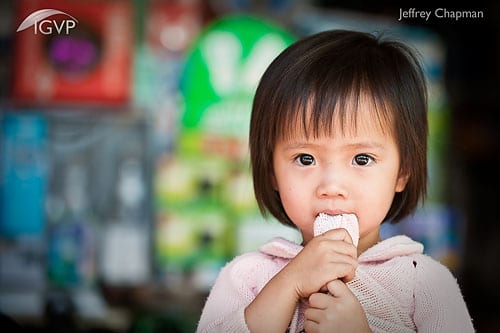
Jeffrey Chapman

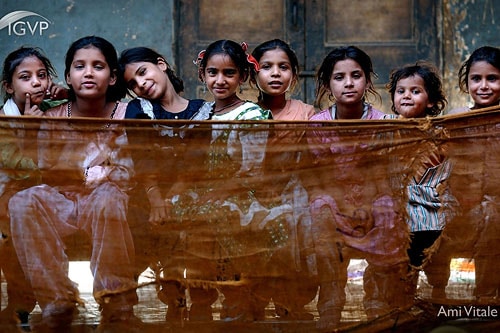
Ami Vitale in Gujarat

We quickly ran into a wonderful “problem.” Everyone wanted in. We had some strategies in mind for how a small guild could operate, so we created a second, connected strategy. We’re forming a branch of the Guild called the Visual Peacemakers Community, able to grow wide in numbers and deep in impact. These will be members on our site with Peacemaker Profiles, galleries, etc.

Today we’re defining visual peacemakers as photographers/ videographers who especially:

• Document our common humanity
• Display the beauty & dignity of people
• Make an unknown culture known to another.
• Tell stories of hope
• Bring new perspectives where harmful stereotypes exist

Their images foster peace by building bridges of awareness & understanding between ethnic, cultural, & religious identities.

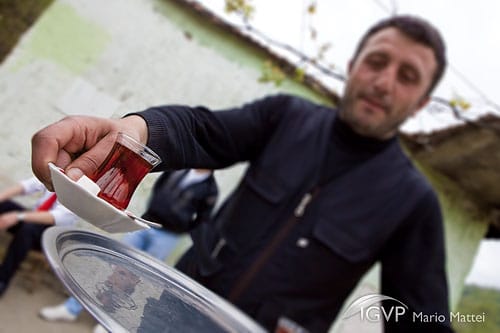
Mario Mattei, Turkey

On the website each photographer will have an in-depth profile and portfolio. It’s being developed as a place to create, connect, and catalyze through tools & social media. Resources for photographic growth will be available like ebooks, podcasts, articles, mentoring, portfolio reviews, grants and world workshops. This aspect has really been developing and has been rewarding to see just how much visual peacemakers can and will be equipped to make a difference.

Each and every member will be inviting their friends, co-workers, and family to take part by signing a half-page Charter for Visual Peace that expresses what it means to be a socially conscious viewer of visual media. And here you have the beginning of impact beyond our group of visual communicators.

Without glossing over tragedy and conflict, IGVP is seeking to show more than human hardships. We’re displaying all that is beautiful about us, and all that connects us. Visual Peacemakers treat humanity’s similarities as sacred and our diversities things to be honored. We’ve got a long list of photographers to be notified of the launch. So, though this seems to have been going on for awhile to some of us, for most, it all really begins on launch day!

Will you join us?

Filed Under: Culture, Documentary, Photography, Photojournalism Tagged With: Culture, Diversity, Peace, Photography, Understanding, Visual Peacemakers

Homai Vyarawalla: India’s First Woman Photojournalist

April 27, 2009 by Seshu | Editor & Publisher

It was a magazine clipping that my mother handed me on my way back to the US that first introduced me to Homai Vyarawalla, India's first woman photojournalist. In a field that is clearly overrun by men, I was easily charmed by her tenacity and resolve to also bear witness to India's first waking moments as an independent nation.

Check out this film – it's rather long at 70 minutes – to get acquainted with a legend in the field of photojournalism.

View this movie at cultureunplugged.com

Post your thoughts below in the comments section. I look forward to hearing from you.

Filed Under: Documentary, History, India, Photojournalism Tagged With: Homai Vyarwalla, India, Photojournalism

  • « Previous Page
  • 1
  • 2
  • 3
  • 4
  • 5
  • Next Page »

Subscribe To Tiffibox Treats!

Looking for a well-curated email newsletter that will leave you inspired and motivated about your photography business? Sign up below!

About Seshu

Seshu creates relaxed portraits of families and high school seniors in Avon, Connecticut. He also leads a successful headshot photography studio in Connecticut, helping professionals from a variety of disciplines project the very best versions of themselves. He created Tiffinbox as a way of inspiring photographers, to create better images and successful businesses. [Read More]

Email Templates For Headshot Photographers

Email Templates for Headshot Photographers

Recent Posts

  • How Capture One Changed My Event Photography
  • 10 Steps To Stay Positive In Times Of Great Stress
  • Why You Need To Read “Personal Branding For Photographers” Now
  • How To Master Your Website Content Step By Step?
  • Tony Taafe’s TNT Method For Headshot Photographers

Recent Comments

  • Stephen Davison on Are You A Business Owner Who Is Smart, But Stuck?
  • Ben A. on Don Giannatti Clinches The 8th Annual Tiffinbox Award
  • Dan on Don Giannatti Clinches The 8th Annual Tiffinbox Award
  • Donald Giannatti on Don Giannatti Clinches The 8th Annual Tiffinbox Award
  • Stephen Davison on G.E. Masana’s 6 Strategies For Wedding Photography Success
  • Naveen Kumar on Weddings In India Are More Than Being At The Right Place And At The Right Time
  • kartick on Weddings In India Are More Than Being At The Right Place And At The Right Time
  • Leonid Farbman on 6 Uncommon Trends To Grow Your Photography Business
  • Willow and Finch Wedding Photography on 11 Reception Tips To Help Your Wedding Photography
  • Web Designer Malaysia on How To Optimize Your Squarespace Website For Search Engines
  • Creastan on An Interview With Photojournalist G.M.B. Akash
  • Cindy Brown | Atlanta on An Open Letter To A Local Photographer

Become a Patron!

Copyright © 2026 · Tiffinbox · Site Design by Heather Mackan Creative · Built on Genesis