• Photography
  • Interviews
  • Business
  • Reviews

Tiffinbox

Inspiring Photographers

  • Home
  • About
  • Blog
  • Contact

U.S. Customs Procedures For Photographers Who Travel With Their Equipment Overseas, A Rebuttal

August 5, 2010 by Guest

Steven "Fish" Frischling, AvatarThis is a guest post by Steven “Fish” Frischling, a Connecticut based intrepid photographer. You can find him blogging about his escapades in airports and on airplanes at Flying With Fish. And, I do recommend you follow him on Twitter for his sage advice about the air travel industry.

In the world of travel there are regulations, laws, gray areas and the simple facts of every day events. All of these possibilities don't always match up and sometimes it seems traveling photographers may get caught in the middle.

Recently Scott Bourne wrote about a photographer who nearly had to pay taxes on US$15,000 worth of camera equipment while traveling back into the United States because he did not have a Form 4457 that proved his ownership of the equipment.

In reading the blog post by Scott Bourne, U.S. – Based Photographers Traveling Abroad – Beware The Duty, I was left pondering the realities of travel. Having racked up more than 1,000,000 butt-in-seat miles traveling since I started paying attention to my miles in 2005 I have done my fair share of international travel and researched travel with camera equipment extensively.

In my experience, a Form 4577 is cumbersome, as every single piece of equipment needs its own form filled out in detail. To negate the sheer time and annoyance it takes to fill out a Form 4577 I prefer to use a Carnet. A Carnet is a single form that lists all items a photographer would be traveling with, it proves ownership and eliminates the need to pay taxes and US Customs Agents are legally required to accept it … but do I really need a Form 4577 or Carnet to reenter the United States? No, I do not … and let me tell you why.

In my experience, a Form 4577 is cumbersome, as every single piece of equipment needs its own form filled out in detail.

If you follow the links from Scott Bourne's post you'll find one to the US Customs & Border Protection (US CBP) Traveler's Checklist. Under the US CBP Checklist if you read #5 it states: “Receipts or registration paperwork (CBP Form 4457) for any new electronics, such as a camera or laptop, that I’m taking with me? (Only suggested if traveling with recently purchased goods. Not necessary for goods more than 6 months old.)”

I have asked about getting stopped and having gear searched by US CBP and the best answer I got from a Supervisor at Los Angeles International Airport (who wishes to remain anonymous) is “it's all about red flags.”

US Customs scans tens-of-thousands of passengers in airports daily. Some are flagged by passport control, others for body language, and others by intuition, but you need to send off a red flag to have your bags checked upon reentry into the United States as a Citizen.

I have set off red flags and been checked more than once, but never once have I been threatened with a duty on my equipment. I have been flagged after traveling to Tokyo for 36 hours. When asked why my trip was so short I replied that there were no earlier connections home … that was a red flag. Explaining to passport control that on a trip I had travelled to Basrah Iraq for six hours followed by a two-hour stop in Kuwait City … and I was not traveling with the Military … that was a red flag. Having passport control notice I had been in and out of Amsterdam Schiphol International Airport 3 times and Paris's Charles De Gaulle Airport once in a single day … that was a red flag.

I have set off red flags and been checked more than once, but never once have I been threatened with a duty on my equipment.

In all of these red-flag instances when my camera gear was revealed it was obvious that I was a professional photographer, my equipment was my own and it had likely been in my possession longer than six months.

US Customs agents are over worked and under staffed at nearly every airport I know. I spent a considerable amount of time documenting US CBP as a news photographer for a major magazine a few years back and got to witness how they operate from the inside out, not just from the perspective of a passenger, and agents generally use their own common sense to determine who is being truthful, who is lying and if equipment being brought into the country left the country with the traveler.

One way to ensure your gear will not get a second glance should you get red flagged is to take ownership of your gear before you leave. All of my equipment have uniform labels with my name and contact info on them, some pieces of gear have it twice. All of my gear is marked with tape (I use pink tape to quickly be able to ID my own gear), the tape on all the gear makes it uniform. My cameras all have gaffers tape in the eyepieces, nearly all my lenses have gaffers tape on the lens hoods or marks of the tape where the hoods attached to the bodies. All my camera batteries have pink tape and identification labels as well.

One way to ensure your gear will not get a second glance should you get red flagged is to take ownership of your gear before you leave.

When my bag is opened up an agent knows my equipment is … well … my equipment. Gear that is 2 days old may look cleaner than gear that is six years old, but having them taped and marked the same way speeds up the process and I never get a second look.

The one time I ended up being significantly scrutinized by a CBP Agent, at Atlanta (ATL), the agent asked for my card, I handed it to him and he walked off. He checked my web site, saw I legitimately was a photographer, he apologized for the delay, helped repack my bag and sent me on my way.

One thing to note is that in Scott Bourne's post he suggests filling out the Form 4577 then having it signed by the US CBP at your Port of Entry (POE) prior to departure. This is problematic for many travelers. Never mind that nearly every CBP Agent I have asked said they hate signing off on Form 4577s because its never one form, its 30 forms and they need to verify every piece of gear … but there is no CBP Office near many travelers and most travelers depart from a location different than their Port of Entry. For example, most of my trips start and end at New Haven's Tweet Airport, but my Port of Entry when I fly home is usually Philadelphia … although my Port of Entry can also be Atlanta, San Francisco, Chicago, Los Angeles, Shannon (Yes there is US Immigrations & Customs in Shannon Ireland), Miami, Toronto (Yes there is US Immigrations & Customs in Toronto), Newark, Detroit, Dulles, etc etc etc.

One thing to note is that in Scott Bourne’s post he suggests filling out the Form 4577 then having it signed by the US CBP at your Port of Entry (POE) prior to departure. This is problematic for many travelers.

Travelers who feel the need to have a Carnet or Form 4577 for reentry back into the United States should look for a local CBP Office, although there are many regions that simply don't have an office conveniently located.

So what should you do when you fly internationally and are returning home to the United States? Know the rules, US CBP will not laugh at you, as Scott Bourne states … and I have had my fare share of run-ins with Agents (just search my blog), but if you are right you ask for a Supervisor and as them to review the US CBP Traveler's Checklist … unless you've already read the CBP Harmonized Tariff Schedule of the United States (which I don't suggest reading, its quite boring).

Happy Flying!

Your comments below will inspire a dialogue. We want to hear your opinions. So, step up and speak up!

Filed Under: Photography, Travel

HomeLands: A Documentary Project In Southern Indiana

August 4, 2010 by Guest

Robb Hill, AvatarThis is a guest post by Robb Hill, a Washington, DC based photographer.

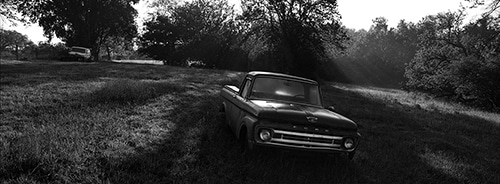
A few years ago I received an e-mail from my father. It was a link to a story in the Louisville Courier-Journal about how Kentucky and Indiana were in the planning stages for a new bridge to cross the Ohio River. His e-mail included the news that the location for the connecting highway will run about half a mile from the 150-year-old farmhouse they’ve lived in for 35 years. It was then I decided to photograph our pocket of rural, Southern Indiana.

HomeLands by Robb Hill

Creating a historical record of the area before construction began appealed to me. A few months later I was photographing the woods, farms and fields I tromped around in as a kid. I found an old family cemetery I never knew about. Subdivisions that were just a few homes when I left for college had grown into communities of their own. Some of the woods were sparse from being logged over. Much had changed already in the land of my youth.

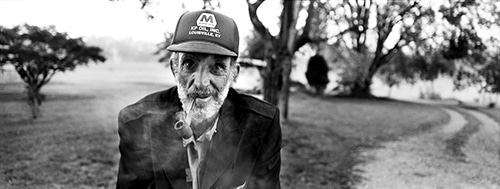
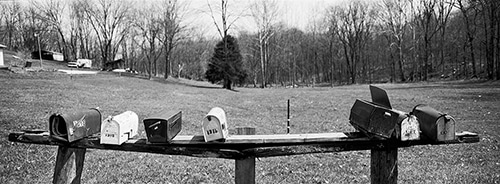
What has changed very little since I moved away are the people. Almost everyone I knew while growing up still lives there. A few have passed away and one couple moved. This should not have been the surprise to me it was. The Meyers have been farming the same land for four generations. The names Summers and Lentz on the headstones in the family cemetery from the 1800s can be found on mailboxes today.

Since starting my HomeLands project, I’ve come to understand just how much the land and the people are one. They may not say it in those words, but I know they feel it. Where they live is who they are. That can be said about anyone, I know, ask any New Yorker. But these people are unique: They know their way of life is facing imminent demise.

HomeLands by Robb Hill

HomeLands by Robb Hill

HomeLands by Robb Hill

HomeLands by Robb Hill

HomeLands by Robb Hill

To see more of HomeLands or donate via the Kickstarter.com website click on this link.

Your comments below will inspire a dialogue. We want to hear your opinions. So, step up and speak up!
Filed Under: Culture, Documentary, Photography Tagged With: Documentary, headstone, homeland, HomeLands, Indiana, louisville courier journal, photo projects, Photography, project, Robb Hill, rural, rural towns

Short Guide For Photographers | Start Right Or Start Over

August 3, 2010 by Guest

Chelo Keys, AvatarThis guest post is by Livingston, New Jersey photographer Chelo Keys.

If you’re a part-timer working hard to be taken seriously, save yourself from some of the mistakes I’ve made.

It’s no secret that part-time and emerging photographers have to work hard to shake off the “weekend warrior” label. First, it’s hard to be taken seriously when there are so many part-timers entering the market at super low rates. Second, it’s very difficult to form good relationships in the photographic community when both your weekdays and weekends are taken up. With that said it’s easy to find yourself in a place of isolation, stumbling in the dark and making mistakes as you try to build a sustainable business. But even if you’re thinking of throwing in the towel, the good news about being a part-timer is that it’s never too late to start over, reassess your business and earn respect amongst your colleagues.

I’ve made some whopping mistakes starting out. But, I’m in the mist of a huge overhaul and can say that the following helped me chart a path to starting anew.

Practice Humility

Picking up a camera for the first time and thinking you know everything about the business is seriously obnoxious. I did this, so I know. If you’re doing this, stop it. I once worked for a prominent photography studio. Their practices were “old school” but the clients were rolling in and the sales were piling up. I was convinced that they were doing it wrong because they didn’t blog, Facebook or have a fancy flash website. Instead of soaking it in and taking notice of what they were doing right, I was pig-headed, left the job and thought I could do it better myself, but far from it. I failed and flailed. Lesson learned: Never rebuff anyone that is successful.

Accept Critique

I don’t think there is anything more anxiety provoking than taking critique from colleagues. But if you have the ear of a successful and trustworthy professional, take advantage of her or him. I recommend face-to-face critique. But remember, there is nothing more frustrating than advising a person that has selective hearing. Make sure to be open and don’t take it personally. If their advice is sound and you rebuff them, it will only bolster the idea that part-timers are Uncle Bobs with no regard for building skills.

Be Respectful

Things are hard when you’re just starting out, working part-time or transitioning to full-time. You need advice, but maybe you’ve found that other professionals are reluctant to speak with you. First of all, it’s my belief that good teachers should be paid for their time. Personally, I don’t mind answering questions because I don’t think I’m a super star. But I have contacted prominent photographers in the past and expected them to spend their precious time divulging everything to me. How rude! Don’t do what I did. Instead, contact the person that inspires you and make it clear that you are willing to pay for their time. Most importantly state that you are looking for advice on your business and not wanting to know every detail about theirs. Who knows, maybe they won’t want to be paid – but don’t make the assumption that they owe you anything. I’m happy to say that I’ve found a great teacher thanks in part to being respectful of their time.

Don’t Be A Groupie

This goes along the same vein as being respectful. I’m very eager to learn anything I can from successful professionals and it took me a while to learn that prominent photographers are real people. I remember second shooting for someone I really admired. I spent so much time star struck that in the end my photographs of the day left little to be desired. I may have also made the person uncomfortable. Needless to say, they never called me back. I also remember landing a small part-time job with a studio I was completely enamored with. I was so blinded with admiration that I exaggerated my skills, asked way too many questions and found myself fired 2 weeks later. Remember, fawning is not always taken well by others.

Don’t Brag

It’s unbecoming. There is nothing wrong with posting that you’ve booked another wedding on Facebook or Twitter. However, when colleagues state that they are having a difficult time in this economy, don’t counter with “Don’t know what you mean! I’m doing better than ever!!” Especially if your prices are still relatively low and you’re not able to fully sustain yourself on your photography income. Remember, part of this business is about building good relationships.

Be Professional

This should go without saying but you should be paying taxes and have insurance, even if you are part-time. You should develop a sound business plan and formulate rates that adequately cover your expenses and don’t undermine the industry. We’ve all heard the “you have to start somewhere” excuse. But believe me, after undervaluing myself for close to 3 years I’d rather the “somewhere” I started from was an educated and sound place!

Take it Easy

This is the last and most important point. Don’t rush into things like I did. You’ll find yourself paying for mistakes long after they are made. I’m excited to say that there are some great changes coming to my photography business and that the path ahead is promising. That’s the other great thing about being part-time – you can take the time to do things right. But, if you’ve stumbled around like me you can always, always start over.

Your comments below will inspire a dialogue. We want to hear your opinions. So, step up and speak up!
Filed Under: Commentary, Photo Biz, Photography Tagged With: albums, chelo, fulltime, guide, guides, keys, labor, livingston, new jersey photographers, photographer, Photographers, Photography, photography studios, weekend warrior

The Risks & Rewards Of Pursuing Photography

August 2, 2010 by Guest

Nick Franklin, AvatarToday's guest post is by Nick Franklin, a photographer and student from Huntsville, Alabama. Follow him on Twitter.

Risk and reward is the mantra of business. How many risks and rewards does a person have to take to be a professional photographer in this market? What are you willing to lose for chasing a dream? If you haven’t looked at these questions yet, you will. No one can provide you the answers, and no one can make choices for you. What they can do, is tell you what they did, and maybe you can glean experience from them. I’d like to share my own with you here.

Lady In The Vines by Nick Franklin

As an amateur-professional I faced a hard decision early on with where I would take my photography, and what I would lose doing so. Art college is a heavily debated topic in the field, some say it’s almost necessary, others say you’re better served in business school. I weighed the pros and the cons. Being surrounded in a artistic zone could be hugely beneficial in developing a vision, but could also burn me out soon. And, above all, was the cost. My choice schools, somewhere like the Savannah College of Art & Design or Brooks Institute were hugely more expensive than some of the top business schools available to me. Combine that with a looming recession, and my choice was practically made for me. I would not pursue any academic credential in photography. I took instead a more common path, a business major, and secured myself a job through college. I don’t regret this decision now, as the market has not recovered, and I was able to devote what time I had for photography to its best use. I shot what I wanted, and learned a lot photographing things I never thought I would. Making images became a retreat from the norm, and only increased my desire to make them.

Flexing Muscles, by Nick Franklin

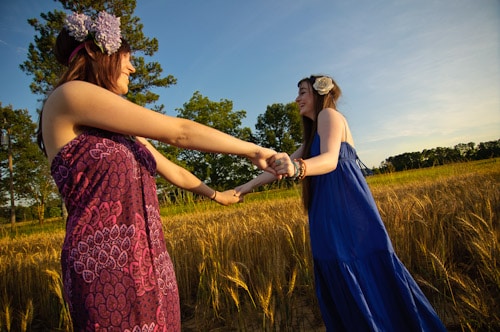
Girld Dancing In An Open Field, by Nick Franklin

My improvement over two years only opened more doors to me however, and with that came more decisions. Clients began to pop up, and I had to decide whether I wanted to forgo those unique shooting excursions to make side money and begin the trying process of building a business. I chose the latter, and it turned out to be considerably harder than I had expected. Balancing shooting, editing, and managing some level of brand on a limited schedule was quickly running my love of photography into the ground.

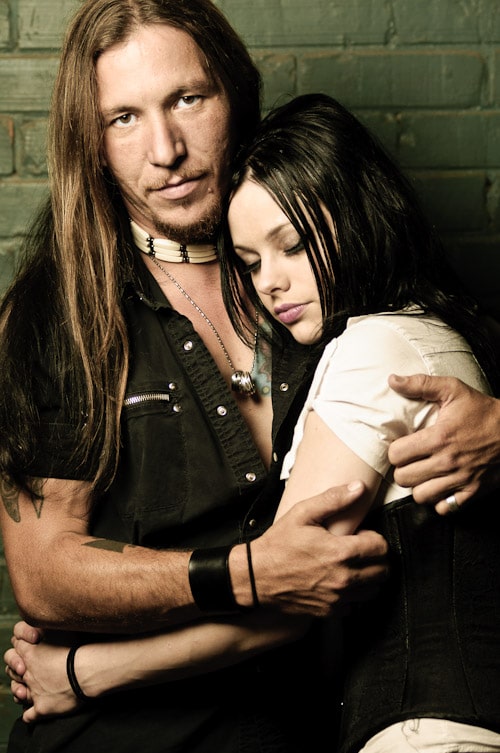
Portrait Of A Couple, by Nick Franklin

It wasn’t long until I would drop everything I had on my plate. I left my job, took a semester off from college and stopped taking clients. What on earth could create such a sudden about face? A chance of a lifetime I thought. A photographer who I respected greatly, to the point of modeling my own hopes of success on, was accepting internships. I applied, was accepted, invested over a thousand dollars to relocate myself and for the first time pursued photography full time with no hesitations. My hopes going in were that this was at least a foot in the door of a major studio, or a life adventure I would never forget.

I got much more of the latter than the former. Personal differences led me to leave the studio less than two weeks into my internships. In such a short time my expectations were crushed, and I was left broken. The risk I took had not paid off. It had cost me not only monetary value, but pride and a place beside someone I respected. I found rock bottom.

I didn’t pick up a camera for nearly three months. I was able to resettle myself at home, though not able to make up the lost time from school, and found myself another job. I spent that time thinking about why I took the risk originally, and what I learned from it. I learned that despite how much we get consumed with the mood and meaning of imagery, behind the camera and in front of the lens are real people with real problems. That the things we let go to pursue a dream are the very things that made it in the beginning. In some ways this failure taught me more than success would.

It’s a personal decision in the end how much you are willing to risk for this lucrative career. It’s the things you don’t think about that hurt the most, things like family and friends, or the impression you have a hero. Measure these things very carefully, but go boldly with what you decide. There can be no reward without risk, and sometimes the rewards aren’t always evident.

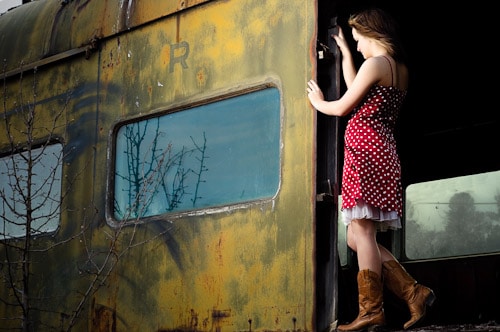
Journey On A Train, by Nick Franklin

Filed Under: Photo Biz, Photography Tagged With: alabama photographers, franklin, nick, photographer, Photography, professional photographers, rewards, risk, risks rewards

Around The World, Yet Across The Street

July 30, 2010 by Guest

Trudy Hamilton, AvatarThis is a guest post by Trudy Hamilton, a portrait and lifestyle photographer and blogger, originally from Florida and now residing the the San Francisco Bay area. She can also be found on Facebook and Twitter.

Most photographers that I know enjoy the adventure that travel brings into their lives. Whether it be personal travel, such as visiting family, or business travel, such as the destination wedding or a location commercial shoot, travel is both a pleasure and necessity. However, unless we're all Joe McNally, we probably don't travel as much as we'd like to.

One of the best reasons to travel is simply to experience the culture of another, hopefully though an open mind, heart and camera. However, you don't have to travel all of the time to experience and photograph another culture. An exciting and economical way to do so is to explore the cultural events of your community. I photographed my first community cultural event in 2006 and I have been interested in them ever since. The beauty of people, music, food, fashion and uniqueness has always excited me and appealed to me. This is why I travel, but also why my mind and heart can travel even when I am home.

A few good reasons to embrace your local community cultural events are:

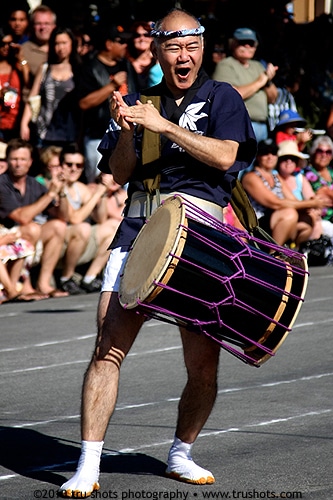
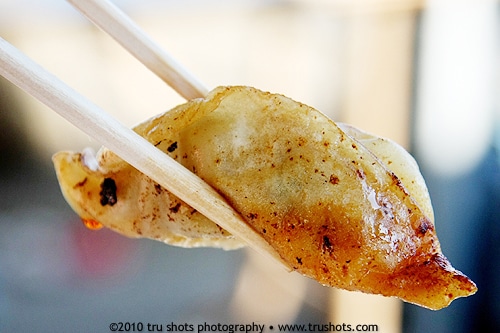
1) It's a learning opportunity. If you are open to it, a community cultural event can be a learning experience for you. Certainly I could have read an article on the Obon Festival, but I chose to attend one in Japantown of San Jose, CA a few weeks ago. I have been to Japan, but certainly couldn't pick up and go again a few weeks ago. But by attending the festival, I chatted with and photographed Japanese, Japanese Americans and others at the event, listened to the powerful yet soothing sounds of the San Jose Taiko and enjoyed gyoza–some of the same activities I did while I was actually in Japan a few years ago. For several hours, it was like I was transformed from traditional Bay Area Cali and merged into Japanese culture.

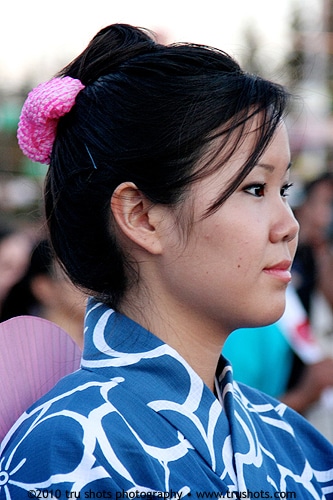
Japanese Woman In A Kimono

Japanese Man Drumming by Trudy Hamilton

Gyoza by Trudy Hamilton

2) It's a photographic opportunity. Certainly most photographers desire paid work versus unpaid work, especially the ones running a business. However, sometimes it is good to photograph truly for the sake of creation. Cultural photojournalism differs from my portraiture work. I use different camera settings, I have different compositional ideas and a different intent and message with every photograph that I create at a community cultural event. It's great exercise for me for when I do have paid event photography and great exercise in my creativity and storytelling, in general.

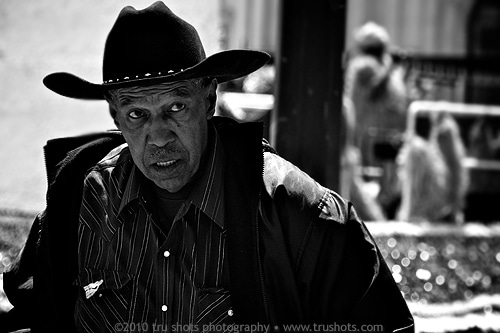
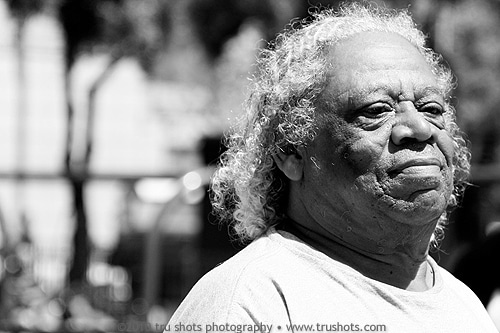
3) It's a networking opportunity. I am an introvert. Though I am not shy, as introversion does not always equate to shyness, I am usually uncomfortable and drained by traditional networking events and conventions. However, at a community cultural event, such as one I attended a month ago in San Francisco, Juneteenth, I can stay below radar and only photograph if I choose, or chat with people who ask me about my work simply from seeing me with what they call a big camera. At this aforementioned event, someone came up and talked with me. I ended up booking them as a client on the spot. So not only was it a great cultural experience (even just to embrace stories of Black people in America–ones that I could see in the very skin of the men I photographed below, who are only a few generations removed from slavery) but it was a business opportunity as well.

Man In Cowboy Hat by Trudy Hamilton

Street Photography by Trudy Hamilton

Acknowledging, embracing and understanding the cultures of others doesn't just make us better photographers, it makes us better humans. So I encourage you to view your city's website or a site like Yelp and look for the next event in your area, whether it be a Japanese, Chinese, Italian, Filipino, Jamaican or Irish festival (I've been to all of these types) and check it out. It may truly be a learning, photographic and networking opportunity for you as it has been for me. Embrace the true beauty within yourself, by embracing the beauty of others.

Filed Under: Culture, Photography Tagged With: as a, business travels, Community, cultural, cultural events, Culture, embrace, embracing, japanese culture, Journalism, mass media, photograph, photographer, Photography, Photojournalism, san francisco, stock photography, visual journalism

  • « Previous Page
  • 1
  • …
  • 95
  • 96
  • 97
  • 98
  • 99
  • …
  • 164
  • Next Page »

Subscribe To Tiffibox Treats!

Looking for a well-curated email newsletter that will leave you inspired and motivated about your photography business? Sign up below!

About Seshu

Seshu creates relaxed portraits of families and high school seniors in Avon, Connecticut. He also leads a successful headshot photography studio in Connecticut, helping professionals from a variety of disciplines project the very best versions of themselves. He created Tiffinbox as a way of inspiring photographers, to create better images and successful businesses. [Read More]

Email Templates For Headshot Photographers

Email Templates for Headshot Photographers

Recent Posts

  • How Capture One Changed My Event Photography
  • 10 Steps To Stay Positive In Times Of Great Stress
  • Why You Need To Read “Personal Branding For Photographers” Now
  • How To Master Your Website Content Step By Step?
  • Tony Taafe’s TNT Method For Headshot Photographers

Recent Comments

  • Stephen Davison on Are You A Business Owner Who Is Smart, But Stuck?
  • Ben A. on Don Giannatti Clinches The 8th Annual Tiffinbox Award
  • Dan on Don Giannatti Clinches The 8th Annual Tiffinbox Award
  • Donald Giannatti on Don Giannatti Clinches The 8th Annual Tiffinbox Award
  • Stephen Davison on G.E. Masana’s 6 Strategies For Wedding Photography Success
  • Naveen Kumar on Weddings In India Are More Than Being At The Right Place And At The Right Time
  • kartick on Weddings In India Are More Than Being At The Right Place And At The Right Time
  • Leonid Farbman on 6 Uncommon Trends To Grow Your Photography Business
  • Willow and Finch Wedding Photography on 11 Reception Tips To Help Your Wedding Photography
  • Web Designer Malaysia on How To Optimize Your Squarespace Website For Search Engines
  • Creastan on An Interview With Photojournalist G.M.B. Akash
  • Cindy Brown | Atlanta on An Open Letter To A Local Photographer

Become a Patron!

Copyright © 2026 · Tiffinbox · Site Design by Heather Mackan Creative · Built on Genesis