• Photography
  • Interviews
  • Business
  • Reviews

Tiffinbox

Inspiring Photographers

  • Home
  • About
  • Blog
  • Contact

Photogs, Do You Know Your Exposure Conversions?

September 22, 2010 by Seshu | Editor & Publisher

About three weeks ago, I started teaching photography at The Avon Old Farms School. We are just getting around to learning about the exposure meters and the interplay between shutter speeds, apertures and of course film speeds.

I think I can safely say that most people, even students of photography, fail to understand this dance. The newer, fancier, digital cameras apparently do all the “creating.” Sigh!

Here is an easy one – If you are at f/5.6 and your shutter speed is 1/125 of second, what should your shutter speed be set to for a similar exposure at f/4? Answer: 1/250 of second. Right?

Well, as I was trolling on Twitter today, I noticed a challenge posted by my friend Jonathan Canlas. He is a terrific photographer out of Utah and yes, he still shoots film. (Follow him on Twitter like I do – http://twitter.com/jonathancanlas/)

Here is his challenge: 400 iso f6.3 @ 30 sec = 800 iso f(X) @ 8 sec.

If you have no idea what those numbers mean, I recommend taking a course in basic photography. Could those of you seasoned pros out there perhaps solve this riddle? Give it a shot below in the comments section.

Keep in mind that we are trying to determine the aperture value here, or f-stop number. I'll see if Jonathan will chime in to give us an explanation of how he came up with his correct answer.

I'll send the first person to post the correct answer a little surprise, so don't post anonymously.

Photography should still be fun, so if you feel stressed out about this little puzzler, take a deep breath and then tackle it. Go!

Filed Under: Photography

How To Use Kickstarter To Fund Your Photo Projects?

September 13, 2010 by Guest

Robb Hill, AvatarThis guest post is by Robb Hill. Read his first post on Tiffinbox: “Homelands: A Documentary Project in Southern Indiana.” He is a Maryland-based documentary photographer. Connect with him on Twitter.

A few weeks ago I was here writing about a project I have on Kickstarter.com. Seshu and I have known each other since college and as a long time follower of his, this, blog I thought posting on it would be a good way to get the word out about my project. Now that the fund raising window has closed on my Kickstarter project (I was able to raise more than my goal!!) we thought it a good idea to write about my experience, hopefully for the benefit for all.

I had never heard of Kickstarter.com until a friend and fellow photographer, Nelson Chan, told me about it a few months ago. Nelson has watched me struggle with HomeLands over the years and has been supportive. He thought Kickstarter and my project would be good fit.

The first photos I took for HomeLands was back in March of 2005. When I began I lived in Chicago and my business was doing well. Which meant I had the time and money to get down to Southern Indiana to work. Now I live in Sliver Spring, Maryland and it has been a struggle the last two years to keep my head above water. As much as I wanted to return to Indiana to photograph, my priority had to be financial stability.

Since starting HomeLands I have applied to 15 different grants and received none. For a previous project I won three grants and felt confident about my understanding of the grant writing/application process. Now, for whatever reason, I was getting no traction in the grant world. Trying to secure funding via Kickstarter seemed like a good idea.

After reading all the FAQ and application pages I submitted a proposal. The first piece of advice I have is edit, edit, edit. The initial proposal to Kickstarter is only 1500 characters. Yes, that’s characters not words. It is very important to write as concisely as possible. I don’t think Kickstarter is looking for a certain kind of project, if you look around on the website you’ll see a wide range of projects. What I think they are looking for is clarity of thought in the proposal and uniqueness of project. But I don’t know for sure.

If you are accepted – I am curious to see what they turn down – you next have to create your Kickstarter page. This is a longer written proposal, video, and whatever else you can get on a web page. Here is where you have to start selling your project.

For my video I decided to use still images, music, and voice-over. I did not want to be on camera because, although I was looking for support, I wanted people viewing the video to think of the project not me. For me this is key. Get people interested in what you’re doing not yourself. This may be obvious but the tone and feel the video should match the tone and feel of your project.

For the written portion Kickstarter recommends not only describing your project but explaining how you plain to spend the money you raise. I didn’t publish a specific budget but did generally explain how I plain to use the money. It could be helpful to be very specific about your expenses but for my project I didn’t see it as necessary.

Even if you don’t publish a budget it’s very important to create one because it’s completely up to you to set the dollar amount you want to raise. I set my goal at $7,000, an ambitious amount but not overly so. I examined budgets from various grants proposals I’d written and calculated a comfortable amount of money that would allow me to work unrestricted. By unrestricted I mean I will be able to cover materials like, film (yes, I’m shooting my project on film), processing (doing it myself), scanning, flights, etc. as well as meet my financial obligations at home while I’m away photographing. The only real advice I have about the budget is; be thorough and honest about your costs. And don’t be afraid of the total.

Look around on Kickstarter and you’ll see people who successfully raised far more and far less money than I did. Kickstarter is very up front about the fact they are an all or nothing proposition. This means if you don’t meet your dollar goal, you don’t get any of it. Which I think makes sense because it forces two things to happen. The first is, as I alluded to above, artists are forced to really think about what they need financially to do their project. The second is, it makes the larger public aware of how expensive the creation of art can be.

There is no cost to post your project on Kickstarter. But, and Kickstarter is very upfront about this, they take 5% of your goal as their fee, but only if you reach your goal. This is completely reasonable. Also be aware Kickstarter uses Amazon Payments as their money handler and Amazon takes 4.5% as their fee. This is also clearly stated but was a little harder to find. If you need a very specific amount for things like, studio rental, printing, etc., make sure you factor in the 10% you’ll loose in fees.

Then you need to set how long the pledge window will be open. The FAQ’s have much to say about this. But it boils down to this; the maximum length of time to pledge to a project is 90 days and longer isn’t necessarily better. I set my window at 45 days.

Once I had my project page ready I nervously hit the Launch Project button.

After the Launch Project button is hit you are far from done. Now it’s very important to do the one thing almost every artist I know is horrible at, selling yourself. While people do search Kickstarter for projects that interest them, you cannot rely on Kickstarter alone to raise your funds. I can’t stress this enough, it’s very very very very very very very important for you to get the word out about your project.

Immediately after hitting the launch button I posted a link on Facebook and sent emails to damn near everyone in my contact list. In the first week a good number of people, mostly family and friends, pledged to my project. Also, many people reposted my link on their Facebook page, some I asked, and some just did.

As the dollar amount in the pledged column increased that first week I was pretty happy about how the fund raising was going. When the first complete stranger pledged to my project I suddenly felt the power of Kickstarter. Here was someone I don’t know who pledged $250. I was very touched. With this person’s pledge I felt I could reach my goal.

Then it was time to get the word out even farther. I asked Seshu if I could post about it on his blog. I asked an old high school friend who is a booster for our hometown to talk up my project on his website. I have close connections to the digital media staff at NPR and they were kind enough to feature my project on the NPR Picture Show blog, with links to my site and Kickstarter page.

With all that attention I didn’t see the amount of pledges I thought I would. Because of my personal real estate situation I am very aware of how bad the economy is. But bad economy or no, I had to keep putting the word out. I then started trying to get posted on other photography oriented websites. Most sites I contacted posted a link. But I still wasn’t seeing much of an increase in pledges. This was partly because in today’s world asking photographers for money is like expecting Bob Cratchit to come up with the Christmas goose by himself. It’s not that we aren’t a supportive, generous bunch; it’s just that the industry as a whole is in a tough way.

As the days passed there was little movement towards my goal. With two weeks left I was less than half way to my goal. I talked to my sister, a professional grant writer, about things I could do. Her advice to me was very simple. “The only way to get people to give you money is to ask.”

With just over a week left I started a direct email campaign. I went through my Facebook friends and wrote a personal email to everyone I thought would donate to my project. Like everyone, I have Facebook friends who I’ve not actually spoken with in twenty years. But I really wanted to make my goal and I didn’t let that stop me from asking for donations.

It worked. Pledges started coming in immediately. Also, something of the ebay effect happened, meaning strangers also pledged to my project in the last few days. With 72 hours left I had done all that I could think of, the only thing to do now was wait and see what happened.

With 48 hours left checked the total before going to bed and notice it had gone down. Someone, who I don’t know, reduced his pledge from $250 to $5. Kickstarter allows people to reduce or cancel their pledge. Here is what they’ve written about it on the website, “By pledging, you are committing to supporting that person’s project; canceling that commitment is discouraged.” But it does happen and I went to bed crestfallen.

For some reason at 4:30 the next morning I was awake. I read for a little while and decided to check the status of my project. It was $7,131 dollars. I rolled over and told my wife the good news. But knowing that people could reduce or cancel their pledges I didn’t allow myself to celebrate until Kickstarter told me it was over.

In the end I had 110 backers, 24 of whom are total strangers to me. Two weeks earlier I felt there was no way I was going to reach my goal. But by taking the bull by the horns and asking people to help me, I raised $7,326.

I was happier than I’ve been in a long time.

Kickstarter encourages you update backers about your project. Which can be done from you project page. Here is the last paragraph of a thank you letter I posted on my blog:

Even in good economic times it’s hard for artists to find the money that allows us to create. Watching the number in the pledged column on my Kickstarter page grow was exciting, gratifying, and very moving. I am incredibly thankful and honored that so many of you out there respect me and or my work enough to donate to my project. Last Sunday when the pledge window closed with my goal being exceeded I was happy beyond measure. I feel a responsibility that goes beyond making good work. I feel responsible to the 110 of you who helped me be the artist I want to be. Thank you for giving 105%.

Are you inspired to use services like Kickstarter? Comment below to tell us about your efforts to raise money for your photography project.

Filed Under: Contests & Grants, Photography Tagged With: documentary photographers, documentary photography, fund, fund raising, funding, grant writing, how to use, human interest, kickstarter, projects, raising funds, secure funding, write proposal

Friday Foto Features By Scott Webb, Week 1

September 10, 2010 by Scott

Scott Webb, AvatarThis is a guest post by Scott Webb, a photographer based in London, Ontario Canada. Through photography and art, he believes that we can avoid and fight depression and mood disorders. He gets out of bed everyday to challenge the mediocre through the lens of photography.

Every week there are a massive number of articles posted relating to photography. I want to present some that help me out and could help you out too. Tiffinbox is growing as a great resource for photographers and the weekly round up is intended to build upon that momentum. This being the first week for the photography round up, I’m testing the waters and the topics are very malleable.

The format of the helpful photography round up will take some time to mold, but the intention is always to help photographers with a place to come and be presented with content they may not have come across during their busy days of the week. The topics included within such a round up related to photography are anything from photography tips, marketing, business, inspiration, and showcasing. Forgive me if this first week feels a bit scattered.

Here are some of the best articles I have read in RSS subscriptions this week, stumbled upon, or caught in my twitter stream and retweeted on @scotty_webb.

Tips & Technique

• 5 ways a photographer can take advantage of using long lenses when it comes to portrait photography
• A helpful interview that will help you learn to shoot challenging food photography
• Rad approach that says to forget about focusing on your subject – great right brain thinking.
• How it's possible to use a normal lens for macro photography – why not!

Thought Provoking

• Is photography an art? You tell me in: Beyond Craft – this is a great insightful exploration within the photographers mind.
• Better start to think about what your portfolio is revealing about you – is it good or bad news?
• 5 points a photographer should consider related to watermarking photographs – helping or damaging?
• How much time do you spend keeping up with industry trends and cutting edge info? – might be time to start chasing

On Tiffinbox!

• Photographers: do you have a photographic archive? – be good to your archive and it will be good to you
• How success comes from your photographic vision – as the world of photography democratizes before your eyes you'll need to craft a vision

Introspective

• It's not too early to start some reflection and plan for 2011 – start looking within for next year.
• What type of photographer do you see yourself as? – become the observer and step back.
• How a photographer struggles with the vision for a photography business – labels and being defined by what
Offbeat
• Customize your Pentax with lego blocks and skins – have the coolest camera in your city
• NASA releases images for creative commons – check out NASA's vast collection of photographs

Showcase!

Sweet-n-Low

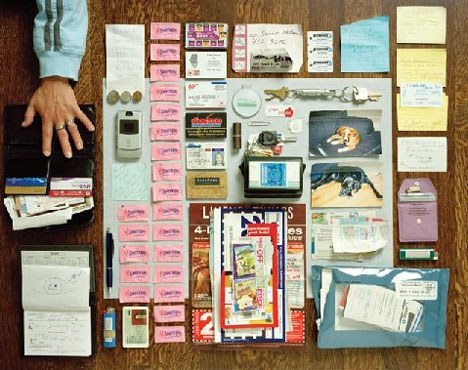
An amazing photography project – Our Secret Selves.  The artist looks at identities in the pockets and purses of strangers. Beautifully inspiring!

Want To Be Featured In A Helpful Photography Round Up?

Looking for some Tiffinbox link love? Articles featured in the resources come primarily from people I interact with in social networks and comments! So comment your heart out and add me to your social networks.  If something you share catches my eye, it may appear here on Tiffinbox.

A word from Seshu: Scott Webb and I have never met. Yet, here we are collaborating on a weekly post. That's the beauty of the Internet. Scott, who is very active on Twitter has generously offered to collate and post links to some very interesting articles about photography on a weekly basis. I used to this way back when but it's always great to have a second pair of eyes scouring the net to bring you useful, informative and sometimes amusing stories. Here is Scott's first foray into guest blogging on Tiffinbox.

Filed Under: Photography Tagged With: articles, camera, candid photography, food photography, human interest, macro photography, News, optics, Photography, photography articles, photography tips, portrait photography, resources, scott webb, Wedding Photography

Using Your Photo Archive: Looking Back To Look Forward

September 7, 2010 by Guest

Ed Kashi, AvatarThis is a guest post by Ed Kashi, a widely celebrated and published photojournalist, based in New York. He is now represented by VII. Ed Kashi is also a filmmaker and educator dedicated to documenting the social and political issues that define our times. A sensitive eye and an intimate relationship to his subjects are the signatures of his work. Kashi’s complex imagery has been recognized for its compelling rendering of the human condition. In 2002, Kashi and his wife, writer / filmmaker Julie Winokur, founded Talking Eyes Media. The non-profit company has produced numerous short films and multimedia pieces that explore significant social issues.

As a photographer, my archive houses many of my memories and the personal experiences attached to the creation of those photographs. Over time I have come to appreciate the value of my archive as something more than a simple repository of those images and associated memories. This growing, thriving and continually evolving organism has become a living library with untold value. By value I’m not speaking about the monetary potential, which is important and vital, but to the greater meanings, connections and possibilities of interpretation that it offers. In a sense, my library of images, made over a nearly 30-year period, offers an opportunity for further explorations into my work and who I am.

Over time, as one accumulates many thousands and even hundreds of thousands of photographs, your archive becomes more than the individual images and stories, instead forming a whole larger than its parts. In looking over your work, the images start to have meaning and connections amongst themselves that you can’t necessarily recognize in the moment, or when you’re editing for purpose. Patterns of style, theme, issue, geography, mood, design, etc. begin to emerge and with them great potential for discovery. Images are not just historical record, but also a record of your growth as a photographer and as a human being. It's a rewarding practice whether you’ve been photographing for a few years or a few decades, to use your archive as a tool to make these new discoveries. And even though this journey through your photographic past and present might prove disappointing at times, revealing weaknesses or blind spots, you can still gain valuable and rich insights. It’s always hardest to examine yourself closely but when you allow for vulnerability, many powerful and rewarding epiphanies are sure to come.

Even though this journey through your photographic past and present might prove disappointing at times, revealing weaknesses or blind spots, you can still gain valuable and rich insights.

It is in this spirit that I have begun yet another exhumation of my archives. I thrive on collaboration, having another set of eyes, another heart and mind to make new discoveries about my own creations. My collaborator in this project is Alison Shuman, a New York-based photographer who assists me part-time in my studio. She has been combing through my files and forming an edit of single images that we have missed in previous reviews, or that feel like discoveries through the prism of this moment. On a weekly basis for the coming months we will create a blog post featuring an image from my archive presented together with her thoughts and comments. I have always found it exciting to encourage someone I trust to review my work, which often leads to additional insight. After all, that is one of the joys about working with great editors and art directors. Alison is a thoughtful, articulate and strong writer. So far in the blogging and social networking she has done to support our efforts in the self-dissemination of my work, ideas, causes, issues and point of view, she has brought a fresh, smart and insightful voice.

In conclusion, the moral of the story here is (because there’s always a moral with me, much to the dismay of my kids), be good to your archive. There’s immense value in looking back while always moving forward. But you can only do this effectively if your archive makes sense to not only you, is searchable and organized in a way that anyone can find all your images and understand their context. Otherwise you’ve failed yourself. This means creating great captions, keywords and the other information we now call metadata. In this manner, you won’t lose the potential for deeper discoveries and hidden joys that your work may contain. It’s crucial from an early point in your photographic life to take care of your photos and archive them carefully. Keep notes. Be organized and respect your work. And who knows what kinds of discoveries you’ll make as you build and grow your photography.

Tell us – Do you have a photographic archive? How well is it organized? How often do you dig back into it to see what you have done in the past? Is it easier or more difficult to do with digital files? If you have comments about Ed's article above, please pen your thoughts below so that we may learn more about your “best practices.”

Filed Under: Photography

Crafting Your Photographic Vision Leads To Success

September 1, 2010 by Guest

Daniel Milnor, AvatarThis guest post is by Daniel Milnor who splits his time between the chaos of Southern California and the spiritual landscape of New Mexico. He is happiest with his notebook, Leica and trusty leather boots, sizing up whatever situation is happening in front of him.

Milnor is the author of the blog, Smogranch, which allows him to speak his mind, post his mother’s poetry and bring together like minded people around the globe. Connect with him on Twitter.

For being a “creative industry” we sure love to conform.

A trend develops, no pun intended, and suddenly the industry publications, blogs, advertising, seminars and trade shows are filled with what is hot, new and temporary.

I’ve never completely understood this.

This isn’t unique to photography. Look at television. One reality show becomes a success and suddenly three or four similar shows pop up, all slightly less relevant than the original. Within a year or two the public is saturated, bored and searching for a new thrill.

Today’s photography world is filled with more photographers than ever before as the barrier for entry into the professional world falls lower and lower.

So what gives? How do we look to the future with a positive glow in our eyes?

Well, to me it comes down to finding our individual vision and refining our style, and accomplishing this isn’t possible by following industry trends or what’s hot.

Finding your vision comes from intense soul searching, time in the field and mastering the basics of photography, things like light, timing and composition, not to mention actually having something to say, something unique and native only to you, or me, and not simply what the industry wants us to say.

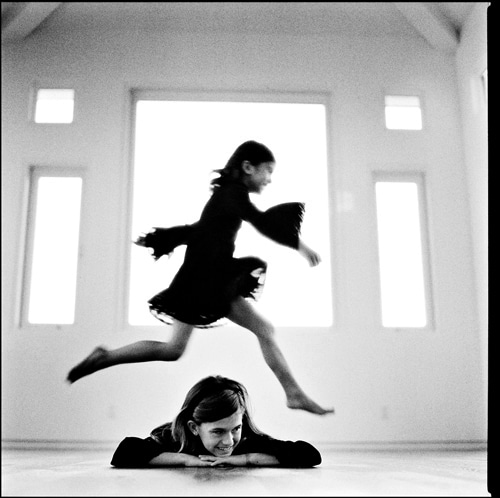
Children's Portraiture by Daniel Milnor

Often times, words like “vision, soul, passion, style,” are thrown around with reckless abandon, but most of the time this is only for show. These things, these traits are easy to talk about but very difficult to actually acquire. The good news, you already have them and all you have to do now is find them inside yourself.

Why do you need vision? Style?

Well, in essence, your vision is the most valuable thing you have. Making unique imagery, instantly recognizable imagery, is what will create the demand around your business.

Yesterday I received an email from a potential portrait client who said, “I had another photographer booked to photograph my kids, but after I saw your work I canceled with them and knew you were the photographer I was looking for.”

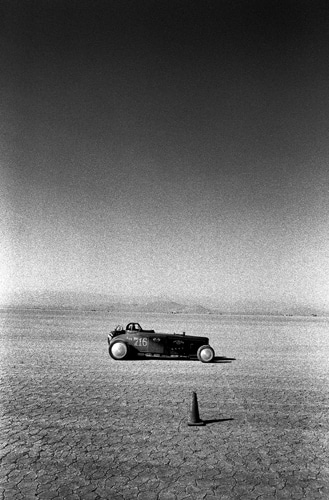
Mirage by Daniel Milnor

If I followed the industry trends, used all the same tools that the masses of photographers were using, then how does the client differentiate between my work and the masses? What do I have to negotiate with?

If I’m using camera A, lens A, Photoshop action A, Filter A, and you are using all these same things, then where is the value in my work? Why would anyone hire me over the photographer down the street?

When photographers conform and follow the masses, what typically happens is the job comes down to price and how much the photographer is prepared to give away. What gets lost? The photographs.

This is NOT the situation you want to find yourself in.

When you produce unique imagery clients recognize they are seeing something they can’t get everywhere. This doesn’t’ mean you are going to book every job, the reality is far from this, but what becomes the focal point of the negotiation is the IMAGERY.

My point with this little story is that finding your vision isn’t easy and might require time alone and asking some serious questions.

“Who am I with a camera in my hand.”
“What am I trying to say?”
“What do I REALLY want to do?”

You might think this last question is an easy one but I can’t tell you how many photographers I’ve spoken with who have simply followed what the industry has told them to do, or what they feel “They have to do.”

How did I find my vision?

I found my vision by NOT working as a photographer. I began working as a photographer, full time, around 1993. By 1997 I knew something wasn’t right. I was working but I wasn’t particularly thrilled with what I was producing and after looking back at what I had produced over the entire year I realized I didn’t have anything to show.

So, I took a job working for Eastman Kodak and signed a non-competition letter stating I wouldn’t accept any assignments during my time working for the company. I sold all of my equipment except for one Leica M body and one lens.

Over the following four years I learned much about the industry, other photographers, but more importantly I had the time to learn about my own work.

Over the four years I worked for Kodak I shot extensively on the side, not for anyone else, strictly for myself. When I picked up a camera I had only my own vision in mind.

After four years I looked at what I had accomplished and finally recognized who I was with a camera in my hand.

I made the decision to leave Kodak and become a photographer once again only this time I had a personal vision to lead my way.

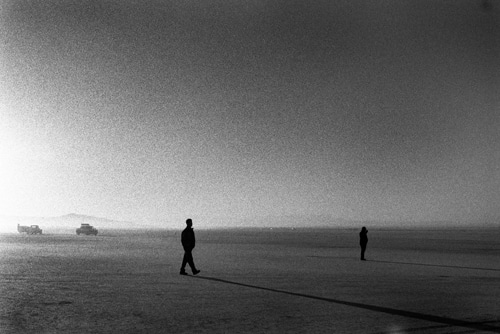
Mirage In The Desert, by Daniel Milnor

Had I NOT stopped working as a photographer I don’t think I would have ever come close to finding my vision. The industry and the controls being placed on me were just too powerful. There was little room to explore and what was expected of me was cut and dry.

My jobs today come more from me making suggestions than from a client telling me what to do. This is a very liberating feeling. When I book a portrait shoot or a wedding I book it because my work looks different and I have a clear vision of what I want to accomplish. Working this way feels like you are part of a creative collaboration as opposed to having to adopt to someone else’s idea of what images should look like.

My advice? Think about studying photography, really studying. Take classes, go to bookstores, go to galleries, museums and study what photography really has to offer. Learn who the masters were and are, and not just those in your genre. I’ve learned FAR more about how to photograph a wedding by looking at documentary work than I ever have from the wedding industry.

Also, think about taking on a long-term personal project, a project that is entirely controlled by you and preferably something outside your normal comfort zone.

Children's Portraits by Daniel Milnor

And finally, approach one of your best clients and suggest a new direction.

We can make all kinds of excuses about conforming, about not taking the time to find our unique point of view, but ultimately we simply owe it to photography to continue to explore the limits of our vision.

Finding your vision can be frustrating, confusing, sure, but when you begin to see a pattern or begin to see the proverbial light at the end of the tunnel the positive feeling will far outweigh any struggles you had to endure.

So go forth, take chances, break some eggs and keep your eyes open for the spark that can set you free.

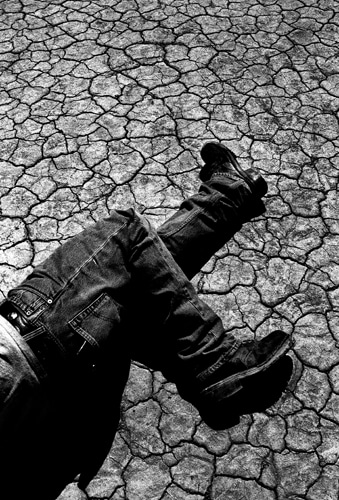
Desert Mirage by Daniel Milnor

Milnor is a former newspaper, magazine and commercial photographer who now tries to work solely on his own projects, projects that allow him to work in the fashion he feels most likely to produce images that go beyond the temporary. Milnor is also a member of the advisory board at Blurb, a print on demand book publishing company comprised of some of the most creative and talented folks he has ever encountered.

He has taught at Art Center College of Design, The Santa Fe Photographic Workshops, The Julia Dean Workshops and is scheduled to teach in Peru, California and New Mexico in 2010. He has also found considerable success with his portrait work, which is represented by the agency Masterfile.

Filed Under: Commentary, Photography Tagged With: craft, crafting, creative industries, current trends, daniel, daniel milnor, event photographer society, industry trends, milnor, photographer, Photography, Success, vision, vision led, visual arts, Wedding Photography

  • « Previous Page
  • 1
  • …
  • 93
  • 94
  • 95
  • 96
  • 97
  • …
  • 164
  • Next Page »

Subscribe To Tiffibox Treats!

Looking for a well-curated email newsletter that will leave you inspired and motivated about your photography business? Sign up below!

About Seshu

Seshu creates relaxed portraits of families and high school seniors in Avon, Connecticut. He also leads a successful headshot photography studio in Connecticut, helping professionals from a variety of disciplines project the very best versions of themselves. He created Tiffinbox as a way of inspiring photographers, to create better images and successful businesses. [Read More]

Email Templates For Headshot Photographers

Email Templates for Headshot Photographers

Recent Posts

  • How Capture One Changed My Event Photography
  • 10 Steps To Stay Positive In Times Of Great Stress
  • Why You Need To Read “Personal Branding For Photographers” Now
  • How To Master Your Website Content Step By Step?
  • Tony Taafe’s TNT Method For Headshot Photographers

Recent Comments

  • Stephen Davison on Are You A Business Owner Who Is Smart, But Stuck?
  • Ben A. on Don Giannatti Clinches The 8th Annual Tiffinbox Award
  • Dan on Don Giannatti Clinches The 8th Annual Tiffinbox Award
  • Donald Giannatti on Don Giannatti Clinches The 8th Annual Tiffinbox Award
  • Stephen Davison on G.E. Masana’s 6 Strategies For Wedding Photography Success
  • Naveen Kumar on Weddings In India Are More Than Being At The Right Place And At The Right Time
  • kartick on Weddings In India Are More Than Being At The Right Place And At The Right Time
  • Leonid Farbman on 6 Uncommon Trends To Grow Your Photography Business
  • Willow and Finch Wedding Photography on 11 Reception Tips To Help Your Wedding Photography
  • Web Designer Malaysia on How To Optimize Your Squarespace Website For Search Engines
  • Creastan on An Interview With Photojournalist G.M.B. Akash
  • Cindy Brown | Atlanta on An Open Letter To A Local Photographer

Become a Patron!

Copyright © 2026 · Tiffinbox · Site Design by Heather Mackan Creative · Built on Genesis