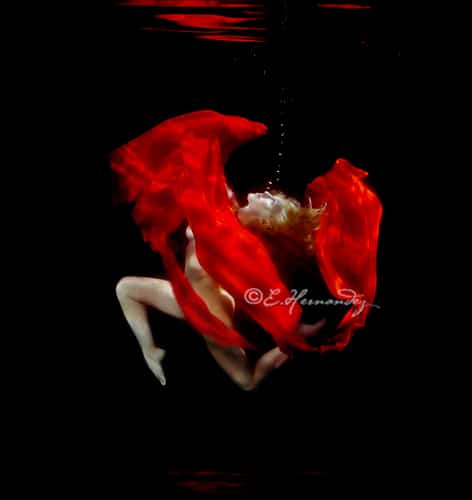
• Photography
  • Interviews
  • Business
  • Reviews

Tiffinbox

Inspiring Photographers

  • Home
  • About
  • Blog
  • Contact

The Significance Of Photographing Engagement Sessions

June 15, 2010 by Guest

Sunny Mathur, AvatarThis is a guest post by Washington, D.C. photographer Sunny Mathur, of Photographick Studios.

Every wedding photographer dreams of the day when all their clients will completely and honestly open up to them, let their guard down and let their emotions flow; tears and all. Every wedding photographer is looking for the magic phrase that will allow this to happen; it's a novel concept that seldom comes to fruition without some assistance and hard work (sorry no
magic phrase).

From a client's perspective it is difficult to open up to a stranger. It is even more difficult to tell this stranger intimate details about you, including how you met, proposed and details about your partner. Put yourself in their shoes, it's already awkward to pose for pictures but intimate
pictures is a completely different story. Although this cannot be a direct correlation to our job as wedding photographers it does provide some insight into some clients perceived “stiffness.” To gain this all access pass into the lives of our clients we must earn it. This all access pass well worth its cost.

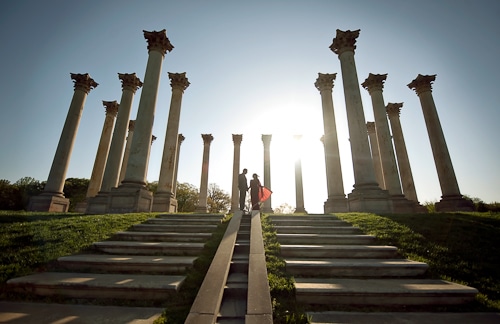
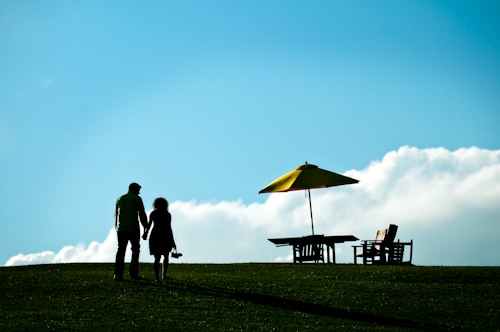
One solution that we particularly enjoy due to the financial reward as well as the emotional connection we build with our clients is to meet them before the wedding during an engagement session. We ask the couple to think of a location that is particularly important in their relationship, whether the location of their first date, where the groom proposed or simply somewhere they both love going. This allows your client to associate those great memories to their engagement session and thus their feelings towards you, the photographer. We ask them to reminisce about the location and more times than not the future bride will glow and recount all her favorite memories.
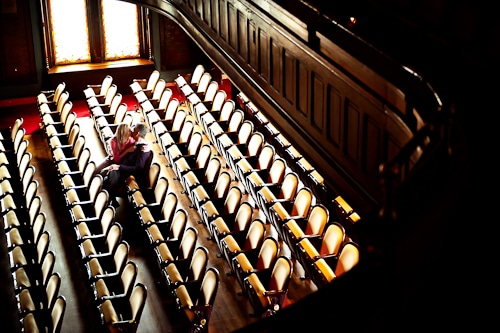
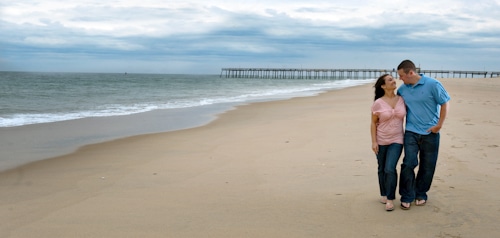
Engagement Session 1 - Sunny Mathur

Engagement Session 2 - Sunny Mathur

Engagement Session 3 - Sunny Mathur

Engagement Session 4 - Sunny Mathur

The groom will chime in with a few of their own and before long they are talking, laughing, smiling and kissing. This allows us to do three items all at once; befriend our clients, show them our value by taking some amazing pictures and prove to them that they can trust you.

At each engagement session we probe about their wedding preparations, ask them if they need assistance, provide vendor recommendations, bring up current wedding trends and past wedding ideas. We try to connect with the bride and groom to show them we are truly invested in the success of their day and the images captured. We work hard to build a strong rapport with our clients. Through this not so magical formula we build their friendship, their trust and after we blog a few of their images from their engagement session we gain their love. Through this connection, this memory and their understanding of our dedications towards them, we are no longer looked at as a vendor but as a friend who can share in their emotions, their love and perfectly capture their perfect day; tears and all.

Resource Tip From Seshu: If you are ever stuck for ideas on how to pose your couples, reach for the Design Aglow's Inspire Me Cards: Modern Engagement Posing Guide. Those should fuel your imagination!


Filed Under: Photography Tagged With: Couples, Engagement Sessions, Photography, Weddings

Learn To Light With Zack Arias At CreativeLive.com

June 6, 2010 by Seshu | Editor & Publisher

Learning to light is one of those big steps that you will take as a photographer. True, there is a lot you can do with ambient light, or if night time photography is your thing, then investing in a tripod makes sense.

As a wedding photographer or portrait photographer, I am called to a variety of scenarios and I have to make quick calls to whether to use the existing light or enhance it with a flash. I recall buying two Nikon SB-800's and then asking myself, “now what?” I didn't know much about flash, how apertures and shutter speeds and ISO's all worked in tandem, or that my images would truly rock if only I took the flash off of the hot-shoe on my camera body.

Subjected to wedding after wedding where the reception lights were getting dimmer and dimmer, I was desperate to learn to light. Through the Digital Wedding Forum, I learned about Zack Arias, an Atlanta-based photographer who had cut his teeth photographing bands and music concerts. Zack was and is photographing weddings with another fabulous photographer named Marc Climie (more on him in a future post). When I heard about Zack's OneLight Workshops, I had to attend. The description matched my needs to a T. It was meant for those who wanted to learn from the ground-up, to light.

Well, some weeks back, Chase Jarvis and friends inaugurated CreativeLive.com, a website for photographers to learn from the very best photographers in the world.

On June 11, 12 and 13 (yes, this coming weekend), Zack, will be presenting at CreativeLive. If you can't make it you can buy his presentations as a digital download for $79. That, my friends, is what I call a STEAL. Get it!

And you've got to watch this by my man Zack:

I have to be on the road for that weekend, so I have ordered the download. If you are anywhere near Connecticut, bring some popcorn; we can watch it over at my place. I hope it is in HD! I am sure it will be a treat and a great learning experience. Perhaps we can even watch it and then go out and practice like real Strobists.

So, in full disclosure – I have attended two OneLight Workshops by Zack – one in Boston and the other in New York. They were both fabulous and I recommend them to anyone who is just starting out. If using your flash freaks you out (I was one of those to be totally honest), you should go. If you don't know what “off-camera lighting” means, you should go. If you want to create images with a greater depth, by using lighting, you should go. Well, you get the picture, right? [grin]

Unlike a lot of workshops where you sit and stare at an instructor and take furious notes, Zack broke it up and had us go out and shoot and practice and practice and practice. He split us into groups, had models stand in and made his equipment available for our use. He isn't just a photographer, he is a teacher. And by that I mean he talks and shows and makes darn sure you GET IT, before moving on to the next topic. One of the first things he declared was that there were no “stupid questions.” All was fair … from the very basic to the very technical. And if Zack didn't know the answer, he would say that he didn't know rather than bullshit his way through it.

Well, with this workshop now on CreativeLive.com, you don't have to travel far. The workshop comes to you online. That's bonus number one. And as I have said, if you are busy or away from your computer or you are still running on dial-up (God save you!), you will want to get that download for $79. That's bonus number two. Both will lead you to bonus number three, which is your desire to go and see the man in person at a workshop near you.

I don't make a dime for saying all this, so rest easy, sit back to watch and learn from a lighting guru. Your comments (after you watch the live event, which is FREE, by the way) would be greatly appreciated.

Filed Under: Lighting, Photography, Workshops Tagged With: Flash, Lighting, OneLight, Photography, Strobes, Workshops, Zack Arias

Visual Peacemakers UNITE!

May 24, 2010 by Guest

Mario Mattei, AvatarMario Mattei is a photographer, visionary, & president of IGVP, based outside of Istanbul, Turkey.

I’m the kind of person who likes to ask “what if…” I’ve learned that I’m not alone in this and not alone in asking one particular “what if,” one that my friends and I were asking in 2008 …

In light of the tragedies on 9/11 and the fear-based reactions so often caused by worldviews shaped in onslaughts of “shocking” visual media, what if humans instead got consistently exposed to “other” cultures through photography and media themed on dignity, hope, and common humanity? Would the world be a different place?

Matt Powell - Fiena, East Jabel Mara, Darfur, Sudan

This idea developed and is now known as “visual peacemaking.” All this year we’ve been moving it from dreams to action. Visualpeacemakers.org will be launching very soon. It’ll be a place to “get exposed” to the world’s peoples. And to get involved in contributing.

With this larger-than-life vision, my closest and most brilliant friends (Logan McAdams, John Machado and Jim Mullins) became co-founders with me in initiating, creating, and recruiting the International Guild of Visual Peacemakers (IGVP).

The vision spread through emails and Skype conversations. Matt Brandon, Nicole Gibson, and David DuChemin were in on the ground-level. It became our dream to form an organization and cross-promotional website that would advance the cause for visual peace and leverage photographers from around the globe to “SHOOT FOR PEACE.”

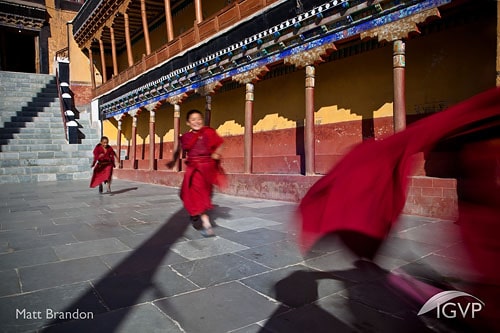
Matt Brandon Image of Buddhist Monks

Not much time passed and we soon invited Gavin Gough, Matt Powell, Ami Vitale, Jeffrey Chapman, and Kerry Lammi into the Guild. These world-class photographers, and do-gooders, immediately clicked with the call to “peacemaking and breaking down stereotypes by displaying the beauty and dignity of various cultures around the world.”

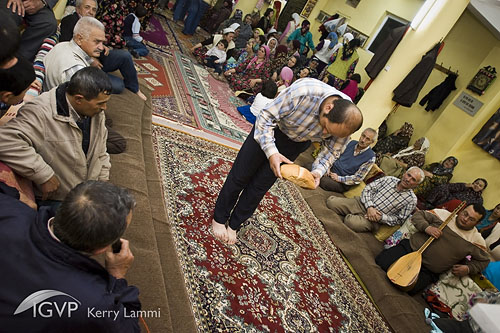
Kerry Lammi - man presents the bread for a blessing before the congregation.

Jeffrey Chapman

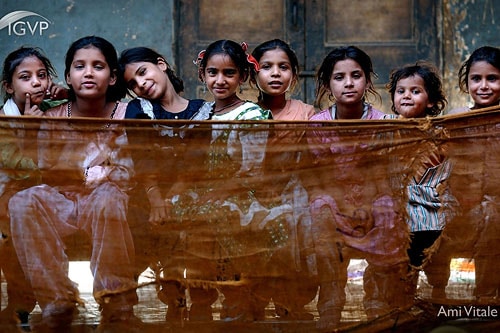
Ami Vitale in Gujarat

We quickly ran into a wonderful “problem.” Everyone wanted in. We had some strategies in mind for how a small guild could operate, so we created a second, connected strategy. We’re forming a branch of the Guild called the Visual Peacemakers Community, able to grow wide in numbers and deep in impact. These will be members on our site with Peacemaker Profiles, galleries, etc.

Today we’re defining visual peacemakers as photographers/ videographers who especially:

• Document our common humanity
• Display the beauty & dignity of people
• Make an unknown culture known to another.
• Tell stories of hope
• Bring new perspectives where harmful stereotypes exist

Their images foster peace by building bridges of awareness & understanding between ethnic, cultural, & religious identities.

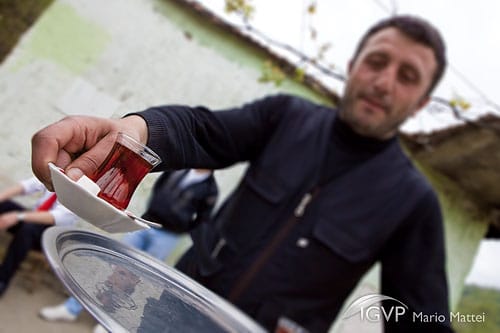
Mario Mattei, Turkey

On the website each photographer will have an in-depth profile and portfolio. It’s being developed as a place to create, connect, and catalyze through tools & social media. Resources for photographic growth will be available like ebooks, podcasts, articles, mentoring, portfolio reviews, grants and world workshops. This aspect has really been developing and has been rewarding to see just how much visual peacemakers can and will be equipped to make a difference.

Each and every member will be inviting their friends, co-workers, and family to take part by signing a half-page Charter for Visual Peace that expresses what it means to be a socially conscious viewer of visual media. And here you have the beginning of impact beyond our group of visual communicators.

Without glossing over tragedy and conflict, IGVP is seeking to show more than human hardships. We’re displaying all that is beautiful about us, and all that connects us. Visual Peacemakers treat humanity’s similarities as sacred and our diversities things to be honored. We’ve got a long list of photographers to be notified of the launch. So, though this seems to have been going on for awhile to some of us, for most, it all really begins on launch day!

Will you join us?

Filed Under: Culture, Documentary, Photography, Photojournalism Tagged With: Culture, Diversity, Peace, Photography, Understanding, Visual Peacemakers

In Motion: Shooting Dance Performances

May 22, 2010 by Guest

Visithra Manikam, AvatarThis guest post is by Visithra Manikam is a photographer based in Kuala Lumpur, Malaysia.

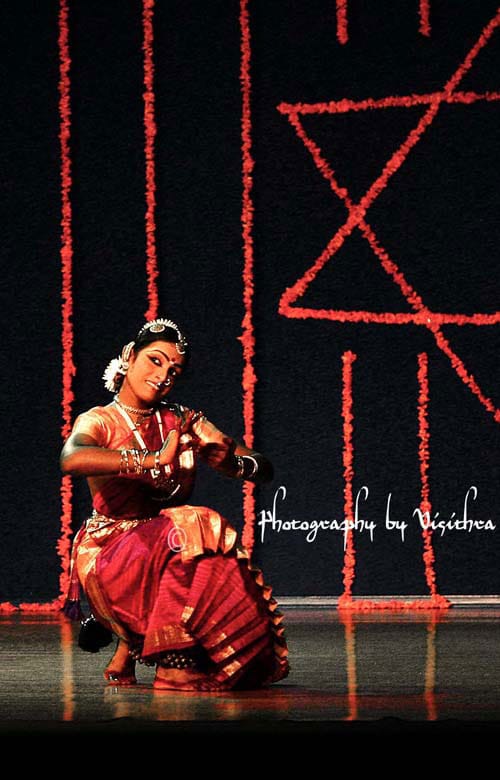
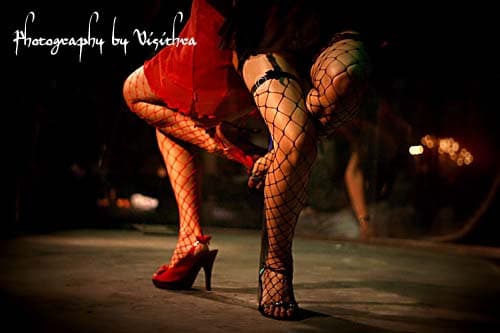
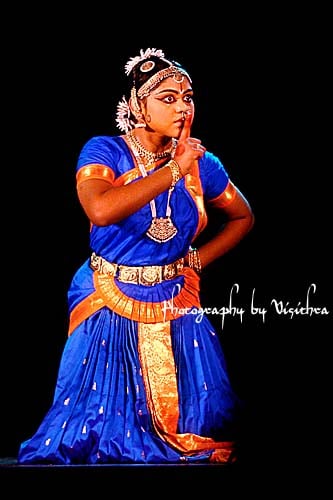
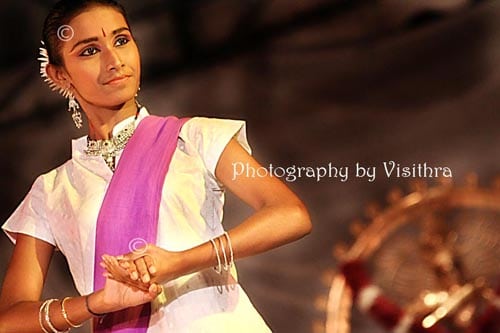
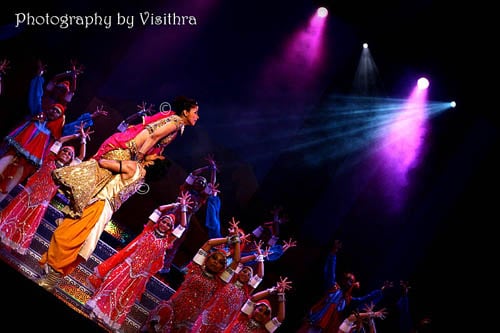
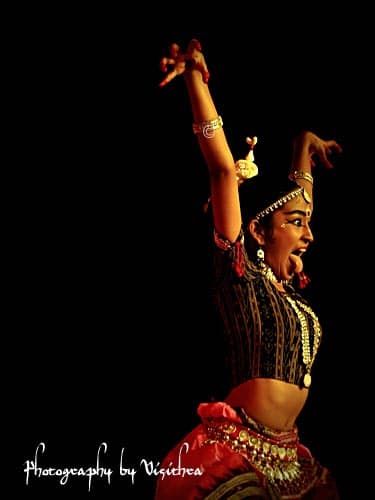
Dance has been one of my favorite subjects to shoot and I’m particularly fond of shooting live performances but they’re not the easiest to shoot. There’s myriad expressions, body language, hand gestures and fast movements to keep you busy.

Planning and knowledge helps to make a dance performance shots look extraordinary. So how is a live dance performance different from shooting a music concert and what should you look out for?

The Venue

Dance Venue

Auditoriums, community halls, small function rooms each have different space and restrictions to work around. So arrive early and plan your shoot with the organizer if possible. Or, find a seat with a good shooting range. Check out the stage light settings so you can gauge where the light will fall.

The No Flash Rule

Dance, No Flash Rule

Usually we’re requested not to use flash, even if it’s an off body set up as it may distract the dancers. Unless you’re doing motion blur shots of the dancers, use a higher ISO so that you can shoot at a reasonable shutter speed as dancers are usually quick and swift on their feet. Plus unless you have a light set up on the stage it’s totally useless to shoot with a flash from a seated auditorium setting. Do remember moving right up at the stage may just get you doused by rotten eggs [grin]

Pick A Strategic Spot

Dance, Pick A Strategic Spot

You’re usually requested to shoot from one location throughout the duration of the event as to not distract the audience. So again arrive early and pick a good spot to station yourself without blocking others. I know I keep repeating this but it really matters. Sometimes you may encounter other photographers who block everyone’s view by standing, so try to get them to politely move or just get up and move because it can be impossible to explain to someone they’re a disturbance.

Knowledge

Dance, Knowledge

A technically perfect shot is useless if the photo is caught at the wrong time. Hand gestures, expressions and body movement play a big part in getting a good photo. A dancer usually holds a pose only for a few seconds and sometimes executes a dozen poses and movements in less than 30 seconds. So unless you have knowledge of the style of dance, watch and time your clicks so that you get the right shots. A shot of a dancer’s hands in between a pose would just look clumsy and no dancer would want that. Read any information you can on the dance style beforehand so you can anticipate their moves.

Lighting Crew

Dance, Lighting Crew

Your photos can he helped or hurt depending on how good the lighting crew are. If they’re fond of flashing different colored lights on the dancer you’re going to have white balance issues with funky colored photos. Work with the situation and try to correct your white balance during the shoot rather than once you’re back as editing those images can be a pain. I’m always shooting events where the lighting crew love to flash red during an angry expression scene – problem is red drowns out the expression so much sometimes I just wanted to strangle the crew [grin]

Backgrounds

Dance, Background

Keep them clean, so plan your location based on what’s on the background. Community hall performances tend to have a lot of decorations and words in the background, so try to minimize their appearance in the shot as it will be distracting. You can of course use them to your advantage in some cases.

Stage Lights

Dance, Stage Light

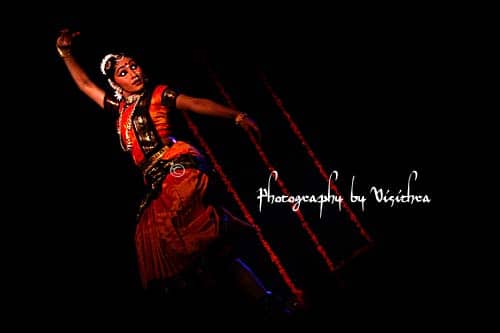
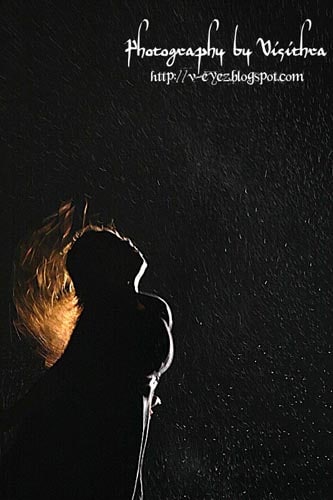
If they are prominent and stream out interesting ray trails, use them in your compositions. It will give your shoots an added edge. By switching your angles and compositions according to the dance movements you can help dramatise your shots using these lights.

Watch

Dance, Watch The Performance

Don’t forget to watch the performance while you’re getting the photos, dance can inspire you in your other photography work. Watch their minute expressions and body movement to incorporate into your other photography work.

So plan ahead and brush up on your dance knowledge and you’ll be getting the shots in no time.

Filed Under: Dance, Photography Tagged With: Dance, Guest Blogging, Photography, Technique

Forays In Photographing Underwater

May 20, 2010 by Guest

Elena Hernandez AvatarThis is a guest blog by photographer Elena Hernandez from Dallas, Texas. As a professional photographer for the past 30 years, Elena has been through various evolutions in fine tuning her craft. In the beginning, her passion was in the purity of photojournalism and worked as a freelance photographer for several local newspapers for a few years. Evolving into commercial work then transitioning into school and wedding photography. Her journey has led her into seeking out the new ways to stay creative and bring her clients into the evolution of her vision and art. Elena has won various awards such as the Fuji Masterpiece Awards to Kodak Gallery Awards. She earned her Masters of Photography degree, Craftsmen and Certification degrees from Professional Photographers of America. She is one of only a a handful of Latin women to have those degrees. I am extremely honored to have her pen some thoughts about underwater photography.

“Look and think before opening the shutter. The heart and mind are the true lens of the camera” – Yousuf Karsh

What causes a person to be inspired to go beyond what is normal into the extraordinary? For some, it is Love. For some, it is Boredom. Others might find it is because they are in a situation that demands change. I found myself one day needing a change. I needed to go beyond my comfort zone and do something totally foreign to me. I needed to take a leap into my art and do a ”free fall” of sorts. I know it is scary to venture out into the unknown. Yet, it is also exciting …

“What if I tried to shoot an underwater portrait session? What would I do to go about making that happen?”

One night, in 1999, I was having a drink with a friend named Rex, and we were discussing “what if's”… What is the one thing in photography that I have not done that I would like to? I mentioned that I attended a PPA convention one year, and met Gigi Clark and she had done some lovely underwater images of brides that reminded me of a book I had called “Pool Light”. By an incredible photographer by the name of Howard Schatz. It was fine art fashion portraiture underwater. I mentioned I would love to be able to do that someday. Then the thought occurred to me …”What if I tried to shoot an underwater portrait session? What would I do to go about making that happen?”

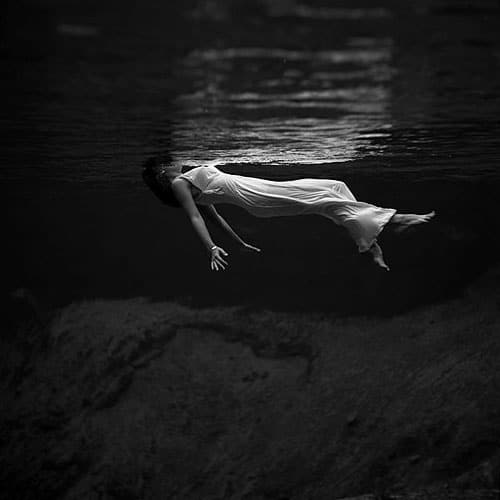
So began my quest to do something different and unique that was challenging and very VERY out of my comfort zone. Just so you know, there is nothing new in photography that has not been done before when photography was in it's infancy. Before Howard Schatz tried to photograph models underwater, there was a woman photographer by the name of Toni Frissell who was a society/fashion photographer in the 1920's who shot for Vogue and the New yorker. Her images were very glamorous and one in particular that really excited me was shot in Florida, underwater of a model for a fashion shoot. If you get a chance, look up Toni Frissell. Here is the image below:

Tony Frissell - Images of model underwater in Florida

Keep in mind, this is before they invented cool underwater housings and cameras. She probably shot this inside of a float-able fish tank and probably shot this with herself being underwater and the camera inside that fish tank contraption just barely below the surface. There is no real data about how or with what this is done with, but just looking at this image made me try to figure out those questions.

As luck would have it, I had a woman ask me to photograph her nude indoors then outdoors. She just got some new ‘upgrades' if you know what I mean. I then asked her if it would be possible to do an experimental underwater session at the end of the session and that if she did not like those images she did not have to purchase them. She agreed.

Now I was committed to a project I knew nothing about. Zilch. Nada. Zero.

I figured that I would ask a fellow photographer friend, if I could borrow his underwater Nikonos camera to play around with. He said “Sure, but it has not been used in years and I think the O ring is leaking”… I said to myself: “Hmm what is an O ring?” I later found out that it is a rubber piece that keeps the camera from flooding with water …(we'll get to how I found that out later.)

I wanted to test the camera out so I bought some 35 mm film and went to a pool and immersed the camera underwater and shot in broad daylight.

Four things I noticed:
1) The camera underwater magnifies things.
2) I do not like the squiggly lines that happen in broad daylight.
3) Everything is off color blue.
4) This is a fixed focal length lens so there is no room to move around.

I decided to shoot at night.

I then also decided to immerse my $300 dollar black muslin into the pool to create a dynamic contrast that I felt this type of photography needed. (the chlorine bleached my lovely background. don't ruin a perfectly lovely background like I did.)

One thing I make clear is safety. We get in and out on one side and the electronics are on the other side.

Once I got the film back, I was really excited about this upcoming session because the images, even though they were kinda blue, looked really magical. The day came. We photographed indoors and then outdoors. I had to have two assistants with me as a “look out” for the outdoor session, because all of a sudden men were tromping in the woods where I was photographing this nude woman. I photographed those images very quickly. By the time we got back to the studio it was dark. It was great that I had a private pool to work in and so the nudes were not observed by anyone but my assistants and myself.

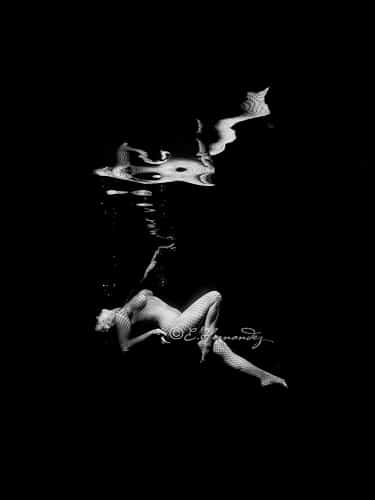
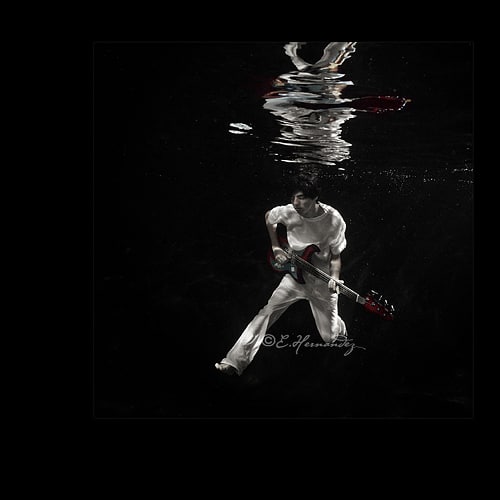
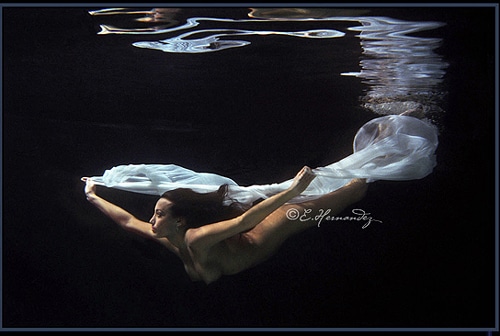
Lyrical Depth by Elena Hernandez

I lit it with 2 Photogenic lights with strip soft-boxes on the one side of the pool. I slaved the lights. I wanted a direction for the lighting and so all the electronics are on one side of the pool. One thing I make clear is safety. We get in and out on one side and the electronics are on the other side. I was halfway through the session when all of a sudden the lights were not firing. There was a short in the camera's flash system. So I went to plan B. I shot Bulb open and lifted my hand out of the water so that I could have the assistant trigger the lights manually. The problem was…when I lifted my hand out of the water it made me unbalanced and as a big girl … my butt kept floating up to the surface … (I know laugh all you want it was funny.)

Soul Deep by Elena Hernandez

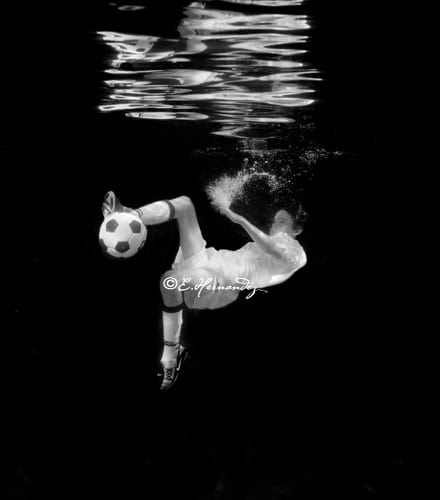
Catching Air by Elena Hernandez

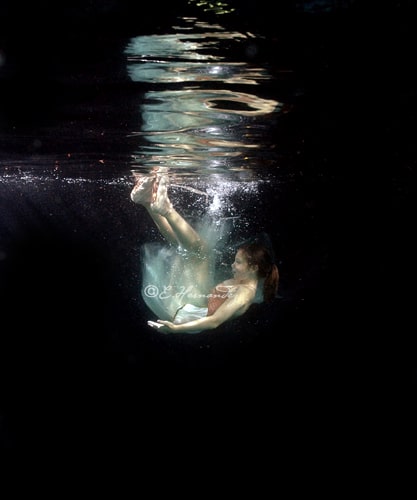
My second assistant then got into the water to hold me under the surface … (lesson number two was to get a weight belt). Once I was finished with the session she went home. I tried to get the film out of the Nikonos and realized the camera was flooded slightly. (sigh … remember the O ring issue?) I immediately took the underwater roll to the lab and they processed it that night. I only lost about five images but the rest were fine. One image in particular was exceptional. I titled it “Free Fall.” It hung at PPA and was published into the showcase collection book.

Freefall by Elena Hernandez

This was a very difficult session with all of Murphy's Laws coming into play but I am so glad I tried. I would rather try and fail than go through life saying “would have, could have, should have.”

Water Sprite by Elena Hernandez

From this one session, I started to get more people requesting underwater imagery. Then my clients started to get more creative with me in the final Art Pieces. I raised my prices for those sessions because they were so labor intensive.

Fallen by Elena Hernandez

I also learned something important about myself and that is I am tenacious … I want to thank those pioneers who inspired me to want to be different … I hope that what ever idea or dream you might have that you do not give it up no matter what the challenges.

Rise Of The Phoenix by Elena Hernandez

Elena is on Twitter and Facebook. Be sure to connect with her. And you should know that she and I would greatly value your comments below. Hit her up questions about what she did and why? She may be able to give you more pointers on how to get started on photographing underwater.

Filed Under: Photography, Strobist, Visual Art Tagged With: Lighting, Nudes, Technique, Underwater Photography

  • « Previous Page
  • 1
  • …
  • 97
  • 98
  • 99
  • 100
  • 101
  • …
  • 164
  • Next Page »

Subscribe To Tiffibox Treats!

Looking for a well-curated email newsletter that will leave you inspired and motivated about your photography business? Sign up below!

About Seshu

Seshu creates relaxed portraits of families and high school seniors in Avon, Connecticut. He also leads a successful headshot photography studio in Connecticut, helping professionals from a variety of disciplines project the very best versions of themselves. He created Tiffinbox as a way of inspiring photographers, to create better images and successful businesses. [Read More]

Email Templates For Headshot Photographers

Email Templates for Headshot Photographers

Recent Posts

  • How Capture One Changed My Event Photography
  • 10 Steps To Stay Positive In Times Of Great Stress
  • Why You Need To Read “Personal Branding For Photographers” Now
  • How To Master Your Website Content Step By Step?
  • Tony Taafe’s TNT Method For Headshot Photographers

Recent Comments

  • Stephen Davison on Are You A Business Owner Who Is Smart, But Stuck?
  • Ben A. on Don Giannatti Clinches The 8th Annual Tiffinbox Award
  • Dan on Don Giannatti Clinches The 8th Annual Tiffinbox Award
  • Donald Giannatti on Don Giannatti Clinches The 8th Annual Tiffinbox Award
  • Stephen Davison on G.E. Masana’s 6 Strategies For Wedding Photography Success
  • Naveen Kumar on Weddings In India Are More Than Being At The Right Place And At The Right Time
  • kartick on Weddings In India Are More Than Being At The Right Place And At The Right Time
  • Leonid Farbman on 6 Uncommon Trends To Grow Your Photography Business
  • Willow and Finch Wedding Photography on 11 Reception Tips To Help Your Wedding Photography
  • Web Designer Malaysia on How To Optimize Your Squarespace Website For Search Engines
  • Creastan on An Interview With Photojournalist G.M.B. Akash
  • Cindy Brown | Atlanta on An Open Letter To A Local Photographer

Become a Patron!

Copyright © 2026 · Tiffinbox · Site Design by Heather Mackan Creative · Built on Genesis