• Photography
  • Interviews
  • Business
  • Reviews

Tiffinbox

Inspiring Photographers

  • Home
  • About
  • Blog
  • Contact

Shine A “Positive Light” On Bangladesh

March 26, 2013 by Seshu | Editor & Publisher

Bangladesh. For those of us in the west, it's a land that is far off. Over there, mostly to be forgotten and only reminded when the traditional media is quick to paint a picture of its poverty, its political strife, its annual flooding and perhaps its religious conflicts. It's all negative.

I am calling their bluff.

While I am not from Bangladesh, I've been there once. My memory is similar to Mikey Leung‘s – that the country is a vibrant place, that people are hospitable and welcoming and that there are many more things that are positive about Bangladesh than there are negative.

Yes, it took a visit to dispel the myths that I had constructed in my head. While not everyone can travel to Bangladesh (I think they should), Mikey Leung, in cooperation with Drik has produced a book, a photo essay of Bangladesh that is wholly positive. It's a called “Positive Light.”

Here is Drik's founder Shahidul Alam talking about the project:

This post is an appeal to you my readers. I am not pitching you anything. I hope this book makes you think differently about Bangladesh.

Support the production of this book here. They are looking to raise $10,000 in the next 5 days and I know they will do it. Their ultimate goal is to raise $20,000 so that the book is distributed far and wide.

Will you consider making a difference in the way a country and its people are perceived?

Think about it for a second – why do you photograph? For me, it is a way of discovering people, emotions, places and culture. Your “why” may be similar or different, but I'm sure you'll find “Positive Light” a welcome inspiration of all that is possible.

Join me!

Filed Under: Culture, Photo Books, Photography Tagged With: A Positive, Bangladesh, Drik, Drik Picture Library, Leung, Light, Mikey, Positivity, shahidul alam, Shine, Traveling To Bangladesh

Light It, Shoot It, Retouch It by Scott Kelby

September 7, 2012 by Eileen Earnest

This guest blog is by Eileen Earnest, an expatriate photographer who lives in Abu Dhabi. Follow her on Twitter.

Light It, Shoot It, Retouch It is the latest in the Kelby Training Series. I am a fan of Kelby’s how-to books for several reasons. The first and best is that Scott Kelby is funny. I find it fairly impressive to make an instruction manual entertaining, and he does just that. His writing tone gives the impression that is just how he comes across in a conversation. Quite a skill to have and I gravitate to his books because of that ability to make me laugh now and then amongst fairly dry material.

I own two other Kelby books, one on Photoshop and the other on Lightroom. They both provide clear, easy to follow instructions and many, many photos. They are good books. But Light It, Shoot It, Retouch It is different-good. Here’s how: In any type of instruction book, typically the author starts with the most basic, foundational stuff. Then they build, build, build. If I am interested in a specific aspect of the program I am reading about, it might be page 193 before I get my answer. Light It, Shoot It, Retouch It gives photographers exactly what they need, each step of the process, and it’s complete from start to finish in under 20'ish pages. Some chapters are even shorter, but still chock full of all the information and detailed instruction on getting the best photo, during and after the shoot.

The Info Before the Info and the Info After the Info

Each type of shoot is described in the book as it’s own chapter. However, before we even start the first lighting set up, Kelby gives us eleven things we need to know prior to diving in. He has some equipment suggestions and points the reader to his online companion to the book.

Every chapter is accompanied with detailed photos of the background and lighting configuration so Scott also explains how to read these. These eleven tips are followed by an equally important list of ten tidbits that he wishes he had known before using studio lights. And yes, I also wish I had known these things, so thank you, Scott! On a personal note, I’ve only worked in a studio for the last 4 months. Setting up the lighting and making the transition from only natural light photography is no small task. This quick section of the book is well placed and very important to any photographer who is getting his or her own studio off the ground.

Towards the end of the book, there is a look at each of the setups with hot shoe flashes instead of strobes. In addition, there is a comprehensive gear list as seen in the different shoots. Scott Kelby shoots Nikon, which I have decided to not hold against him, but it is easy to figure out the comparative Canon equipment when necessary. (Also, he flip-flops between using a Nikon and Canon body for the back-of-camera photograph in each chapter so no one feels left out. The list of modifiers was incredibly essential to me as I find myself randomly buying gear at times. I would have made better choices with a little more direction before purchasing. This is a perfect wish list of studio equipment.

Chapter By Chapter, Shoot By Shoot

The next twelve chapters describe in thorough, but concise, detail each different style of photography he is shooting. We begin with a 3-Light Classic Beauty Setup, and continue through eleven other types of lighting. I imagine Scott started with the 3-Light Classic because it’s such a common set up in the studio. My favorite “style” in the book, however, is the 3-Light Sports Setup. It’s so simple but the final image is evokes a sense of strong, silent power. The full length set up was particularly helpful, as I tend to struggle with evenly lighting from head to toe. With each of the twelve set ups, we get to see Kelby actually shooting the subject and the light configuration, including the power settings on the strobes. There is literally no better way to explain how he took this photo than by showing us a photograph of how he took this photo. Actually, FOUR photographs for each lighting set up. Plus, each chapter starts with the final image placed next to the contact sheet from the shoot. Seriously, it could only be more helpful if Scott Kelby himself came to my studio, set up my lights and held my camera for me!

Wait! It Gets Better!

What comes next, however, was even more eye-popping. Scott details his retouching, step by step. Not in a general, “if you’d like to remove a blemish you might choose the spot healing tool…” but in a, “I am removing this blemish on this eyelid with this tool,” method of instruction. Combine this level of detail with Scott’s conversational writing tone, and it’s as if he’s standing over your shoulder pointing to the right keystrokes! I can only imagine the depth of his love of teaching and sharing of knowledge that Kelby must have to go into such detail as he shares his tricks of the trade. Even if you feel pretty confident in your lighting ability and your shooting is sharp, the quick, specific and step-by-step Photoshop aspect of this book is worth its weight in gold. Ok, this man is the President of the National Association of Photoshop Professionals, and he clearly knows Photoshop much more thoroughly than the rest of us mere mortals. Still, he makes it look so darn easy and intuitive! I came away from the book believing if I can read, I can make these edits happen.

Does It Work?

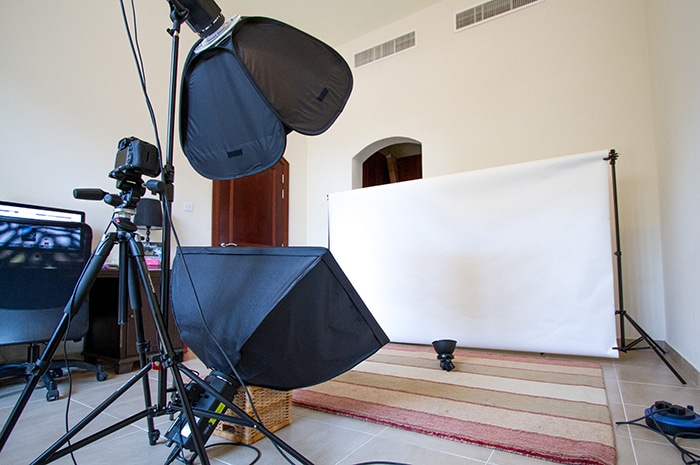
To test my “literacy is the only requirement” theory, I decided to choose a lighting set up and follow Scott’s directions as closely as my equipment will allow. My test will sample the 3-Light Classic Beauty Setup. I don’t have a beauty dish, so I am using a 24×24 soft box. My bottom light is a 24×34 soft box on a strobe.

Eileen Earnest Portrait Set Up

The first hiccup: No flexible arm on my light stands. To remedy this, I had to remove the boxes from the stands and prop them on the floor. My model would have to kneel … not ideal, but it worked! The photo [PHOTO 1] below shows the position of the lights and backdrop.

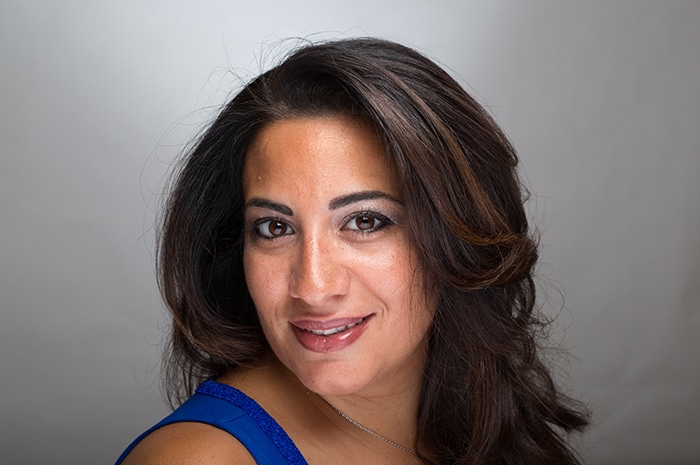
Ok, here is the straight out of camera (SOOC) image:

Eileen Earnest Portrait Straight Out Of Camera Image

I have a few disclaimers to make about following Scott’s steps in Photoshop.

#1. I am a self taught PS user. Before upgrading to CS6, I found everything (I thought) I needed in Elements. This is another reason why LI, SI, RI is the perfect tool at this stage in my learning process.

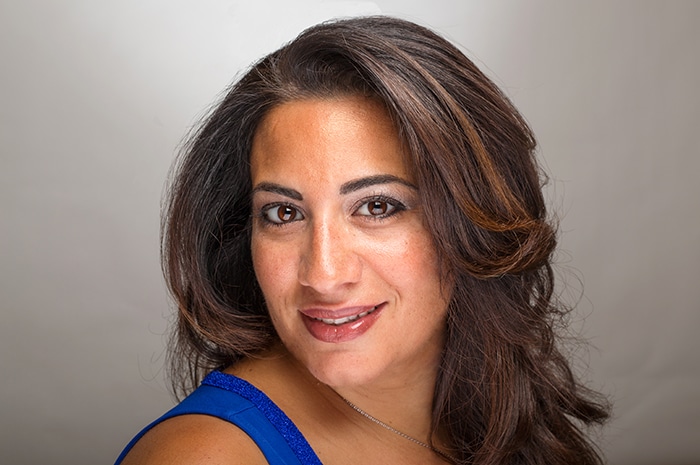
#2. I have a horribly unsteady hand and do not typically retouch this much because I do not shoot glamour or beauty shoots. Really, I am the perfect candidate for this test because I am basically a novice user. I followed step by step, skipping only that did not apply to my photo. The blemishes were removed, skin softened, dodged and burned, eyes brightened, unsharp mask applied.

Suzanne, my willing model, has long dark, wispy hair as you can see from the image below:

Eileen Earnest Portrait Enhanced Image

I didn’t remove as many wisps as Scott may have, but instead focused on smoothing down above her head and removing flyaway hairs on her face. Again, I think a more experienced user could do a better job. However, the question is, can someone follow along with the instruction in the book and get a decent result? I believe yes! The steps are there; the technique and ease will come with a lot of practice.

At the end of the day, we have so many books to choose from as photographers. Picking one that will literally come in handy on a weekly basis ensures my time and money is not wasted. I feel confident that Light It, Shoot It, Retouch It by Scott Kelby will not get dusty on my shelf nor will it on yours.

Filed Under: Books, Photo Books, Photography, Review Tagged With: 3 light, abu dhabi, eileen earnest, light photography, Lighting, national association of photoshop professionals, natural light photography, retouching, scott kelby, shooting, studio light, the shoot

“Going Amateur”

December 29, 2010 by Stuart Sipahigil

This is a guest post by Stuart Sipahigil. He is an amateur photographer in the traditional sense of the word; that is, he does it for the love of the craft. His photographs have won awards, appeared in publications, and have made their way into homes and businesses around the country. Stuart also teaches workshops to help other amateur photographers find great photographs close to home. Stuart’s work can be found at TheLightWithout.com.

So, you're “just” an amateur photographer… but you've discovered that you have a love for making photographs and you seem to be pretty good at it. Your friends and family are telling you they love your photographs and several have said you are “good enough to be a professional.” Maybe you've entered a local photography contest or two, and you've done pretty well. Or perhaps you've even sold a few prints of your photographs to the local coffee shop or restaurant.

Now you're thinking to yourself, “maybe I could be a professional photographer,” and then, “how would I do that?” So you check out a couple of books about being a pro photographer — David duChemin's VisionMongers: Making a Life and a Living in Photography or Dane Sanders' Fast Track Photographer, for example — and discover that it's actually quite a bit of hard work. You already have a career right now and well, it's paying the bills and you're doing okay, even in this economy. Shifting gears to becoming a pro is a big change and would disrupt your life quite a bit. It might be doable, but it would be painful, and you're just not sure it would be worth it.

So now what do you do?

Traditionally, there were the only two paths available to you: turn pro, with all of the responsibilities that entails and the costs associated with it. Or remain an enthusiastic amateur, occasionally selling a print or two at your local art fair, or maybe shooting your cousin's wedding for a few hundred bucks (and thus, pissing off an entire group of professionals—but that's another story). However, I think there are several other choices you can make; several other paths you can trod that don't involve becoming a traditional “pro” to find satisfaction as a talented amateur photographer.

The Internet has changed everything. You have many more outlets for your work now than ever before. Traditionally, if you wanted to get your photographic work out into the public eye you had only a few choices; magazines, gallery showings, or stock photography, for example. Today, you can sign up for a blogging service and start your own photography blog, publishing your work to a worldwide audience in about five minutes. If you're a little more ambitious, you can self-publish your own “coffee table” book of your photographs using services like Blurb or Inkubook. Or publish a photography ebook, either on your own or through a publisher like Craft & Vision. All of these things were prohibitively expensive and perhaps even impossible to do on your own only five years ago.

There used to be an old saying, “Those who can, do. Those who can't, teach.” That's simply not true these days (and it never really was). Many professional photographers like Joe McNally, David duChemin, and Zack Arias — all terrific photographers — offer workshops and seminars about the vision, the craft, and the business of photography. But not everyone is ready for (or can afford) workshops with these big names.This can create an opportunity for you to step up and use your skills to help others that are as passionate about this craft as you are. Is there a local arts center in your town? This can be a great place to start and to hone your teaching skills. If you don't have that opportunity, why not just try leading a few photo walks, either on your own or in concert with Scott Kelby's Worldwide Photo Walk in July? Signing up to be a walk leader is easy and can get you started on the path to becoming a photographic instructor.

Are you good at talking about photographic tips and techniques? Do you think you can interview other photographers? Maybe you should start a photography podcast. In a few minutes, you can set one up in Apple's iTunes and publish it to a worldwide audience on a regular basis. The folks at Faded & Blurred have done just that, combining it with their own regular photo walks and a lively online community to create a terrific resource for passionate photographers.

If you are currently a professional photographer, you too can benefit from “going amateur.” I don't mean that you should give up your business and find something else to do, but to try to carve out a little time in your life to do some work for yourself. Personal projects are your connection back to why you started in the field to begin with: your love of photography, the feel of the camera in your hands, and the joy of seeing something that moved you appear on film or in the LCD. There is enormous value in removing the pressures of running a successful photography business and just do it for yourself.

Maybe there are other opportunities that you could use to expand your business (and reputation) as well. Matt Brandon, a professional travel and humanitarian photographer, publishes regular interviews with other pros like Ami Vitale, Gary S. Chapman, and Chris Orwig on his Depth of Field podcast. David duChemin created the Craft & Vision eBook publishing business by starting with a few of his own ideas about photography. Chase Jarvis has added The Best Camera, a best-selling book and phone app, as well as the Creative Live educational video series to his successful endeavors. Many other pros are adding to their repertoire of services by taking advantage of these new avenues.

And if your photography business isn't very successful, why not step back and take a fresh look? Is it just a production job for you now: prepare, shoot, post-process, deliver? Have you lost that love for the art that you used to make? Perhaps it's time to re-think photography as a professional career. That may seem a bit harsh, but I'm simply saying your photographic life might be more rewarding without the pressures of trying to make a living at it. Or perhaps you just need to shift gears and, like some of these other pros, add some new roles to your career, such as broadcaster or teacher. There may be opportunities available to you that you just haven't considered.

There are great rewards to becoming a professional photographer if you're willing and able to put in the time and effort it requires, but there is no shame in trying to be a great amateur photographer. Making money with photography doesn't always equate to making exceptional photography. If you love photography and want to do more than just make slideshows for your friends and family, there are more opportunities now than ever before. Overcome your doubt and hesitation, step out and see what you can accomplish as “just” an amateur.

Please support this site and buy Stuart's awesome e-book, Close To Home, through the Craft & Vision website. [affiliate link]

Filed Under: Photo Books, Photo Exhibit, PhotoBlog, Photography Tagged With: amateur, amateur photographer, david duchemin, event photographer society, fast track, photographer, Photography, photography contests, Photojournalism, professional photographers, stock photography, stuart sipahigil, Wedding Photography

How To Organize A Portfolio Into A Hardcover Photobook

December 6, 2010 by Guest

Ingrid Spangler, AvatarThis is Ingrid Spangler's second guest blog post for Tiffinbox. She is responsible for all the social media, as well as copywriting, promotions and marketing for AdoramaPix. She has been an avid photographer from the time she was a child, and studied film at Temple University in Philadelphia, where she learned about film theory and visual aesthetics. Her first post was about finding the perfect photography printing lab.

Hardcover photo books are fast becoming the best choice to present and distribute your portfolio. It’s a more permanent way to display your images, and while that is a definite plus, it also requires much more care when organizing and designing than just slipping your prints into the plastic sleeves. There’s also something about having your images in a book that leads the viewer to believe that the images should hold together and tell a story more than a traditional portfolio.

Here’s a general portfolio tip from my buddy Joe Holmes of joe's nyc focus on one style or genre of photography that you do best, such as landscapes or street photography or portraits. You can always do separate portfolios/books for each genre.

Another tip: Don’t let the design of your book overwhelm your images. Keep it simple. This rule goes for any photo book you make, but is especially true for portfolios.

From speaking to photographers and photo editors, it seems that the general rule when organizing your images into your portfolio is “put your best images in the front and the back; make a strong first impression, then give them something to remember you by.” While you can still use this tenet to start to set up your book, what do you do with all the prints in the middle?

Here are some suggestions for how you can sequence the images to have them hold together as something cohesive.

Organize Your Images By Color

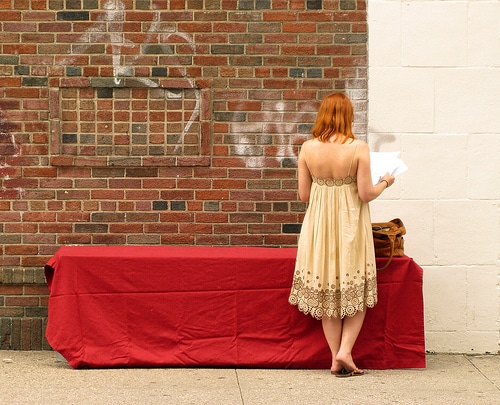
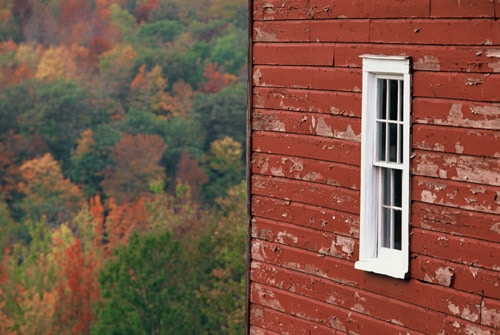
Allow the dominant color in one image to dictate what the next image will be. This is very subtle and works very well for images that are largely disparate. Take for instance these images with lots of red tones, the next images could be something with orange or deeper red as the dominant color and so on.

Keep moving through the color spectrum until you are close to the end of the book, where you’ll place your second set of strong images to leave a lasting impression on the viewer.

Red Table

Red Barn

Organize Your Images Graphically

Look for the strong, dominant lines in your images and pair them accordingly. This image with strong diagonal and horizontal lines is matched by an image with similar lines. For diagonal lines that go off the page, try as much as possible to have them point to the center of the book. This pairing also works because of the similar colors.

Boys On The Beach

Bridge

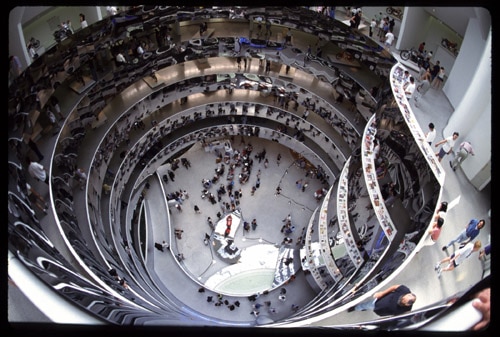
Or these circular shapes:

Guggenheim

Tunnel

*Images courtesy of Brandon Remler: Fall Trees, Boys on Beach, Bridge, Guggenheim and Tunnel. Red Table courtesy of Ingrid Spangler.

Group like with like: black and whites together, images that depict the same subject, etc.

Above all, choose a high quality lab to make your photo book portfolio! AdoramaPix photo books are printed on real photo paper, so they are the closest thing to a traditional portfolio. Unique lay-flat bindings ensure that none of your images are lost to a gutter in the center, plus you don’t have to worry about matching up halves of an image that you want to span both pages. PixPublisher, the online book creation and editing program, is easy to use and powerful, you can design your portfolio exactly the way you want, sizing and positioning your images precisely on the pages, down to the pixel!

Remember, it’s your work, don’t gamble with the presentation. You may only get one chance to impress someone, make it count!

Filed Under: Books, Photo Books, Photography Tagged With: books, digital photography, hardcover, hardcover photo book, how to organize, ingrid spangler, organize, photo books, photo editor, photobook, photograph album, Photography, physics, portfolio

E-Books For Busy Photographers | Now On Sale!

October 28, 2010 by Seshu | Editor & Publisher

If you are anything like me, it's been ages since you read a real page turner. Busy photographers we all are but that doesn't mean we get to stop learning and perfecting our craft.

Photographer and author Ed Verosky is running a special Halloween SALE on all of his books.

If you have been on the fence about getting his books (see the big fat images below as well as in the sidebar of this blog), this is your chance to save 25%. But the sale ends October 31. So hurry!

If you have enjoyed the posts here on Tiffinbox and want to find a way to say thank you, simply click the images below to order your e-books. Yes, those are affiliate links. But they are of e-books I have read and found very valuable.

THE DISCOUNT CODE IS: “PHOTOBOOKS”

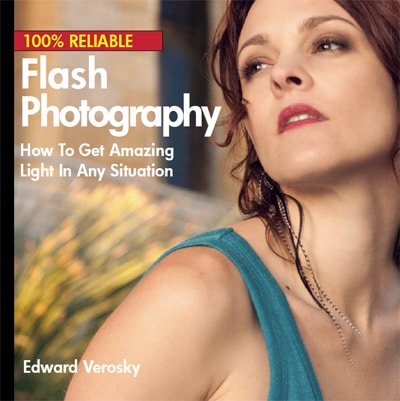
Buy 100% Reliable Flash Photography:

100% Reliable Flash Photography by Ed Verosky

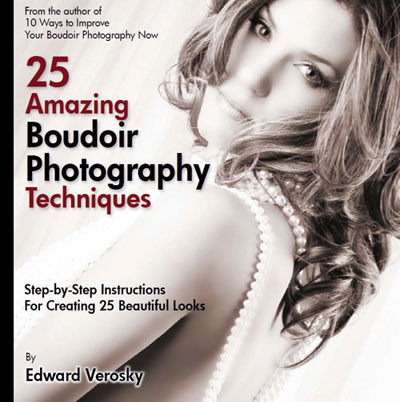
Buy 25 Amazing Boudoir Photography Techniques:

25 Amazing Boudoir Photography Techniques by Ed Verosky

If you do buy one or both of the e-books, do chime in below with your comments about them. I do want to hear your feedback. Did you learn anything from them? Were they priced just right for you? Would you feel good about letting your friends know about the e-books being available here? Your comments are valuable. You have a voice.

Thank you again for your support!
Seshu

Filed Under: Books, Photo Books, Photography Tagged With: authors, books, boudoir, busy, E-books, halloween, halloween sale, human interest, perfect, photobook, photographer, Photographers, sale

  • « Previous Page
  • 1
  • 2
  • 3
  • Next Page »

Subscribe To Tiffibox Treats!

Looking for a well-curated email newsletter that will leave you inspired and motivated about your photography business? Sign up below!

About Seshu

Seshu creates relaxed portraits of families and high school seniors in Avon, Connecticut. He also leads a successful headshot photography studio in Connecticut, helping professionals from a variety of disciplines project the very best versions of themselves. He created Tiffinbox as a way of inspiring photographers, to create better images and successful businesses. [Read More]

Email Templates For Headshot Photographers

Email Templates for Headshot Photographers

Recent Posts

  • How Capture One Changed My Event Photography
  • 10 Steps To Stay Positive In Times Of Great Stress
  • Why You Need To Read “Personal Branding For Photographers” Now
  • How To Master Your Website Content Step By Step?
  • Tony Taafe’s TNT Method For Headshot Photographers

Recent Comments

  • Stephen Davison on Are You A Business Owner Who Is Smart, But Stuck?
  • Ben A. on Don Giannatti Clinches The 8th Annual Tiffinbox Award
  • Dan on Don Giannatti Clinches The 8th Annual Tiffinbox Award
  • Donald Giannatti on Don Giannatti Clinches The 8th Annual Tiffinbox Award
  • Stephen Davison on G.E. Masana’s 6 Strategies For Wedding Photography Success
  • Naveen Kumar on Weddings In India Are More Than Being At The Right Place And At The Right Time
  • kartick on Weddings In India Are More Than Being At The Right Place And At The Right Time
  • Leonid Farbman on 6 Uncommon Trends To Grow Your Photography Business
  • Willow and Finch Wedding Photography on 11 Reception Tips To Help Your Wedding Photography
  • Web Designer Malaysia on How To Optimize Your Squarespace Website For Search Engines
  • Creastan on An Interview With Photojournalist G.M.B. Akash
  • Cindy Brown | Atlanta on An Open Letter To A Local Photographer

Become a Patron!

Copyright © 2026 · Tiffinbox · Site Design by Heather Mackan Creative · Built on Genesis