• Photography
  • Interviews
  • Business
  • Reviews

Tiffinbox

Inspiring Photographers

  • Home
  • About
  • Blog
  • Contact

Why You Need To Read “Personal Branding For Photographers” Now

April 28, 2021 by Seshu | Editor & Publisher

It’s not easy to read a business book that is 250 pages long within a couple of weeks, much less read it twice.

But that’s what I did with Maurice Jager’s book, “Personal Branding For Photographers.”
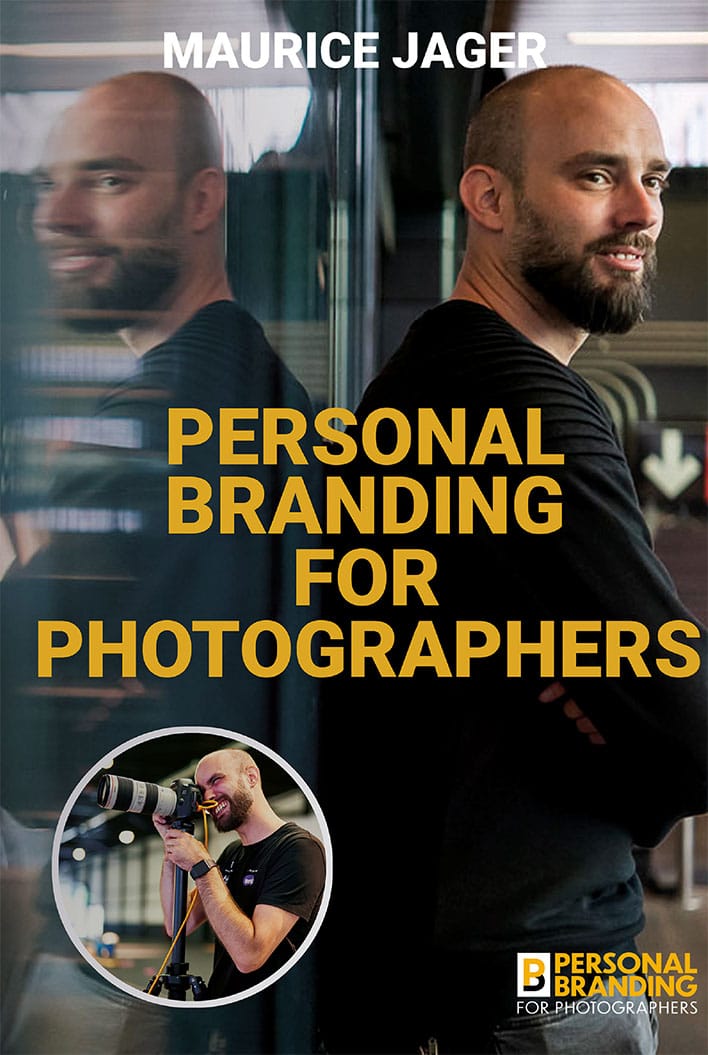
Personal Branding For Photographers, by Maurice Jager

While there are webinars and courses for photographers to learn all about “personal branding”, Jager’s book is the first and most comprehensive book I’ve read on the topic.

According to Jager, “Branding is the process of giving people the opportunity to create a perception of who you are and what you offer; the creation of a brand experience.”

TL;DR – If being seen by your audience means anything at all for you, you can skip the review below and just buy the book and read it. It is required reading, which you will reference again and again as you change your personal branding strategy.

Reading “Personal Branding For Photographers”

The book is hefty, not just because of its length but also because of the content. Jager begins by walking the reader through the importance of taking stock in one’s own story and background. If you buy the electronic version of the book and print it, I am going to guess you will have copious notes on the margins of this section because Jager nudges all kinds of interesting questions I had never considered before.

This first section of the book really got me thinking about how I present myself to the world and why I have held back so much. I can shore it up to being shy or introverted, but to Jager’s point, I just need to get over that and do the work.

The questions Jager suggests come at a rapid-fire and if there is one thing I do wish for is a set of worksheets that could have accompanied the book that one could download. As I said, I would and could easily fill the pages I had printed but having something fresh to use would be helpful.

Once you have answered those questions, you can then embark on your “visual strategy”, which allows you to share “authentic and powerful content which reflects your personality, work, and process.” This process of repeatedly showing up online or in-person has a way of communicating to those interested in your work that you are an expert in the field.

Getting To The Heart Of Telling Your Story

Jager offers an in-depth framework for visual storytelling, making the six chapters the bulk of the book.

Here are the six chapters:

1. Who are you?
2. What’s your background?
3. How do people see you?
4. What do you want to achieve?
5. What are the details?
6. What do you sell?

These overarching questions are subsequently broken down with even more questions for us to consider. The amount of content you are going to generate from this exercise alone is massive and is going to take you some time, but Jager confirms that it will be all worthwhile in the end.

The responses to these important questions lead us to create our story and Jager provides a social media matrix where we can use the content we have created in a very methodical, yet creative manner.

Interviews That Bring It All Together

In addition to the many examples in the book, Jager deftly segues into lengthy but informative interviews with a variety of successful photographers. You’ll read perspectives from Andrew Sommeling, Clay Cook, Dani Diamond, Glyn Dewis, Emily Teague, Pratik Naik, Humberto Tan, Tony Taafe, John DeMato, and Peter Hurley. My advice: don’t skip these parts of the book. There is gold in there too.

Part of owning your own domain is to have an active blog. Given how lousy I have been on my commercial websites with blogging, I found this section particularly useful. My advice is to print Jager’s eight guidelines for publishing a blog and having it within arm’s reach when you are looking to publish a blog post. In fact, I used it to create this post!

There is a lot to read and do in “Personal Branding For Photographers.” It’s not a passive book. It’s only in your action that you will see results from this book. For folks like me who often get overwhelmed with ideas and not knowing which action to take first, second, or third, Jager’s book gives me structure and a sense of satisfaction when portions of it are done and I can move on to the next task. In some respect, it’s a workshop in a book form.

Seeing Proof!

After I read the book all the way through the first time, I wanted to see if some of the strategies mentioned in the book would work for me. I had almost never posted a selfie online, though I am warming up to the idea of having my photographs being seen online. So, on two recent photoshoots, I had someone photograph me working. I posted both to Instagram and was floored by the number of people liking the post.

Here are the Instagram links for you to check out!

https://www.instagram.com/p/CNkpYkBsC6Q/
https://www.instagram.com/p/CN787FAMCbo/

There is a lot more to “Personal Branding For Photographers” and I wish I could mention it all, but I hope I have whet your appetite a bit for it so that you can buy and read it. In addition to the book, Maurice Jager runs an active Facebook group, an annual conference, and a podcast.

Like anything he does, Jager’s heart and soul are in every venture, so, again if being seen and eventually hired to work with your audience is important for you, I highly recommend you read “Personal Branding For Photographers,” and also sign for the conference (coming July 2021) and subscribe to the podcast. I was honored to be on Episode #19.

Lastly, I love this quote in the book because ultimately this is what personal branding is all about:

When people already trust you, prospective clients have no reason not to trust you, too.

Why Should You Buy ‘Personal Branding For Photographers' Now?

So, why do you need to read Maurice Jager's book now? Two big reasons: As a photographer, you are looking for a way to stand out authentically within your community and what you will have is a playbook that walks you through the exact steps to present your brand in your own way. Do the work prescribed in the book, and success will find you. This is $30 investment is a no-brainer in my opinion.

Still on the fence? Watch this video to learn more from the author –
Filed Under: Books, Business, Marketing, Review Tagged With: internet, Marketing, Maurice Jager, Personal branding, personal branding for photographers, Photography

Capturing Life Through Better Photography

September 16, 2012 by Seshu | Editor & Publisher

Back in October 2010, I posted a review of Tamara Lackey's DVD “Inside Contemporary Children's Photography.”

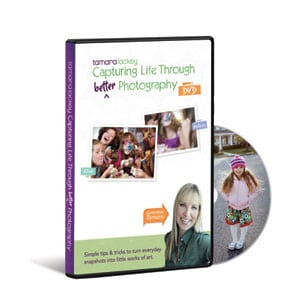
Almost two years later, I have in front of me a book and DVD called “Capturing Life Through Better Photography.” While it too was published in 2010, I think it is appropriate that I am mentioning it now.

In the last two weeks, I have been approached by well-meaning parents who are frustrated by the challenges they face when photographing their children. And it was Tamara's book, “Capturing Life Through Better Photography,” that I recommend to them.

Capturing Life Through Better Photography BookThe book is concise. At less than 100-pages, it is a quick read. In fact, there are so many incredible examples that illustrates Tamara's points, that there is less reading and more seeing. As a budding photographer, I subscribe to this method of learning. We all need to do more seeing.

Tamara's other promise on the book is – “Simple tips & tricks to turn everyday snapshots into little works of art.” The basics, are for sure covered. Exposure, composition, timing, direction of light etc. But on page 43, she urges us to look at body language.

I know of no other book that makes this very important point. Body language, be it of a child or an adult says so much about their personality or their current circumstance. So, if you like nuggets like that, this book is for you.

The book is peppered with “Fun Facts” that draw the reader back in. Be they historical quotes or short scientific explanations (the one about why a balloon makes that popping sound was something new to me), Tamara's crisp and lucid writing will leave you reaching out for your camera to try and replicate what you see in her book.

Capturing Life Through Better Photography DVDThe 90-minute DVD that is a part of this set is a MUST watch. Why? Well, if you somehow miss Tamara's high-energy and passion for teaching photography in the book, you'll definitely feel it watching the DVD. The 90 minutes zip by quickly. It's exquisitely produced. Tamara worked with Rex Ballard, the Director of Photography for ABC's Emmy award-winning Extreme Makeover: Home Edition, to create this DVD.

From my perspective I feel the DVD complements the book but not the other way around. So, think of the DVD as a real bonus.

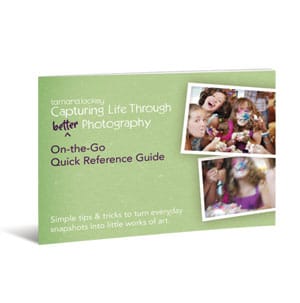
Capturing Life Through Better Photography Quick Reference GuideIf you buy the entire set through Amazon, you'll get what is called a “Quick Reference Guide.” I did not receive this so I don't know what is in it. But given the two other products that I have had the pleasure of reading, viewing and using, I bet the reference guide is just as good too.

Now, I do have to say that the book and DVD is directed towards those who have just bought or are thinking about buying a digital camera – a DSLR like the new Nikon D600 [affiliate].

Here is the link to the Deluxe kit where you get the book, the DVD and the quick reference guide for $59.99. There is so much information packed into each of these that I think parents or amateur photographers who want to start making images on a more solid footing will be remiss if they don't buy it. [I make absolutely nothing for promoting this set.]

Want to have access to more of Tamara Lackey's photography wisdom? Join us on October 3 when she will be our guest during our Swift Kick webinar. Sign up for that webinar alone or register for all of them in the series for only $25.

Filed Under: Books, Photography, Review Tagged With: capturing life, children's photography, digital slr camera, human interest, Photography, photography books, photography dvd, slr cameras, tamara lackey, teaching photography

Light It, Shoot It, Retouch It by Scott Kelby

September 7, 2012 by Eileen Earnest

This guest blog is by Eileen Earnest, an expatriate photographer who lives in Abu Dhabi. Follow her on Twitter.

Light It, Shoot It, Retouch It is the latest in the Kelby Training Series. I am a fan of Kelby’s how-to books for several reasons. The first and best is that Scott Kelby is funny. I find it fairly impressive to make an instruction manual entertaining, and he does just that. His writing tone gives the impression that is just how he comes across in a conversation. Quite a skill to have and I gravitate to his books because of that ability to make me laugh now and then amongst fairly dry material.

I own two other Kelby books, one on Photoshop and the other on Lightroom. They both provide clear, easy to follow instructions and many, many photos. They are good books. But Light It, Shoot It, Retouch It is different-good. Here’s how: In any type of instruction book, typically the author starts with the most basic, foundational stuff. Then they build, build, build. If I am interested in a specific aspect of the program I am reading about, it might be page 193 before I get my answer. Light It, Shoot It, Retouch It gives photographers exactly what they need, each step of the process, and it’s complete from start to finish in under 20'ish pages. Some chapters are even shorter, but still chock full of all the information and detailed instruction on getting the best photo, during and after the shoot.

The Info Before the Info and the Info After the Info

Each type of shoot is described in the book as it’s own chapter. However, before we even start the first lighting set up, Kelby gives us eleven things we need to know prior to diving in. He has some equipment suggestions and points the reader to his online companion to the book.

Every chapter is accompanied with detailed photos of the background and lighting configuration so Scott also explains how to read these. These eleven tips are followed by an equally important list of ten tidbits that he wishes he had known before using studio lights. And yes, I also wish I had known these things, so thank you, Scott! On a personal note, I’ve only worked in a studio for the last 4 months. Setting up the lighting and making the transition from only natural light photography is no small task. This quick section of the book is well placed and very important to any photographer who is getting his or her own studio off the ground.

Towards the end of the book, there is a look at each of the setups with hot shoe flashes instead of strobes. In addition, there is a comprehensive gear list as seen in the different shoots. Scott Kelby shoots Nikon, which I have decided to not hold against him, but it is easy to figure out the comparative Canon equipment when necessary. (Also, he flip-flops between using a Nikon and Canon body for the back-of-camera photograph in each chapter so no one feels left out. The list of modifiers was incredibly essential to me as I find myself randomly buying gear at times. I would have made better choices with a little more direction before purchasing. This is a perfect wish list of studio equipment.

Chapter By Chapter, Shoot By Shoot

The next twelve chapters describe in thorough, but concise, detail each different style of photography he is shooting. We begin with a 3-Light Classic Beauty Setup, and continue through eleven other types of lighting. I imagine Scott started with the 3-Light Classic because it’s such a common set up in the studio. My favorite “style” in the book, however, is the 3-Light Sports Setup. It’s so simple but the final image is evokes a sense of strong, silent power. The full length set up was particularly helpful, as I tend to struggle with evenly lighting from head to toe. With each of the twelve set ups, we get to see Kelby actually shooting the subject and the light configuration, including the power settings on the strobes. There is literally no better way to explain how he took this photo than by showing us a photograph of how he took this photo. Actually, FOUR photographs for each lighting set up. Plus, each chapter starts with the final image placed next to the contact sheet from the shoot. Seriously, it could only be more helpful if Scott Kelby himself came to my studio, set up my lights and held my camera for me!

Wait! It Gets Better!

What comes next, however, was even more eye-popping. Scott details his retouching, step by step. Not in a general, “if you’d like to remove a blemish you might choose the spot healing tool…” but in a, “I am removing this blemish on this eyelid with this tool,” method of instruction. Combine this level of detail with Scott’s conversational writing tone, and it’s as if he’s standing over your shoulder pointing to the right keystrokes! I can only imagine the depth of his love of teaching and sharing of knowledge that Kelby must have to go into such detail as he shares his tricks of the trade. Even if you feel pretty confident in your lighting ability and your shooting is sharp, the quick, specific and step-by-step Photoshop aspect of this book is worth its weight in gold. Ok, this man is the President of the National Association of Photoshop Professionals, and he clearly knows Photoshop much more thoroughly than the rest of us mere mortals. Still, he makes it look so darn easy and intuitive! I came away from the book believing if I can read, I can make these edits happen.

Does It Work?

To test my “literacy is the only requirement” theory, I decided to choose a lighting set up and follow Scott’s directions as closely as my equipment will allow. My test will sample the 3-Light Classic Beauty Setup. I don’t have a beauty dish, so I am using a 24×24 soft box. My bottom light is a 24×34 soft box on a strobe.

Eileen Earnest Portrait Set Up

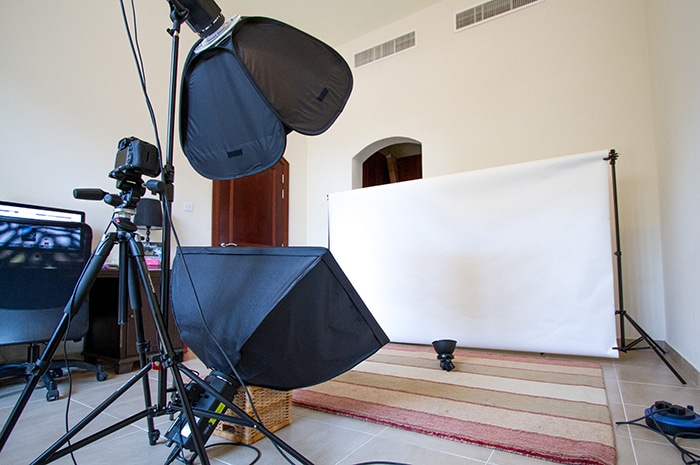
The first hiccup: No flexible arm on my light stands. To remedy this, I had to remove the boxes from the stands and prop them on the floor. My model would have to kneel … not ideal, but it worked! The photo [PHOTO 1] below shows the position of the lights and backdrop.

Ok, here is the straight out of camera (SOOC) image:

Eileen Earnest Portrait Straight Out Of Camera Image

I have a few disclaimers to make about following Scott’s steps in Photoshop.

#1. I am a self taught PS user. Before upgrading to CS6, I found everything (I thought) I needed in Elements. This is another reason why LI, SI, RI is the perfect tool at this stage in my learning process.

#2. I have a horribly unsteady hand and do not typically retouch this much because I do not shoot glamour or beauty shoots. Really, I am the perfect candidate for this test because I am basically a novice user. I followed step by step, skipping only that did not apply to my photo. The blemishes were removed, skin softened, dodged and burned, eyes brightened, unsharp mask applied.

Suzanne, my willing model, has long dark, wispy hair as you can see from the image below:

Eileen Earnest Portrait Enhanced Image

I didn’t remove as many wisps as Scott may have, but instead focused on smoothing down above her head and removing flyaway hairs on her face. Again, I think a more experienced user could do a better job. However, the question is, can someone follow along with the instruction in the book and get a decent result? I believe yes! The steps are there; the technique and ease will come with a lot of practice.

At the end of the day, we have so many books to choose from as photographers. Picking one that will literally come in handy on a weekly basis ensures my time and money is not wasted. I feel confident that Light It, Shoot It, Retouch It by Scott Kelby will not get dusty on my shelf nor will it on yours.

Filed Under: Books, Photo Books, Photography, Review Tagged With: 3 light, abu dhabi, eileen earnest, light photography, Lighting, national association of photoshop professionals, natural light photography, retouching, scott kelby, shooting, studio light, the shoot

Children’s Photography, A Contemporary Approach

October 29, 2010 by Seshu | Editor & Publisher

My wedding season is winding down, but my children's portrait photography sessions are starting to pickup. It's just the nature of things as we cycle from one season to the next.

In my pursuit to be better than I was last year, I looked around to see whose work and expertise could elevate me as an artist. One name that kept popping up to the top of my head was Tamara Lackey.

Let me at the outset tell you that Tamara is a friend. We first met at a workshop hosted by Jesh de Rox. Tamara and I continued to stay in touch (and that's one good way to be on top of someone's mind, eh?) but both our studios got busier and things got a little quiet. Then all of a sudden I heard that Tamara had written a book called The Art of Children's Photography.

Subsequently, I met her at Learnfest, another workshop hosted this time by Tamara, Audrey Woulard, Lena Hyde and Laura Novak. (Learnfest is now on an indefinite hiatus and that's why the link points to a very good review of that workshop!)

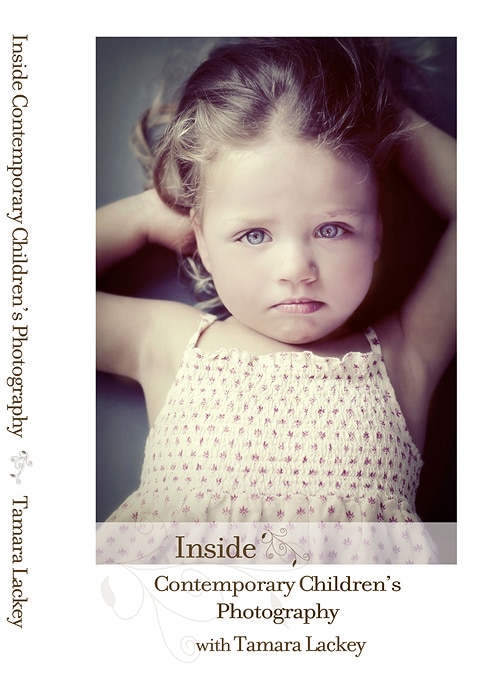
Inside Contemporary Children's Photography

In early January of this year, Tamara announced that she had co-produced a DVD with Rex Ballard, called Inside Contemporary Children's Photography. I sent Tamara a message saying that I was intrigued by the DVD and wanted to know where I could buy it. Her prompt response was to simply ask for my address. A couple of days later I received her generous gift. So, let me be clear that I did receive this DVD gratis. This blog post, however wasn't solicited by her or me. It was truly an after thought because I absolutely loved what Tamara was able to teach me in 90-very-quick-minutes. I say “quick” because it left me wanting to hear and see more.

Her breakdown of different kinds of children and how to approach them was my biggest take away. I have two kids of my own whom I photograph constantly, but that doesn't make me an expert on all the different kinds of kids there are in the world. Tamara, of course, generalizes to some extent. But her opinions come from the vantage point of a lot of experience. Just look at her images and you will be amazed at how intact the children's souls remain. In some children, she is playful and down-right goofy. While working with some others – those who are cranky or shy, her approach is much more reserved and quiet. In any of the scenarios, you can tell that being respectful of children is very important.

Tamara Lackey Photographing A Child

There is also a fairly detailed section of the DVD where Tamara and her studio director talk about how to run a successful portrait photography business. If you are starting out, this is going to be doubly valuable to you.

I wholly recommend this DVD if you are considering specializing in children's photography or at least making it part of your business.

Be sure that your approach is going to be different (and Tamara and I hope that it will be), so please don't think of this DVD as a template for what you MUST do. Think of it as a template of what you CAN do. These are suggestions and very good ones that will help you make your business sing if you adopt even just a few of them.

I wholly recommend this DVD if you are considering specializing in children's photography or at least making it part of your business. Tamara's approach is genuine and her love of children is as clear as a sunny day. The DVD itself is very well produced. After all, Rex Ballard's litany of achievements as a Director of Photography and Cinematographer include National Geographic and The History Channel.

You can buy this helpful tutorial as a DVD or a download here. [This isn't an affiliate link and I don't get a dime for promoting it!]

BONUS: If you are going to be in New York City this Friday (October 29, 2010), Tamara Lackey will be presenting at Photo Plus Expo. She is an enthusiastic speaker and her presentation is not to be missed.

UPDATE: Tamara has generously given Tiffinbox readers a $30 discount if you buy her DVD by Friday – November 5, 2010. That brings your price down to $169. This is NOT an affiliate offer and I don't make a dime for promoting it here. Yeah, it's that good. Get it!

Filed Under: Photography, Review, Tutorials Tagged With: approach, contemporary, dvd, films, human interest, kids, photograph, Photography, portrait photography, portrait photography business, Portraits, tamara, tamara lackey

ReviewMe

November 12, 2006 by Seshu | Editor & Publisher

Full Disclosure: The following is a paid review

As an active blogger, I have to find ways to make “a living” but not sell my soul. Well, truth to be told, there are very few bloggers who do make a living at blogging. For the majority of us, it continues to be a labor of love. But we persist, don't we?

When Google Ads and merchant carts don't do the trick, one has to go and seek out other revenue streams. Well, a couple of days back, I received an invitation from Patrick Gavin of Text Link Ads fame in which he mentioned a new venture called ReviewMe. Briefly, ReviewMe is an opportunity for companies to have their products and services, well, reviewed, by bloggers, for a fee. That fee is determined by how many people visit your site and some thing called an Alexa rating.

Based on the popularity of your site and how conscientious you are about posting your reviews in time [you usually have 48 hours after accepting a call for review], you could make a bundle. Paying off the year's subscription fees for TypePad [currently $120 for this site] is one of my goals. I think it's a target that I can hit. I enjoy discovering new websites, new programs, new things that will hopefully make it easy and interesting to lead our lives.

Far from being forced to review products, websites or services that one could care little about, the ReviewMe guidelines allow you to control what, when and how you review anything. This, in my mind, makes things fair. You aren't caught in an awkward situation defending or explaining what something is when you are indifferent to it or totally opposed to it.

Take this very review of ReviewMe, for example. I am writing about this website and service only because I think it is a great idea and I am open to using it as often as possible. I however promise that I won't review anything that won't make sense to you or something you won't find useful in some way. The rationale is very simple: If I find I will benefit from whatever I am reviewing, then my assumption leads me to believe it will help you as well. So, in short, I promise that I won't be a shill to just to pay off my TypePad bill.

“In the ReviewMe system, advertisers choose which blogs review them. So basically, sit back, and let the review offers come to you.”

As I said earlier, once you accept a review offer, you have 48 hours to complete and submit a URL link to that completed review. The review has to be at least 200 words long and should mention somewhere that your post has been sponsored [my full disclosure is up top, just in case you missed it.] If it all looks good, you get paid by the 4th of the month. On the ReviewMe site you can submit the name of your other blogs and post reviews on multiple sites as well [upto six sites, but I think more than two should keep you crazy busy]. The simple, bright user interface makes it a snap to use the site.

So, if you are blogger, check out ReviewMe and sign up for its services. Still not sure why you would want to do this? While you get paid, the company, product or service you reviewed gets a bit of a kickstart in the Internet. You become an integral part of creating a buzz about something that has caught your fancy. Years from now you can tell your grandkids that you helped make the zBox the hottest selling doo-dad in history.

So, you will have both the loot and the legacy in your back pocket. Time to go get some!

Filed Under: Review

Subscribe To Tiffibox Treats!

Looking for a well-curated email newsletter that will leave you inspired and motivated about your photography business? Sign up below!

About Seshu

Seshu creates relaxed portraits of families and high school seniors in Avon, Connecticut. He also leads a successful headshot photography studio in Connecticut, helping professionals from a variety of disciplines project the very best versions of themselves. He created Tiffinbox as a way of inspiring photographers, to create better images and successful businesses. [Read More]

Email Templates For Headshot Photographers

Email Templates for Headshot Photographers

Recent Posts

  • How Capture One Changed My Event Photography
  • 10 Steps To Stay Positive In Times Of Great Stress
  • Why You Need To Read “Personal Branding For Photographers” Now
  • How To Master Your Website Content Step By Step?
  • Tony Taafe’s TNT Method For Headshot Photographers

Recent Comments

  • Stephen Davison on Are You A Business Owner Who Is Smart, But Stuck?
  • Ben A. on Don Giannatti Clinches The 8th Annual Tiffinbox Award
  • Dan on Don Giannatti Clinches The 8th Annual Tiffinbox Award
  • Donald Giannatti on Don Giannatti Clinches The 8th Annual Tiffinbox Award
  • Stephen Davison on G.E. Masana’s 6 Strategies For Wedding Photography Success
  • Naveen Kumar on Weddings In India Are More Than Being At The Right Place And At The Right Time
  • kartick on Weddings In India Are More Than Being At The Right Place And At The Right Time
  • Leonid Farbman on 6 Uncommon Trends To Grow Your Photography Business
  • Willow and Finch Wedding Photography on 11 Reception Tips To Help Your Wedding Photography
  • Web Designer Malaysia on How To Optimize Your Squarespace Website For Search Engines
  • Creastan on An Interview With Photojournalist G.M.B. Akash
  • Cindy Brown | Atlanta on An Open Letter To A Local Photographer

Become a Patron!

Copyright © 2026 · Tiffinbox · Site Design by Heather Mackan Creative · Built on Genesis