• Photography
  • Interviews
  • Business
  • Reviews

Tiffinbox

Inspiring Photographers

  • Home
  • About
  • Blog
  • Contact

The Sylights Interviews: 1 of 4 | Michael Guarisco: Using Lighting Diagrams

December 19, 2011 by Olivier Lance

Olivier Lance of Sylights last wrote a guest blog post here back in August about why one should use lighting diagrams. He is back with a short series of quick interviews with photographers. Here is the first one, with Michael Guarisco, an amateur photographer living in Nancy, France. He shares his knowledge and tutorials here (in French).
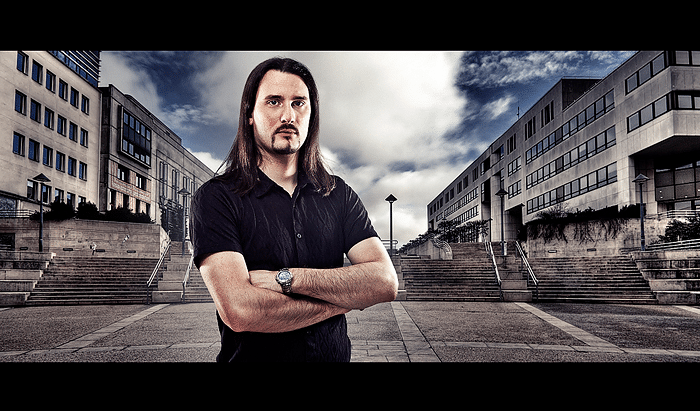
Michael Guarisco | French Photographer

Sylights: This picture is a composite image of at least two photos: one of the model and one for the background. Why did you choose this technique?

Michael Guarisco: This compositing technique is similar to the one used by Joel Grimes, an American photographer. He used it in some ads for Nike, for instance. I'm a fan of this style he achieved, so I wanted to try it myself. I love this work in different phases, it brings in several constraints: on lighting, on the choice of the background, and a heavy post-processing. I wouldn't make it my specialty but it's really instructive!

S: What is your workflow for that kind of compositing?

MG: I take a picture of my subject in a studio on a seamless background (black or white, depending on the subject's clothes, as I need a good contrast) to facilitate his extraction. The point being to find an effective lighting with three light sources, with the right modifiers, etc. … I know Joel Grimes uses large softboxes or beauty dishes. As an amateur, I'm happy with some simple umbrellas! After having processed and extracted my subject, I set off to find my background according the subject's attitude and style. It can take a lot of time, one needs to move and search a lot to find the background that will fit both the processing and the subject. When I've found my background, I take 5 photos with different exposures to perform an exposure fusion. Then I retouch the image a bit to get a satisfying result. If the subject's extraction has been done properly, the final compositing is done easily.

S: How do you make sure that the lights on your subject match those of the background? Do you have any special tips to achieve this?

MG: It's true that it's difficult to have matching lights between the background and the subject. You must simulate light coming from behind the subject to make it look real. Though I don't necessarily look for a perfect, logical lighting, I do make sure that my resulting picture as a whole looks coherent (prevailing color, temperature, etc.). I work a lot with the curves tool; I use it on my subject so that it integrates well into the background, then I use another curves layer on the complete image (I have a fondness for a slight cross-processed look). I completely assume using compositing and I think it's normal that anybody might see my picture is composited, but it's important not to neglect the image's fluidity. I want to hear people saying, “Yes, it's composited, but it works well!”
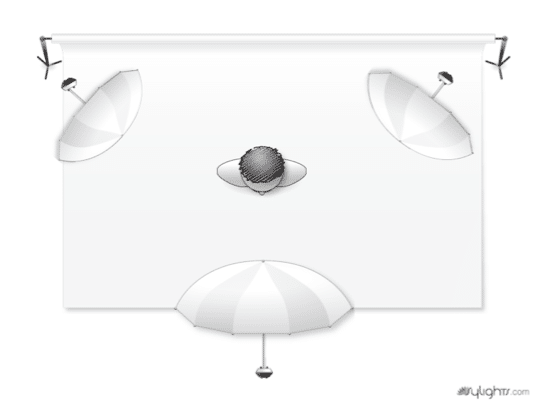
Michael Guarisco Lighting Diagram

S: What's the place of lighting diagrams in your work? Do you use them as a preparation tool or rather as a documentation tool?

MG: Lighting diagrams are certainly the most important aspect of working with flashes! First of all, they allow one to quickly learn what setups lead to different types of images. It's a very educational tool! Then, even when you're more experienced, it's still useful to plan a session by sketching a bunch of setups we'd like to use. I've always worked with lighting diagrams, I use them for myself as well as for showing others how I've created a photo, on my website. Even in the middle of a chat, a diagram scribbled in the corner of a napkin makes oral explanations way easier! In that sense, Sylights lets anyone archive flash photographs; the sharing aspect pops out, as anybody can understand how each posted image has been created. Moreover, when we work with many different setups it's pleasant to be able to find them back easily on the website!

Filed Under: Interviews, Photography Tagged With: amateur photographer, compositing, diagrams, Joel Grimes, light diagram, Lighting, michael guarisco, olivier lance, photo shoots, photographer, visual effects

“Going Amateur”

December 29, 2010 by Stuart Sipahigil

This is a guest post by Stuart Sipahigil. He is an amateur photographer in the traditional sense of the word; that is, he does it for the love of the craft. His photographs have won awards, appeared in publications, and have made their way into homes and businesses around the country. Stuart also teaches workshops to help other amateur photographers find great photographs close to home. Stuart’s work can be found at TheLightWithout.com.

So, you're “just” an amateur photographer… but you've discovered that you have a love for making photographs and you seem to be pretty good at it. Your friends and family are telling you they love your photographs and several have said you are “good enough to be a professional.” Maybe you've entered a local photography contest or two, and you've done pretty well. Or perhaps you've even sold a few prints of your photographs to the local coffee shop or restaurant.

Now you're thinking to yourself, “maybe I could be a professional photographer,” and then, “how would I do that?” So you check out a couple of books about being a pro photographer — David duChemin's VisionMongers: Making a Life and a Living in Photography or Dane Sanders' Fast Track Photographer, for example — and discover that it's actually quite a bit of hard work. You already have a career right now and well, it's paying the bills and you're doing okay, even in this economy. Shifting gears to becoming a pro is a big change and would disrupt your life quite a bit. It might be doable, but it would be painful, and you're just not sure it would be worth it.

So now what do you do?

Traditionally, there were the only two paths available to you: turn pro, with all of the responsibilities that entails and the costs associated with it. Or remain an enthusiastic amateur, occasionally selling a print or two at your local art fair, or maybe shooting your cousin's wedding for a few hundred bucks (and thus, pissing off an entire group of professionals—but that's another story). However, I think there are several other choices you can make; several other paths you can trod that don't involve becoming a traditional “pro” to find satisfaction as a talented amateur photographer.

The Internet has changed everything. You have many more outlets for your work now than ever before. Traditionally, if you wanted to get your photographic work out into the public eye you had only a few choices; magazines, gallery showings, or stock photography, for example. Today, you can sign up for a blogging service and start your own photography blog, publishing your work to a worldwide audience in about five minutes. If you're a little more ambitious, you can self-publish your own “coffee table” book of your photographs using services like Blurb or Inkubook. Or publish a photography ebook, either on your own or through a publisher like Craft & Vision. All of these things were prohibitively expensive and perhaps even impossible to do on your own only five years ago.

There used to be an old saying, “Those who can, do. Those who can't, teach.” That's simply not true these days (and it never really was). Many professional photographers like Joe McNally, David duChemin, and Zack Arias — all terrific photographers — offer workshops and seminars about the vision, the craft, and the business of photography. But not everyone is ready for (or can afford) workshops with these big names.This can create an opportunity for you to step up and use your skills to help others that are as passionate about this craft as you are. Is there a local arts center in your town? This can be a great place to start and to hone your teaching skills. If you don't have that opportunity, why not just try leading a few photo walks, either on your own or in concert with Scott Kelby's Worldwide Photo Walk in July? Signing up to be a walk leader is easy and can get you started on the path to becoming a photographic instructor.

Are you good at talking about photographic tips and techniques? Do you think you can interview other photographers? Maybe you should start a photography podcast. In a few minutes, you can set one up in Apple's iTunes and publish it to a worldwide audience on a regular basis. The folks at Faded & Blurred have done just that, combining it with their own regular photo walks and a lively online community to create a terrific resource for passionate photographers.

If you are currently a professional photographer, you too can benefit from “going amateur.” I don't mean that you should give up your business and find something else to do, but to try to carve out a little time in your life to do some work for yourself. Personal projects are your connection back to why you started in the field to begin with: your love of photography, the feel of the camera in your hands, and the joy of seeing something that moved you appear on film or in the LCD. There is enormous value in removing the pressures of running a successful photography business and just do it for yourself.

Maybe there are other opportunities that you could use to expand your business (and reputation) as well. Matt Brandon, a professional travel and humanitarian photographer, publishes regular interviews with other pros like Ami Vitale, Gary S. Chapman, and Chris Orwig on his Depth of Field podcast. David duChemin created the Craft & Vision eBook publishing business by starting with a few of his own ideas about photography. Chase Jarvis has added The Best Camera, a best-selling book and phone app, as well as the Creative Live educational video series to his successful endeavors. Many other pros are adding to their repertoire of services by taking advantage of these new avenues.

And if your photography business isn't very successful, why not step back and take a fresh look? Is it just a production job for you now: prepare, shoot, post-process, deliver? Have you lost that love for the art that you used to make? Perhaps it's time to re-think photography as a professional career. That may seem a bit harsh, but I'm simply saying your photographic life might be more rewarding without the pressures of trying to make a living at it. Or perhaps you just need to shift gears and, like some of these other pros, add some new roles to your career, such as broadcaster or teacher. There may be opportunities available to you that you just haven't considered.

There are great rewards to becoming a professional photographer if you're willing and able to put in the time and effort it requires, but there is no shame in trying to be a great amateur photographer. Making money with photography doesn't always equate to making exceptional photography. If you love photography and want to do more than just make slideshows for your friends and family, there are more opportunities now than ever before. Overcome your doubt and hesitation, step out and see what you can accomplish as “just” an amateur.

Please support this site and buy Stuart's awesome e-book, Close To Home, through the Craft & Vision website. [affiliate link]

Filed Under: Photo Books, Photo Exhibit, PhotoBlog, Photography Tagged With: amateur, amateur photographer, david duchemin, event photographer society, fast track, photographer, Photography, photography contests, Photojournalism, professional photographers, stock photography, stuart sipahigil, Wedding Photography

Subscribe To Tiffibox Treats!

Looking for a well-curated email newsletter that will leave you inspired and motivated about your photography business? Sign up below!

About Seshu

Seshu creates relaxed portraits of families and high school seniors in Avon, Connecticut. He also leads a successful headshot photography studio in Connecticut, helping professionals from a variety of disciplines project the very best versions of themselves. He created Tiffinbox as a way of inspiring photographers, to create better images and successful businesses. [Read More]

Email Templates For Headshot Photographers

Email Templates for Headshot Photographers

Recent Posts

  • How Capture One Changed My Event Photography
  • 10 Steps To Stay Positive In Times Of Great Stress
  • Why You Need To Read “Personal Branding For Photographers” Now
  • How To Master Your Website Content Step By Step?
  • Tony Taafe’s TNT Method For Headshot Photographers

Recent Comments

  • Stephen Davison on Are You A Business Owner Who Is Smart, But Stuck?
  • Ben A. on Don Giannatti Clinches The 8th Annual Tiffinbox Award
  • Dan on Don Giannatti Clinches The 8th Annual Tiffinbox Award
  • Donald Giannatti on Don Giannatti Clinches The 8th Annual Tiffinbox Award
  • Stephen Davison on G.E. Masana’s 6 Strategies For Wedding Photography Success
  • Naveen Kumar on Weddings In India Are More Than Being At The Right Place And At The Right Time
  • kartick on Weddings In India Are More Than Being At The Right Place And At The Right Time
  • Leonid Farbman on 6 Uncommon Trends To Grow Your Photography Business
  • Willow and Finch Wedding Photography on 11 Reception Tips To Help Your Wedding Photography
  • Web Designer Malaysia on How To Optimize Your Squarespace Website For Search Engines
  • Creastan on An Interview With Photojournalist G.M.B. Akash
  • Cindy Brown | Atlanta on An Open Letter To A Local Photographer

Become a Patron!

Copyright © 2026 · Tiffinbox · Site Design by Heather Mackan Creative · Built on Genesis