• Photography
  • Interviews
  • Business
  • Reviews

Tiffinbox

Inspiring Photographers

  • Home
  • About
  • Blog
  • Contact

Why You Should Buy Angela Pointon’s E-Book – “Worth More: A Simple Way To Create The Photography Brand, Pricing and Packages That Command The Money You Deserve”

June 18, 2013 by Seshu | Editor & Publisher

Do you ever wonder what your value proposition is to your potential client? In other words, what do you bring to the table that your “rightest” client will eat up and then thank you for it by paying you what you are really worth?

It's a simple question. But it's not so easy to answer or explain. Thankfully, Angela Pointon of Steel Toe Images has a new book out called “Worth More: A Simple Way To Create The Photography Brand, Pricing and Packages That Command The Money You Deserve.” [affiliate]

Long title, I know.

I just got done reading an advance review copy and I have to tell you the worksheets and exercises she puts you through are the very first steps any photographer must take to create a sustaining and successful business. It's critical that you define who your clients need to be and then work through your pricing and packaging that meets your target client's expectations. There is really no better way to synchronize your values with those of your clients.

From Worth More: “So we’re going to figure out your ONE awesome thing by conducting another written exercise. And honestly, there’s a chance you’re not doing anything awesome right now.”

When things are in sync, you get to make a living at something you love to do. No one can or should deny you that, especially you. So, here is what I am urging you to do. Watch this video below. Based on what you hear from Angela, figure out if you ant to be a thriving photographer or a struggling photographer. If it is the former, buy Angela's book. It's on sale from today through June 23 for $79. It goes up to $99 after that date.

Angela also sent me this infographic that allows you to compare the two different photographers in the world: thriving or struggling –
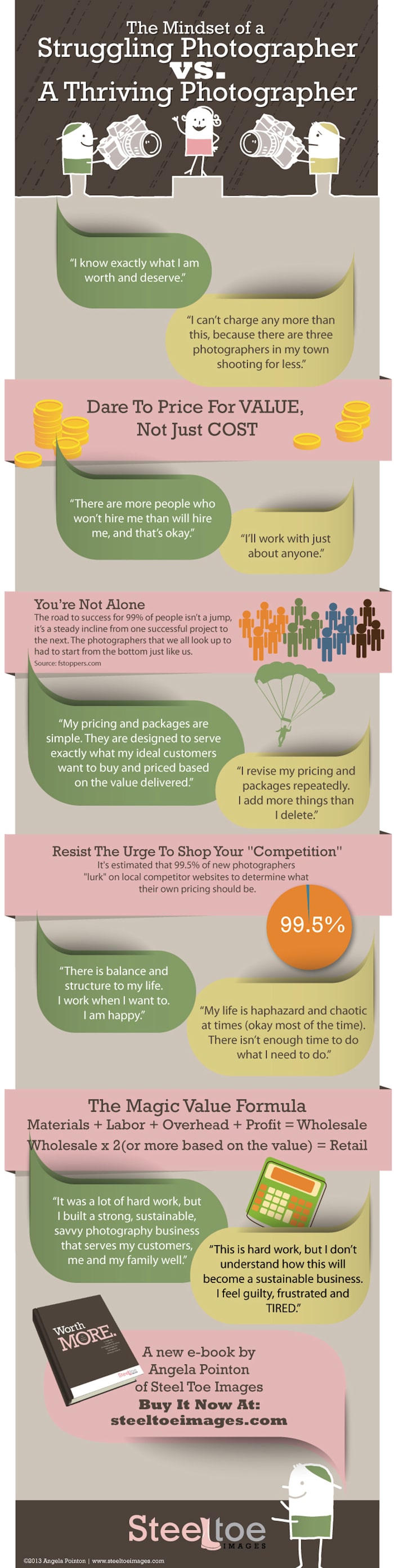
Worth More By Angela Pointon

Now, let me be very clear about one thing. As I read through the e-book, Angela wants you to complete exercise after exercise so that the answers guide you to some startling and positive conclusions. If you are the type that buys info products and just sits on them, don't buy this book. That would be a sheer waste of money. However, if you are open to trying new things and actually doing what Angela prescribes, I'll guarantee that you will see incredible results.

So, why should you buy Angela Pointon's e-book? Very simply, reading it and doing the exercises will be transformative (with a little elbow grease) for your bottom line. Imagine not having to struggle to find the “rightest” clients. Imagine having time to spend with your loved ones. Imagine being able to create a nest egg that keeps growing. All because you spent a few hours gaining some much needed clarity on whom you want to serve and why.

For me saving $20 is still something. I'm going to bet it is for you too. So, get the book before the price jumps on June 24th.

Filed Under: Books, Marketing, Photography, Photography Business Tagged With: Angela, brand, Photography, pointon, Prices Packaging, Pricing, Worth, Worth More

Scott Strazzante Finds “Common Ground” In His 14-Year Personal Project

June 12, 2013 by Seshu | Editor & Publisher

It was first at Ohio University, where I was briefly working on a graduate degree in Visual Communications, that I came across the name Scott Strazzante. This was some 13 years ago.

Scott Strazzante | Common GroundRight around that time, Scott, while at the Chicago Tribune, began a personal project that he pursued on his own time. That documentary project, called Common Ground, explores the challenges farmers Harlow and Jean Cagwin face in rural Illinois.
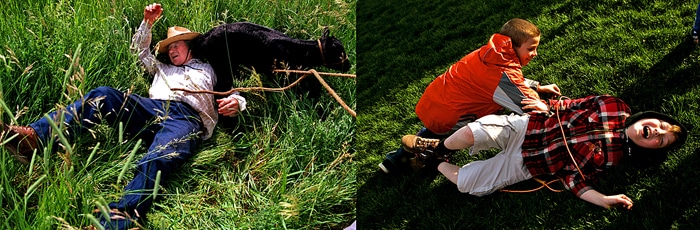
The story takes an incredible turn when in 2002, the Cagwins lost their home to urban sprawl and a new subdivision. But Scott didn't stop making images then. A chance meeting in 2007 of Amanda Grabenhofer, who now lives in that subdivision, prompted Scott to continue the project by photographing her and her family.

If you ever doubted if history repeated itself, all you have to do is see the wonderful diptychs that Scott, with the help of Mike Davis and Deb Pang Davis, has created of life on the farm when it existed and life in the new subdivision that overtook that farm.

Scott Strazzante | Common Ground Diptych

“Echoes of the Past” – In 2002, Harlow and Jean Cagwin left their 118-acre cattle farm in Lockport, Illinois to make room for the Willow Walk subdivision. Five years later, Ed and Amanda Grabenhofer and their four children have settled in at the end of Cinnamon Court. This series compares and contrasts these two very different ways of life on the same piece of land.

As Scott so eloquently says in my conversation with him (see video below), this project isn't a political statement of any kind. It leans more gracefully on the art side of things, where we are gently cajoled into experiencing disparate lives, lived on virtually the same place, or common ground.

Scott Strazzante is well on his way to publishing a book, thanks to this Kickstarter campaign. He has 21 days to go to raise $42,500.

I am asking you to back this project, to show your support of long-term, personal projects that photojournalists like Scott are doing simply because they feel compelled to share with us the world they witness on a daily basis. When I watched the campaign video, I knew right away that this was a very special project.

Scott and I have never met in person, but it's easy to discover the man's commitment to photojournalism and his love for narrating visual stories of everyday life. I applaud him for going the distance, completing this project and publishing this book, Common Ground.

Filed Under: Uncategorized Tagged With: Common Ground, Documentary Project, personal project, Scott, Scott Strazzante

A Candid Interview With Wedding Photographer, Laura Novak

June 11, 2013 by Seshu | Editor & Publisher

I watched a video recently by Laura Novak, a wedding photographer, about the one secret ingredient she uses in attracting the right wedding clients for her business.

So, watch that video first:

The video inspired a few questions in my mind and so I hopped on over to Twitter where I asked Laura for some clarification:

TB: In your recent video, you recommend e-sessions with wedding collections and offer it as a complimentary service. Do you then present those images from that session as part of your collection as well when it is time to send the files to the client (assuming you give files to clients)? Or, do you create products from the e-session that the client has to buy first to receive those files?

LN: I highly recommend creating products from the engagement session that you can sell to the client afterwards. Many of my clients purchase loose prints, save the dates, framed images for display at the wedding reception and albums. For example, how cute are these overlays from Design Aglow? All you need to do is take their favorite photo, place an overlay on top and add the wedding date. Done and done!

I always provide wedding and engagement files with the client's finished wedding album, so considering that is usually a year or more from the time of the engagement session they are pretty far away from receiving the files. Typically my clients are looking for products to purchase immediately after the engagement session to be part of their wedding.

Another great idea would be to show and sell a sign-in board. Brides and grooms love these! I really like the designs over at Design Aglow as well. 

TB: So what you are saying is, you would structure the collections to include a complimentary e-session, but the only way they can get the files is if they invest in $xxxx. I am worried some may see that as a bait and switch. Thoughts?

LN: Most of my wedding packages (the ones 10k or more) include all the engagement and wedding files with the finished wedding album. Because I state that up front, all of my clients know this and it is no surprise. Most people ask about files during the initial interview, so it gives us a chance to have a good conversation about it. In addition, that information is very clear right in the first page of my marketing materials.

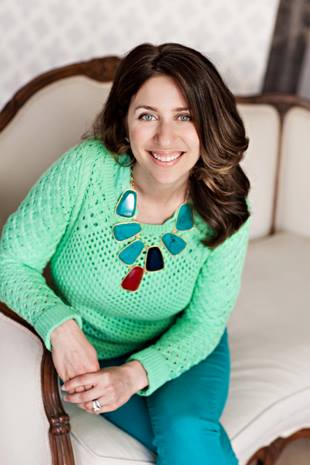
Laura Novak | Wilmington, Delaware Wedding PhotographerTB: Not sure I am clear on what you mean by “they are years away.” Your e-sessions are years before their actual wedding date? I can see why people want their e-session images.

LN: Let's say that the e-session is six months before the wedding day. Then their wedding day comes and goes, and afterwards the client receives their proofs a few weeks later. Then it takes them a month or two to choose selections (best case scenario) and they have their album and finished files about 6-8 weeks after that.  Therefore, clients would typically get their files about a year or more after the engagement session.

TB: So, you let your clients make their final selections?  If they did (and I have) they pick images that just don't flow well. Thoughts?

LN: I do! It's their album, so the selections are completely up to them. I just do my best with what they chose and if they give me more creative freedom all the better! And if a year goes by and they don't choose their selections I create the album myself and ship it off (that part is in my contract).

Laura Novak has over 10 years of wedding photography experience, and her work has been featured on numerous national and international publications. Visit Laura's site, www.lauranovak.com, to download a sample album that Laura used to generate over $1.2 million dollars in wedding business. She lives in Wilmington, Delaware with her husband, John, and new baby, Andrew.

Filed Under: Interviews, Photography, Weddings Tagged With: Laura, Laura Novak, Secret Ingredient, wedding albums, Wedding And Engagement, wedding photographer

An Interview With Documentary Photographer Zun Lee

June 6, 2013 by Seshu | Editor & Publisher

Zun Lee is a documentary photographer and a doctor. You can find some of his work also on this Flickr page. Zun was recently interviewed by New York Times about his project documenting African-American fathers and their relationships with their children. Check it out! Follow Zun on Twitter too!

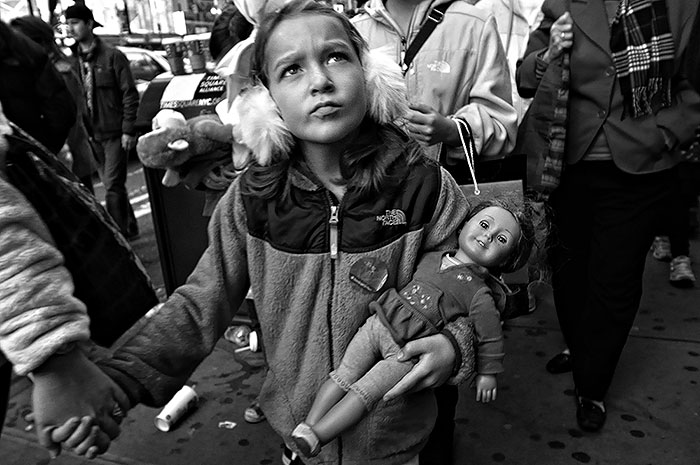
Zun Lee | Documentary Photographer1) You say this in your bio: ” I was trained in a profession in which humans at their most vulnerable grant permission to a stranger to invade their privacy. As a result, I have always had an intense interest in the dynamics of power, trust and control when it comes to human interaction.” What profession is that? Are you referring to photography? Is this sense of vulnerability in the back of your mind every time you photograph someone – stranger or friend?

Being a physician definitely plays a part in how I go about interacting with people on the street. I’m not referring primarily to photography. For me, being a photographer is not something you “do”, it’s who you “are” as an artist and as a human being. So, yes, this notion of interaction and exploring aspects of vulnerability is constantly in the back of my mind.

When I refer to interaction between the photographer and the subject, I don’t necessary mean actual verbal communication taking place between two human beings. Even in street scenes or portraits featuring a single human being, the “subject” isn’t necessarily that human being. Our thoughts and behaviors are affected by how we move through the world, so the environment and how one relates to it at any given moment in time also play a part in that interaction.

Of course, the kind of interaction I seek on the street can take the form of actual verbal exchanges, and it is often the case for me. Sometimes, it’s subtler – a nod, a glance. But most of it happens invisibly – A feeling, emotion or state of mind you may become aware of in a particular moment and that you project into the world: in some cases, curiosity, empathy, love, optimism. In other cases discomfort, fear, doubt. Folks that know me personally often hear me talk about “energy”, something you intuitively feel in your gut as you survey your environment for picture-making opportunities.

Photographing people on the street, no matter how “interesting” or “beautiful” the subject, that alone doesn’t do it for me. I would like for the viewer to be able to discern what kinds of thoughts or emotions were involved when I pressed the shutter. Or at the very least, make up their own story about what is unfolding.

2) How do you approach strangers? What do you say to them? Or, do you simply watch, capture and move on like Bresson did? Indeed, I am curious to know how you operate. Tell us.

It’s not a one-size-fits-all approach. It all depends on who or what I see, and what that particular interaction may yield. Sometimes, it happens in a fraction of second – I snap and move on. Sometimes, it can take several minutes of striking up a conversation and then catching the individual in certain moments in which they share a part about themselves that wouldn’t have been easily evident otherwise.

“… Can I take your picture” is rarely a conversation starter. Getting creative is key. The subject also has to get interested in you – it works both ways. Humor helps a great deal. Being honest and upfront about who you are and why you’re doing this works most of the time. Rehearse your lines in front of the mirror or with friends – if they’re not buying it, you’re likely going to be in trouble.

Something that almost never works is being sneaky. Keep it natural and always be prepared to deal with rejection. And be courteous and thank them, even after a “no”. That’s the best policy.

3) What you and I share is this – and I hope I am on the right track about this – that there is innate beauty in everyday life that goes without being photographed or is not noticed by most. Do you agree?

Completely agree with you. I’m a strong advocate of finding beauty in the mundane, everyday scenes that unfold before us. That said, “beauty” doesn’t mean “beautiful”. I’m referring mostly to scenes or moments that remind us of how precious life is in all its facets – the good, bad and the ugly. And again, I think the best way to go about it is to approach the streets with a sense of wonderment and openness to its possibilities. Or, as one of my mentors once said to me, “Shoot with love, and you will shoot with purpose”.

4) Why is that we don't celebrate those moments where people reveal a little bit more about themselves for that split second? What causes us to cover ourselves up? Is it simply fear of being judged?

I think overall, vulnerability is seen as a weakness in our culture and surely, nobody wants to be judged as weak. We don’t publicly show and tell, we don’t give broadside. Also, I think life itself has gotten a lot tougher for most people in North America in the last few years – people generally have very little to smile about and lives have become increasingly hectic. When we get up and get dressed every morning and leave our homes to go to work or to run errands etc., the last thing on our mind is to reveal who we are and how we feel. We’re constantly stressed, have very little downtime, try to get from point A to point B quickly. We don’t stop to smell the roses, we have our game face on. We put forth this impenetrable façade to prevent us from sensory overload and avoid engaging with the outside world at any cost. Headphones on, eyes on our smartphones. Minds on our own business.

Zun Lee | Documentary PhotographerIf you think about the implications of that, today’s widespread notion of “candid photography” is really a misnomer. Think about the very definition of the word “candid” – frank, open, honest, transparent. Given what I just said above, people are anything BUT candid in public. Is taking pictures of people in that state of hurried indifference, without their knowledge and/or consent and without the subject looking into the camera really “candid”, then?

For me, candid means breaking through that emotional fortress and finding some kind of truth underneath that. Some wait for these decisive emotional moments. Others surprise and startle their subjects. I’m usually more about some kind of subtle interaction.

When time or the nature of the exchange permits, I show the pictures to the people I just photographed. Sometimes, I get “I didn’t know I look like this” or “Did I really make this face” as a positive reaction, which tells me I was on to something.

5) Your opening image in your “Street Portraits” portfolio is of a woman deep in thought, but there is a reflective, double-image of her. The image is rich with complementary colors and your use of a very shallow depth of field forces us to “stare” back at this woman. It's an arresting image. Do you know who she is? Do you engage with people once you photograph them? How aware was she that you were photographing her?

Thank you for the love and appreciation, Seshu. I was spending a day with fellow street shooters Ourit Ben-Haim, Rena Ginzburg, and Michael Martin in Midtown Manhattan (group walks are usually not my favorite thing to do but it works with certain shooters). We all saw this lady in Midtown Manhattan and were drawn to her immediately. She was VERY aware of our attempts to photograph her and she definitely did not appreciate it. The situation could have gone wrong easily, and somehow I managed to explain why we found her intriguing and why we wanted to take her picture. She eventually relaxed and allowed us to do our work. This particular shot took a while to get, as I wanted her to be a little more settled down and find an angle that gives me more context in terms of color and texture. I gave her my card and obtained her email address, and sent her the picture a few days later.

I think the latter is always a good practice – to return some of the goodwill by sending people the pictures you took, especially if you engaged them in a longer conversation. Or if email is not an option, make prints and mail them, or keep them with you as you roam the streets, ready to hand them out if you happen to run into the same individuals again. It happens more often than not.

Zun Lee | Documentary Photographer

Zun Lee | Documentary Photographer

Zun Lee | Documentary Photographer

Zun Lee | Documentary Photographer

Zun Lee | Documentary Photographer

Zun Lee | Documentary Photographer

Zun Lee | Documentary Photographer

Zun Lee | Documentary Photographer


6) Do you get any grief from people you photograph on the streets? I am curious to know how you deal with conflict on the street.

… All the time! People routinely yell and scream, sometimes fists get swung my way, and I’ve been stopped and detained by cops who were not aware of the legality of what I’m doing. And even without those moments, you have to be prepared for a lot of rejection. It’s not a relaxing pastime.

I’m actually quite shy and conflict-averse, so shooting street is definitely nerve-wrecking to begin with. I can’t tell you how many times I missed a shot by passing by a person or scene I really wanted to photograph but couldn’t muster the courage to do so. I’ve gotten better at standing my ground and negotiating with people to get what I want, but in the end you don’t want to manipulate them or cause unnecessary conflict. So if the answer remains no, you got to move on.

In general, I’d say pick and choose your battles. Over time, you develop a pretty good sense of which individuals you can push beyond the initial “no” and which ones are best left alone. Familiarity with a certain neighborhood also plays a role. When the locals see you coming back time and time again, it establishes a certain level of trust. By that token, it also helps sometimes to stay put in a certain spot for a while and interact with the people in the area until they relax and won’t notice you anymore.

7) The human face is perhaps the most interesting thing to photograph. What got you started on this mission to photograph people on the street? What drives you personally to observe and then to photograph these human interactions?

Agreed, for me it’s all about the face and the eyes. I think everyone has a story to tell, and that story often manifests in the face and eyes. I just have this desire to get in on that story, to uncover at least an aspect of it. But in the end, it isn’t really about “their” story. I think of my street photos as mirrors to my soul – they often reveal more about me and my state of mind than about what’s happening in front of me. Going back to the idea of “energy”, I often gravitate toward individuals that mirror my own realities back to me. It’s very unnerving to put that out there with certain frames, but it can also be liberating.

I first ventured into the streets about 4 years ago and was just happy to experiment, get to know my gear. I didn’t even know much about street photography then, had no idea who Cartier-Bresson, Winogrand, or Klein were. I went shooting every day after work, and on most weekends, more or less. At first, it was without much of a plan other than having an interest in photographing strangers, except I didn’t really know how to go about that. As mentioned, I’m quite shy, so the whole experience was terrifying. I just had a desire to learn how to do that, so I kept practicing. I tried with longer lenses at first and quickly realized that approach doesn’t work for me. The physical distance also creates emotional distance, and it was not a satisfactory experience at all.

Ironically, I think my shyness actually led to this desire to be as close as possible with people – by being in the same space, eventually people will let you into their world, their lives, their story. And being so close, it forces you to do the same – you also share a piece of who you are to enable the picture that you seek to make. It’s not about “stealing souls” or being an unobtrusive fly on the wall. To me, photography is about creating a relationship, whether for a split second or for a longer period of time, and whether it’s with people, animals, or inanimate objects. Your visceral reaction to a given moment – it matters as much as what you see in front of you. There’s a brief but powerful moment of someone expressing the notion of “I don’t know who you are but I trust you”, and that is a real privilege to be granted. I think being part of that “give-and-take” can be exhilarating, even addictive.

8) On a technical side, I see you use a Nikon D700. Do you switch around with different lenses? Which ones and why?

I use the D700 and the Ricoh GRD (GRDIV at the moment). As mentioned, I used telezooms initially, and now use them very rarely. 35mm or wider is my comfort zone, and my favorite Nikkor glass is the 14-24mm f2.8. The Ricoh is my always-on-me camera, 28mm is a perfect all-around focal length for me. It’s how I see the world, and the ergonomics of the camera suit my style of shooting. I’ve also begun using the Olympus OM-D (also with lenses 35mm or wider), which offers a great balance in terms of portability and image quality.

9) Your post-production is realistic. Colors pop and black & white images are some of the best I have seen online. Do you do your own post-processing? Is much of that learned on the job or did you go to school for it?

Thanks for the compliment, Seshu. I used to paint, so perhaps that background helps in the way I approach processing. I do my own post-processing, and it is all self-taught, lots of trial and error. I definitely am not very knowledgeable as a user of imaging software and you’d be appalled at some of my workflows! In terms of processing, I’m primarily driven by the desire to make an image look and feel like what I actually saw, as closely as possible. I definitely have a penchant for dramatic processing at times, but I never want it to look surreal or over-processed. Sometimes achieving the look I want takes just a few minutes; sometimes it can take up to an hour per frame.

10) I am always curious about how anyone can make a living as a street photographer. There are all kinds of copyright and model release issues that one has to deal with now. What are you doing to overcome all those challenges when marketing your work? Or, is your work simply a way to get your foot in the door for corporate work that calls for a “street vibe”? Tell us more about your plans to be represented. How do you make a living as a photographer?

That’s the $64,000 question, isn’t it? The whole industry is in flux, traditional business models are collapsing and entire job categories disappearing. Honestly, I haven’t really been in this field long enough to move it from a serious hobby into a full-time lifestyle, much less a life-sustaining one. There are no formulas, or transparent roadmaps. A huge part of being a creative visual professional nowadays will have to revolve around how to forge your own creative career path, and I am still in the process of figuring that out for myself.

Copyright and model release issues – that’s definitely an ongoing challenge to deal with. Luckily for most street work, I find I don’t explicitly need releases to publish or exhibit the work. Making money from prints and books is a bit of a grey area but so far it’s not been a huge problem for me because I don’t do stock or commercial photography. I haven’t actively sought any commercial work, even though I’ve been approached to use my street shots for ad campaigns or shoot commercial projects with a “street” vibe. For my long-term documentary work, I definitely make sure model releases are signed.

What’s next for me? I know I want to continue to tell interesting stories and bring them to people’s attention. I don’t think I’m interested in being an assignment photographer per se; I have to really be personally connected to the work I’m doing or it becomes just another chore. I’m really drawn to photodocumentary and photojournalistic work – unfortunately, this kind of work is recognized less and less, and commercially not very viable on its own. So, I will definitely not quit my day job anytime soon to do this full-time. That said, I’ve embarked on some long-term projects, for which I’ve already received some great recognition by the photo industry and major publications, so it’s encouraging to know that I’m on the right path.

My immediate goal is to complete these projects, get them published, maybe do a few exhibitions, and continue building my name in the field, both as a photodocumentarian and as a street photographer. Then we’ll see where it goes. I’m still paying my dues, so I’m focusing on producing more work and getting better at it. Being able to join a photo collective with a social or humanitarian mandate would be an amazing opportunity. Gallery representation would be a great experience at some point. But most of all, I want to continue to enjoy making pictures and engaging people in the process. That is the main reward for me; any potential money and recognition is secondary.

If you enjoyed this interview and would like to see more like it, please Tweet, post a link to this article on Facebook and tell your friends. I am looking for more documentary photographers to interview on this site. Thank you!

Filed Under: Documentary, Interviews, Photography Tagged With: documentaries, Documentary Photographer, Lee, photograph, Photographing People, street photographer, Zun

Elizabeth Krist, Senior Photo Editor, National Geographic Magazine

June 4, 2013 by Seshu | Editor & Publisher

Last week, I had the pleasure of interviewing Elizabeth Krist, Senior Photo Editor at National Geographic magazine. We discussed photographers, photo editing and the workshop she will be teaching from July 31 to August 3, in Vermont.

She is joined at this wonderful retreat for photographers by other photo editors and decision makers:

June 19-22: Sam Barzilay, UPI and Photoville
June 26-28: Angelika Hala, Stern Magazine
July 10-13: James Estrin, New York Times
July 24-27: Denise Wolff, Aperture
August 7-10: Whitney Johnson, The New Yorker
August 21-23: Emily Keegin, Bloomberg Businessweek Magazine
August 28-30: William A. Ewing, Thames and Hudson

“This summer, FotoVisura is hosting a unique 3-day intensive workshop in Stowe, Vermont that features an impressive list of guest editors. The workshop includes editing, sequencing, design layout, and final presentation. Photographers will be paired with a guest editor in one-on-one and group sessions to help consult photographers on their goals – whether it’s a photo essay, portfolio, multimedia, book or exhibition.”

I first heard of the Foto Visura photo editing and post production workshops through Photoshelter and so I want to thank them (and Lauren Margolis, in particular) for introducing me to Elizabeth.

Foto Visura was founded by Adriana Teresa and Graham Letorney. Learn more about Foto Visura here. As I express to Elizabeth, if I were in town, I would definitely sign up to be a part of her program as she appears to be open to making it about either photography or photo editing.

Check out the video below and if you have any questions or comments, please pen them below.

Learn more from Elizabeth through this wonderful webinar coordinated by Photoshelter's Allen Murabayashi. If you do decide to go to Vermont, please let me know what your thoughts are about these workshops. It's important that we share, in equal measure, the successes and challenges of photography and photo editing workshops everywhere.

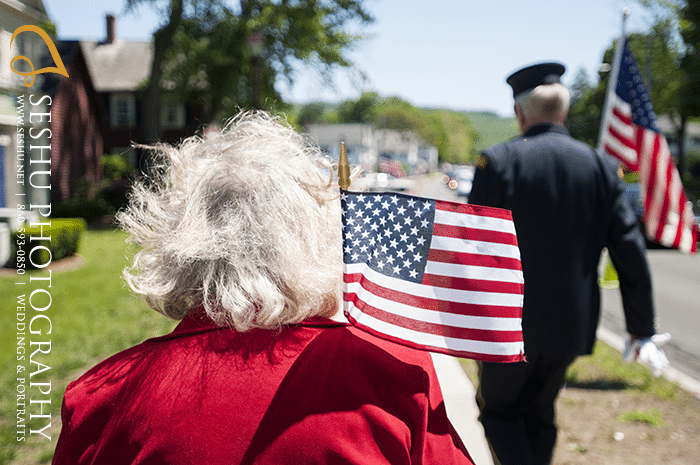
And here is the image, Elizabeth and I discussed in the video:

Memorial Day 2013, Avon, Connecticut  | Seshu Photography

Filed Under: Education, Photography, Workshops Tagged With: Editing Workshops, Elizabeth Krist, National Geographic Magazine, Photo Editing, photo editor, Photo Essay, Visura

  • « Previous Page
  • 1
  • …
  • 48
  • 49
  • 50
  • 51
  • 52
  • …
  • 347
  • Next Page »

Subscribe To Tiffibox Treats!

Looking for a well-curated email newsletter that will leave you inspired and motivated about your photography business? Sign up below!

About Seshu

Seshu creates relaxed portraits of families and high school seniors in Avon, Connecticut. He also leads a successful headshot photography studio in Connecticut, helping professionals from a variety of disciplines project the very best versions of themselves. He created Tiffinbox as a way of inspiring photographers, to create better images and successful businesses. [Read More]

Email Templates For Headshot Photographers

Email Templates for Headshot Photographers

Recent Posts

  • How Capture One Changed My Event Photography
  • 10 Steps To Stay Positive In Times Of Great Stress
  • Why You Need To Read “Personal Branding For Photographers” Now
  • How To Master Your Website Content Step By Step?
  • Tony Taafe’s TNT Method For Headshot Photographers

Recent Comments

  • Stephen Davison on Are You A Business Owner Who Is Smart, But Stuck?
  • Ben A. on Don Giannatti Clinches The 8th Annual Tiffinbox Award
  • Dan on Don Giannatti Clinches The 8th Annual Tiffinbox Award
  • Donald Giannatti on Don Giannatti Clinches The 8th Annual Tiffinbox Award
  • Stephen Davison on G.E. Masana’s 6 Strategies For Wedding Photography Success
  • Naveen Kumar on Weddings In India Are More Than Being At The Right Place And At The Right Time
  • kartick on Weddings In India Are More Than Being At The Right Place And At The Right Time
  • Leonid Farbman on 6 Uncommon Trends To Grow Your Photography Business
  • Willow and Finch Wedding Photography on 11 Reception Tips To Help Your Wedding Photography
  • Web Designer Malaysia on How To Optimize Your Squarespace Website For Search Engines
  • Creastan on An Interview With Photojournalist G.M.B. Akash
  • Cindy Brown | Atlanta on An Open Letter To A Local Photographer

Become a Patron!

Copyright © 2026 · Tiffinbox · Site Design by Heather Mackan Creative · Built on Genesis