• Photography
  • Interviews
  • Business
  • Reviews

Tiffinbox

Inspiring Photographers

  • Home
  • About
  • Blog
  • Contact

Supercharge Workshops For Photographers

May 27, 2013 by Seshu | Editor & Publisher

It's funny how things just seem to come together when one decides to pivot. I spoke about scuttling two of my websites and changing course. Part of my new adventure involves being absolutely sure what my future photography clients want and what they are looking for.

As I have stated before, just because you can photograph and publish images on the web does not guarantee you a following or more importantly a business. You have to define who want to do business with in the first place. Most people, including me, get stuck in the “how” – I don't know, for instance, how to use Google Analytics in a way that will give me a good idea of what information my clients are looking for online.

Who has helped me through this process, from time to time, is my friend Scott Wyden Kivovitz. He is a phone call or a Tweet away. If he has time and he is one very active guy, he helps me out. If he doesn't, he usually has a resource online that I can check out on my own. I can't tell you the number of times Scott has come to my rescue. He is incredibly web savvy and it came as no surprise when he was asked to join the Photocrati Media team.

Supercharge Workshops | Photocrati MediaScott asked me to let you all know about two web marketing workshops directed solely towards photographers. He is joined by Erick Danzer and Vanessa Joy. Erick owns Photocrati Media, a highly regarded company that produces among other things WordPress themes for photographers. Vanessa is a well-known teacher, author and photographer.

The workshops are in Denver, Colorado and Hamilton, New Jersey. Sign up before May 31st and save $100.

Specific topics include SEO, keyword selection, site optimization, link building, image SEO, social media and social signals, blogging, content marketing, email marketing and follow up, paid advertising, conversion rate optimization, social proof, and more.

Plus, you get a ton of bonuses:

– Free Access to the Sculpture Gardens & Red Rocks
– Lunch is Included
– Free Copy of the Photographer’s SEO eBook – $39 value
– One Year Membership for the Photographer’s SEO Community – $99 value
– Photocrati WordPress Theme + One Year of Support/Updates – $89 value
– The Laundry List eBook by Rachel Brenke – $9.99 value
– Chic Magazine for phone/iPad – $12 value

Get all the details here and register for either the Colorado or New Jersey Supercharge Workshops, before the prices get bumped up.

[Yes, I am an affiliate partner of Photocrati Media because they provide quality WordPress themes and great value through their various educational resources. I wholly support vendors who help photographers elevate their game!]
Filed Under: Marketing, Photography, Web/Tech Tagged With: Improve Traffic, Photocrati Media, Photographers, search engine optimization, traffic, Workshops

An Interview With Documentary Photographer Darren Baldwin

May 26, 2013 by Seshu | Editor & Publisher

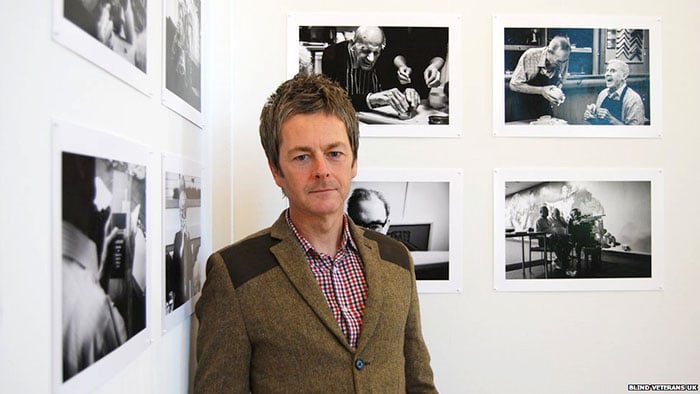
Thanks to my previous interviews with documentary photographers Jim Mortram and Brant Slomovic, I “met” Darren Baldwin, a documentary photographer based in Brighton, United Kingdom. In addition to being a documentary photographer, he is a pediatric nurse and a design director for a few websites. Follow Darren on Twitter: @BWDdrj

Darren Baldwin | Documentary Photographer

1) So, tell us a little about how you got your start in documentary photography. Is it an off-shoot from being a street photographer? What draws you to this particular genre of photography?

My dad is a videographer by trade, but has always been an avid and passionate photographer; he was one of my earliest visual influences. Interestingly, I recently found out my estranged grandfather (whom I never met) was a popular street portraiture photographer – it would appear that the apple never falls far from the tree; even if you never sat beside it!

In my teens I’d go out with one of my friends and take pictures using my father’s camera; I dragged all his darkroom equipment down from the attic and we’d spend hours developing images in my little dark room in the garage, taking time to mess around with developing times and trying effects (often with rather less than successful outcomes!).

It wasn’t until I met my partner Carrie that my passion for photography really became apparent again. When we formed DIGITAL bungalow, Kitchen Bitching and live.love.space. photography became a way of life. We’re really passionate about strong imagery on the sites, and as Carrie is the wordsmith it naturally fell to me to provide suitably beautiful images to accompany her words.

Whilst I have dabbled with landscape, product, macro, band, sports etc, my interest in street portraiture came about by chance the day that I discovered Vivian Maier. Everything changed when I realised that landscapes, seascapes, traditional portraits and conventional concepts of beauty just didn’t excite me. I found more beauty in Maier’s work than in anything I’d seen before; and I wanted to see if I could capture the same unexpected human essence that Maier did. I also went back to books I’d previously read, Araki’s ‘Lucky Hole’, ‘Radical Eye’ by Miron Zownir, ‘Im Auftrag’ by Snowdon and ‘The Seven Ages of Man’ from Hulton Getty. These small developments steered me into a ‘documentary’ style of photography.

2) You are now the second in this series of interviews who has an affiliation with the health industry. Is there anything in particular that makes you better documentary photographer because of your medical training?

That’s true. Brant Slomovic being the first! I agree with Brant in that I see the two ‘as completely separate existences’. However, after 10 years in adult emergency and 3 in paediatric emergency, you get a feel for situations and how they’re going to develop which is a good skill for street photography. I deal with conflict, anxiety, anger, sadness and happiness when I am at work, so I definitely think that helps. However, that doesn’t make you take better photographs, and nor does the camera you’re using.

3) In addition to being a pediatric nurse (what is a & e?), you are the design director at DIGITAL Bungalow, Kitchen Bitching and Live Love Space. First, how the heck do you find the time to juggle all that and secondly, how do your design sensibilities inform your documentary approach?

A&E is the UK equivalent to your emergency rooms (Accident and Emergency).

My partner Carrie is a writer and workaholic, very driven and always moving forward. I like that, it kicks me up the backside and gets me moving too. So we started DIGITAL bungalow it quickly became something much bigger than we anticipated, then Carrie wanted to start another, and another, and another! As Design Director I oversee the sites, and deal with any design requirements the team might need. Carrie now runs DIGITAL bungalow Editorial Agency – so there’s plenty of design work to be done for her clients too. How do I fit it all in? Well … the revolution will not be televised.

I studied graphic design when I left school and get a lot of my creative sensibilities from my father which filter down into my photography, definitely. While I photograph a lot of people I also like, structure, form, architecture and symmetry. As a photographer I’m not one for setting up shots. I don’t overthink it – I just shoot and let the subjects do all the talking.

4) How and perhaps why were you so interested in photographing blind veterans? How did you get your start in that project?

Following my documentary series that captured the London Road area of Brighton and its inhabitants, I wanted to work on a new project that further challenged peoples’ perceptions of usual stereotypes.

The initial idea behind the Blind Veterans project was to challenge the the stereotype of a “hero”. I wanted to collect images that defy the clichéd young, muscular, bare-chested hero; instead allowing the viewer to recognise for themselves the once pivotal role of these now frail individuals. My subjects' lack of sight mirrors the way that society sometimes fails to “see” the elderly, or truly appreciate the influence their actions had
on the world of relative peace we are so lucky to live in today.

Darren Baldwin | Documentary Photographer

Darren Baldwin | Documentary Photographer

Darren Baldwin | Documentary Photographer

Darren Baldwin | Documentary Photographer

Darren Baldwin | Documentary Photographer

Darren Baldwin | Documentary Photographer

Darren Baldwin | Documentary Photographer

5) There is a certain aloofness in the subjects you photograph. If first impressions count, the one word that came to mind when I viewed your images is – “isolation” – am I right in assuming you are fascinated by how people are part of a community but still remain apart or isolated?

Absolutely. I do have a fascination with that aspect of our lives. We’re all so damn busy but there are people who can seem very alone. That’s not to say they’re unhappy – I believe there are many more facets to isolation than simple, abject misery. Contemplation, meditation, introversion … all these things can come from or lead to isolation. I’m interested in capturing both quiet moments – almost the pauses in between breaths – and diminutive moment when subjects see the lens. I love to wonder what it is they’re thinking – the multifaceted nature of the human psyche fascinates me – as it does many other people!

6) With very few exceptions, your recent work is all black and white. Why is that?

I just really like black and white. I love the deep contrasts. I like dark images. You don’t get tangled up in the colour.

Not everything works well in black and white, of course – and I love colour street work from people such as Matt Stuart, Justin Sainsbury, and Paul Russell. I am definitely influenced by Maier and Arbus’ work, but both my dad and grandfather worked in B&W, so who knows, maybe it’s in the genes.

7) Brighton, UK, where you live is a popular destination for tourists. Are your images mostly of them?

No.

8) Your images now live on Flickr. How helpful has Flickr been to attract you clients interested and willing to support your documentary projects?

I use Flickr because I’d rather spend time taking photos than building a website to house them.

When it comes to working with new people, new projects and potential backers – I like good old-fashioned word of mouth. I want my images to do the talking. It’s great if someone stumbles across you – but the internet is an immense space – I’m not expecting a “stumbler” to commission me for a massive project any time soon. Flickr serves as a quick and easy gallery – a convenient way of people seeing what my work is about. Hopefully people will see my work, and want to talk about it – and we’ll take it from there.

9) Other than Twitter, where you are quite active, and Flickr, where your images are hosted, do you use any other social media channel to market your work? Tell us about it.

Apart from Twitter and Flickr I have a facebook page. That’s it. No tumblr, no 500px, no Google+ nothing else. I don’t see the point in constantly repeating myself!

10) You mentioned that a new website is in the works. Care to tell us what the domain url will be and when we can expect to see it go live?

At the moment I’m so busy with projects that a website will just have to wait – it would be fantastic to have a proper online showcase but, as I said, for me it’s personal relationships that build really positive projects.

Do you know of other documentary photographers I should interview? Why not put them in touch with me? Simply direct them to this website! Thank you.

Filed Under: Documentary, Interviews, Photography Tagged With: Baldwin, Darren, Documentary Photographer, documentary photographers, documentary photography, street photographer

Does Your Photography Website Convert Traffic And Make You Money?

May 23, 2013 by Seshu | Editor & Publisher

Are you converting your website's visitor's to paying customers? It's a really simple question isn't it?

Your answer can either be “yes” or you can say “no.” Those are your only options. If it's the former, good on you friend. You've cracked the code and your rolling in it.

Or, are you?

I just shuttered two websites that weren't converting to my satisfaction. The business still exists but the sites are gone. Why? What happened?

Simple: The websites spoke to me more than they spoke to my clients. This is a cardinal mistake that most photographers make. They spend a good deal of money and time making a site look pretty, not fully understanding that their potential clients who are ready to pay them for your services are not interested in any of that fluff.

So, what IS important for your clients? That's in fact the process of discovery I'm personally embarked on now thanks to Portfolio To Profit Engine: How To Build An Absolutely Irresistible Photography Website [aff], by Psychology For Photographers.

Portfolio To Profit Engine: How To Build An Absolutely Irresistible Photography Website

You are probably thinking why make such a fuss, right? These days it is so easy to buy a template, slap some images down and start a blog (which some people like me don't update very regularly). Yes, there is nothing to it if you want to do it the wrong way.

The right way takes a bit of elbow grease. Jenika, who publishes Psychology For Photographers, includes what are called “dreamsheets” (as opposed to worksheets) that nudge you along. Complete these and you'll be astonished at what your website should really look and feel like for your clients.

You may want to read that last sentence again.

Done? Good.

If you are truly in service of your clients, shouldn't your website reflect that from the first time your client connects with you and your work? I personally think Portfolio To Profit Engine: How To Build An Absolutely Irresistible Photography Website is a boon for photographers. If you are struggling with your business and you aren't attracting the “right” clients, it may be time to reassess how your website is resonating with your future clients. If it isn't, and I would say 95% of them do not, then it's time to fix it.

And you can do it yourself. This is more about understanding your client's perspective than working with web technology. This e-book will help you quickly tap into your client's needs and desires and guide you into delivering what they want in their lives. Far from being mumbo jumbo, Jenika who is a graduate from Yale delivers from a deep well of behavioral neuroscience. Simply put, she understands how our brains work.

Now, I am going to keep you all abreast of my progress with this, but between now and Saturday, Jenika has dropped the price from $159 to $119.

UPDATE: Jenika has extended the sale through Monday, May 27th, so here is your 2nd chance at grabbing this product

If I were you, I would not wait to grab it now. Get all the details about this e-book here: Portfolio To Profit Engine: How To Build An Absolutely Irresistible Photography Website.

Filed Under: Photography, Web/Tech Tagged With: Convert, photography website, traffic

An Interview With Documentary Photographer Brant Slomovic

May 16, 2013 by Seshu | Editor & Publisher

Brant Slomovic is a documentary photography based in Toronto. He was recently featured as a Contender in the 2012 Hey, Hot Shot! International Photography Competition and in the Collection at Flak Photo. His current personal projects include Shinny, which details the ubiquity of shinny Hockey in Canadian culture, and Puja, which explores daily rituals of spirituality in Indian life. Please follow Brant on Twitter.

Documentary Photographer Brant Slomovic | Shinny

1) You became a documentary photographer after pursuing emergency medicine. First what motivated you to change tracks? And, secondly, what was it in your training as a medic prepared you the most to be a documentary photographer?

Those are great questions, but to clarify, I was a photographer long before I even considered becoming a physician. So it wasn’t really changing tracks from one métier to another, as much as it was rediscovering of a need to make photographs and tell stories. I had abandoned photography when I entered university. By the time I finished my specialty training in emergency medicine this deep desire to express myself through images re­emerged. It was unstoppable.

I think of the two ­- medicine and photography ­- as completely separate existences. I’m keenly aware of the potential for conflicts of interests to arise, because I am a photographer and at the same time a physician. So the choice not to cross paths is deliberate. Perhaps one day I will find a way to approach a subject and bring the two together­; the insight and empathy that my training as a physician has developed and photo making.

2) If I was to describe the images on your website, I would use the words: “quiet” or “deliberate” ­ do you agree? Where did you acquire this sense of rhythm in your images?

I do agree, it’s a very fair statement. I search out these moments. On one hand its a reflection of an esthetic that I’m looking for. On the other, it gets back to your first question, about the relationship between practicing medicine and making images. As a result of the inherent chaotic environment of the emergency department, I look for the opposite when I am engaged with the other elements of my life. It's about finding a balance for me personally.

3) So many interviews I have heard or read focus on the process. I am interested in your intention. The projects you have embarked on ­ Shinny and Puja ­ couldn't be more disparate. Can you tell us what it is about each that you are drawn to?

Both the Shinny project and the Puja work emanate from very personal places. My long term projects have to come from something that stirs within, whether it be a deep curiosity or something I am already connected to and passionate about.

Shinny is about my love of hockey and the place it has in Canadian culture and art. As a Montrealer, having grown up during the heyday of the 70’s, it would be impossible not to be passionate about this subject. I see shinny as a deeply unifying Canadian experience, shared by a huge spectrum of people, from elite professional athletes to new immigrants. The initial inspiration began with the paintings of great Quebec artists like Terry Tomalty and John Little, who have established a tradition of painting hockey scenes. I thought “no one is doing this kind of work with photographs”.

The Puja project is also highly personal. My wife was born and raised in Bombay. So my attraction to this work began with my discovery of her and where she came from. I am fascinated by the intertwining of cultures in India, how the lines of distinction are blurred, and by this sense of unification through diversity. The ritual of puja is a beautiful expression of devotion and I love that it can exist in public spaces and that it’s interpretation is limitless. Puja can be a specific religious act as much as it can be about the way in which one travels to work or performs mundane daily activities.

4) Around 1984, when you graduated from high school, you tasted your first big win in an art competition. How important is it for you to enter contests? How do you select which ones to enter? And, lastly how do you edit your images and select your personal “winners”?

To be honest, contests, per se, are not very important to me. The recognition is of course nice and there is certainly a role for them in the advancement of one’s work. At this point I am concentrating on building the strongest body of work that I can and on developing new projects. But hey, if you’re interested in nominating me for anything, I’ll accept graciously.

Editing is always a challenge. First, I take time away from the images and the experiences. I need the separation physically and emotionally; the space to gain objectivity. Then I enlist the eyes of a few trusted friends. The personal winners communicate emotion and that impact stands the test of time.

5) Tell us a little bit about your sense of awareness of when an image should be made.

A large part has to do with the preparation before you even show up. Developing a clear idea and intention, researching, immersing in one’s subject. Then, for me, its about being as present an open minded as possible. Looking and often waiting for specific moments but having the awareness to let things happen as well.

Documentary Photographer Brant Slomovic

Documentary Photographer Brant Slomovic

Documentary Photographer Brant Slomovic

Documentary Photographer Brant Slomovic

Documentary Photographer Brant Slomovic

6) When I came across image #14 in your “PUJA” series, it stopped me in my tracks. Can you tell us about why that image was made and what its significance is?

That image was made because it was there. The significance is that for me the image is a reflection of India, in it’s totality. It is a literal and perhaps slightly cliché representation of the contrasts that personify India. I was also attracted to the scene because it made me wonder about the story of those roses ­where and by whom were they made, what was their purpose and in what kind of ceremony were they used. And finally, what was their journey and how did they end up adrift in murky waters.

7) I have to ask you about the form factor of your gear. What are you using? Are you shooting film or is all of your work now digital?

The majority of my work, and specifically the two projects we have been discussing, are shot on medium format film.

8) Whether it's “PUJA”, “SHINNY”, “GLENGARRY” or “PAAN”, I get the sense that you are most interested in how humans inhabit their spaces. True? Is distilling it to that even fair?

It is fair. There is certainly an element of that in my work. For a while, I wanted to make images devoid of people. It was just something that made sense and felt natural at a specific time in my evolution. When I was editing my first show, Glengarry, I realized that I couldn’t fully tell the story I wanted to tell without including the human element in the edit. From that point forward it has been something I strive for­ – how people fit into the narrative. I think of the work of Simon Roberts and Massimo Vitale as great examples of this.

9) Personal projects are never ever finished as they go on and on. Do you find yourself finding a point to stop and say that you've got it all and you move on to the next project?

Ha! Well I thought so. But recently I was encouraged by one of my mentors to return to a project I thought I had closure on. I’m considering it, but haven’t gone back to it, yet. I think some will inherently come to an end, either when I feel a sense of satisfied completion or simply exhaustion. With Shinny, I’ve just begun to scratch the surface and I’m excited for it to carry on for a long time.

10) Are you represented by an agency or a gallery? How would one go about buying one of your prints?

At this time, I do not have representation. Buying prints can be done through the contact link on my website, www.brantslomovic.com. Thank you Seshu. It’s been a real pleasure.

Know of other documentary photographers like Brant or Jim Mortram pursuing projects that they are ready to show and share with the world? Send them my way. I would love to highlight their efforts and interview them.

Filed Under: Uncategorized Tagged With: Brant Slomovic, Documentary Photographer, documentary photography, interview, project

Commercial & Wedding Photographer Jane Shauck, On Sound Financial Planning

May 15, 2013 by Seshu | Editor & Publisher

Jane Shauck is a West Hartford, Connecticut based wedding and commercial photographer. I first met Jane at a Pictage User Group meeting that she hosted. We subsequently saw each other at trade shows and conferences like Mystic Seminars or Inspire Photo Seminars (both in or near Connecticut by the way). Before her husband, Mike, joined her business as a second-shooter, I assisted Jane at a wedding. I was always impressed by how organized she was and how very calm she appeared to be during the entire day.

We met again recently at the Inspire Photo Seminars, in Sturbridge, Massachusetts and her presentation literally caused my jaw to drop. Her no-nonsense approach to the photography business was refreshing because I feel way too many people sugar coat the experience of being a professional photographer. Yes, we must be passionate about what we do, but I learned (and am learning the hard way) that having financial control of your business is paramount to being in business and staying in business. Her presentation that winter day warmed me up to the idea and the steps I needed to take to be a lot more strategic about my time, about how I plan my year and especially what kinds of photography I needed to pursue to meet my financial goals.

Her advice is general for a reason – each of us has different goals and we need to carefully assess what it is that we need to be each making to meet or exceed those goals. I welcome you to take a listen to our conversation below. I would urge you to also visit and bookmark Jane's new blog for photographers called Photo Career.

Comment below to give me/us a sense of how important these types of interviews are for you. If you value them, share the link so that others may also learn from it. Thank you!

Filed Under: Uncategorized Tagged With: Commercial Photographer, Financial Goals, Financial Planning, Jane Shauck

  • « Previous Page
  • 1
  • …
  • 49
  • 50
  • 51
  • 52
  • 53
  • …
  • 347
  • Next Page »

Subscribe To Tiffibox Treats!

Looking for a well-curated email newsletter that will leave you inspired and motivated about your photography business? Sign up below!

About Seshu

Seshu creates relaxed portraits of families and high school seniors in Avon, Connecticut. He also leads a successful headshot photography studio in Connecticut, helping professionals from a variety of disciplines project the very best versions of themselves. He created Tiffinbox as a way of inspiring photographers, to create better images and successful businesses. [Read More]

Email Templates For Headshot Photographers

Email Templates for Headshot Photographers

Recent Posts

  • How Capture One Changed My Event Photography
  • 10 Steps To Stay Positive In Times Of Great Stress
  • Why You Need To Read “Personal Branding For Photographers” Now
  • How To Master Your Website Content Step By Step?
  • Tony Taafe’s TNT Method For Headshot Photographers

Recent Comments

  • Stephen Davison on Are You A Business Owner Who Is Smart, But Stuck?
  • Ben A. on Don Giannatti Clinches The 8th Annual Tiffinbox Award
  • Dan on Don Giannatti Clinches The 8th Annual Tiffinbox Award
  • Donald Giannatti on Don Giannatti Clinches The 8th Annual Tiffinbox Award
  • Stephen Davison on G.E. Masana’s 6 Strategies For Wedding Photography Success
  • Naveen Kumar on Weddings In India Are More Than Being At The Right Place And At The Right Time
  • kartick on Weddings In India Are More Than Being At The Right Place And At The Right Time
  • Leonid Farbman on 6 Uncommon Trends To Grow Your Photography Business
  • Willow and Finch Wedding Photography on 11 Reception Tips To Help Your Wedding Photography
  • Web Designer Malaysia on How To Optimize Your Squarespace Website For Search Engines
  • Creastan on An Interview With Photojournalist G.M.B. Akash
  • Cindy Brown | Atlanta on An Open Letter To A Local Photographer

Become a Patron!

Copyright © 2026 · Tiffinbox · Site Design by Heather Mackan Creative · Built on Genesis