• Photography
  • Interviews
  • Business
  • Reviews

Tiffinbox

Inspiring Photographers

  • Home
  • About
  • Blog
  • Contact

David Jackson’s Photography & Lighting Workshops On June 10th & 11th, 2013

May 13, 2013 by Seshu | Editor & Publisher

If you have read David Jackson's two mega posts on Tiffinbox, you already know what his photography and lighting workshops are going to be like: Raw and real.

Haven't read the posts yet? Here you go: An Open Letter To A Photographer and On Chasing Rainbows And Unicorns.

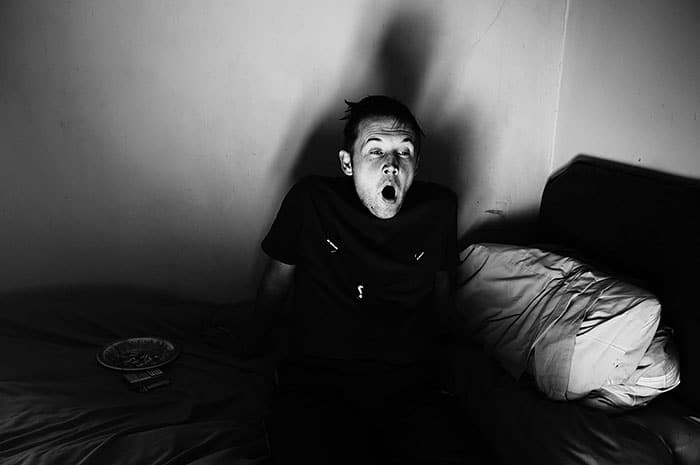
I have had the pleasure to visit his Appleton, Wisconsin studio twice in one year – once to attend his Breaking The Rules workshop and the second time to attend his then new f/what? workshop.
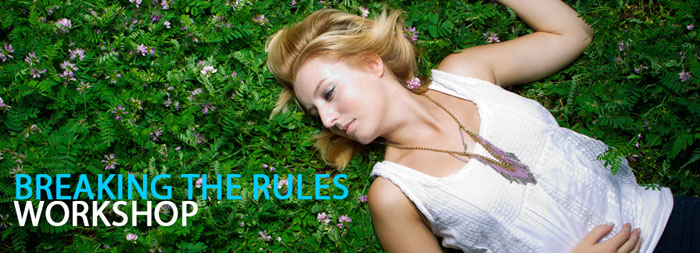
Breaking The Rules Workshops | David E. Jackson | Appleton, Wisconsin

“The Breaking The Rules workshop is essentially designed to give emerging photographers a fresh, new start on re-evaluating the way we approach creating dynamic images by examining the struggles faced in finding our unique voices.”
f-what? Workshops | David E. Jackson | Appleton, Wisconsin

“Whether you’re looking to expand your current approach to location lighting or create dynamic lighting effects, we will move toward re-inventing the way we use studio strobes to spark a new level of creativity in our portrait shooting process.”

If memory serves me right, at both workshops, the number of students were limited to between eight and 10. The level of instruction and demonstration was high. I recall working late into the night until David had answered everyone's questions about photography, business or lighting. We also played a lot. By that I mean, we experimented with lighting scenarios. If something didn't work, we moved quickly to some other set up that did. We were challenged. We were asked to discuss our “why's” and “how's.” On the whole, a lively group of people joined me; all inspired to make better images for themselves and their clients.

David and studio manager, Trevor Nackers, made me feel at home. There was always something to munch on, when I got hungry. The lunches were simple and fast, but healthy. The dinners were truly communal and welcoming as well.

I've been asked before why I attend so many workshops. Trust me when I say I am hyper-selective when I choose to go to one. I've done my homework. I've often reached out and badgered the workshop instructor with questions (just as David!) and I've made darn sure there will be a return on investment. From what I experienced in the two workshops I have attended, David put his heart and soul into making this a successful workshop for each attendee. If you have specific questions about lighting, David goes to great lengths to address them and provide you with a solution. One isn't left wondering about how to approach a portrait session.

The other bonus is meeting other photographers. Often they become friends of mine who contribute to Tiffinbox. Amanda Reesburg and Brett Stoddart are both fine examples.

It was also such a thrill to meet and get to know Brandon and his wife (and photography blogging phenom) Jamie Swanson.

Ok, so you are probably wondering why I decided to post this now. Here are a few reasons:

1) In my opinion, beginner or advanced photographers can always learn to light better (read this interview with Joe McNally about why lighting matters the most to us) and this is an awesome opportunity

2) David and his crew have incredibly large hearts and want to help you become better photographers today

3) The cost of each of these workshops – $250 – is laughably low (and yes, I have told David this), so you are getting tremendous value. Sign up for both and David's going to save you an additional $50!

4) These workshops will be the last ones David is offering for 2013

5) Tiffinbox is sponsoring / partnering with David and will be responsible for the bagels and cream cheese for both workshops (how appropriate, eh?)

Please know that I am not getting paid to promote David's workshops. In fact, I am planning to be at the June 10th & 11th workshops and am footing my own bill to get there. So, yes, not only is Tiffinbox sponsoring the workshops, but I am solely responsible for my hotel, flight and rental car. I intend to be at the workshop only as an observer/participant. It is one of the handful of workshops I truly believe in and I look forward to seeing you there. If you are interested, register for them here.
Filed Under: Lighting, Photography, Workshops Tagged With: Breaking The Rules, david, david jackson, Dynamic Lighting, Lighting Workshop, Photography, Workshops

An Interview With Documentary Photographer Jim Mortram

April 29, 2013 by Seshu | Editor & Publisher

Jim Mortram is a documentary photographer. That's perhaps the easiest way to describe him. The images on his website – Small Town Inertia – gripped me like a vice for their gritty portrayal of lives lived in rural England. I was surprised by how quickly I cared for those people Mortram photographed. There is compassion and clarity in Mortram's approach and it is a refreshing change from the synthetic and saccharine images we are all subjected to every day. Mortram has published a limited edition book called “Electric Tears & All Their Portent” – limited and sold out! Please follow Jim Mortram on Twitter.

Small Town Inertia | Jim Mortram

1) Who are you and how did you get your start in documentary photography?

About six years ago I'd become quite insular. Working as a caregiver for my Mother in my family home; it's an intense situation, quite highly stressed, with odd hours. Before you're even aware of it, the ties you once had – friends and the connection to the outside word – erode. It's a subtle shift, and by the time I noticed, it was too late to cease that evolution. I was loaned a camera by a friend and immediately knew I had to document people. The challenge was where and how. I live in a very rural, low-population part of East Anglia, UK; I was tied to my duties as a caregiver. Long periods away from home to shoot were out of the question due to both responsibilities and financially. I hated the situation. I wanted to escape, wanted an escape for everyone involved … I wanted to click my fingers and make my Mother well, Father freed of the pain of seeing his wife in pain everyday but there was no way that was going to happen. After having this effect me profoundly it was then a long road of rebuilding everything.

One relationship really helped pull me out of my shell and pull my photography into focus. It was because of a person close to me, 2 doors from the family home, in fact. I'd known W.H. since I was a child. In his late 80's, I would visit often to hear his stories. Gradually I began to make portraits. He encouraged me greatly. The whole process was very organic and instinctive. He became ill with cancer, and I ended up being one of the last people to talk with him – certainly the last to photograph him. This experience really forged the understanding of why I had to document local people. I began to understand that everyone has a story; that they are all important. It also made me re-appraise my location and my relationship to it. I finally harmonized with where I lived. Where I had felt suffocated suddenly transformed into a place that was of the highest importance : Dereham, one of those small forgotten towns, with a distinct strata of the population that have also been forgotten.

I still work at home, caring for my Mother, that's never changed, I don't shoot for money, I fit shoots in and around duties etc. It's a big balancing act but like water finds it's way from mountains to sea, you find a way!

2) Do you have a sense of the documentary tradition – as in, have you studied it, or did this all come about naturally for you?

I'm an autodidact really, I studied fine art painting before being forced to quit early in my degree to return home to be a Carer. Regarding photography or documentaries I've always been aware of it and when I turned to it, it was a very natural extension of myself.

3) Why is it so important for you to document the lives in your own community?

I think this has been answered through the other Q&A's : )

4) How do you cope with the emotional baggage that usually comes with working in this genre of photography?

I could not see myself working in any other way than long form. Without the time invested, on both sides of the lens, I think I would document in a much shallower, ephemeral way, so taking months, years to constantly document and share it gives the series context, there is a evolution within the lives, to tell any story you have to do more than read chapter one you have to read from the front to the back cover. That's all far more important to me than how it might touch ‘me' emotionally, even if it and often is quite really stressful or saddening and you know if it did not affect me, touch me … I'd really worry.

5) How do you go about choosing people to photograph? How do you get access into their lives? Why are they so eager to tell their story to you?

I just ask … or sometimes I'll get a call from someone or someone who knows someone and wants to be involved. I always treat people, as I myself like to be treated. You can never feign nor fake interest in a person. I’ve never singled out people with an eye that they might make a good story for example; it’s a very organic evolvement. People are very giving and that humbles me greatly, my greatest debt is always to the person the other side of the lens. It’s such a great honor to be accepted and brought into another person’s life and given the access to document it. I’m sure I could work in a faster fashion but for me long form documentary is where my heart is. Often I’ll visit people and not even take an image, just talk and more importantly listen, and I listen more than I shoot. I have an equation that I always bear in mind talk more than you shoot and listen more than you talk and it serves me well. I break shoots up into periods of straight documentary and periods to shoot portraits, make interviews and shoot video.

Initially, for the people I work with it’s a way to have an opportunity, ANY opportunity to share their experiences and to be heard. It’s, I feel, a really empowering step for someone to make the decision to get involved, stay involved. It’s a way for many people to take a positive step, to maybe take some control where there might be a huge absence of any control in their lives. It’s also a mirror for many people, it might be the first time that they have paused for thought as every day is just surviving, enduring and when you live just to make it through one day to the next it’s often hard to distance yourself from that experience and take a moment for reflection.

6) Typically, how long do you spend photographing someone? When do you know you are “done” telling their story?

I'll shoot a person, their story forever, I don't think you can ever be ‘done'.

Small Town Inertia | James Mortram

Small Town Inertia | James Mortram

Small Town Inertia | James Mortram

Small Town Inertia | James Mortram

Small Town Inertia | James Mortram

7) Your images are almost always black & white. Was that by design or were you limited to black & white film? Do you shoot in color?

I get asked this a lot and there's a simple and fast answer and also one I might expound upon. When I started shooting I was using borrowed equipment, digital equipment, cameras, lenses and the monitor I had was broken, the colours were way off and no way to calibrate etc. so I turned the colour off and worked in mono. Mono suited me as I related to it having watched my Father hand develop images in the kitchen or the bathroom when I was young. My formative years were spent experiencing images in mono, newspapers, books from the library, most were featuring mono so that language was imprinted within me I think, the shapes within mono, the way composition is highlighted. I've never found a B&W image to be more abstract than a colour and I'm aware of all the arguments VS … likewise film VS digital … truth be told, from day one of shooting I'd planned to shoot colour (Film, medium format) portraits in tandem with the mono DSLR it was just a fact that I was not able to fund it immediately so I've had to wait a few years.

8) You've used social media quite effectively to spread your message. Which platform do you feel best helps you do that?

Twitter is amazing. On first glimpse it's easy to see it as quite an ephemeral platform, fast, impersonal but if you apply patience and dedication the friendships and relationships that have evolved from Twitter have been so rewarding, I've met and become firm friends with so many incredible people via Twitter. I've never seen the Internet as ‘other' to our non on-line lives, just different. It's like photography (or anything else) you'll get back what you put in and it's only going to be as honest as your own intent.

9) I can see how one could feel a sense of satisfaction narrating the lives of your fellow neighbors. But, what do your subjects receive in return for their time?

I've never felt satisfied, I feel driven, obliged, motivated to make photographs and share stories the way I do. It's all about addressing an imbalance, I find everyone around me is in a situation where they are subjected to prejudice or stereotyping, especially now via mainstream media and our current government. I have no satisfaction depicting lives, real lives lived that are sometimes filled with suffering, struggle … of course some stories feature great happiness, great strengths and endurances. As for the people I document, I never use the term or perceive anyone as a subject, I'd really have to ask them … were I to assume, I'd think as for me, it's good to have someone to talk to, share with, someone to listen and often the people I'm working with know they are never heard, never noticed and want to be, want an opportunity to have their life experienced rather than have it written about in text or policy by some far away pen that's no experience of their situation.

Jim Mortram10) You were accepted into Aletheia, the documentary photography and film collective. How has that helped you personally and professionally?

It's just amazing to be included with a group of such amazing documentary makers and afforded the opportunity to share work as part of a collective and a collective that shares a very similar world view.

11) What are your plans for Small Town Inertia? Have you been approached to create a book or a country-wide exhibit?

I just keep shooting and what comes along, comes along. If nothing ever happened I'd still do everything exactly the same.

12) You came at this from a very personal angle – your mom suffers from epilepsy. Is having a personal stake important in creating images and pursuing personal projects?

Having emotions and having empathy is important. I'm not alone in experiencing pain or struggle in life, in witnessing it. I'm not alone in allowing the sum of ones life to inform, to be fuel for ideas, to inform ethical or moral views, to be the compass, direction and engine.

I'm a big believer in the now, right now, to be alive in the now you can't ignore the situations around you. Here in the UK right now … it's a hugely volatile time, divisive … real fractures are appearing in society … and I feel compelled as you either to choose to ignore it and the lives situations around you or you feel it, experience it and react.

Documenting, to document “Something, such as a recording or a photograph, that can be used to furnish evidence or information,” is so important, important to the lives lived and important lest they now be forgotten.

Would you like to see more interviews such as this on Tiffinbox? Can you recommend other documentary photographers who are pursuing personal projects? Please do so in the comments section below. Your participation is crucial!

Filed Under: Documentary, Photography Tagged With: Documentary Photographer, documentary photography, James Mortram, photograph, The Documentary Tradition, Town

Get The Guide To Create A Successful Photography Portfolio

April 24, 2013 by Seshu | Editor & Publisher

It's spring and you want to post new images to your website and create a photography portfolio your clients are going to love. But you don't know how to go about it. Either you are just starting out in the business or you have been in the photography industry for a while. Either way, your portfolio needs a kickstart. What's your next step?

Being flummoxed is natural. So, with me, deep breath in. Deep breath out. You still with me? I'll cut to the chase.

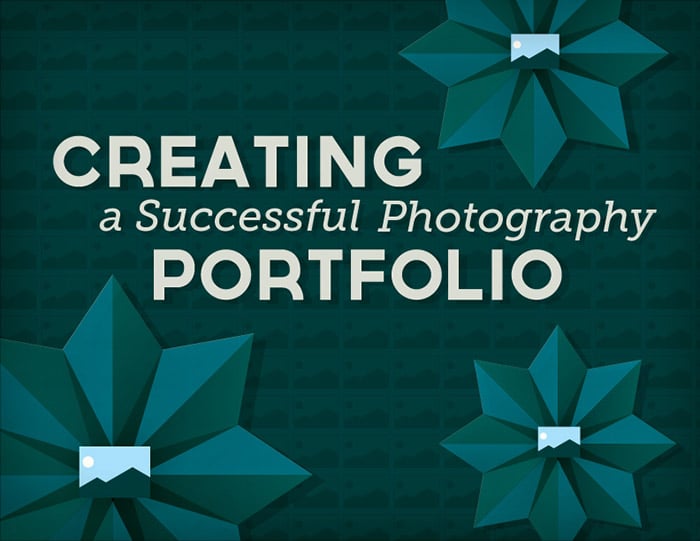
PhotoShelter, again, has published a guide that is worth checking out. It's called “Creating A Successful Photography Portfolio.”

Create A Successful Photography Portfolio | Guide by PhotoShelter

The guide includes:

– 11 secrets to creating a successful photography portfolio website
– Tips to set the right tone and attract dream clients
– Ideas for showcasing personal projects to help win jobs
– 5 portfolio review myths debunked

Those who download the free guide will also automatically be entered to win a free Website Image Edit with top consultant Amanda Sosa Stone. Details about this special opportunity on the PhotoShelter blog.

The guide is free, useful and timely, especially if you are starting to refresh your websites a new photography portfolio. I recommend you download it now!

Filed Under: Photography Tagged With: guide, Photography Portfolios, photoshelter, portfolio, portfolio website

26 Prints For Sandy Hook Elementary School

April 1, 2013 by Seshu | Editor & Publisher

I suspect, a tragedy that took place a little over three months ago, far from where you live is a distant memory. I happen to live an hour from Newtown, Connecticut, where on December 14, a deranged killer murdered 20 children and six adults. So, that memory is fresh and very raw.

To say that this tragedy shook the surrounding communities would be a gross understatement. As my wife and I struggled to make sense of it all, we made sure to hug our kids a little tighter, spend more time with them and simply be more present for each other. That hasn't changed, but I wanted to do something more to remember those innocent souls.

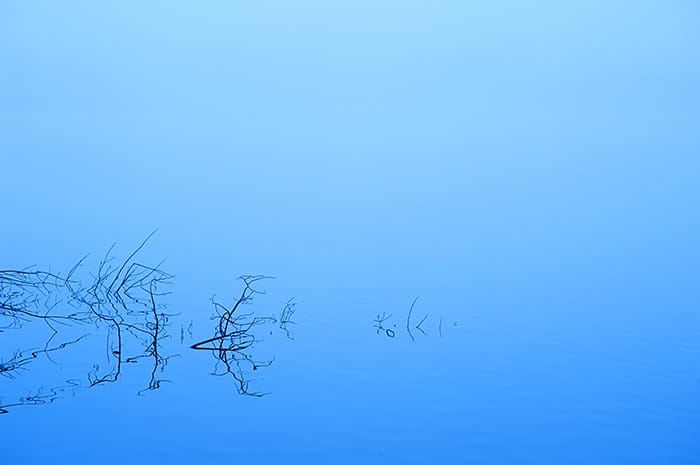
A few days before this disaster, as I was driving around the New Britain (a town near Hartford, Connecticut) one foggy morning, I came upon Batterson Park Pond. The fog was so dense that I couldn't see past 30 or 40 feet. As I got out of the car with my camera, I could hear the flutter of birds taking off. I couldn't actually see them. And then everything went quiet, except for sound my feet were making as I walked over the wet grass. Since I couldn't see anything anyway, I closed my eyes for a few months and took a few deep breaths in. Slowing down felt good. I had been running from one assignment to another and things were starting to blur.

I opened my eyes again and I saw this image you see below.

Foggy Morning | Sandy Hook Memorial Fund

I made four or six frames and felt in my gut that I had captured something I would go back to some day in the future. These images were made deliberately because I truly felt the urge to create them.

The sounds I heard but birds and animals I didn't see left an indelible mark on me. There was solitude and peace amidst the chaos of life. After the Sandy Hook Elementary School massacre, I couldn't help but think of my time at the pond and the images I created there. I pulled them into Lightroom and as the images popped up, I think I surprised myself a bit by choking up. As I said, emotions here are still running high.

As fathers, mothers, brothers, sisters, uncles, aunts and grandparents we have to find a way to pull together and find that peace amongst us. Somehow. I am not sure the passing of time will make things any easier for the parents of those 20 babies. That line people use often is trite and rather ambiguous at best. It leaves us nothing to hold on to, which is what I think as a parent I would want to do.

As a photographer, I'll continue to make quiet images like the one you see above. That may be the way I survive through this. It's not so much to keep my mind off of it but to bring more presence into what I am doing any way. It's not about “moving on” but carrying on with more purpose. Does that make sense?

When Ann Curry, the news correspondent, urged us to ask ourselves – “what can I do?” – and proposed 26 act of kindness, I wondered if I could share the image as a large print with 26 individuals. I first proposed the idea to my neighbor Carmine Masi, who didn't flinch even for a second before diving for his check book and making a donation.

These prints aren't for sale in the traditional way they would be available on one of my sites. No, what I am asking people to do is to make a donation of $100 or more to the Sandy Hook School Support Fund, c/o Newtown Savings Bank, 39 Main St., Newtown, Conn. 06470. Once you make that donation, simply email me your receipt and include your full name and shipping address so that I can send you the print. Email me with your receipt and contact information here – seshu {at} tiffinbox.org. Please use the subject line – “Sandy Hook Elementary School Fund.”

A word about the print and the printing: I approached Caitlin & Jeffrey Lazo, who own the award-winning custom print lab ProDPI, at the annual Mystic Seminars. They readily agreed to sponsor this initiative and print and mount this image as a 16″x20″ print. I am truly grateful to them and want to recognize how incredibly generous they are towards photographers. By the way, if you haven't guessed yet, ProDPI is my preferred lab for all of my client and personal prints.

ProDPI LogoPlease note that no one is attempting to make any money on this gesture. I have simply supplied ProDPI one of my images, which they have agreed to print free of charge. This image will never be printed again as a 16×20, and in fact may never be offered again. Right now, I am just focused on delivering 26 prints to 26 homes to remember the 26 people we lost at Sandy Hook Elementary School.

If you are interested in displaying this image on your wall, now is the time to make that commitment to the Sandy Hook School Support Fund. Thank you for being you!

Filed Under: Commentary, Photography Tagged With: Limited Edition Prints, Sandy Hook, Sandy Hook Elementary School

Shine A “Positive Light” On Bangladesh

March 26, 2013 by Seshu | Editor & Publisher

Bangladesh. For those of us in the west, it's a land that is far off. Over there, mostly to be forgotten and only reminded when the traditional media is quick to paint a picture of its poverty, its political strife, its annual flooding and perhaps its religious conflicts. It's all negative.

I am calling their bluff.

While I am not from Bangladesh, I've been there once. My memory is similar to Mikey Leung‘s – that the country is a vibrant place, that people are hospitable and welcoming and that there are many more things that are positive about Bangladesh than there are negative.

Yes, it took a visit to dispel the myths that I had constructed in my head. While not everyone can travel to Bangladesh (I think they should), Mikey Leung, in cooperation with Drik has produced a book, a photo essay of Bangladesh that is wholly positive. It's a called “Positive Light.”

Here is Drik's founder Shahidul Alam talking about the project:

This post is an appeal to you my readers. I am not pitching you anything. I hope this book makes you think differently about Bangladesh.

Support the production of this book here. They are looking to raise $10,000 in the next 5 days and I know they will do it. Their ultimate goal is to raise $20,000 so that the book is distributed far and wide.

Will you consider making a difference in the way a country and its people are perceived?

Think about it for a second – why do you photograph? For me, it is a way of discovering people, emotions, places and culture. Your “why” may be similar or different, but I'm sure you'll find “Positive Light” a welcome inspiration of all that is possible.

Join me!

Filed Under: Culture, Photo Books, Photography Tagged With: A Positive, Bangladesh, Drik, Drik Picture Library, Leung, Light, Mikey, Positivity, shahidul alam, Shine, Traveling To Bangladesh

  • « Previous Page
  • 1
  • …
  • 50
  • 51
  • 52
  • 53
  • 54
  • …
  • 347
  • Next Page »

Subscribe To Tiffibox Treats!

Looking for a well-curated email newsletter that will leave you inspired and motivated about your photography business? Sign up below!

About Seshu

Seshu creates relaxed portraits of families and high school seniors in Avon, Connecticut. He also leads a successful headshot photography studio in Connecticut, helping professionals from a variety of disciplines project the very best versions of themselves. He created Tiffinbox as a way of inspiring photographers, to create better images and successful businesses. [Read More]

Email Templates For Headshot Photographers

Email Templates for Headshot Photographers

Recent Posts

  • How Capture One Changed My Event Photography
  • 10 Steps To Stay Positive In Times Of Great Stress
  • Why You Need To Read “Personal Branding For Photographers” Now
  • How To Master Your Website Content Step By Step?
  • Tony Taafe’s TNT Method For Headshot Photographers

Recent Comments

  • Stephen Davison on Are You A Business Owner Who Is Smart, But Stuck?
  • Ben A. on Don Giannatti Clinches The 8th Annual Tiffinbox Award
  • Dan on Don Giannatti Clinches The 8th Annual Tiffinbox Award
  • Donald Giannatti on Don Giannatti Clinches The 8th Annual Tiffinbox Award
  • Stephen Davison on G.E. Masana’s 6 Strategies For Wedding Photography Success
  • Naveen Kumar on Weddings In India Are More Than Being At The Right Place And At The Right Time
  • kartick on Weddings In India Are More Than Being At The Right Place And At The Right Time
  • Leonid Farbman on 6 Uncommon Trends To Grow Your Photography Business
  • Willow and Finch Wedding Photography on 11 Reception Tips To Help Your Wedding Photography
  • Web Designer Malaysia on How To Optimize Your Squarespace Website For Search Engines
  • Creastan on An Interview With Photojournalist G.M.B. Akash
  • Cindy Brown | Atlanta on An Open Letter To A Local Photographer

Become a Patron!

Copyright © 2026 · Tiffinbox · Site Design by Heather Mackan Creative · Built on Genesis