• Photography
  • Interviews
  • Business
  • Reviews

Tiffinbox

Inspiring Photographers

  • Home
  • About
  • Blog
  • Contact

Going Wireless: PocketWizard For Off-Camera Flash

June 15, 2011 by Seshu | Editor & Publisher

The very core of the Strobist experience is to use your flash units off-camera or studio strobe units on location. There are a lot of options in the market now that can help you do just that. From personal experience, though, I have used the PocketWizard Plus II Transceivers. More recently I switched to Paul C. Buff's CyberSync system. Now I am considering returning back to PocketWizard.

These two videos below by Mark Wallace have convinced me to make the move back. The videos show how the new units work with the Nikon camera and flash systems. I suspect, however, the way these units operate won't be too radically different if you are using a Canon system. So everyone is welcome!

How To Shoot With PocketWizard MiniTT1 and FlexTT5

How To Use The PocketWizard AC3 Zone Controller

For using these units on a Canon system, check out these video tutorials.

By sheer coincidence, I won these units some time back. So, you'll see an “open-box” video very soon. Stay tuned! Thanks to Mark Wallace and Phil Bradon of Mac Groups for sending me the Nikon version of these PocketWizard units. I can't wait to go out and play with them.

Below, tell me if you have considered buying these units or you have already invested in a RadioPopper or some other wireless system. Do you work with flash off-camera or studio units for your shoots? Do you have questions on how to set those up? Would you find it useful if there were more tutorials posted here on Tiffinbox? Let me know!

Filed Under: Off-Camera Flash, Photography, Reviews Tagged With: camera flashes, cameras, digital photography, electronics, Flash, j. mark wallace, live preview digital cameras, nikon, nikon camera, off-camera flash, Photography, pocketwizard, red digital cinema camera company, shooting, strobist, technology, Video, video tutorials, zone controller

How To Specialize Photographing High School Seniors

May 24, 2011 by John Pyle

John Pyle Photography specializes in High School Senior Photography and is a three time national senior portrait artist (spa) winning studio. He and his wife, Sallye Anne, own and operate John Pyle Photography in Columbus, Georgia and enjoy their soon to be 2 year old daughter, Julie Anne. Follow John on Twitter.

When I first began specializing in seniors (about 4 years ago) weddings were the buzz in the photography world.  People were laughing because I was on “that Facebook site.” Others thought all you needed was “passion”, a 5D camera and a 1.2 lens to become a wedding photographer. Now it seems that everyone with a camera wants to photograph high school seniors. The marketplace and Facebook have become saturated with photographers tilting the lens to create images for high school grads. So how do you separate yourself from fan pages, logos, and self proclaimed “artists” in  a growing and crowded senior market?

My point is you don’t have to sink in a massive pool of mediocrity if you are doing what it takes to stand out.

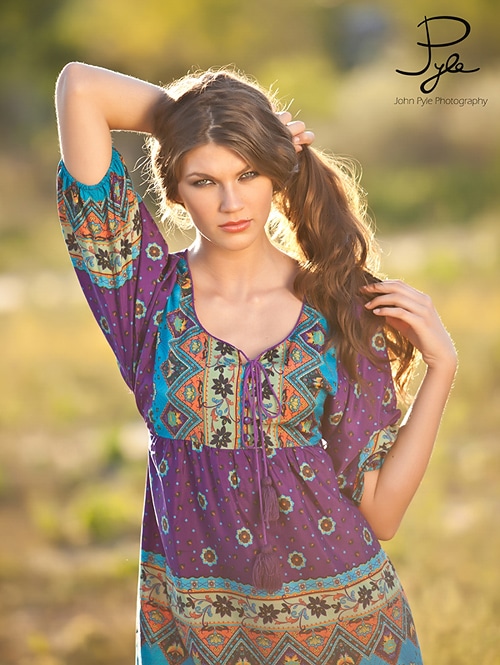
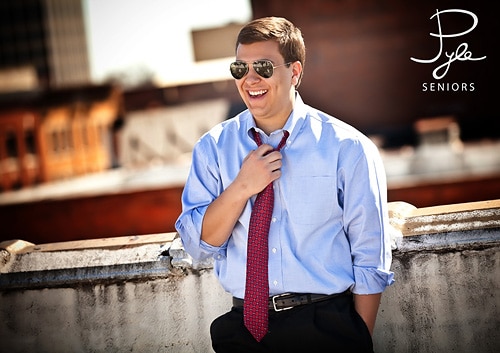
John Pyle Senior Portrait Sessions

Competition

Before full time photography I was in pharmaceutical sales. I sold one of the most popular drugs in the market with only one competitor for 6 years. When a new competitive drug launched, everyone was panicked that our market share and business would crumble. But the opposite occurred. Despite the drug being slightly cheaper than the one our company sold OUR sales grew! Why? Because there was more noise being made about the market, the drug, and the disease state it treated. Sometimes competitors can actually grow your business. Especially if your work and sessions clearly stand out. 

Yesterday a client told me she was surprised at how many “photographers” are on Facebook when she began looking to book a session. She also said that it was actually very clear who did quality work because so much of the “noise” coming across Facebook from other “photographers” was not ”good at all”. 

My point is you don’t have to sink in a massive pool of mediocrity if you are doing what it takes to stand out. This may start by educating your clients on what quality is and by valuing what you do. If you don’t value your own work then people aren’t going to randomly decide to value it for you. Worry about your customers while competitors worry about you. 

John Pyle Senior Portrait Sessions

John Pyle Senior Portrait Sessions

John Pyle Senior Portrait Sessions

Know Your Customers

When photographing high school seniors you better target everything to seniors right? WRONG. Seniors are a unique population to photograph because you are essentially targeting several clients in one; seniors, parents, family, siblings, peers, classmates … etc. Meet with the seniors and their families prior to shoot to clearly define the goals, likes, and dislikes before a session. You want customers to be thrilled with your images, excited about the session and be proud enough to show off the images. Sit down and analyze your customers to include defining who you want your ideal customers to be.

I talk with a lot of wedding photographers who are frustrated that they aren’t attracting brides who value their work, invest in their business, send referrals, and praise them to friends on Facebook. Some are advertising 75% off of everything, giving away free books, free CDs, free engagement sessions, etc. That’s fine if you don’t need income. But if you do need income you can’t be afraid of the word “profit”. It is still a business and being blessed enough to create images and work in your “passion” is still not enough to pay for gas or buy groceries.

Knowing your customers means knowing business also. A great lesson to be learned is if you sell on price, what happens when you aren’t the cheapest anymore? And if all your customers choose you based on price then that may be the only thing they value about you. Perfect your craft and learn how to run a business.   

Social Media

When utilizing Facebook and a blog/website make sure you show what you want to shoot. If you are constantly posting images of flowers, babies, concerts, airplanes, the beach, brides, and parks while claiming to specialize in senior photography don’t be surprised if your senior business doesn’t grow. You can’t sell what you don’t show. 

Customers (current and future) don’t need to see 463 images from a session. Limit what you show and choose what you show very carefully. This includes personal pictures and information as well. Personal pages are as much business pages for people and political statements, bad jokes, angry comments, and insults turn everyone off. Remember teenagers, seniors, parents, and grandparents are on your Facebook now. It’s also a good idea to monitor the images you post online for inappropriate comments. Every picture we post we are tagged in for this very reason.  

John Pyle Senior Portrait Sessions

Network

Seek out other businesses outside of photography including those that target your market. Find out what they are doing right, and what works and doesn’t work for them. 

Invest in yourself and your business. Joining professional organizations, online forums, attending quality workshops, and experiment with new styles of shooting and lighting.

These will all improve your business and your creativity. The days of secret locations, mystery editing techniques, and hiding in darkrooms are over. You cannot be complacent in the senior market.  

Finally seniors are a very rewarding population to photograph. They keep you young and force you to stay current. But you must enjoy interacting with people and creating experiences on your sessions if you want to grow this segment of your business. Seniors only graduate once. You can’t even say that about people getting married anymore.  

John Pyle Senior Portrait Sessions

Filed Under: Marketing, Photography Tagged With: facebook, high school senior photography, high school seniors, john pyle, online social networking, photograph, photographer, Photographers, photographing, Photography, senior marketing, senior portraits, seniors, seniors photography, specialize

What Happens When A Canon Shooter Uses A Nikon?

May 20, 2011 by John Edgar

John Edgar is an internationally renowned wedding and portrait photographer who travels the globe documenting moments and creating art of his discerning clients. He is based out of the beautiful city of Toronto, Canada.

I’ve been take pictures for over 10 years, and worked as a full time photographer for 6 of those. I don’t feel that any topic has been more discussed than Nikon vs. Canon. In fact, the number one question I always get as a photographer is just that. Until last weekend, Canon was the only system I have ever shot. I started with a Canon 300D post college, picked up a 30D shortly after, and the day the 5D came out, I had one. I shot the 5D for many, many years until I recently switched to the 5D mkII and 1Series bodies.

I’ve been a prime shooter since day one, originally with the plastic fantastic (50mm 1.8), upgrading from the 1.8 to the 1.4, and more recently the 1.2. My daily drivers are the 35 1.4, 50 1.2, 85 1.2 and 135 2.0.

After much conversation at the Mystic 6 convention I came to the conclusion that I should at minimum play around with a Nikon setup to see what I think. It would be quite ignorant of me to stand behind my Canon love having never given Nikon a fair run, right? My friend Steve Sager agreed to let me come out and shoot a wedding with him, and bestie Tara McMullen agreed to lend me her Nikon gear for the day.

Full disclosure: I was sure I wasn’t going to like the system, but I resigned myself to the fact that I would indeed give it a fair shot, and leave my bias at home. I’m not an overly techie person. I understand camera and imaging technology but I don’t obsess over custom functions and AF point placement algorithms. I like taking pictures, and hope my camera for the most part “just works”. I guess as a result, my commentary won’t be particularly technical.

Armed with a D3s, 35, 50, 85 and 135mm lenses, I left my beloved Canon bodies at home and ventured off to shoot a wedding.

The Preparation

I arrived in the morning at the groom’s house to shoot preps. The family was Portuguese and everything was moving along quite quickly. This wasn’t anything usual for me, but I felt it was definitely a great opportunity to put the D3s through it’s paces. I like the 35 1.4 in the morning, for preps. It gives a great sense of place and as a result it’s almost always my go-to lens for that portion of the day. I stuck it on the D3s and started snapping. We were upstairs and the bedroom was quite dark. I didn’t have a flash on (mostly because I like to shoot available light) so I was pushing the ISO into the 1200+ range.

My first immediate and extremely frustrating observation was that the autofocus was slow to acquire a focal lock and to allow me to fully depress the shutter button. With my 5D mkII, it almost never hunts around for focus. With the D3s, I felt like it was just sitting there thinking about what to do next, while I was missing some great moments. To be honest, it really, really annoyed me. However, when it did finally acquire AF lock and I made an image, the focus was spot on. This wasn’t really something I had ever thought about before, and sparked an internal conversation of “would I rather have the image, but out of focus, or miss a few for something sharp” (more on that later). Generally, a pretty high proportion of my images shot with my Canon system are out of focus, mostly because it just can’t seem to focus on the right thing. This has been a frustration for a while and definitely my main friction point with the Canon system.

Nevertheless, I pushed on shooting. I was tweeting as I went and Paul Johnson offered some insight into a change I could make in the camera settings that would allow for faster autofocus. I made some quick changes, tested it out a bit and found the “continuous” mode to be quicker in low light. After making this change, I did notice a much higher percentage of out of focus images, but still plenty of usable frames coming from the camera.

My next realization about the Nikon system came as I moved from inside the house to the yard out back. I’m a manual shooter so I’m used to changing my exposure on the fly as I move around and the lighting conditions change. Over the years you become accustomed to knowing the settings you need by judging the light and your hands automatically find the settings and plug them in. For me this is something that happens almost subconsciously as I’m shooting. As I quickly ran outside and started shooting my fingers did the usual wheel turns and something struck me. I realized that in less than 30 minutes of using the camera, it felt second nature to me. Believe it or not, after 10 years of shooting on the Canon system I still sometimes get lost and turn things the wrong way or forget where a setting is. I was very, very impressed with how quickly I was able to adapt and learn the Nikon layout, and found it extremely natural and ergonomic. Hours in I said to a guest who asked me about the camera, “it really is a joy to shoot with.”

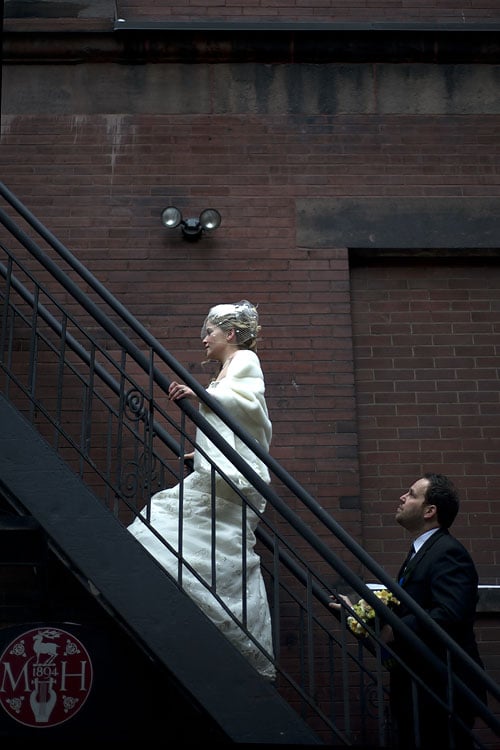
John Edgar - Wedding with Nikon D3s

The Ceremony

After the preps we headed to the church. It was very dark and I wasn’t about to use the flash during a ceremony. This was the perfect time to test the higher ISO ranges. I sent a quick message to my friend Ryan Brenizer to confirm that the files are pretty clean around 6400 ISO before I went trigger-happy. He gave me the nod and with a smile I set the camera there and went to town. I shot for a bit and then zoomed in to 100% and checked the shadows. Just as Ryan had mentioned: very, very clean. I kept my exposures solid if not slightly to the right and shot the rest of the ceremony 3200/6400.

I had decided to shoot the whole ceremony with 135mm lens. Having had a morning filled with slow AF I was a little worried about it, but plunged in never the less. I switched out of continuous focus back to single focus because my morning tests had left me with a feeling that S was slightly more accurate, and I could afford to slow down a little during the ceremony. As I shot the ceremony, I noticed almost none of the AF lock lag I had observed in the morning. The quality of the light in the church, while dim, was quite a bit better. The shadows were more even, and had less contrast. Without knowing the in-depth technical aspects of AF, my gut feeling is this helped. After shooting I went through the frames on the back of the camera at 100% zoom checking the focus. I noticed that about 85% of them were sharp and focused as I expected. This is about 30-40% better than what I generally experience off of my Canon bodies.

The Photo Session

In “Canonland” I shoot 90% of the photo session with the 50 1.2 so I decided to shoot with the Nikon 50 1.4 I had. I immediately noticed that the bokeh was totally different. At first I thought I had my aperture set wrong, I wanted to be wide open but what I was seeing looked like I was at f2/2.8. (I’m not going to debate the merits of bokeh here, that would be stupid. It’s all personal preference.) Going back over the images and looking at my Canon work, I personally like the look of the out of focus areas on my Canon glass much much better. I switched over to the 35 1.4, and set it to 1.4, again I really didn’t like the way the glass rendered out of focus light. It was also during the photo session that I noticed the general hue of the image was drastically different than what I was used to seeing on the back of the camera. At that point I didn’t know if that was the RAW rendered jpg, the screen, the light I was in, my eyes or what. Having now looked at the files side by side in ACR I definitely feel that a CR2 file has more of a magenta hue to it than a NEF. Nikon raw files generally seem warmer/orange. This is also to my mind a hue difference, not simply white balance related. I don’t really have a clear opinion on that either way at this point, so I’m merely making the observation. Do as you will with it.

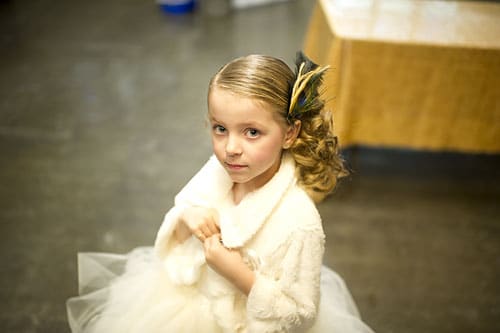
John Edgar - Wedding with Nikon D3s

The Reception

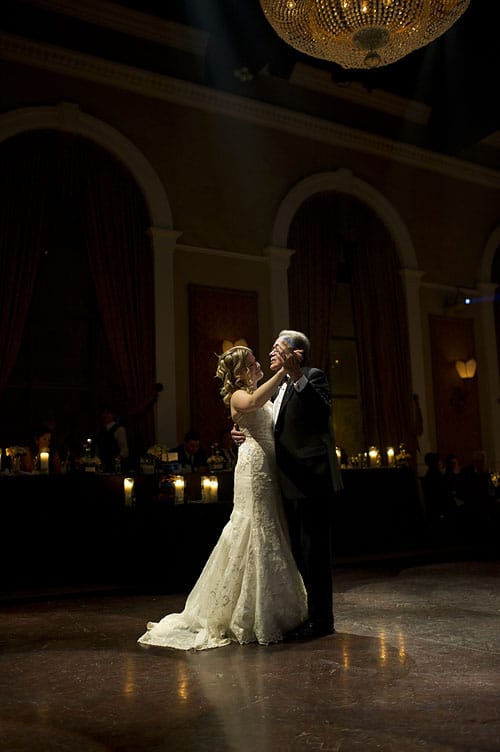
After the photo session we headed to Liberty Grand where the reception was held. Anyone local to Toronto knows how brutal shooting in this hall can be. The ceilings are dark wood and a good 30 feet high. Bouncing isn’t much fun in there, but if you aim for the walls and get the angle right it’s doable. I’ve shot the venue 20+ times so I’m used to it, but I wasn’t used to the SB900. I was told to keep it in manual mode because it sometimes overheats and shuts down in TTL. This initially put me off a bit, but I compensated for it manually and it was fine.

As I shot, I found that my ability to pull in a lot of ambient light was great! The high ISO I used gave me much more flexibility with the flash than I usually afford myself with my 580EXII. I really liked the exposures I was getting. At one point during the evening the flash batteries died and before I had a chance to replace them, the father of the groom pulled me over and demanded a quick shot with some of the groomsmen. I didn’t have batteries in my pocket so I thought “to hell with it” and cranked the ISO into H1. It was almost pitch black and the (very) intoxicated groomsmen wouldn’t stay still. I grabbed a few frames and I was pleasantly surprised with them. The final image will have to be presented in black and white, however it was sharp and fairly well exposed.

As I finished out the night, I felt the strain in my arm. The camera is more weight than I’m used to for a 13 hour day and my wrist was starting to ache a little. If I’m to do this for another 10-15 years I feel heavy bodies are going to cause some long term damage to my right hand. Many of my professors from school now have bad carpal tunnel and arthritis from shooting for 20+ years. I guess the alternative is to shoot a D700/D3s combo, as it’s a much lighter body.

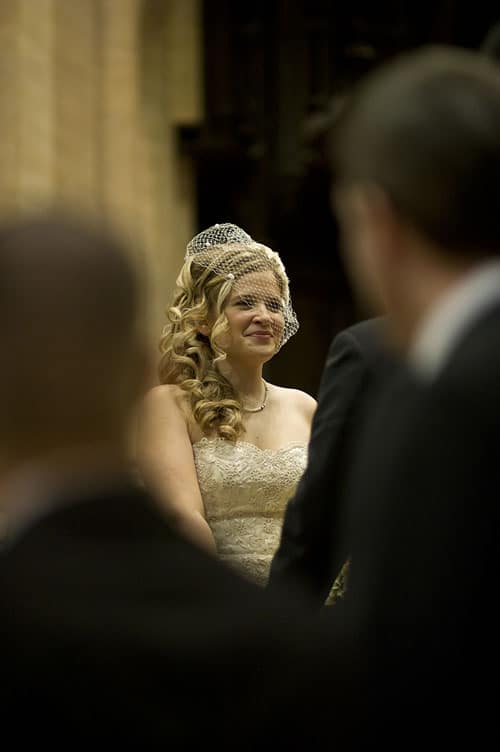
John Edgar - Wedding with Nikon D3s

John Edgar - Wedding with Nikon D3s
The Post

When I got home I went over some of the files: zoomed, cropped, pushed, pulled, starred and un-stared. I spent a good few hours figuring out what I liked and what I didn’t. So here is what I’ll say:

The AF focus system is, at worst, much better than anything I’ve experienced with Canon. In continuous focus mode, while a lot of the AF lag is gone, so is a lot of the accuracy. That being said, I still found more of the images to be in than out or at least acceptability soft. During the photo session, shooting with good light in AF-S, the focusing was almost always spot on.

The flash system is good. I know some people hail it as the second coming of Christ, but I truly believe the 580EXII is just as good as the SB900. Feature wise, it does have some nice fancy do-das that the 580 doesn’t, but in terms of just taking a good solid exposure the systems are very, very comparable.

The high ISO noise tolerance on the D3s is unreal. That’s all I need to say about that.
I personally find the layout of the D3s to be fantastic. A lot of the button arrangement and menu options make much more sense to me than the Canon design. For example, where Canon will use a 3 finger strain voodoo dance menu wheel scroll push setting change, Nikon simply has a toggle switch.

Now I realize this is just my personal opinion, but I do not like the bokeh. And as an artist/photographer/whatever, I rely heavily on depth of field as a pivotal element of the work I produce. This will be the main reason I wouldn’t switch systems. Canon has great glass. The colour clarity, the way it renders flair, the out of focus areas, the contrast and general “look” of the images from my Canon are what I fell in love with, and continue to love.

In the wedding space I feel that if those “artistic” elements of photography (that transcendental feel and quality of the image that you just can’t quite put your finger on) are important to you as a Canon shooter, you might find a switch frustrating. If you are a photographer who is very methodical, photo journalistic, technical or moment driven then you should without a doubt be shooting Nikon right now. However I am truly in love with the look of my Canon glass. I’m willing to over shoot and deal with weird white balance and a total inability to focus to have that.

Call me stupid, and maybe I am.

“Popularity does not dictate quality,” says this one Mashable article which coincidentally compares Canon v. Nikon. Check out the infographic. What are your thoughts? Have you given both systems an honest, unbiased try? Tell us your experiences with that “other” system. Go!

UPDATE: John wanted me to let you know that the images presented here are SOOC – Straight Out Of Camera – with the only exceptions being that they were scaled down and sharpened a tiny bit.

Filed Under: Photo Technology Tagged With: autofocus, bokeh, canon, canon 300d, canon eos 5d mark ii, canon shooters, conventions, live preview digital cameras, mystic, nikon, nikon d3s digital camera, nikon system, Photographers, Photography, portrait photographers, shooter, shooting, toronto

How To Grow Your Photography Income?

April 22, 2011 by Rosh Sillars

Today's guest blog post is by Rosh Sillars, a veteran photographer with a photojournalism background specializing in people, food and interiors. He earned his BFA in photography at the College of Creative Studies (CCS), Detroit. Rosh offers his services to traditional media, new media and corporate clients. He owns the creative representation firm The Rosh Group, Inc. and teaches photography at two universities and serves as a marketing and social media consultant for Synectics media. Rosh is also the coauthor of the book Linked Photographers guide to marketing and social media.Please visit his new project The Driven Business.

Is it really possible to increase dramatically your photography income?

Yes.

Photography has changed over the last 10 years. Digital cameras have made everyone a photographer; many of the basic point-and-shoot jobs have been lost. But, that doesn’t mean the opportunities are gone.

The truth is, there are more opportunities than ever. The secret is to make your competition irrelevant.

How?

Great photography and your creative ideas are the answer. Photography can be combined with writing, video, Photoshop, and other digital technologies to help you create unique offerings.

You must find your niche.

If you don’t have a good website, you are not in business. Make sure it is easy to use and well-optimized (If you don't know what that means, find out.) to attract the people who are searching for what you do. Don’t take search engine optimization lightly. Make sure you have a blog that is updated weekly with great images and text.

Get out of your home, office, or studio. Business is about people and developing relationships. Go to at least one networking event a week. Make sure you have business cards, portfolio cards, and your freshest images ready to share on your smart phone or tablet. Always have a portfolio available. You never know when opportunity will come knocking.

Follow up using the social web. Keep your new connections alive through social media. Develop new relationships using Facebook, LinkedIn and Twitter. Don’t sell to your followers, educate them. Teach them how to find leads for your business and you return the favor with opportunities and valuable introductions.

Create partnerships with companies that focus on the same target market. Develop packages and market your products in cooperation.

Don’t just sell your product. Sell the experience of working with you. You can’t hide behind your products. Photographers today need to understand that if they are going to be successful they are part of the product. Customers, in many cases, are buying the photographer more than the photography.

Make it easy for someone to do business with you. It is important to protect your copyrights. If copyrights were not important, people wouldn’t be working so hard to take them from you. Keeping your copyrights will increase your income by providing more opportunities to resell your images at the appropriate time. But, the issue of copyright, business practices, and contracts doesn’t have to be an us versus them battle. Keep it simple.

Unless you photograph events, you should be using the per-image-pricing model. Your rates should be based on the value of each image, not your time. It is much easier for customers to justify a few hundred dollars per commercial image than $1,500 a day for the photographer's time. This model can easily be adjusted and applied to portraits and family photography. Each image has value; never give away a valuable CD full of images.

Don't forget to follow up.

Communicate regularly with past clients. They are the best referral sources you have, so make sure you collect e-mails and addresses. Don’t let them forget what a great experience they had working with you. Keep them up-to-date with you newest images. Give them the tools and the opportunity to refer you.

The best marketing campaign you can participate in is to regularly send hand-written thank-you notes. People like to be appreciated. Your appreciation is often rewarded with additional income.

What strategies will you employ to grow your photography income? What are you trying now? Willing to share so that can learn from each other? Post your thoughts below!

Filed Under: Business, Photography Tagged With: business cards, digital cameras, family photography, grow, how to grow, income, News, photographer, Photography, rosh sillars, search engine optimization, stock photography, teaching photography, visual arts, Wedding Photography

Photographer Joe McNally Speaks With Tiffinbox

April 19, 2011 by Seshu | Editor & Publisher

As I mentioned a few days back, I had the honor of meeting both David Hobby and Joe McNally during their Flash Bus stop in Boston. Thanks to Adorama – The Photography People, I was able to interview them both. If you haven't seen the interview with David Hobby yet, please check it out now.

Here is the one with Joe McNally:

This wasn't the first time I met Joe. I was one of his students at his Dobbs Ferry workshops (highly recommend it, by the way) in June 2009.

I have two of his books – The Hot Shoe Diaries: Big Light from Small Flashes and The Moment It Clicks: Photography secrets from one of the world's top shooters. His next book, Sketching Light, is due out soon and based on what he has just told me in the interview above, I just pre-ordered it.

If you have any of his books or you have attended Joe McNally's presentations in the past, please comment below.

Please thank Adorama again for making this interview possible. When they say they are the “Photography People,” I know they mean it. One way you can help Tiffinbox and yourself is by ordering all your photographic gear through them. Heck, if they are the go-to-store for Joe McNally's professional needs, why not for you?

*Yes there are affiliate links embedded in this blog post.

Filed Under: Off-Camera Flash, Photography, Reviews, Video Tagged With: Boston, david hobby, Flash, flash bus, guru, interviewing, joe, joe mcnally, mass media, mcnally, photographer, photographic lighting, Photography, speaks, video interview

  • « Previous Page
  • 1
  • …
  • 21
  • 22
  • 23
  • 24
  • 25
  • …
  • 34
  • Next Page »

Subscribe To Tiffibox Treats!

Looking for a well-curated email newsletter that will leave you inspired and motivated about your photography business? Sign up below!

About Seshu

Seshu creates relaxed portraits of families and high school seniors in Avon, Connecticut. He also leads a successful headshot photography studio in Connecticut, helping professionals from a variety of disciplines project the very best versions of themselves. He created Tiffinbox as a way of inspiring photographers, to create better images and successful businesses. [Read More]

Email Templates For Headshot Photographers

Email Templates for Headshot Photographers

Recent Posts

  • How Capture One Changed My Event Photography
  • 10 Steps To Stay Positive In Times Of Great Stress
  • Why You Need To Read “Personal Branding For Photographers” Now
  • How To Master Your Website Content Step By Step?
  • Tony Taafe’s TNT Method For Headshot Photographers

Recent Comments

  • Stephen Davison on Are You A Business Owner Who Is Smart, But Stuck?
  • Ben A. on Don Giannatti Clinches The 8th Annual Tiffinbox Award
  • Dan on Don Giannatti Clinches The 8th Annual Tiffinbox Award
  • Donald Giannatti on Don Giannatti Clinches The 8th Annual Tiffinbox Award
  • Stephen Davison on G.E. Masana’s 6 Strategies For Wedding Photography Success
  • Naveen Kumar on Weddings In India Are More Than Being At The Right Place And At The Right Time
  • kartick on Weddings In India Are More Than Being At The Right Place And At The Right Time
  • Leonid Farbman on 6 Uncommon Trends To Grow Your Photography Business
  • Willow and Finch Wedding Photography on 11 Reception Tips To Help Your Wedding Photography
  • Web Designer Malaysia on How To Optimize Your Squarespace Website For Search Engines
  • Creastan on An Interview With Photojournalist G.M.B. Akash
  • Cindy Brown | Atlanta on An Open Letter To A Local Photographer

Become a Patron!

Copyright © 2026 · Tiffinbox · Site Design by Heather Mackan Creative · Built on Genesis