• Photography
  • Interviews
  • Business
  • Reviews

Tiffinbox

Inspiring Photographers

  • Home
  • About
  • Blog
  • Contact

Only You Can Be You

December 13, 2010 by Guest

Dustin MeyerDustin Meyer is an internationally acclaimed wedding and portrait photographer with clients across the country. WPPI speaker, owner of MpactPhoto Blog, Collages.net CLASS leader, and contributor to the Pay It Forward Blog, Dustin is all about giving it back when it comes to marketing, social media, Lightroom, and sales techniques.

You’re nervous. As the barista brings you your latte, you glance at the clock in apprehension. The sound of your heartbeat fills your ears as you inspect your outfit yet again. Questions like “What if she doesn’t like me?” and “What if I sound like an idiot?” race through your mind as the door to the café opens and in walks the woman you came to meet.

Take a deep breath. You’re not on a date. You’re meeting with a potential bride. However, many times as we get prepared to meet with clients for the first time, it can feel just like your first date. Except, in the dating world, booking brides would be the same as competing on the Bachelorette. You’re not the only one hoping to shoot this wedding and therefore being yourself is more important than ever.

In most major cities, the wedding photography industry is pretty oversaturated. Everyone is grabbing a camera and calling themselves photographers. The frustration builds as the photo community begins to collapse on itself as we all try to compete with each other on pricing, style, and products.

In the beginning, our studio had booths at bridal shows and advertised in local wedding magazines. However, I couldn’t help but feel like a number as the overwhelming sea of brides passed our booth again and again. Identity can get lost as the crucible of marketing boils everything we have down to the numbers game. “How many images do you shoot per wedding” and “The guy three booths down can shoot my wedding for X dollars, how good can you do on that price” are questions that become so common it makes you want to just put down your camera and walk away.

But you’re not a number. You’re a photographer. Pricing and even photographic style don’t have a face attached to them. This is why it’s most important to get your personality out there.

Your personality is the one thing that other studios cannot copy. It’s who you are, along with the style and portfolio you’ve developed over the years. By letting go of the copycat game (mimicking another photographer’s Photoshop effects or stealing someone’s price sheet at a wedding expo) you free yourself to just be you. And that’s exactly what brides are looking for.

It’s easy to feel like the guy next to you must be doing it better than you, hence why so many people are doing the same thing. However, it’s far easier to just stand out by being yourself. By putting as much of your personality on your site, in your work, or in your presentation, you’ll find that the quality of your clients will increase dramatically.

As we all probably know, it was much better to be yourself back when you were dating. It’s the same when it comes to booking brides. The more you just act like you, the more compatible you are with your clients. So relax, have another sip of your latte, and be a pro at being you.

Got something on your mind after reading Dustin's blog post? Sound off below in the comments. We love to hear from you.

Filed Under: Business, Photography Tagged With: adobe photoshop lightroom, be you, dustin, dustin meyer, human interest, photographer, Photographers, portrait photographers, unique, Wedding, Wedding Photography

Photographer’s Conundrum: To Charge Or Not Charge

October 18, 2010 by Guest

Sean Low, AvatarThis is a guest blog by Sean Low, President of The Business of Being Creative which “provides practical business advice to those in the business of being creative.” You have got to follow Sean on Twitter.

Of all the issues confronting creative businesses, photographers included, pricing tops the list. Always. What to charge? How to charge? Can you charge? When to charge? If only there were a right answer. Unfortunately, there is not. However, there is definitely a wrong answer.

If you are not transparent and do not have a pricing model that supports your philosophy, you will go broke in a hurry. Why? You will never be able to create the trust with your client necessary for you to do your best (or even adequate) work. If you are trying to “bury” expenses and/or profit in a single number or “package”, your clients will sense it and will (rightfully) question your integrity. They will be waiting for the other shoe to drop, even if there is no shoe. So the better question to ask yourself is: have I communicated the value of my art and does the way I do things support that value.

You can earn a fair return if you a transparent with your pricing and your business model.

Fundamentally, photographers are in two businesses: 1) selling the act of creating the image; and 2) selling the products derived from the image (i.e., prints, albums, etc.). In a perfect world, a photographer would be able to make money on both businesses. However, in the digital age and with competition the way that it is, it is increasingly difficult to earn a fair return on your investment of time and energy in either business.

The pricing pressure on the act of creating the image has never been greater. You need only take a look at Groupon offerings by photographers to witness the price of creating an image approach zero. On the other hand, services like the Album Boutique make it very difficult to extract value from selling products associated with an image. Moreover, many clients are placing photographers in the very difficult position of having to give up control of their art and just turn over a CD of hi-res images. Just say no.

To move forward, you have to bring integrity to your process. You can earn a fair return if you a transparent with your pricing and your business model. You should be able to say to your client that this is what you need to create your images. If it means having a second or third shooter, then you should lay this out too. Despite what you might think, clients do know you are in business and have to pay things like rent, utilities, payroll, etc., so if you do tell them that you charge say fifty percent on your and your staff’s time they will probably accept it. Likewise, if you require a certain quality of album be purchased (it is the legacy of you and your art after all), they will likely accept that too. Again, you are entitled to earn a fair return on your investment of time and energy – enough to sustain your business. The key is to be transparent to what that is with your clients. Transparency builds trust and is really the only currency you trade in.

Ignore those that would compete with you solely on price. Focus on what you offer and why you do things the way you do. Be uncompromising when it comes to the integrity of your art and completely transparent in what it takes for you to create it. Your ultimate value has nothing to do with the price you charge and everything to do with how you communicate. Those clients who need (read: not just want) your vision will pay for it. It is up to you to move them from want to need.

It's your turn to sound-off. What are your challenges when presenting pricing to your clients? How do you approach pricing – is it transparent or do you make it difficult for your clients to get a good read on you and your business? What issues do you encounter when discussing pricing with your clients?

Filed Under: Photo Biz, Weddings Tagged With: Art, Business, business models, business transparency, charge, competition, conundrum, creating trust, creating value, Marketing, photographer, Photographers, photogrpahy, Pricing, pricing models, sean low, transparent, value, Wedding Photography

Friday Foto Features By Scott Webb, Week 1

September 10, 2010 by Scott

Scott Webb, AvatarThis is a guest post by Scott Webb, a photographer based in London, Ontario Canada. Through photography and art, he believes that we can avoid and fight depression and mood disorders. He gets out of bed everyday to challenge the mediocre through the lens of photography.

Every week there are a massive number of articles posted relating to photography. I want to present some that help me out and could help you out too. Tiffinbox is growing as a great resource for photographers and the weekly round up is intended to build upon that momentum. This being the first week for the photography round up, I’m testing the waters and the topics are very malleable.

The format of the helpful photography round up will take some time to mold, but the intention is always to help photographers with a place to come and be presented with content they may not have come across during their busy days of the week. The topics included within such a round up related to photography are anything from photography tips, marketing, business, inspiration, and showcasing. Forgive me if this first week feels a bit scattered.

Here are some of the best articles I have read in RSS subscriptions this week, stumbled upon, or caught in my twitter stream and retweeted on @scotty_webb.

Tips & Technique

• 5 ways a photographer can take advantage of using long lenses when it comes to portrait photography
• A helpful interview that will help you learn to shoot challenging food photography
• Rad approach that says to forget about focusing on your subject – great right brain thinking.
• How it's possible to use a normal lens for macro photography – why not!

Thought Provoking

• Is photography an art? You tell me in: Beyond Craft – this is a great insightful exploration within the photographers mind.
• Better start to think about what your portfolio is revealing about you – is it good or bad news?
• 5 points a photographer should consider related to watermarking photographs – helping or damaging?
• How much time do you spend keeping up with industry trends and cutting edge info? – might be time to start chasing

On Tiffinbox!

• Photographers: do you have a photographic archive? – be good to your archive and it will be good to you
• How success comes from your photographic vision – as the world of photography democratizes before your eyes you'll need to craft a vision

Introspective

• It's not too early to start some reflection and plan for 2011 – start looking within for next year.
• What type of photographer do you see yourself as? – become the observer and step back.
• How a photographer struggles with the vision for a photography business – labels and being defined by what
Offbeat
• Customize your Pentax with lego blocks and skins – have the coolest camera in your city
• NASA releases images for creative commons – check out NASA's vast collection of photographs

Showcase!

Sweet-n-Low

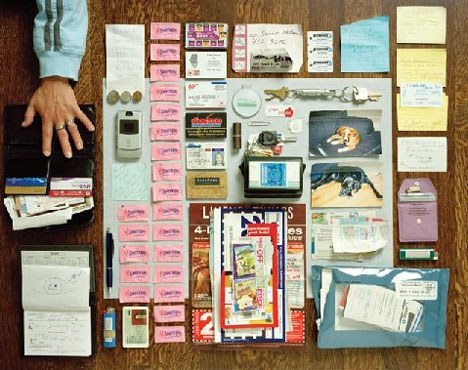
An amazing photography project – Our Secret Selves.  The artist looks at identities in the pockets and purses of strangers. Beautifully inspiring!

Want To Be Featured In A Helpful Photography Round Up?

Looking for some Tiffinbox link love? Articles featured in the resources come primarily from people I interact with in social networks and comments! So comment your heart out and add me to your social networks.  If something you share catches my eye, it may appear here on Tiffinbox.

A word from Seshu: Scott Webb and I have never met. Yet, here we are collaborating on a weekly post. That's the beauty of the Internet. Scott, who is very active on Twitter has generously offered to collate and post links to some very interesting articles about photography on a weekly basis. I used to this way back when but it's always great to have a second pair of eyes scouring the net to bring you useful, informative and sometimes amusing stories. Here is Scott's first foray into guest blogging on Tiffinbox.

Filed Under: Photography Tagged With: articles, camera, candid photography, food photography, human interest, macro photography, News, optics, Photography, photography articles, photography tips, portrait photography, resources, scott webb, Wedding Photography

Please Don’t Just Give Your Clients The CD or DVD!

September 9, 2010 by Guest

Alethea Cheng Fitzpatrick, AvatarThis is a guest post by Alethea Cheng Fitzpatrick, NYC based architect, interior designer, photographer AND mom! Alethea has her own business, alethea cheng fitzpatrick photography.

I hear photographers talking about digital images all the time.

I've noticed that portrait photographers tend to be the ones bemoaning the fact that their clients “just want the CD”. Mostly it's because those same clients also think that the CD should be really inexpensive, because it “didn't cost the photographer much” to make.

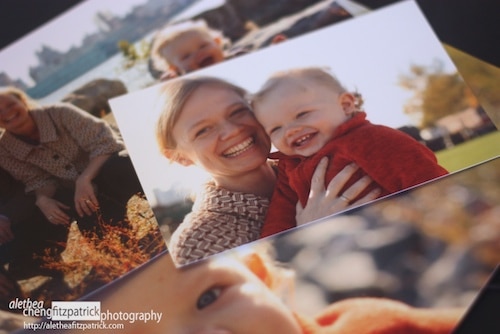
Alethea Cheng Photography

Wedding photographers, on the other hand, often celebrate the fact that their clients don't really want albums any more. They claim that it's hard to make money off albums because they take so long to design and cost so much to make. They are quite happy to wow their brides and grooms by having an iPad pre-loaded with all their photos waiting on their doorstep when they return from their honeymoon.

The different perspectives are interesting, and there's a simple reason for the difference – wedding photographers typically charge up front for a package and include the high resolution files because they are already assured of the sale. Portrait photographers depend on post-session sales and, unless properly priced, high res files undercut their other products.

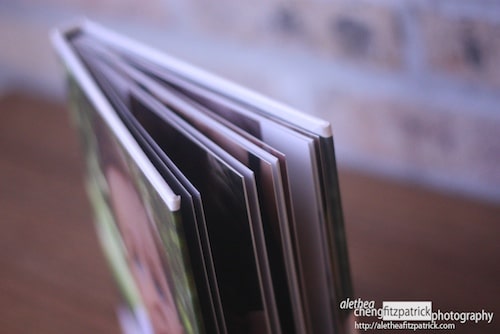
Alethea Cheng Photography

But regardless of the type of photographer you are, in both cases I strongly believe that you are doing your CLIENT a disservice if you only give them the CD. It is not in their best interest!

Here's why.

Fifty years from now, where is that iPad going to be? Where is that CD going to be?

What about a hundred and fifty years from now? Or longer?

Technology is going to COMPLETELY change, I don't need to tell you that, but have you thought about how your super fancy high resolution digital images of today… might not look so good on technology down the road, or might not be viewable at all? Now, I do not have any expertise in “future proofing” digital files, but then, you probably don't either, and nor do your clients. And a quick Google search seems to show that … no one really knows, and one recommended strategy is to make hard copies of important documents and photos!

Yes, your clients may upwardly convert their files, but do you want to depend on that?

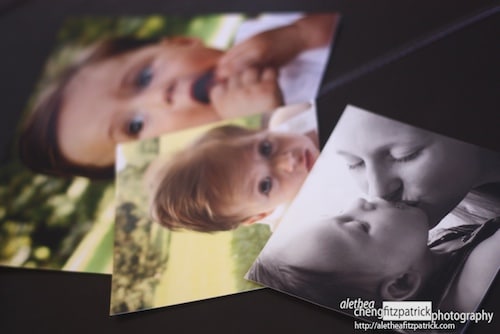
Alethea Cheng Photography

Prints and albums (of archival quality – which of course you are going to provide) are your most future proof medium. They can sit on a shelf for years and still be viewed with no additional effort required by anyone.

But even aside from the future proofing issue, even assuming that the format you pick for your digital images is readable forever, is that really the only way you want your clients to experience your images?

Forget 50 years from now, even tomorrow, does viewing a digital images come anywhere close to the experience of holding viewing an actual physical piece of artwork in person?

Honestly? If you think it does then, seriously, you are not getting your prints made at the right lab!

Alethea Cheng Photography

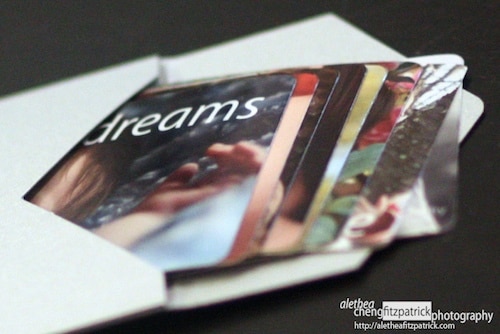
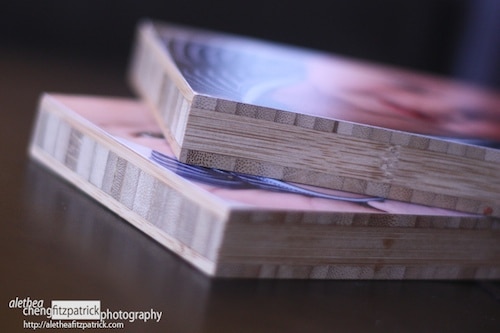
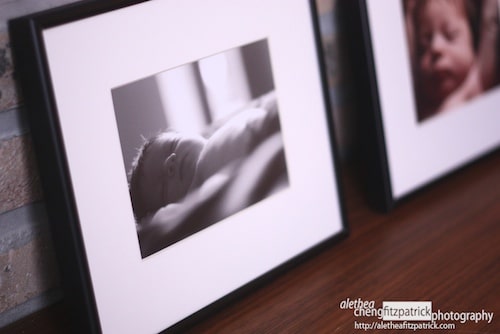
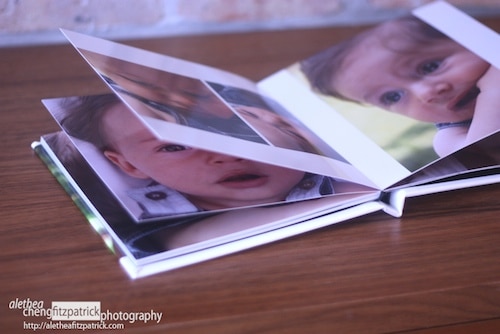
I love my prints – love love LOVE them, and so do my clients. In fact, some of my clients start out thinking they just want the high resolution files but after they see the artwork products I offer (including museum quality framed and bamboo mounted prints, custom designed heirloom photobooks on presentation stands and beautiful notecards), they “get it”. Often they end up with everything BUT the high resolution files they started out so concerned about and are very happy about it.

Why?

Well, first of all, don't get me wrong, I'm not saying DON'T offer digital files. I absolutely understand the importance and value of digital files and I offer them to all my clients. I'm just saying that to ONLY provide digital files is doing your clients a disservice. I follow the recommendations that Alicia Caine makes in Easy As Pie (I highly recommend this resource by the way – well worth the investment). I offer high resolution files but a la carte, they are the most expensive item on my price list, and it's actually less expensive for clients to purchase high resolution files AND a proof box. I also offer low resolution web-sized watermarked files but only after a minimum purchase of other artwork has been made. Basically, my pricing is structured in a such a way that no client ends up with only digital files.

So how do clients end up changing their mind about the high resolution files?

Well, first of all, a big reason people want digital files is so they can share them online and via e-mail, and the low res web files take care of that. It helps that I offer my low res web files in the form of a finished product – an online digital storybook that is a cohesive presentation, designed and paced to tell a story, and set to licensed music. It can also easily be shared in a matter of clicks.

Secondly, they want them for archival purposes, but as we've discussed, hard copies are better for that.

Finally, they want the freedom to make their own prints in the future … and those that are really motivated to have this option available are willing to pay for it (or I am just not the right photographer for them). But most clients, when it comes down to it, and presented with the beautiful artwork options I offer, plus the fact that I sit with them and help them select their images and put together their order, not to mention frame, deliver and install their custom designed wall gallery, know deep or even not so deep down that they will not make such beautiful artwork themselves, and even if they had the resources and knowledge to do so, probably would never get around to it.

Alethea Cheng Photography

Think about it. If you hand your client a CD, they have to put it in their computer, open it up, download them to their desktop, sort through the images, select the ones they want to print, upload them to a printing service, collect or receive their prints, get them framed, buy the hardware to hang them, and then hang them.

Yes, some clients are very motivated and will do this. But most of my clients are busy professionals and they want to spend their spare time hanging out with their kids, not traipsing to a framer or a hardware store.

And how many clients can design an album? How many will?

Alethea Cheng Photography

My high resolution digital files are my highest priced a la carte product, because if they were any less, I would be underselling all my other products. But I feel that my clients get a LOT more value out of ordering artwork and albums from me, and after a certain spend level, I actually throw in the high res files at what works out to be pretty much for free as part of a collection.

Many photographers follow a “shoot and burn” model I know, and if it works for you, great. But if you're doing it because you think that is what clients want, consider whether it really is in their best interest, not to mention yours. You know how I feel about it – please don't just give them the CD!

How do you handle high resolution files for clients? How about low resolution files? What is your take on delivering just the digital images and nothing else to clients? Who wins and why do your clients almost always lose?

Filed Under: Most Popular Posts, Photo Biz Tagged With: alethea cheng fitzpatrick, cds, client, client expectations, clients, compact disc, customer service, digital file, digital imaging, digital media, electronics, filing, image processing, image resolution, Photographers, Photography, Photography Business, portrait photographers, storage, Wedding Photography

Crafting Your Photographic Vision Leads To Success

September 1, 2010 by Guest

Daniel Milnor, AvatarThis guest post is by Daniel Milnor who splits his time between the chaos of Southern California and the spiritual landscape of New Mexico. He is happiest with his notebook, Leica and trusty leather boots, sizing up whatever situation is happening in front of him.

Milnor is the author of the blog, Smogranch, which allows him to speak his mind, post his mother’s poetry and bring together like minded people around the globe. Connect with him on Twitter.

For being a “creative industry” we sure love to conform.

A trend develops, no pun intended, and suddenly the industry publications, blogs, advertising, seminars and trade shows are filled with what is hot, new and temporary.

I’ve never completely understood this.

This isn’t unique to photography. Look at television. One reality show becomes a success and suddenly three or four similar shows pop up, all slightly less relevant than the original. Within a year or two the public is saturated, bored and searching for a new thrill.

Today’s photography world is filled with more photographers than ever before as the barrier for entry into the professional world falls lower and lower.

So what gives? How do we look to the future with a positive glow in our eyes?

Well, to me it comes down to finding our individual vision and refining our style, and accomplishing this isn’t possible by following industry trends or what’s hot.

Finding your vision comes from intense soul searching, time in the field and mastering the basics of photography, things like light, timing and composition, not to mention actually having something to say, something unique and native only to you, or me, and not simply what the industry wants us to say.

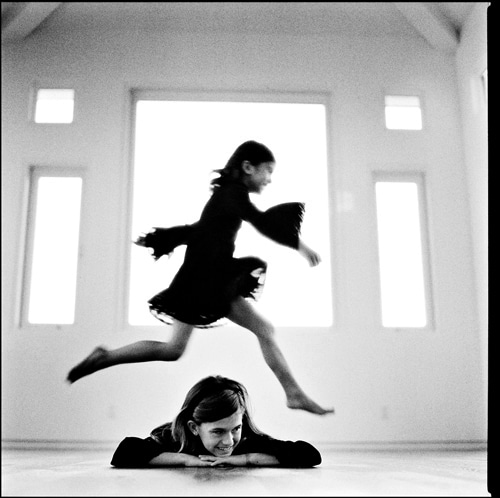
Children's Portraiture by Daniel Milnor

Often times, words like “vision, soul, passion, style,” are thrown around with reckless abandon, but most of the time this is only for show. These things, these traits are easy to talk about but very difficult to actually acquire. The good news, you already have them and all you have to do now is find them inside yourself.

Why do you need vision? Style?

Well, in essence, your vision is the most valuable thing you have. Making unique imagery, instantly recognizable imagery, is what will create the demand around your business.

Yesterday I received an email from a potential portrait client who said, “I had another photographer booked to photograph my kids, but after I saw your work I canceled with them and knew you were the photographer I was looking for.”

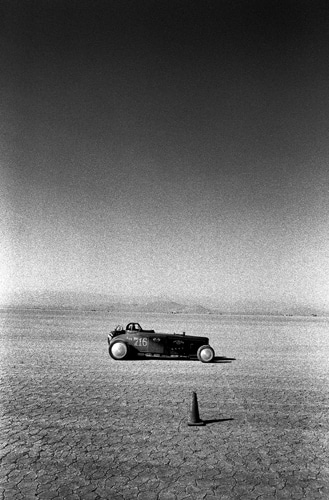
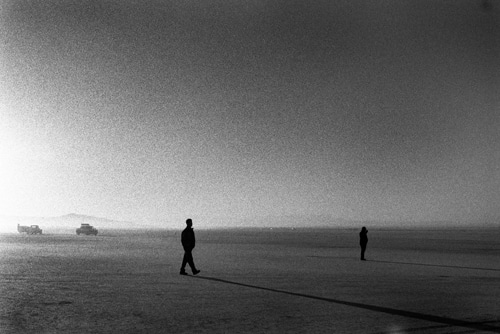
Mirage by Daniel Milnor

If I followed the industry trends, used all the same tools that the masses of photographers were using, then how does the client differentiate between my work and the masses? What do I have to negotiate with?

If I’m using camera A, lens A, Photoshop action A, Filter A, and you are using all these same things, then where is the value in my work? Why would anyone hire me over the photographer down the street?

When photographers conform and follow the masses, what typically happens is the job comes down to price and how much the photographer is prepared to give away. What gets lost? The photographs.

This is NOT the situation you want to find yourself in.

When you produce unique imagery clients recognize they are seeing something they can’t get everywhere. This doesn’t’ mean you are going to book every job, the reality is far from this, but what becomes the focal point of the negotiation is the IMAGERY.

My point with this little story is that finding your vision isn’t easy and might require time alone and asking some serious questions.

“Who am I with a camera in my hand.”
“What am I trying to say?”
“What do I REALLY want to do?”

You might think this last question is an easy one but I can’t tell you how many photographers I’ve spoken with who have simply followed what the industry has told them to do, or what they feel “They have to do.”

How did I find my vision?

I found my vision by NOT working as a photographer. I began working as a photographer, full time, around 1993. By 1997 I knew something wasn’t right. I was working but I wasn’t particularly thrilled with what I was producing and after looking back at what I had produced over the entire year I realized I didn’t have anything to show.

So, I took a job working for Eastman Kodak and signed a non-competition letter stating I wouldn’t accept any assignments during my time working for the company. I sold all of my equipment except for one Leica M body and one lens.

Over the following four years I learned much about the industry, other photographers, but more importantly I had the time to learn about my own work.

Over the four years I worked for Kodak I shot extensively on the side, not for anyone else, strictly for myself. When I picked up a camera I had only my own vision in mind.

After four years I looked at what I had accomplished and finally recognized who I was with a camera in my hand.

I made the decision to leave Kodak and become a photographer once again only this time I had a personal vision to lead my way.

Mirage In The Desert, by Daniel Milnor

Had I NOT stopped working as a photographer I don’t think I would have ever come close to finding my vision. The industry and the controls being placed on me were just too powerful. There was little room to explore and what was expected of me was cut and dry.

My jobs today come more from me making suggestions than from a client telling me what to do. This is a very liberating feeling. When I book a portrait shoot or a wedding I book it because my work looks different and I have a clear vision of what I want to accomplish. Working this way feels like you are part of a creative collaboration as opposed to having to adopt to someone else’s idea of what images should look like.

My advice? Think about studying photography, really studying. Take classes, go to bookstores, go to galleries, museums and study what photography really has to offer. Learn who the masters were and are, and not just those in your genre. I’ve learned FAR more about how to photograph a wedding by looking at documentary work than I ever have from the wedding industry.

Also, think about taking on a long-term personal project, a project that is entirely controlled by you and preferably something outside your normal comfort zone.

Children's Portraits by Daniel Milnor

And finally, approach one of your best clients and suggest a new direction.

We can make all kinds of excuses about conforming, about not taking the time to find our unique point of view, but ultimately we simply owe it to photography to continue to explore the limits of our vision.

Finding your vision can be frustrating, confusing, sure, but when you begin to see a pattern or begin to see the proverbial light at the end of the tunnel the positive feeling will far outweigh any struggles you had to endure.

So go forth, take chances, break some eggs and keep your eyes open for the spark that can set you free.

Desert Mirage by Daniel Milnor

Milnor is a former newspaper, magazine and commercial photographer who now tries to work solely on his own projects, projects that allow him to work in the fashion he feels most likely to produce images that go beyond the temporary. Milnor is also a member of the advisory board at Blurb, a print on demand book publishing company comprised of some of the most creative and talented folks he has ever encountered.

He has taught at Art Center College of Design, The Santa Fe Photographic Workshops, The Julia Dean Workshops and is scheduled to teach in Peru, California and New Mexico in 2010. He has also found considerable success with his portrait work, which is represented by the agency Masterfile.

Filed Under: Commentary, Photography Tagged With: craft, crafting, creative industries, current trends, daniel, daniel milnor, event photographer society, industry trends, milnor, photographer, Photography, Success, vision, vision led, visual arts, Wedding Photography

  • « Previous Page
  • 1
  • …
  • 7
  • 8
  • 9
  • 10
  • Next Page »

Subscribe To Tiffibox Treats!

Looking for a well-curated email newsletter that will leave you inspired and motivated about your photography business? Sign up below!

About Seshu

Seshu creates relaxed portraits of families and high school seniors in Avon, Connecticut. He also leads a successful headshot photography studio in Connecticut, helping professionals from a variety of disciplines project the very best versions of themselves. He created Tiffinbox as a way of inspiring photographers, to create better images and successful businesses. [Read More]

Email Templates For Headshot Photographers

Email Templates for Headshot Photographers

Recent Posts

  • How Capture One Changed My Event Photography
  • 10 Steps To Stay Positive In Times Of Great Stress
  • Why You Need To Read “Personal Branding For Photographers” Now
  • How To Master Your Website Content Step By Step?
  • Tony Taafe’s TNT Method For Headshot Photographers

Recent Comments

  • Stephen Davison on Are You A Business Owner Who Is Smart, But Stuck?
  • Ben A. on Don Giannatti Clinches The 8th Annual Tiffinbox Award
  • Dan on Don Giannatti Clinches The 8th Annual Tiffinbox Award
  • Donald Giannatti on Don Giannatti Clinches The 8th Annual Tiffinbox Award
  • Stephen Davison on G.E. Masana’s 6 Strategies For Wedding Photography Success
  • Naveen Kumar on Weddings In India Are More Than Being At The Right Place And At The Right Time
  • kartick on Weddings In India Are More Than Being At The Right Place And At The Right Time
  • Leonid Farbman on 6 Uncommon Trends To Grow Your Photography Business
  • Willow and Finch Wedding Photography on 11 Reception Tips To Help Your Wedding Photography
  • Web Designer Malaysia on How To Optimize Your Squarespace Website For Search Engines
  • Creastan on An Interview With Photojournalist G.M.B. Akash
  • Cindy Brown | Atlanta on An Open Letter To A Local Photographer

Become a Patron!

Copyright © 2026 · Tiffinbox · Site Design by Heather Mackan Creative · Built on Genesis