• Photography
  • Interviews
  • Business
  • Reviews

Tiffinbox

Inspiring Photographers

  • Home
  • About
  • Blog
  • Contact

An Interview With Documentary Photographer Darren Baldwin

May 26, 2013 by Seshu | Editor & Publisher

Thanks to my previous interviews with documentary photographers Jim Mortram and Brant Slomovic, I “met” Darren Baldwin, a documentary photographer based in Brighton, United Kingdom. In addition to being a documentary photographer, he is a pediatric nurse and a design director for a few websites. Follow Darren on Twitter: @BWDdrj
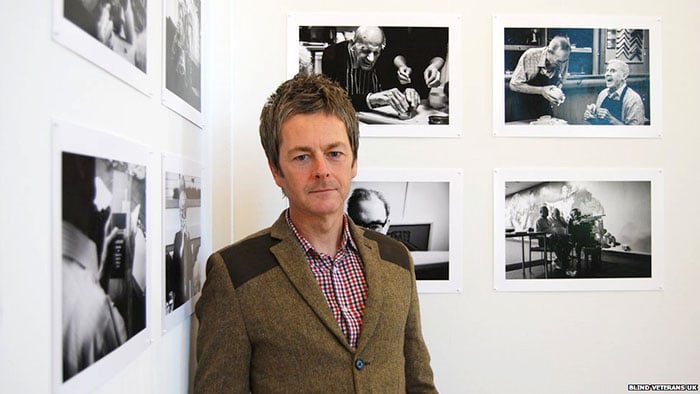
Darren Baldwin | Documentary Photographer

1) So, tell us a little about how you got your start in documentary photography. Is it an off-shoot from being a street photographer? What draws you to this particular genre of photography?

My dad is a videographer by trade, but has always been an avid and passionate photographer; he was one of my earliest visual influences. Interestingly, I recently found out my estranged grandfather (whom I never met) was a popular street portraiture photographer – it would appear that the apple never falls far from the tree; even if you never sat beside it!

In my teens I’d go out with one of my friends and take pictures using my father’s camera; I dragged all his darkroom equipment down from the attic and we’d spend hours developing images in my little dark room in the garage, taking time to mess around with developing times and trying effects (often with rather less than successful outcomes!).

It wasn’t until I met my partner Carrie that my passion for photography really became apparent again. When we formed DIGITAL bungalow, Kitchen Bitching and live.love.space. photography became a way of life. We’re really passionate about strong imagery on the sites, and as Carrie is the wordsmith it naturally fell to me to provide suitably beautiful images to accompany her words.

Whilst I have dabbled with landscape, product, macro, band, sports etc, my interest in street portraiture came about by chance the day that I discovered Vivian Maier. Everything changed when I realised that landscapes, seascapes, traditional portraits and conventional concepts of beauty just didn’t excite me. I found more beauty in Maier’s work than in anything I’d seen before; and I wanted to see if I could capture the same unexpected human essence that Maier did. I also went back to books I’d previously read, Araki’s ‘Lucky Hole’, ‘Radical Eye’ by Miron Zownir, ‘Im Auftrag’ by Snowdon and ‘The Seven Ages of Man’ from Hulton Getty. These small developments steered me into a ‘documentary’ style of photography.

2) You are now the second in this series of interviews who has an affiliation with the health industry. Is there anything in particular that makes you better documentary photographer because of your medical training?

That’s true. Brant Slomovic being the first! I agree with Brant in that I see the two ‘as completely separate existences’. However, after 10 years in adult emergency and 3 in paediatric emergency, you get a feel for situations and how they’re going to develop which is a good skill for street photography. I deal with conflict, anxiety, anger, sadness and happiness when I am at work, so I definitely think that helps. However, that doesn’t make you take better photographs, and nor does the camera you’re using.

3) In addition to being a pediatric nurse (what is a & e?), you are the design director at DIGITAL Bungalow, Kitchen Bitching and Live Love Space. First, how the heck do you find the time to juggle all that and secondly, how do your design sensibilities inform your documentary approach?

A&E is the UK equivalent to your emergency rooms (Accident and Emergency).

My partner Carrie is a writer and workaholic, very driven and always moving forward. I like that, it kicks me up the backside and gets me moving too. So we started DIGITAL bungalow it quickly became something much bigger than we anticipated, then Carrie wanted to start another, and another, and another! As Design Director I oversee the sites, and deal with any design requirements the team might need. Carrie now runs DIGITAL bungalow Editorial Agency – so there’s plenty of design work to be done for her clients too. How do I fit it all in? Well … the revolution will not be televised.

I studied graphic design when I left school and get a lot of my creative sensibilities from my father which filter down into my photography, definitely. While I photograph a lot of people I also like, structure, form, architecture and symmetry. As a photographer I’m not one for setting up shots. I don’t overthink it – I just shoot and let the subjects do all the talking.

4) How and perhaps why were you so interested in photographing blind veterans? How did you get your start in that project?

Following my documentary series that captured the London Road area of Brighton and its inhabitants, I wanted to work on a new project that further challenged peoples’ perceptions of usual stereotypes.

The initial idea behind the Blind Veterans project was to challenge the the stereotype of a “hero”. I wanted to collect images that defy the clichéd young, muscular, bare-chested hero; instead allowing the viewer to recognise for themselves the once pivotal role of these now frail individuals. My subjects' lack of sight mirrors the way that society sometimes fails to “see” the elderly, or truly appreciate the influence their actions had
on the world of relative peace we are so lucky to live in today.

Darren Baldwin | Documentary Photographer

Darren Baldwin | Documentary Photographer

Darren Baldwin | Documentary Photographer

Darren Baldwin | Documentary Photographer

Darren Baldwin | Documentary Photographer

Darren Baldwin | Documentary Photographer

Darren Baldwin | Documentary Photographer

5) There is a certain aloofness in the subjects you photograph. If first impressions count, the one word that came to mind when I viewed your images is – “isolation” – am I right in assuming you are fascinated by how people are part of a community but still remain apart or isolated?

Absolutely. I do have a fascination with that aspect of our lives. We’re all so damn busy but there are people who can seem very alone. That’s not to say they’re unhappy – I believe there are many more facets to isolation than simple, abject misery. Contemplation, meditation, introversion … all these things can come from or lead to isolation. I’m interested in capturing both quiet moments – almost the pauses in between breaths – and diminutive moment when subjects see the lens. I love to wonder what it is they’re thinking – the multifaceted nature of the human psyche fascinates me – as it does many other people!

6) With very few exceptions, your recent work is all black and white. Why is that?

I just really like black and white. I love the deep contrasts. I like dark images. You don’t get tangled up in the colour.

Not everything works well in black and white, of course – and I love colour street work from people such as Matt Stuart, Justin Sainsbury, and Paul Russell. I am definitely influenced by Maier and Arbus’ work, but both my dad and grandfather worked in B&W, so who knows, maybe it’s in the genes.

7) Brighton, UK, where you live is a popular destination for tourists. Are your images mostly of them?

No.

8) Your images now live on Flickr. How helpful has Flickr been to attract you clients interested and willing to support your documentary projects?

I use Flickr because I’d rather spend time taking photos than building a website to house them.

When it comes to working with new people, new projects and potential backers – I like good old-fashioned word of mouth. I want my images to do the talking. It’s great if someone stumbles across you – but the internet is an immense space – I’m not expecting a “stumbler” to commission me for a massive project any time soon. Flickr serves as a quick and easy gallery – a convenient way of people seeing what my work is about. Hopefully people will see my work, and want to talk about it – and we’ll take it from there.

9) Other than Twitter, where you are quite active, and Flickr, where your images are hosted, do you use any other social media channel to market your work? Tell us about it.

Apart from Twitter and Flickr I have a facebook page. That’s it. No tumblr, no 500px, no Google+ nothing else. I don’t see the point in constantly repeating myself!

10) You mentioned that a new website is in the works. Care to tell us what the domain url will be and when we can expect to see it go live?

At the moment I’m so busy with projects that a website will just have to wait – it would be fantastic to have a proper online showcase but, as I said, for me it’s personal relationships that build really positive projects.

Do you know of other documentary photographers I should interview? Why not put them in touch with me? Simply direct them to this website! Thank you.
Filed Under: Documentary, Interviews, Photography Tagged With: Baldwin, Darren, Documentary Photographer, documentary photographers, documentary photography, street photographer

Tara Gentile: Infrequently Asked Questions

May 1, 2012 by Seshu | Editor & Publisher

Tara Gentile, a thought leader and creative business coach. She brings creative thinking to branding, product development, and marketing that incorporates both strategy and high touch design. Her approach to business in the You Economy resonates with MBAs, PhDs, and graduates of the school of life. She writes frequently for the Daily Worth, Design*Sponge, and Etsy. Bestselling author, Jonathan Fields, named her blog a Top 22 Single-Voice Business Blog of 2012. She’s the author of several popular digital guides including her latest on the relationship between personal art and money, The Art of Earning.Visit her websites: Reclaiming Wealth and KickStart Labs

Tara Gentile | Kickstart Labs1) You project a tremendous sense of discipline. Who do you attribute this trait to? Your mother, as you say, instilled in you the habit of saving. So, she would be my first guess.

I think you're right – my mama taught me discipline. Her business – she supported my brother & I as a seamstress – was driven by her values & personal priorities. She wanted to be present in our lives as much as humanly possible: picking us up from school, attending softball games, being there when we were sick.

So naturally, she found the discipline to work at the wee hours of the morning to get a batch of alterations complete or the strength to canvass the wealthy neighborhood a few minutes away with flyers about her business.

I think her disciple also emanates from just how much she loves & is challenged by her work. She still owns a sewing business even though she doesn't need to work. She truly wants to be at her sewing machine crafting new garments & altering old.

My discipline is very much the same. I want to work as hard as I do. I want to provide for my child. I want to model entrepreneurship & self-determination for my child. I'm also driven to discipline by my clients because I want to serve them at my highest level all the time.

But my personal discipline is also paired with a deep appreciation for time off. I don't push myself through “not feeling like it.” If I don't feel like it, there's a reason and I respect that reason. I do something else instead — even if that something looks frivolous on the outside.

I work hard & I play hard. It's a good life and one I'm happy to lead.

2) If I can speak for photographers as a collective, I would say we sincerely believe we can be both profitable and pursue our art. But we also a lot that gets too easily derailed. What would your advice be to stick to the path we initially imagined we would be on?

First, make sure you're not trying to do more than you can for the sake of money. Photographers (and web designers and web developers) all fall into the category of trying to work too much. As in, you try to accumulate too many billable hours. You work more to make more money because that seems to be the easy way to do it.

How can you make more money working less? Charge more for what you do. Create other revenue streams (i.e. sell prints at the right price, create books, diversify your services). Run your business smarter (i.e. create systems for referrals)

Second, make sure you're differentiated within the market. If where you shine is taking pictures of families with small children, make sure everyone knows that's your specialty. If you're the master of black & white, show that on your website and have a “no color” policy. You'll be able to charge more for your best work instead of making less doing more things.

The average joe doesn't know the difference between you and the 50 other photographers in your geographic area. Make it obvious. Show average joe that you understand his unique needs. Be the best match or tell him to go somewhere else.

Tara Gentile | The Art Of Earning3) In your seminal ebook, The Art of Earning, I get the feeling you are giving us artisans permission to pursue our dreams, which includes honing our craft and creating a sustainable lifestyle for ourselves and our families. Am I reading that right?

Yes! And right there you've hit the nail on the head. It's a two fold mission in becoming a thriving artist:

a) Hone your craft. Get better at what you do. Don't just learn about business — learn to become a better artist! Keep up with trends, invest in equipment, learn new skills.

b) Create a sustainable lifestyle. Make the money you need to live the way you want to live. Nothing is out of your grasp if you name it & work towards it. Don't aim for getting by, don't aim for working 100 hours per week. Aim for sustainable and thriving.

4) You say “transformation is valuable” and I agree. But who gets to place value on that transformation? Let's say a wedding client of mine is looking at a picture I took of her and her late grandmother on the dance floor. How does one put a dollar value to that emotion the bride is feeling at that moment? And how is that value conveyed to my client without sounding like a used-car salesman?

This is one statement from the book I might back pedal on a bit today. Not because it's untrue but because it needs context.

People don't actually buy “personal transformation.” No one believes there is a lump sum of money they can plop down & become better, smarter, richer, or prettier because of the service they've just bought. However, overall transformation is something that can be broken down into its parts. Those parts can be bullet-pointed, named, and price tagged.

For a photographer, transformation may be seeing yourself as you've never been seen before. It might be capturing the beauty of friends & family gathered 'round. It might be providing the best souvenirs from a moment in a child's life.

No kidding, there is no set fee for “the bride & her late grandmother on the dance floor” but that doesn't mean the fee should be low just because it's a beautiful moment either. Charge what you need or want to charge and then back it up with the language that you use to describe the service that you offer.

Break what you do down into tangible bits. Let people feel into having you as their photographer and give them a sense of what both the experience of being photographed & the experience of seeing the photos will be like.

Don't worry about sounding like a used car salesmen. This is ridiculous! You're not a used car salesmen. You weave beautiful stories when you talk to friends about what you do – weave those same stories for your potential clients.

Then say with confidence, “This is my fee.” And give them the space that they need to say, “Yes.”

5) Is having or making that “third choice” – beyond saving/investing or spending it on “stuff” – the driving force behind the art of earning? Also, do you recommend you declare this third choice to your clients so that they understand WHY you are doing what you are doing for you and your business?

Yes, the art of earning is always about earning with purpose. It's not about earning more for the sake of earning more — and it's not about earning enough to “get by” or “have just enough.” If you've built your business with a big ambition, and I hope you have, then earning money is a byproduct of working towards that big ambition.

The more you serve, the closer you come to your ambition, the greater your realize your purpose, the more money you stand to earn. Not in a drain-'em-til-they're-dry way but in a whole-hearted people-see-the-value way.

6) In a world where there are other artisans also providing a similar service, how does one distinguish oneself? Is it by clearly defining how we will deliver either an experience or product full of meaning to the client?

First – let me say – differentiation is so important! It's probably the biggest thing standing in between you and more money, you and better clients, you and full artistic self-expression. It's true!

I could talk all day about differentiation but I want to define it in two ways today:

First, your values define you. What are your values? How do you prioritize? What makes you stand up and say “yes!”? My values include wisdom, excellence, and equality. I know I resonate with someone else's work when I see those same values echoed back at me. I can instantly align with both their purpose & their modality.

Talk to me in values. Tell your story in values. Explain your process in values. Give me something to say “yes!” to.

Second, your value drives you. What are you really selling? What are people really paying for? Understand your value from your customers' perspectives. Interview them about how they received your services and what was important to them in the experience.

Don't paint in broad strokes. Use fine detail. Share others' experiences and allow me to see myself in their examples.

Tara Gentile | The Art Of Earning7) How much does faith personally direct you to help people?

Great question. Up until about 6 months ago, I didn't realize how much my faith & my previous academic study of that faith had carried over into my business. My faith not only directs me to help others but has shaped my whole outlook on business & the commercial system.

Especially observant folks have noticed that I have “Bonhoeffer chick” in my Twitter bio. Bonhoefferchk was my first blogging handle. But the theology of Dietrich Bonhoeffer is also the theology I ascribe to personally. That theology has also directly impacted my approach to business.

Bonhoeffer posited that “Jesus is a being for others.” Jesus' sole purpose was to live his life for others. While great self-love & self-acceptance is a necessary part of that kind of faith, it manifests itself outwardly in service. That's the kind of business I know seek to run and the kind of business I direct my clients to run, as well.

Yes, you must self-express through your great work. Yes, you must have a high self-worth to increase your net worth. But in the end, it's service of others that pushes you onward. It's service that defines your success. Your work exists for others not merely for yourself.

Those are the kind of businesses I want to see in control of the new economy.

Are YOU part of the “new economy” that Tara mentions? I highly recommend you follow Tara Gentile on Twitter. Sound off below to tell us what you thought about this interview. If you would like more such interviews, please help me spread the word. Thank you!

Filed Under: Business, Interviews, Photography Tagged With: Art, Business, competition, creative business, kickstart, kickstart labs, labs, personal art, photo business, Photography, tara gentile, the art of earning

Seattle, WA Photographer: Kirk Mastin

April 10, 2012 by Seshu | Editor & Publisher

Kirk Mastin and I connected through Twitter. It was only when I spoke to him (scroll down to see the video interview), that I discovered he and I shared a passion for story-telling and a background in photojournalism. Kirk uses film cameras of all types.

[blogshow id=9cb2 player=1 autoplay=0 toolbar=1]

In my interview, I ask him about that and the purported demise of film (especially as Kodak is now officially bankrupt). I also ask him about his experiences photographing wedding and engagement sessions. Check out his responses.

I caught up with Kirk when he was visiting San Francisco. So, the only connection to the Internet he had was through his iPhone. Please bear in mind that the interview has its moments; where I am convinced Kirk is in a kung-fu movie and the audio and video didn't quite sync up.

“The only thing I am selling is my vision, my art.”

Got questions for Kirk, ask them below in the comments section or on his Formspring page.

Filed Under: Interviews, Photography, Weddings Tagged With: interviewing, kirk mastin, mastin, Photographers, photographing weddings, seattle, story telling, video interview, Weddings

Eric Foley | On Becoming A Pro Photographer

March 6, 2012 by Seshu | Editor & Publisher

Are you considering photography as a profession? Are you thinking of going pro? If you photograph only on the weekends and want to transition to a full time photography career, you should watch this video by Eric Foley, a wedding and portrait photographer based in Connecticut:

Eric Foley was awarded 2011 Wedding Photographer of The Year by the CTPPA. He is also active in the Connecticut Professional Photographer's Association (CTPPA).

If you are in Connecticut from March 8 through 12, you can meet Eric at the CTPPA annual convention. He will also be presenting at Inspire Photo Seminars this year. His talk is called, “Making The Jump – Going Fulltime V2.0.”

As a friend, photographer and a fellow foodie, I recommend you visit his website and follow him on Twitter. He is a great guy to know!

Filed Under: Interviews, Photography

Martin Prihoda, A Mumbai Interview

March 4, 2012 by Seshu | Editor & Publisher

I had an opportunity to interview Martin Prihoda recently. Let me correct that … I had an opportunity to interview Martin Prihoda three times in a row but the first two attempts failed miserably due to technical snafus on my end.

Martin, in his usual graciousness and patience offered to meet with me through Skype after every debacle, making sure at times that his Mumbai apartment would be conducive and as quiet as possible for our interview.

The first time I had heard of Martin was through David Hobby's website, The Strobist. The video showed Martin orchestrating a stunning portrait session for one of his clients. I was blown away by his approach, his openness to teach and share what he knows about photographic lighting. Indeed, he is now recognized as one of the leading experts in the field. In addition to being asked to speak on the subject, Martin leads a workshop of his own called Big Lights Far Away. He is making his way to Dubai right now to teach at Gulf Photo Plus. He joins an illustrious list of phenomenal photographers and teachers.

Martin is Canadian, but now lives and works in Mumbai, India. To know more about why Martin moved to Mumbai and to learn about how he quickly established himself in a completely new culture, check the video below:

Links to some of the magazines and websites Martin mentioned in this video:

GQ, Elle, Vogue, Priyanka Chopra

Other lighting gurus who have appeared on Tiffinbox:

David Hobby and Joe McNally

Who will be next?

Filed Under: Interviews, Photography, Portraits

  • « Previous Page
  • 1
  • …
  • 25
  • 26
  • 27
  • 28
  • Next Page »

Subscribe To Tiffibox Treats!

Looking for a well-curated email newsletter that will leave you inspired and motivated about your photography business? Sign up below!

About Seshu

Seshu creates relaxed portraits of families and high school seniors in Avon, Connecticut. He also leads a successful headshot photography studio in Connecticut, helping professionals from a variety of disciplines project the very best versions of themselves. He created Tiffinbox as a way of inspiring photographers, to create better images and successful businesses. [Read More]

Email Templates For Headshot Photographers

Email Templates for Headshot Photographers

Recent Posts

  • How Capture One Changed My Event Photography
  • 10 Steps To Stay Positive In Times Of Great Stress
  • Why You Need To Read “Personal Branding For Photographers” Now
  • How To Master Your Website Content Step By Step?
  • Tony Taafe’s TNT Method For Headshot Photographers

Recent Comments

  • Stephen Davison on Are You A Business Owner Who Is Smart, But Stuck?
  • Ben A. on Don Giannatti Clinches The 8th Annual Tiffinbox Award
  • Dan on Don Giannatti Clinches The 8th Annual Tiffinbox Award
  • Donald Giannatti on Don Giannatti Clinches The 8th Annual Tiffinbox Award
  • Stephen Davison on G.E. Masana’s 6 Strategies For Wedding Photography Success
  • Naveen Kumar on Weddings In India Are More Than Being At The Right Place And At The Right Time
  • kartick on Weddings In India Are More Than Being At The Right Place And At The Right Time
  • Leonid Farbman on 6 Uncommon Trends To Grow Your Photography Business
  • Willow and Finch Wedding Photography on 11 Reception Tips To Help Your Wedding Photography
  • Web Designer Malaysia on How To Optimize Your Squarespace Website For Search Engines
  • Creastan on An Interview With Photojournalist G.M.B. Akash
  • Cindy Brown | Atlanta on An Open Letter To A Local Photographer

Become a Patron!

Copyright © 2026 · Tiffinbox · Site Design by Heather Mackan Creative · Built on Genesis