• Photography
  • Interviews
  • Business
  • Reviews

Tiffinbox

Inspiring Photographers

  • Home
  • About
  • Blog
  • Contact

Do You Want To Guest Blog On Tiffinbox?

May 12, 2010 by Seshu | Editor & Publisher

For the last few weeks, I have had the honor of hosting a slew of wonderful guest bloggers – all of whom have some connection to the photography world.

Recent Guest Blog Posts

The Wedding Photography Industry: A Rebuttal
Holi, The Festival of Colors, In Utah
Photography Concentrate: Why We Teach?
Make Your Photos Sing (Part 1)
Make Your Photos Sing (Part 2)
Confessions Of An Emerging Professional Photographer
How To Grow Your Photography Business Without Pushing Customers Away?
When Did Teaching & Learning Photography Become Such A Controversy?
Dramatic Portrait Lighting For Photographers
Ethics & Etiquette For A Second Photographer
Concurrences: The Newly Global and the Eternal in South Asia

Why Would You Want To Guest Blog?

Very simply, Google loves it that you are present in spaces other than your own website. Links pointing back to your site from external sources is a GOOD thing, for you and me. You want to rank higher for keywords that are near and dear to you? Well, write a blog post using those keywords (as long as it has to do with photography I'll give it a fair shake), and the links back to your site will do its magic. This isn't some nefarious scheme to fool Google. It's an accepted practice where we can all win. So, do it!

Criteria Of Guest Blogger

Let me be frank – I am not looking for the next Hemingway. I just want to see writing and images that suggest you are serious about your craft and are committed to this journey with me. It's an exciting trip and I want you to come along.

I am always looking for photographers who can write, share their passion for photography in words and images. Are you one of them?

I have quite a few already writing their posts now and I am excited about revealing who they are what they have written. I am sure you will be just as thrilled when you read them here on Tiffinbox.

Basic Standards

Here are some basic standards that you must meet:

1) Be a photographer (I need to see an online portfolio)
2) Already have a blog (again a link is necessary)
3) Should link back to your own blog post on Tiffinbox
4) Be able to write simply (minimum 500 words, that's about a page)
5) Submit 6-10 images that have a width of 500 px
6) Submit a 300×300 px portrait of yourself
7) Deliver the text file as a .txt file not .doc file
8) Be open to have your blog post critiqued
9) Respond to blog comments in a civil manner (see no-no's below)

Blogging No-no's

– No posts/comments belittling other photographers – their work, their business models, their services or products

– No religion or political speak (don't want to have any flame wars on my site)

– No, you can't post anonymously

Topics To Write About

You may write about business, marketing, SEO, camera equipment … whatever that pushes your buttons or gets you really jazzed about photography.

Future Plans For This Site

In the next few weeks, I'll be setting up this site so that you can simply sign in and enter your post and upload your images. All I'll have to do is to hit “Publish.” Here's hoping it IS that simple!

Don't Wanna Blog, Then Comment Your Thoughts

Meanwhile, if you don't feel ready to blog here, but have been thinking about topics that are pertinent to your own business, mention it in the comments section below. It might just inspire someone who is reading this post to take it up and respond to YOU. How cool would that be to receive a customized blog post meant just for you?

I look forward to hearing from you all. Thank you!

Filed Under: Blogging, Tiffinbox Tagged With: Guest Blogging, Options, Photographers, Standards, Tiffinbox

The Wedding Photography Industry: A Rebuttal

May 8, 2010 by Don Giannatti

This is a guest post by Don Giannatti, a photographer and teacher based in Phoenix, Arizona. The opinions expressed in this post are his alone and I am only providing him this space to hear his perspective on a rather tempestuous blog post by Gary Fong, also a photographer and now entrepreneur.

I am not a wedding photographer, but I flirted with it a bit from 2005- 2008. It didn't end up being my cup-o-tea. So understand where I am coming from – a commercial photography background of 35 years. I teach lighting workshops now, and mentor photographers wanting to get into the world of commercial photography. I am not the one to come to for wedding photography information, but this post by a celebrated wedding photographer kinda got me thinkin'. And that can be a scary thing sometimes.

1] “Prices are low because photographers are terrified of being asked the question – “how much do you charge?” Because you're afraid of rejection, (and you want to get hired) you either a) publish a artificially high price, then let the client negotiate you down (this is a snowball of trouble) or b) find out what the competition is charging, and charge less, and throw in a free engagement session.”

Well, not always. Sometimes markets change. I know several high-end shooters who are doing well… because they are damn good at what they do. Perhaps the clients are getting more savvy in what they want and maybe they don't want to spend $5K on a wedding photographer who isn't worth it. The recent downturn in the economy has hit upper-middle class people the hardest in many ways, and finding a way to lessen the cost of an already rediculously expensive party is not something that is only borne out in photographers. Offering free engagements is marketing 1.0. By maximizing the value to the client without incurring much out of pocket is a time honored tradition of marketers in all kinds of genres. We got a fee printer and an iPod Touch last year when we bought my daughter's MacBook. To the point of being terrified of the “how much do you charge” question, it is a matter of personal fortitude. Personal comfort. If one is confident in one's price, there is no terror. Walk into a Ferrari dealer and ask how much the red one is. They do not feel terrified at all. Confidence in one's work will take one past the terror and into the garden of being paid what one wants to be paid. By the way, I paid $2400 for my first Macintosh (1986). In today's money, that is about $10K. Why? Competition, cost of entry, supply and demand… so many reasons. Or – even more terrifying… maybe the work isn't worth the price being quoted. Yeah. Tough nut to swallow, but if no one is buying the price is too high for the value perceived. Simple.

2] “Photographers do so much post-processing, they don't work hard to obtain the PRICELESS moment.”

This seems non-sequitur to me, but I think I know what you mean. A photographer who shoots shit and just believes it is fine – “I'll fix it in Photoshop” may be dealing a lot with your first point (see above)… ya know.

3] “I remember when I started photography, “filters” were all the rage. Shooting a beach? (Half Tobacco filter). Shooting a unity candle lighting ceremony? (star filter). Shooting a portrait? (Don't forget your vignetting filter). Photographers went out of their way to find situations where they could use their filters! This is what happens when you take your bride and groom into an alley and make them wear sunglasses and jump in the air. Barf.”

So if your client asks for that shot (agreed – stupid) what would you say? As a vendor to a client who is presumably paying you a lot for your time and art?

4] “Jumping in the alley? My God, you two bumpkins are so lame? Such a stupid idea for a shot… I mean, really… gotta barf now.”

OK. I think I would try to lead them to another shot, but in the end, they are the client.

5] “You know what happened to those images? They're laughed at today because they're as outdated as orange shag carpet. Same thing with Photoshop actions. If you process your actions with photoshop-heavy gimmicks (I especially am befuddled by the aged-film action, this is so fake looking) then someday the grandkids will point to your silly over-processed, over-saturated, over-sharpened, barbie-doll skinned looking face images and giggle, and go gramps, your wedding photos are silly. Face it. They are.”

Avocado Green appliances.?
Mullets
Fu-Manchu mustaches
Big Hair?
Wide Belts on poofy skirts?
Hot Pants?
Smoking
?Hose with seams up the back
Leisure Suits ?
Velour “Jogging” wear?
Real Fur

Your point? Things and styles change. What is cool now may not be cool then. Shooting for the clients needs means following some trends the client wants. If you are shooting and showing a more traditional style of photography and getting the gigs you need, then what does it matter? If you are shooting and manipulating the hell out of the images and getting the gigs you need, what does it matter? Point is that there are all kinds of things that go in and out of style. Just a facet of time that catches up with all of us. I have been married for nearly 30 years. My kids howl at the wedding photos… not because of the cheesy photography (and it sucks big time) but because of the way we looked and what we wore.

I don't remember the hairdressers or the tux folks worrying about what that would look like in 20 years back then. Only what looked good on the ‘special day' that was planned. It would be great to be able to look into a crystal ball and make all the necessary changes in today to fit tomorrow's needs, but… well, that is not part of our world right now.

6] “And photographers who know they're going to sit on Photoshop for three weeks gimmicking up their images with cartoonish looking effects typically rely too much on the processing and not trying really hard to let the impact of the moment sell. THIS by the way is what rich people want.”

Then I hope to hell it is in the portfolio of the photographer looking for someone to shoot their rich people's wedding. Whatever a photographer does, it must be in the portfolio that they show. If you are a bumpkin on Pshop and do most of your work there, with only ‘fodder' from the camera, and people like what you are doing, then you are – well, good to go. Right?

I will no way believe that ‘rich people' are stupid enough to hire someone who they haven't reviewed. They know what you do, and how you do it before you get to come over to the ‘rich people' house and shoot the ‘rich people' wedding with all the ‘rich people' guests. They look at your book. They see other weddings you have done. They make decisions.

They're ‘rich people' not ‘stupid people.'

7] “In case you're wondering. Rich clients don't want a photo of them holding hands over a train track or standing in front of a graffiti wall. Rich clients do not want their wedding photos to look like a senior high school portrait session. Rich clients do not want their wedding photos to look like a modeling portfolio. They want to say to you – “how the hell did you capture that moment?” For that, they'll pay dearly.”

Then by all means if you want to be a ‘rich people' photographer do not do the shots in front of a graffiti wall with caution tape and train tracks and stripper heels… oh wait, that's Model Mayhem. Sorry.
And if ‘rich people' will pay dearly for ‘that', then why are they buying the cheesy stuff… and if they aren't buying the cheesy stuff, what was the point?

How the heck does someone speak for rich people who haven't spoken for themselves. And what rich people are getting the graffiti images and the caution tape and the jumping in the alley shots – hating them – and then breathlessly calling their friends to tell them how wonderful the photographer is. Seems like a Straw Man argument to me.

8] “For your silly look-like-everybody fake punchy Photoshop filter, the simple-minded client will find the cheapest person who looks like you do.”

Well, that is a good point. Mediocre is mediocre and that means NO ability to stand out from the crowd. I totally agree. Want better clients? Shoot better images. A lot better images. Is that hard? You bet your ass it is. That is why there is so much mediocrity killing mediocrity in the worlds of photography. No secret there.

I will address this though … the thing that rubs me wrong about so much of what is discussed in forums and online. The point of ‘rich people' being the only clients worth servicing. And the notion that people of smaller means are ‘simple-minded' just knocks the breath out of me. I cannot even describe the sadness that something so elitist would be said about good, hard working people who may not have the disposable income to present a $45K wedding to their daughter. My oh my.

I am not an elitist, but I do have my price point. And no, when I did shoot weddings it was mid-stream in my town (around $3500 per with no addons). I don't shoot $750 weddings and give people the images on CD. Never did, never will.

But I truly hope the young people who are trying to bootstrap a wedding for only a couple of thousand get a good shooter who will. I don't want them to not have pictures because they are not ‘rich people.' I don't want the industry to turn into some sort of elitist entity that exists totally for the Tony Class who have the ‘big bucks” – the ‘rich people.' That thought sorta makes me want to – well – barf.

9] “Your signature look should be the fantastic moment. Like this series below taken by our awesome wedding photographer Jessica Claire:”

OK.

10] “I am just waiting for the day when I see a bride and groom sitting in a white high-key background leaning on the numbers 2010. I'm sure somebody has already done it.”

And that means what to you? That the photographer is lame and stupid? That the couple is lame and stupid for doing that? Why does everybody want to impose their notion of what is good on other people? What makes it anyone elses business what kind of work the bride and groom want and get… as long as they are happy. Who gives a shit if the 2010 is pink? If I had a nickel for every lame ass photograph out there, I wouldn't have time to do this. I would be speeding around the world on my own jet trying to find the perfect vinyl copy of “A Love Supreme” for my $5M stereo system. Stupid shot idea? You bet. My business? Nope.

If it sucks, and the clients hate it, and he gets no clients…well – “Hello, Welcome to WalMart”…

Will the destruction of the photographer bring you great joy? Will it make the industry better? Will his/her demise be something to cheer? Maybe for Judge Joe “I Gotta Pelican Case” Brown, but not for me.

Instead of laughing… help. Instead of condescending humiliation, offer guidance and mentorship.

11] “Shoot-to-burn DVD's – standard going rate around L.A. is about $750 for a DVD of high – res images.”

For some people, that may be the limit of their expenses. Is that a problem for anyone? “Fkn cheap ass poor people…”

Do prospective brides from Beverly Hills and Santa Monica (where, you know, the ‘rich people' live) shop Craigslist for their photographer? Is Denis Regie feeling the heat from $750 wedding shooters?

12] “Photographers say they shoot over 3,500 images. That's 20 cents an image. Why not charge that instead? Why not tell the client – “I charge 20 cents an image – and you get to keep the original file!” Are you freaking kidding me? How about be the photographer that works hard, anticipates the moment, IS PERCEPTIVE, captures the mood and the story and gives the image unmodified? I've seen many of your images. I'd pay 20 cents for them, and not a penny more. That's how bad some of you suck. Sorry.”

Well … there you have it. Work for poor people and provide a service to them and you ‘suck'. If you are in East LA and are a wedding shooter who does a great job for your neighbors who can barely afford $5K for their entire wedding – you ‘suck.'
Now, unless I am not understanding the way things work, most people look for people who are like them, or provide something to them that they need. I see this so much on the forums… “cheap CL shooters are ruining the business”.

Bullshit.

Lexus dealers are not sitting around worrying about the Hyundai dealer down the road. People who sell $2500 wedding dresses are not sweating the cheaper stores or online. Bakeries are not vying for a chance at the bottom of the pile… I know, I was just involved in finding a cake with a client. Damn!

I must say that last time I was in LA there were several people driving Kia's and Focuses… you must suck too. Sorry.

13] “Do you know what I think of your silly Photoshop action-look? It reminds me of one of those Hyundai Sonatas that have been lowered with neon lights in the undercarriage, a big ass subwoofer booming, spinning wheels and sparkle paint. Yes, someone had to say it, and I'm saying it. To a person of taste, if you overgoof your photos, that's what your images look like.”

Well, not everyone has the same taste level. Sinatra/Kanye – Spring Strings/Philadelphia Strings – banjo music/jazz.
And where I may – or may not – agree with your assessment of that kind of imagery, I have little desire to humiliate those that like that stuff.

14] “Negotiating your fees – this is big. Photographers put up a fake “big number” so they can look ultra-cool in front of their peers. “My packages start at $5,000” No they don't. You start at $3,500 and will put on a suit and charge your batteries for less if it's “off-season”. Or you will book your associate shooter and promise the client that you will come as well.”

I have nothing to say about that. I have no idea what you are talking about, so I have no comment. Have heard of negotiations though. There's even a book or two on the subject. Maybe.

15] “Dude, a few years ago, I know of someone who said, “I didn't start doing well until I raised my fees to $20,000″ Oh really? Do you think that would work in today's market?”

What? Not enough ‘rich people' I guess. And now I am confused. Prices too low? Prices too high… it is all going round and round for me.

16] “Get real. Have reasonable prices and do NOT let your client bargain you down. That's the beginning of a nightmare for both you and the client. The minute you say, “OK, I'll give you a reduced rate” your credibility goes down. How would you feel if your brain surgeon said – well, since it's you, I'll take 20% off, or – throw in a tattoo at no charge.”

Well, I am agreeing with you there. Creating a sensible price structure and holding to it is a very important part of finding out where you are, and where you belong. If you can't get what you charge, then maybe you aren't worth what you charge. Simple simple.
Idea for tattoo: “I wanna be a ‘rich person' so I am getting this tattoo.” Or, “Look at My Cool Tattoo, I Must Seem Like A “Rich Person” to you.” I dunno, I kinda suck at making tattoo statements cause I friggin' hate tattoos. Don't care at all if you get one or love them… just don't mean anything to me.

17] “Proclaiming Jesus in your work – any ethnic group bargains itself down. I'm serious. I grew up with Koreans. They are the worst. Oh I know a good KOREAN dentist and they will do your braces for a deal. Oh I know KOREAN movers, let's use them to save money. Same with mormons, jews kill each other with deal-making. But the Christians as a group – (I'm burping my ribs as I type this) use this to try to sway people in a cheap way to get jobs. Grow some gonads and ditch the Jesus thing in business. Just shut up about it. Seriously, shut up. You will lose all non-believers and your fellow church-goers who say “God is so good”. Oh just shut up. Do business. Get great images. Book weddings because of your STRONG IMAGES and not your proclaimed faith. Be neutral. Can you imagine what a wreck my Lightsphere business would be if I put a Christian fish on every box? Picture it. Would I sell a half million of these things? Hell no. The Europeans would fall off their chairs laughing at me. The Japanese would look at it and make the face a dog does when it doesn't understand the sound you just made. And for those I did sell, would my fellow Christians go – ooh! I want to buy this because he's CHRISTIAN. Please. Shut up. OK just shut up.”

Ummm… I got nothin'.

18] “Workshop Bullshit – I honestly have never seen such a carnival circus of posers in my life trying to pitch “education” on business success. These people don't earn jack at photography. The ones who do earn – shoot. They're too busy to stop what they're doing and write an outline and create the class materials to give a good class. Next photo event you go to – PLEASE. ASK THE SPEAKER WHAT THEY EARNED IN PHOTOGRAPHY.”

Agreed… there are some pretty bad ‘workshops' out there. And there are some pretty good ones out there. The ability for the workshop to be successful has very little to do with the income generated by their work. It has more to do with preparation, hierarchal information, skills with people, a devotion to the wonderful art of teaching and a real connection to those they are teaching. Even ‘rich people' who do occasionally take a workshop when not polishing their Rolls.

Ask the professors in your University how much money they made in Astro Physics before they taught it? Ask your music teacher at the University how much money they made composing before they decided to teach it.

Teaching is an art in itself. And there are damn great teachers out there who pride themselves in being a teacher. When did teachers become so low on the priority list of some people?

Man – some people are just totally hung up on money – ‘rich people' and I get that. But denigrating people with that time-worn BULLSHIT phrase about ‘those that can do and those that can't teach” is such a total slam at the people who work hard to make other people better. I hate that phrase and I believe that people who repeat it are more bitter and small than the ones they are demeaning.

19] “Do it right there in front of everybody. Watch that person squirm because they talk about business success, and they've never achieved it. Doing great in the business of photography is very very tough, but it's totally possible. You HAVE to be the person who NAILS the unforgettable moment, tells the true story, helps people relive memories.”

And one who “NAILS the unforgettable moment, tells the true story, helps people relive memories”… cannot teach?

Really?
Really really?

20] “It is not going to be easy to be successful if you try to copy somebody's blog images by buying a set of Photoshop actions and copying poses. This is not the stuff that memories are made of (oh we will never forget how we sat on that park bench back-to-back). It's the memory-making photographer that will get the loyal following and earn the high income, which I believe, is still possible (but it will never again be like the hey-day, not with digital cameras getting more advanced every year). But if you can be a master of the moment, people will beg to hire you – at your fee structure.”

Hokey Dokey.

Offend, denigrate, humiliate, insult – and inspire. Sort of.

21] “This is not the stuff that memories are made of (oh we will never forget how we sat on that park bench back-to-back). It's the memory-making photographer that will get the loyal following and earn the high income …”

It is the photographer who delivers superior work, listens to the clients, leads by example, and builds a strong, steady business will succeed. Digital has opened a lot of what we do to people who were not trained as we were trained. And some of them suck, and some of them are kicking our asses. The ones that suck, well – they suck, so who cares.

The ones that are kicking asses need to be listened to, and push those of us who are getting our asses kicked into a new place. Happens all the time. Makes hanging a shingle out after buying a ‘Blad and a Norman system and being ‘in business' seem a little lame. I agree… we will not be going back there. Ever.

But I harbor no resentment to those who are entering and kicking ass. They are the beginnings of a new order. And that is what it is.
BTW… “and earn the high income” may not be the reason I would ever suggest for someone getting into the photography business.

From Seshu: Care to comment? I would value your perspective in the comments section below.

Filed Under: Commentary, Photo Biz Tagged With: Buisness, Don Giannatti, Gary Fong, Industry, Photographers, Pricing, Wedding Photography

Love This Image By Gabe McClintock

May 8, 2010 by Guest

Don't you just feel the peace, serenity and love in this stunning image by Gabe McClintock, a photographer based in Calgary, Alberta, Canada? Gabe calls these portrait sessions before a wedding, “Connection” Sessions (instead of the ubiquitous and somewhat boring E-Sessions). Makes sense to me. This is what wedding photography should be all about!

A Connection Session by Gabe McClintock

Feel free to visit Gabe's website which is so full of amazing moments that are gentle, quiet and graceful. Thanks, Gabe for the opportunity to host one of your images here.

Post your comments below. Tell us, if you are a wedding photographer, how you portray the connection your couples have between each other or the connections that families make in multicultural weddings.

Filed Under: Art, Photography, Weddings Tagged With: Canada photographer, Connection Sessions, Engagement Sessions, Gabe McClintock, Photography, Wedding

Holi, The Festival of Colors, In Utah

May 5, 2010 by Guest

This is a guest post by Scott Jarvie, a photographer based in Utah. 0001__J7S3067

So this is Holi: The Festival of Colors

The Holi festival in Utah is one of the largest of it's kind (outside of Asia) in the world. This is what wikipedia says about Holi.

Two years ago I first heard of the event which had been growing over the years from some devotees and handful of local college students to where it is now some devotees and a mass of college students and others. I was lucky enough to take the iconic picture that year (Below), which is still probably one of my favorites.

 001__DS20706

Last year one of my biggest regrets of the year was taking an out of state wedding instead of heading back to the festival. This year I would have none of that and not only went to the event but organized 12 other photographers to come and take pictures to amass in a huge gallery for the benefit of the attendees and the temple. Between the 10+ photographers we walked away with 10,000 pictures and in the end we came up with a gallery of 4992 pictures. The reason for so many is because this was for the attendees and when you have well over 15,000 people there are rarely duplicates of the same person… unless of course they were doing something fun or were covered uniquely. You can see the pictures divided by each photographer here. Including mine of course.

In some circles I'm known as the Jarvie of the “Jarvie Window” experience. (Strobist) So of course I snapped a few pictures ala that style.

 0009__J3S3119
 0010__J3S3376
 0012__J3S3402
 0008__J3S3194

Wedding photographers might find it interesting that I also arranged for some clients and friends to show up in wedding dresses.

 0013__J3S2006
 0027__J3S3067

BUT what is the Festival of Colors?

It takes place at the Radha Krishna Temple located at 311 West 8500 South Spanish Fork, Utah 84660.

 0090__7SC2018

 0091__7SC2062

(Above) The temple is a unique and perhaps out of place building in the middle of a farming community in a highly LDS (Mormon) Utah. They pack them in. Estimates vary widely. They don't do an official count … but my guess would be somewhere between 15-25k (that range is pretty safe, I know).

 0141__J7S3027

 0201__J7S2436

(Above) this is hours before the color starts, but close parking is limited so they come in early.

The temple's priest, Caru Das Adikari (Below) runs the show and helped make the temple and the Krishna community happen in Utah County.

 0107__J3S2135

 0018__J3S2147

They have dancing and of course chanting but the big event is when they do the count down, burn the witch, usher in the spring and throw the colors.

 0022__J7S3070

A crowd this size makes for more than a couple wonderfully candid and fun moments (Below)

 0016__J7S3126

 0048__J3S3049

(above) and the not so candid

There are a lot of people with cameras (Below) Both DSLRs and everyone with their own point and click. It's actually a whole lot safer to go in with a nice sealed Pro camera than these little point and clicks, but a bit of plastic bags to go around and anyone's camera is decently safe from the colored (Corn Maize) powder found in one of the 50,000 bags they sell on the property.

 0137__J3S2736

Of course… People get covered with colors. That's kind of the point for those going.

 0007__J3S2803

They come dressed pretty uniquely (Below)

 0035__J3S2089

While the majority of people are students is also very much a family event. Good clean fun you may say (Below)

 0030__J7S3029
 0029__J3S2880

Other details and portraits

 0190__7SC2207 0192__7SC2269 0186__J7S3251 0188__7SC2126

 0180__J3S3410 0182__J3S3446 0174__J3S3334 0167__J3S3248

 0159__J3S3083 0130__J3S2548 0131__J3S2573 0103__J3S1997

 0062__J3S2323 0067__J3S2554 0075__J3S2765 0034__J3S1957

If you're in town next March or you want to go out of your way to make it down here, get a hold of me, because I'm sure we're going to do it again. Maybe even have a larger group of photographers this time.

I used to write posts about how to protect the cameras but after 2 events I've decided that this is actually such a non-issue that I will no longer coddle the weak. I said to myself why am I so concerned about curing people's worries and getting more photographers there? All are invited (by the organizers and of course me) but it's not for everyone. I didn't do anything to protect my stuff the first time and this last time I used saran wrap and gaffer tape and both times my cameras were totally fine. So this is about all I'll say on this subject.

We should be talking about the pictures, the totally unique and fun experience.

Go and see a whole bunch more divided into lots of categories. Like crowd surfing, color throwing, Jarvie Window and the Krishna Temple.

Boy with Holi colors

Tell us what you thought of this post! I look forward to your comments. Thank you!

Filed Under: Culture, Photography, Religion

Name The Tune & Win Photography Books

May 3, 2010 by Seshu | Editor & Publisher

At Dane Sander's Fast Track Photographer Workshop in Boston, I received a couple of photography-related books that are truly exceptional. I happen to own them already and so giving them away just makes sense. Yes, the ones I will send out to you are brand new.

First book I am giving away is Fast Track Photographer, by Dane Sanders. The second edition of this book reaches bookshelves across the planet on May 18. You will want to buy that one for sure.

The second book I am giving away is Digital Photography Boot Camp: A Step-by-Step Guide for Professional Wedding and Portrait Photographers, by Kevin Kubota. Kevin has a wonderful and long-running workshop called the Digital Photography Bootcamp. It's perpetually sold out for a reason. He is an amazing teacher and I am in love with his Photoshop actions and more recently his Lightroom presets. Good stuff. Well, if you can't make it to the workshop, there is the book, which is full of useful information about setting up your workflow.

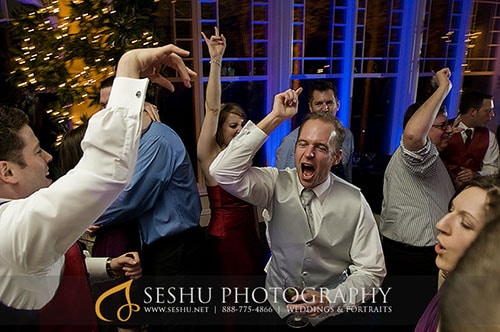
Here's how you can win – name the song this bridegroom is belting out in the image you see below – yeah, that easy!

Bridegroom Singing At Wedding Reception, by Seshu Photography

I photographed Mike enjoying his reception with his friends this past weekend at The Waterview, in Monroe, Connecticut. A fun, spirited wedding for sure.

Guessing is good. First two people to answer correctly win one book each. Sorry, I can't give away both the books to the same person. One book per person. Cool? Shipping is included. Feel free to post a link on your own blog about this contest. Tweeting about it would help too!

Use this when you Tweet: “RT @PicSeshu Name The Tune & Win Photography Books. Please RT!”

Ok, post your answer in the comments below. It's all in good fun. I'll announce a winner (if there is one) on May 7. Good luck!

UPDATE: After nearly 53 comments and 47 reTweets, there is only one person who got the right answer. To help one other astute person win the other book, I am going to drop the following hints – Think “trip” and one of the other songs in the band's repertoire had to do with the city of San Francisco. I have already said way too much! [grin]

UPDATE 2: Looks like my “hint” didn't quite elicit the right response. The winner of the first book is Lauren Lim. She nailed it with the correct answer “Don't Stop Believing – by Journey.” The first person to comment after reading this updated post wins the second book. Fair enough? Thank you all for playing. That was fun!

Filed Under: Contests & Grants, Photo Books

Photography Concentrate: Why We Teach?

April 29, 2010 by Guest

Rob & Lauren AvatarThis is a guest post by Canadian photographers, Lauren & Rob Lim, whose spirited wedding, portrait and travel photography is the talk of the town.

At the moment in the wedding photography industry there is a bit of a backlash against educators. Whether deserved or not is up for debate, but it certainly has resulted in a lot of discussion about those who make money from teaching.

As we can be considered educators ourselves (have been quite happily teaching other photographers for over 2 years), and are now moving towards doing it more, we thought we’d give a bit of insight into why we teach.

To understand where we’re coming from, I’ll give you a bit of background on us. We weren’t the photographers who grew up with a camera in hand. Our interest in photography didn’t come until we were 19 and 21, during a requisite backpacking trip through Europe. As I’m sure has happened with all photographers out there, we instantly developed a very strong passion for creating photos. But, we knew absolutely nothing about the art. Nothing at all. Being rather young, we didn’t see that as any sort of hindrance, and began the process of teaching ourselves this craft so that we could become professional photographers.

Romantic Kiss On A Boat, by Rob & Lauren Lim
That naivety allowed us to pursue our goals without any thought to whether it was even possible. And, thankfully, we simply made it possible. But it didn’t happen without an immense amount of time spent learning, reading, sifting through dozens of articles, and making a ton of mistakes along the way.

What we found, after years of self-teaching, was that the number of high quality and affordable resources out there for photographers was a lot smaller than we would have imagined. Sure, there are countless forums, blogs, and articles that you can find for free. But many of them offer differing opinions and ideas (though all too often they don’t see them as opinions, but rather as fact! That makes it even more difficult for a new photographer to understand what to do!). They also take a lot of time to go through, compile information, and try to process it in a way that works for the individual. It’s not easy or fun, and often it’s just downright overwhelming! I fear that a lot of people likely give up, simply because the task of finding and digesting high quality information is just too difficult.

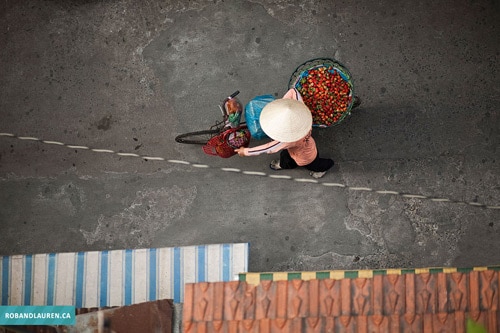
Man On A Bicycle, Ho Chi Minh City by Rob & Lauren Lim
Furthermore, many resources are currently being offered for very high price tags. Often upwards of hundreds of dollars (thousands if we’re talking about workshops). While there’s no way for us to decide whether those are worth it, we do know that they are far outside the reach of many photographers. Photographers on average aren’t rich people. They often have budgets just like anyone else, and many are left unable to purchase the tutorial they’d like, or going into credit card debt to attend the workshop they think will solve their problems. We were deeply unhappy with that approach. We strongly believe that teaching should be to help others, not yourself. With that in mind, we made a commitment to offer our education at prices that anyone could afford, including students.

Back to how we became educators! The more we learned, the more we found ourselves trying to help other photographers. We’d have colleagues over to our home to spend some time teaching them a new program or technique. And, time and time again, we’d find ourselves teaching the same material to each person. We were happy to be helping out that individual, but knew that there had to be a more efficient method.

The next logical step was, of course, to figure out how to get that information into the hands of the most people possible! So we created Photography Concentrate, a website dedicated to high quality, affordable information. We initially thought about writing e-books, but as soon as we began to plan for our first tutorial, all about RAW processing, we realized that books aren’t always the best way to learn for most photographers. We’re visual people by nature, so learning likely happens best in a visual manner! Thus began our foray into video tutorials. We’ve just completed our first one, and are hard at work at the next. We’re so excited about the possibility of helping photographers all around the world to learn to take control over the programs we rely so heavily on.

Which brings me to the final thought: Why We Teach

It’s pretty simple, and we can boil it down to one idea: we teach to help photographers acquire the skills needed to fully realize their artistic potential.

All the people we teach have their own incredible creative talent. We don’t need to teach them that. We simply want to help them unlock it. We believe that having a strong foundation of technical knowledge is the first step on that path, so that’s what we intend to share!

Kristin & Michael by Rob and Lauren Lim

With RAW Processing Concentrate, our tutorial on editing in Lightroom, we’re hoping to help photographers improve the final look of their images. Very often we see an incredible shot, with great composition and vision behind it, but the processing falls short, and the image fails to reach it’s full potential. Processing is just one step in the creation of a great photograph, but it’s a hugely important one. Many photographers currently rely on pre-made actions and presets to process their images. These will certainly make you faster, but we don’t believe they will make you better.

Life as an artist is about growth and exploration, and one needs knowledge to achieve that.

If you’d like more information about our tutorial and teaching adventures check out Photography Concentrate.

Photography Concentrate By Rob & Lauren Lim

Filed Under: Education, Photography Tagged With: Education, Learning, Photography, Tutorials, Video, Webinars

Make Your Photos Sing (Part 2)

April 28, 2010 by Guest

Phil Mackenzie avatarThis is Part 2 of 2 of a guest blog post by Phil Mackenzie, a photographer based in Pennsylvania. You can find Part 1 here.

Lessons learned. (Stuff you should remember from the first part)

We examined the two of the most obvious features of music and images last time. There’s one more feature that sometimes even eclipses the first two. And we’ll also look at two more subtle, yet decidedly distinctive, elements of music that also have counterparts in photography. Let the beat go on!

Rhythm. (The Stuff That Drives the Universe)

Rhythm defines life. Your heart, your breath, the engine of a car, the turn of the earth, the orbit of the planets; they all exist and perpetuate their own rhythms. The world is a colossal mess of rhythm. As I write this, you can watch the legendary aerial photographer Yann Arthus-Bertrand’s film Home on YouTube. It’s also airing on the National Geographic Channel in all of its HD glory. Try watching it without the sound. You’ll see rhythm with your eyes. Almost two hours of it. It’s amazing just how much rhythm life on its own. If you want an even more in-your-face film, there’s also the incredibly provocative collaboration called Koyaanisqatsi between filmmaker Francis Ford Coppola and composer Philip Glass. Regardless of any artistic judgment of the music (Glass, like bagpipes, doesn’t have many indifferent listeners), the combination of the constant pulsing music against the rhythm of the visual imagery that merely depicts everyday events such as traffic patterns in a city or highway is enough to entrance you for quite some time.

Those examples, of course, are motion pictures. Their inherent rhythm comes from the differences between still each of the 24 still images that fly past you every second. By contrast, a photograph’s rhythm can only be based on one image and the patterns and light within the frame. So how can it possibly achieve the same effect?

In a song, if you took away the rhythm, the melody becomes merely an organized pattern of pitches. If you have any doubt about the power of a rhythm, just tell someone to tap out just the rhythm to the melody of a song without telling you what it is, and try to guess what it is, just from the rhythm. It’s easier than you might think. Try it a few times and you’ll see that rhythm is almost, if not equally, as distinctive and as identifiable as melody.

In a photograph, the visual rhythm is what makes your eye move around the image. Your composition, framing, whatever you want to call it. It’s all about controlling the path the eyes take around the photograph. This is easy to see in images of either abstract subject or repeating subjects, such as these:

Rhythm by Phil Mackenzie

Rhythm by Phil Mackenzie

Notice how your eye follows a fairly predictable pattern around the images. For instance, in this more abstract image, the human eye is generally drawn to the lighter areas of an image first. Your eye probably starts in the top third of the image, and then it’s easy to follow the line of the main object down to the bottom, then come back up around in a big circle, exploring the blurry background along the way.

The same patterns can be true of images involving people as well. As humans, we’re generally drawn to another face initially, then your eye moves around the image. For instance:

Melody by Phil Mackenzie

Your exact eye pattern might vary, but it probably started on her face, continued down her nicely lit hands and her right arm, back up to her shoulder, and back to her face. Instinctively darker areas tend to be given less visual priority. Certainly you might continue to examine those, but not until after your eyes have made the “light loop” from her face, down in a clockwise motion, and back up to her face again.

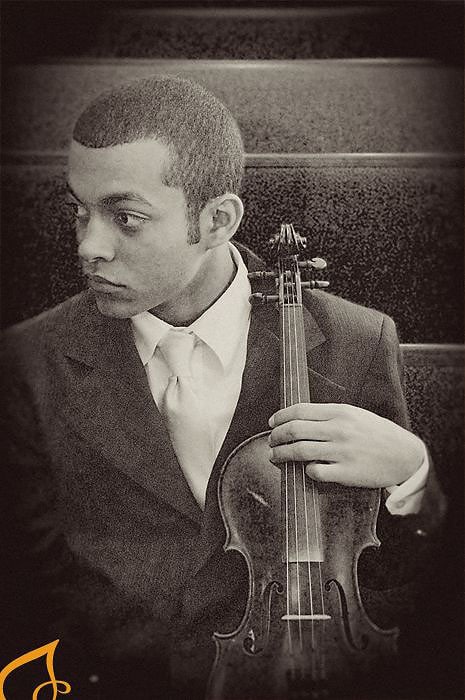
You have have also noticed that some images seem to make your eyes feel like they’re stuck in molasses, whereas others make your eyes dart around as if there’s no tomorrow. Both elements that we’ve discussed before (i.e. melody and harmony) have a great deal to do with the speed at which your eyes move through an image. A black-and-white, grainy image with a solitary gaze might make your eyes more considerate and willing to spend the extra time to examine every detail. This image by Seshu is a wonderful example of an image that will slow down your eyes:

Rhythm by Seshu Photography

Notice how he has evened up the contrast as well. Both areas of highly saturated color or sharp contrast can increase the visual rhythm. Scarlett Lillian’s work is highly color-rhythmic, as is a great deal of fashion photography. Just pick up an issue of Vogue or Marie Claire, or even Brides magazine. Those images are designed to excite you, and what better way than to make your eyes dart around areas of super-saturated color, bright highlight and dark shadows? More contrast, faster rhythm. Less contrast, slower rhythm. Neither one is better than the other, they all depend upon the mood you wish to convey in the image. Wedding photographers might not be able to consciously compose each image due to the mere volume of shots taken (I know I average well over 2500 images for a wedding), but you can begin to see what your natural visual rhythm is by examining your portfolio. Find the images you love and feel their rhythm with your eyes. Make sure they complement each other. Variety is the spice of life, but it’s important that your portfolio’s visual rhythm not contradict itself; a bright, snappy color-saturated image might seem out of place in the middle of an ocean of brooding black-and-white images.

Dynamics. (More Stuff That Sizzles)

Comparing aural dynamics to visual dynamics is an obvious one. In music, dynamics are simply the “loud” factor. A song can be either loud, soft, or optimally a mix of the two. If a piece of music doesn’t have much dynamic range, it’s usually because it’s serving a specific purpose. A trumpet fanfare, for instance, is loud and stately. And usually short, because it serves only to introduce royalty or some other dignitary. Whereas a softer more introspective dynamic is wonderful for a few minutes to lull our ears in, but after a while of static dynamics, it’s just too much of one thing.

High-key and low-key images are probably already leaping to mind in comparison to musical dynamics. Both high-key and low-key images are ones that are thus named precisely because of their distinct lack of visual dynamic. A high-key image only has one “visual volume”: loud. The opposite for a low-key image. The two below are typical, though not over-the-top, versions of high-key and low-key images.

Highkey

Lowkey by Phil Mackenzie

Generally speaking, the most visually appealing photographs have as wide a dynamic range as possible. Though simplified, this is the basic premise of the zone system that was propagated by Ansel Adams. Almost every one of his images was exposed and developed in order to use the fullest possible dynamic range. None of these exposure methods is better than the other; it’s simply a matter of the photographer’s intent in making the image. Be warned, though, that whether you tend to shoot high-key, low-key, or for the fullest dynamic possible, that the eye has a saturation point with the same style of image. Imagine only listening to one singer for the rest of your life. Variety is the spice of life, and of photos, my friends.

Timbre’s Signature. (Photography DNA)

The traditional symphony orchestra has four different “families” of instruments: strings, winds, brass, and percussion. Those, in turn, are each divided into more instruments that vary in their range, from low bass up to very high treble. Each instrument has its own unique sound; this is how your ears differentiate an oboe from a violin or a flute from a trumpet. It’s the timbre (if you’re reading along out loud, you say it tam•ber or tim•ber), the quality of a sound as distinct from its pitch or intensity. So all other things being equal, how can you tell it’s a woman’s voice as opposed to a man’s voice? The timbre.

In a larger sense, when you are able to identify a composer or songwriter by their work, it’s a form of timbre. Usually it’s called their “style.” A Mozart symphony sounds much different than Tchaikovsky’s “The Nutcracker”; a John Williams film score (Harry Potter) is different than a Hans Zimmer score (Pirates of the Caribbean); Carrie Underwood’s songs are different than those by Sara Bareilles. You get the idea.

Close your eyes and think of a black-and-white image of Yosemite. Who’s the photographer? An Ansel Adams print might be one of the easiest photographs in the world to identify. It’s also relatively easy to distinguish a Richard Avedon photograph from an Annie Leibovitz image. Their own style, their “photographic timbre” is present in every one of their photos. Just as the masters of musical composition and songwriting use characteristic aural nuances in their work, photographers also have formulas they have developed over years or decades, and they tend to follow them religiously. It is not only advisable to develop your own style of shooting and working with light, it’s a necessity.

What’s interesting about the current state of the wedding photography industry is that a photographer’s “timbre” or “style” seems to come equally as much from his or her personality and business skills than his or her portfolio. As better camera technology continues to obliterate the line between professional and amateur, and the same sets of Photoshop actions are used across the entire globe, it’s becoming harder and harder to visually distinguish yourself.

It is now, quite possibly more than ever, crucial for both you and your photos to have a distinctive personality. Strive to cultivate and develop your own style (see David duChemin’s insightful new book “Within the Frame”) so that your clients can tell your work from someone else’s. Don’t lose the personality. But combine a sparkling personality and a killer photographic style? You could rule the world. Or at least your own corner of it.

Coda: Putting the pieces back together.

Music is constructed in a more-or-less consistent manner. Generally either a melody or a rhythm is composed first, followed by some basic harmony and then highlighting the climax or dramatic moments with some dynamic variation. Timbre is usually an ongoing consciousness, especially relating to the medium of composition. A composer always knows the instruments for which he or she is writing, and keeps their different timbres in mind while always staying true to his or her style, whether consciously or subconsciously.

As photographers, we work in much the same way whether we’re aware of it or not. We generally start with the subject, or at least the mood of the image we want to create. After considering the primary purpose of the image, we focus on the secondary elements to the subject; the visual harmony, rhythm, and dynamic. All the while, staying consistent to our own personal style, or timbre.

It has always been fascinating to me to read the thought processes of some of the great photographers while making an image. Annie Leibovitz has a new book called “At Work” that describes her experiences while capturing some of her most iconic images. Admittedly, not every photographer thinks about every element of an image while composing a frame. Sometimes it’s a oh-wow-grab-the-camera-and-hope-you-get-it shot, but more often than not we have more than a split second to think about how to compose the frame. The most important part of shooting might just be in the editing session. Look at the shots you’ve taken that catch your attention, that grab you, that sing to your eyes. Figure out what it is about them that grabs your eye. Is it the rhythm? Is it the visually interesting harmonic palette with which the image’s background is composed? Is it just that the subject (i.e. the melody) of the image is so powerful it trumps everything else and lets you get away with some technical imperfections?

Just as there are songs and concert music that have stood the test of time, and countless others that have had their time and faded into the background of culture, there are thousands of images taken for every one remembered and treasured. Your goal should be to tilt that balance in your own favor. See what your own magic formula is. How do you compose your visual melody? How do you capture the rhythm of the scene? If you don’t like the way you create harmony in an image, recognize that before the next time you press the shutter and change it. Try something new. Composers like Mozart, who could transcribe music already composed in his head, are rare. Most artists are much more like Beethoven: decided unsatisfiable, he would often scratch out entire pages of music that represented hours or days of work with berating notes to himself about how this page of music was garbage, and how he ever could have written such a horrid and elementary chunk of music.

As photographers we don’t deal in the same time frames as composers. Our decisions occur at a fraction of a second. Composers have as much time as they need to deliberately write every note, every rhythm, every harmony. We don’t have that luxury as the bride is walking back down the aisle toward us, or we see an incredible shot starting to materialize in front of our faces. More often than not, we grab the camera, raise it, and click the shutter in one swift motion without much thought. I would argue, however, that those photographers who take the extra second to think, to edit, and to be aware of their own visual composition abilities will only become the next generation of famous image-makers.

Know your images. Know your tendencies. Know what abilities you have to create an image that entrances and sings to your client’s eyes. If the elements all work in harmony, your song will be one from the heart. And your clients will love you for it.

As always, your comments below are welcome. Tell us how you inject elements of music into your photography.

Filed Under: Art, Music, Photography

FABulous Program For Wedding & Portrait Photographers

April 27, 2010 by Seshu | Editor & Publisher

Ever wanted to custom design a wedding or portrait album but didn't know how to go about it using Photoshop?

Well, here comes Fundy's Album Builder to the rescue. It's fast, easy and intuitive. But best of all, you aren't stuck using templates that can “date” an album. Now, there isn't anything wrong at all about using the free templates or those you find online for a fee. But if you are looking to keep your album designs fresh and truly unique, you should consider Fundy's Album Builder.

In the video tutorial below, Andrew Funderburg (aka. The Fundy) shows us how he used some of my images from Veena and James' Wedding in Morristown, New Jersey, to build a few pages very quickly. Of course, with Fundy having designed and used this program multiple times, the buttons and the options all seem natural to him. That will come in good time for you as well and you'll be amazed at how instinctively you will approach your layouts.

As Fundy says at the beginning of the video, I have known him for some time. He is a dynamic, energetic and passionate entrepreneur who is very interested in helping photographers. As one himself, he and his business partner Kevin Focht have taken the industry by storm with their frequent webinars and YouTube tutorials like the one you see above. The products that Fundy has developed continues to evolve thanks to input from their users – i.e. people like you. So, don't feel shy about sending Fundy a note with your suggestions.

If you have any questions or comments, do post them below. If you have used FAB, tell us what your experience has been like or even drop a link to one of your album designs. We would love to take a look!

As regular subscribers to Tiffinbox or new visitors, I have a special offer from Fundy for you. Take 15% off the price of Fundy's Album Builder, when you use the following code: “Seshu”

Other programs you may be interested in as well are Album Proofer and Batch-o-licious, also from Fundy. If you want to save $125, you've gotta check out the Total Studio Pack, which includes a slew of other neat programs that Fundy has created for the photography community.

Filed Under: Album Design, Tutorials Tagged With: Album, Design, Fundy, Photographers, Portraits, Weddings

Confessions Of An Emerging Professional Photographer

April 22, 2010 by Guest

Hemant Naidu, Saskatoon, Canada photographerThis is a guest post by Hemant Naidu, an emerging photographer based in Saskatoon, Canada.

About six months ago I had a thought of entering the professional photography scene. Call me stupid, but that idea started to blossom into something more than just something in my head. The thought of shooting professionally has been a dream of mine for sometime, but I just never could get over that hump to make it a reality. Did I really want to run a business, something I didn't really know much about despite having a business degree? And being thirty-five with a wife, a mortgage, two dogs, and a baby on the way, did it really make sense to think about starting a business?

Jorja in Dads Hands by Hemant Naidu

Diving In

After answering “yes” to those questions there was still a few other questions that kept running through my mind. The first was whether I was even good enough. I think this is a question that all photographers struggle with throughout their career and I'm pretty sure that it's an impossible questions to ask. It wasn't that I didn't have confidence in my work, but I would always find myself trying to compare my shots to other photographers in the area. I had to make a conscious effort to stop doing this and to just trust that I was in fact “good enough”.

Is It Just A Job?

The second question that worried me slightly was whether I would lose my passion for photography if it became a job. Just because you love something as a hobby doesn't necessarily mean that it is a going to be a good career fit for you. It took me a while to realize that if I let this fear stop me from giving it a try I may end up robbing myself of a career that I have dreamed about.

As much as I wanted to pursue a career in photography I did want to minimize my risk as much as possible. I currently work as an Agile Team Lead for a software development company which involves me managing a group of programmers. I enjoy the job greatly and welcome its challenges so keeping my day job for now is not a problem. The thing is that if I start to see a significant increase in my photography contracts I am going to become incredibly busy very fast. I often think about the logistics of managing a full time job, a part-time photography gig, and a family life.

The “2 Year Plan”

Despite all of these fears I decided to take the plunge, and got the ball rolling on setting up a small business. Who would have thought that after all of the complicated paperwork that would be the easy part? With the business now set up I had to devise a way to get my name out there. Even though Saskatoon, Canada isn't a massive city it still has a fairly competitive photography industry with a huge range of talent. It was at this point that I really started to think about my “2 year plan” and how I was going to set myself apart from other photographers in the area.

It's All About WOM

It seemed to make most sense for me to rely on word of mouth marketing. If I could leverage the people I already knew to get the word out I was sure that opportunities would start to materialize. I found the book “Word of Mouth Marketing” by Andy Sernovitz to be an invaluable source in planning a word of mouth marketing campaign. If I wanted people to talk about me I would need to give them interesting things to talk about, meaning that I needed something unique to set me apart from the rest of the crowd.

Peeking Out by Hemant Naidu

Something I noticed in my market was the relatively low use of social media outside of Facebook. Twitter is very popular in Saskatoon, but seems to have been adopted by only a small amount of the photographers. I was already an avid Twitter user from a personal perspective, but I thought it was important to also manage an account for my business. I put a lot of importance in using Twitter as a marketing tool and have been slowly creating a group of followers, while also trying to connect with local photographers, and some heavy hitters in the industry. Because my network is still relatively small, Twitter gives me a unique opportunity to reach far more people, in a shorter amount of time, and with much less effort than traditional networking.

Going Fusion

I also see an opportunity to be one of the first photography studios in the area to take advantage of the convergence of photography and video with the new DSLRs. From what I can tell the fusion of these two formats is few and far between in my market. I understand that utilizing and producing quality video with these cameras is not trivial, but I am definitely up to the challenge. It is still breaking in here and I would love to be the one that leads the way.

Other Challenges

Despite moving past my three main fears I mentioned earlier (or at least learning to cope with them) there is another topic that I continue to struggle with. I understand that there is a lot of discussion about so-called “Uncle Henry's” and “weekend warriors” coming into the scene, undercutting professionals, and devaluing the profession. This is the last thing I want to do and I certainly do not want to be viewed this way by established pros in Saskatoon. My desire is to have them view me as a colleague as opposed to an enemy, and I am doing all that I can to ensure that I go about establishing my business in the proper manner.

On Stage by Hemant Naidu

Pricing Strategy

I think like many new photographers in the industry finding a reasonable pricing strategy is a source for many headaches. I know it has been difficult for me, and has caused me to constantly evaluate and compare it to others. It's hard to measure one's skills and put a price on it, but it still needs to be done. I have found resources online such as goingpro2010.com and photofocus.com to be invaluable in helping me in this area. For now I am comfortable with my pricing structure based on what I see other new “responsible” photographers in the area charging. Despite this I can't help but always have that idea in the back of my mind that someone out there is cursing me as that darned weekend warrior. All I can do ensure that I am putting out quality work and providing a pleasant experience for my clients. Hopefully that will speak for itself.

Chugging Along

It has been about five months since Naidu Photography was officially registered as a legal business and I've spent the majority of my time networking, building and tweaking a concrete business plan, trying to facilitate a word of mouth marketing campaign, and getting my head around the accounting nuances that come with the territory. Sure I've had shoots which have been fabulous, but now I am really starting to see what I've heard so much about running a photography business – it's twenty percent photography, and eighty percent business management. Fortunately this hasn't stopped me from driving forward, but has only made me hungrier to get this business off of the ground and flying.

I welcome your comments below! Tell us what challenges you have faced when starting your business. What would you like to learn from other emerging professional photographers?

Filed Under: Business, Commentary, Photography

How To Grow Your Photography Business Without Pushing Customers Away?

April 20, 2010 by Guest

Scott Wyden, photographerThis is a guest post by Scott Wyden Kivowitz, a portrait & landscape photographer from New Jersey. He works in the repair industry for the extended warranty company Mack Camera & Video Service.

I love photography.  It is my passion.  But if you're like me then you have a full time job and shooting is on the side. With that said, I don't have the advertising funds to promote photography work.  The money I make from shooting helps pay my bills and that is about it.

So what can a person do to get customers without advertising?  Good question. Social media is one way.  With Twitter, Facebook, Flickr and so many websites growing daily social media websites is the easiest way to get your name out there. But you can over do it. Social media is a learning experience as well as a promotional tool.

If you tweet too much, you could loose followers.  If you share too much on Facebook you will loose fans.  If you post horrible photos on Flickr you will loose viewers.  But if you learn from your mistakes you can get them all back.

Sleeping Puppy

So here are some simple tips to help you grow your brand, get your name out there and develop your photography skills.

Talk to people; learn from other photographers.  Don't be afraid to ask questions, meet up and shoot, join conversations, comment on other peoples work and also ask for constructive criticism on your work.

Start a Facebook fan page. Share your work, links and helpful advice for your fans. Be creative and not spammy.

Share new photos on Flickr.  Tag and title them correctly, then spread the word.  If you share them they will come.

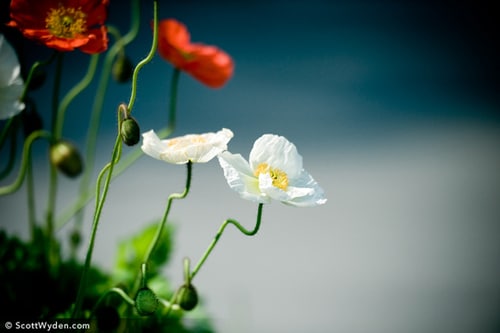
Flowers by Scott Wyden

So now you're sharing, growing your brand and on your way.  All for free right? There are buyers, models, couples and all types of potential customers checking out your work. You're not over doing it so you don't push anyone away… right?! You're listening to your friends, fans and followers.  If they tell you to stop tweeting so much, or to stop tweeting useless things, make sure you pay attention. As your brand grows you must grow with it.

While you're doing all this social media stuff, you should also be posting on your blog.  BLOG??? If you don't know what a blog is by now you need to learn quick and get moving on it.  Actually, you're currently reading a blog.  How about that! Blogs by nature attract search engines. Wait, isn't that free advertising?  Sure is baby!

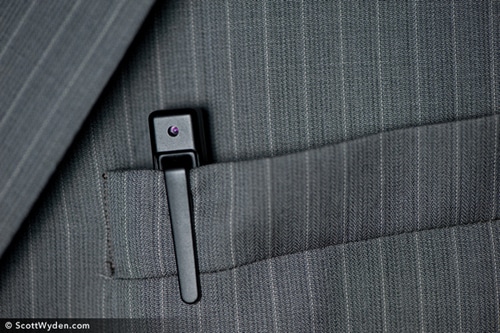
Pen In A Pocket By Scott Wyden

On your blog you should be writing and sharing photography. You don't need to write a long winded article like this one, but keep it consistent.  Keep the articles flowing and build your brand.

Potential customers might read your blog and say “Wow this dude posts new photos from each event he shoots and they are awesome!” or maybe even “I want him to shoot our wedding”.  I mean, that's what I thought when I first saw Seshu's documentary wedding photography!

Again, keep the blog posts flowing and be consistent but don't overdue it.  If you post too much useless stuff it will push people away.

Now you're brand is growing still and you haven't spent a dime on advertising. Isn't that something?

So what about getting the gig?

That's where all of your hard work at sharing, writing, etc.. comes in to play.  As long as you do it right and share great work, customers will come.  The past few months have been busy for me shooting paid gigs.  However along the way I needed to shoot many charity gigs or trade for CD gigs.  We have to do what we have to do.  But the key is to keep shooting, keep sharing and keep loving photography.

Do that and the customers will come.  As Gary Vaynerchuk says in his book by the same name, go on and “Crush It“

Filed Under: Business, Photography

  • « Previous Page
  • 1
  • …
  • 58
  • 59
  • 60
  • 61
  • 62
  • …
  • 198
  • Next Page »

Subscribe To Tiffibox Treats!

Looking for a well-curated email newsletter that will leave you inspired and motivated about your photography business? Sign up below!

About Seshu

Seshu creates relaxed portraits of families and high school seniors in Avon, Connecticut. He also leads a successful headshot photography studio in Connecticut, helping professionals from a variety of disciplines project the very best versions of themselves. He created Tiffinbox as a way of inspiring photographers, to create better images and successful businesses. [Read More]

Email Templates For Headshot Photographers

Email Templates for Headshot Photographers

Recent Posts

  • How Capture One Changed My Event Photography
  • 10 Steps To Stay Positive In Times Of Great Stress
  • Why You Need To Read “Personal Branding For Photographers” Now
  • How To Master Your Website Content Step By Step?
  • Tony Taafe’s TNT Method For Headshot Photographers

Recent Comments

  • Stephen Davison on Are You A Business Owner Who Is Smart, But Stuck?
  • Ben A. on Don Giannatti Clinches The 8th Annual Tiffinbox Award
  • Dan on Don Giannatti Clinches The 8th Annual Tiffinbox Award
  • Donald Giannatti on Don Giannatti Clinches The 8th Annual Tiffinbox Award
  • Stephen Davison on G.E. Masana’s 6 Strategies For Wedding Photography Success
  • Naveen Kumar on Weddings In India Are More Than Being At The Right Place And At The Right Time
  • kartick on Weddings In India Are More Than Being At The Right Place And At The Right Time
  • Leonid Farbman on 6 Uncommon Trends To Grow Your Photography Business
  • Willow and Finch Wedding Photography on 11 Reception Tips To Help Your Wedding Photography
  • Web Designer Malaysia on How To Optimize Your Squarespace Website For Search Engines
  • Creastan on An Interview With Photojournalist G.M.B. Akash
  • Cindy Brown | Atlanta on An Open Letter To A Local Photographer

Become a Patron!

Copyright © 2026 · Tiffinbox · Site Design by Heather Mackan Creative · Built on Genesis