• Photography
  • Interviews
  • Business
  • Reviews

Tiffinbox

Inspiring Photographers

  • Home
  • About
  • Blog
  • Contact

Brides: Are You For Real?

August 17, 2010 by Seshu | Editor & Publisher

Sometime this afternoon, on Twitter, I came to know about a gallery of images on Brides magazine's website called Real Brides' Favorite Wedding Moments.

Let me be very clear at the outset that I have nothing personal against Brides magazine, its editors and publishers. I am just voicing my opinion here and being pissed off doesn't come easy for me.

Now have you had a chance to look at the gallery? What did you find? Or, rather, what did you NOT find?

Bridal Magazines by Jigar Champaneria

As a wedding photographer, I immerse myself in a couple's celebration regardless of their background. It's what makes my pulse beat a little faster. There are times when two different cultures come together. I recognize there are all kinds of people in the world who wish to have nothing more than a great celebration of their wedding and work with a photographer who is mindful of their presence to document their event in an elegant manner. And some even want me to find those real moments and capture them as they occur without being obtrusive.

Yes, couples come in different hues and shades of color, with very different expectations. When I saw this Brides magazine gallery, I was quite frankly, appalled. No, the images were spectacular. In fact, I was happy to see two of my friends – Scott Lewis and Robert & Kathleen Trenske‘s images were part of this selection (they are truly great people). What got me in the gut was what was missing. The magazine had not picked even a single bride from a different cultural or racial backgroun, for their selection of “real” weddings.

Chelo Keys, a photographer in New Jersey responded by saying: Wow! I guess Brown/Black/Asian women cannot be “real brides”.

That was my reaction as well. My question to Brides magazine and others in the industry is a simple one – how accurate or “real” of a representation do you have in your magazine of couples from different backgrounds, faiths, sexual orientations? Is Brides being inclusive or exclusive when it chooses not to acknowledge other types of brides?

Denying the presence of other cultures is nothing short of a travesty. No, I am not asking that magazines shift gears and start publishing images of just a few Indian weddings from time to time. That would be patronizing. What I am demanding requesting is that magazines, blogs and other outlets that claim to showcase “real” weddings take a bit of time to understand what that might mean to people across the spectrum before laying claim to the term “real weddings.”

“What to Look For In a Photographer” is directed towards photographers, but I suspect the message in that blog post can be reiterated to magazines that fail at every turn to showcase brides and couples from all walks of life.

Are the rise of magazines like South Asian Bride or blogs like Maharani Weddings a direct response to how most of these widely read publications are shunning multicultural, ethnic or gay couples? I understand the need to focus on your niche, but is that just a clever way of saying “I am going to segregate and serve only one type of client over another based on their skin color or sexual preference?”

As publishers of magazines and bridal blogs that are read widely, you do have the power to dictate what is truly happening in the wedding industry. And you also have the responsibility to represent all brides in an equal manner. But will you?

Imagine the African American bride or the Indian bride or the Chinese bride who may just stumble onto your magazine and website, only to find what you have published simply does not relate to them. Or, that all they have access to when planning their wedding is what you supply to them. It scares me that a couple's or culture's visual history will be but a fading memory, while clearly only one dominant culture continues to highlight its celebrations all the time.

Why is it that other cultures get sidelined? What perverse rationale is used to NOT acknowledge that other people exist among us? I ask these questions not to point fingers but to really figure it out. I am sure other people have these thoughts running through their brain too.

Even I am not infallible. My galleries were once segregated to “Eastern Weddings” and “Western Weddings”. My website has this on the front – “Seshu Is A Documentary Wedding Photographer Serving Multicultural, Ethnic & Interfaith Clients In Connecticut, New England and Around The World”. This will be changed pronto to make it more inclusive. I am a documentary wedding photographer of ALL people. Period.

A good friend and I have talked about this a lot. A wedding is a wedding and the documentary approach I use isn't going to be any different because the clients are different. Makes sense to me, so I thought about it and have decided to display the very best images from all my weddings, regardless of what traditions my clients have chosen to follow. In the end, it's about telling everyone's story – not just Indian, Japanese, Iraqi or French couples. Get my drift?

Perhaps I have been naive all along. But folks, it's 2010 and I say let's mix it up. It's more fun that way!

*The above image was created by Jigar Champaneria, a photographer in the Bay Area. Check out the covers. Isn't it indicative of what this blog post is about? Thanks, Jigar!

Filed Under: Commentary, Culture, Photography, Weddings

HomeLands: A Documentary Project In Southern Indiana

August 4, 2010 by Guest

Robb Hill, AvatarThis is a guest post by Robb Hill, a Washington, DC based photographer.

A few years ago I received an e-mail from my father. It was a link to a story in the Louisville Courier-Journal about how Kentucky and Indiana were in the planning stages for a new bridge to cross the Ohio River. His e-mail included the news that the location for the connecting highway will run about half a mile from the 150-year-old farmhouse they’ve lived in for 35 years. It was then I decided to photograph our pocket of rural, Southern Indiana.

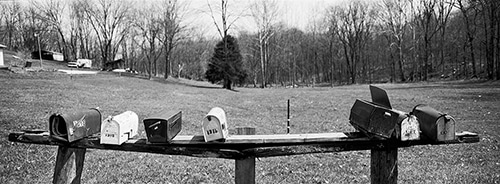
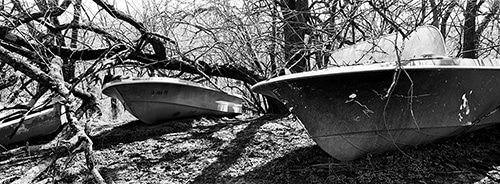
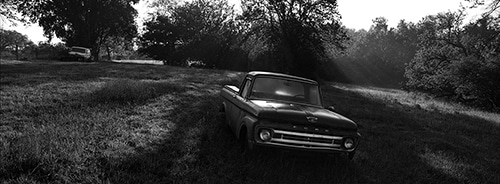
HomeLands by Robb Hill

Creating a historical record of the area before construction began appealed to me. A few months later I was photographing the woods, farms and fields I tromped around in as a kid. I found an old family cemetery I never knew about. Subdivisions that were just a few homes when I left for college had grown into communities of their own. Some of the woods were sparse from being logged over. Much had changed already in the land of my youth.

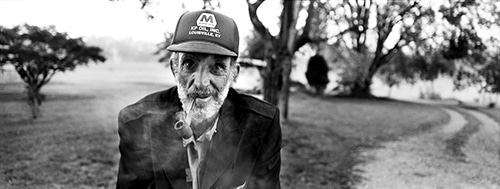
What has changed very little since I moved away are the people. Almost everyone I knew while growing up still lives there. A few have passed away and one couple moved. This should not have been the surprise to me it was. The Meyers have been farming the same land for four generations. The names Summers and Lentz on the headstones in the family cemetery from the 1800s can be found on mailboxes today.

Since starting my HomeLands project, I’ve come to understand just how much the land and the people are one. They may not say it in those words, but I know they feel it. Where they live is who they are. That can be said about anyone, I know, ask any New Yorker. But these people are unique: They know their way of life is facing imminent demise.

HomeLands by Robb Hill

HomeLands by Robb Hill

HomeLands by Robb Hill

HomeLands by Robb Hill

HomeLands by Robb Hill

To see more of HomeLands or donate via the Kickstarter.com website click on this link.

Your comments below will inspire a dialogue. We want to hear your opinions. So, step up and speak up!

Filed Under: Culture, Documentary, Photography Tagged With: Documentary, headstone, homeland, HomeLands, Indiana, louisville courier journal, photo projects, Photography, project, Robb Hill, rural, rural towns

Around The World, Yet Across The Street

July 30, 2010 by Guest

Trudy Hamilton, AvatarThis is a guest post by Trudy Hamilton, a portrait and lifestyle photographer and blogger, originally from Florida and now residing the the San Francisco Bay area. She can also be found on Facebook and Twitter.

Most photographers that I know enjoy the adventure that travel brings into their lives. Whether it be personal travel, such as visiting family, or business travel, such as the destination wedding or a location commercial shoot, travel is both a pleasure and necessity. However, unless we're all Joe McNally, we probably don't travel as much as we'd like to.

One of the best reasons to travel is simply to experience the culture of another, hopefully though an open mind, heart and camera. However, you don't have to travel all of the time to experience and photograph another culture. An exciting and economical way to do so is to explore the cultural events of your community. I photographed my first community cultural event in 2006 and I have been interested in them ever since. The beauty of people, music, food, fashion and uniqueness has always excited me and appealed to me. This is why I travel, but also why my mind and heart can travel even when I am home.

A few good reasons to embrace your local community cultural events are:

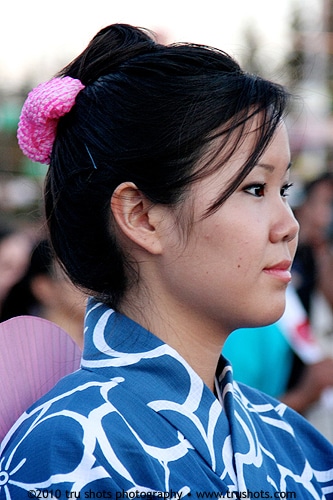
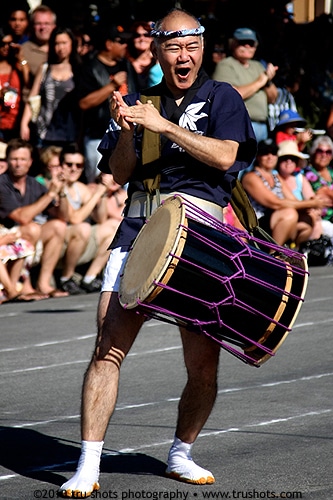
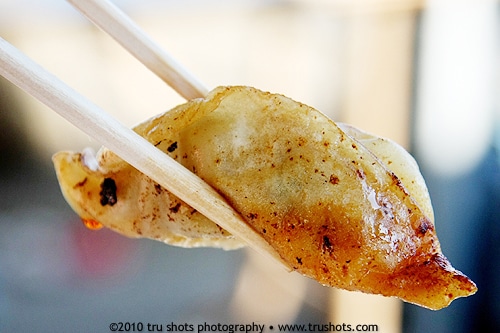
1) It's a learning opportunity. If you are open to it, a community cultural event can be a learning experience for you. Certainly I could have read an article on the Obon Festival, but I chose to attend one in Japantown of San Jose, CA a few weeks ago. I have been to Japan, but certainly couldn't pick up and go again a few weeks ago. But by attending the festival, I chatted with and photographed Japanese, Japanese Americans and others at the event, listened to the powerful yet soothing sounds of the San Jose Taiko and enjoyed gyoza–some of the same activities I did while I was actually in Japan a few years ago. For several hours, it was like I was transformed from traditional Bay Area Cali and merged into Japanese culture.

Japanese Woman In A Kimono

Japanese Man Drumming by Trudy Hamilton

Gyoza by Trudy Hamilton

2) It's a photographic opportunity. Certainly most photographers desire paid work versus unpaid work, especially the ones running a business. However, sometimes it is good to photograph truly for the sake of creation. Cultural photojournalism differs from my portraiture work. I use different camera settings, I have different compositional ideas and a different intent and message with every photograph that I create at a community cultural event. It's great exercise for me for when I do have paid event photography and great exercise in my creativity and storytelling, in general.

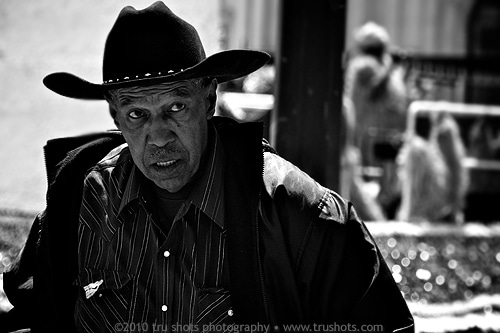
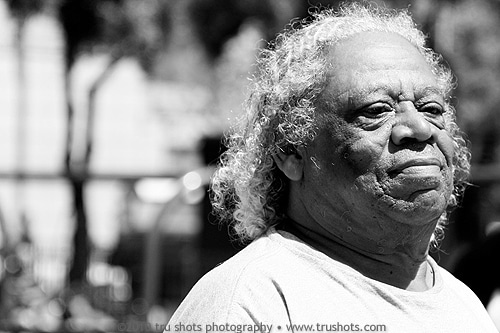
3) It's a networking opportunity. I am an introvert. Though I am not shy, as introversion does not always equate to shyness, I am usually uncomfortable and drained by traditional networking events and conventions. However, at a community cultural event, such as one I attended a month ago in San Francisco, Juneteenth, I can stay below radar and only photograph if I choose, or chat with people who ask me about my work simply from seeing me with what they call a big camera. At this aforementioned event, someone came up and talked with me. I ended up booking them as a client on the spot. So not only was it a great cultural experience (even just to embrace stories of Black people in America–ones that I could see in the very skin of the men I photographed below, who are only a few generations removed from slavery) but it was a business opportunity as well.

Man In Cowboy Hat by Trudy Hamilton

Street Photography by Trudy Hamilton

Acknowledging, embracing and understanding the cultures of others doesn't just make us better photographers, it makes us better humans. So I encourage you to view your city's website or a site like Yelp and look for the next event in your area, whether it be a Japanese, Chinese, Italian, Filipino, Jamaican or Irish festival (I've been to all of these types) and check it out. It may truly be a learning, photographic and networking opportunity for you as it has been for me. Embrace the true beauty within yourself, by embracing the beauty of others.

Filed Under: Culture, Photography Tagged With: as a, business travels, Community, cultural, cultural events, Culture, embrace, embracing, japanese culture, Journalism, mass media, photograph, photographer, Photography, Photojournalism, san francisco, stock photography, visual journalism

How Can Photographers Become Go-Givers?

June 8, 2010 by Guest

Alicia Candelora, AvatarThis is a guest post by Alicia Candelora, a wedding photographer based in Connecticut.

I was raised in a family where we were taught from a young age that you should give and share with others as much as humanly possible. As the eldest of three, that principle is not always something I liked following. After all, what kid enjoys sharing things with their younger siblings? My parents not only consistently taught us to do so through their words, but also through their actions. They have spent their lives helping others and giving to others. I remember many times where we had young mothers, or families in need come live with us. We always hosted dinners for people.

When I was 15 I decided to go on my first missions/relief trip to Guatemala. I did not know anybody else who was on the team, but I was excited to be the first in my family to leave the USA! During that trip, my eyes were opened to a world that I never dreamed was possible. I witnessed children living in the most primitive of conditions, many of them not knowing where their next meal would come from. I met people who had never seen a flushing toilet, a car, or a computer – things that we “can’t” live without here in the USA. My world was rocked. My life was changed. From that point on, I realized that I could no longer live my life just for ME. I had to have more purpose than just fulfilling my own hopes and dreams, because there was a world out there of people who are starving, dying, and without hope.

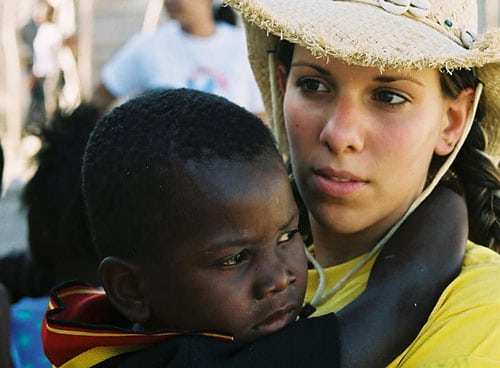
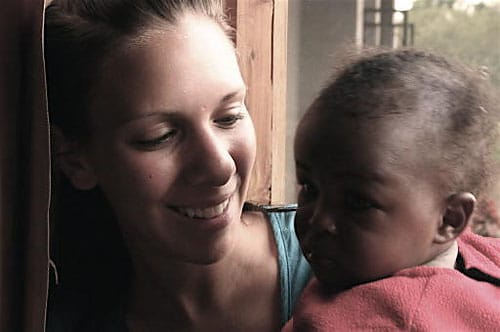
Alicia Holding A Baby

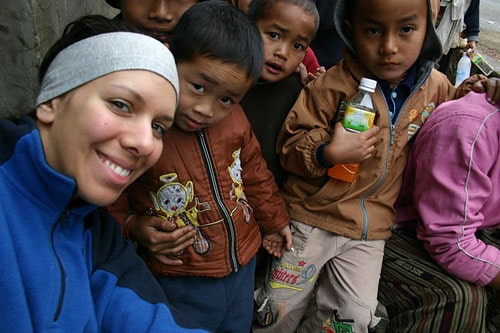
Alicia's Portrait With Kids

Alicia Holding A Baby 2

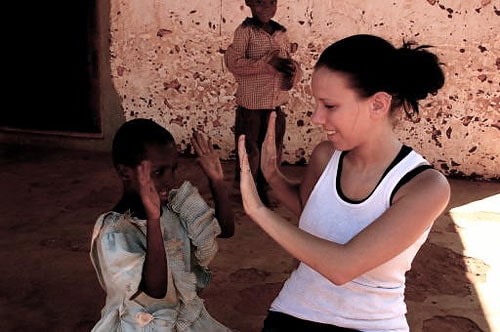
Alicia Playing With Kids

At the age of 18 I went to school to study bible and theology, while still staying very active in relief work in third world countries. After 3 and a half years of studying, I had an opportunity to move to Copenhagen, Denmark to teach leadership classes and to lead teams into third world countries doing relief work of various sorts. This was, and continues to be my heart and my passion.

About a year ago I decided to move back to the USA, after living in Denmark for 4.5 years, to pursue photography while still staying active with relief work. When I opened my business, I wanted to base the business model on the theory that “giving is better than receiving.” I had a lot of people tell me that I should not start a business that way, as I would quickly end up in debt. Most of us are taught that in order to “make it” in the business world, we have to adopt a In a dog-eat-dog mentality. From a young age we are urged to be a better “go-getter.” I want to challenge you for a few moments tonight to open your mind to the possibility of, instead, becoming a go-GIVER.

Recently I stumbled across a book written by John Mann and Bob Burg called The Go-Giver: A Little Story About a Powerful Business Idea. This book has since become my business bible, as it clearly and practically outlines the principles that I had already been living by and running my business by. Through a compelling narrative, the author outlines the “Five laws of stratospheric success” as follows:

The Law of Value: Your true worth is determined by how much more you give in value than you take in payment.
The Law of Compensation: Your income is determined by how many people you serve and how well you serve them.
The Law of Influence: Your influence is determined by how abundantly you place other people’s interests first.
The Law of Authenticity: The most valuable gift you have to offer is yourself
The Law of Receptivity: The key to effective giving is to stay open to receiving

Alright, so some of you might be thinking “This all sounds good in theory, but how does this apply to ME?” Well I am glad you asked! I have compiled a list of what it looks like on a practical level to be a go-giver.

Ten ways to spot a go-giver:

1. A Go-Giver does you a favor and is not looking for compensation.
2. A Go-Giver helps you just because they want to and is not keeping score.
3. A Go-Giver listens carefully to how your day was, or how a project is going.
4. A Go-Giver helps you without caring whether your status is high or low in life.
5. A Go-Giver makes connections for you because they believe in you.
6. A Go-Giver over-delivers on a job because they want you to be happy (and tell your friends).
7. A Go-Giver recommends a competitor if they are a better fit.
8. A Go-Giver is someone that others spontaneously and enthusiastically rave about.
9. A Go-Giver goes out of their way to help others.
10. A Go-Giver always seem to be connecting with the right people to make good things happen.

In conclusion, I have to ask myself – what would it be like if we adopted the mindset of being a go-giver? What would happen to our businesses, our careers, our marriages, and our relationships in general? My challenge for you is this: Become a go-giver and watch it drastically revolutionize your business and your life.

As always, your comments are welcome. Tell us about how you give back. You may be featured in our sister blog, OpenShade, if you are currently pursuing a community project or a cause that is near and dear to your heart.

Filed Under: Commentary, Culture, Photo Biz

Visual Peacemakers UNITE!

May 24, 2010 by Guest

Mario Mattei, AvatarMario Mattei is a photographer, visionary, & president of IGVP, based outside of Istanbul, Turkey.

I’m the kind of person who likes to ask “what if…” I’ve learned that I’m not alone in this and not alone in asking one particular “what if,” one that my friends and I were asking in 2008 …

In light of the tragedies on 9/11 and the fear-based reactions so often caused by worldviews shaped in onslaughts of “shocking” visual media, what if humans instead got consistently exposed to “other” cultures through photography and media themed on dignity, hope, and common humanity? Would the world be a different place?

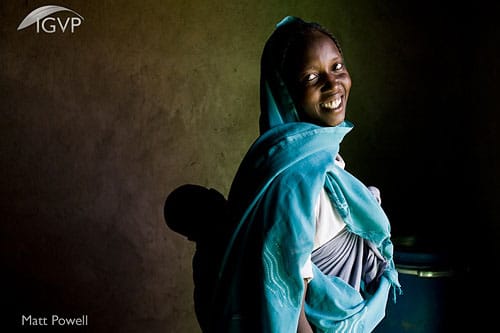
Matt Powell - Fiena, East Jabel Mara, Darfur, Sudan

This idea developed and is now known as “visual peacemaking.” All this year we’ve been moving it from dreams to action. Visualpeacemakers.org will be launching very soon. It’ll be a place to “get exposed” to the world’s peoples. And to get involved in contributing.

With this larger-than-life vision, my closest and most brilliant friends (Logan McAdams, John Machado and Jim Mullins) became co-founders with me in initiating, creating, and recruiting the International Guild of Visual Peacemakers (IGVP).

The vision spread through emails and Skype conversations. Matt Brandon, Nicole Gibson, and David DuChemin were in on the ground-level. It became our dream to form an organization and cross-promotional website that would advance the cause for visual peace and leverage photographers from around the globe to “SHOOT FOR PEACE.”

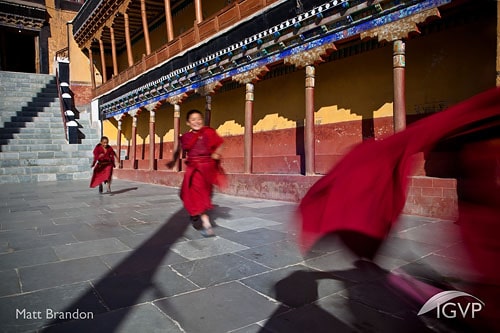
Matt Brandon Image of Buddhist Monks

Not much time passed and we soon invited Gavin Gough, Matt Powell, Ami Vitale, Jeffrey Chapman, and Kerry Lammi into the Guild. These world-class photographers, and do-gooders, immediately clicked with the call to “peacemaking and breaking down stereotypes by displaying the beauty and dignity of various cultures around the world.”

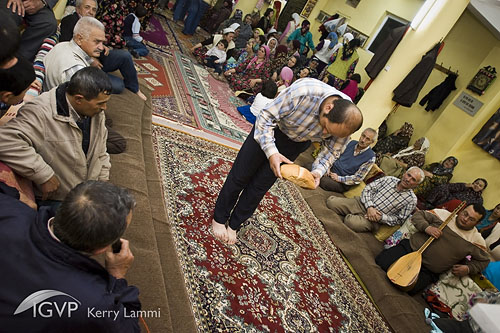
Kerry Lammi - man presents the bread for a blessing before the congregation.

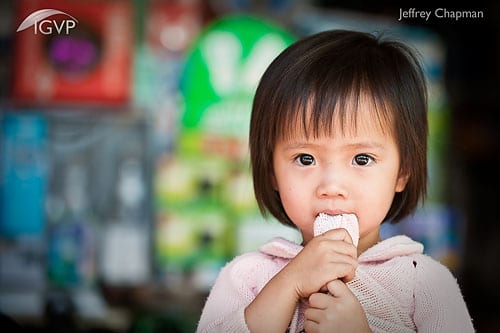
Jeffrey Chapman

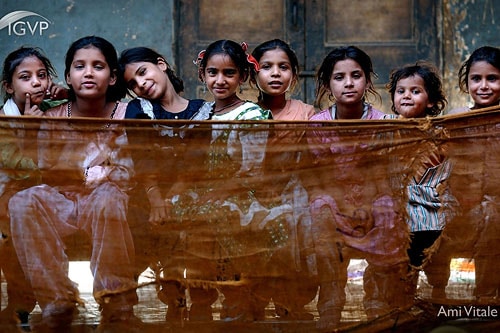
Ami Vitale in Gujarat

We quickly ran into a wonderful “problem.” Everyone wanted in. We had some strategies in mind for how a small guild could operate, so we created a second, connected strategy. We’re forming a branch of the Guild called the Visual Peacemakers Community, able to grow wide in numbers and deep in impact. These will be members on our site with Peacemaker Profiles, galleries, etc.

Today we’re defining visual peacemakers as photographers/ videographers who especially:

• Document our common humanity
• Display the beauty & dignity of people
• Make an unknown culture known to another.
• Tell stories of hope
• Bring new perspectives where harmful stereotypes exist

Their images foster peace by building bridges of awareness & understanding between ethnic, cultural, & religious identities.

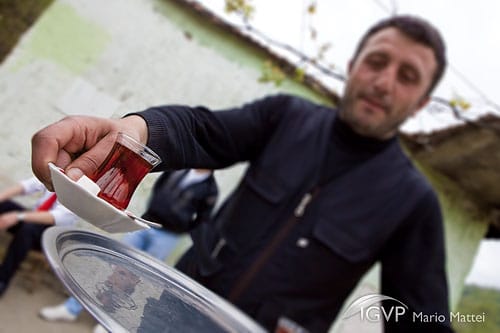
Mario Mattei, Turkey

On the website each photographer will have an in-depth profile and portfolio. It’s being developed as a place to create, connect, and catalyze through tools & social media. Resources for photographic growth will be available like ebooks, podcasts, articles, mentoring, portfolio reviews, grants and world workshops. This aspect has really been developing and has been rewarding to see just how much visual peacemakers can and will be equipped to make a difference.

Each and every member will be inviting their friends, co-workers, and family to take part by signing a half-page Charter for Visual Peace that expresses what it means to be a socially conscious viewer of visual media. And here you have the beginning of impact beyond our group of visual communicators.

Without glossing over tragedy and conflict, IGVP is seeking to show more than human hardships. We’re displaying all that is beautiful about us, and all that connects us. Visual Peacemakers treat humanity’s similarities as sacred and our diversities things to be honored. We’ve got a long list of photographers to be notified of the launch. So, though this seems to have been going on for awhile to some of us, for most, it all really begins on launch day!

Will you join us?

Filed Under: Culture, Documentary, Photography, Photojournalism Tagged With: Culture, Diversity, Peace, Photography, Understanding, Visual Peacemakers

  • « Previous Page
  • 1
  • 2
  • 3
  • 4
  • …
  • 13
  • Next Page »

Subscribe To Tiffibox Treats!

Looking for a well-curated email newsletter that will leave you inspired and motivated about your photography business? Sign up below!

About Seshu

Seshu creates relaxed portraits of families and high school seniors in Avon, Connecticut. He also leads a successful headshot photography studio in Connecticut, helping professionals from a variety of disciplines project the very best versions of themselves. He created Tiffinbox as a way of inspiring photographers, to create better images and successful businesses. [Read More]

Email Templates For Headshot Photographers

Email Templates for Headshot Photographers

Recent Posts

  • How Capture One Changed My Event Photography
  • 10 Steps To Stay Positive In Times Of Great Stress
  • Why You Need To Read “Personal Branding For Photographers” Now
  • How To Master Your Website Content Step By Step?
  • Tony Taafe’s TNT Method For Headshot Photographers

Recent Comments

  • Stephen Davison on Are You A Business Owner Who Is Smart, But Stuck?
  • Ben A. on Don Giannatti Clinches The 8th Annual Tiffinbox Award
  • Dan on Don Giannatti Clinches The 8th Annual Tiffinbox Award
  • Donald Giannatti on Don Giannatti Clinches The 8th Annual Tiffinbox Award
  • Stephen Davison on G.E. Masana’s 6 Strategies For Wedding Photography Success
  • Naveen Kumar on Weddings In India Are More Than Being At The Right Place And At The Right Time
  • kartick on Weddings In India Are More Than Being At The Right Place And At The Right Time
  • Leonid Farbman on 6 Uncommon Trends To Grow Your Photography Business
  • Willow and Finch Wedding Photography on 11 Reception Tips To Help Your Wedding Photography
  • Web Designer Malaysia on How To Optimize Your Squarespace Website For Search Engines
  • Creastan on An Interview With Photojournalist G.M.B. Akash
  • Cindy Brown | Atlanta on An Open Letter To A Local Photographer

Become a Patron!

Copyright © 2026 · Tiffinbox · Site Design by Heather Mackan Creative · Built on Genesis