• Photography
  • Interviews
  • Business
  • Reviews

Tiffinbox

Inspiring Photographers

  • Home
  • About
  • Blog
  • Contact

19+1 Ideas On How To Be Inspired As A Photographer

June 24, 2010 by Guest

Tom Bourdon, AvatarThis is a guest post by Tom Bourdon, an award winning travel photographer based in Spain and specializing in creating images of global celebrations. Find his blog here.

I have to admit I procrastinated a little over writing this blog, I was stumped as to what my subject should be, and without that I couldn't begin, searching for inspiration I headed over to Google. Then it dawned on me – inspiration – that's it, perfect, and I was off.

All artists need inspiration, where it comes from is difficult to say and there's no one guaranteed method of producing it. Sometimes you just need to let your mind wander for a short while, or see things differently, so I've put together a list that I hope will help everyone, myself included, when we're lacking that mystical power.

Now, I'm a travel photographer so this list is slightly biased towards that, but for sure it can be relevant to all photographers.

So with out further ado.

1. Read A Book

Any book. It doesn¥t have to have anything to do with photography, just pick one from your bookshelf or even a library (yes, they do still exist) and just read, its an exercise that will get the brain cells thinking outside of your normal life.'
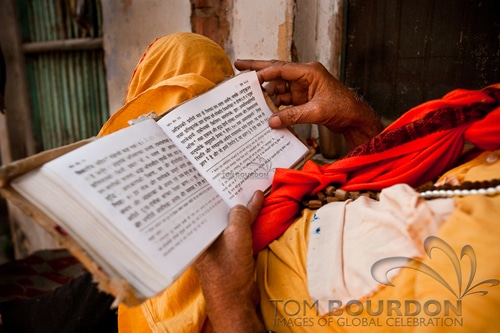
Reading A Book, by Tom Bourdon

2. Watch A Film

Books are great to get your imagination working, but films have the huge advantage of being visual, even if you never plan to shoot a second of video you can still learn plenty about composition from the cinema greats.

3. Visit A Flea Market Or Boot Fair

You never know what you're going to find at places like this, but for certain they'll be some interesting shapes to shoot.

4. Become A Tourist For The Day

Do touristy things in your own town, take a trip on the open top bus, wander around your town with fresh eyes, look up, wander down strange narrow streets, even get lost if you can. This is why I love travel photography so much particularly the festivals as there is always something unique to shoot.

5. Visit An Exhibition

No matter where you live there's bound to be a photography exhibition of some sort nearby, if not create one. In fact I'm off to see one later today.

6. Search Google Images Or Photo Libraries

Similar to visiting an exhibition except you can do it from the comfort of your own home. Find out what others are shooting and how. My current favorite is Reportage by Getty

7. Wake Up Early

Where you live probably looks very different at 6 in the morning, so wake up and explore this new place. Also by making the effort to get up early you'll feel more eager to shoot as getting up at ridiculous o'clock was the hard part, well it is for me.

8. Read A Blog

Don't know which one, here's another quick list:

Digtal Photography School
Strobist
Photopreneur
Catchy Colors Photoblog
Photodoto
Daily Dose of Imagery
Photoshop User TV
DIYPhotography
Earthbound Light
David DuChemin
Nature Photographers Of The Pacific Northwest
Stuck In Customs
Chase Jarvis Blog
Beyond the Obvious
F/1.0
Photoshop Insider
Photo Business News & Forum

… and there's plenty more.

9. Buy A Photography Book

Makes sense, no?

10. Set Yourself A Challenging Assignment

For example, shoot only red things for the day or only shoot from very low down to include your subjects feet. Its a great way to starting thinking about composition, by limiting yourself like this you¥ll be looking for new ways to shoot familiar subjects.
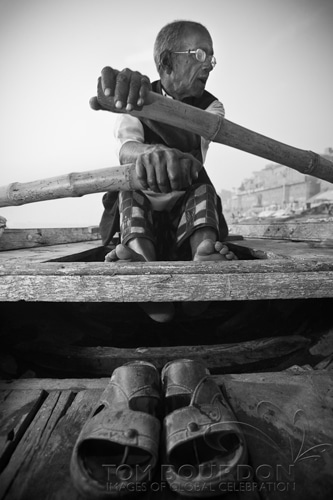
Man Rowing His Boat by Tom Bourdon

11. Make Friends In The Photography World

With the tidal wave of social media that¥s now upon us, its never been easier to meet like minded folk. These friendships can easily progress from the Internet to actually meeting up and who knows where it will go from there. Talking with other photographers is bound to shape your own photography. There¥s also Scott Kelby's Worldwide photo walk which is a great way to meet others and is well worth checking out.

12. Shoot Some Self Portraits

It could be as simple as a hand holding your camera and shooting your reflection in a mirror or it could be as complex as a full studio shot with big umbrellas either way its probably something you don't shoot very often and something you can play with for weeks until you get an image that you can be really proud of.

13. Check Out The Big Winners

The winners of big photo contests, such as the Pictures of the Year, Travel photographer of the year, World press photo, Photo district news. There's bound to be plenty to inspire. Which ever area of photography interests you there's bound to be a competition for it and the winning images should be somewhere online.

14. Play With Settings

Use slow shutter speeds and slow sync flash, set your aperture to f22 and shoot into the sun, use your highest ISO, just have a play and see what happens – perhaps you think you know, if so prove it. You may well be surprised.

15. Take A Photography Class

This doesn't have to be as time consuming as you might think. Creative live run free online photography courses with an incredible line up of teachers, you can even ask questions during the class and yes it really is free.

16. Ignore The Silly Criticism

Constructive criticism can really benefit the serious photographer, but it's not always great for your inspiration, particularly the silly criticism. At the end of the day if you¥re shooting for yourself and your happy with what you're producing then that's great. However if you're shooting for a client and your client isn't happy with your work – well that's something very different.

17. Shoot Something Random

The inside of your freezer, a radiator, your attic, the inside of your car, the dust on the top of your wardrobe, something you'd never normally think about taking a photo of. Spend some time on it playing with composition and light. Shoot five different, but thought out, compositions. This is harder than it sounds.

18. Doodle

I bet you haven't done this in a while, but just sit down with a pen and a blank piece of paper just scribble away absent-minded, move the pen around, make shapes, but don't think about it too much. This technique is often used by other visual artists, but I don't see why it can't aid the photographer.

19. Print Your Pictures

Not many people do this nowadays, myself included, which is a real shame. But being able to touch an image gives it a new dimension, I'm sure but there's probably some complex science behind all this, but all I know is to see my best work professionally printed on lustre paper I want to go out and shoot some more.

20. [fill in the blank with your own]

Now number 20 is up to you guys, leave your own ideas for what inspires you in the comments section below, there's no prizes (unless Seshu wants to jump in here with something ;) ) it's just sharing ideas, which is what the Internet is so great for.

Filed Under: Photography

Escaping Cliches In Photography

June 22, 2010 by Guest

Divya Manina, AvatarThis is a guest post by Divya Manian, a standards-based web designer who now lives in Seattle. She publishes her own blog, Nimbupani.

What pictures come to mind when you think of India?

Wait, I do not need to ask you, all I need to do is to look at Flickr search results and it is obvious what India means to photographers. What about Africa?

India, is much more than vermilion, yellow, vibrant colors and dark women. It is now a land of high-rises, malls, and industrial pollution. Unfortunately, this is not a popular stereotype and rarely highlighted in photography. It perpetuates a myth of poverty and rustic living that is now not true for most of India. Similar is the case with African countries. The greatest catastrophe is the grouping of so many different countries into one ideal “country” called Africa. Africa's landmass can contain China, US, and more in terms of land area. There are people of several cultures within a single country in Africa and African towns and cities have a lot more technology than popular photographs indicate.

A photograph is a slice of time which exaggerates the importance of the captured moment, just like a painting. Photographs have been used to perpetuate myths as well as facts. They alter public opinion with force that is unseen in the written text. As in the movie Spiderman, Uncle Ben says, “With great power, comes great responsibility” and here I would like photographers to use this power wisely.

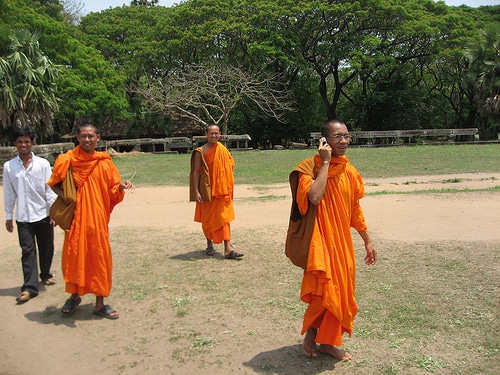
It is easier to shoot photographs that match a popular stereotype than to go against it. Many times, a popular stereotype reinforces the familiarity of a shot and makes a photograph appealing. Unfamiliarity with the subject being photographed can cause this too. Sometimes, it invokes a sense of nostalgia for a time that could have been or sometimes, a sense of relief for not being in that position, or there can be simply nothing else to do (e.g. Taj Mahal, or birthday parties). Still, stereotypes pander to an opinion that already exists and brings nothing new to life, and I consider that an opportunity lost. A popular cliche these days is a religious priest with a “hi-tech” gadget.

Buddhist Monks With Telephones

This is a call to all photographers to look beyond the stereotypes, or to use stereotypes wisely. For example, Mr. Oochappan takes great photographs of a part of Tamil Nadu that is rarely seen by the city dwellers. His photographs revels in the stereotypes so much that the pictures bring out unseen facets of Tamil culture. See this image in particular of a man dressed like the Hindu deity Shiva.

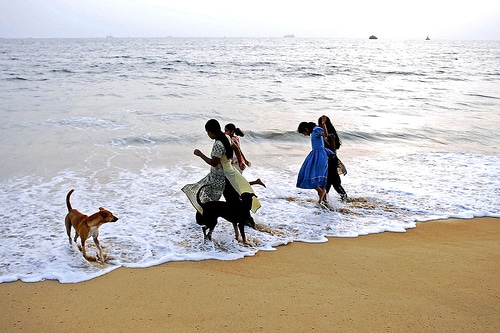
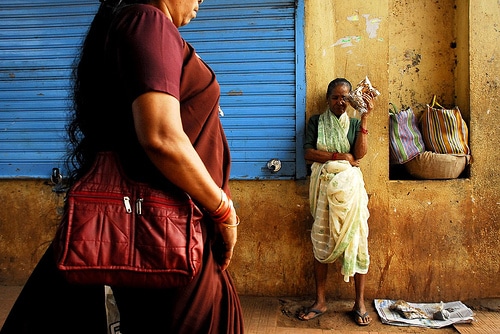
Akshay Mahajan usually take photographs that go beyond the stereotypical shots:

People On The Beach In India

Woman Selling Food In India

I don't mean to hold these two as extreme examples and not all of their photographs fit into the boundaries I have drawn around them. It may not be possible to escape the cliche, but as photographers we must try.

How do you know if you are subscribing to a cliché? Simple, if a shot looks “perfect”, ask yourself why you think so. Is it because it fits into a known stereotype of a “perfect” shot for that place/occasion/people? Or is it because that shot tells an unusual story? Whatever it is, before you take or share a photo you have taken with the world, spend some moments thinking about the story the photograph tells and let it not be “perfect”.

What do you think? Ink your thoughts below in the comments section.

Filed Under: Commentary, Photography Tagged With: Clichés, Exotic, India, Photography

The Significance Of Photographing Engagement Sessions

June 15, 2010 by Guest

Sunny Mathur, AvatarThis is a guest post by Washington, D.C. photographer Sunny Mathur, of Photographick Studios.

Every wedding photographer dreams of the day when all their clients will completely and honestly open up to them, let their guard down and let their emotions flow; tears and all. Every wedding photographer is looking for the magic phrase that will allow this to happen; it's a novel concept that seldom comes to fruition without some assistance and hard work (sorry no
magic phrase).

From a client's perspective it is difficult to open up to a stranger. It is even more difficult to tell this stranger intimate details about you, including how you met, proposed and details about your partner. Put yourself in their shoes, it's already awkward to pose for pictures but intimate
pictures is a completely different story. Although this cannot be a direct correlation to our job as wedding photographers it does provide some insight into some clients perceived “stiffness.” To gain this all access pass into the lives of our clients we must earn it. This all access pass well worth its cost.

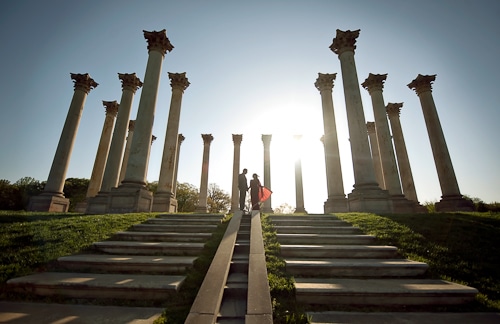
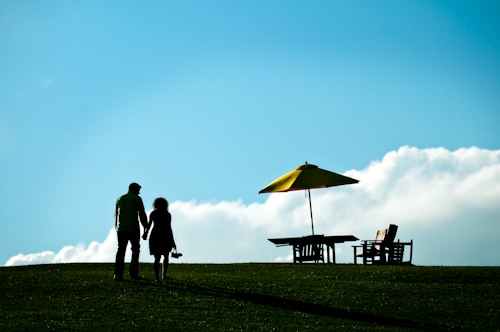
One solution that we particularly enjoy due to the financial reward as well as the emotional connection we build with our clients is to meet them before the wedding during an engagement session. We ask the couple to think of a location that is particularly important in their relationship, whether the location of their first date, where the groom proposed or simply somewhere they both love going. This allows your client to associate those great memories to their engagement session and thus their feelings towards you, the photographer. We ask them to reminisce about the location and more times than not the future bride will glow and recount all her favorite memories.

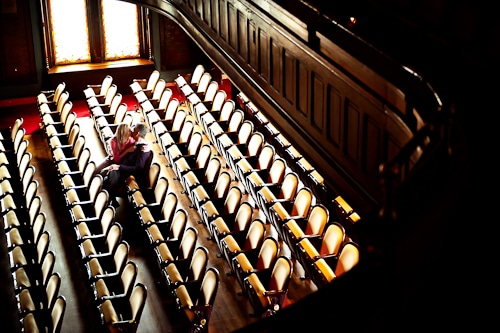
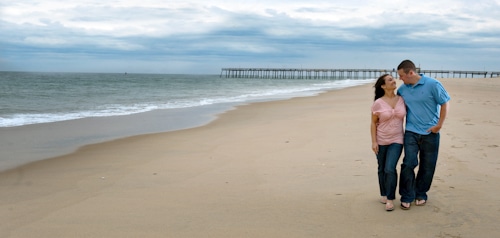
Engagement Session 1 - Sunny Mathur

Engagement Session 2 - Sunny Mathur

Engagement Session 3 - Sunny Mathur

Engagement Session 4 - Sunny Mathur

The groom will chime in with a few of their own and before long they are talking, laughing, smiling and kissing. This allows us to do three items all at once; befriend our clients, show them our value by taking some amazing pictures and prove to them that they can trust you.

At each engagement session we probe about their wedding preparations, ask them if they need assistance, provide vendor recommendations, bring up current wedding trends and past wedding ideas. We try to connect with the bride and groom to show them we are truly invested in the success of their day and the images captured. We work hard to build a strong rapport with our clients. Through this not so magical formula we build their friendship, their trust and after we blog a few of their images from their engagement session we gain their love. Through this connection, this memory and their understanding of our dedications towards them, we are no longer looked at as a vendor but as a friend who can share in their emotions, their love and perfectly capture their perfect day; tears and all.

Resource Tip From Seshu: If you are ever stuck for ideas on how to pose your couples, reach for the Design Aglow's Inspire Me Cards: Modern Engagement Posing Guide. Those should fuel your imagination!

Filed Under: Photography Tagged With: Couples, Engagement Sessions, Photography, Weddings

How To Find Work And Get Hired As A Photojournalist?

June 9, 2010 by Guest

Gerik Parmele, AvatarThis is a guest post by Gerik Parmele. He is the director of photography at the Columbia Daily Tribune. Prior to moving to Missouri in 2005 to work at the Tribune he worked as a staff photographer at the Grand Island Independent, in Nebraska, for eight years.

The economy is tough, especially in photojournalism. As a photo editor in charge of a staff at a small newspaper it can be pretty stressful dealing with things like budgets and workloads.

But recently one situation came up that really drove home the point of what it's like for photojournalists, especially those vying for newspaper jobs, in this new economic climate. It's what happened when one of my staff gave his two week notice to move on to another newspaper.

The last time I hired a photographer here at the Columbia Tribune was in 2007. I had the luxury of mounting an extensive search for the right candidate. I posted on job boards and list-serves. I used my network of friends and colleagues to find candidates who would be a good fit. I gave it weeks.

Once I found a candidate that I felt was perfect for the job we were even willing and able to wait several weeks for her to finish a previous obligation before joining our staff. Those were the days.

Then things took a slight turn. Our budgets got pinched and our staff was reduced by one photographer, the one we waited weeks to hire a 19 months earlier. Our workload was increased with new initiatives to produce more web content. You've heard it all before I'm sure.

So for the last year we've been doing more with less, but getting by. Well, that is until I got the two week notice.

With the reality of having to replace a photographer in two weeks while already short staffed I thought back to the days of 2007 when I had the luxury of methodically sorting through more than 70 portfolios of photographers wanting to work here.

Not this time.

Stack of Portfolios

I knew I needed to act quickly and decisively.  I wanted to get someone on board as soon as I could. I was scared our open position would be frozen. I knew our sanity would not last long with 50 percent less staff than we had 2 years ago while covering the same amount of assignments.

Thankfully there was someone right here in Columbia who is a great photographer, who I was familiar with, who was interested in working here and who was available. We offered him the job days after we knew we'd need a replacement.

So what's the take away for you if you are a photojournalist looking for work in this weak economy? Here's a short list of my opinions and things I learned the hard way.

1. As a photojournalist looking for work you need to have a very clear idea of where (city, state, region) you want to work and for who (newspaper, specific photo editor or agency) you want to work for.

2. Do your research about these places and be very familiar with them.

3. Make sure they know you want to work for them and why.

4. Be in touch frequently, but not to frequently.  A postcard now and again is good. Phone calls every other day, bad. One of the things I've found that photojournalists were not good at was staying in touch with potential job prospects, even when I asked them “Please, stay in touch.”

5. Take a chance and move to the location you desire to work. It's easier to network and become known than if you lived 1000 miles away.

6. Be excellent in what you do. Remember a couple of paragraphs higher I wrote I received more than 70 portfolios for one entry level job opening? The competition is pretty tough.

Jobs don't open very often on the photo staff of our paper. I would guess that is the same for most around the country. But when they do, are you the first person that photo editor will think of when they need to hire someone right away?

You may also want to read this article from the National Press Photographers Association about Getting Started in Photojournalism.

Filed Under: Jobs, Photojournalism

How Can Photographers Become Go-Givers?

June 8, 2010 by Guest

Alicia Candelora, AvatarThis is a guest post by Alicia Candelora, a wedding photographer based in Connecticut.

I was raised in a family where we were taught from a young age that you should give and share with others as much as humanly possible. As the eldest of three, that principle is not always something I liked following. After all, what kid enjoys sharing things with their younger siblings? My parents not only consistently taught us to do so through their words, but also through their actions. They have spent their lives helping others and giving to others. I remember many times where we had young mothers, or families in need come live with us. We always hosted dinners for people.

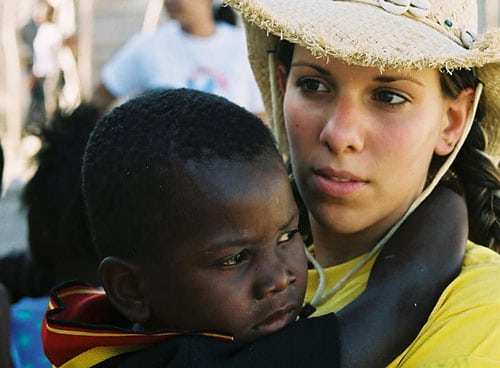
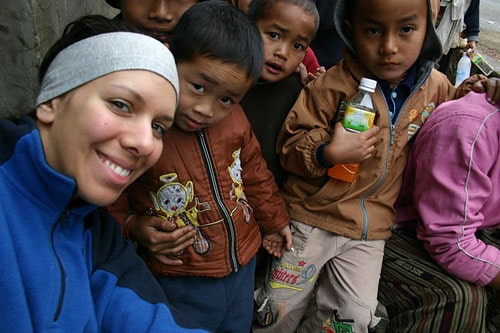
When I was 15 I decided to go on my first missions/relief trip to Guatemala. I did not know anybody else who was on the team, but I was excited to be the first in my family to leave the USA! During that trip, my eyes were opened to a world that I never dreamed was possible. I witnessed children living in the most primitive of conditions, many of them not knowing where their next meal would come from. I met people who had never seen a flushing toilet, a car, or a computer – things that we “can’t” live without here in the USA. My world was rocked. My life was changed. From that point on, I realized that I could no longer live my life just for ME. I had to have more purpose than just fulfilling my own hopes and dreams, because there was a world out there of people who are starving, dying, and without hope.

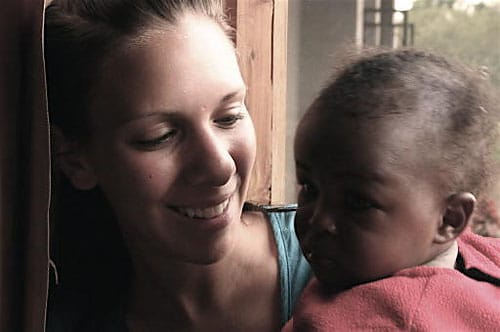
Alicia Holding A Baby

Alicia's Portrait With Kids

Alicia Holding A Baby 2

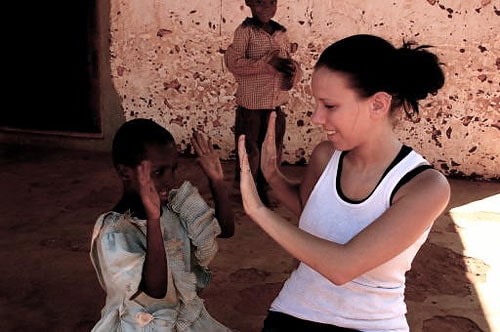
Alicia Playing With Kids

At the age of 18 I went to school to study bible and theology, while still staying very active in relief work in third world countries. After 3 and a half years of studying, I had an opportunity to move to Copenhagen, Denmark to teach leadership classes and to lead teams into third world countries doing relief work of various sorts. This was, and continues to be my heart and my passion.

About a year ago I decided to move back to the USA, after living in Denmark for 4.5 years, to pursue photography while still staying active with relief work. When I opened my business, I wanted to base the business model on the theory that “giving is better than receiving.” I had a lot of people tell me that I should not start a business that way, as I would quickly end up in debt. Most of us are taught that in order to “make it” in the business world, we have to adopt a In a dog-eat-dog mentality. From a young age we are urged to be a better “go-getter.” I want to challenge you for a few moments tonight to open your mind to the possibility of, instead, becoming a go-GIVER.

Recently I stumbled across a book written by John Mann and Bob Burg called The Go-Giver: A Little Story About a Powerful Business Idea. This book has since become my business bible, as it clearly and practically outlines the principles that I had already been living by and running my business by. Through a compelling narrative, the author outlines the “Five laws of stratospheric success” as follows:

The Law of Value: Your true worth is determined by how much more you give in value than you take in payment.
The Law of Compensation: Your income is determined by how many people you serve and how well you serve them.
The Law of Influence: Your influence is determined by how abundantly you place other people’s interests first.
The Law of Authenticity: The most valuable gift you have to offer is yourself
The Law of Receptivity: The key to effective giving is to stay open to receiving

Alright, so some of you might be thinking “This all sounds good in theory, but how does this apply to ME?” Well I am glad you asked! I have compiled a list of what it looks like on a practical level to be a go-giver.

Ten ways to spot a go-giver:

1. A Go-Giver does you a favor and is not looking for compensation.
2. A Go-Giver helps you just because they want to and is not keeping score.
3. A Go-Giver listens carefully to how your day was, or how a project is going.
4. A Go-Giver helps you without caring whether your status is high or low in life.
5. A Go-Giver makes connections for you because they believe in you.
6. A Go-Giver over-delivers on a job because they want you to be happy (and tell your friends).
7. A Go-Giver recommends a competitor if they are a better fit.
8. A Go-Giver is someone that others spontaneously and enthusiastically rave about.
9. A Go-Giver goes out of their way to help others.
10. A Go-Giver always seem to be connecting with the right people to make good things happen.

In conclusion, I have to ask myself – what would it be like if we adopted the mindset of being a go-giver? What would happen to our businesses, our careers, our marriages, and our relationships in general? My challenge for you is this: Become a go-giver and watch it drastically revolutionize your business and your life.

As always, your comments are welcome. Tell us about how you give back. You may be featured in our sister blog, OpenShade, if you are currently pursuing a community project or a cause that is near and dear to your heart.

Filed Under: Commentary, Culture, Photo Biz

  • « Previous Page
  • 1
  • …
  • 7
  • 8
  • 9
  • 10
  • 11
  • 12
  • Next Page »

Subscribe To Tiffibox Treats!

Looking for a well-curated email newsletter that will leave you inspired and motivated about your photography business? Sign up below!

About Seshu

Seshu creates relaxed portraits of families and high school seniors in Avon, Connecticut. He also leads a successful headshot photography studio in Connecticut, helping professionals from a variety of disciplines project the very best versions of themselves. He created Tiffinbox as a way of inspiring photographers, to create better images and successful businesses. [Read More]

Email Templates For Headshot Photographers

Email Templates for Headshot Photographers

Recent Posts

  • How Capture One Changed My Event Photography
  • 10 Steps To Stay Positive In Times Of Great Stress
  • Why You Need To Read “Personal Branding For Photographers” Now
  • How To Master Your Website Content Step By Step?
  • Tony Taafe’s TNT Method For Headshot Photographers

Recent Comments

  • Stephen Davison on Are You A Business Owner Who Is Smart, But Stuck?
  • Ben A. on Don Giannatti Clinches The 8th Annual Tiffinbox Award
  • Dan on Don Giannatti Clinches The 8th Annual Tiffinbox Award
  • Donald Giannatti on Don Giannatti Clinches The 8th Annual Tiffinbox Award
  • Stephen Davison on G.E. Masana’s 6 Strategies For Wedding Photography Success
  • Naveen Kumar on Weddings In India Are More Than Being At The Right Place And At The Right Time
  • kartick on Weddings In India Are More Than Being At The Right Place And At The Right Time
  • Leonid Farbman on 6 Uncommon Trends To Grow Your Photography Business
  • Willow and Finch Wedding Photography on 11 Reception Tips To Help Your Wedding Photography
  • Web Designer Malaysia on How To Optimize Your Squarespace Website For Search Engines
  • Creastan on An Interview With Photojournalist G.M.B. Akash
  • Cindy Brown | Atlanta on An Open Letter To A Local Photographer

Become a Patron!

Copyright © 2026 · Tiffinbox · Site Design by Heather Mackan Creative · Built on Genesis